


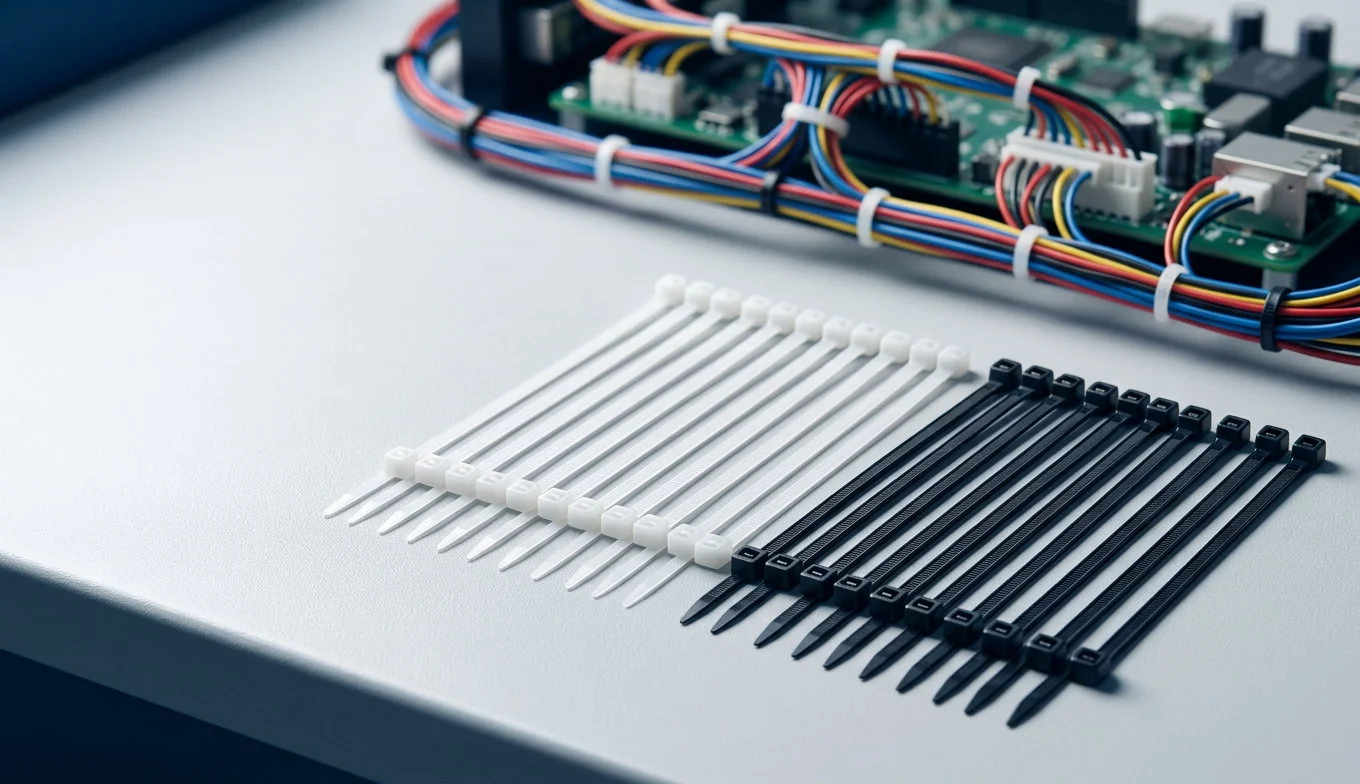

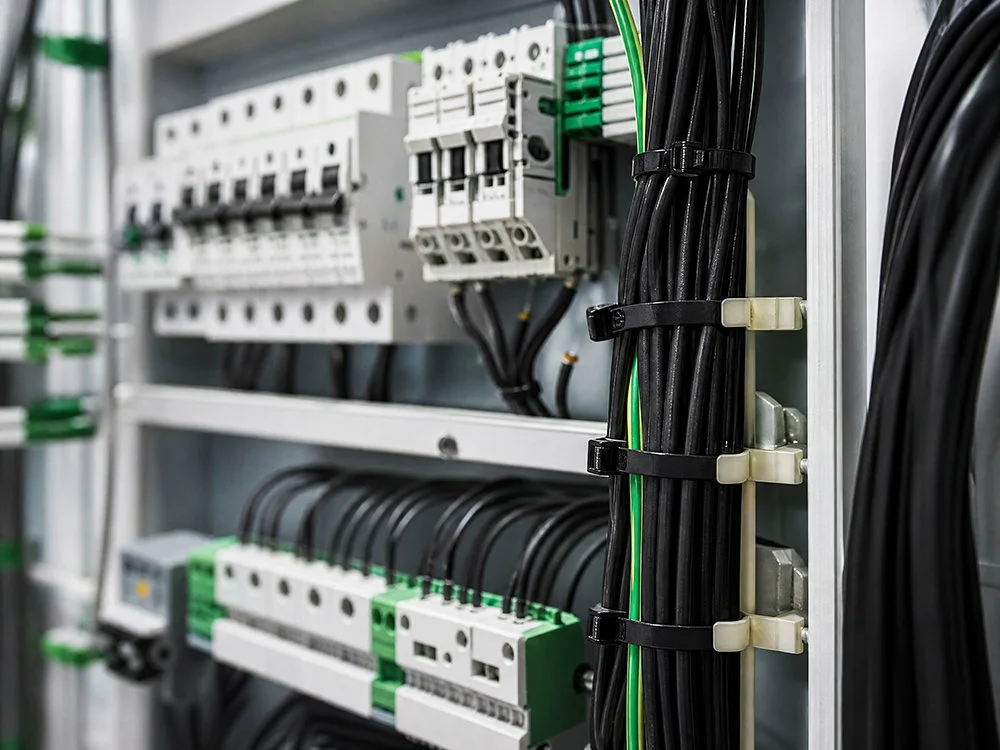

Cold Resistant Cable Ties for Arctic and Sub-Zero Installations
IGOTO manufactures cold resistant cable ties for sites where installation cannot wait for a warm day: solar farms, outdoor electrical cabinets, telecom towers, cold storage and utility work across northern Europe, Canada, Central Asia and the northern United States.
Two cold grades are produced on the same line as the standard range. The impact-modified PA66 grade is rated for installation down to -20°C, and the PA12 (nylon 12) grade holds its impact strength to -40°C with lower moisture absorption and better UV stability for exposed outdoor work.
Every cold weather cable tie is moulded from Virgin PA66 or PA12, stabilised with carbon black for UV, and supplied with a batch tensile record. Standard sizes from 2.5 mm to 4.8 mm width are available with your label, your colour and your packing.

What Makes a Cable Tie Cold Resistant?
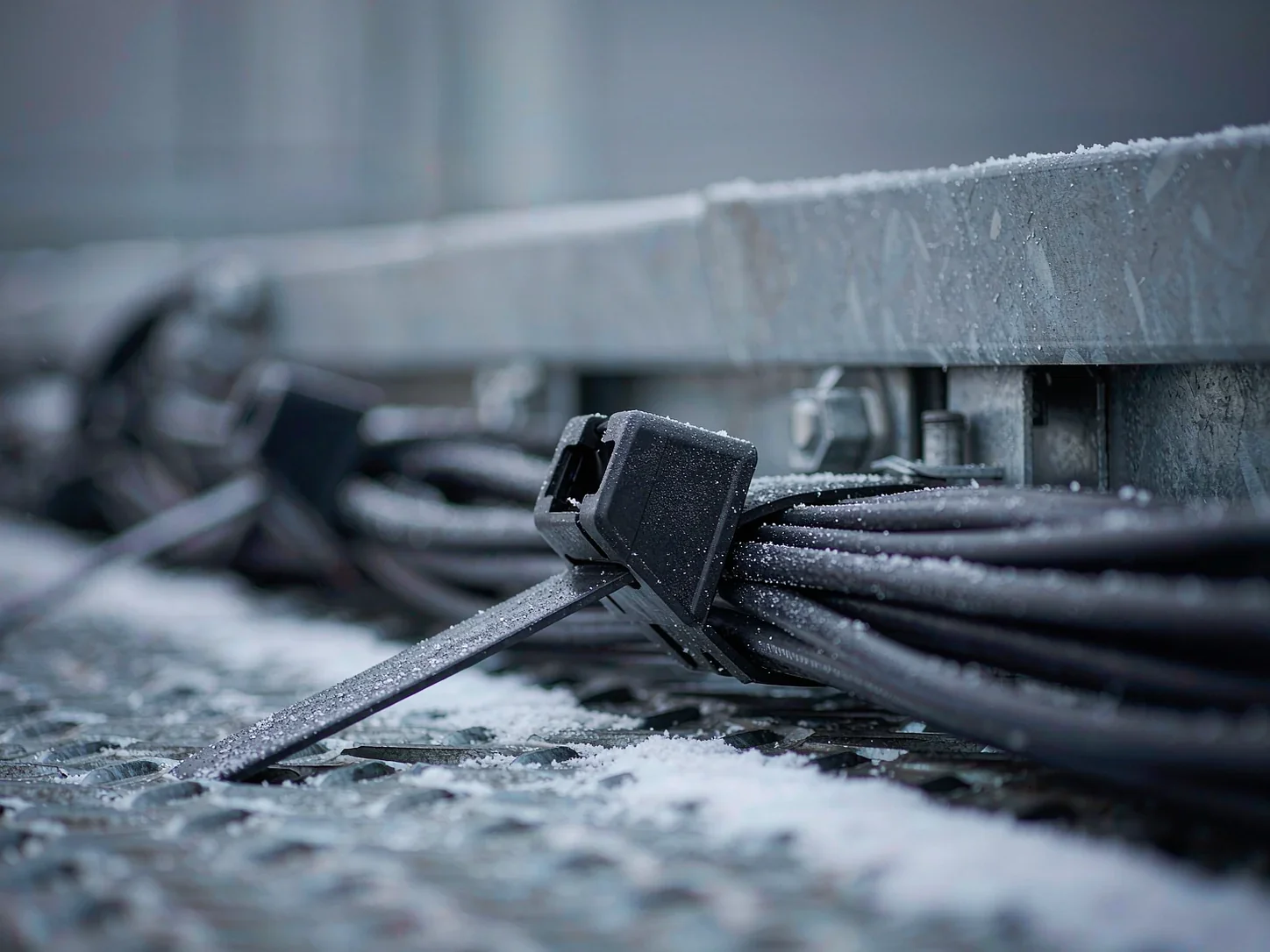
A cold resistant cable tie is not simply a black tie sold for winter. The difference is in the polymer and in the geometry of the locking head, because that is where a tie fails when the temperature drops.
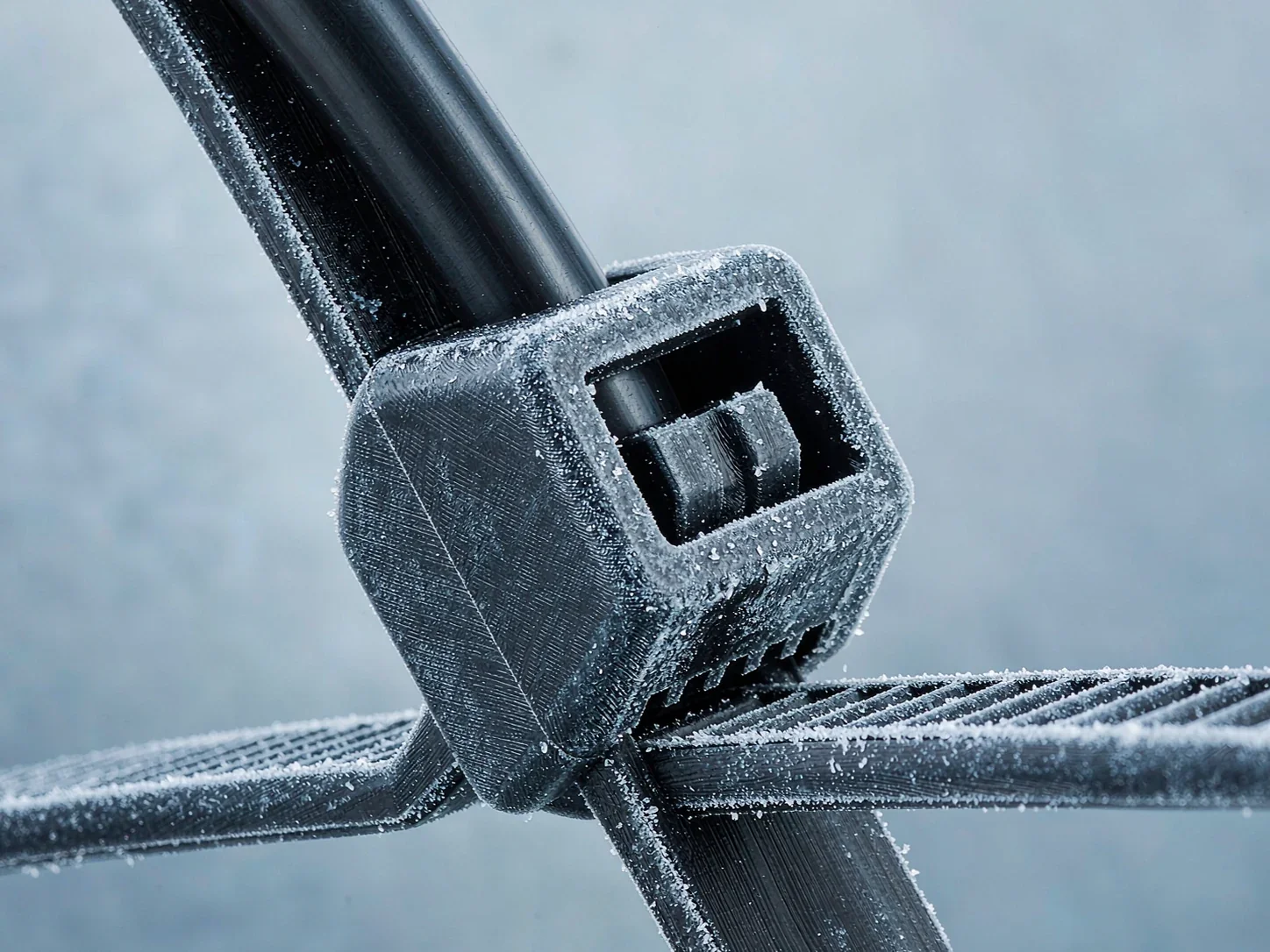
Nylon 66 absorbs moisture from the air. At low temperature that moisture stiffens the polymer chain and impact strength falls sharply, so the tie no longer flexes around a bundle or over a sharp edge. The strap itself is usually fine; the pawl inside the head is what shears.
Cold grades solve this in three ways: a lower-moisture polymer such as PA12, an impact modifier that keeps the head ductile below zero, and a slightly thicker pawl section that spreads the load instead of concentrating it on one tooth.
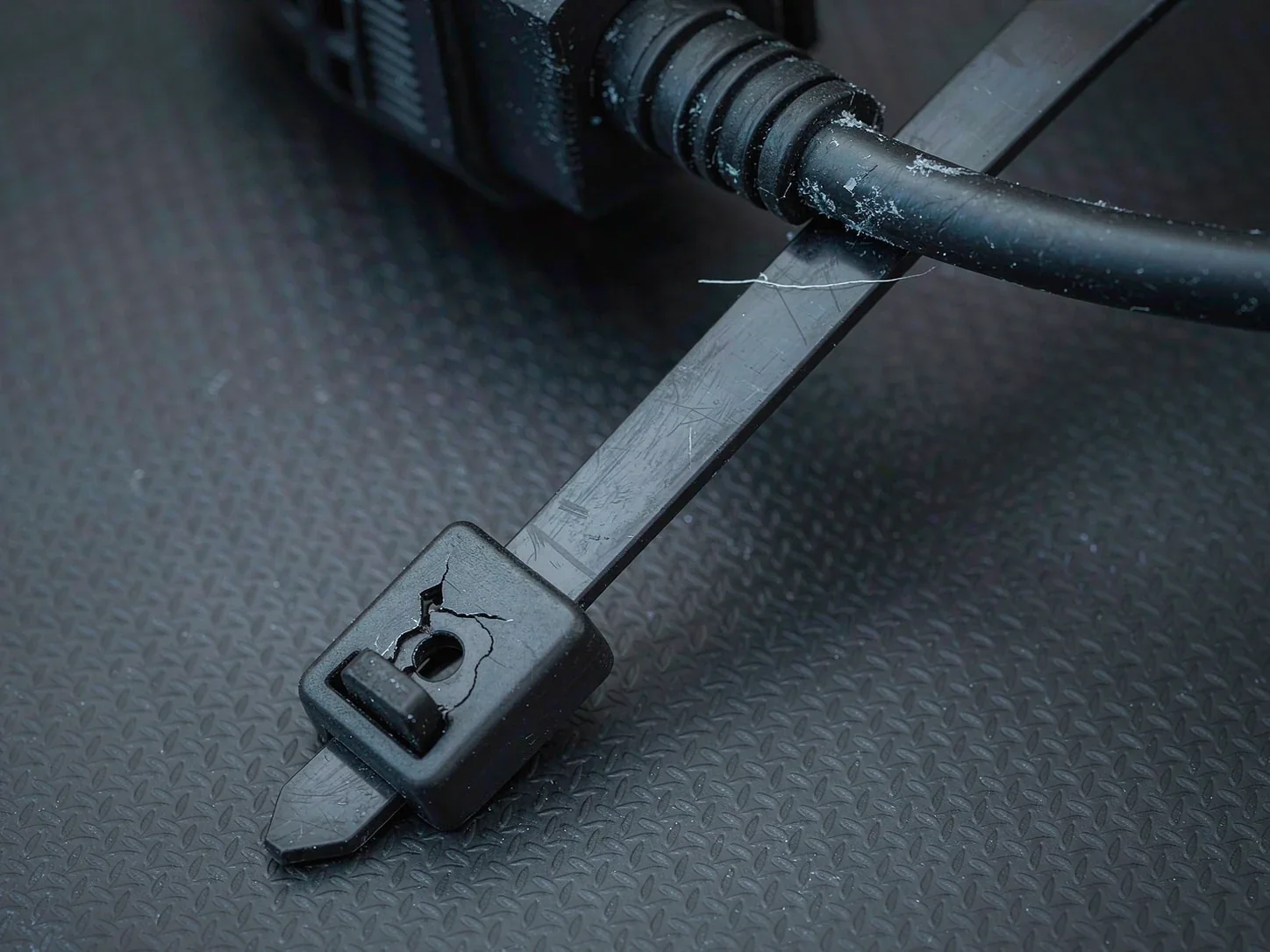
Why Standard Nylon Cable Ties Break in Cold Weather
A tie that has been in service for two winters rarely fails on its own. It fails during installation, in the two or three seconds when the tail is pulled through the head and the pawl has to bend.
Below about -10°C a standard PA66 tie loses most of its impact strength. Pull too hard, or bend the tail against a cable tray edge, and the head cracks instead of flexing. The same tie installed in July and left untouched would have lasted years.
The second cause is over-tensioning. A tie pulled to its limit at 20°C is already under stress; at -30°C that stress sits on a brittle material all winter. Cold weather ties are specified with a tension tool and left slightly looser than a summer installation.
Cold Weather Cable Tie Temperature Range
Service temperature and installation temperature are two different numbers. A tie can survive -40°C in service and still crack if it is installed at -25°C, so both columns matter when you specify.
| Material grade | Service temperature | Installation temperature | الأفضل لـ |
|---|---|---|---|
| Standard PA66, UV black | -35°C إلى +85°C | -10°C and above recommended | Indoor wiring, general cable management, mild climates |
| Impact-modified PA66 | -40°C to +85°C | -20°C | Outdoor cabinets, construction sites, general cold climate duty |
| PA12 (nylon 12) | -40°C to +85°C, short-term +110°C | -30°C | Solar farms, coastal sites, high UV and wet cold conditions |
| Low-temperature specialty grade | -60°C on request | -40°م | Arctic sites, cold chain, refrigeration and freezer rooms |
Figures are for the grade, not for one test coupon. The final service range depends on strap width, bundle diameter and whether the tie is under continuous tension. Confirm the grade against the site minimum temperature before the order is placed.
Cold Resistant Cable Tie Sizes and Tensile Strength
The cold grades use the same moulds as the standard range, so the size you already fit can be supplied in a winter material without changing the bundle, the tool or the drawing.
| Model | Width × length | قوة الشد | Typical bundle |
|---|---|---|---|
| ET-3×100 | 2.5 × 100 mm (4″) | 8 kg | up to 22 mm |
| ET-3×200 | 2.5 × 200 mm (8″) | 8 kg | up to 50 mm |
| ET-4×300 | 3.5 × 300 mm (12″) | 18 kg | up to 76 mm |
| A5×400 | 4.8 × 400 mm (16″) | 22 kg | up to 110 mm |
| ET-5×500 | 4.8 × 500 mm (20″) | 22 kg | up to 140 mm |
Bundle figures are a working guide at 80% of usable strap length. Tensile values are loop tensile at 23°C; at -40°C the PA12 grade retains most of that figure while a standard PA66 tie loses a significant part of it.
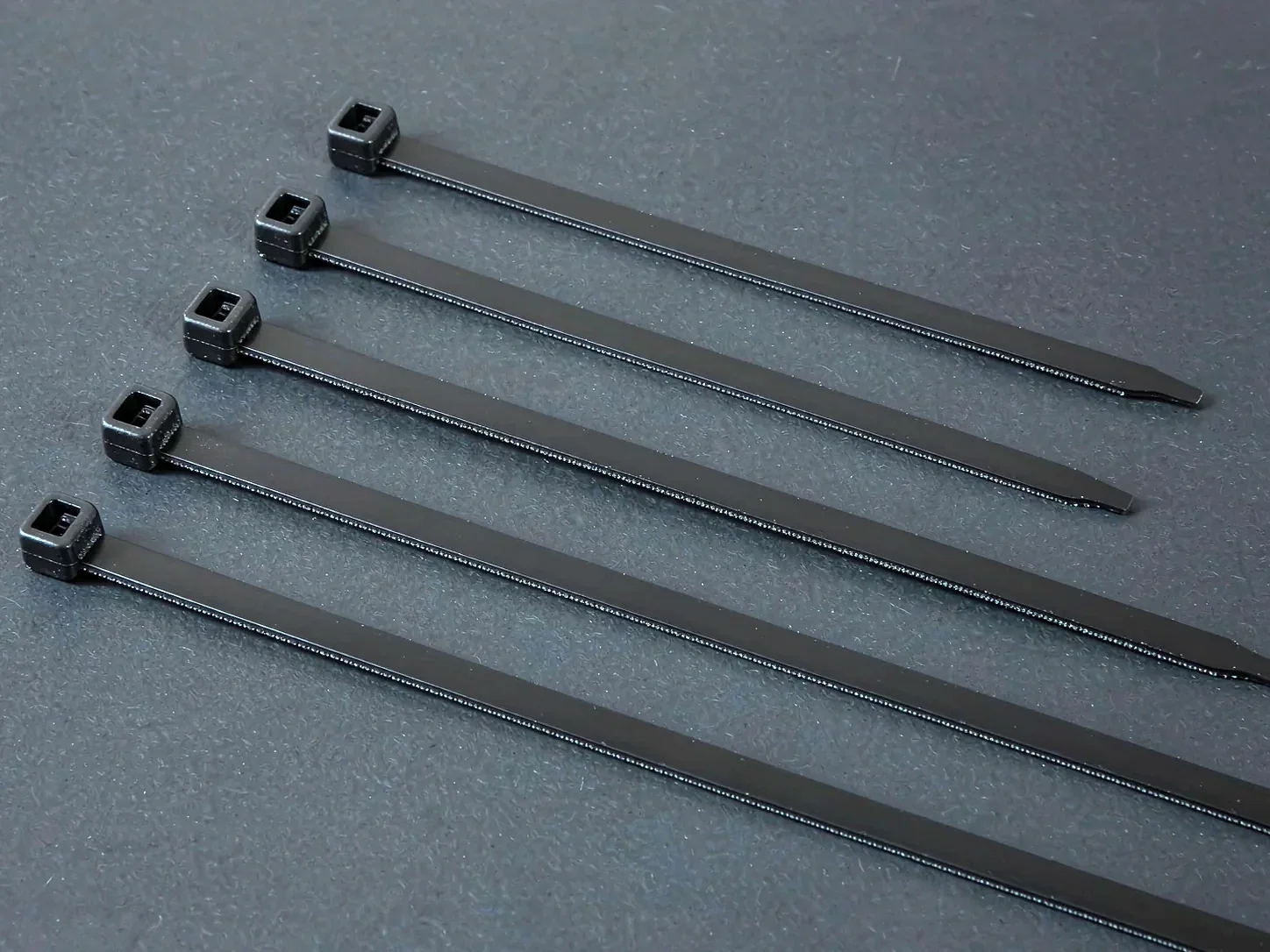
Sizes 100 mm to 500 mm, width 2.5 mm to 4.8 mm, in standard black or a custom colour.
Where Cold Weather Cable Ties Are Used
Cold resistance matters most where the tie is installed outdoors, in an unheated building, or on equipment that is commissioned in winter and then left alone for years.
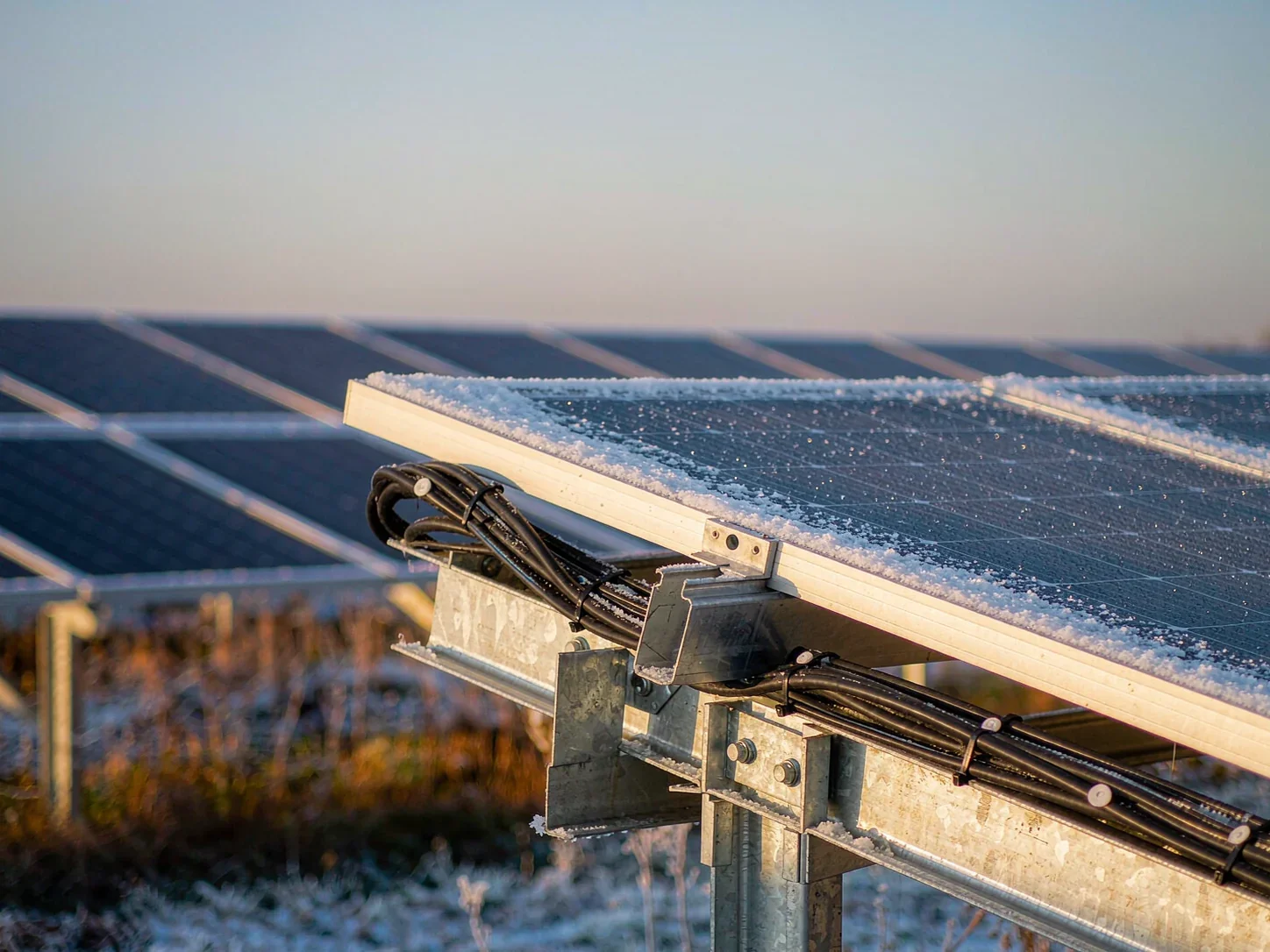
Solar and Outdoor PV
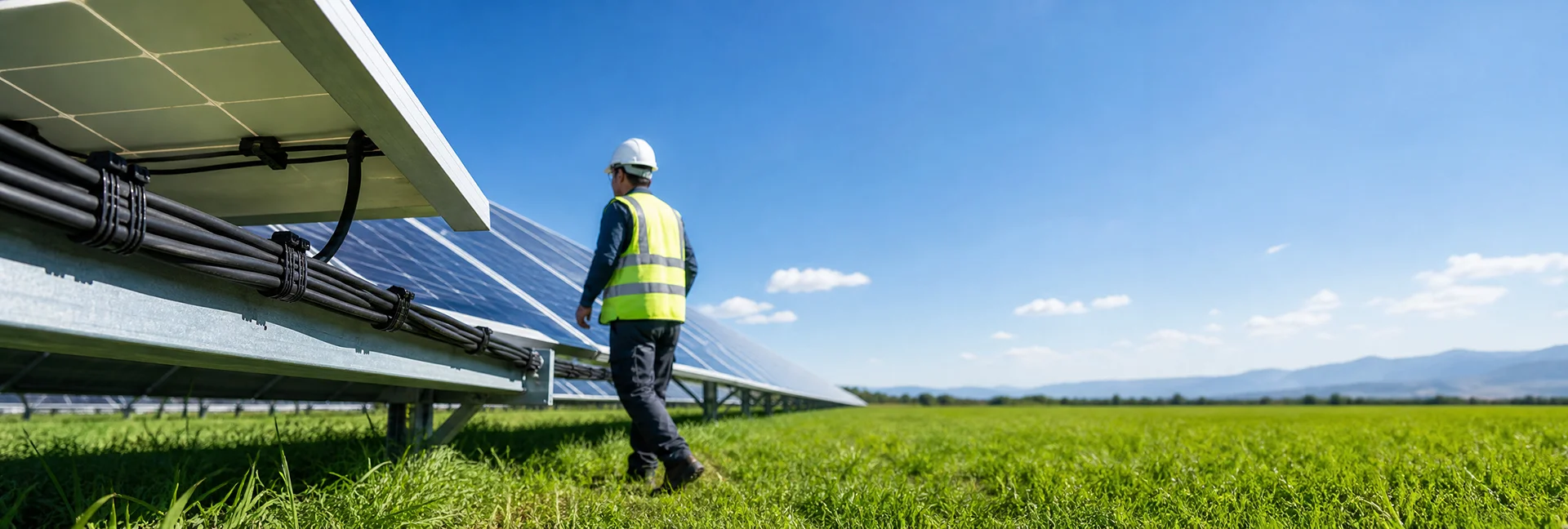
Array cabling is fixed in winter and inspected in summer. PA12 resists both the cold snap at installation and the UV load of twenty summers on the rail.
View UV Resistant Cable Ties →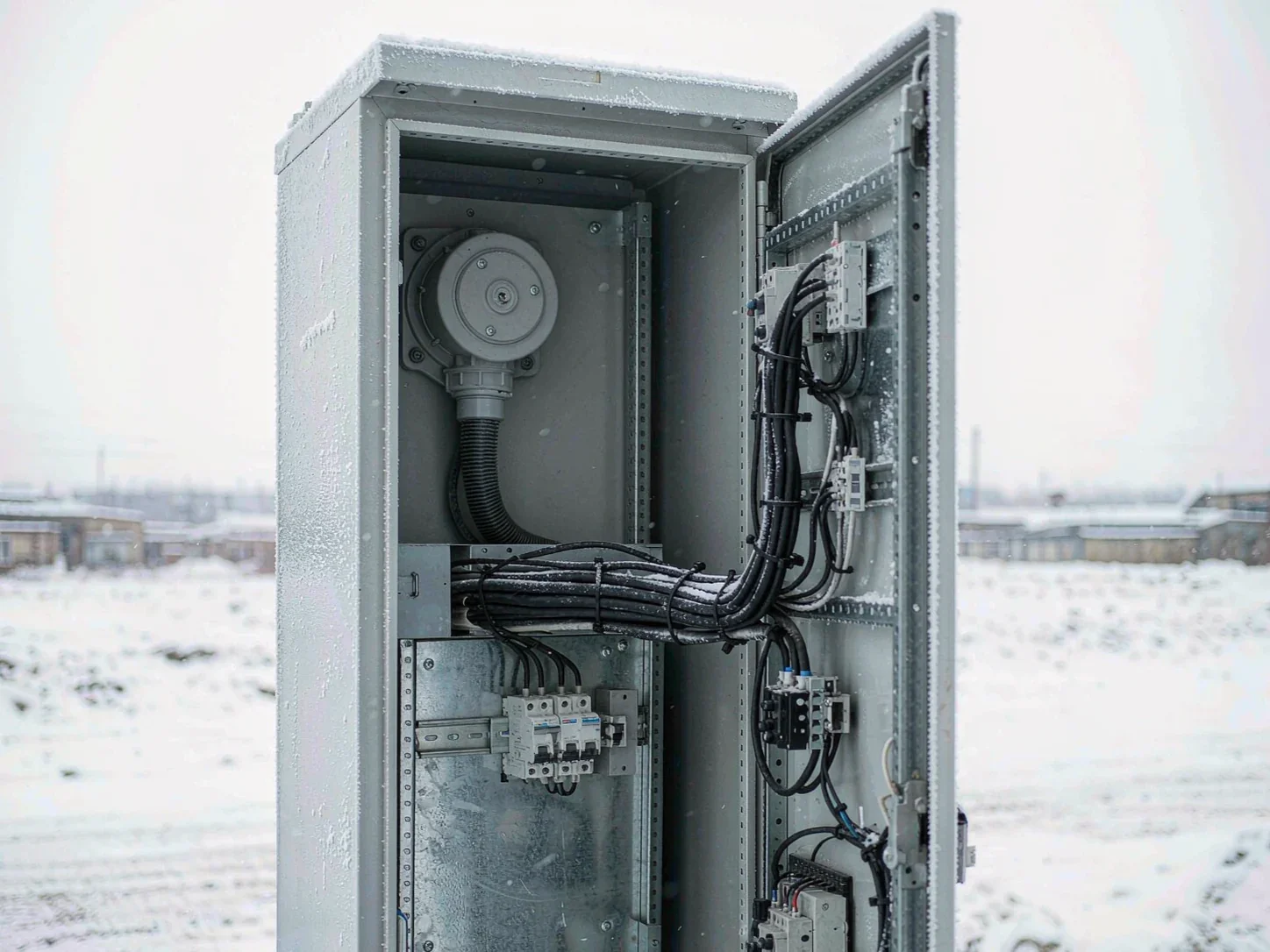
Outdoor Cabinets and Telecom
Distribution cabinets, CCTV poles and telecom enclosures are often wired on site in sub-zero weather, then sealed for years without inspection.
View Cabinet Cable Ties →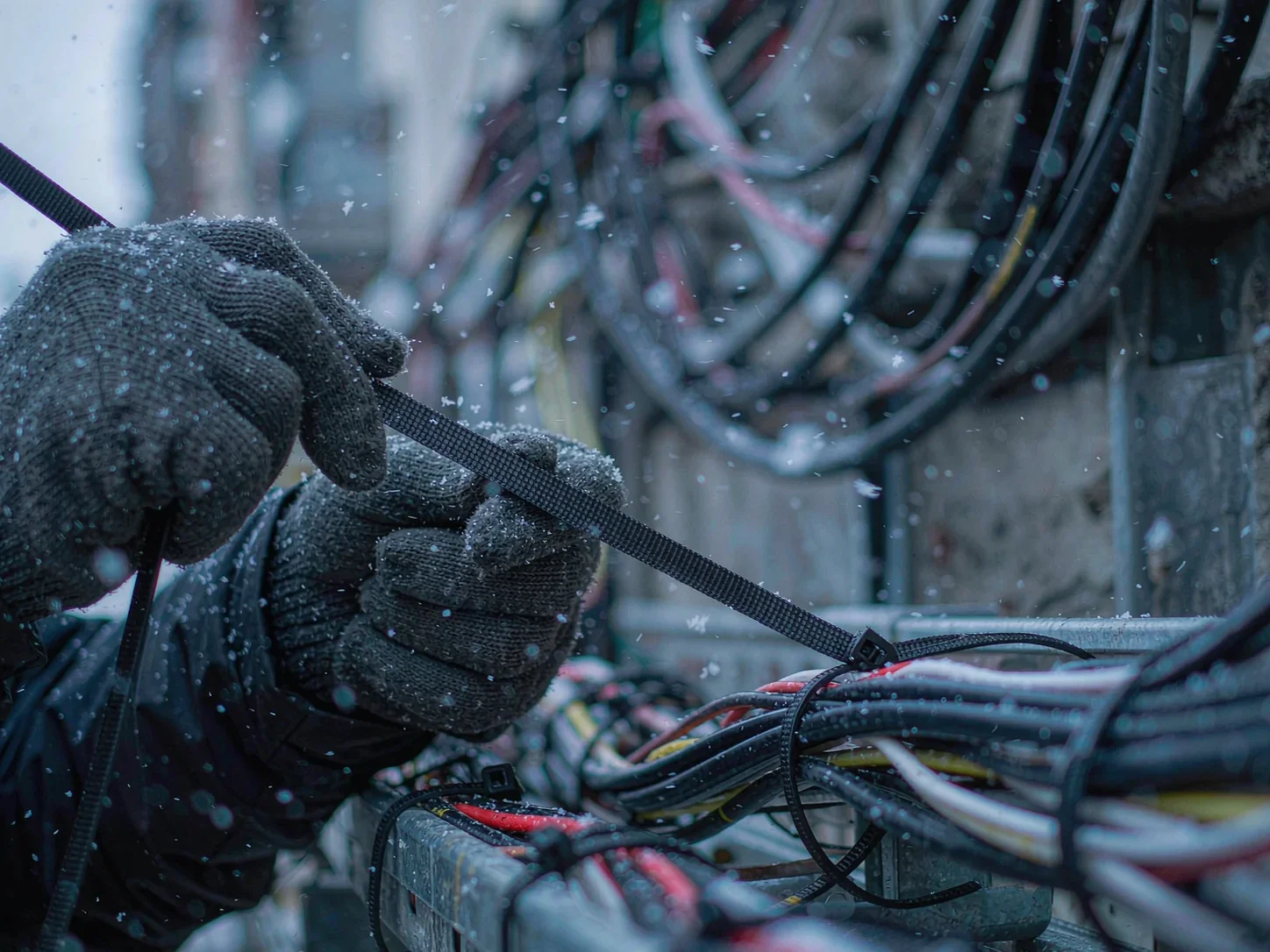
Winter Site Work and OEM Kits
Contractors working through winter need a tie that survives a gloved hand and a cold tail. Distributors can stock the grade under their own label.
عرض خيارات OEM →Material Options for Cold Weather Cable Ties
- Impact-modified PA66: the cost-effective cold grade, installable to -20°C and suitable for most outdoor cabinet and construction work.
- PA12 (nylon 12): lower moisture absorption and better low-temperature impact, installable to -30°C and rated to -40°C in service.
- UV stabilised black: carbon black masterbatch for exposed sites; natural (white) is not recommended outdoors.
- Flame retardant option: UL-94 V2 available where the enclosure specification calls for it, with a small reduction in low-temperature impact.
- Colour: black as standard, custom colours matched to a sample or a Pantone reference for brand and identification work.
How to Specify the Right Grade
- Start with the lowest site temperature, not the average winter figure. A -25°C night decides the grade, not a -5°C afternoon.
- Separate installation from service. If the tie is fitted in a heated workshop and installed later, a cheaper grade may be acceptable.
- Check UV exposure. Cold and sun often come together on solar and high-altitude sites; specify black, stabilised material.
- Allow for gloves. A longer tail and a wider strap are easier to handle at -20°C than a 2.5 mm tie.
- Ask for the batch record. Tensile results and material grade on paper are what an inspector will ask for later.
Private Label Packing for Cold Grade Ties
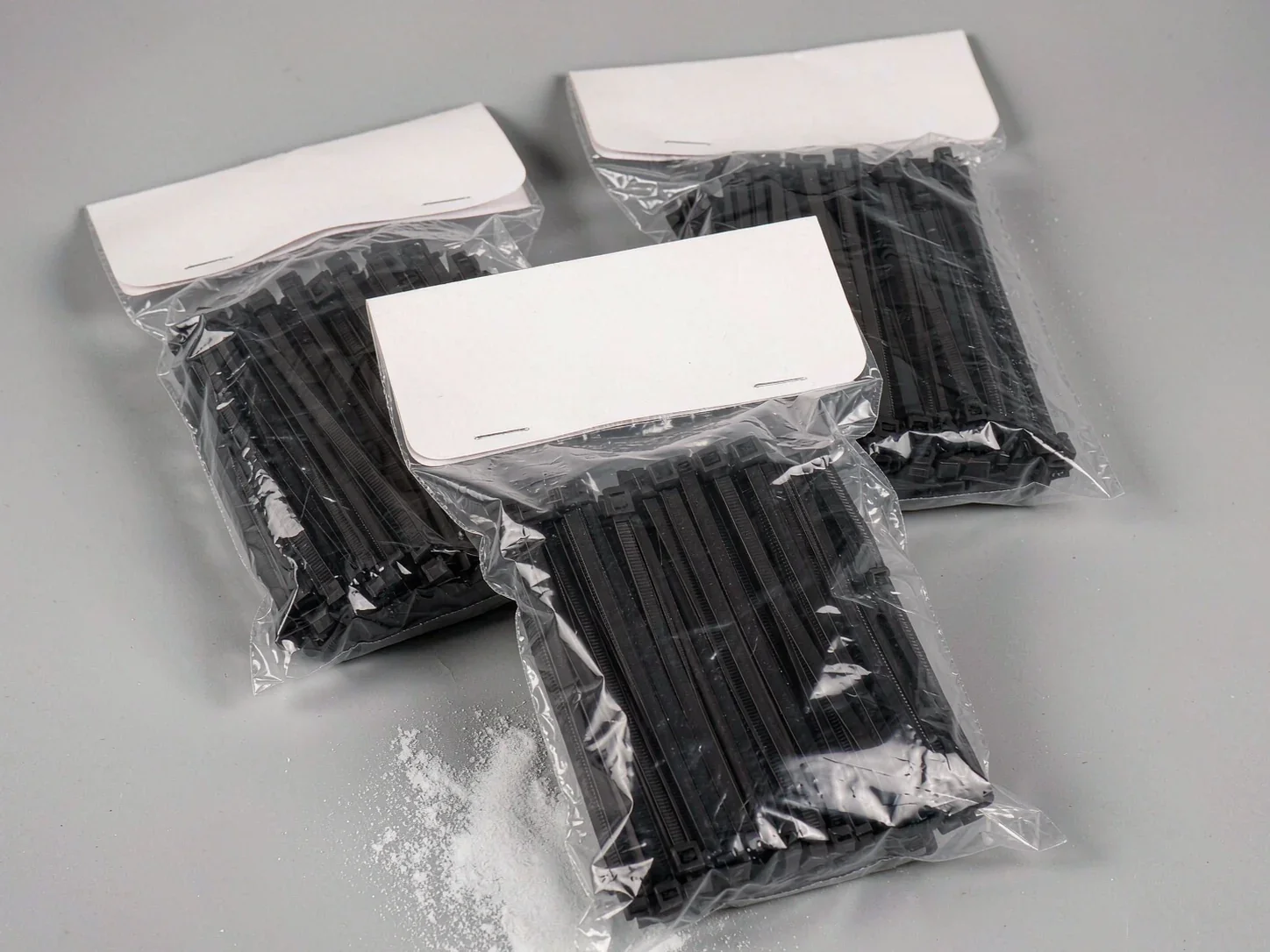
Cold grade ties are usually bought by distributors and contractors who need their own brand on the shelf, not a generic bag. IGOTO packs to your artwork: header card, poly bag with printed label, barcode and export carton, with the grade and temperature range printed on the label rather than left to memory.
- Header card, poly bag or bulk carton, sized to your shelf or your site store
- Label carries the model, tensile strength and service temperature range
- Mixed cartons for a distributor range, or one size per carton for project delivery
How Every Cold Weather Batch Is Tested
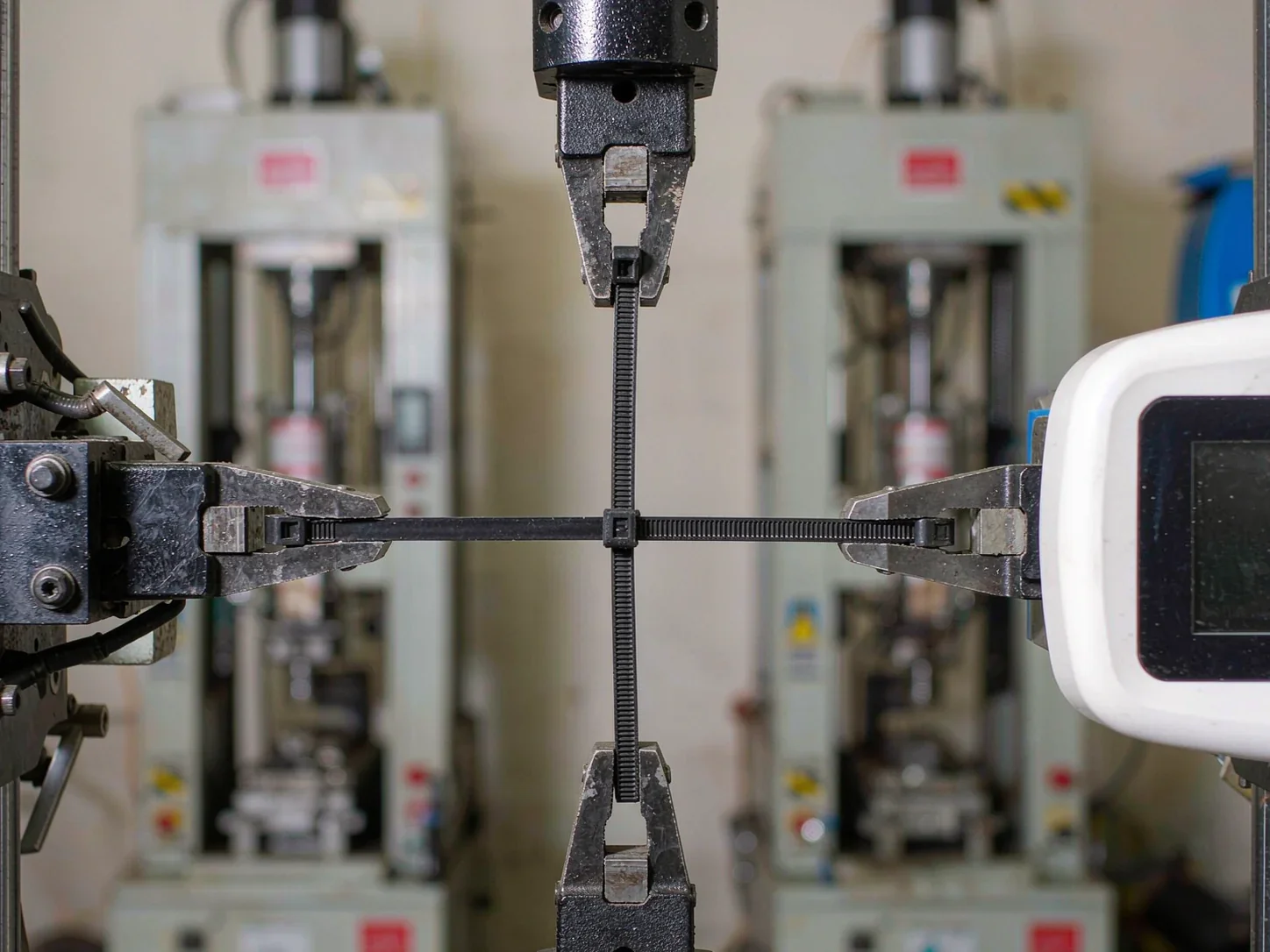
Cold performance is not a claim on a label. It is a measurement, and these are the checks that run on each production batch before the cartons are sealed.
| Test item | الطريقة | What it proves |
|---|---|---|
| قوة الشد الحلقي | Pull test to UL 62275 / EN 50146 at 23°C | The tie holds the load printed on the bag |
| Low-temperature impact | Conditioned at the declared minimum, then looped and struck | The head flexes instead of cracking during installation |
| Locking performance | Pull-back test on the pawl and teeth | No tooth slip under vibration and thermal cycling |
| UV ageing | Accelerated exposure to ISO 4892-3 | Retained strength after years of outdoor exposure |
| Dimensions | Width, thickness and length against the drawing | The tie fits the tool and the cable duct |
| القابلية للاشتعال | UL 94 vertical burn | V2 rating where the enclosure specification requires it |
Test reports are supplied per batch on request, and a witnessed inspection can be arranged before shipment. The مراقبة الجودة page shows the same stations on the factory floor.
Cold Weather Cable Tie FAQ
What is the maximum temperature zip ties can withstand?
For standard nylon 66 cable ties the continuous service limit is about 85°C, with short excursions to roughly 105°C. Heat-stabilised grades extend the continuous figure to about 105°C. Above that, nylon softens and the pawl loses its grip, so the next step is a different polymer: PPS ties are used to about 170-200°C, PEEK to about 250°C, and stainless steel where temperature and fire risk are both present. The melting point of PA66 is around 255°C, but the useful limit is far below it because the tie creeps under load long before it melts.
ما هي بعض روابط الكابلات المقاومة لدرجات الحرارة العالية؟
Heat-stabilised nylon 66 is the common first step, rated to about 105°C for engine bays, lighting and industrial cabinets. Beyond that, PPS ties cover roughly 170-200°C, PEEK ties about 250°C, and ETFE or PTFE ties are used where chemical resistance matters as much as heat. Stainless steel ties are specified for exhaust wrapping, kilns and fire-rated routes because they have no polymer to soften. IGOTO supplies heat-stabilised PA66 as standard and can quote the higher-temperature polymers against a sample.
Do snow tire zip ties work?
They work for a short distance in an emergency, and they are not a substitute for chains or winter tyres. The idea is to loop heavy ties around the tyre and rim so the heads bite into snow, which gives a little extra traction on a stuck vehicle. Two limits matter: a standard nylon tie becomes brittle well below zero and snaps within a few hundred metres, and a broken tie can wrap around the brake caliper or the ABS sensor. If the method is used at all, specify a 4.8 mm PA12 tie for cold impact strength, fit them on driven wheels only, keep the speed very low, and cut every tie off before returning to a public road.
At what temperature do plastic zip ties melt?
There is no single melting point for plastic zip ties because the polymer decides it. Nylon 66 melts at roughly 255°C and nylon 12 at roughly 178-180°C, while PVC ties soften around 80°C. In practice the useful limit is much lower than the melting point: a nylon tie under continuous load begins to creep at around 85°C, and a nylon 12 tie loses rigidity earlier than a nylon 66 tie at the same temperature. That is why cold-resistant PA12 is specified for winter and not for hot enclosures.
Start Your Cold
Resistant Cable Tie Project
Tell us the lowest site temperature, the tie size, the quantity and the packing you need. We will confirm the grade, send samples and quote against a written specification.