




Bridas gruesas: Las 10 mejores marcas y fabricantes
When it comes to thick zip ties, width (in millimetres) will be the first thing you see listed; however, the second measurement will be a tensile strength measurement (in pounds). The two are related, but they can not be used interchangeably. For example, different manufacturers may produce a thick zip tie with a width of 12.7 mm. One manufacturer may produce a 12.7 mm zip tie that has a tensile strength of 250 lbs, while another manufacturer may produce a 12.7 mm zip tie that has a tensile strength of 175 lbs. In these two cases, it is important to note that the tensile strength of the thick zip ties is a factor of both the pawl design and the polymer grade.
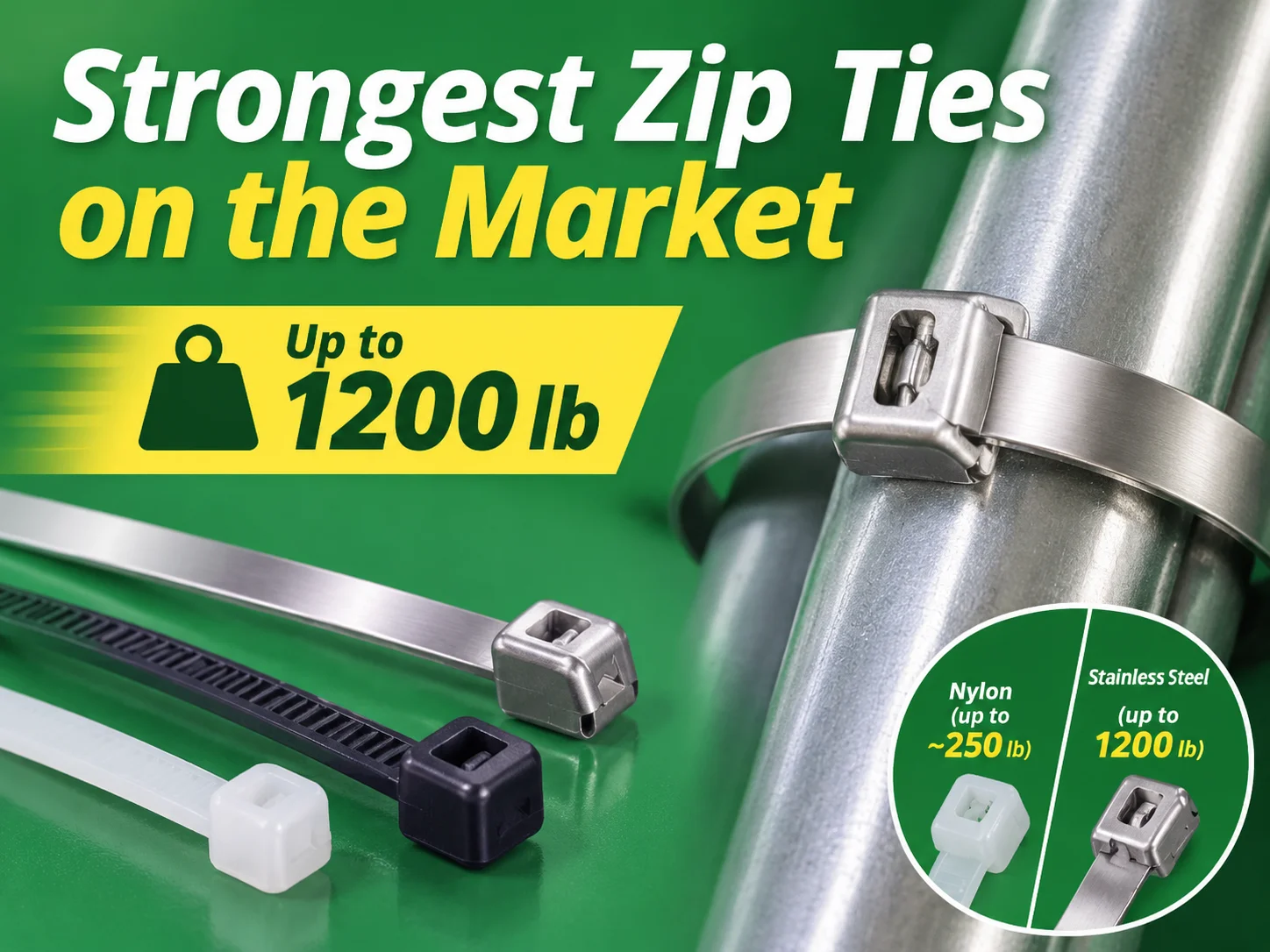
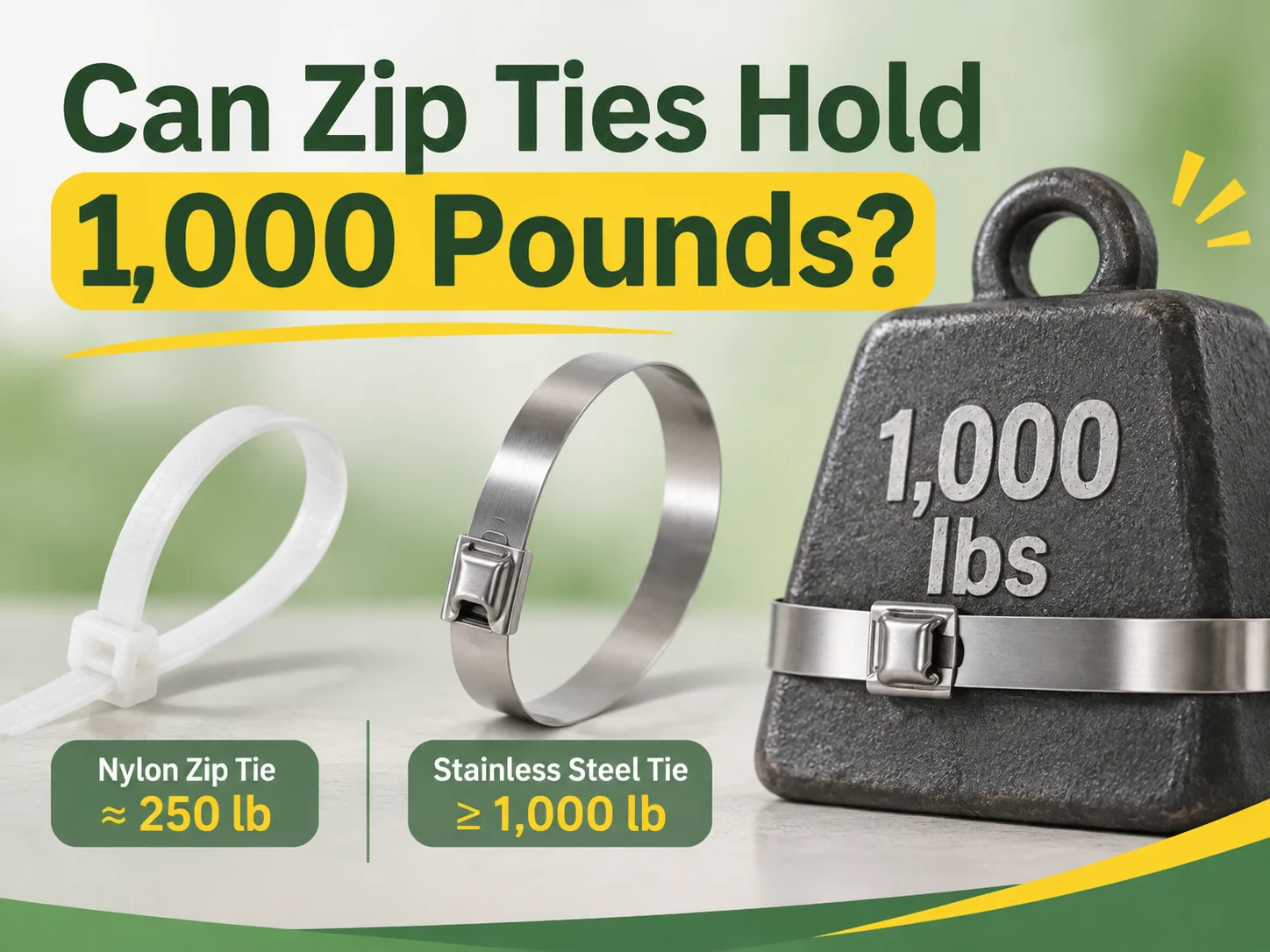
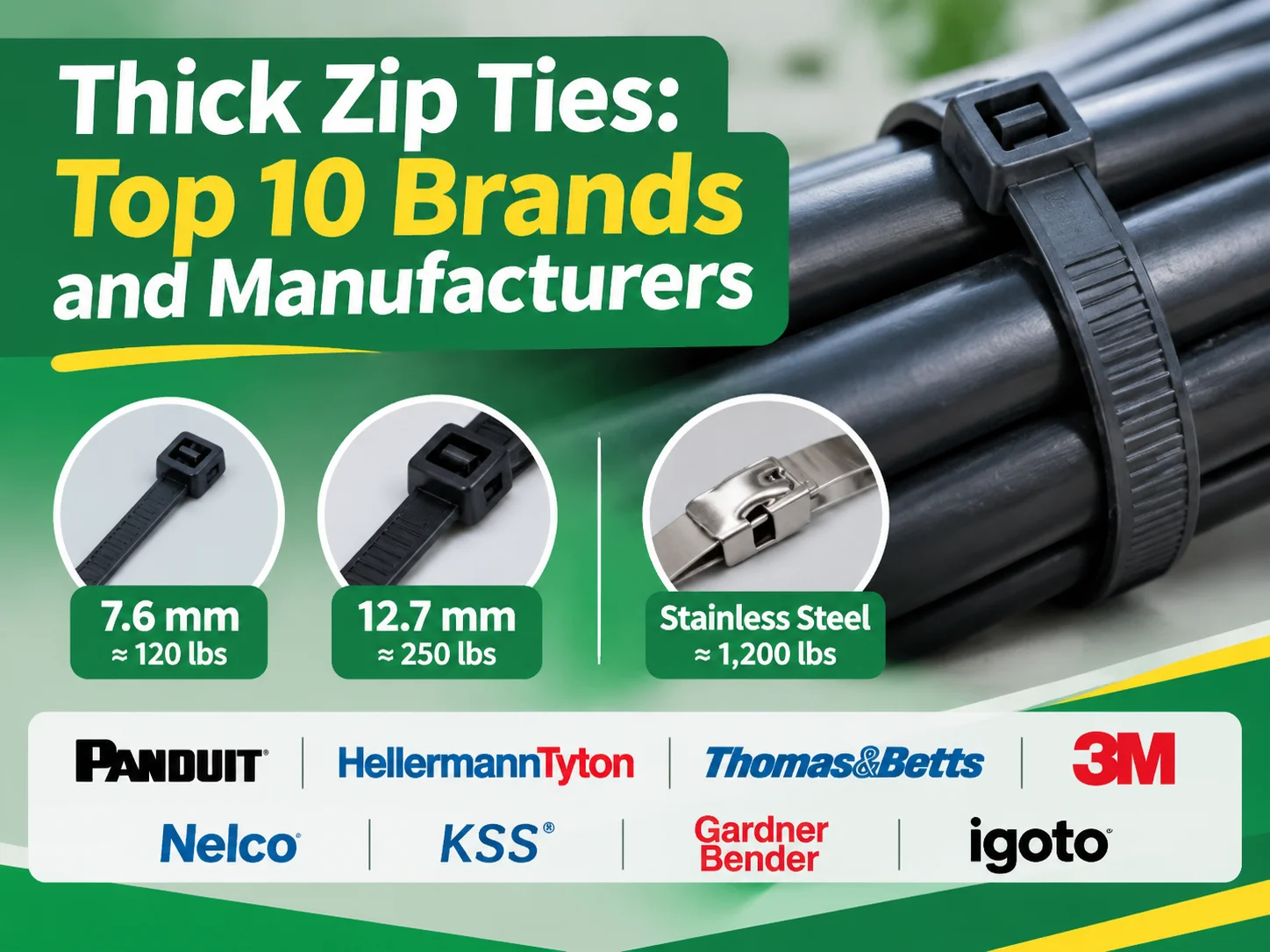
For instance, approximately 7.6 mm wide and 120 lbs tensile would be considered the minimum, while approximately 12.7 mm wide and 250 lbs tensile would be the maximum for standard nylon cable ties. Stainless steel band cable ties have their own design and allow for cable ties with maximum tensile strengths of 1,200 lbs. Prices for 7.6 mm nylon cable ties run from $10 to $25 per hundred, while 12.7 mm nylon cable ties run between $25 and $60 per hundred, and 12.7 mm stainless steel cable ties run between $70 and $180 per hundred. Manufacturers/Pretenders you will want to include when creating your list include: Panduit, HellermannTyton, Thomas & Betts, 3M, Nelco, KSS, Gardner Bender, and Igoto. Of these manufacturers, the top two, Panduit and HellermannTyton, dominate the market when it comes to specification-grade products.
The following sections of the article will define thick zip ties, describe how to create a shortlist, profile the ten manufacturers with strengths and pricing, compare certification levels, and map different applications to their corresponding thick zip tie product types, and finally explain the three-to-one price differential between wholesale and retail prices, and review where the factory supplier fits.
Because width governs tensile strength and bundle capacity, width is the shorthand used for this trade; whereas length only specifies a maximum diameter for a product.
What “Thick” Means in a Zip Tie
Cable ties are made in the following ladder sizes: a miniature 2.5mm (18 lb), standard 4.8mm (50 lb), heavy duty 7.6mm (120 lb), extra heavy duty 9mm (175 lb; some mouldings), and widest standard nylon at 12.7mm (approx. 250 lb). The general classification for anything thick is 7.6mm or larger, and the typical range for industrial cable ties is generally between 7.6mm and 12.7mm.
Two additional variables affect whether a thick tie will function properly; the first is the pawl (locking tooth at the head); since it carries the entire load, a wide strap with a small pawl typically experiences failure at the head rather than in the strap. The second factor is the polymer; nylon 6/6 is the standard polymer used, but the heat-stabilized or UV-stabilized grade maintains its tensile strength in conditions where standard nylon 6/6 loses greater than 20 percent of its tensile strength capabilities. The calculation to determine the proper width for a bundle diameter is independent from determining the proper size of a cable tie; therefore, buyers typically refer to the standard cable tie size chart for this information.
Criteria for Selecting the Ten
The list presented below was developed based on four criteria, not on size. Each brand must have a true heavy-duty line of at least 7.6mm and above, have an identifiable certification for products sold as industrial, provide distribution to project-buyers in more than one region, and provide tensile data that can be verified against a test standard.
For a majority of catalogue brand owners, they either buy solely the same product as every other catalogue owner, or they sell an unbranded and untapped product in plastic, not as a label product. Many of the products in plastic containers are available in bulk, at the lowest price, and are therefore the least traceable. However, for volume purchasers who do not buy brand names, factory-direct suppliers represent the only true substitute.
The Top Ten Manufacturers: What They Are and What They Do
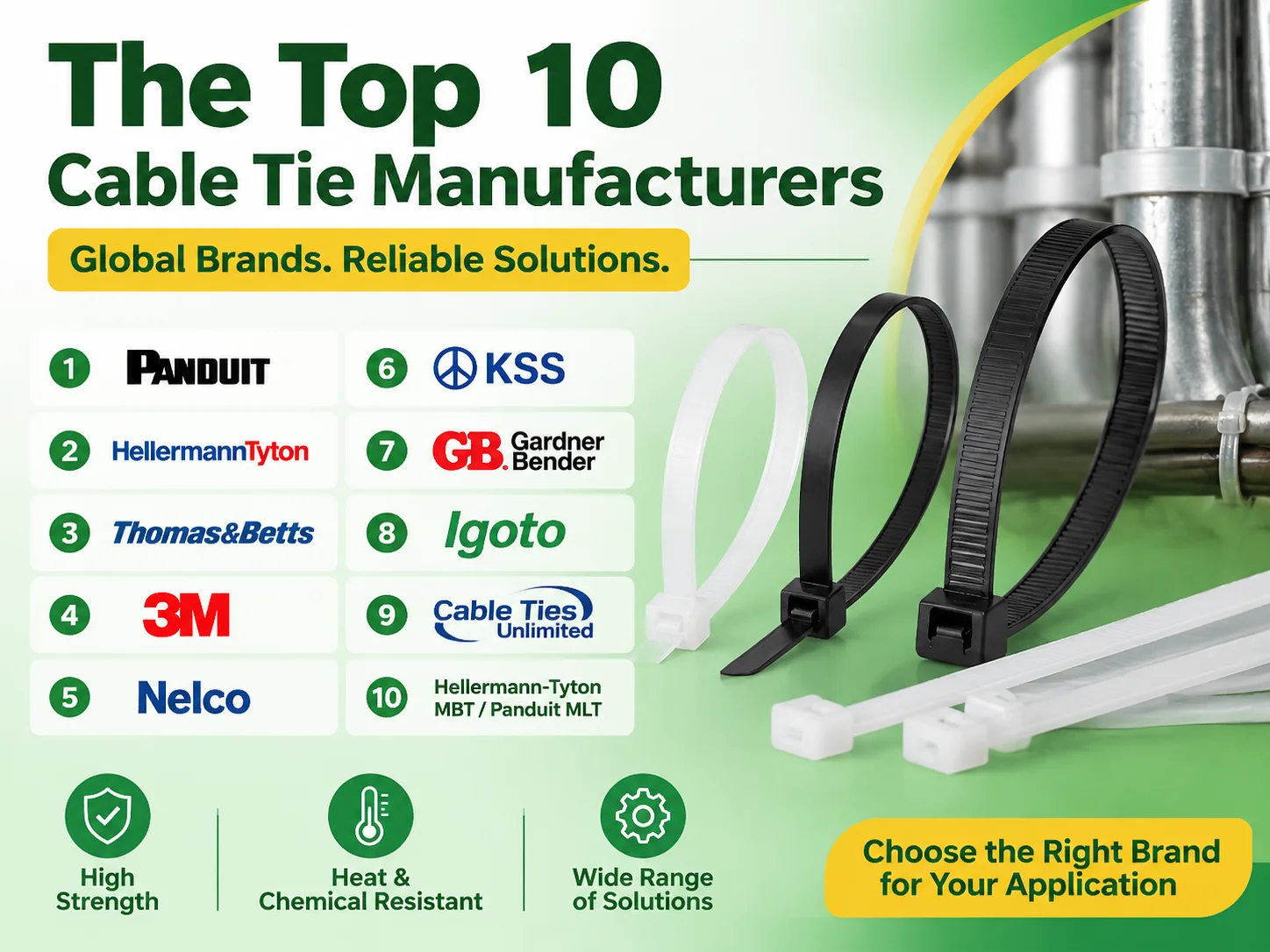
| Marca | Country of Origin — Manufacturer | Product Offerings |
|---|---|---|
| Panduit | USA – Illinois – Industrial Cable Management | Extensive range of industrial solutions, offering metal and nylon at a premium; conventional pricing from 2.5 to 3 times factory |
| HellermanTyton | Germany – Hamburg – Combination of metal and nylon in a single option; varied dependant accessories | Premium solutions priced from 2.0 to 2.5 times factory |
| Thomas & Betts | USA – Tennessee – Considerable reach into Electrical Channels; familiarity with Electrical Suppliers | Mid-Premium priced from 1.8 to 2.2 times factory |
| 3M | USA – Minnesota – Specialties that include sensitive and harsh installations | Premium solutions only |
| Nelco | USA – Massachusetts – Provides specialty products in small packages; provides a wide variety of sizes for electronic assembly | Mid-Premium priced from 1.5 to 2.0 times factory |
| KSS | Japan -Tokyo | Produces exclusively automotive approved precision moulded products — Mid-Premium products priced from 1.8 to 2.3 times factory price |
| Gardner Bender | USA – Wisconsin; Products sold to wholesalers and contractors produced under a uniform quality agreement | Mid-Quality priced from 1.3 to 1.8 times factory price |
| IgotO | China -Zhejiang; Products sold factory-direct, comprising a comprehensive assortment of metal banding products | Baseline product, factory-direct pricing. |
| Cable Ties Unlimited | USA – Mid-size distributor, provides an all-inclusive product line (i.e. cable ties); does not require a minimum order; provides odd sizes and small orders of stainless steel cable ties | Mid-Premium priced from 1.4 to 2.0 times factory price. |
| Hellerman-Tyton MBT and Panduit MLT | manufactured in Germany and USA respectively; | Designed to support and hold weights in excess of 1,200 lbs; Produced of the same metal products manufactured by HellermanTyton – many of these metal products are available through cable tie manufacturing companies at a premium. |
The high price point (2½-3 times that of an equivalent factory) is the major flaw, plus the catalogue depth means it’s often more time-consuming to consider products than it is to install them!
HellermannTyton is probably the best option, as they have a range of metal and nylon available with matching accessories. The MBT metal offers 121-607 lbs of load (a single band) with double wrapped configurations were tested to 7,000N, the nylon offers a similar range. When you are looking for just one vendor to cover both categories of products, it is usually your first choice.
Thomas & Betts (now an ABB brand) is one of those brands that electricians will be familiar with; their products are adequate, but not groundbreaking. Since their engineering is directed towards the contractor market and not for high volume consumers, their prices tend to be lower than those of Panduit.
3M are the specialists when it comes to manufacturing products for harsh environments or with unique installation needs as well as for a small segment of the marketplace. If you have unusual requirements (chemical-resistant tie, or detectable products for food plants), that’s where you want to start your search.
Nelco Products and Cable Ties Unlimited are manufacturers that cater to small quantities of products. Neither of them manufacture items on a large scale, which is important because if you only need 50 stainless ties in four size options, neither of those companies will allow you to place a factory order.
KSS is a Japanese precision moulding manufacturer that focuses on automotive and electronics applications; in both cases the ties have to stand up to certain standards of vibration and heat. Gardner Bender is the retail face of KSS, and is a great product for contractors looking to buy off-the-shelf packages, but do not meet the specifications.
Igoto is the factory-direct option for our customers. It offers a wide variety of products from 2.5mm through 12.7mm in nylon and 4.6mm through 12.7mm stainless band, made from both type 304 and 316 stainless steel with and without coatings, and with width, length and packaging options available per order. Prices listed are factory prices without distributor margin, which is why the same tie sized at 12.7mm can be priced from $0.25 to $0.60 per?
Price Range by Brand Tier:
| Producto | Factory Price | Branded Price |
|---|---|---|
| Nylon 7.6mm x 300mm pack of 100 | $10 to $18 | $22 to $40 |
| Nylon 9mm x 400mm pack of 100 | $15 to $28 | $35 to $55 |
| Nylon 12.7mm x 500mm pack of 100 | $25 to $45 | $60 to $110 |
| Stainless 4.6mm x 200mm pack of 100 | $20 to $35 | $45 to $80 |
| Stainless 12.7mm x 500mm pack of 100 | $70 to $120 | $160 to $300 |
| Tensioning Tool for Stainless | $150 to $300 | $350 to $600 |
The difference indicated by the multiplier factor between the two columns is attributed to the cost of maintaining inventory in a specific region and having a datasheet available for reference, as well as the ability to answer technical questions. For a manufacturer that purchases 1,000 ties per year, that investment would be justifiable; however, for an OEM that purchases 200,000 ties per year, that investment would not be justified, which is why factory-direct supply is available.
Perhaps the most undervalued item in the table is the tensioning tool.
When a stainless steel tie is manually pulled, it often does not produce full tension (half or less than the stated rating) because the tensile rating is created from the stated tension required to grip the locking balls. Hence, if you have a project with 300 ties and do not have any type of tool, then the entire project is going to result in 300 ties that are potentially less than full tension.
Certifications that Matter:
There are four ways to distinguish a specified product from those that can only be purchased. The following are the essential certifications necessary for a tie:
- UL recognition with a file number. The recognition provides the actual test rating for the tie, which may differ from what a seller would like to claim. The file number can be independently verified.
- Tensile testing data against a named standard. A loop tensile number without testing method is merely marketing. Tensile test standards, such as ASTM D2671, are acceptable if the method is provided in the documentation.
- Material declaration. All nylon ties should be identified as nylon 6/6. Stainless steel ties must be rated as either 304 or 316 quality. It is important to know that a 316 tie will cost between 20 and 40 percent more and behave differently when in contact with chlorides.
- Flammability and temperature ratings when applicable. If the application specifies a tunnel or rail car, there will be fire codes associated with these products as well as for plenum-type products; the certifications associated with a product are what audit documentation is looking for, and confirming this is easier before placing your order than after.
Application Selection
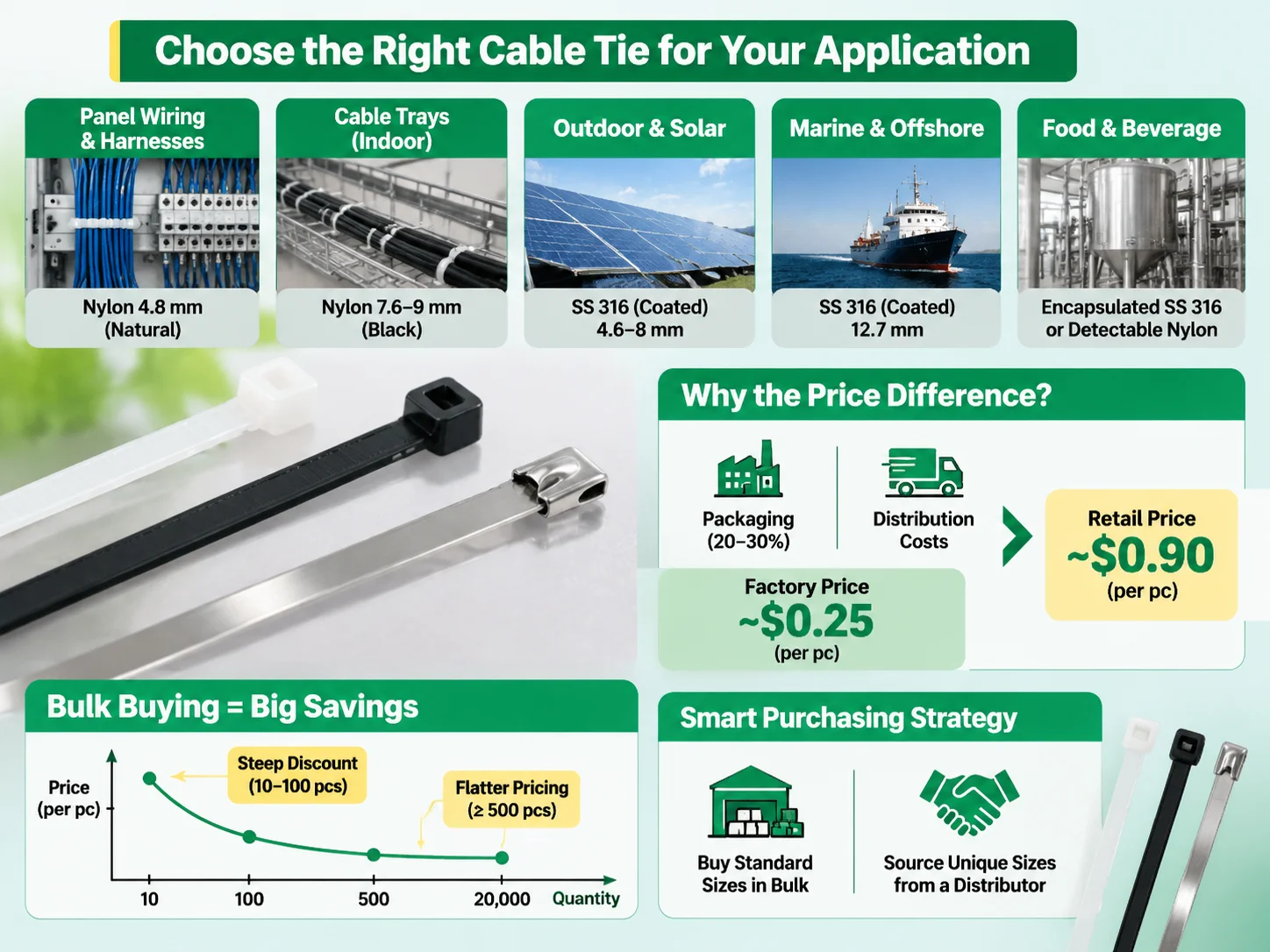
| Aplicación | Producto | Reason |
|---|---|---|
| Panel wiring and harnesses | Traditional Nylon 4.8 mm, Natural | (Economical, Quick, Sufficient for smaller bundles). |
| Cable tray application inside a plant | Traditional Nylon 7.6 mm to 9 mm, Black | Strength for reasonable cost. |
| Use in outdoor and solar power applications | Traditional Stainless Steel 316, 4.6 mm to 8 mm, Coated | Affected by UV and Thermal Cycling and have no Creep. |
| Marine and Offshore use | Traditional Stainless Steel 316, 12.7 mm, Coated | Affected by Salt Spray, Vibration and Fire Load. |
| Use in Food and Beverage Plants | Encapsulated Stainless Steel 316 or Detectable Nylon | Effects of wash-downs, need for detection and no sharp cut ends. |
| Use in Heavy Cable Riser | Traditional Stainless Steel 12.7 mm, Double Wrapped | Loads beyond the capacity of a single band. |
Choice of nylon represents an inconvenience for failure; choice of stainless represents a cost and/or safety reason. The guide for heavy-duty cable ties is developed based on the width and the material selection process as stated.
Wholesaler and Retailer: Possible Reason for Price Difference
A factory price for a 12.7 mm Nylon Tie will typically be around $0.25 each (or less) compared to approximately $0.90 at a retail peg (some stores offer them for even more than this). The difference is not a markup on the same item, but instead is due to three distinct cost factors.
Embalaje – a retail bag of 100 with a printed header produces more costs per unit than a bulk bag of 1,000 and has higher labour costs associated with producing the package. This accounts for approximately 20-30% of the overall difference in price.
Distribution – the distribution process includes maintaining stock on hand, providing credit to customers, handling returns, and staffing a counter.This cost is a real expense that gets absorbed into the per-unit cost of a product, which is also why a product’s trade price will generally be higher than that of the factory.
When it comes to volume, the steepest discounting occurs between 10 and 100 pieces with the curve flattening out at 500 pieces; this is due to fixed costs associated with set-up and inspection, rather than materials. A buyer that orders 200 pieces will be charged close to the 100-piece price point, while a buyer that orders 20,000 will be able to negotiate a completely different pricing structure.
In a project, an effective split would be to purchase bulk quantities of the most common sizes (standard sizes) and to source the unique sizes through a distributor. If a plant were to standardise on three widths of cable ties and one size of stainless cable tie, it could purchase all of these items in bulk within a single container. Any one-off requirements can typically be sourced from a local distributor’s inventory. Because the retail unit is normally packaged in packs of 100 cable ties, having a standard 8-inch pack as the typical retail unit is a good example of how packaging drives a shelf price, rather than the manufacturer’s suggested retail price (MSRP) based on the highest price point.
Where Does Igoto Fit In?
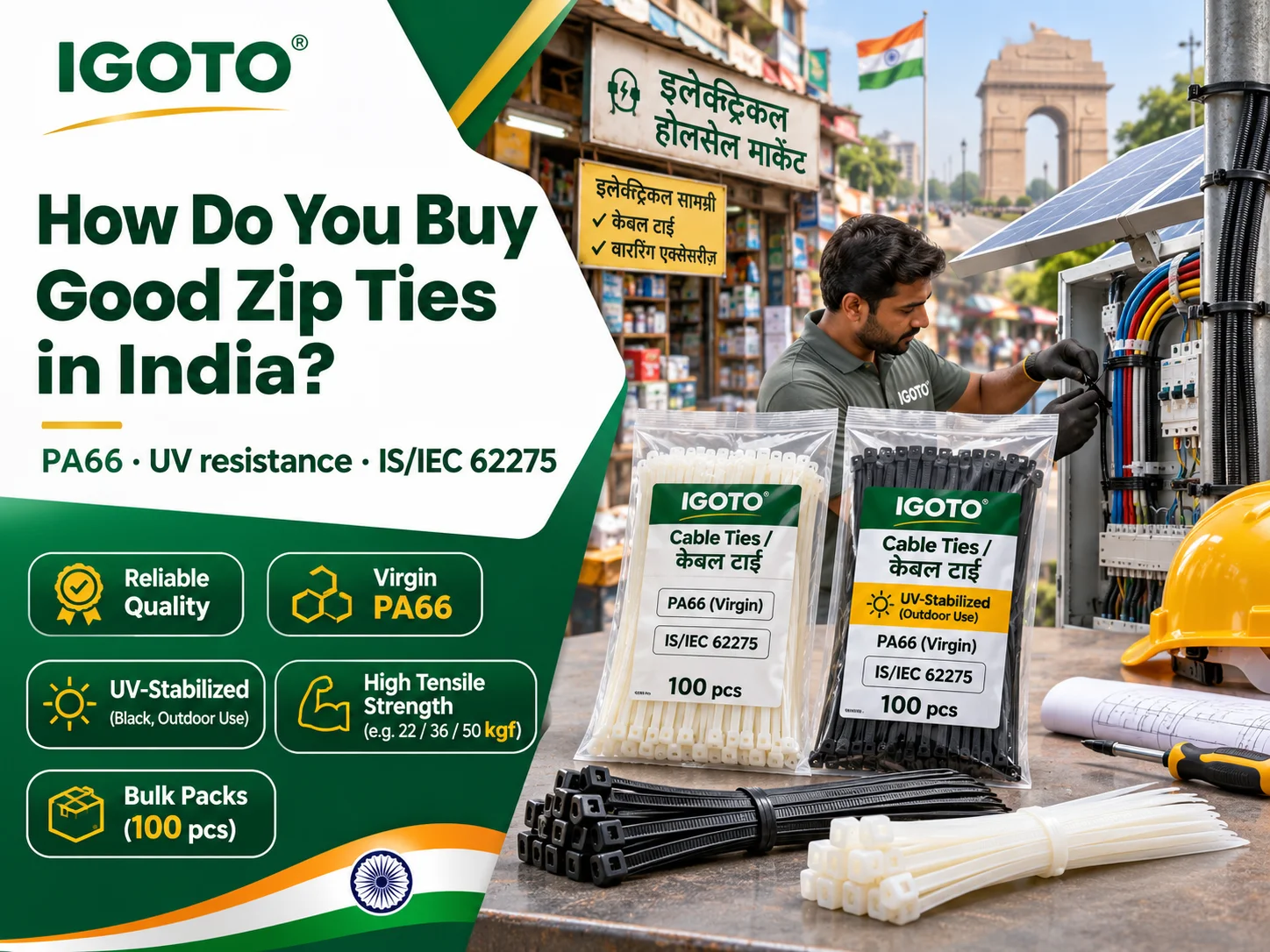
Igoto Manufacturers produces our cable ties from a range of sizes, covering sizes from 2.5mm to 12.7mm in Nylon 6/6 and sizes from 4.6mm to 12.7mm using a stainless band from both 304 and 316 grades, in both coated and uncoated forms. The vast majority of cable tie volume is shipped to distributors, panel builders and OEMs, who typically have a need for a standard product within multiple sizes, rather than a single, hero-product.
Heavy Duty Cable Tie manufacturing is structured as contracts for long-term supply and for container quantities, this is what creates a factory price as compared to a distributor’s price.
The standard volume product for general cable work in most of the industry is the 8” Black UV Cable Tie, which shows the most price difference to a branded equivalent throughout the industry.
We will not make the claim that a nylon cable tie can hold 1000 pounds. There are no nylon ties on the market capable of such a weight, and a customer finding this out in the field will not return; therefore, this is not good business practice and not good engineering.
Preguntas Frecuentes
What is the widest nylon cable tie available?
The widest practical nylon tie available is 12.7mm (0.5″), with a rating of around 250 pounds. Ties above this width are used with a different family of products — stainless steel band ties. The largest stainless steel band ties from Panduit and Hellermann/Tyton can support up to and over 1200 pounds. The limitation of weight for nylon ties is due to the moulded pawl (the locking mechanism); when the pawl fails, the tie fails long before the strap.
Are the more expensive cable ties worth the extra cost?
The answer depends on the application. For cable bundles within an enclosure, a factory tie functions the same as a branded tie at one-third the cost. For an installed outdoor application or one where safety is paramount, the extra cost of the branded product is offset by having an established supplier who stands behind their products with a verifiable certification, a documented test report, and the ability to answer customer questions.
The tie style to be avoided is a generic brand with a photocopied certificate.
What is the contrast between Heavy Duty and Thick Zip Ties?
They are two ways of defining the identical product. Heavy Duty is a tensile classification, generally 120 lbs. and up, which corresponds to a tie width of 7.6 mm; while Thick is a physical description of the same strap. For example, a 9 mm tie is referred to as both Thick and Heavy Duty, and a 12.7 mm is the heaviest standard size both in definition.
What tensile strength can a 12.7 mm zip tie support?
It has a tensile strength of about 250 lbs. As a loop tension on a new tie at room temperature, it has a working load of approximately 60 lbs, assuming a safety factor of 4 to 1. In use, the rating decreases due to exposure to sharp edges, heat, and UV rays. Using two ties around the same set of bundles does not increase the load capacity because both ties will rarely support the load equally.
Sources
- Panduit – Cable Ties and Pan-Steel Stainless Steel Cable Tie Systems.
- HellermannTyton – Cable Ties Range and MBT Metal Ties
- Thomas & Betts – Cable Management and Support Products
- UL Solutions – Cable Tie Testing and Recognition.
- Cable Ties Unlimited – Tensile Ratings and Material Data
Summary
Las bridas gruesas se determinan por el ancho, siendo el ancho máximo de 12.7 mm, con una resistencia a la tracción de aproximadamente 250 lbs para nylon; y 250 lbs para todas las bandas de acero inoxidable que pertenecen a una categoría de producto diferente, generalmente cuestan más y tienen requisitos de instalación totalmente diferentes.
Deciding to utilize an OEM branded tie vs. a no-name tie is a decision regarding recourse. The difference in price between an OEM branded tie with the same attributes and a factory tie can be as much as three times, with very little variance in performance between the two, with what you receive by spending more is a certificate, a data sheet and someone to call if you need assistance. For a manufacturing facility, that is often worth the investment, while for an original equipment manufacturer (OEM) shipping the product, it seldom is.