




Хомуты на липучках: Когда использовать их вместо стяжек
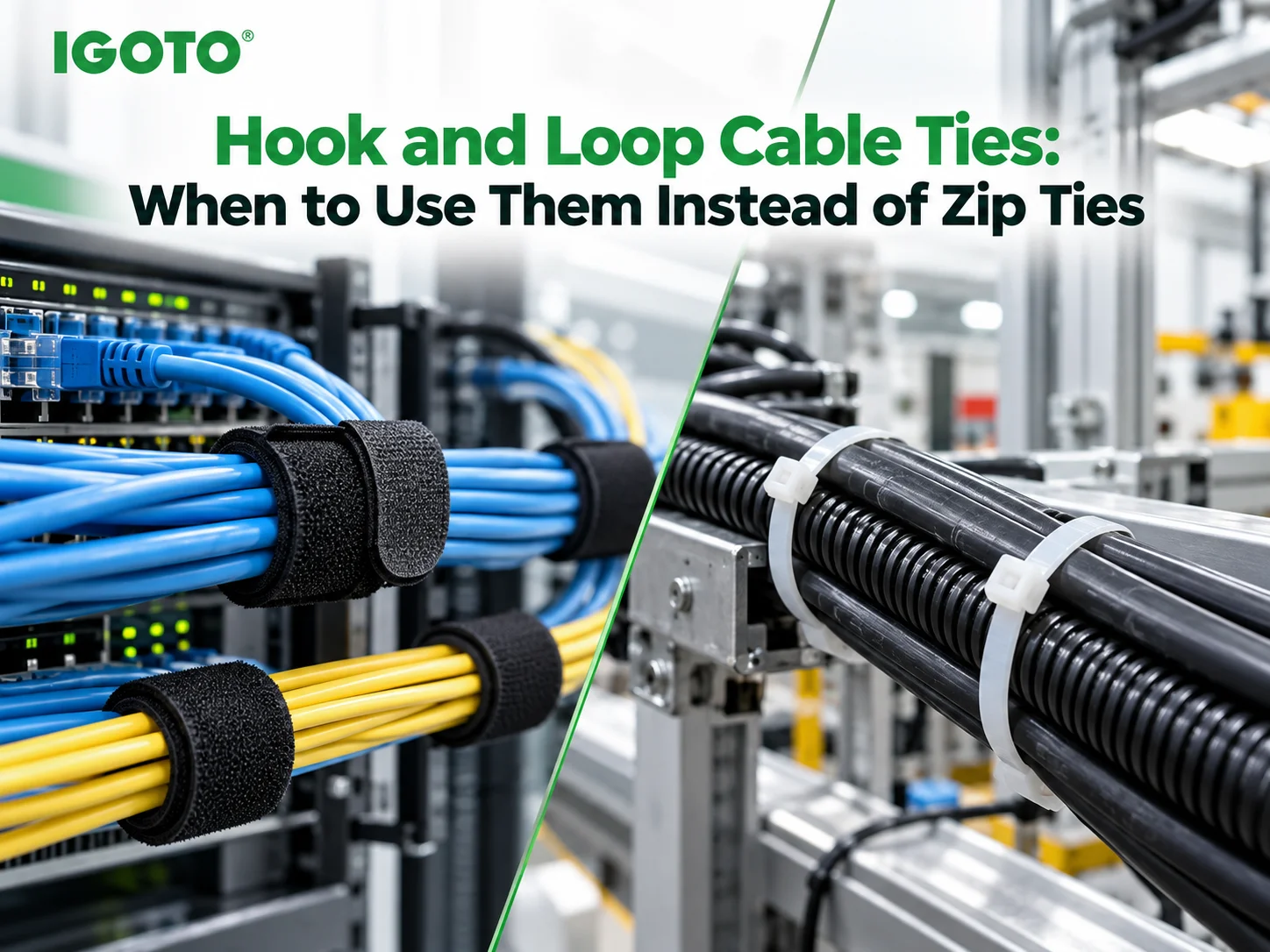
Hook and loop cable ties have proven to be an excellent choice in numerous server rooms, AV racks, and even home offices. These tie types come with their own benefits; they are easy to open and close by hand, they do not exert excessive load on cables, and you have the possibility to reroute a bundle within mere seconds. However, they are not the best solution to all cable management issues. If a fabric strap is used on a rooftop solar system, in the vicinity of a hot motor or even on a vibrating machine, it can become the weakest element of the system. This guide provides a pragmatic approach to decision-making: when hook and loop cable ties are appropriate, when they are not, and which other solutions can be utilized in these situations.
Hook and loop cable ties are reusable fabric straps composed of a hook side and a loop side, which stick to each other when pressed together. The main advantage of these straps is that they can be operated manually, they apply low or even force on cables, and they are a good choice in case of frequent addition of new elements to bundles, such as data center and server rack cabling, fiber optic patch cords, AV racks, or office desks. However, this wire connection method has several downsides such as the low holding strength, an ability to get dirty and wet easily, as well as susceptibility to degradation (the degree of degradation depends on the length of exposure).
What Are Hook and Loop Cable Ties?
A hook and loop tie is a string of fabric, typically from nylon or polyester, with small hooks on one side and soft loops on the other. When two sides of the tie are pressed together, the hooks connect with the loops; however, when the two sides are pulled apart, the tie can easily be separated. The technology was invented by a Swiss inventor George de Mestral, who was inspired by thorns that were stuck to his clothes, and thus, it is often referred to as Velcro. Strictly speaking, VELCRO is a trademark, and as such, general terms that can be used are hook and loop ties, cable ties of Velcro type or reusable ties.
In order to perform efficient cable management, you can choose between three varieties:
- -cut ties with a slot or a buckle on one side able to wrap around the bundle.
-rolls that are also called one-wrap tape. The roll contains a hook on one side and a loop on the other, and is normally cut to required size on the spot.
-cinch ties that have a plastic or metal buckle and help do tighter packing of large items.
If you compare hook and loop with different temporary fastening methods such as reusable plastic ties or cam buckles, our guide to многоразовым решениям для крепления для временных установок covers those options. This article focuses on one question that matters to installers and buyers: hook and loop or nylon cable ties?
Hook and Loop vs Nylon Cable Ties: The Core Difference
Both products have cable collection characteristics, but they serve conflicting purposes. Hook and loop straps have a primary focus on accessibility and protection of the cables.. Nylon cable ties are focused on locking, being permanent and being durable as illustrated below.
| Фактор | Hook and loop cable ties | Nylon 6/6 cable ties |
|---|---|---|
| Повторное использование | Opened and closed many times by hand | Single use (release-type ties are an exception) |
| Pressure on cables | Low, spread over a wide strap | Can be high if over-tightened |
| Holding strength | Moderate; depends on overlap length and cleanliness | Defined minimum loop tensile strength, from about 8 kg to 22 kg for common sizes and higher for heavy-duty ties |
| Permanence and tamper resistance | Easily removed by anyone | Locked; must be cut to remove |
| Outdoor and UV exposure | Varies widely by fabric; many are intended for indoor use | Excellent in UV-stabilized black grades |
| Температура | Adhesives, fabric and hooks can soften or lose grip | Standard grades commonly rated to about 85 °C, heat-stabilized grades higher |
| Vibration and oil | Hooks can work loose; dirt and oil reduce grip | Positive ratchet lock holds under vibration |
| Профиль | Wide, soft strap | Narrow, compact head and strap |
| Cost per fixing | Higher per piece, lower if reused many times | Very low per piece |
Simply put, hook and loop straps win in stores whilst nylon cable ties are used for industrial purposes.
When Hook and Loop Cable Ties Are the Right Choice
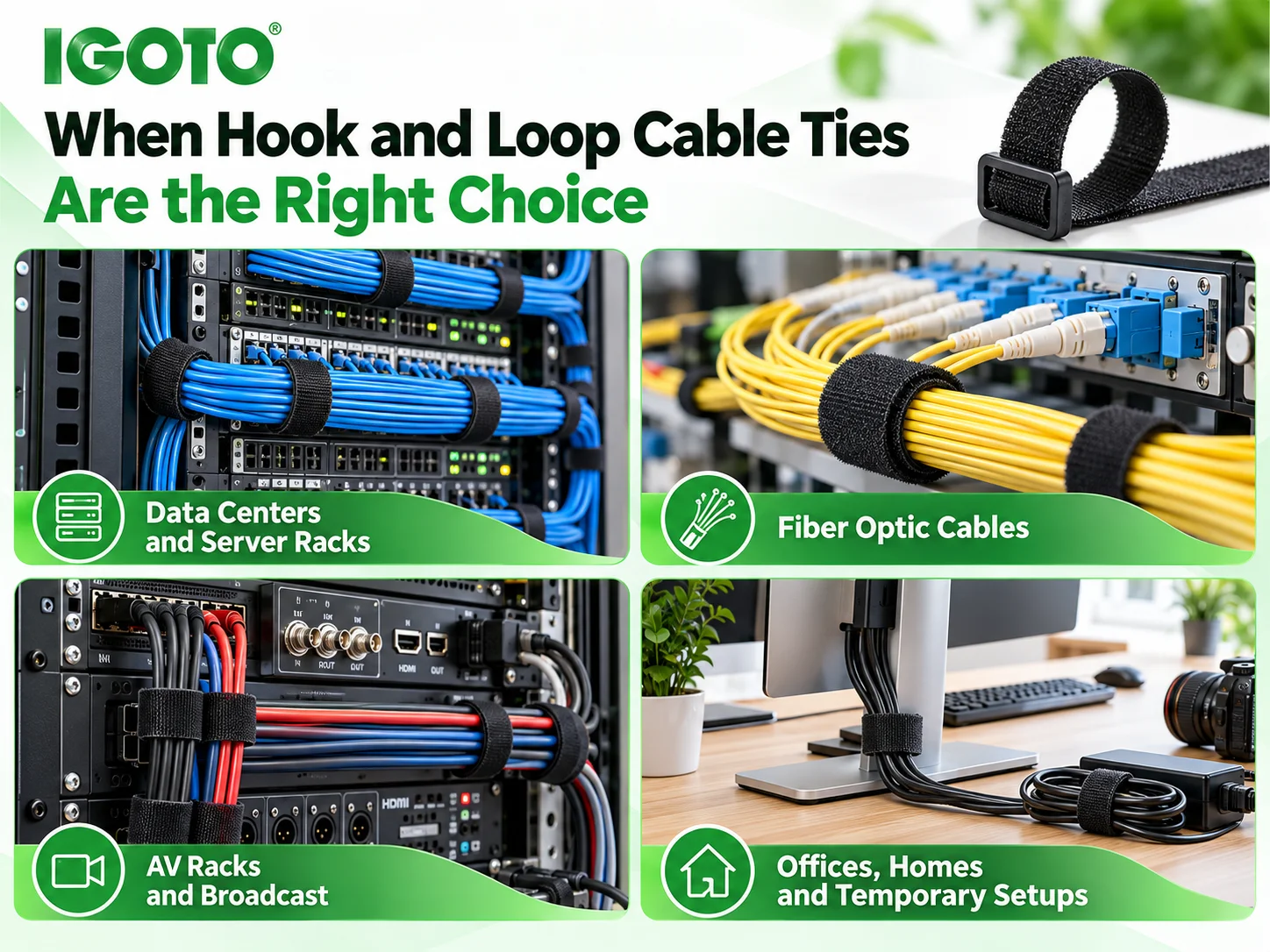
Hook and loop cable ties are most commonly used in case of server racks and data centres. Patch cords are removed and put back in place, and each nylon tie would have to be removed and put on every time. TIA-568 specifies that patch cords should be tied loosely and easily released, and BICSI installation guidelines provide for the use of hook and loop straps that allow for maintaining the integrity of the cables. The same applies to network closets, patch panels, and any structured cable runs in cabinets.
Fiber Optic Cables
Hook and loop cable ties are a popular choice for organizing fiber optic cables as there is a considerable danger for damaging the cables under weight and sharp bends. A narrow nylon strap squeezed around the patch cords could create a force point and result in greater signal loss or damage of fibers. A soft strap therefore distributes weight evenly. However, if using nylon straps one needs to use them loosely.
AV Racks
The audio-visual systems use many types of wires. Therefore, they are frequently reconfigured so that the changes in wiring can be frequent. The AVIXA F502.01 states that hook and loop cable ties must be used for linking wires within AV racks, with uneven spacing of different links.
Offices and Homes
Desks, TV walls, gaming setups as well as shows and exhibitions utilization reusable cable ties in their cable management systems. This is because technology changes and no one would like to reach for the tools that would be needed for cable tie removal.
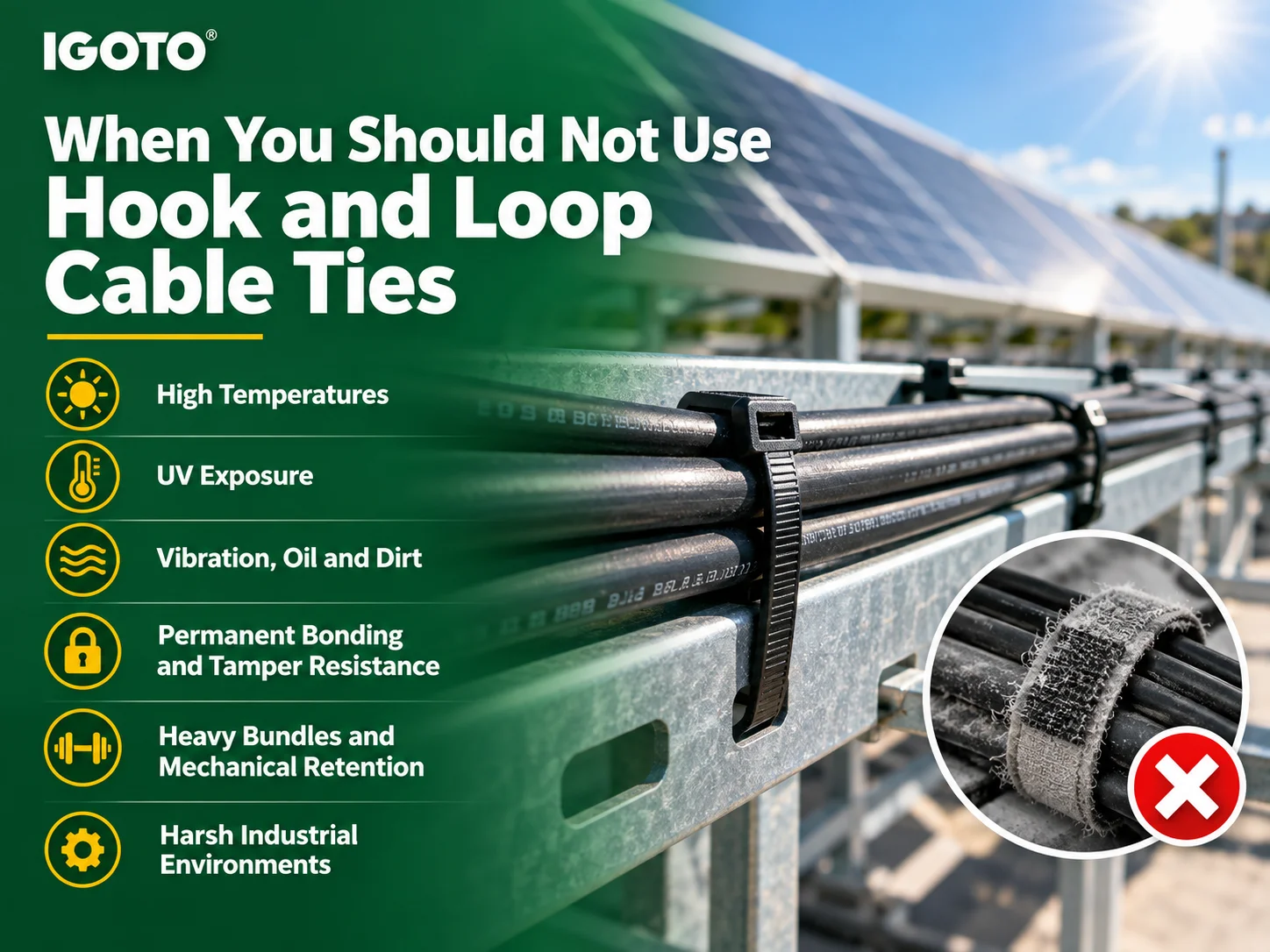
When You Should Not Use Hook and Loop Cable Ties
In many comparison articles, this is the segment that is often ignored, and this is where it is easy for installations to go wrong. The same properties that make hook and loop useful – lightweight fabric, simple disengagement, and friction-based hold – can work against it in extreme or permanent applications.
Long-Term Outdoor and UV Exposure
The queries on outdoor utilization of hook and loop cable ties is have an ambiguous solution: It depends on the material used, and in most cases such approach is not advisable for outdoor tying of cables in the long term. Even though polyester hook and loop performs better in relation to UV and moisture than nylon option, a large number of solutions for cable placement are designed for indoor utilization. Additionally, water, mud, pollen, and frost may obstruct the work of hook and loop systems over time. For solar arrays, telecom towers, outdoor lighting and CCTV runs, UV-resistant black nylon cable ties are the more reliable option, and our guide on как долго стяжки служат на улице explains why carbon-black stabilization matters.
High Temperatures
When fabric straps are placed in areas with engines, heaters, lighting or in hot surroundings, they may begin to lose their holding power. The most secure choice would be nylon wires that have been rated at the temperature. For more options, check our guideline on high-temperature tie wraps .
Vibration, Oil and Dirt
In industrial machines, vehicles and pumping apparatuses, the continuous movement may lead to the opening of the hook and loop fastening, as well as the contamination of the hook and the fastening assembly with oil and dust, which leads to the loss of its effectiveness. Such type of fastening is termed a positive ratchet lock and distinguishes itself by the fact that it does not depend on friction.
Permanent Routing and Tamper Resistance
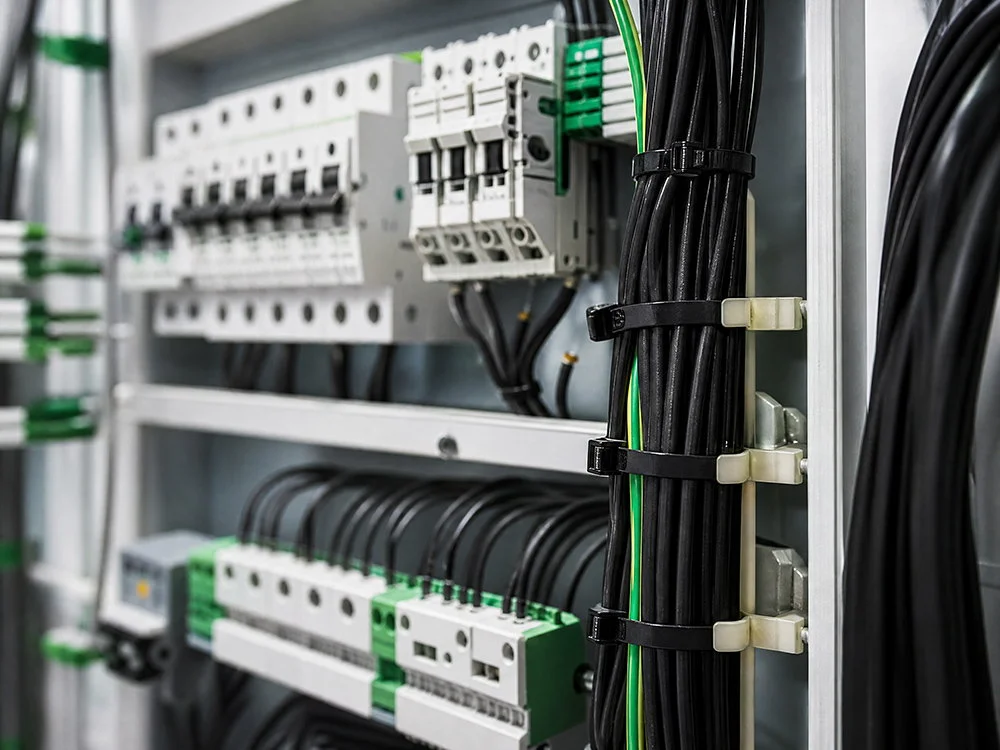
Easy removal is an inconvenience in electrical panels, public spaces, transportation, or sites where people can get to cables. A locked nylon tie reveals its broken state at a glance and cannot be unplugged without a special tool.
Heavy Bundles and Mechanical Retention
The strength of hook and loop is determined by the amount of overlap and the cleanliness of the surfaces. In case of holding heavy cables, hoses and bundles against the force of gravity or movements, you need to select a tie with a specified tensile strength, such as a стяжку из высокопрочного нейлона rated for a weight of 22 kg (roughly 50 lb) or heavier variant depending on the load requirements.
Fire-Rated and Plenum Spaces
Certain fire performance requirements must be met by fastening the materials used for air-handling spaces and public buildings. There are hook and loop straps that are rated for plenum use, but not every fabric strap is compliant. Read the relevant listing and consider our brief guide to cable ties rated for plenum-rated cable ties before ordering any materials to be used in an air-handling environment. In extreme fire, chemical and offshore conditions, stainless steel straps may be required.
Don’t assume that the hook and loop strap is appropriate for external or air-handling applications as well as use in high-temperature environments simply because it works well on your desk. Instead, it is important to verify the characteristics of the fabric.
A Simple Decision Framework: Hook and Loop or Nylon?
In order to answer these questions, it is also necessary to reply “yes” the first time.
1. Will the bundles be re-routed, added, or checked periodically? In case the answer is positive, one should employ hook and loop technology first.
2. Are there any cables that are sensitive to pressure like fiber, high category twisted pair or coax? In that case, one needs to choose hook and loop strips or loosely fitted nylon ties.
3. Is the installation outdoors and under direct sunlight for years? In this case, people should turn to UV-stabilized black nylon ties.
4. Is the environment hot, oily, vibrating, dirty? If the answer is yes use nylon ties with a suitable temperature rating.
5. Does the fixing need to be permanent or tamper evident? In that case people should use locks made of nylon.
6. Does the installation contain heavy components that will experience pulling? Otherwise one can use solid nylon ties.
7. Is the installation in the plenum, fire rated or extreme condition? In this case people need to use plenum rated goods or stainless steel.
The Best Answer Is Often Both
Numerous professional setups are a union of both approaches. A regular server room applies the use of nylon ties to affix cable runs to both ladder racks and cable trays, while the same equipment will use hook and loop ties for patch cables that are constantly getting moved. In a solar power project, its UV nylon ties are used to attach string cables onto racking while hook and loop ties let spare leads stay in place in the inverter room. By picking fastening means based on their environment, a professional makes the installation efficient and easy to maintain. For panel and cabinet work, see our electrical wiring and cable management solutions.
How to Use Hook and Loop Cable Ties Correctly
- Opt for a width and length that ensures adequate lap. Longer laps of hook and loop surfaces guarantee better holding power.
- Wrap the strap firmly, but not tightly. It must hold the bundle securely, while the cable sheaths remain in shape.
- Attach the straps in an irregular manner, when adding straps to long sections of twisted-pair cable.
- Maintain cleanliness of the fastening surfaces. Dust, lint, and oils diminish the grip strength.
- Make use of color-coded straps to mark circuits, racks, and types of cables.
- Use new straps. After many applications, flat hooks and fuzz loops do not hold well.
How to Use Nylon Cable Ties Without Damaging Cables
A large amount of the negative feedback regarding nylon ties within data cabling could be linked to over-tightening rather than some intrinsic inadequacy of the ties. When used appropriately, nylon cable ties are considered to be the benchmark in terms of long-lasting cable ties.
- When using nylon ties, make sure to tighten the strap enough just so as not to allow it to move; do not put any pressure on the cable jacket.
If possible, use an adjustable setting tool so that the needed results would be obtained every time, and cut the excess strap level with the rest of the bundles.
Make sure to use the right width for the cable tie, for example, a wider cable tie would better distribute the load with large bundles of cables. - Match the grade to the environment: стандартные нейлоновые кабельные зажимы indoors, UV black outdoors, heat-stabilized near heat, flame-retardant where fire ratings apply.
Never tighten your nylon cable tie too much, particularly when working with fiber-optic cables. If a tie leaves an obvious dent on the cable, it has been overtightened.
Why Quality Nylon Cable Ties Still Matter
While hook and loop straps have found their niche in most situations, nylon cable ties still form the backbone of almost any assembly of trays, panels, machines, vehicles and outdoor runs. This is the point where quality pleads its case. IGOTO cable ties are made of pure nylon 6/6 (Ascend Vydyne 21SPC resin), UL-approved and have UL 94 V-2 rating. They are designed to function in the temperature range from -35 °C to +85 °C. IGOTO’s offer includes the various models of cables ranging from standard ones with the width of 2.5 mm to 4.8 mm and UV-treated outdoor cables. If you are specifying fasteners for a data center, panel shop or solar project, contact IGOTO for samples and pricing.
Часто задаваемые вопросы
Are hook and loop cable ties better than zip ties?
Neither option is superior in every situation. Hook and loop cable ties works best with cables that frequently change locations or cables which can be damaged easily. Nylon zip ties are preferable when a permanent fastening or fastening in very harsh environments, where temperature, vibrations or possibility of tempering are important.
Can hook and loop cable ties be used outdoors?
Some types of polyester based straps are suitable for outdoor usage but most types of cable management straps are created for indoor conditions.
When the cable system is exposed to sunlight, the best choice will be UV-resistant nylon cable ties.
Why do data centers use hook and loop instead of zip ties?
In data centers cable systems are modifies often. Also, impacted nylon cable ties can cause change in structure of cables (twisted pair or fiber). It is generally recommended by the known organizations TIA, BICSI, AVIXA to do fastening in loose way to enable re-routing without cutting.
Can you use zip ties on fiber optic cables?
It’s possible to use them, but the application has to be loose enough to prevent fiber break or any kind of deformation. Many installers prefer to use hook and loop straps for fiber patch cords. They use nylon ties only to fix the protected fiber cable to trays and fixture.
How many times can hook and loop cable ties be reused?
Good-quality straps can be opened and closed many times, but grip declines as hooks flatten and loops collect dust and lint. Replace straps that no longer hold firmly.
Are hook and loop cable ties strong enough for heavy cables?
For light and medium bundles, yes. For heavy cables, hoses or anything that must resist pulling, gravity or vibration, use nylon cable ties with a defined tensile rating instead.
Ссылки
- Standards Frequently Asked Questions, BICSI
- Rack Building for Audiovisual Systems (F502.01), AVIXA
- Hook-and-loop fastener, Wikipedia
- Кабельный зажим, Википедия
Заключение
Hook and loop cable ties are the right fastener wherever cables change often and must be treated gently: server racks, data centers, fiber patching, AV racks and desks. They are the wrong fastener where cables must stay put for years in sunlight, heat, vibration or dirt, or where fixings must resist tampering and heavy loads. In those places, nylon 6/6 cable ties in the right grade, and stainless steel in extreme cases, do the job better. Choose by location, mix both where it makes sense, and your cable management will be easy to maintain and built to last.
Содержание
Рекомендация
-
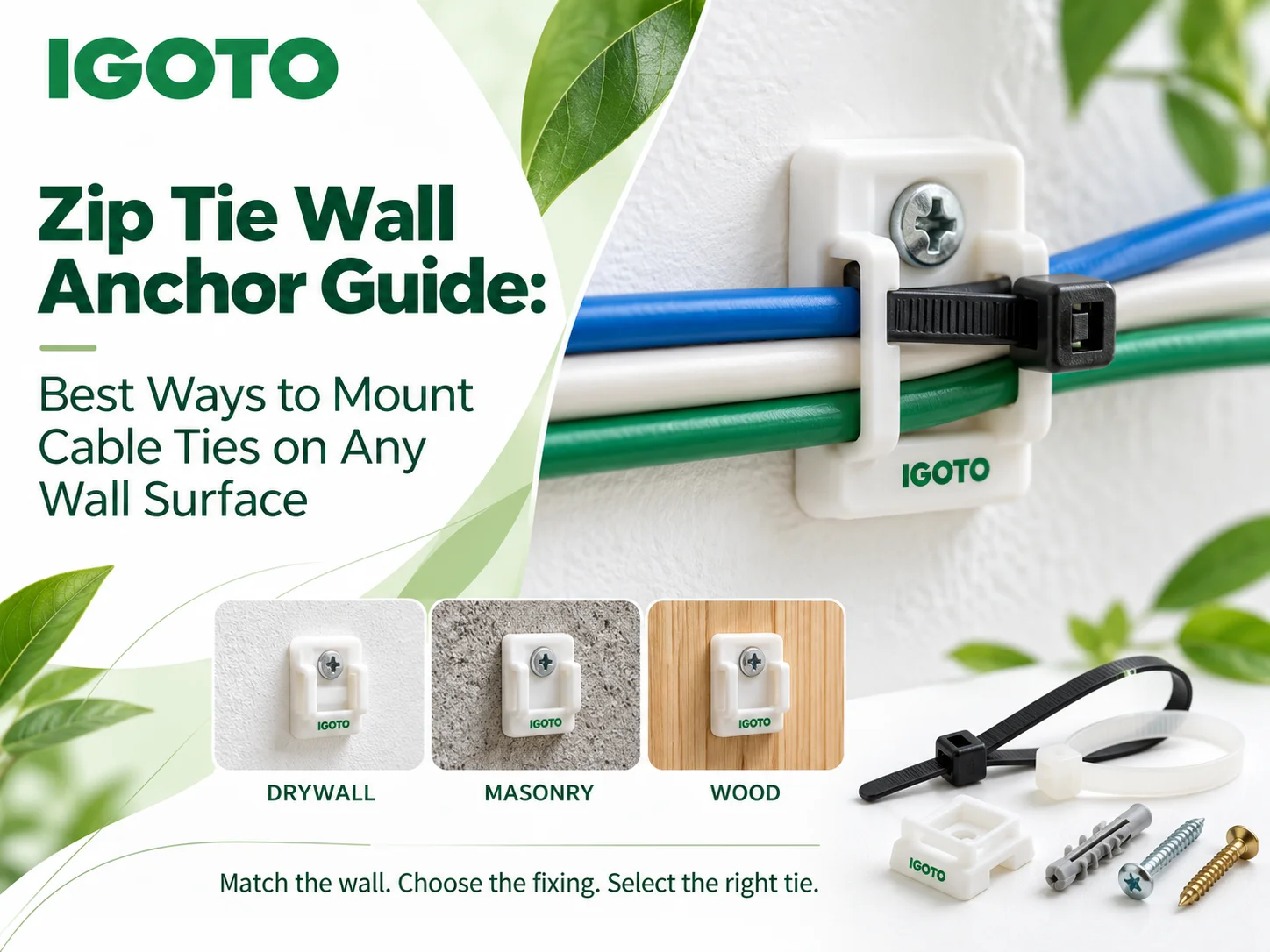 Гипсокартон, бетон или кирпич? Как закрепить кабельные стяжки на любой стене2026-09-28
 -
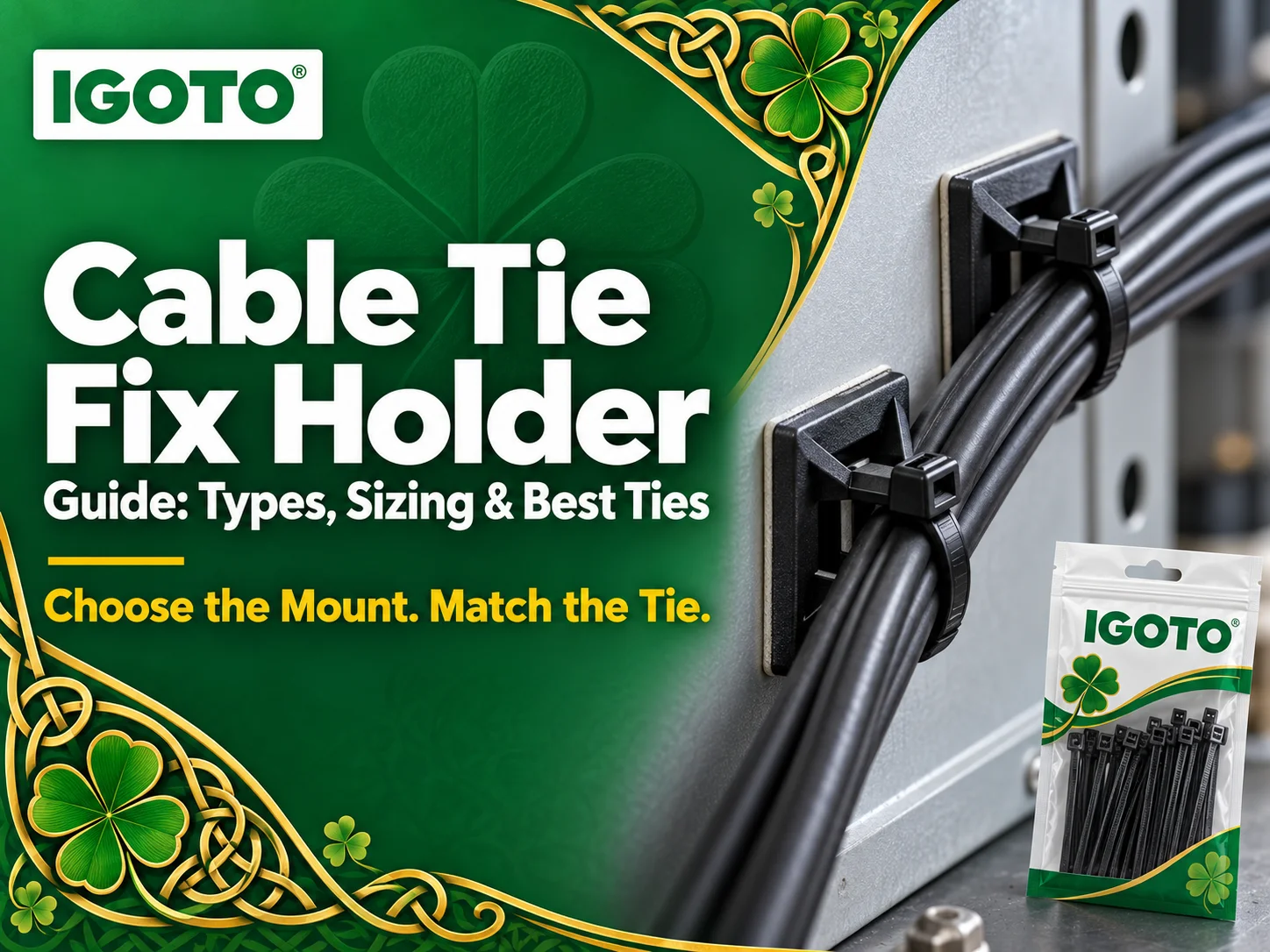 Держатель для кабельных стяжек: Как выбрать крепления и правильные кабельные стяжки2026-09-27
 -
 Искусство и ремесла из стяжек: художники, выставки и идеи для DIY2026-09-26
 -
 Объяснение кабельных стяжек Ty-Rap: почему роверы NASA используют их2026-09-24