



Машина для производства стяжек vs Автоматическая машина для связывания
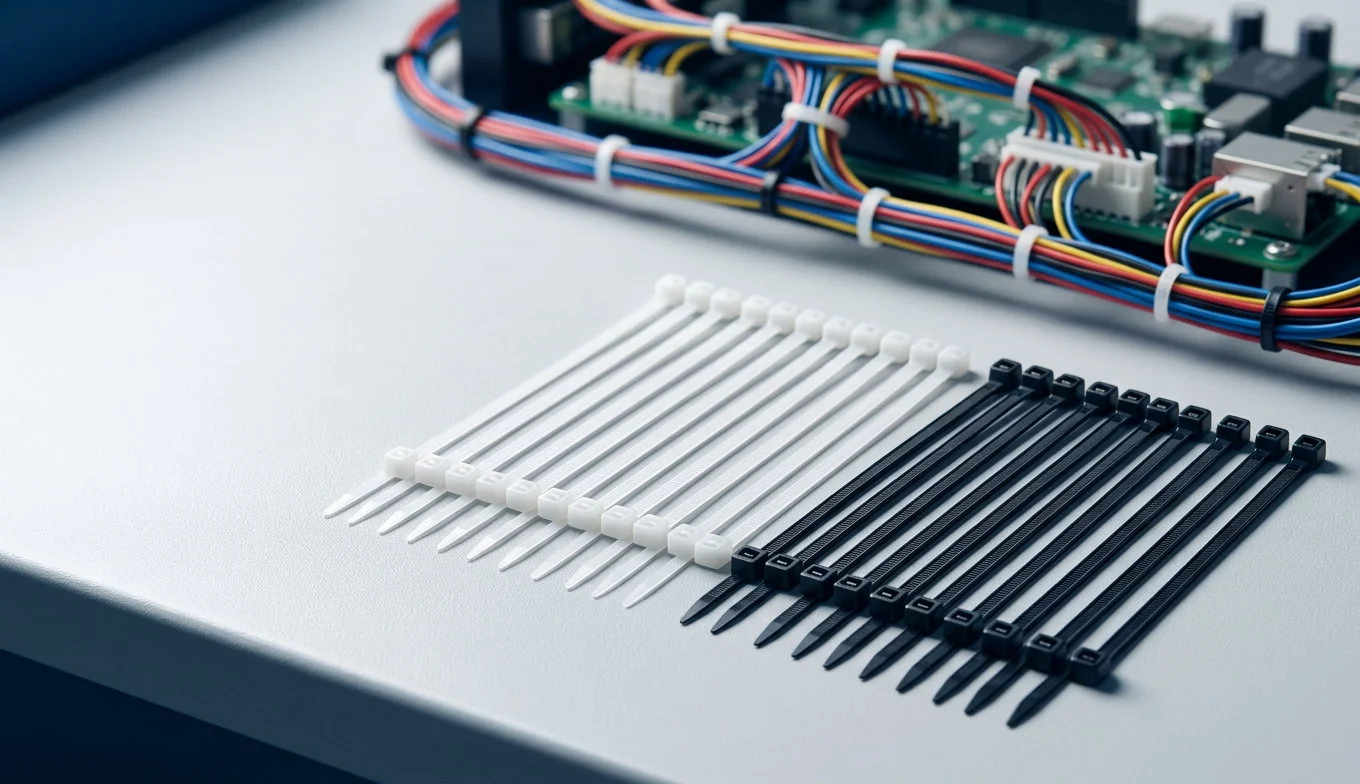
Большинство людей, которые ищут машину для производства кабельных стяжек на продажу покупают одно из трех очень разных устройств, и объявления редко это проясняют. Первая машина прессует стяжки на основе нейлона из гранул пластика PA66; вторая обматывает готовые пластиковые стяжки вокруг соответствующей связки, затягивает узел и отрезает излишки. Третья машина производит проволочные стяжки без необходимости в нейлоновых стяжках. Цены и функции упомянутых машин значительно различаются, примерно в десять раз по стоимости. Настоящее руководство объясняет различия между тремя типами машин и на что следует обратить внимание при покупке.
Первый тип машины для кабельных стяжек состоит из самой производственной машины – производящей то, что называется машиной для производства кабельных стяжек (часто называемой машиной, работающей с помощью инъекционного формования PA66 в готовые изделия); также существует другая машина, которая автоматически обрабатывает кабельные стяжки, известная тем, что выполняет обматывание стяжки вокруг соответствующей связки с последующим завязыванием узла и отрезанием излишков. Последний тип машины для кабельных стяжек характеризуется использованием своего рода проволоки вместо завязанных нейлоновых стяжек.
Три машины, продаваемые под одним названием
В результатах поиска категории на рынке, а также названия продуктов переплетают эти машины. На крупных B2B рынках, когда вы видите что-то под названием “машина для производства кабельных стяжек”, это может быть портативное устройство для связывания, в то время как “машина для кабельных стяжек” может относиться к инъекционной формовочной машине. Поэтому убедитесь, что вы проверили технический паспорт, а не только название.
| Тип машины | Что входит | Что выходит | Типичный покупатель |
|---|---|---|---|
| Машина для производства кабельных стяжек (инъекционный пресс плюс форма) | Гранулы нейлона 66 | Готовые кабельные стяжки, обычно формуемые по несколько десятков за раз | Производители пластиковых изделий и крепежа |
| Автоматическая машина для связывания кабельных стяжек | Готовые нейлоновые кабельные стяжки | Связанные проволочные связки, жгуты или катушки | Заводы по производству жгутов проводов, сборки бытовой техники и электроники |
| Машина для завязывания | Катушка проволоки с бумажным или пластиковым покрытием | Закрытия на мешках, шнурах и маленьких катушках | Упаковка продуктов питания, потребительские шнуры, легкая упаковка |

Ручные и пневматические натяжные пистолеты – это четвертая категория, но это инструменты, а не машины. Если вам действительно нужен ручной инструмент, наше сравнение инструментов для кабельных стяжек охватывает варианты без капитальных затрат.
Машины для производства кабельных стяжек: что вы на самом деле покупаете
Машина, используемая для производства кабельных стяжек Обычно это простая горизонтальная инжекционная машина, используемая для некоторых сложных задач в переработке пластика. Кабельные стяжки — это длинные, тонкие пластиковые объекты с легким запирающим механизмом на одном конце. Горячий нейлон должен пройти от головки машины до конца пластика, прежде чем замерзнуть. Статья производителя стяжек из США в PlasticsToday сообщает, что время заполнения составляет менее 1 секунды, а давление инжекции колеблется от 11,000 psi до 16,000 psi, и формы имеют от 6 до 256 полостей, некоторые из которых требуют силы зажима до 600 тонн.
Следовательно, инжекционная машина является лишь одной частью инвестиции. Полноценная производственная ячейка включает в себя следующее:
– Многополостная прецизионная форма. Все полости должны заполняться одновременно, чтобы избежать коротких стяжек с некоторыми готовыми изделиями, имеющими избыточный залив. Это настолько сложно, что производители форм запатентовали способы достижения этого.
– Горячие каналы или правильно спроектированный холодный канал, который должен быть выбран в зависимости от количества полостей или размера кабельных стяжек.
– Сушилка с осушителем. Нейлон 66 поглощает влагу из атмосферы, и переработчики смол утверждают, что содержание влаги должно находиться в узком диапазоне перед инжекцией, потому что влажная смола приводит к нежелательным пузырькам, распылению и слабым кабельным стяжкам.
– Контроль температуры формы и охлаждающая вода, потому что неравномерное охлаждение может повлиять на размеры кабельной стяжки и жесткость зацепа.
– Стабилизация влаги после формования. Свежесформованный нейлон сухой и хрупкий, поэтому стяжкам нужно время для стабилизации, прежде чем они смогут сгибаться и фиксироваться.
– Также необходимо следующее оборудование для тестирования: для измерения прочности на разрыв, силы запирания и размеров, а также для упаковки и подсчета.
Инжекционная машина не достаточна для производства товарных кабельных стяжек. Необходимо заложить бюджет на форму, сушилку, охладитель, кондиционирование и тестирование, а также нанять квалифицированного технолога процесса.
Автоматические машины для связывания кабельных стяжек для линий жгутов проводов
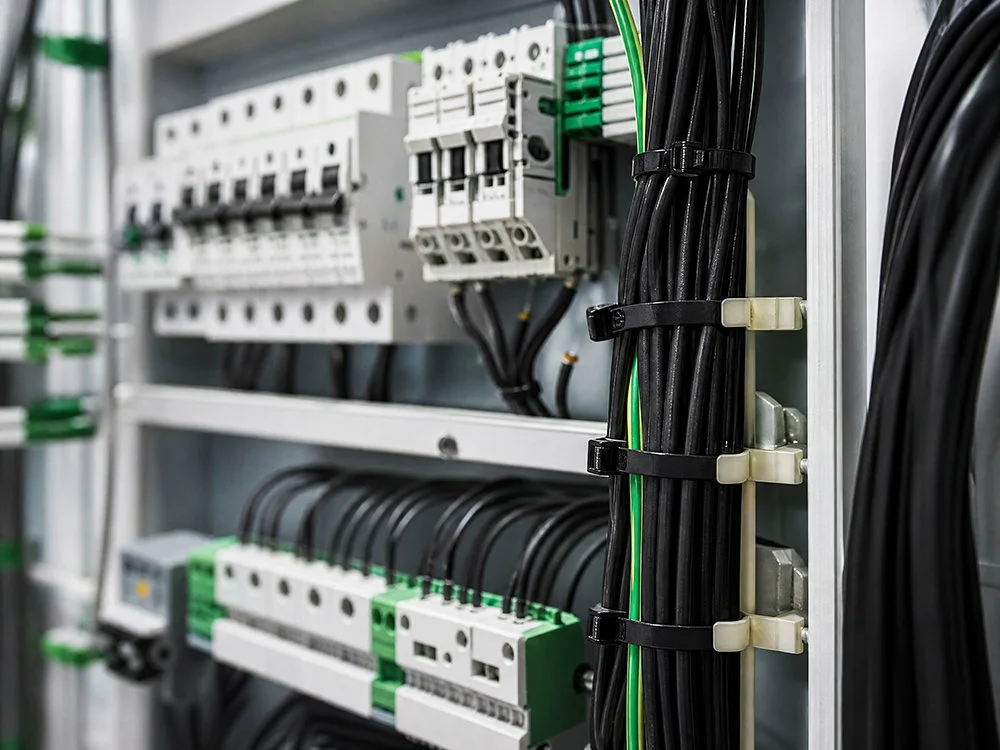
Автоматическая машина для кабельных стяжек для связывания проводов выполняет противоположную операцию. Оператор помещает кабельный жгут в захваты машины, и машина затем автоматически подает кабельную стяжку вокруг него, начинает продевать хвост в головку, натягивает с заранее установленным напряжением и обрезает избыточную кабельную стяжку. Настольные устройства очень распространены в мастерских по производству жгутов, промышленных предприятиях и у производителей панелей управления с повторяющимся связыванием в течение дня.
Разные типы машин используют разные методы подачи кабелей. Большинство настольных машин берут кабельные стяжки в свободных секциях, используя вибрационный бункер для сортировки стяжек. Некоторые машины, такие как портативные устройства, используют кабельные стяжки на катушках. Каждый метод подачи стяжек определяет стоимость расходных материалов, скорость изменения размера и тип кабельных стяжек, которые вы можете приобрести в зависимости от модели машины.
Технические характеристики также следует сравнивать. Основные характеристики - размер стяжки, максимальный диаметр кабельной束ки, время цикла и регулировка натяжения.
Сколько стоит машина для стяжек?
Цены ниже - это публичные цены, собранные в октябре 2026 года. Они являются ориентировочными, а не котировками, и не включают фрахт, пошлины, установку, формы и обучение.
| Оборудование | Публичная ценовая справка | Что обычно не включается в цену |
|---|---|---|
| Автоматическая машина для скрутки стяжек | About $1,500 retail | Wire spools; it cannot use nylon cable ties |
| Benchtop automatic nylon tie tying machine (vibratory bowl feed) | $4,200 for the ZONESUN ZS-WTKZ4 | Tie-size change parts, shipping, voltage options |
| Handheld or benchtop automatic tying units on B2B marketplaces | Roughly $4,300 to $6,200 | Compatible consumables, spare parts, local service |
| Injection molding machines marketed for cable tie production | Roughly $9,000 to $50,000 per machine | The mold, dryer, chiller, conditioning, test equipment and installation |
The injection molding figure is one that deceives buyers most. The listing indicates the press. A precision multi-cavity cable tie mold is quoted separately, and on a new production line the cost of the mold, auxiliary equipment, and the time it spends for tuning the process can equal to the cost of the press itself. Make sure you ask each supplier to give a turnkey quotation that names every item, such who will run the first trials.
With tying machines, look beyond the cost as well. A cheaper machine that only uses proprietary reel-fed ties can turn out to be more expensive over five years than an overpriced machine that can use loose regular ties.
Nylon Ties?
Many buyers overlook asking this query. Machines that use bowls must be built around a specified head shape, strap gauge, and length variety, while machines that use reels and bandoleer systems must get the straps formed for them.
Some branded automatic machines have been made specifically for the maker’s own straps and do not use any other straps.
You must clarify the following questions before placing the order:
What strap sizes and variations is the machine capable of running? Specify the changing parts needed.
Does it use standard loose straps or reel-fed straps?
Are they going to test your straps before sending?
How is the machine made to adjust tension? Is the tension limited to safety the insulation of wire?
How much will the compatible straps cost?
Avoid thinking that a strap will be supplied correctly just because the dimensions are compliant. There is a need to consider head geometry, stiffness, and moisture content while sending samples.
For loose straw feeding machines, the straps that are produced by only one manufacturer are significant. Standard sizes such as our стандартные стяжки are a starting point for trials, and a tie size chart helps you match the machine’s stated range to real part numbers. Results still need to be confirmed on your specific machine.
What to Evaluate Before Your Purchase
①. Define the purpose. Will you be using the ties to sell products, on your assembly line, or pack goods?
②. Assess the numbers. Determine how many ties you plan to create or use and how many types will be produced.
③. Ask for the list of equipment. For molding it will be all the machines involved in the molding process. For tying it will include change parts and feeding system.
④. Request for tests. The molding machine providers should produce test ties from the material you chose. The tying provider should test the tying of your bundles.
⑤. Examine the utilities. Make sure that the voltage, phase, compressed air, and cooling water are ready for work.
⑥. Check the availability of local service. Call and ask the representative of the company who will be providing after-sale service for the machine.
⑦. Think about quality control. Test the ties for tensile strength against the standard you chose.
Should you purchase the Machine or Ties?
In some contexts, having a machine makes economic sense and in others it does not. To figure it out, a simple division can be performed:
Payback = Total investment ÷ Savings per tie
In terms of tying machine, savings derived out of labor. One example to illustrate the comparison: a factory has the ability to operate the tying machine that costs $4,200, which helps cut 3 seconds per tie, while labor costs $24 per hour, which means the cost of one tied bundle is $0.02, making the machine cost efficient after about 210,000 bundles tied. If the factory ties 2,000 bundles per day, payback will come in few months, while the one doing 50 bundles per day may never reach it.
In terms of making machine payback is determined by calculating the full price of making the tie on your own (including resin, energy cost, labor cost, maintenance costs and testing and comparing it against the price of the ties from the factory. Poor utilization rates and high levels of scrap will render the savings in no time.
| Your situation | Usually the better first move |
|---|---|
| Distributor starting a cable tie line | Buy from a manufacturer, ideally under your own brand |
| Assembly plant tying the same bundle all day | Evaluate an automatic tying machine and a reliable tie supply |
| Company needing a special size, color or marking | Validate demand with OEM production before investing in tooling |
| Molder with spare presses and nylon experience | Cost out a dedicated mold, dryer and test setup |
| New investor with no molding background | Visit working tie factories before buying any equipment |
Many distributors who search for machines are really looking for their own branded product. That can usually be achieved without a factory, as explained in our guide to branded cable ties.
What a Working Cable Tie Factory Looks Like

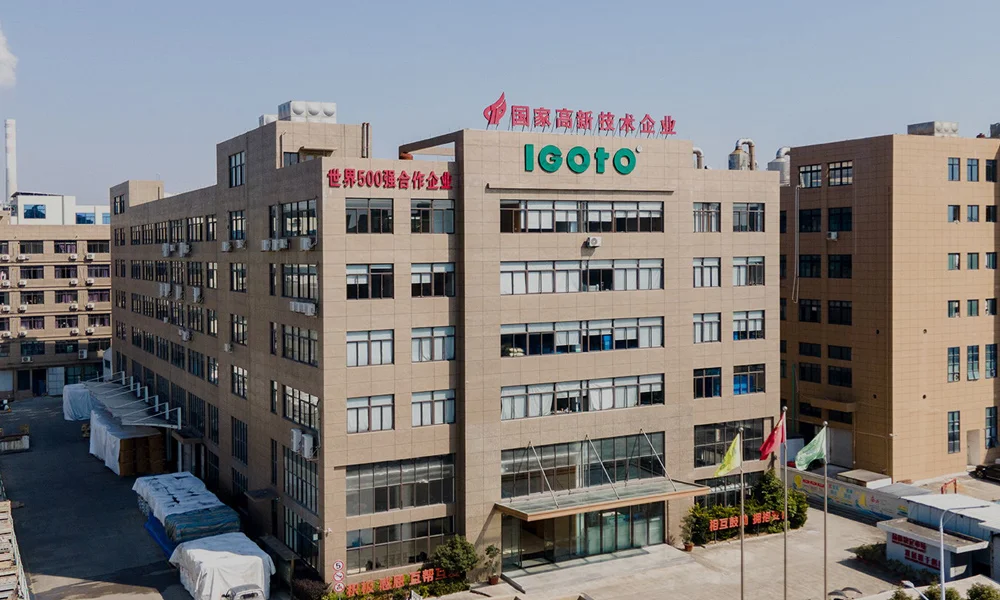
The company IGOTO produces nylon cable ties and does not sell either production or tying machines. We provide this information so that customers can understand how elaborate and disciplined manufacturing of cable ties can be. The manufacturing facility used for the production of cable ties belongs to an area of 25,000 square meters and uses 52 injection molding machines on 18 lines of automated production.
The whole production takes place in several stages:
①.Raw material inspection of virgin PA66.
②.Drying and preparation to make sure that moisture is within acceptable limits.
③.Using precision injection molding at properly controlled temperature and pressure settings.
④.Cooling and forming according to given specifications.
⑤.Moisture conditioning of the finished tie.
⑥.Finishing process, including appearance, dimensions and locking mechanism tests.
⑦.Tensile strength testing and other tests, such as UV testing and aging tests.
⑧.Counting, packaging, labeling and shipping.
Each stage of production is necessary, and ignoring any of them leads to failures in performance of the product. The контроль качества page of our website contains detailed information on the testing process.
For buyers who decide that sourcing ties makes more sense than building a line, our сервис стяжек OEM covers custom lengths, colors, tensile grades and private-label packaging.
Часто задаваемые вопросы
How much does a cable tie making machine cost?
Injection molding machines for producing cable ties range from approximately $9,000 to $50,000 according to B2B trade sites. That is solely for the press. The mold, dryer, chiller, conditioning, testing equipment, and installation are additional costs, which may equal or exceed the press price.
How much is an automatic cable tie tying machine?
Benchtop automatic tying machines start around $4,000 to $6,000 from general equipment suppliers. Industrial systems from established brands cost considerably more, and their consumable ties are often proprietary.
Can I use any cable tie in an automatic tying machine?
No. Each machine is built for a specific feeding format and size range. Head shape, strap thickness and batch consistency all affect feeding, so trial your ties on the actual machine before committing.
How many cable ties can one injection molding machine make?
Output depends on cavity count and cycle time. Commercial molds range from a handful of cavities to more than 200, with cycle times of a few seconds, so a single well-tuned press can produce hundreds of thousands of ties per day.
What material are cable ties made from?
Most nylon cable ties are molded from polyamide 66, which balances strength, flexibility and heat resistance. UV-stabilized, heat-stabilized and flame-retardant grades are used for specific environments.
Is a twist tie machine the same as a cable tie machine?
No. A twist tie machine wraps coated wire from a spool and twists the ends together. It is suited to bags, cords and light bundling, not to nylon cable ties or wire harness work that needs a rated locking tie.
Ссылки
- PlasticsToday: Cable ties, complexity from simplicity
- US Patent 5,792,409: Balanced multi-cavity injection molding of cable ties
- Entec Polymers: Nylon 66 general processing guidelines
- Wikipedia: Injection moulding
- ZONESUN ZS-WTKZ4 automatic nylon cable tie binding machine listing
- NEMA: UL 62275 cable tie types simplified
Заключение
Before you contact a single supplier, decide whether you need to make cable ties, apply them, or twist coated wire. A tying machine is a modest, measurable investment that pays back on labor when volumes are steady and the consumables are easy to source. A cable tie making machine is the front end of a full production system, and the press price is only the opening line of the budget. If the numbers point toward sourcing finished ties instead, IGOTO can quote standard sizes or a custom specification for your project. If they point toward a machine, use the checklist above and insist on a trial with your own ties or resin.


