


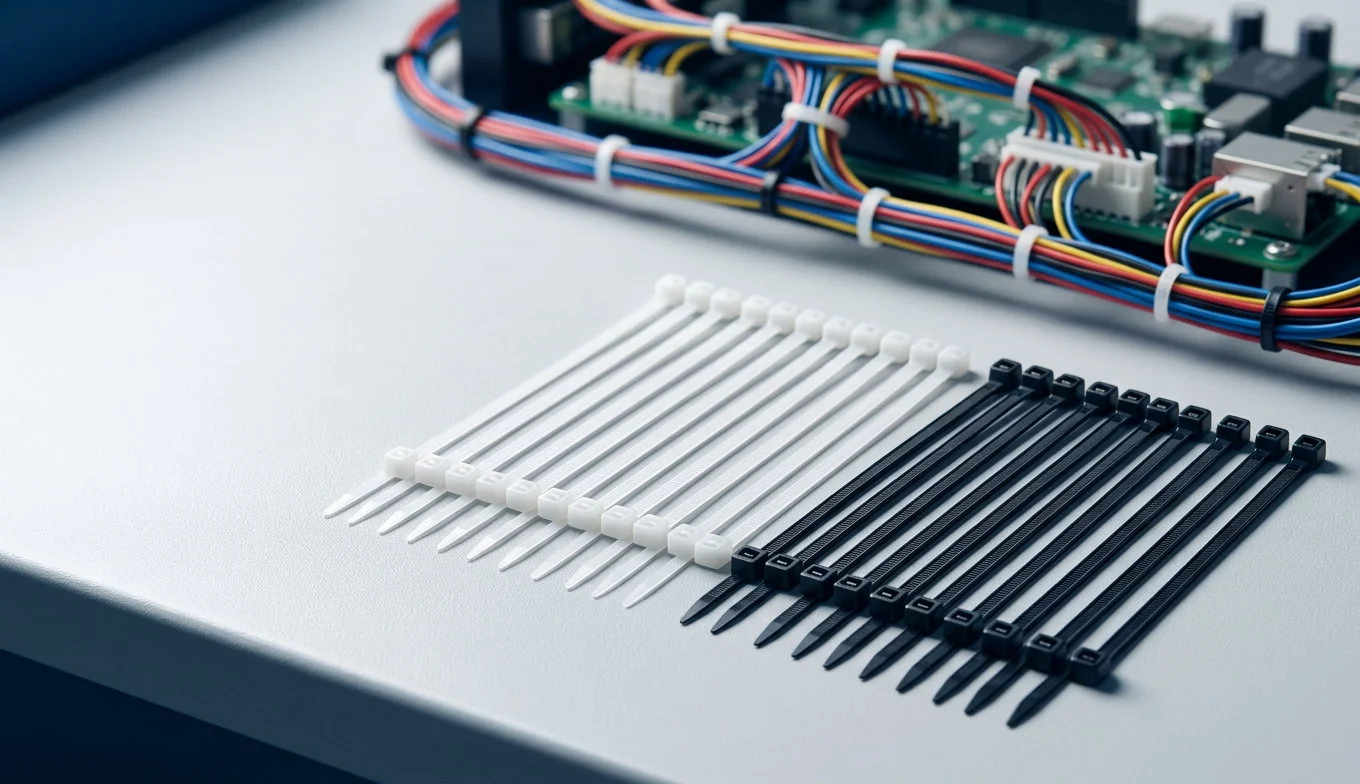

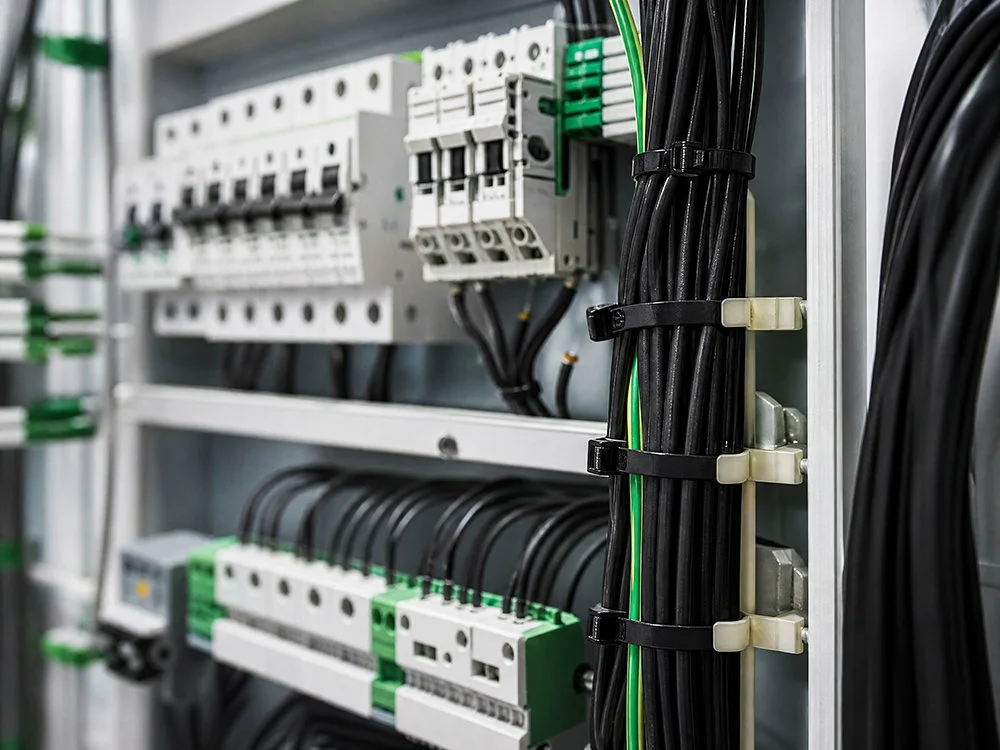

Холодостойкие кабельные зажимы для арктических и субнулевых установок
IGOTO производит холодостойкие кабельные зажимы для объектов, где установка не может ждать теплого дня: солнечные фермы, уличные электрические шкафы, телекоммуникационные башни, холодные склады и коммунальные работы по всей северной Европе, Канаде, Центральной Азии и северных штатах США.
Два холодных сорта производятся на той же линии, что и стандартный ассортимент. Ударопрочный сорт PA66 рассчитан на установку до -20°C, а сорт PA12 (нейлон 12) сохраняет свою ударную прочность до -40°C с меньшим поглощением влаги и лучшей устойчивостью к УФ-излучению для открытых работ.
Каждый кабельный зажим для холодной погоды формуется из первичного PA66 или PA12, стабилизированного с помощью черного углерода для защиты от УФ-излучения, и поставляется с записью о прочности на растяжение партии. Стандартные размеры от 2,5 мм до 4,8 мм доступны с вашей этикеткой, вашим цветом и вашей упаковкой.

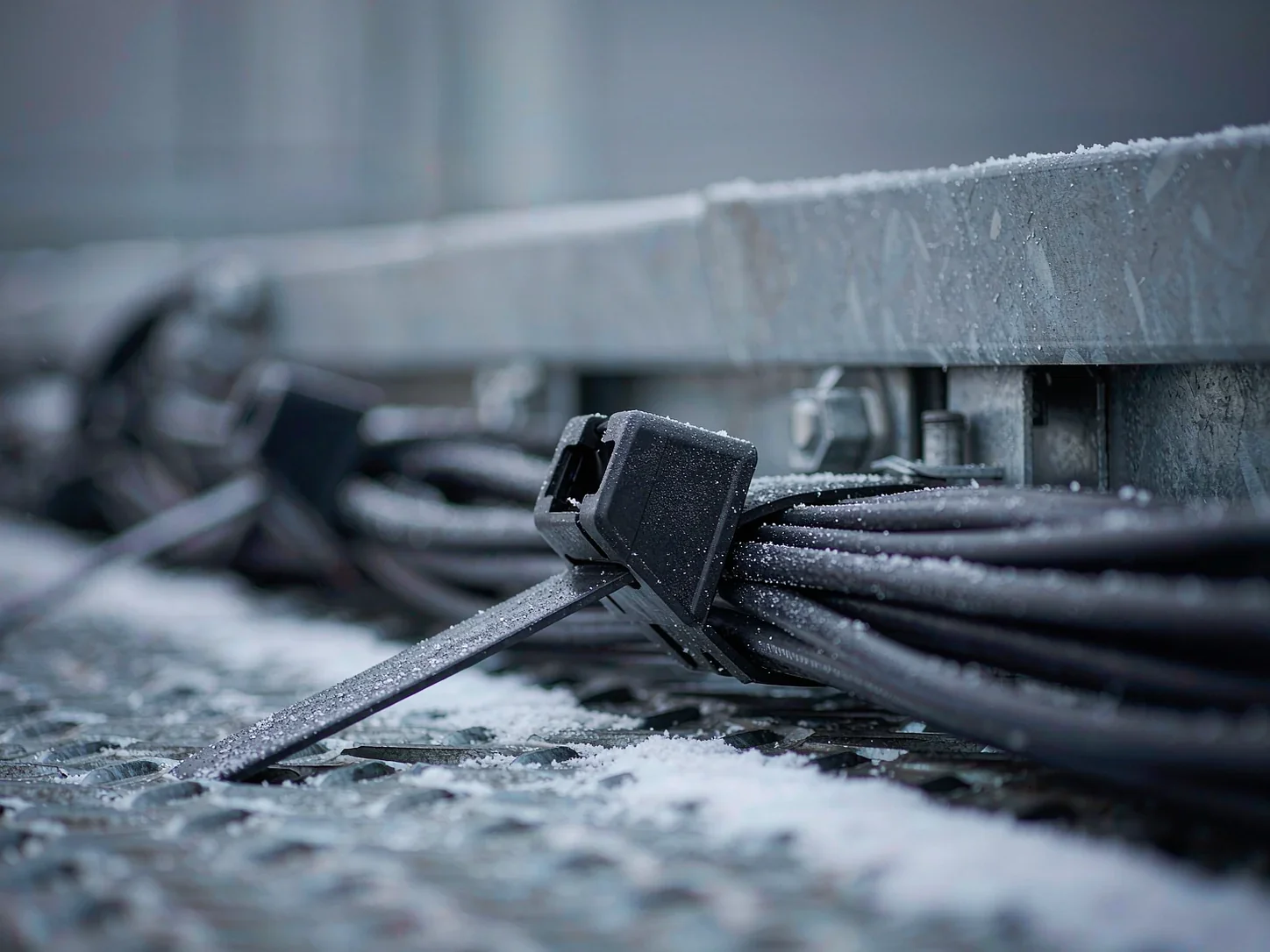
Что делает кабельный зажим холодостойким?
Холодостойкий кабельный зажим — это не просто черный зажим, продаваемый зимой. Разница заключается в полимере и геометрии замкового головки, потому что именно там зажим ломается, когда температура падает.
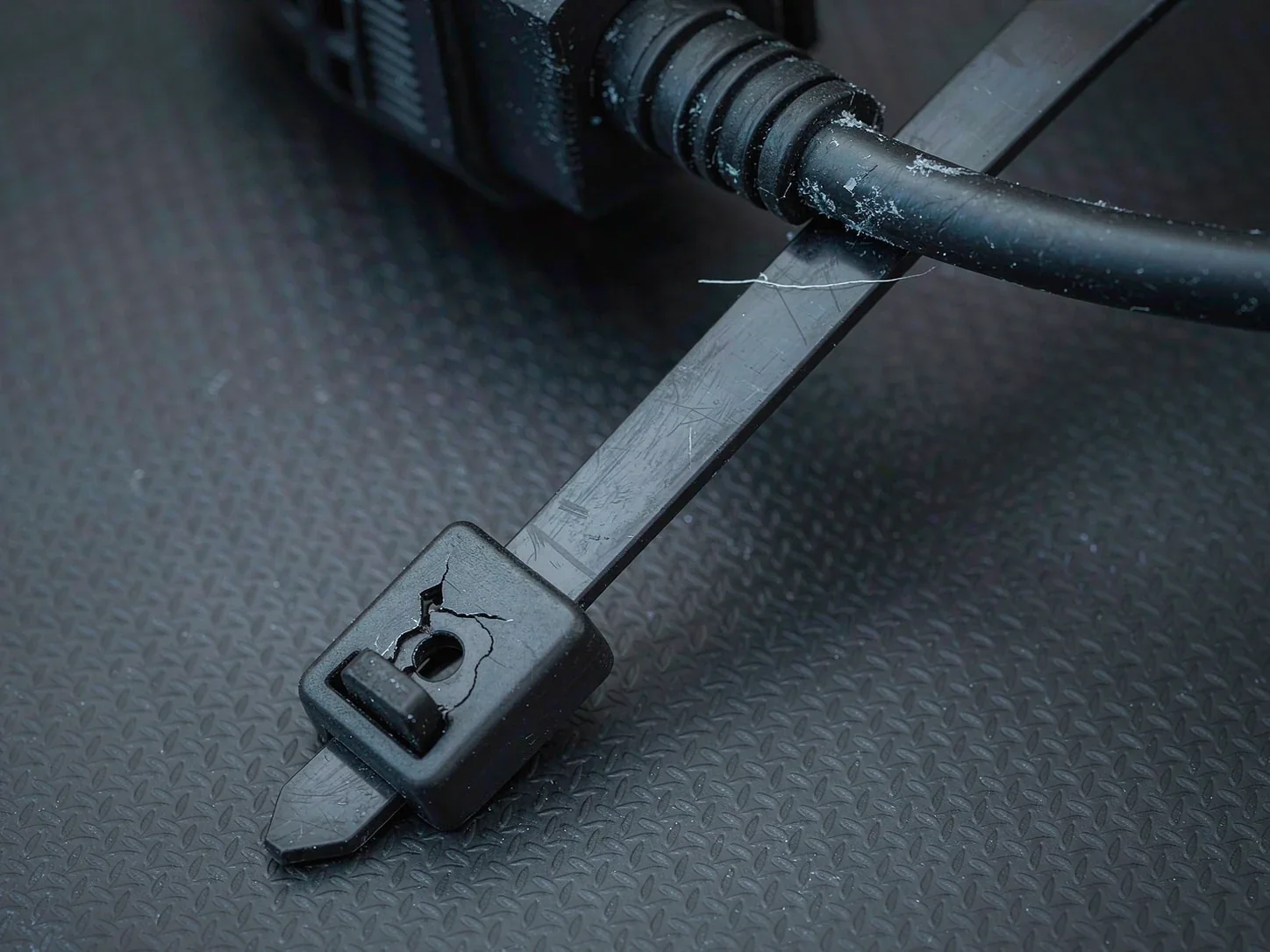
Нейлон 66 поглощает влагу из воздуха. При низкой температуре эта влага делает полимерную цепь жесткой, и ударная прочность резко падает, поэтому зажим больше не сгибается вокруг пучка или по острым краям. Сам ремень обычно в порядке; защелка внутри головки — это то, что ломается.
Холодные сорта решают эту проблему тремя способами: полимер с низким содержанием влаги, такой как PA12, модификатор удара, который сохраняет головку пластичной при отрицательных температурах, и немного более толстая секция защелки, которая распределяет нагрузку вместо того, чтобы концентрировать ее на одном зубце.
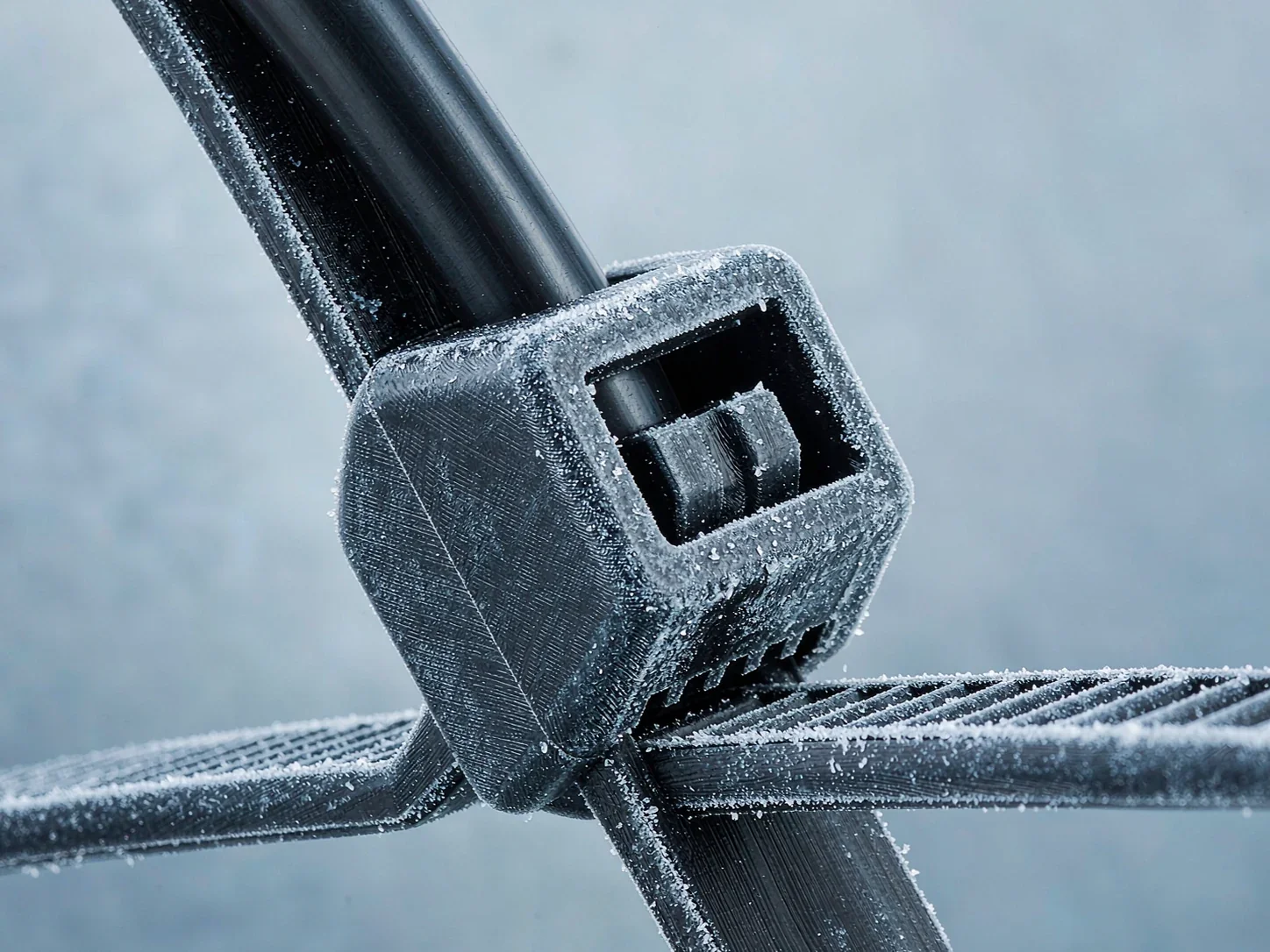
Почему стандартные нейлоновые кабельные зажимы ломаются в холодную погоду
Зажим, который использовался два зимних сезона, редко ломается сам по себе. Он ломается во время установки, в те две или три секунды, когда хвост протягивается через головку, и защелка должна сгибаться.
При температуре ниже примерно -10°C стандартный зажим PA66 теряет большую часть своей ударной прочности. Если потянуть слишком сильно или согнуть хвост о край кабельного лотка, головка трескается вместо того, чтобы сгибаться. Тот же зажим, установленный в июле и оставленный нетронутым, прослужил бы годы.
Вторая причина — чрезмерное натяжение. Зажим, натянутый до предела при 20°C, уже находится под напряжением; при -30°C это напряжение остается на хрупком материале всю зиму. Зажимы для холодной погоды специфицируются с инструментом для натяжения и оставляются немного свободнее, чем летняя установка.
Кабельный зажим для холодной погоды Диапазон температур
Температура эксплуатации и температура установки — это два разных числа. Зажим может выдерживать -40°C в эксплуатации и все равно треснуть, если он установлен при -25°C, поэтому обе колонки важны при спецификации.
| Класс материала | Температура эксплуатации | Температура установки | Лучше всего для |
|---|---|---|---|
| Стандартный PA66, УФ-черный | -35°C до +85°C | Рекомендуется -10°C и выше | Внутренняя проводка, общее управление кабелями, умеренные климатические условия |
| Ударопрочный PA66 | -40°C до +85°C | -20°C | Уличные шкафы, строительные площадки, общие условия холодного климата |
| PA12 (нейлон 12) | -40°C до +85°C, кратковременно +110°C | -30°C | Солнечные фермы, прибрежные участки, высокие УФ и влажные холодные условия |
| Специальный класс низкотемпературного применения | -60°C по запросу | -40°C | Арктические участки, холодная цепь, холодильные и морозильные камеры |
Цифры относятся к классу, а не к одному испытательному образцу. Конечный диапазон эксплуатации зависит от ширины стяжки, диаметра пучка и того, находится ли стяжка под постоянным напряжением. Подтвердите класс в соответствии с минимальной температурой на месте перед размещением заказа.
Размеры и прочность на разрыв холодостойких стяжек
Холодные классы используют те же формы, что и стандартный ассортимент, поэтому размер, который вы уже используете, может быть поставлен в зимнем материале без изменения пучка, инструмента или чертежа.
| Модель | Ширина × длина | Прочность | Typical bundle |
|---|---|---|---|
| ET-3×100 | 2.5 × 100 mm (4″) | 8 kg | up to 22 mm |
| ET-3×200 | 2.5 × 200 mm (8″) | 8 kg | up to 50 mm |
| ET-4×300 | 3.5 × 300 mm (12″) | 18 kg | up to 76 mm |
| A5×400 | 4.8 × 400 mm (16″) | 22 kg | up to 110 mm |
| ET-5×500 | 4.8 × 500 mm (20″) | 22 kg | up to 140 mm |
Bundle figures are a working guide at 80% of usable strap length. Tensile values are loop tensile at 23°C; at -40°C the PA12 grade retains most of that figure while a standard PA66 tie loses a significant part of it.
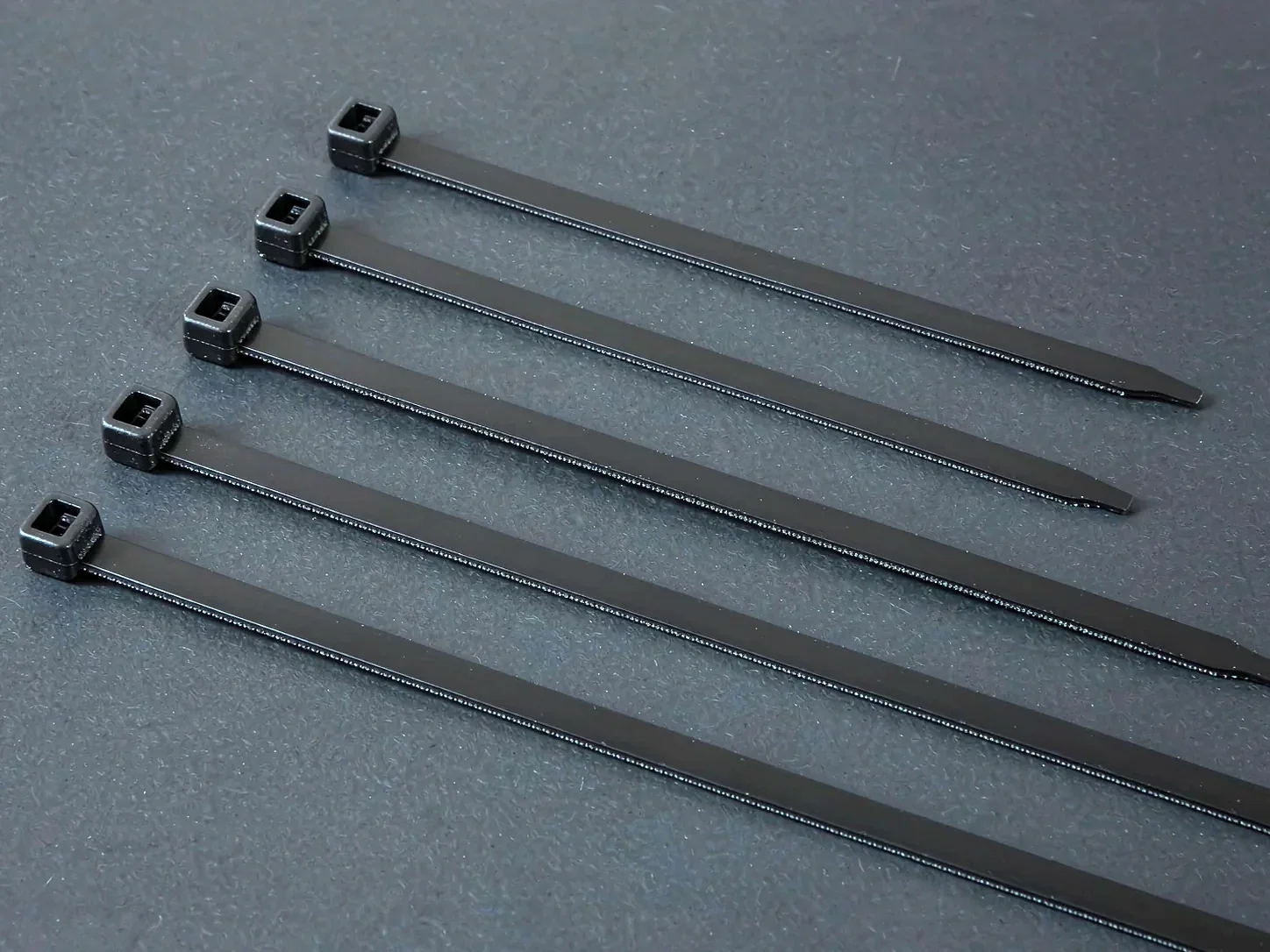
Sizes 100 mm to 500 mm, width 2.5 mm to 4.8 mm, in standard black or a custom colour.
Where Cold Weather Cable Ties Are Used
Cold resistance matters most where the tie is installed outdoors, in an unheated building, or on equipment that is commissioned in winter and then left alone for years.
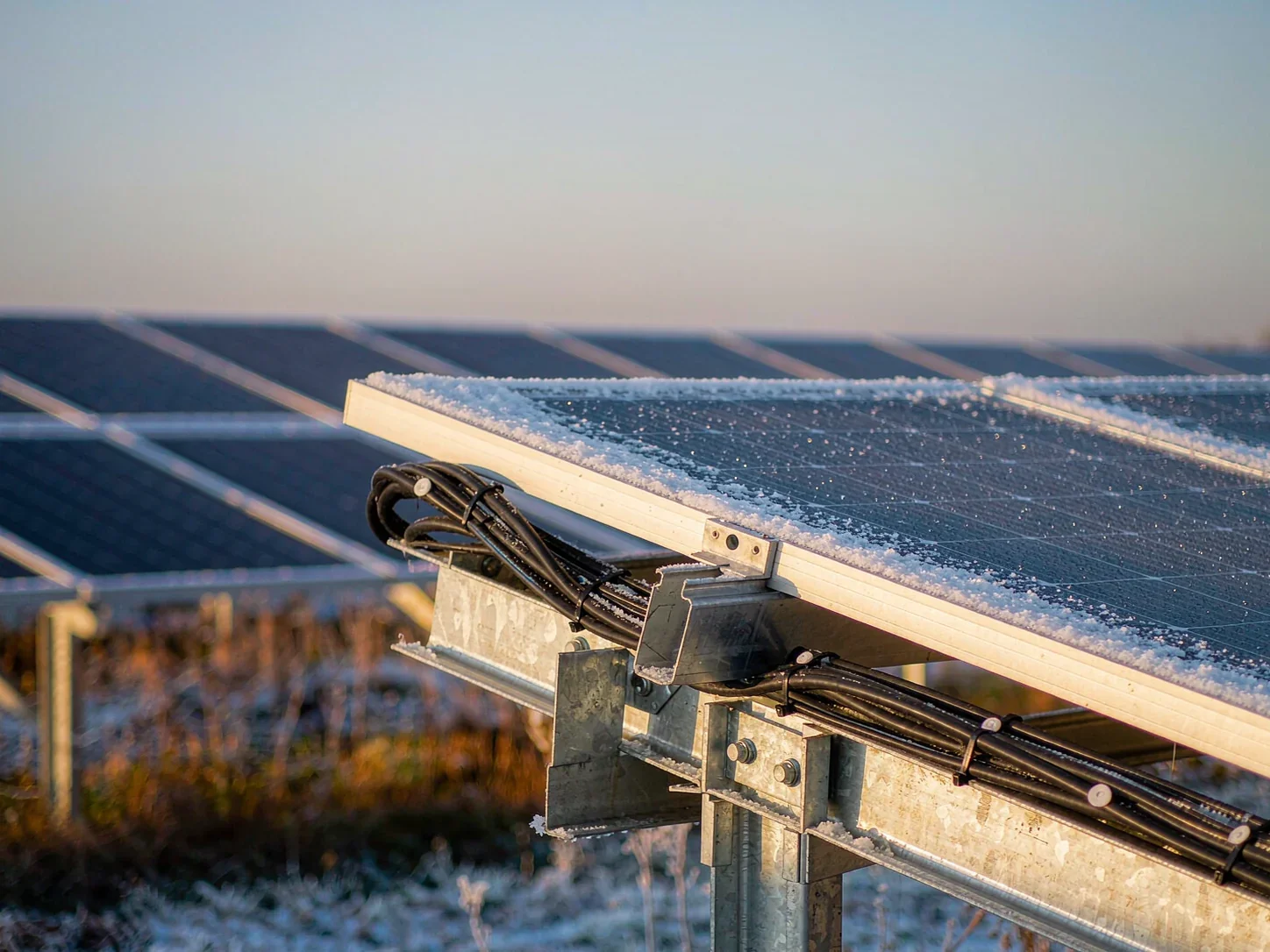
Solar and Outdoor PV
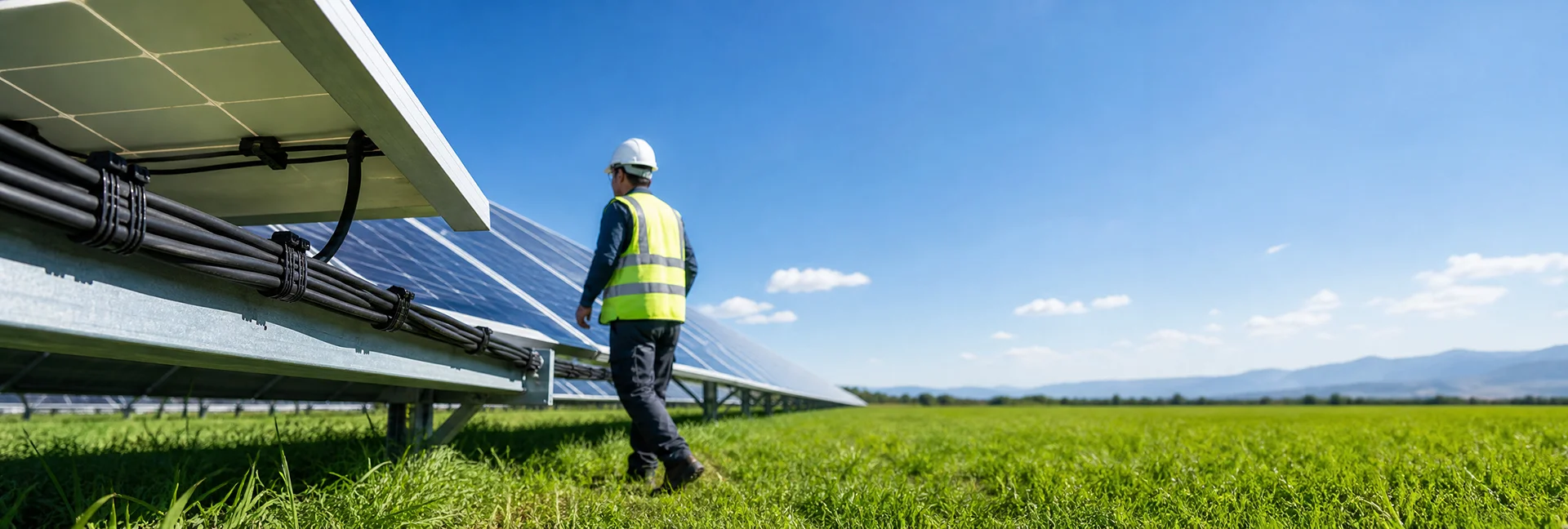
Array cabling is fixed in winter and inspected in summer. PA12 resists both the cold snap at installation and the UV load of twenty summers on the rail.
View UV Resistant Cable Ties →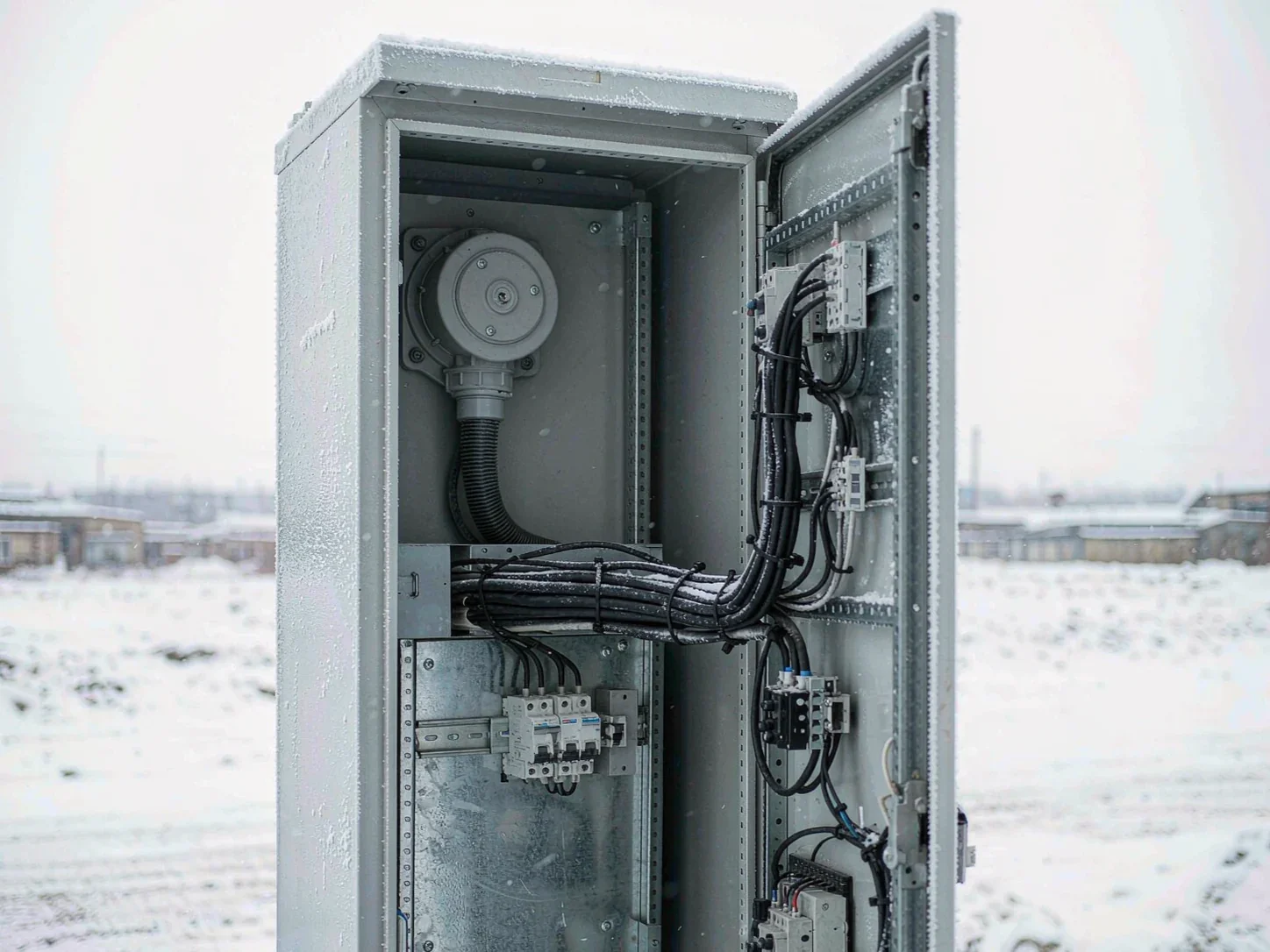
Outdoor Cabinets and Telecom
Distribution cabinets, CCTV poles and telecom enclosures are often wired on site in sub-zero weather, then sealed for years without inspection.
View Cabinet Cable Ties →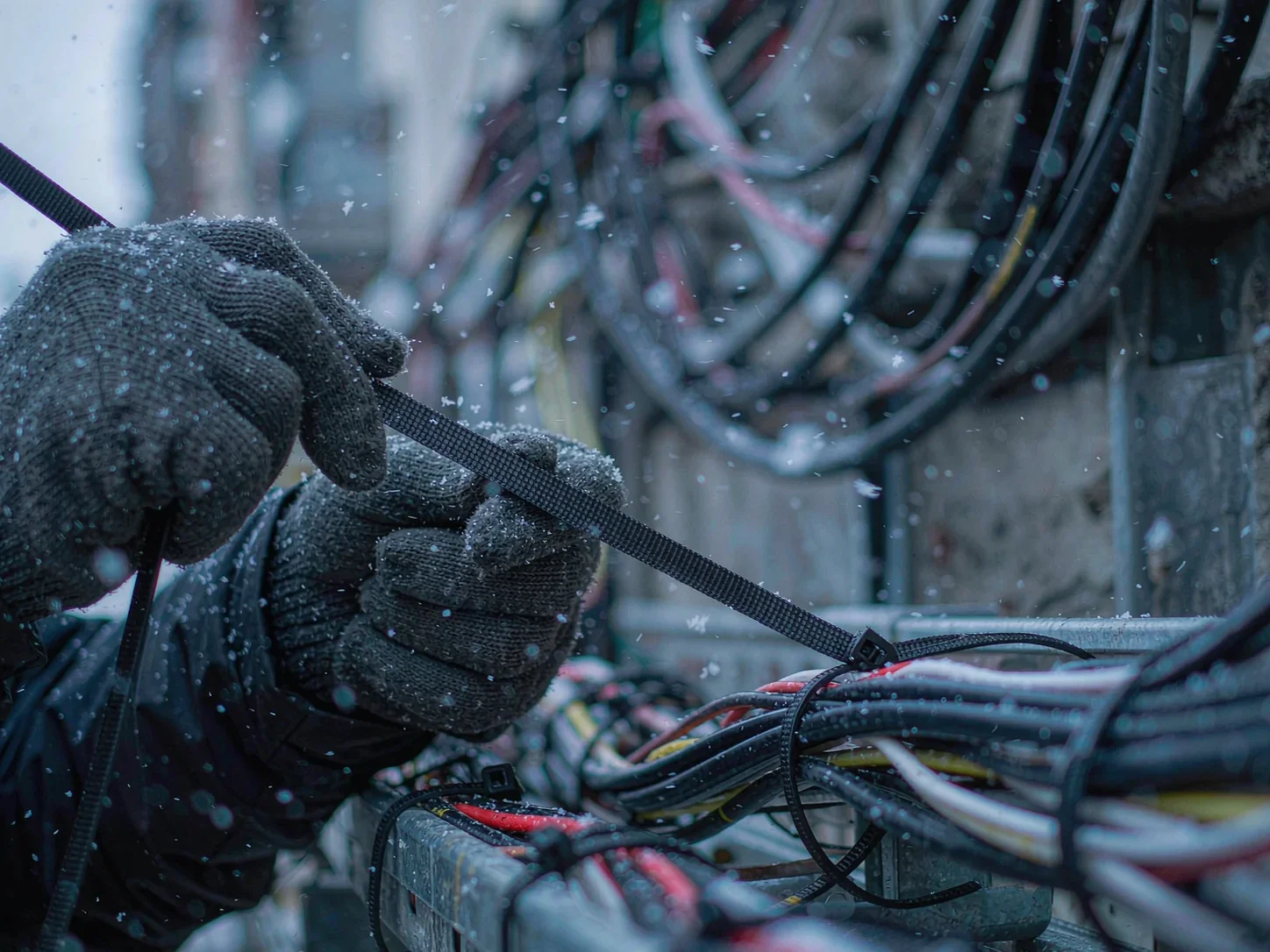
Winter Site Work and OEM Kits
Contractors working through winter need a tie that survives a gloved hand and a cold tail. Distributors can stock the grade under their own label.
Посмотреть варианты OEM →Material Options for Cold Weather Cable Ties
- Impact-modified PA66: the cost-effective cold grade, installable to -20°C and suitable for most outdoor cabinet and construction work.
- PA12 (nylon 12): lower moisture absorption and better low-temperature impact, installable to -30°C and rated to -40°C in service.
- UV stabilised black: carbon black masterbatch for exposed sites; natural (white) is not recommended outdoors.
- Flame retardant option: UL-94 V2 available where the enclosure specification calls for it, with a small reduction in low-temperature impact.
- Colour: black as standard, custom colours matched to a sample or a Pantone reference for brand and identification work.
How to Specify the Right Grade
- Start with the lowest site temperature, not the average winter figure. A -25°C night decides the grade, not a -5°C afternoon.
- Separate installation from service. If the tie is fitted in a heated workshop and installed later, a cheaper grade may be acceptable.
- Check UV exposure. Cold and sun often come together on solar and high-altitude sites; specify black, stabilised material.
- Allow for gloves. A longer tail and a wider strap are easier to handle at -20°C than a 2.5 mm tie.
- Ask for the batch record. Tensile results and material grade on paper are what an inspector will ask for later.
Private Label Packing for Cold Grade Ties
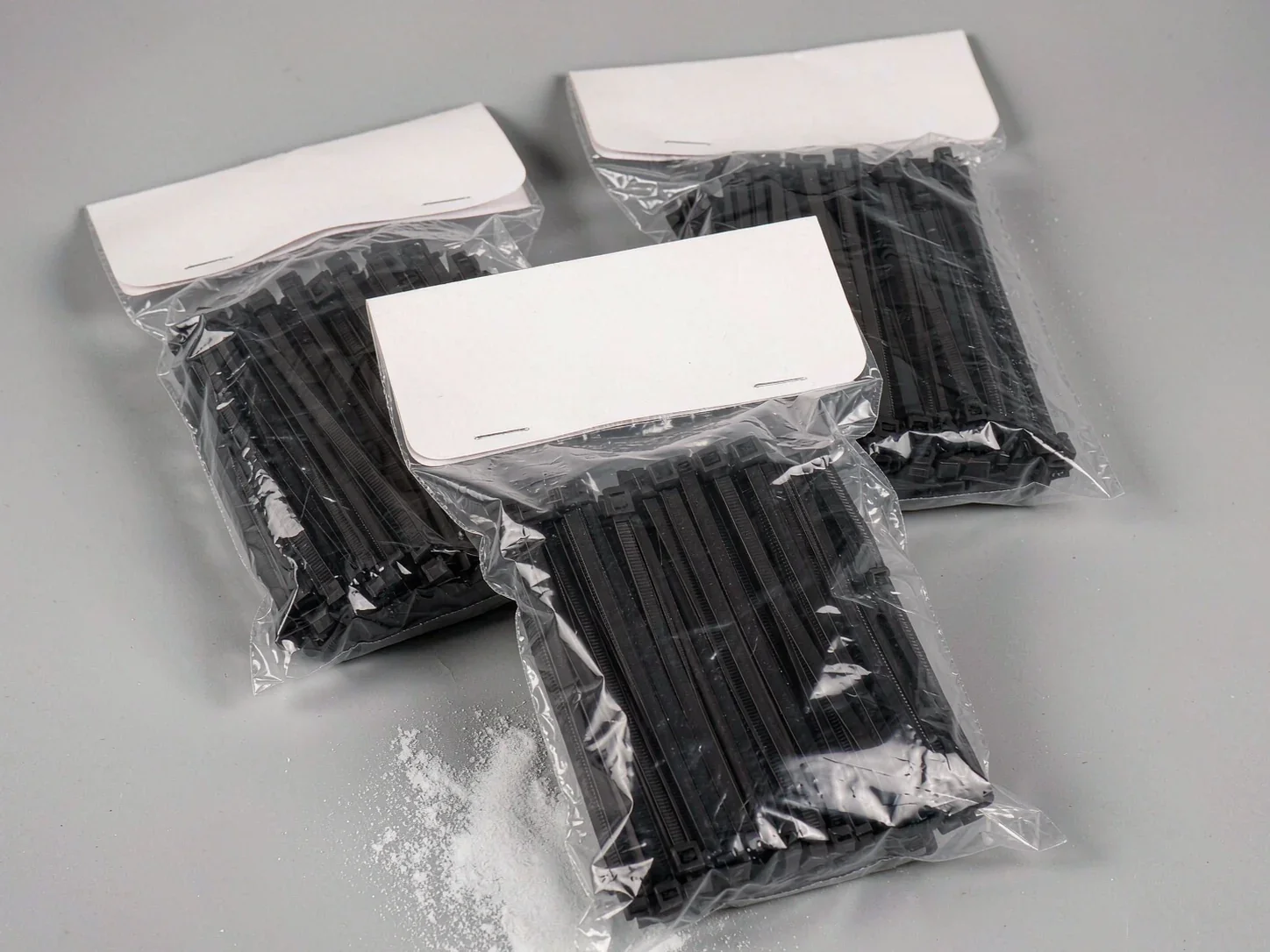
Cold grade ties are usually bought by distributors and contractors who need their own brand on the shelf, not a generic bag. IGOTO packs to your artwork: header card, poly bag with printed label, barcode and export carton, with the grade and temperature range printed on the label rather than left to memory.
- Header card, poly bag or bulk carton, sized to your shelf or your site store
- Label carries the model, tensile strength and service temperature range
- Mixed cartons for a distributor range, or one size per carton for project delivery
How Every Cold Weather Batch Is Tested
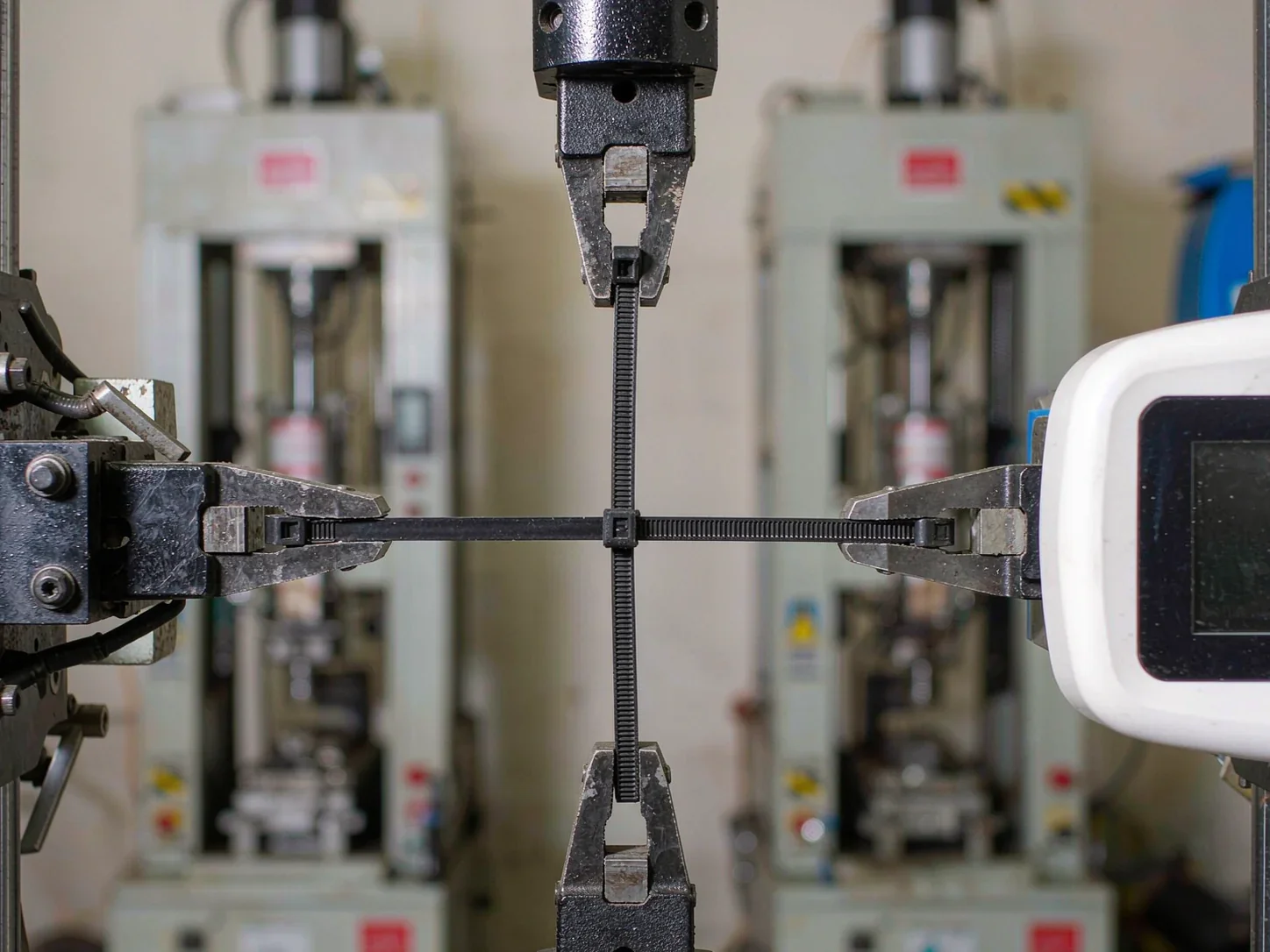
Cold performance is not a claim on a label. It is a measurement, and these are the checks that run on each production batch before the cartons are sealed.
| Test item | Метод | What it proves |
|---|---|---|
| Разрывная прочность | Pull test to UL 62275 / EN 50146 at 23°C | The tie holds the load printed on the bag |
| Low-temperature impact | Conditioned at the declared minimum, then looped and struck | The head flexes instead of cracking during installation |
| Locking performance | Pull-back test on the pawl and teeth | No tooth slip under vibration and thermal cycling |
| UV ageing | Accelerated exposure to ISO 4892-3 | Retained strength after years of outdoor exposure |
| Dimensions | Width, thickness and length against the drawing | The tie fits the tool and the cable duct |
| Горючесть | UL 94 vertical burn | V2 rating where the enclosure specification requires it |
Test reports are supplied per batch on request, and a witnessed inspection can be arranged before shipment. The контроль качества page shows the same stations on the factory floor.
Cold Weather Cable Tie FAQ
What is the maximum temperature zip ties can withstand?
For standard nylon 66 cable ties the continuous service limit is about 85°C, with short excursions to roughly 105°C. Heat-stabilised grades extend the continuous figure to about 105°C. Above that, nylon softens and the pawl loses its grip, so the next step is a different polymer: PPS ties are used to about 170-200°C, PEEK to about 250°C, and stainless steel where temperature and fire risk are both present. The melting point of PA66 is around 255°C, but the useful limit is far below it because the tie creeps under load long before it melts.
Какие существуют стяжки, устойчивые к высоким температурам?
Heat-stabilised nylon 66 is the common first step, rated to about 105°C for engine bays, lighting and industrial cabinets. Beyond that, PPS ties cover roughly 170-200°C, PEEK ties about 250°C, and ETFE or PTFE ties are used where chemical resistance matters as much as heat. Stainless steel ties are specified for exhaust wrapping, kilns and fire-rated routes because they have no polymer to soften. IGOTO supplies heat-stabilised PA66 as standard and can quote the higher-temperature polymers against a sample.
Do snow tire zip ties work?
They work for a short distance in an emergency, and they are not a substitute for chains or winter tyres. The idea is to loop heavy ties around the tyre and rim so the heads bite into snow, which gives a little extra traction on a stuck vehicle. Two limits matter: a standard nylon tie becomes brittle well below zero and snaps within a few hundred metres, and a broken tie can wrap around the brake caliper or the ABS sensor. If the method is used at all, specify a 4.8 mm PA12 tie for cold impact strength, fit them on driven wheels only, keep the speed very low, and cut every tie off before returning to a public road.
At what temperature do plastic zip ties melt?
There is no single melting point for plastic zip ties because the polymer decides it. Nylon 66 melts at roughly 255°C and nylon 12 at roughly 178-180°C, while PVC ties soften around 80°C. In practice the useful limit is much lower than the melting point: a nylon tie under continuous load begins to creep at around 85°C, and a nylon 12 tie loses rigidity earlier than a nylon 66 tie at the same temperature. That is why cold-resistant PA12 is specified for winter and not for hot enclosures.
Start Your Cold
Resistant Cable Tie Project
Tell us the lowest site temperature, the tie size, the quantity and the packing you need. We will confirm the grade, send samples and quote against a written specification.