



Strongest Zip Ties on the Market
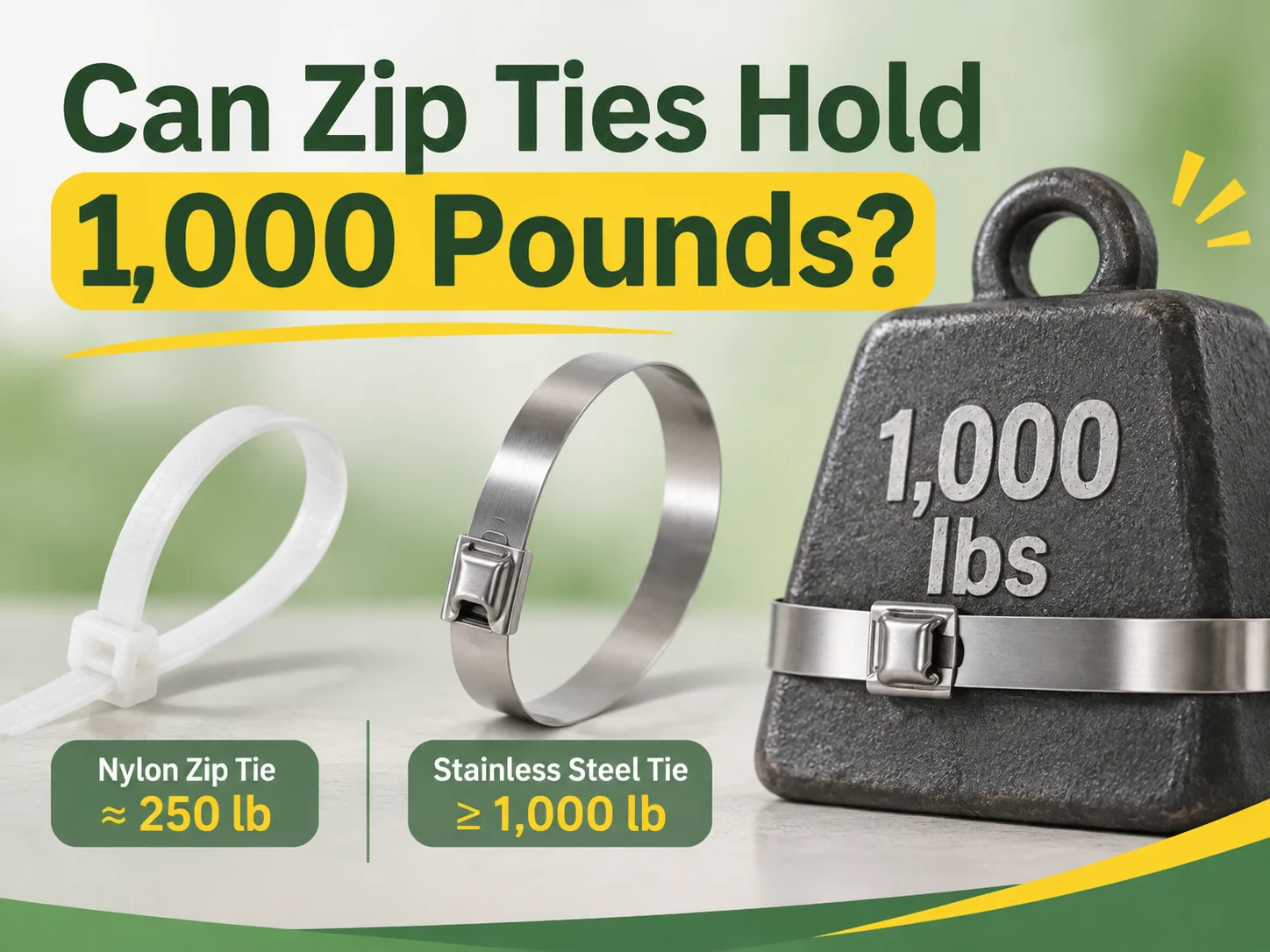
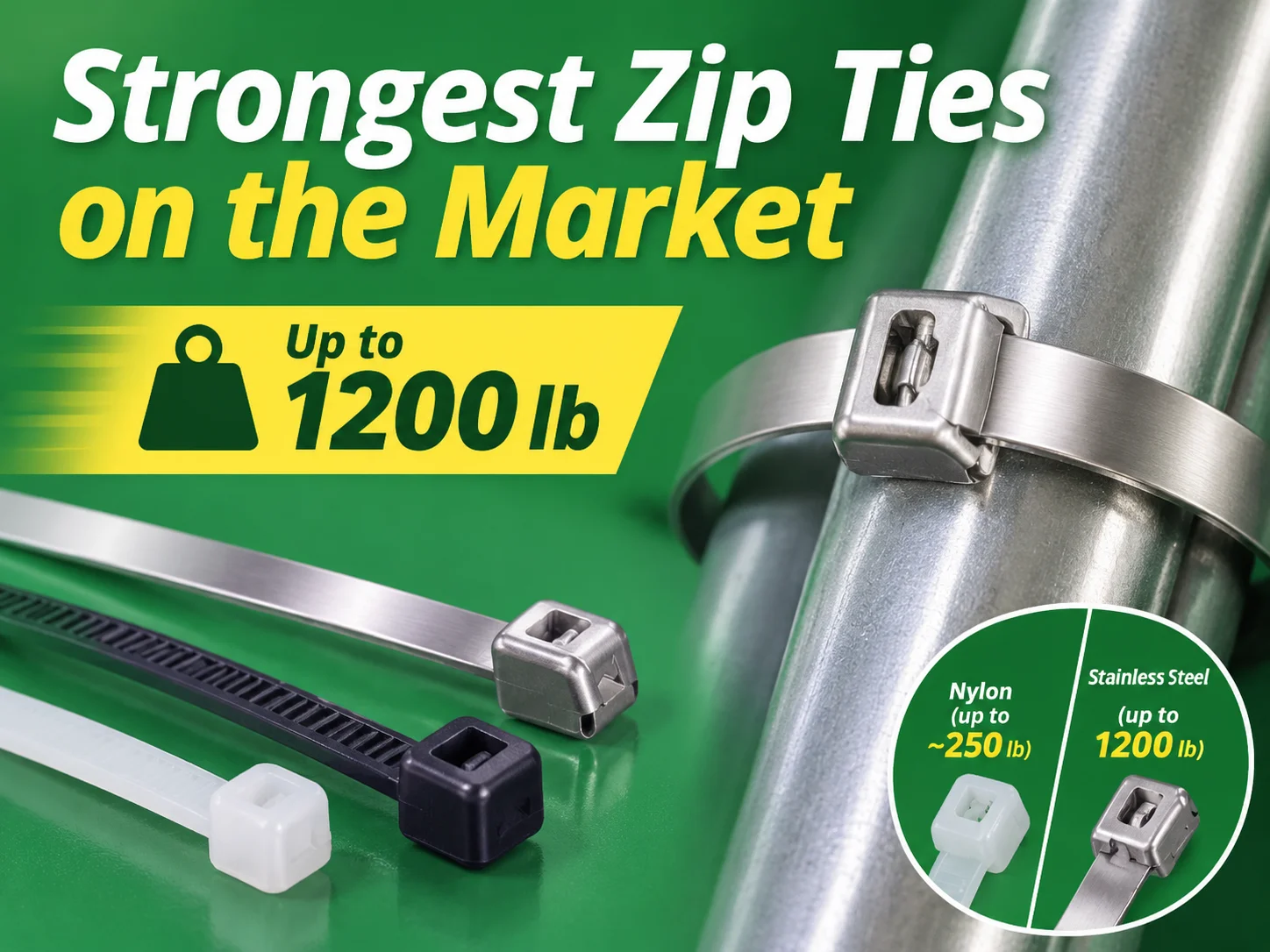
Cable ties are sold on the basis of their strength and bought on the basis of their price with very little correlation between the two. When a buyer is looking for the strongest tie available, they are typically looking to hold something heavier than a bundle of cables, and this is typically determined by the mechanism of securing the tie in place – either with a moulded nylon pawl or using a stainless steel band with a ball lock. The maximum tension in the widest standard product is 250lb for the moulded nylon tie whereas stainless steel ties can bear weight well in 1200lb category of items that are shipped from stock.
The quick answer here is that stainless steel band ties are much stronger than nylon zip ties. The strongest zip ties on the market today is the Panduit Pan-Steel MLT product, which has the capability of withstanding loads of about 1200lb, while one of the products in the 12.7mm stainless steel MLT4DEH-Q316 for example will withstand a maximum of about 800lb (3560N) and still being usable till the temperature reaches 538°C. HellermannTyton’s MBT series covers single band configurations of 121 – 607lb and a double wrap configuration of 7000N (approximately 1570lb). The strongest nylon zip ties have a maximum load capacity of around 250lb while securing a 12.7mm body. At the same time, static loads require an additional safety factor of around 4:1, which means that if the maximum load capacity of the zip tie is around 1000lb, the rated weight capacity of the tie should be around 4000lb or the solution will require double wrap, bolted fastening, or multiple bands. Expect to pay around $20 to $180 per one hundred stainless band ties as opposed to $4 to $60 for nylon ties.
This page discusses two types of strengths and their practical limitations, the special constructions that lie between them, the manufacturers that should be included in any shortlist with their locations and prices, and an index table that matches applications and products. The last section treats the specification items that determine if the appropriate tie is delivered.
What “Strongest” means in the cable tie
The word “strongest” has two numbers which are generalized and which mean different things. For example, loop tensile refers to the force which breaks an entire cable tie when pulled through a calibrated testing device at 23 C°, while working load refers to the load that a cable tie can bear when installed. Working load is calculated as loop tensile divided by a certain safety factor.
In most cases for a static load indoors, the safety factor will be 4:1; however if there is vibration, outdoor exposure, etc. the ratio will be changed to 5:1 or 6:1 depending on the exposure. Thus, this brings us to one of the reasons that exist for the inconsistency between the number on the package and the amount of weight that can actually be sustained by cable tie in a plant location for example.
Another distinction is that a cable tie can support a certain load but may not prevent the joint from being loose. Since nylon tends to creep when put under strain, a cable tie that can hold 200 lb for an hour will lose its tension after a year without breaking. Stainless steel is non-creeping, which is why outdoor installations that must last for 20 years require the use of metal ties regardless of the loading.
The most efficient form is made of stainless steel, where the stress in steel comes through a blank formed steel band fastened with a ball or roller. The absence of the molded tooth defect or the ability of polymer to relax, allows the performance rating of the stainless steel to be 3-6 times more than that of nylon of the same width.
Uncoated stainless steel is the least expensive and the most widely used in industrial environments. However, with the risk of a cut end that can cut fingers. To minimize the risk of a cut end, a coated type made of polyester or nylon may be opted for to provide protection against soft insulation jackets at minimal cost.
However, the most important consideration with respect to the tie is the grade of stainless steel being used. Type 304 will suffice for use indoors and in most industrial atmospheres. However, when chlorides abound or where the daily use of hypochlorite is present, the use of the 316 type which has the highest molybdenum content for maximum resistance to corrosion and chlorides. Therefore, the 316 type can be said to be more expensive than the 304 type; however, this price difference is justified by the fact that it lasts longer in the abrasive environment.
Now, let’s try to establish upper limits for the work we are dealing with. A 12.7 mm band of 316 ties has a load bearing limit of approximately 800 lbs. Acquiring 1,000 pounds necessitates either a broader band, which is rarely available among vendors, or two separate bands engaged in a double-wrap method. The information shows the dissimilarities that follow with regard to the type of material utilized (stainless steel or nylon); in other words, nylon has temperature limitations, among other factors, affecting most outdoor usage.
The High-Strength Nylon and Where It Is Not Practical
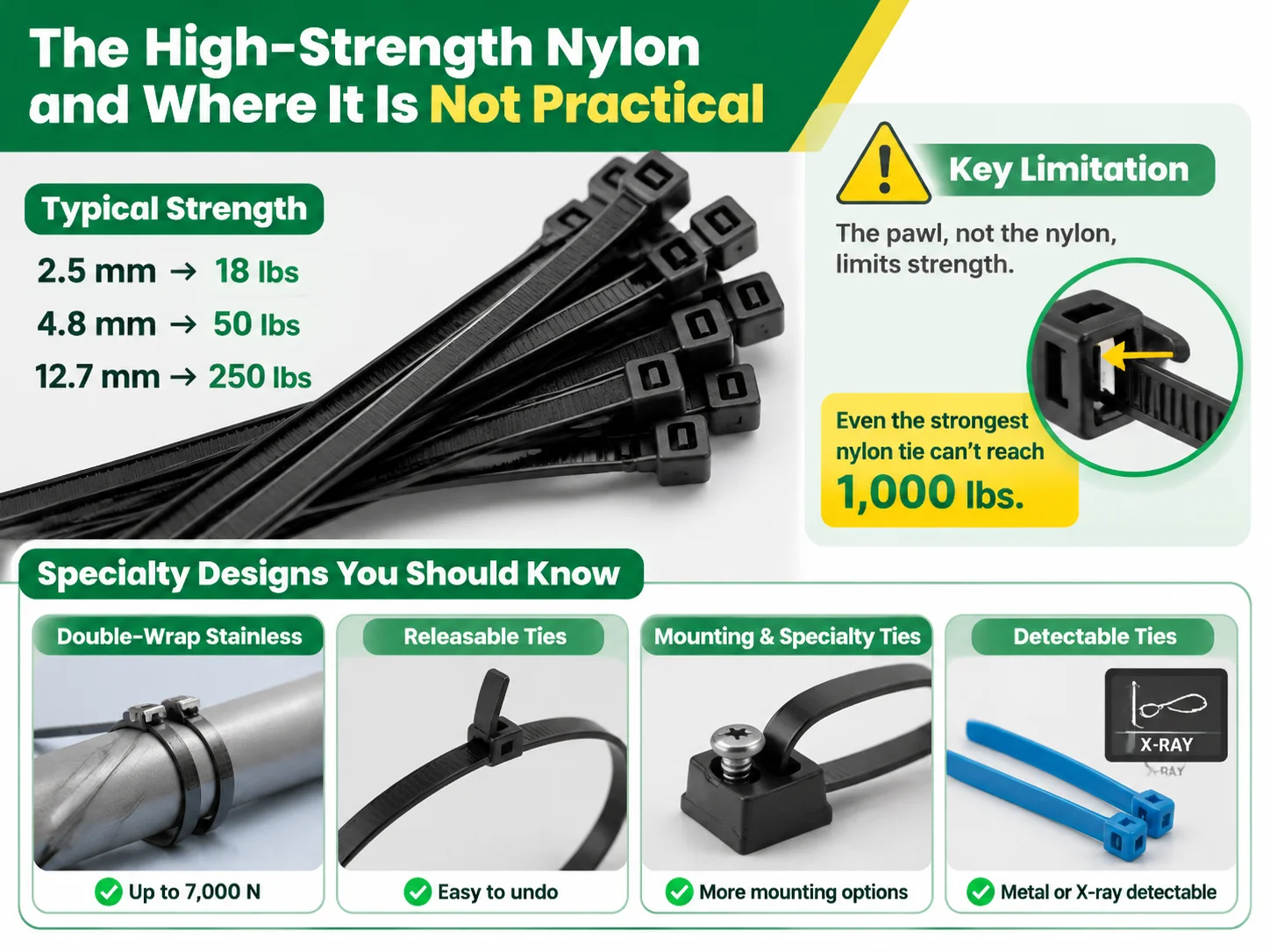
For most cable purposes, Nylon 6/6 is a good choice. It is an inexpensive and fast method of connecting cables, when dealing with the correct size of a cable bundle. For instance, 2.5 mm has approximately an 18-lb capacity, while 4.8 mm has 50 lbs and 12.7 mm weighs at around 250 lbs.
Here these values are for new spirals being pulled at ambient temperature. During its usage, the value decreases as standard conditions are not guaranteed once corners come into play. At a temperature of 60 °C, nylon loses about 20 percent of its tensile strength; the number decreases at 90 °C.
The limitations come more from how nylon spirals work than the fact that it is a nylon. In other words, the mechanism provides the necessary grip rather than the material itself; the actual load remains on a tool that uses a pawl to lock through a serrated strap. Increasing the width of the strap will yield additional parallel teeth, but the pawl will fail much before the strap itself does, which is why no amount of material engineering has ever led to the development of a nylon tie that would be able to withstand the weight of 1,000 lbs. Thus, any company, which claims otherwise, has either made an error in measuring something else or they are mistakenly describing the properties of a stainless tie under the nylon category.
Specialty Designs You Should Know
There are a number of products that deal with specific problems between the two families of products.
Double-wrap stainless. When two wraps of one strap make it through a single locking head, the load will be distributed more evenly than with two independent ties as it will tensioned in one motion instead of in two. Tested configurations can achieve 7,000 N which is the easiest way to surpass the limits of a single strap.
Releasable ties. There is a tab that permits the user to release the pawl in order to undo the tie which will frequently be useful in temporary installations but the release part decreases the amount of strength of the tie making it unsuitable for heavy-duty use.
Mounting ties and specialty ties. There are screw mounts, edge clips and pipe clamps to choose from. The mount can serve as the support while the strap has little to do with load bearing so in this case, a 50 lbs screw mounting ties can support more weight than the limitation seeks to indicate.
Detectable ties. These ties can either be metal detectable or made of polymers that can be seen on X-ray making them very important in the food and drug industries as any material dropping into the food should be found before production can resume.
Understanding the Specific Applications of Each Type by Setting
It is generally accepted in the industry that the environment dictates material use more often than the load does, and there are many specific applications associated with four cases covered below.
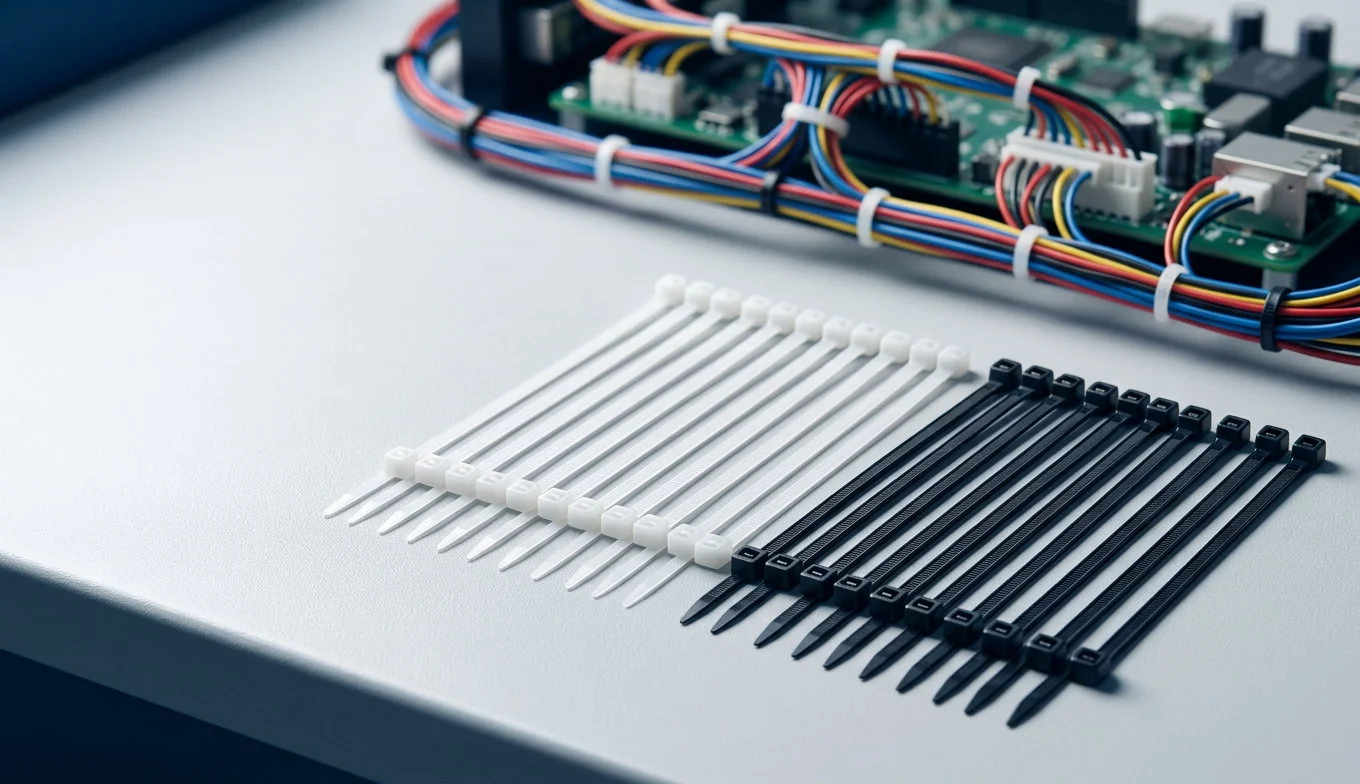
Cable Management for Indoor Use: Most installers would select only one or two sizes of nylon for all indoor installations (e.g., nylon 4.8 from 4.8 to 7.6 mm). A panel builder or electrical contractor would procure these sized cable ties in large orders based on their respective installations.
Cable Management for Outdoor Use, including Solar Cable Management: It has been noted that even outdoor installers utilize stainless steel ties without concern for the applied load; specifically, where soft cable insulation exists, the installation of nylon ties would be avoided due to the potential for thermal cycles to create failure.
Marine Applications: Marine contractors would standardize on the use of 316 stainless steel ties for all marine installations regardless of the loads; specifically, guidelines for all marine installations are acceptable.
Cable Management for Food, Beverage and Pharmaceutical Applications: Equipment fabricated from stainless steel 316 material is recommended for all food applications where cleanliness is a major concern for regulatory compliance.
The trend illustrates that nylon cable ties are usually selected when failure would cause the situation to be inconvenient, while stainless steel ties would be used when failure is not convenient but costly or potentially dangerous. Furthermore, it can be stated that load requirements factor into the overall decision only after the aforementioned distinctions are identified. The considerations associated with how to select the appropriate size and material of стяжки тяжелого назначения.
Companies that Produce High-End Products
Four manufacturers make up most of what is used as specification grade products, and the four occupy different levels within the classification not fully described as a full-line manufacturer.
Panduit is based in Tinley Park, Illinois, and its Pan-Steel MLT is the reference product for bands made from stainless steel. The MLT4DEH-Q316 is a 12.7 mm band made from 316 series stainless steel which has a load capacity of 800 lbs (3,560 N) and is rated for continuous operation at temperature of 538 F (270 C) as wel as having UL safety certification file number E56854. The larger products in this line have a load capacity of 1,200 lbs. The strengths of this product line are documentation and availability. Data sheets exist for each product stating specifications and metal requirements for stainless steel and the UL certification file can be accessed for verification. Product prices for wide stainless steel bands range between $1-$3 per unit, while products manufactured from thinner stainless steel grade can run between $40-$90 for 100 units.
HellermannTyton has its headquarters in Germany, but manufacturing operations exist in Milwaukee, Wisconsin, and they cover both product families. The MBT metal line runs loads of 540 N to 2,700 N (121-607 lbs), while heavy duty nylon products can operate up to 7,000 N. Pricing for their stainless steel products is slightly lower than that for the products produced by Panduit.
Thomas & Betts is now part of ABB and is the North American brand in electrical channel products and is particularly adept in the products purchased by electrical contractors. The primary asset of this approach is the availability of millage products rather than its technical performance. The stainless offering is limited in scope in relation to the first two companies mentioned.
Cable Ties Unlimited as well as other distributors have some relevance to the very small quantity marketplace where an OEM customer is simply unable to place an order due to minimum order quantities.
We are positioned in the OEM marketplace where we manufacture products primarily in volume. Our companies manufacture nylon ties from 2.5 mm to 12.7 mm, and stainless ties in 304 or 316, coated or uncoated. Length, width, and packaging of the product are decided based on an order, representing the OEM approach rather than the distribution process.
Specifications for Product Comparison
There are five measurements that determine whether two different pricing structures are actually for the same product. All of these measurements must be communicated on the purchase order to eliminate supplier error.
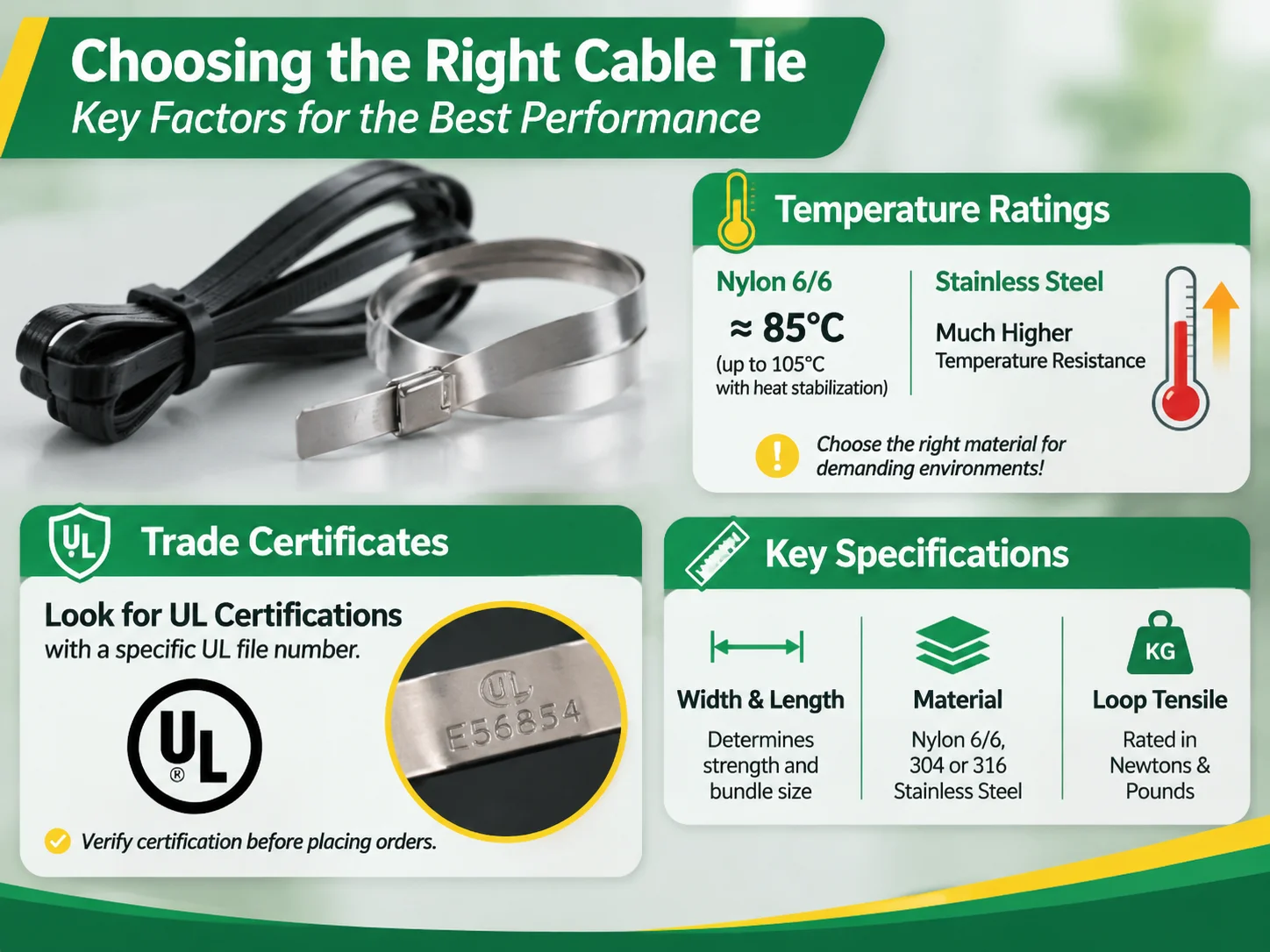
Width and length of the tie: width determines how strong the tie is, whereas length determines the maximum bundle diameter. If the tie is too long then it must be trimmed, creating weak points in the tie.
Material specifications: nylon 6/6 for nylon ties; either 304 or 316 for metal ties. It is important to specify the alloy used, as the performance of each type varies considerably.
Loop tensile measurements in newtons and pounds: both of these measurements should be presented on the purchase order.
Temperature parameters: each individual supplier will have different temperature ranges. Nylon has a maximum continuous temperature tolerance of approximately 85 degrees Celsius or 105 degrees Celsius if it is heat-stabilized, although the tensile strength of the material deteriorates considerably before reaching these limits. Stainless steel has significantly higher temperature Ratings, which makes it suitable for use in applications such as engine compartments as well as boiler rooms.
Trade Certificates: The first criterion is to obtain UL certification that provides the user with a specific UL file number and also indicates the establishment of the convention of standards. Certification pertaining to a product is what auditors ask for, so it is much better to obtain this information before and not after placement of orders.
Price Range versus Price
| Продукт | Типичная цена | Price Factors Affecting Product Price |
|---|---|---|
| Nylon 4.8 mm x 200 mm, bag of 100 | $4 – 10 | UV stabilisation, brand, package size |
| Nylon 7.6 mm x 300 mm bag of 100 | $10 – 25 | Tensile grade, colour which establishes its classification, certification factors |
| Nylon 12.7 mm x 500 mm bag of 100 | $25-60 | Largest standard nylon at 250 lb class |
| Stainless steel 4.6 mm x 200 mm pack of 100 | $20-$45 | 304 grade versus 316 grade, either insulated or bare |
| Stainless 12.7 mm x 500 mm pack of 100 | $70-$180 | Grade coatings, UL certifications |
| Stainless tension tool | $150 – $600 | Manual versus automatic, cut-off process considerations |
There are two points in this pricing table that are critical to note. The first point relates to the use of an appropriate tool. The user of a stainless steel tie will be using it by hand, thus limiting the pretension applied prior to locking the tie because the ball positioned at the locking mechanism needs to be subjected to sufficient tension in order for it to function properly. Thus a job that involves the use of 300 ties without the application of an appropriate tool will result in the application of pretension to 300 ties.
Secondly, it is critical to note the price per piece for branded stainless steel. Using $2.00 for the cost of a thousand tie project, this means you will spend $2,000.00 on ties alone which will flow over to large projects going to factory supply. Due to this expense, specifications refer to the class of the product used and not the brand as with most consumer products allowing for at least one of the reasons why large projects make the shift to factory. The economics found in volume are illustrated by the 8 inch black UV heavy duty tie provided in packs of 100, where the price per 1000 ties is the negotiated price by the plant—despite the fact that the sales approach is to sell the 100 pack at retail.
Selection Criteria Chart by Application
| Применение | Product Applicable | Manufacturers to Review |
|---|---|---|
| Indoor panel wiring/cable harness usage | Nylon 4.8 millimeter in either natural or black color | HellermannTyton, Thomas & Betts, Igoto |
| Support indoors for cables in cable trays/conduits | Nylon 7.6 mm – 12.7 mm, UV black | HellermannTyton, Panduit, Igoto |
| Outdoor use: solar array or cable management | Stainless Steel 316, 4.6mm to 8.0 mm, coated | Panduit MLT, HellermannTyton MBT, Igoto |
| Marine, rail, offshore cable support | Stainless Steel 316, 12.7 mm, coated | Panduit Pan Steel, HellermannTyton MBT |
| Food/beverage wash down areas use | Stainless Steel 316 encapsulated or detectable polymer | Panduit, HellermannTyton, Igoto |
| Fixed structure with loads exceeding 600 pounds | Double wrapped stainless steel or two 12.7 millimeter bands | Panduit, HellermannTyton, factory supply |
| Loads exceeding 1,000 pounds | Bolted clamp or clevis is used instead of ties | Structural. |
Direct Manufacturer
Cable ties are devices used in bundling, while the items mentioned above 800 lbs are meant for supporting cables and pipes not for rigging purposes. Once the load is an item of equipment and not a bundle, the fixing hierarchy begins from bolted and goes down, therefore ties are not included.
Часто задаваемые вопросы
Can zip ties hold 1000 lbs?
Nylon cannot hold that amount, in fact, no nylon zip tie can meet this standard. The maximum load for the strongest nylon tie of 12.7 mm thickness is about 250 lbs. On the contrary, ties made of stainless steel can withstand that load: the largest Panduit Pan-Steel ties can handle 1200 lbs whereas the 12.7 mm 316 tie can hold 800 lbs. In case of 4:1 safety factor, the weight of 1000 lbs requires an equivalent of 4000 lbs, thus the best solution would be to apply two bands or a double wrap or bolted fixing instead of making use of just one tie.
What are the best стяжек повышенной прочности?
If strength is the most important issue, then the best choice will be the stainless steel ties made by Panduit in the Pan-Steel MLT series or those manufactured by HellermannTyton in the MBT series. When it comes to industrial bundling, a 7.6 mm or 12.7 mm nylon tie made by one of the previously mentioned producers or any other manufacturers, such as Igoto, might be applied instead. It is worth noting that the decision will depend on the environment.
Что сильнее стяжки?
A stainless band tie while the same applies to screw-mounted cable clamps as well as strut clamps; thus, whether you use a tie or one of these products depends on where the load is actually being carried by the structure or the strap.
What is the strength required to break a zip tie?
Loop tensile ratings are reported as the force required to actually break a new tie pulled slowly through a calibrated fixture at 23 °C. A nylon tie sized 4.8 mm breaks at 50 lbs while a nylon tie of size 7.6 mm breaks at 120 lbs while the one of size 12.7 mm breaks at 250 lbs but a stainless band sized 12.7 mm can withstand a breaking force of approximately 800 lbs. However, the breaking force is always lower in service due to the edges, temperatures, UV light and installation quality hence working load is only 25% of the rating for static service.
Ссылки
- Panduit — Pan-Steel Stainless Steel Cable Tie System
- HellermannTyton — MBT Metal Cable Tie System
- Cable Ties Unlimited — Tensile Ratings and Material Data
- UL Solutions — Cable Tie Recognition and Testing
- Thomas & Betts — Cable Management and Fixing Products
Заключение
Альтернатива strongest ties in the market are made of stainless band and they have a ceiling strength rating of about 1,200 lbs; not the 4,000 lbs by means of a strap. The strength of nylon ties reaches a maximum of 250 lbs due to the working nature of the pawl notwithstanding the fact that it is not related to the quality of the polymer or other considerations.
The strength of the ties should not only depend on the load it carries but more importantly in the environment of the application.