




فنون وحرف ربط الحبال: فنانون، معارض وأفكار DIY
إذا تجولت في أي ممر للأدوات، ستجد أن رباط السحاب هو أقل الأشياء شاعرية على الرف. إنه مجرد شريط من النايلون، سلسلة من الأسنان، ورأس قفل صغير. ولكن في الاستوديوهات من نيويورك إلى مونتريال،, فن رباط السحاب جعل هذا المنتج القابل لإعادة الاستخدام العادي واحدًا من المواد النحتية المفاجئة في العقدين الماضيين. يتم استخدام آلاف من أربطة السحاب من قبل الفنانين لصنع شعاب مرجانية متلألئة، وتعليقات بكسلية، و“كائنات” غريبة، تنمو في حدائق المدن. نفس العنصر الرخيص والمتكرر صناعيًا الذي يربط الأسلاك خلف التلفاز الخاص بك يمكن أن يصبح الآن وسيلة لمناقشة ثقافة المستهلك، والهوية، وأشكال الطبيعة.
ستتضمن هذه الدليل معلومات عن الفنانين الذين جعلوا هذه الوسيلة مشهورة، والمعارض العامة والمشاريع المهمة، وأفكار الأعمال، ومعلومات عملية عن فنون وحرف رباط السحاب التي يمكن القيام بها في المنزل، وكيفية اختيار أربطة السحاب المناسبة لعملك الإبداعي.
فن رباط السحاب هو نحت حديث، وتركيب، وبناء مصنوع أساسًا من أربطة النايلون. يستفيد الفنانون من نظام القفل الذاتي الذي توفره الأربطة، والمظهر المتسق الذي توفره نفس الشكل، والطبيعة الرخيصة للأربطة مما يسمح بالعمل على نطاق واسع. بعض من أبرز ممارسي هذا الشكل الفني تشمل سوي بارك، إليزابيث بيكارد، وسارة لوشتنر، التي تعرض فنونها آثار الإنتاج الضخم والاستهلاكية.
لماذا أصبحت أربطة السحاب مادة فنية جدية
وُلد رباط السحاب كحل صناعي بحت. طوره المهندس الكهربائي ماوروس لوغان في أواخر الخمسينيات بعد أن رأى عمال الطائرات يكافحون لتجميع أميال من الأسلاك يدويًا، وأصبح التصميم هو الأصل رباط سلكي Ty-Rap. لم يتخيل أي شخص معني به أنه سيعلق في معرض. وهذا هو بالضبط السبب الذي يجعل الفنانين يجدونه مثيرًا للاهتمام.
أربع خصائص تجعل رباط السحاب معبرًا بشكل غير عادي:
- إنه يجمع نفسه بنفسه. بفضل آلية القفل الذاتي, ، يمكن لكل رباط أن يقفل على رباط آخر دون الحاجة إلى غراء، أو لحام، أو أدوات. يمكن أن يتطور النحت رباطًا بعد رباط، تمامًا مثل خلية تتكاثر.
إنه وحدة مثالية. كل رباط من هذه الدفعة هو عمليًا نفس الشيء. بمجرد أن تكرر نفس القطعة آلاف المرات، تحصل على نسيج، وإيقاع، وتصميم لا يمكن إنتاجه مع كائن واحد.
إنه رخيص وغير ملحوظ. لا يستحق ذكر رباط السحاب. إن استخدامه بأعداد كبيرة يبرز مدى البلاستيك القابل للتخلص منه الذي لدينا، ومن ثم لماذا هو مثالي لتسليط الضوء على الإنتاج الضخم عبر الفن.
يعمل مثل الألياف. يمكن قطع الرباط، أو ثنيه، أو نشره، أو نسجه بطريقة تجعله يعمل كخيط صلب، وليس كعنصر بلاستيكي.
من الواضح لماذا العديد من الفنانين المعروفين في فن رباط السحاب لديهم خلفية في إنتاج الأقمشة لأن أشياءهم غالبًا ما تبدو كما لو كانت قد أُنجزت باستخدام تقنيات الأقمشة.
جميع الخصائص المذكورة أعلاه تعطي فكرة عن الرسالة المزدوجة. 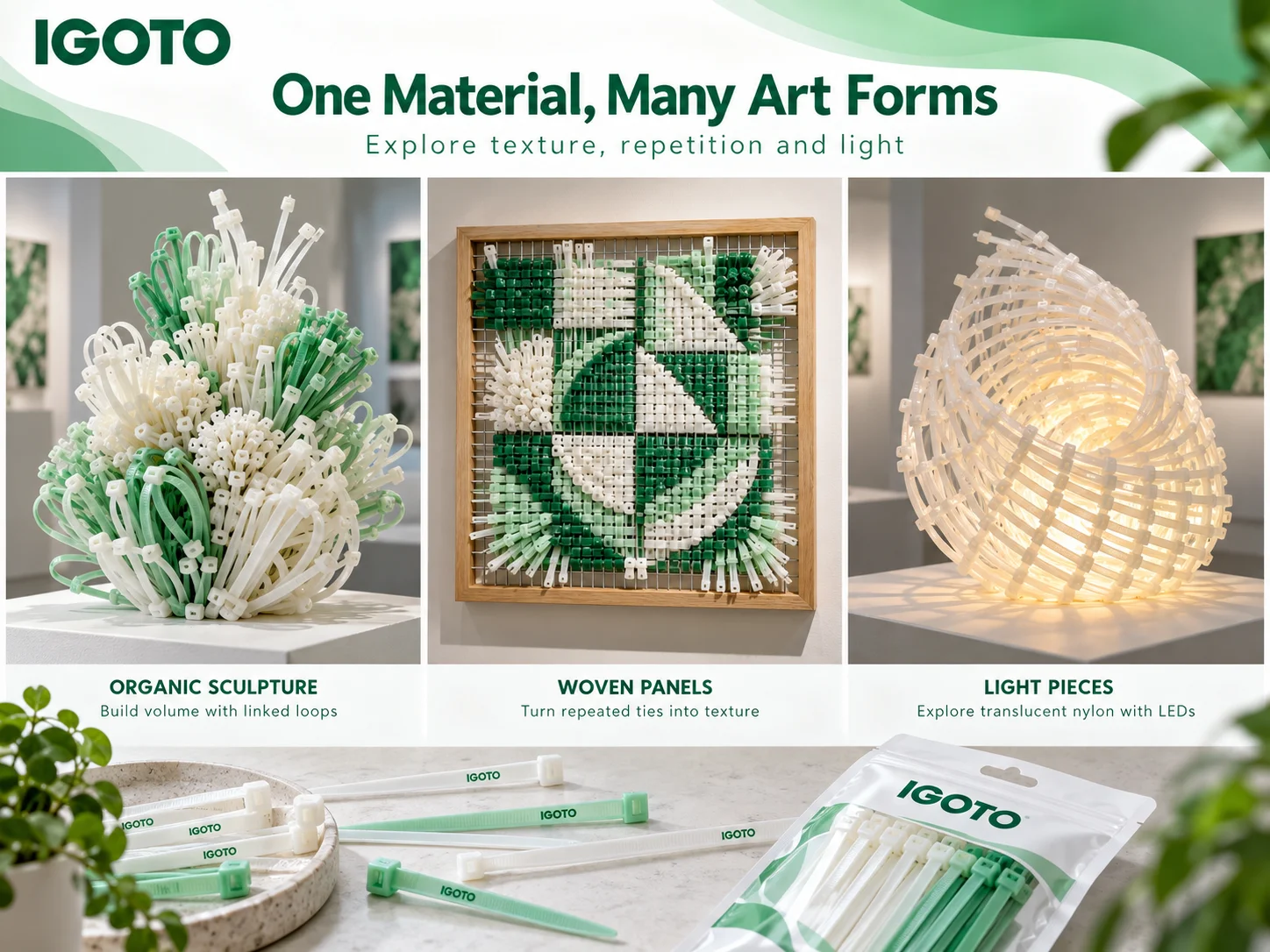
فنانون مشهورون في فن رباط السحاب وأعمالهم
الفنانون أدناه هم من بين الأسماء الأكثر توثيقًا في فن رباط السحاب. كل منهم يستخدم نفس المادة الأساسية بطريقة مختلفة جدًا.
سوي بارك: أشكال عضوية من البلاستيك الصناعي
إذا أشرنا إلى الوسيط لشخص ما، فلا يمكن أن يكون إلا سوي بارك. وُلدت في سيول وموطنها هو نيويورك. تخرجت بارك من جامعة إيوها للنساء بدرجة بكالوريوس وفنون ماجستير في فنون الألياف وقد تدربت في العمارة وتصميم الديكور الداخلي. التماثيل التي أنشأتها مصنوعة من روابط الكابلات الملتوية في أشكال حيوية مثل قناديل البحر، والجراثيم، والطحالب، والأمواج المتدحرجة في الليل.
تستخدم بارك طريقة الصبغ للتأثير على مظهر المادة التي تُستخدم على نطاق واسع. وقد صرحت أن كل قطعة تختلف عند زاوية معينة. علاوة على ذلك، فإن تراكم هذه التفاصيل يعطي الحياة للأعمال الفنية. أعمالها الأخيرة مثل "المزيج المخمر" أو "الجزيء" تجمع بين درجات لونية مختلفة وتقترح أن الوحدة ستتحقق إذا اجتمع الناس.
إليزابيث بيكار: نظم إيكولوجية متلألئة من روابط الكابلات
إليزابيث بيكار هي فنانة من مونتريال تقوم بلف وثني وأيضًا نسج روابط الكابلات لتشكيل أشكال مضيئة تشبه التكوينات المعدنية والميكروبات والحيوانات الموجودة في أعماق البحر. لقد عملت مع هذه الوسيلة منذ عام 2011 ويُقدّر أنها استخدمت أكثر من 300,000 رابط كابل حتى الآن منذ أن بدأت استخدامها. تصبغ بيكار روابط الكابلات باستخدام ألوان باستيل، وألوان طبيعية بالإضافة إلى ألوان الفلورسنت التي تتلألأ تحت الأشعة فوق البنفسجية. بالإضافة إلى ذلك، تستخدم صناديق الضوء أو الألواح الساطعة لإضاءة المادة النايلون.
واحدة من أولى تركيباتها بعنوان “فلوط” (2011) تتكون من 15,000 رابط كابل بالإضافة إلى الزجاج والفولاذ والضوء الفلوري. تتميز أعمالها الأخرى بعناوين مثل “كلوروفايتا”، “نافيكولا” و“سترونجيولوسينتروتوس”، وهي مستندة إلى أسماء الطحالب وقنافذ البحر على التوالي.
سارة لوشتنر: نسج روابط الكابلات يلتقي بالرسم
سارة لوشتنر، فنانة من شيكاغو، درست في مدرسة معهد الفن في شيكاغو، واكتشفت روابط الكابلات بالصدفة. كان لديها أكوام من روابط الكابلات المصنوعة يدويًا في مجموعتها التي لم تكن ذات فائدة كبيرة حتى صادفت بعض شبكات الدجاج. ألهمها ذلك لدفع روابط الكابلات عبر الشبكة وإغلاقها.
نتيجة لذلك، أنشأت الفنانة هذه العناصر ذات الوجهين باستخدام أنابيب نحاسية لتأطير القطع. من جانب، تبدو أعمالها ناعمة ورقيقة بينما من الجانب الآخر تبدو سلسة ومتساوية. كما أنها تصبغ روابط الكابلات يدويًا بدلاً من استخدام ألوان المصنع، مما يضيف أصالة لعملها.
بافيل سينييف: أشكال سلكية مرتبطة بروابط الكابلات
ليس كل الفنانين يخفي روابط الكابلات داخل الشكل. يلف بافيل سينييف مزيجًا من الأسلاك السوداء والبيضاء في أشكال ثلاثية الأبعاد، بسيطة إلى حد ما وغير واقعية، ويستخدم روابط الكابلات لتأمين الشكل. بينما يحتفظ الناتج بالوظيفة الأصلية لرابط الكابل، أي ربط السلك معًا، فإنه يخلق طريقة جديدة لاستخدام رابط الكابل. أحيانًا، أفضل الأعمال الفنية باستخدام روابط الكابلات تسمح فقط للمثبت بأداء وظيفته الأساسية في بيئة جديدة.
آرثر زورن: جمال الروابط المستهلكة
الفنان الفيرموني آرثر زورن أنشأ تمثالًا بطول ستة أقدام يسمى “تحرر” باستخدام روابط ZIP المستعملة. قال في بيان الفنان الخاص به إنه استخدم حوالي 30 رابطًا لتثبيت الفروع أثناء تجميع أرجوحة مقعد كان عليه إزالة جميع الروابط بمجرد أن أصبحت الهيكل مستقرة. تم عرض العمل الفني في مركز شافي للفنون في روتلاند في عام 2025 كجزء من المعرض المسمى “إعادة تخيل II: فن إعادة التدوير.” حجم هذه القطعة متواضع مقارنة بحجم بارك وبيكاد، لكن تجسيدها لفكرة إعادة الاستخدام مثير للإعجاب.
روابط ZIP كبيانات وهوية
روابط ZIP هي أيضًا جزء من فن البيانات، كما يتضح في قطعة نشرت في مجلة تصور البيانات نايتنجيل. في هذه القطعة، أنشأ فنان “بورتريه” مجتمعي حيث يمثل لون رابط ZIP مجموعة المهارات الخاصة التي حصل عليها الفرد وطول الذيل يشير إلى مستوى الكفاءة من 1-3 سم أو لا شيء على الإطلاق. بمجرد أن تم طلاؤها وتصويرها، تحولت الصورة من بيانات من مخطط إلى كائن مادي. إنها حل مثير للاهتمام لمشكلة كيفية عرض الفردية من خلال الأشياء المنتجة بكميات كبيرة.
معارض روابط ZIP ومشاريع عامة تستحق المعرفة
لم يعد فن تمثال روابط ZIP عملًا جديدًا. يظهر في الحدائق، والمعارض الفنية، والإقامات، والعروض الجماعية المنسقة. إليك بعض الأمثلة البارزة:
| المشروع | الفنان | أين ومتى | لماذا هو مهم |
|---|---|---|---|
| علم البيئة في المدينة | سوي بارك | حديقة بيلا أبزغ، هادسون ياردز، نيويورك، 2023 | 32 تمثالًا ملونًا متداخلة في أحواض الزهور، تدمج البلاستيك والنباتات في الفضاء العام |
| حيث يبقى الريح | سوي بارك | مؤسسة I-Park، إيست هادام، كونيتيكت، 2021 | عمل في موقع خارجي باستخدام روابط كابل وخيط أحادي. |
| Site-specific installation | سوي بارك | The Flux Art Fair, Marcus Garvey Park, New York, 2016 | An early example of zip tie sculpture shown outdoors to a general public |
| Ties That Bind | Group show, eight artists including Sui Park | Fowler-Kellogg Art Center, Chautauqua Institution, New York, 2018 | A lace-themed exhibition that used zip ties and other line-based materials to explore intricacy and connection |
| Reimagined II: The Art of Recycling | Group show including Arthur Zorn | Chaffee Art Center, Rutland, Vermont, 2025 | Placed spent zip ties alongside other reclaimed materials in an upcycling context |
City Ecology deserves special mention. Installing plastic sculptures in real flower beds forces a direct comparison between living plants and synthetic imitations, and viewers are left to decide which one looks more alive. If you are planning an outdoor piece of your own, it helps to understand كم تدوم الأشرطة البلاستيكية في الخارج before committing to a season-long display.
The Chautauqua show is interesting for a different reason. Its curator set out to make an exhibition about lace, then realized the idea of lace could be expressed through many materials. Zip ties earned a place because, like lace, a structure full of gaps can still be strong. That is a neat summary of what a woven cable tie form actually is.
The Big Themes: Consumerism, Identity, and Nature
When looking at the works shown above, certain conversations come up.
Consumerism and waste come into play here. The zip tie is made to be discarded immediately after use, and artists who have accumulated thousands of plastic ties into one sculpture shine a light on this very aspect of these plastic structures. Zorn’s ties and the rest of the movement of recycled art point to the problem very evidently; whereas in Picard and Park’s works this concept is conveyed more subtly by showing how an object made out of something associated with waste can be beautiful.
The aspect of identity and belonging surfaces in the works too. Although each tie is identical to the other tie, joined in groups and colored, all of them create something new. The mixed-color pieces by Park and the Roxanne data portrait emphasize that difference by showing how we interact with each other.
Nature versus the synthetic is another discussion note that can come up as related to their works. The zip tie is about as synthetic as a material can get, yet the zip tie sculptures look like living organisms. It is interesting that the more the imitation is successful, the more uneasy the viewer feels, as they realize that the materials being used in the artwork have penetrated nature already.
Zip Tie Arts and Crafts You Can Make at Home
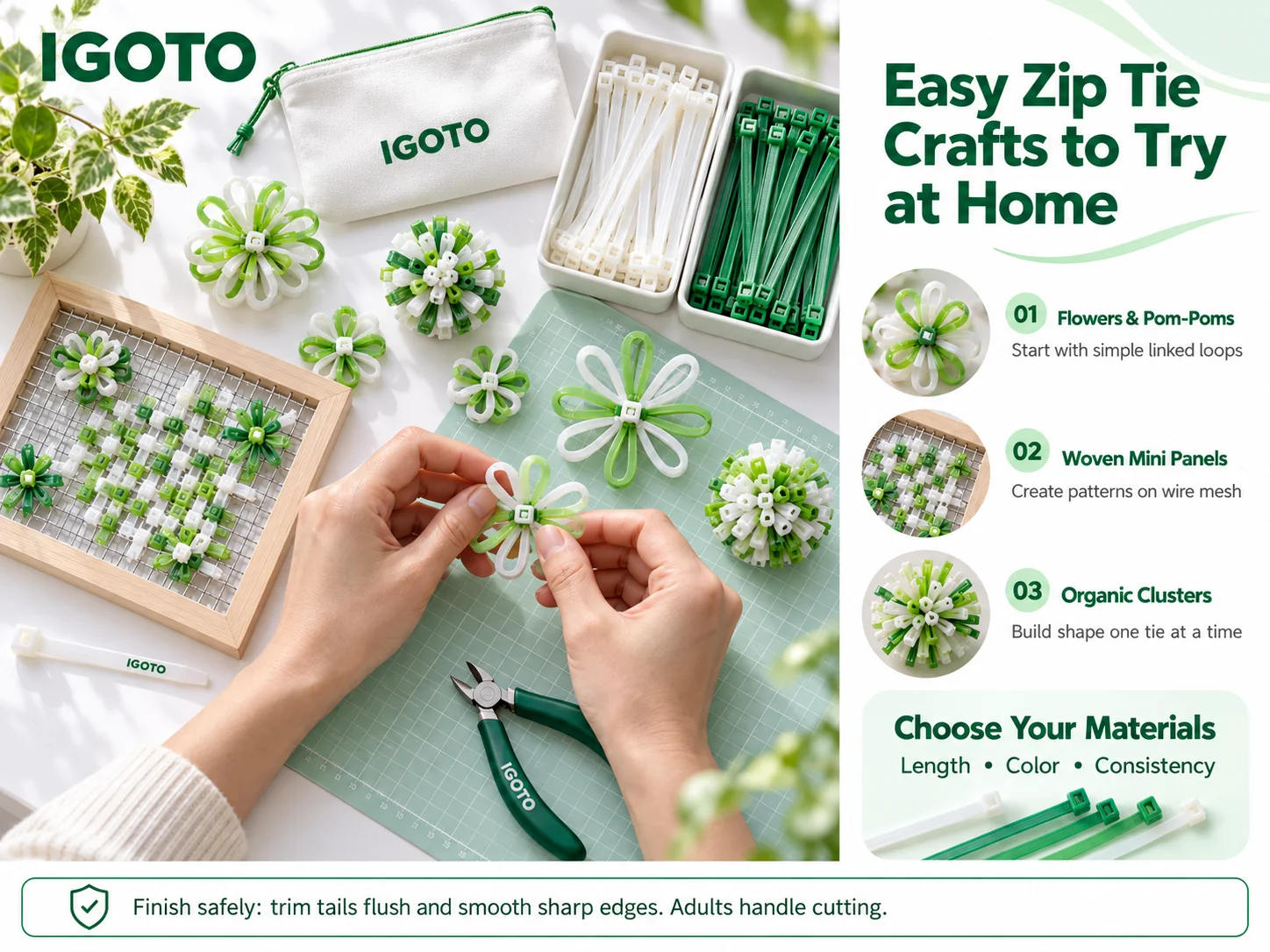
You do not need a gallery budget to try the medium. Most beginner zip tie arts and crafts use only a bag of mixed ties, flush cutters, and patience. Here are projects that answer the common question of what you can actually make out of zip ties, ordered roughly from easiest to most ambitious.
1. Zip-Tie Flowers & Pom-Poms
Take one zip tie and close it into a tiny circle to form the base. Weave in anywhere from 20 to 40 more zip ties into it, locking each and cutting different tail lengths afterward. Spread the tails apart to make a pom-pom. Bright assorted color zip ties make this an easy project with kids or a classroom.
2. Sui Park-Style “Organism” Clusters
Create a chain of chains and keep adding zip ties on different angles. The installation will begin taking shape on its own. Put together a few small pieces on one wall, and you will get a mini version of those Sui Park’s life-form installations that inspired many scholo art clubs.
3. Woven Panel on Chicken Wire
This technique reminds of Leuchtner’s method but is done on a smaller scale. Cut a rectangle or square piece out of a chicken wire, come up with a pattern, and start threading zip ties through hexagons of the wire, and then zip them shut, using colors to fill in the pattern. You may leave the tails long or short, depending on whether you want to get a shaggy look or not. You may also frame the finished piece with wooden strips or pieces of copper pipe to underline its ornamental nature.
4. Lampshades and Light Pieces
As the material is translucent and white, it makes wonderful glowing lighting pieces. This is why Picard uses light boxes. You can wrap zip ties around the frame of a wire lamp shade, or make a free form shell around a low-powered LED bulb.
5. Crowns, Headbands, and Costume Pieces
Fix ties on intervals on a base loop, and leaving its ends straight gives the effect of a crown with spikes. Apply metallic color to it for the purpose of a costume or festival. For the pieces that will be used by people, take time to round off every cut end.
Note: an end of a cut zip tie will have a sharp edge. Any crafting that requires the item to be touched or worn should have its ends cut flat and smoothly sanded. Adults are responsible for cutting the items and being around children while doing it.
6. A Data Portrait of Your Family or Team
Borrow the Nightingale idea: assign each color to a category (a hobby, a skill, a favorite food), let tail length represent how strong the connection is, and arrange the ties on dowels or a board. It is a craft, an infographic, and a conversation starter all at once.
Tips for Better Results
- Buy more than you think you need. Sculptural pieces eat ties fast, and running out mid-project breaks color consistency.
- If you make a mistake, you do not always have to cut. Learn how to فك روابط السحاب دون قطع so you can reposition ties while a piece is still taking shape.
- For temporary displays such as school fairs or events, consider releasable ties from our guide to reusable fastening solutions for temporary setups.
- Scale matters. Tiny ties create dense, furry textures; long ties create bold, graphic lines. For ambitious projects, even the world’s biggest zip ties have found their way into record attempts and oversized displays.
How to Choose Zip Ties for Art Projects
An artist requires different materials and tools than an electrician. While tensile strength is not important for decorative arts such as constructing a flower or wall panel, length, color, finish, and constancy remains highly relevant.
Length and width. For small sculptures, short miniature ties with a length of about 100 mm will be perfect. Standard ties (150-200 mm) provide great versatility for sculptures in general. Order larger ties if needed for crowns and big flowers or structural frames. Our tie wrap sizes guide lays out the standard lengths and widths.
Color. Only natural translucent or white nylon provides the needed base for dyeing and designing light sculptures. Although uses of colored ties allow achieving greater results, it limits color palette. Both Park and Picard manufacture ties by themselves because nylon most effectively accepts colors formulated for artificial fibers. Such dyes are usually dissolved in hot water allowing for smooth color changes.
Constancy. When making a large sculpture, only ties of the same production batch should be used. Slight differences in color and head size are noticeable when the ties are together. Buying large quantities from the manufacturer will help professional artists a lot in this area.
If you are going to construct some outdoor sculptures, you should consider that standard natural nylon and colored nylon forms degrade fast under the sun and become brittle with one or two seasons. For garden sculptures and public art installations, you should opt for UV-stabilized ties that usually come in black or consider the project as temporary in case of not having the needed materials.
الأسئلة المتكررة
What can I make out of zip ties?
Popular zip tie projects include flowers and pom-poms, wall sculptures, woven panels on chicken wire, lampshades, crowns and headbands, garland, holiday ornaments, and data art. Beyond crafts, zip ties are also practical for building frames, organizing supplies, and mounting other artwork.
What are some things I can make with zip ties as a beginner?
Start with a zip tie flower or pom-pom: it needs only a bag of mixed colors and cutters, and it teaches you how ties link and fan out. Once that feels easy, try a small woven panel or a cluster sculpture inspired by Sui Park.
ماذا يسمي البريطانيون أربطة الكابلات؟
In the UK, zip ties are most commonly called cable ties. You may also hear tie wraps, and some people use brand-derived names. In North America, “zip tie” is the everyday term, while “cable tie” dominates in industry. They are the same product.
What is the hottest craft right now for adults?
Trends shift constantly, but upcycling and mixed-media crafts that turn everyday materials into decor continue to attract adult makers. Zip tie weaving fits neatly into that space: it is inexpensive, relaxing, and scales from a small ornament to a gallery-style wall piece.
Is zip tie art the same as tie-dye or necktie crafts?
No, although search engines often mix them up because of the word “tie.” Tie-dye is a fabric dyeing technique, and necktie crafts repurpose old men’s ties into quilts, bags, or pillows. Zip tie art uses nylon cable ties. That said, the worlds overlap slightly: zip tie artists often dye their ties, and a zip tie is a great tool for binding fabric in tie-dye projects.
Can zip tie art last for years?
Indoors, away from direct sunlight and heat, a well-made nylon zip tie sculpture can last for many years. Outdoors, lifespan depends heavily on UV exposure and whether you used UV-stabilized ties.
المراجع
- Sui Park, Wikipedia
- Otherworldly Zip-Tie Sculptures by Sui Park Crawl Across Galleries and Sprout in City Parks, Colossal
- Interlocking Cable Ties Form Undulating Water and Biomorphic Sculptures by Sui Park, Colossal
- Luminescent Zip-Tie Formations by Elisabeth Picard, Colossal
- Sarah Leuchtner Elevates Zip Ties in Her Tactile Art, LUXE Interiors + Design
- Electrifying Art: Sculptures Made of Wire and Cable Ties, WebUrbanist
- Ties That Bind Exhibit, The Chautauquan Daily
- Reimagined II: The Art of Recycling, Rutland Herald
- Plastic Portrait: Visualizing Technical Skills Through Cable Ties, Nightingale
- ماوروس لوغان، قاعة مشاهير المخترعين الوطنية
الخاتمة
The zip tie was invented to solve a wiring problem on an aircraft factory floor. Decades later, it has become a medium for some of the most inventive sculpture being made today, from Sui Park’s park-bed organisms to Elisabeth Picard’s glowing reefs and Sarah Leuchtner’s woven fringe. The possibilities of فن رباط السحاب are still expanding, whether artists are questioning consumer culture, exploring identity, or imitating the forms of nature. And the material’s greatest strength may be how accessible it is: a bag of ties and an afternoon are enough to start. Sometimes the most powerful art really does begin with the most ordinary material.