




Zip Tie Art and Crafts: Artists, Exhibitions and DIY Ideas
If you stroll down any hardware aisle, you will find that zip tie is the least poetic object on the rack. It is just a strip of nylon, a series of teeth, and a small locking head. But in studios from New York to Montreal, zip tie art has made this ordinary reusable product one of the surprising sculptural materials in the last two decades. Thousands of zip ties are used by artists for making shining coral reefs, pixelated hangings, and alien “being,” which “grow” in the parks of the cities. The same inexpensive, industrially repetitive item which binds wires behind your TV can now become a medium for discussing consumer culture, identity, and shapes of nature.
This guide will include information about the artists who made this medium famous, significant exhibitions and public projects, the ideas of the works, practical information on zip tie arts and crafts which can be done at home, and how to pick the right zip ties for your creative work.
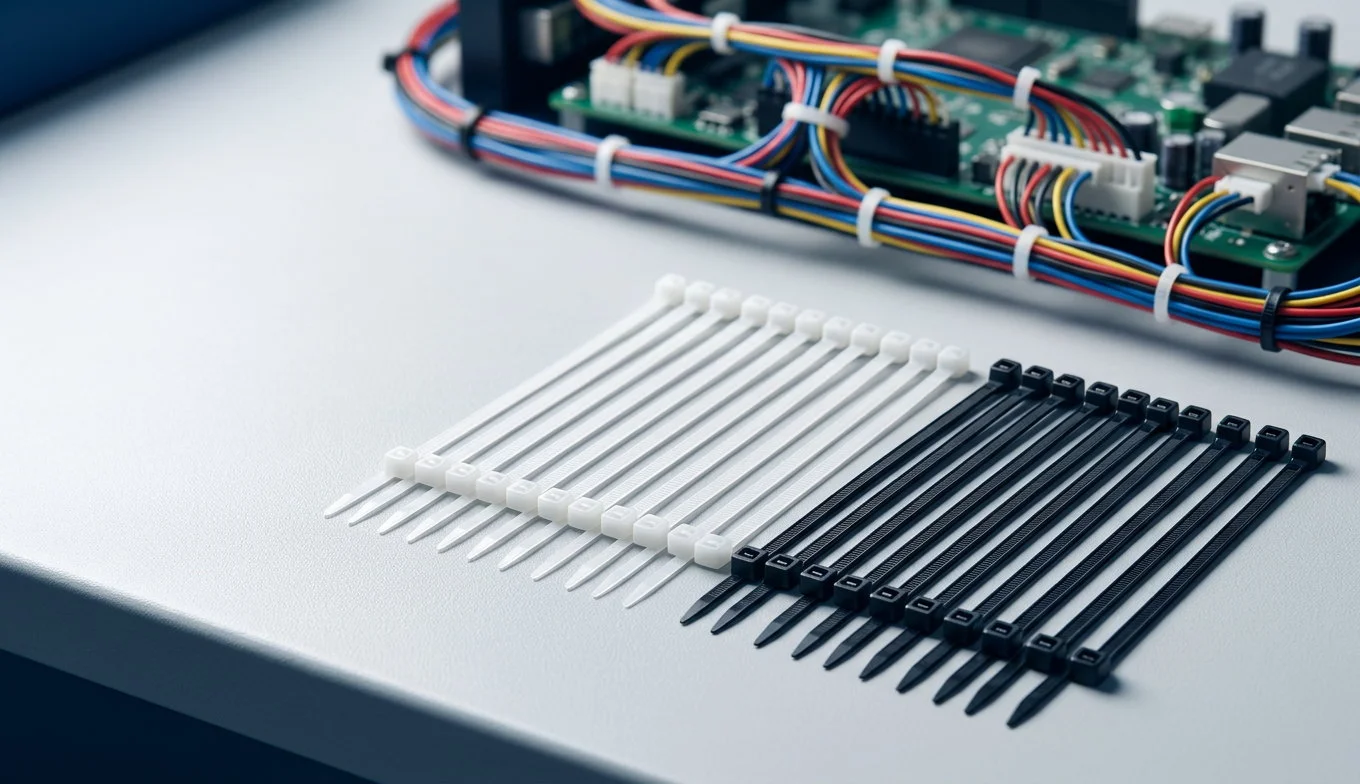
Zip tie art is modern sculpture, installation, and construction made primarily from nylon ties. Artists take advantage of the self-locking system provided by the ties, the consistent look provided by the same shape, and the cheap nature of the ties allowing for the working at a large scale. Some of the leading practitioners of this art form include Sui Park, Elisabeth Picard, and Sarah Leuchtner, whose art showcases the effects of mass production and consumerism.
Why Zip Ties Became a Serious Art Material
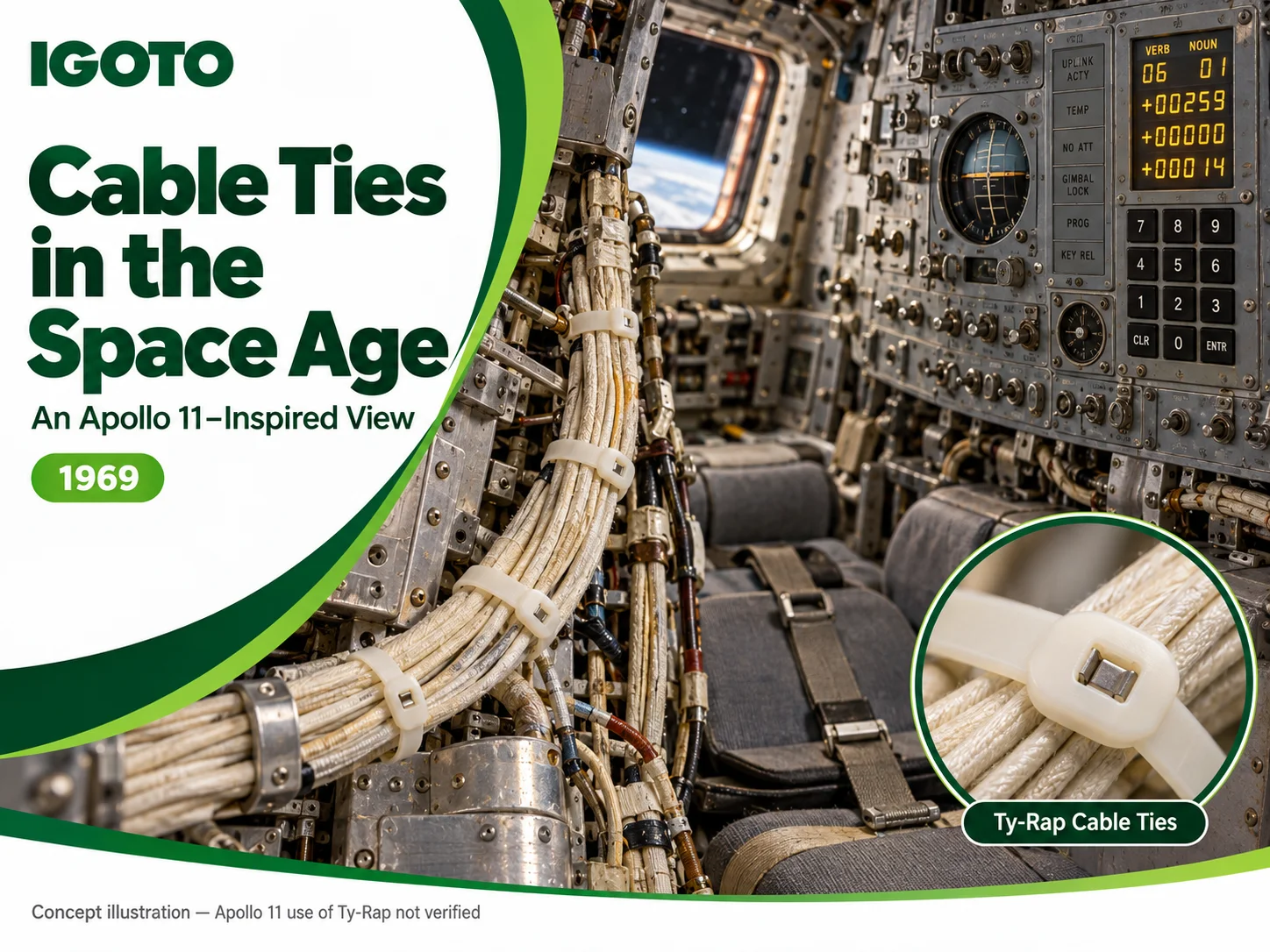
The cable tie was born as a purely industrial solution. Electrical engineer Maurus Logan developed it in the late 1950s after seeing aircraft workers struggle to bundle miles of wiring by hand, and the design became the original Ty-Rap cable tie. Nobody involved imagined it hanging in a gallery. That is exactly why artists find it interesting.
Four qualities make the zip tie unusually expressive:
- It is its own joinery. Thanks to the self-locking ratchet mechanism, every tie can lock onto another tie with no glue, welding, or tools. A sculpture can develop tie by tie, just like a cell which reproduces.
It is an ideal module. Each tie from this batch is practically the same. Once you replicate the same piece thousands of times, you get a texture, rhythm, and design which cannot be produced with one object.
It is inexpensive and unremarkable. A zip tie is not worth mentioning. Its application in such great numbers emphasizes how much disposable plastic we have around, hence why it is ideal for highlighting mass production via art.
It acts like fiber. A tie can be cut, bent, fanned, or weaved in a way that makes it function like a rigid thread, not a plastic item.
It is evident that why many renowned zip tie artists have a background in textile production because very often their things look as if they were done with the use of textile techniques.
Al of the above mentioned qualities give rise to the idea of double message. 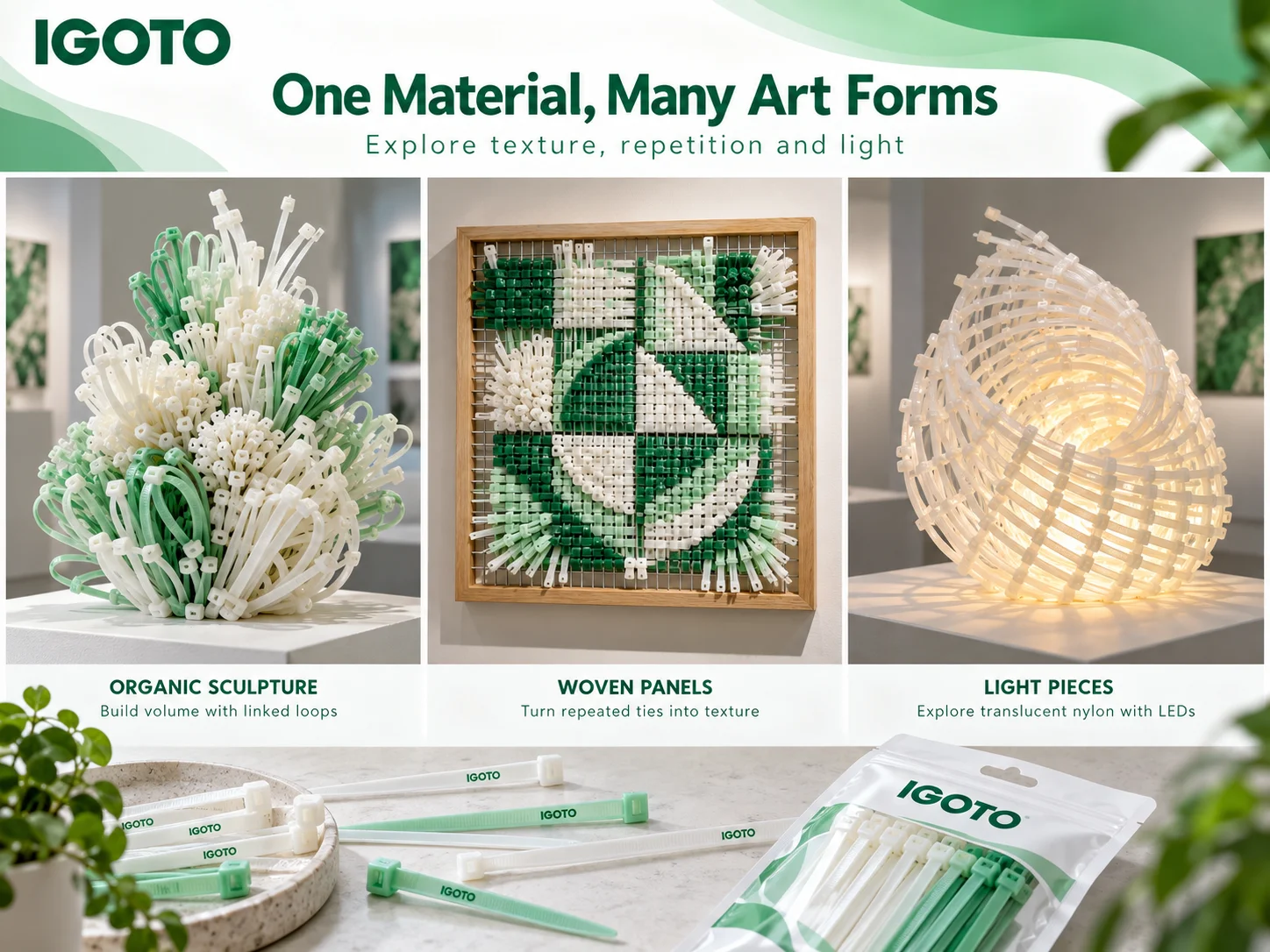
Famous Zip Tie Artists and Their Work
The artists below are among the most documented names in zip tie art. Each uses the same basic material in a very different way.
Sui Park: Organic Forms from Industrial Plastic
If we refer the medium to someone, it could be no other but Sui Park. She was born in Seoul and her hometown is New York. Park was graduated from Ewha Womans University with a BFA and MFA in fiber arts and has trained for architecture and interior design. The sculptures created by her are made of cable ties twisted into biomorphic shapes such as sea anemone, spores, moss and rolling waves at night.
Park uses the dye method to affect the appearance of the material that is widely used. She has stated that each piece varies at a particular angle. Moreover, the accumulation of these details gives life to the artworks. Her latest works such as Fermented Mixture or Molecule combine various tones and suggest that unity will be achieved if people come together.
Elisabeth Picard: Glowing Zip Tie Ecosystems
Elisabeth Picard is an artist from Montreal who curls, bends and also weaves zip ties to form luminous shapes that resemble mineral formations, microorganisms and animals found in deep sea. She has been working with this medium since 2011 and is estimated to have used more than 300,000 zip ties so far since she started using this. Picard colors zip ties using pastel colors, nature colors as well as fluorescence colors that glow under UV rays. In addition, she uses light boxes or bright boards to light the nylon material.
One of her earliest installations entitled “Flot” (2011) consisted of 15,000 zip ties as well as glass, steel and fluorescent light. Her other work features titles like “Chlorophyta”, “Navicula” and “Strongylocentrotus”, and they are based on names of algae and sea urchins respectively.
Sarah Leuchtner: Zip Tie Weaving Meets Painting
Sarah Leuchtner, an artist from Chicago, has studied at the School of Art Institute of Chicago, found out about zip ties by chance. She had piles of home-made zip ties in her collection that were not of much use until she came across some chicken netting. That inspired her to push zip ties through the netting and zip them up.
As a result, the artist created these double-sided items with copper pipes used for framing the pieces. On one side, her works appear soft and fluffy while on the other side they seem smooth and even. She also hand-dyes zip ties rather than using factory colors, which adds authenticity to her work.
Pavel Sinev: Wire Figures Held Together by Cable Ties
Not all artists conceal the zip tie within the form. Pavel Sinev wraps a mixture of black and white wire into three-dimensional shapes, both simple and somewhat surreal, and uses zip ties to secure the shape. While the result maintains the original function of the zip tie, i.e., to tie the wire together, it creates a new way to use the zip tie. Sometimes the best works of art with zip ties only allow the fastener to perform its basic function in a new setting.
Arthur Zorn: The Beauty of Spent Ties
Vermont artist Arthur Zorn created a six-foot sculpture called “Set Free” using used zip ties. He said in his artist statement that he had used around 30 ties to hold branches while assembling a bench swing for which he had to remove all the ties once the structure was stable. The artwork was displayed at the Chaffee Art Center in Rutland in 2025 as part of the exhibition named “Reimagined II: The Art of Recycling.” The size of this piece is modest compared to that of Park and Picad, but its embodiment of the upcycling idea is impressive.
Zip Ties as Data and Identity
Zip ties are also a part of data art, as seen in a piece published by the data visualization magazine Nightingale. In the piece, an artist created a community “portrait” where a color of the zip tie represented the special set of skills obtained by the individual and the tail’s length indicated the level of proficiency from 1-3 cm or not at all. Once painted and photographed, the image turned data from a chart into a physical object. It is an interesting solution to the problem of how to showcase individuality through mass-produced objects.
Zip Tie Exhibitions and Public Projects Worth Knowing
Zip tie sculpture is no longer a novelty act. It appears in parks, art fairs, residencies, and curated group shows. Here are some notable examples:
| Project | Artist | Where and when | Why it matters |
|---|---|---|---|
| City Ecology | Sui Park | Bella Abzug Park, Hudson Yards, New York, 2023 | 32 colorful sculptures nestled into flower beds, blending plastic and plants in public space |
| Where the Wind Stays | Sui Park | I-Park Foundation, East Haddam, Connecticut, 2021 | An outdoor site-specific work using cable ties and monofilament |
| Site-specific installation | Sui Park | The Flux Art Fair, Marcus Garvey Park, New York, 2016 | An early example of zip tie sculpture shown outdoors to a general public |
| Ties That Bind | Group show, eight artists including Sui Park | Fowler-Kellogg Art Center, Chautauqua Institution, New York, 2018 | A lace-themed exhibition that used zip ties and other line-based materials to explore intricacy and connection |
| Reimagined II: The Art of Recycling | Group show including Arthur Zorn | Chaffee Art Center, Rutland, Vermont, 2025 | Placed spent zip ties alongside other reclaimed materials in an upcycling context |
City Ecology deserves special mention. Installing plastic sculptures in real flower beds forces a direct comparison between living plants and synthetic imitations, and viewers are left to decide which one looks more alive. If you are planning an outdoor piece of your own, it helps to understand how long zip ties last outside before committing to a season-long display.
The Chautauqua show is interesting for a different reason. Its curator set out to make an exhibition about lace, then realized the idea of lace could be expressed through many materials. Zip ties earned a place because, like lace, a structure full of gaps can still be strong. That is a neat summary of what a woven cable tie form actually is.
The Big Themes: Consumerism, Identity, and Nature
When looking at the works shown above, certain conversations come up.
Consumerism and waste come into play here. The zip tie is made to be discarded immediately after use, and artists who have accumulated thousands of plastic ties into one sculpture shine a light on this very aspect of these plastic structures. Zorn’s ties and the rest of the movement of recycled art point to the problem very evidently; whereas in Picard and Park’s works this concept is conveyed more subtly by showing how an object made out of something associated with waste can be beautiful.
The aspect of identity and belonging surfaces in the works too. Although each tie is identical to the other tie, joined in groups and colored, all of them create something new. The mixed-color pieces by Park and the Roxanne data portrait emphasize that difference by showing how we interact with each other.
Nature versus the synthetic is another discussion note that can come up as related to their works. The zip tie is about as synthetic as a material can get, yet the zip tie sculptures look like living organisms. It is interesting that the more the imitation is successful, the more uneasy the viewer feels, as they realize that the materials being used in the artwork have penetrated nature already.
Zip Tie Arts and Crafts You Can Make at Home
You do not need a gallery budget to try the medium. Most beginner zip tie arts and crafts use only a bag of mixed ties, flush cutters, and patience. Here are projects that answer the common question of what you can actually make out of zip ties, ordered roughly from easiest to most ambitious.
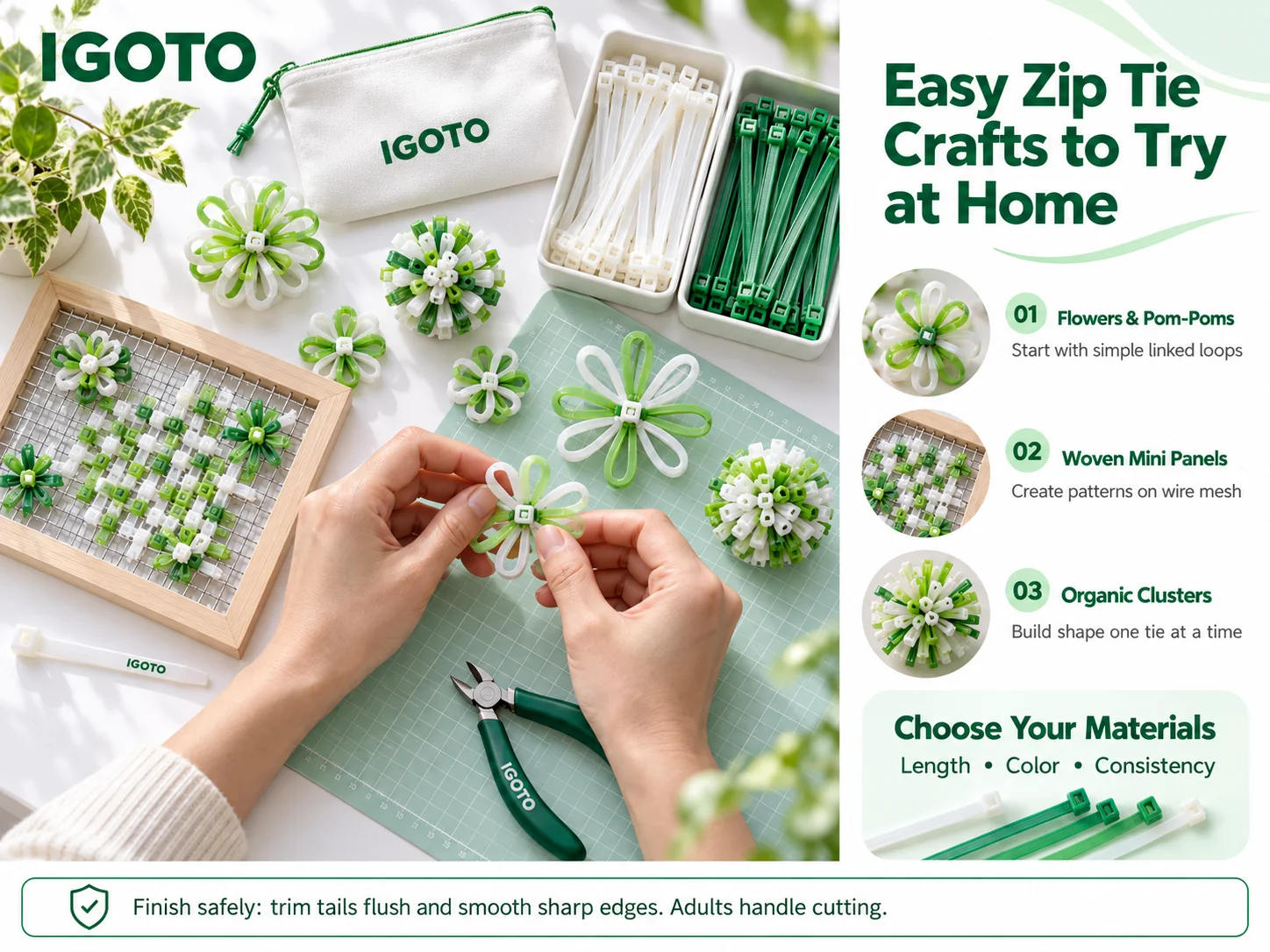
1. Zip-Tie Flowers & Pom-Poms
Take one zip tie and close it into a tiny circle to form the base. Weave in anywhere from 20 to 40 more zip ties into it, locking each and cutting different tail lengths afterward. Spread the tails apart to make a pom-pom. Bright assorted color zip ties make this an easy project with kids or a classroom.
2. Sui Park-Style “Organism” Clusters
Create a chain of chains and keep adding zip ties on different angles. The installation will begin taking shape on its own. Put together a few small pieces on one wall, and you will get a mini version of those Sui Park’s life-form installations that inspired many scholo art clubs.
3. Woven Panel on Chicken Wire
This technique reminds of Leuchtner’s method but is done on a smaller scale. Cut a rectangle or square piece out of a chicken wire, come up with a pattern, and start threading zip ties through hexagons of the wire, and then zip them shut, using colors to fill in the pattern. You may leave the tails long or short, depending on whether you want to get a shaggy look or not. You may also frame the finished piece with wooden strips or pieces of copper pipe to underline its ornamental nature.
4. Lampshades and Light Pieces
As the material is translucent and white, it makes wonderful glowing lighting pieces. This is why Picard uses light boxes. You can wrap zip ties around the frame of a wire lamp shade, or make a free form shell around a low-powered LED bulb.
5. Crowns, Headbands, and Costume Pieces
Fix ties on intervals on a base loop, and leaving its ends straight gives the effect of a crown with spikes. Apply metallic color to it for the purpose of a costume or festival. For the pieces that will be used by people, take time to round off every cut end.
Note: an end of a cut zip tie will have a sharp edge. Any crafting that requires the item to be touched or worn should have its ends cut flat and smoothly sanded. Adults are responsible for cutting the items and being around children while doing it.
6. A Data Portrait of Your Family or Team
Borrow the Nightingale idea: assign each color to a category (a hobby, a skill, a favorite food), let tail length represent how strong the connection is, and arrange the ties on dowels or a board. It is a craft, an infographic, and a conversation starter all at once.
Tips for Better Results
- Buy more than you think you need. Sculptural pieces eat ties fast, and running out mid-project breaks color consistency.
- If you make a mistake, you do not always have to cut. Learn how to undo zip ties without cutting so you can reposition ties while a piece is still taking shape.
- For temporary displays such as school fairs or events, consider releasable ties from our guide to reusable fastening solutions for temporary setups.
- Scale matters. Tiny ties create dense, furry textures; long ties create bold, graphic lines. For ambitious projects, even the world’s biggest zip ties have found their way into record attempts and oversized displays.
How to Choose Zip Ties for Art Projects
An artist requires different materials and tools than an electrician. While tensile strength is not important for decorative arts such as constructing a flower or wall panel, length, color, finish, and constancy remains highly relevant.
Length and width. For small sculptures, short miniature ties with a length of about 100 mm will be perfect. Standard ties (150-200 mm) provide great versatility for sculptures in general. Order larger ties if needed for crowns and big flowers or structural frames. Our tie wrap sizes guide lays out the standard lengths and widths.
Color. Only natural translucent or white nylon provides the needed base for dyeing and designing light sculptures. Although uses of colored ties allow achieving greater results, it limits color palette. Both Park and Picard manufacture ties by themselves because nylon most effectively accepts colors formulated for artificial fibers. Such dyes are usually dissolved in hot water allowing for smooth color changes.
Constancy. When making a large sculpture, only ties of the same production batch should be used. Slight differences in color and head size are noticeable when the ties are together. Buying large quantities from the manufacturer will help professional artists a lot in this area.
If you are going to construct some outdoor sculptures, you should consider that standard natural nylon and colored nylon forms degrade fast under the sun and become brittle with one or two seasons. For garden sculptures and public art installations, you should opt for UV-stabilized ties that usually come in black or consider the project as temporary in case of not having the needed materials.
Frequently Asked Questions
What can I make out of zip ties?
Popular zip tie projects include flowers and pom-poms, wall sculptures, woven panels on chicken wire, lampshades, crowns and headbands, garland, holiday ornaments, and data art. Beyond crafts, zip ties are also practical for building frames, organizing supplies, and mounting other artwork.
What are some things I can make with zip ties as a beginner?
Start with a zip tie flower or pom-pom: it needs only a bag of mixed colors and cutters, and it teaches you how ties link and fan out. Once that feels easy, try a small woven panel or a cluster sculpture inspired by Sui Park.
What do the British call zip ties?
In the UK, zip ties are most commonly called cable ties. You may also hear tie wraps, and some people use brand-derived names. In North America, “zip tie” is the everyday term, while “cable tie” dominates in industry. They are the same product.
What is the hottest craft right now for adults?
Trends shift constantly, but upcycling and mixed-media crafts that turn everyday materials into decor continue to attract adult makers. Zip tie weaving fits neatly into that space: it is inexpensive, relaxing, and scales from a small ornament to a gallery-style wall piece.
Is zip tie art the same as tie-dye or necktie crafts?
No, although search engines often mix them up because of the word “tie.” Tie-dye is a fabric dyeing technique, and necktie crafts repurpose old men’s ties into quilts, bags, or pillows. Zip tie art uses nylon cable ties. That said, the worlds overlap slightly: zip tie artists often dye their ties, and a zip tie is a great tool for binding fabric in tie-dye projects.
Can zip tie art last for years?
Indoors, away from direct sunlight and heat, a well-made nylon zip tie sculpture can last for many years. Outdoors, lifespan depends heavily on UV exposure and whether you used UV-stabilized ties.
References
- Sui Park, Wikipedia
- Otherworldly Zip-Tie Sculptures by Sui Park Crawl Across Galleries and Sprout in City Parks, Colossal
- Interlocking Cable Ties Form Undulating Water and Biomorphic Sculptures by Sui Park, Colossal
- Luminescent Zip-Tie Formations by Elisabeth Picard, Colossal
- Sarah Leuchtner Elevates Zip Ties in Her Tactile Art, LUXE Interiors + Design
- Electrifying Art: Sculptures Made of Wire and Cable Ties, WebUrbanist
- Ties That Bind Exhibit, The Chautauquan Daily
- Reimagined II: The Art of Recycling, Rutland Herald
- Plastic Portrait: Visualizing Technical Skills Through Cable Ties, Nightingale
- Maurus Logan, National Inventors Hall of Fame
Conclusion
The zip tie was invented to solve a wiring problem on an aircraft factory floor. Decades later, it has become a medium for some of the most inventive sculpture being made today, from Sui Park’s park-bed organisms to Elisabeth Picard’s glowing reefs and Sarah Leuchtner’s woven fringe. The possibilities of zip tie art are still expanding, whether artists are questioning consumer culture, exploring identity, or imitating the forms of nature. And the material’s greatest strength may be how accessible it is: a bag of ties and an afternoon are enough to start. Sometimes the most powerful art really does begin with the most ordinary material.