



Abraçadeiras Grossas: Top 10 Marcas e Fabricantes
Quando se trata de abraçadeiras grossas, a largura (em milímetros) será a primeira coisa que você verá listada; no entanto, a segunda medida será uma medição de resistência à tração (em libras). As duas estão relacionadas, mas não podem ser usadas de forma intercambiável. Por exemplo, diferentes fabricantes podem produzir uma abraçadeira grossa com largura de 12,7 mm. Um fabricante pode produzir uma abraçadeira de 12,7 mm que tenha uma resistência à tração de 250 lbs, enquanto outro fabricante pode produzir uma abraçadeira de 12,7 mm que tenha uma resistência à tração de 175 lbs. Nesses dois casos, é importante notar que a resistência à tração das abraçadeiras grossas é um fator tanto do design do trinco quanto do grau do polímero.
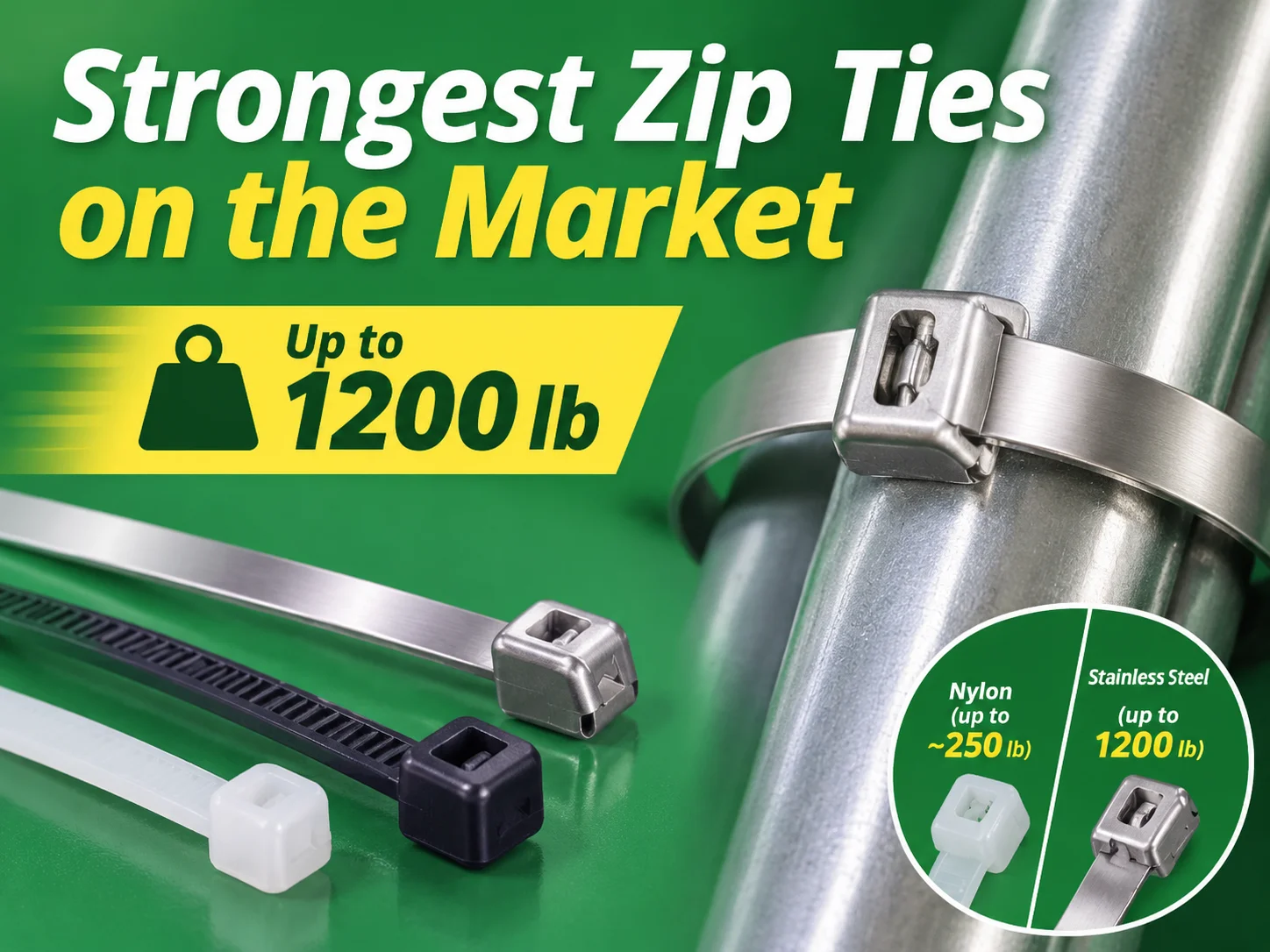
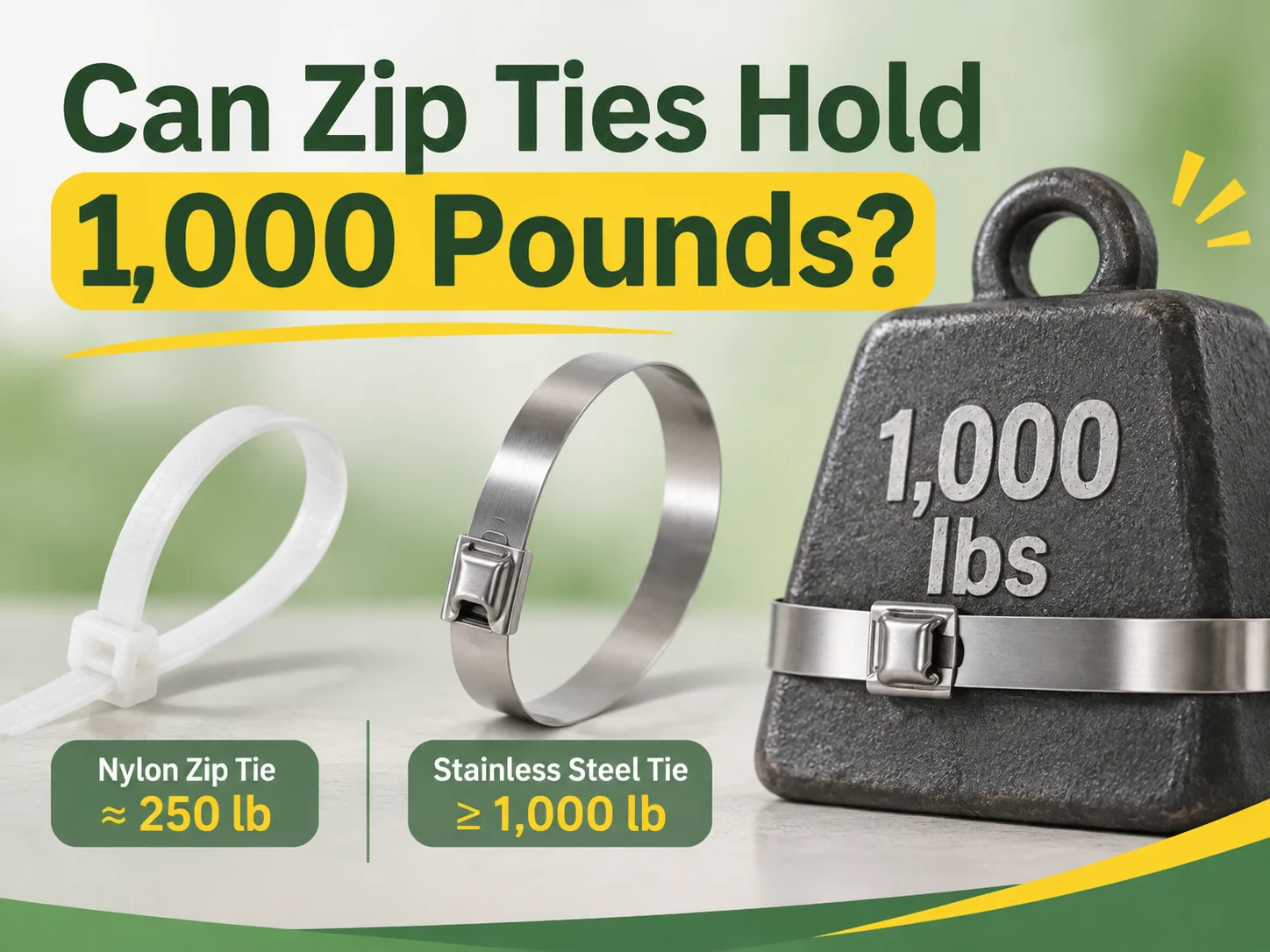
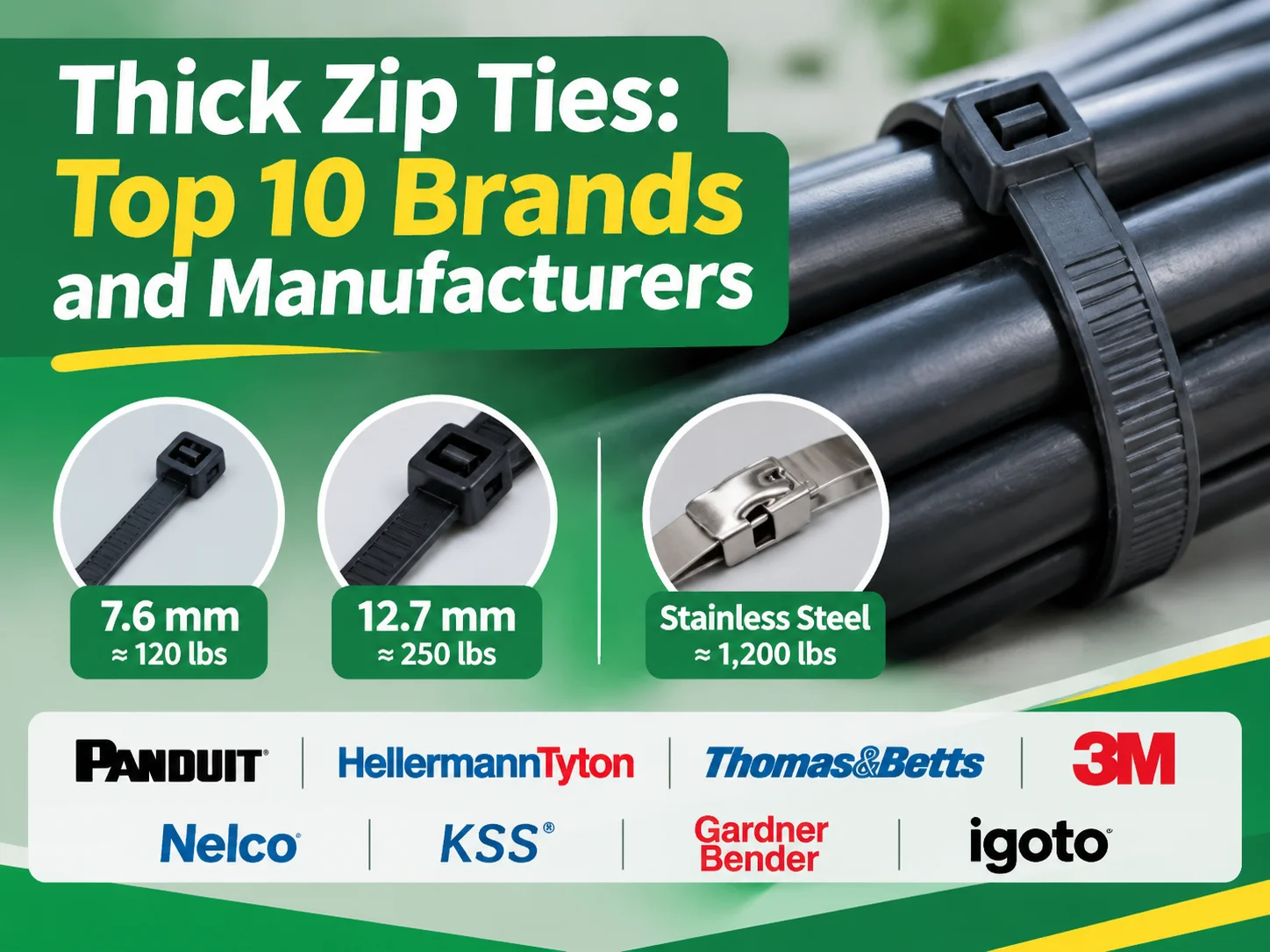
Por exemplo, aproximadamente 7,6 mm de largura e 120 lbs de resistência à tração seriam considerados o mínimo, enquanto aproximadamente 12,7 mm de largura e 250 lbs de resistência à tração seriam o máximo para abraçadeiras padrão de nylon. Abraçadeiras de fita de aço inoxidável têm seu próprio design e permitem abraçadeiras com resistências máximas à tração de 1.200 lbs. Os preços para abraçadeiras de nylon de 7,6 mm variam de $10 a $25 por cem unidades, enquanto as abraçadeiras de nylon de 12,7 mm variam entre $25 e $60 por cem unidades, e as abraçadeiras de aço inoxidável de 12,7 mm variam entre $70 e $180 por cem unidades. Fabricantes/pretendentes que você vai querer incluir ao criar sua lista incluem: Panduit, HellermannTyton, Thomas & Betts, 3M, Nelco, KSS, Gardner Bender e Igoto. Desses fabricantes, os dois principais, Panduit e HellermannTyton, dominam o mercado quando se trata de produtos de grau especificação.
As seções seguintes do artigo definirão abraçadeiras grossas, descreverão como criar uma lista restrita, perfilarão os dez fabricantes com pontos fortes e preços, compararão níveis de certificação, mapearão diferentes aplicações para seus respectivos tipos de produtos de abraçadeiras grossas e, finalmente, explicarão a diferença de preço de três para um entre preços de atacado e varejo, além de revisar onde o fornecedor da fábrica se encaixa.
Porque a largura governa a resistência à tração e a capacidade do feixe, a largura é a abreviação usada para este comércio; enquanto o comprimento especifica apenas um diâmetro máximo para um produto.
O que “Grosso” Significa em uma Abraçadeira
Abraçadeiras são fabricadas nos seguintes tamanhos de escada: uma miniatura de 2,5 mm (18 lb), padrão de 4,8 mm (50 lb), pesada de 7,6 mm (120 lb), extra pesada de 9 mm (175 lb; algumas moldagens) e nylon padrão mais largo de 12,7 mm (aprox. 250 lb). A classificação geral para qualquer coisa grossa é 7,6 mm ou maior, e a faixa típica para abraçadeiras industriais é geralmente entre 7,6 mm e 12,7 mm.
Duas variáveis adicionais afetam se uma abraçadeira grossa funcionará corretamente; a primeira é o trinco (dente de travamento na cabeça); como ele suporta toda a carga, uma tira larga com um trinco pequeno normalmente falha na cabeça em vez de na tira. O segundo fator é o polímero; nylon 6/6 é o polímero padrão usado, mas o grau estabilizado contra calor ou UV mantém sua resistência à tração em condições onde o nylon 6/6 padrão perde mais de 20 por cento de suas capacidades de resistência à tração. O cálculo para determinar a largura adequada para um diâmetro de feixe é independente da determinação do tamanho correto de uma abraçadeira; portanto, os compradores normalmente consultam o gráfico padrão de tamanhos de abraçadeiras para essa informação.
Critérios para Selecionar os Dez
A lista apresentada abaixo foi desenvolvida com base em quatro critérios, não no tamanho. Cada marca deve ter uma linha verdadeiramente pesada de pelo menos 7,6 mm ou mais, possuir uma certificação identificável para produtos vendidos como industriais, fornecer distribuição para compradores de projetos em mais de uma região e fornecer dados de resistência à tração que possam ser verificados contra um padrão de teste.
Para a maioria dos proprietários de catálogos de marcas, eles ou compram exclusivamente o mesmo produto que todos os outros proprietários de catálogos, ou vendem um produto plástico sem marca e não explorado, não como um produto rotulado. Muitos dos produtos em recipientes plásticos estão disponíveis a granel, pelo menor preço, e são, portanto, os menos rastreáveis. No entanto, para compradores em volume que não compram marcas, fornecedores diretos de fábrica representam o único substituto verdadeiro.
Os Dez Principais Fabricantes: O Que São e O Que Fazem
| Marca | País de Origem — Fabricante | Ofertas de Produtos |
|---|---|---|
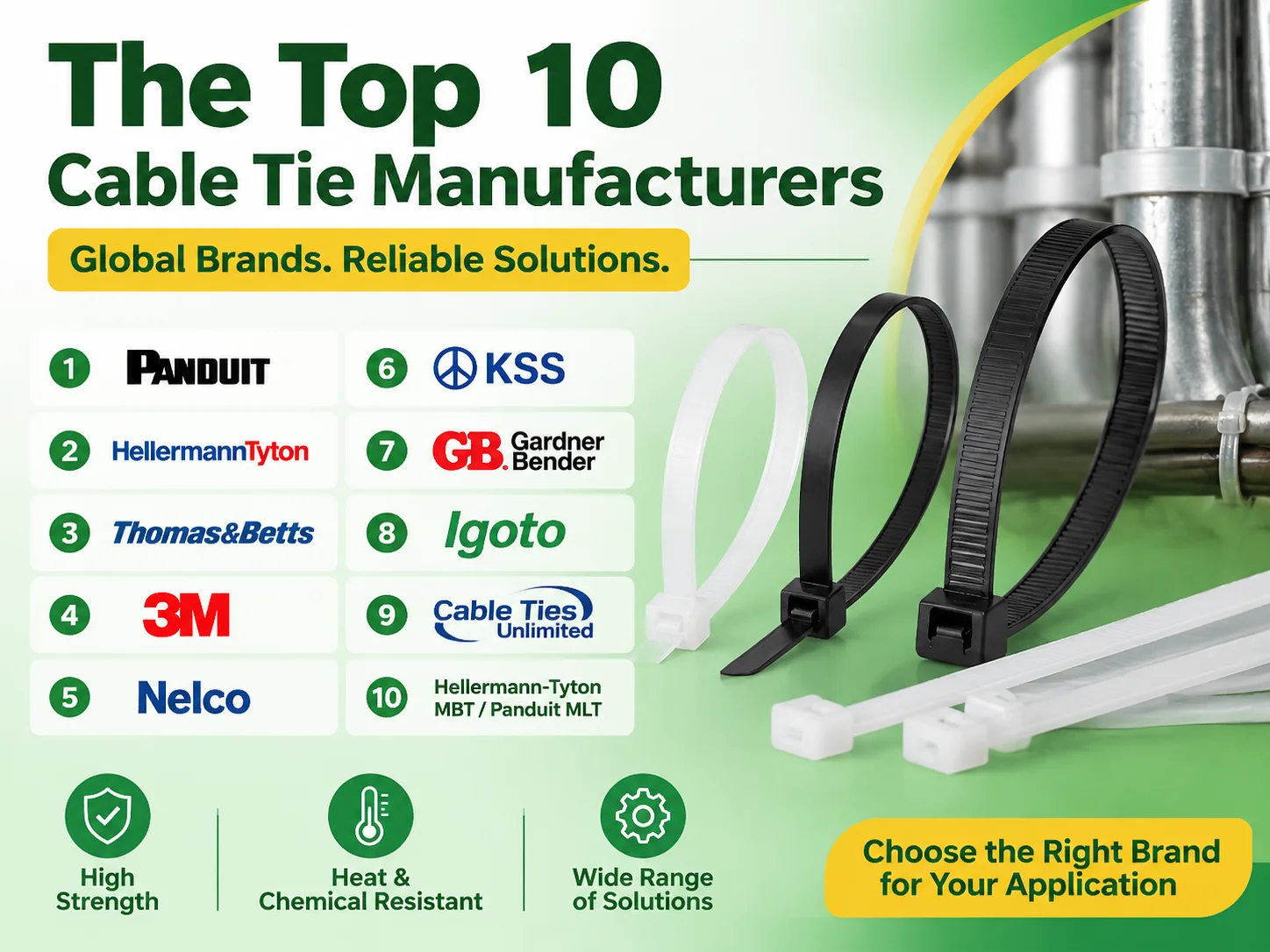
| Panduit | EUA – Illinois – Gestão Industrial de Cabos | Ampla gama de soluções industriais, oferecendo metal e nylon em nível premium; preços convencionais de 2,5 a 3 vezes o preço de fábrica |
| HellermanTyton | Alemanha – Hamburgo – Combinação de metal e nylon em uma única opção; acessórios variados conforme dependência | Soluções premium com preços de 2,0 a 2,5 vezes o preço de fábrica |
| Thomas & Betts | EUA – Tennessee – Alcance considerável nos Canais Elétricos; familiaridade com Fornecedores Elétricos | Preço médio-premium de 1,8 a 2,2 vezes o preço de fábrica |
| 3M | EUA – Minnesota – Especialidades que incluem instalações sensíveis e severas | Apenas soluções premium |
| Nelco | EUA – Massachusetts – Fornece produtos especiais em pequenos pacotes; oferece uma ampla variedade de tamanhos para montagem eletrônica | Preço médio-premium de 1,5 a 2,0 vezes o preço de fábrica |
| KSS | Japão - Tóquio | Produz exclusivamente produtos moldados de precisão aprovados para automotivo — Produtos médio-premium com preços de 1,8 a 2,3 vezes o preço de fábrica |
| Gardner Bender | EUA – Wisconsin; Produtos vendidos para atacadistas e empreiteiros produzidos sob um acordo uniforme de qualidade | Qualidade média com preços de 1,3 a 1,8 vezes o preço de fábrica |
| IgotO | China - Zhejiang; Produtos vendidos diretamente da fábrica, compreendendo um sortimento abrangente de produtos de fita metálica | Produto básico, preço direto de fábrica. |
| Cable Ties Unlimited | EUA – Distribuidor de médio porte, fornece uma linha de produtos completa (ou seja, abraçadeiras); não exige pedido mínimo; fornece tamanhos ímpares e pequenos pedidos de abraçadeiras de aço inoxidável | Preço médio-premium de 1,4 a 2,0 vezes o preço de fábrica. |
| Hellerman-Tyton MBT e Panduit MLT | fabricados na Alemanha e EUA, respectivamente; | Projetados para suportar e segurar pesos superiores a 1.200 lbs; produzidos com os mesmos produtos metálicos fabricados pela HellermanTyton – muitos desses produtos metálicos estão disponíveis através de empresas fabricantes de abraçadeiras a um preço premium. |
O preço elevado (2½-3 vezes o de uma fábrica equivalente) é a principal falha, além da profundidade do catálogo que muitas vezes torna mais demorado considerar os produtos do que instalá-los!
HellermannTyton é provavelmente a melhor opção, pois possui uma gama de metal e nylon disponíveis com acessórios correspondentes. O metal MBT oferece 121-607 lbs de carga (uma única faixa) com configurações de dupla envoltura testadas até 7.000N, o nylon oferece uma faixa semelhante. Quando você procura apenas um fornecedor para cobrir ambas as categorias de produtos, geralmente é sua primeira escolha.
Thomas & Betts (agora uma marca ABB) é uma daquelas marcas com as quais os eletricistas estarão familiarizados; seus produtos são adequados, mas não inovadores. Como sua engenharia é direcionada ao mercado de empreiteiros e não para consumidores de alto volume, seus preços tendem a ser mais baixos do que os da Panduit.
3M are the specialists when it comes to manufacturing products for harsh environments or with unique installation needs as well as for a small segment of the marketplace. If you have unusual requirements (chemical-resistant tie, or detectable products for food plants), that’s where you want to start your search.
Nelco Products and Cable Ties Unlimited are manufacturers that cater to small quantities of products. Neither of them manufacture items on a large scale, which is important because if you only need 50 stainless ties in four size options, neither of those companies will allow you to place a factory order.
KSS is a Japanese precision moulding manufacturer that focuses on automotive and electronics applications; in both cases the ties have to stand up to certain standards of vibration and heat. Gardner Bender is the retail face of KSS, and is a great product for contractors looking to buy off-the-shelf packages, but do not meet the specifications.
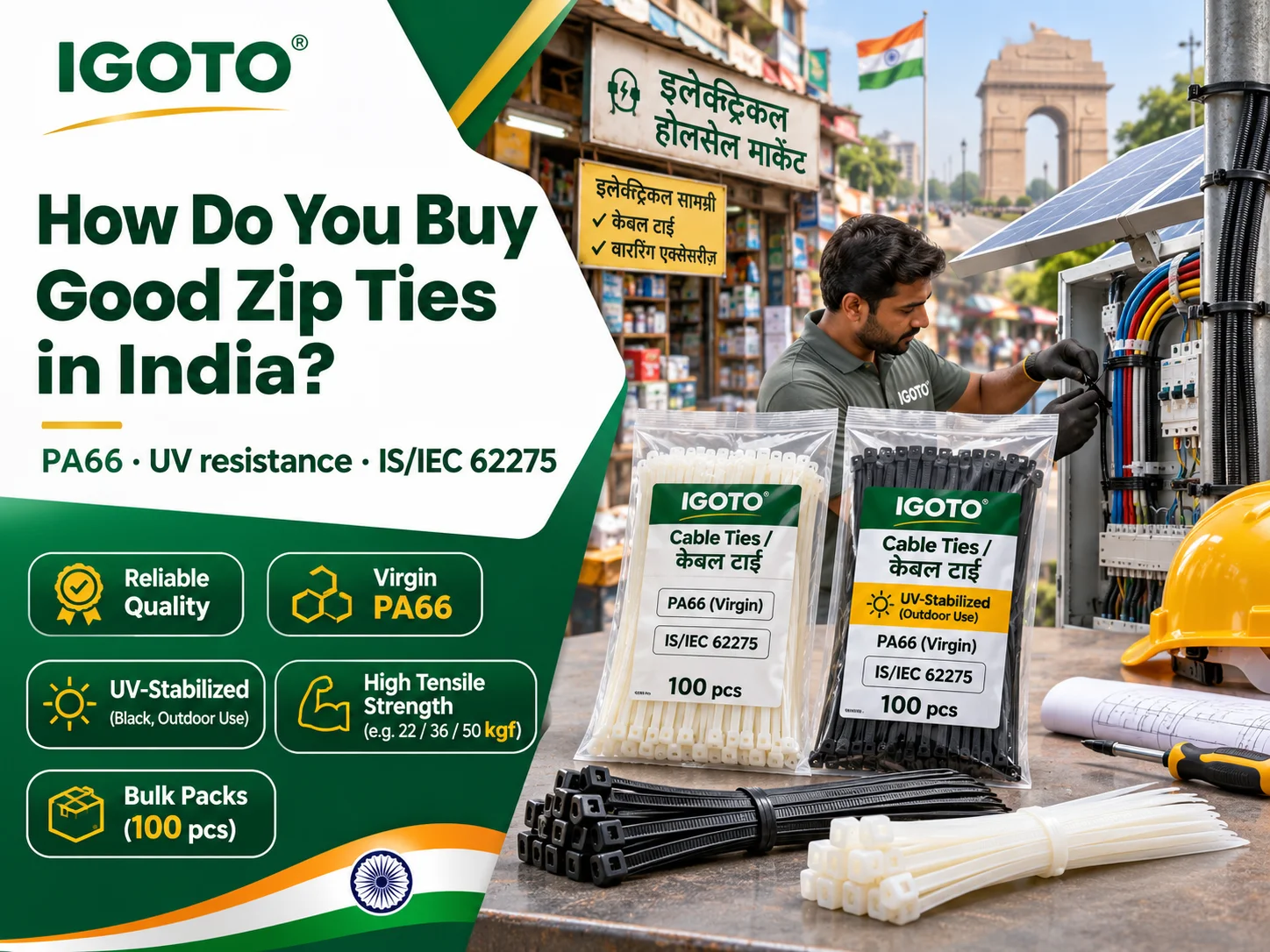
Igoto is the factory-direct option for our customers. It offers a wide variety of products from 2.5mm through 12.7mm in nylon and 4.6mm through 12.7mm stainless band, made from both type 304 and 316 stainless steel with and without coatings, and with width, length and packaging options available per order. Prices listed are factory prices without distributor margin, which is why the same tie sized at 12.7mm can be priced from $0.25 to $0.60 per?
Price Range by Brand Tier:
| Produto | Factory Price | Branded Price |
|---|---|---|
| Nylon 7.6mm x 300mm pack of 100 | $10 to $18 | $22 to $40 |
| Nylon 9mm x 400mm pack of 100 | $15 to $28 | $35 to $55 |
| Nylon 12.7mm x 500mm pack of 100 | $25 to $45 | $60 to $110 |
| Stainless 4.6mm x 200mm pack of 100 | $20 to $35 | $45 to $80 |
| Stainless 12.7mm x 500mm pack of 100 | $70 to $120 | $160 to $300 |
| Tensioning Tool for Stainless | $150 to $300 | $350 to $600 |
The difference indicated by the multiplier factor between the two columns is attributed to the cost of maintaining inventory in a specific region and having a datasheet available for reference, as well as the ability to answer technical questions. For a manufacturer that purchases 1,000 ties per year, that investment would be justifiable; however, for an OEM that purchases 200,000 ties per year, that investment would not be justified, which is why factory-direct supply is available.
Perhaps the most undervalued item in the table is the tensioning tool.
When a stainless steel tie is manually pulled, it often does not produce full tension (half or less than the stated rating) because the tensile rating is created from the stated tension required to grip the locking balls. Hence, if you have a project with 300 ties and do not have any type of tool, then the entire project is going to result in 300 ties that are potentially less than full tension.
Certifications that Matter:
There are four ways to distinguish a specified product from those that can only be purchased. The following are the essential certifications necessary for a tie:
- UL recognition with a file number. The recognition provides the actual test rating for the tie, which may differ from what a seller would like to claim. The file number can be independently verified.
- Tensile testing data against a named standard. A loop tensile number without testing method is merely marketing. Tensile test standards, such as ASTM D2671, are acceptable if the method is provided in the documentation.
- Material declaration. All nylon ties should be identified as nylon 6/6. Stainless steel ties must be rated as either 304 or 316 quality. It is important to know that a 316 tie will cost between 20 and 40 percent more and behave differently when in contact with chlorides.
- Flammability and temperature ratings when applicable. If the application specifies a tunnel or rail car, there will be fire codes associated with these products as well as for plenum-type products; the certifications associated with a product are what audit documentation is looking for, and confirming this is easier before placing your order than after.
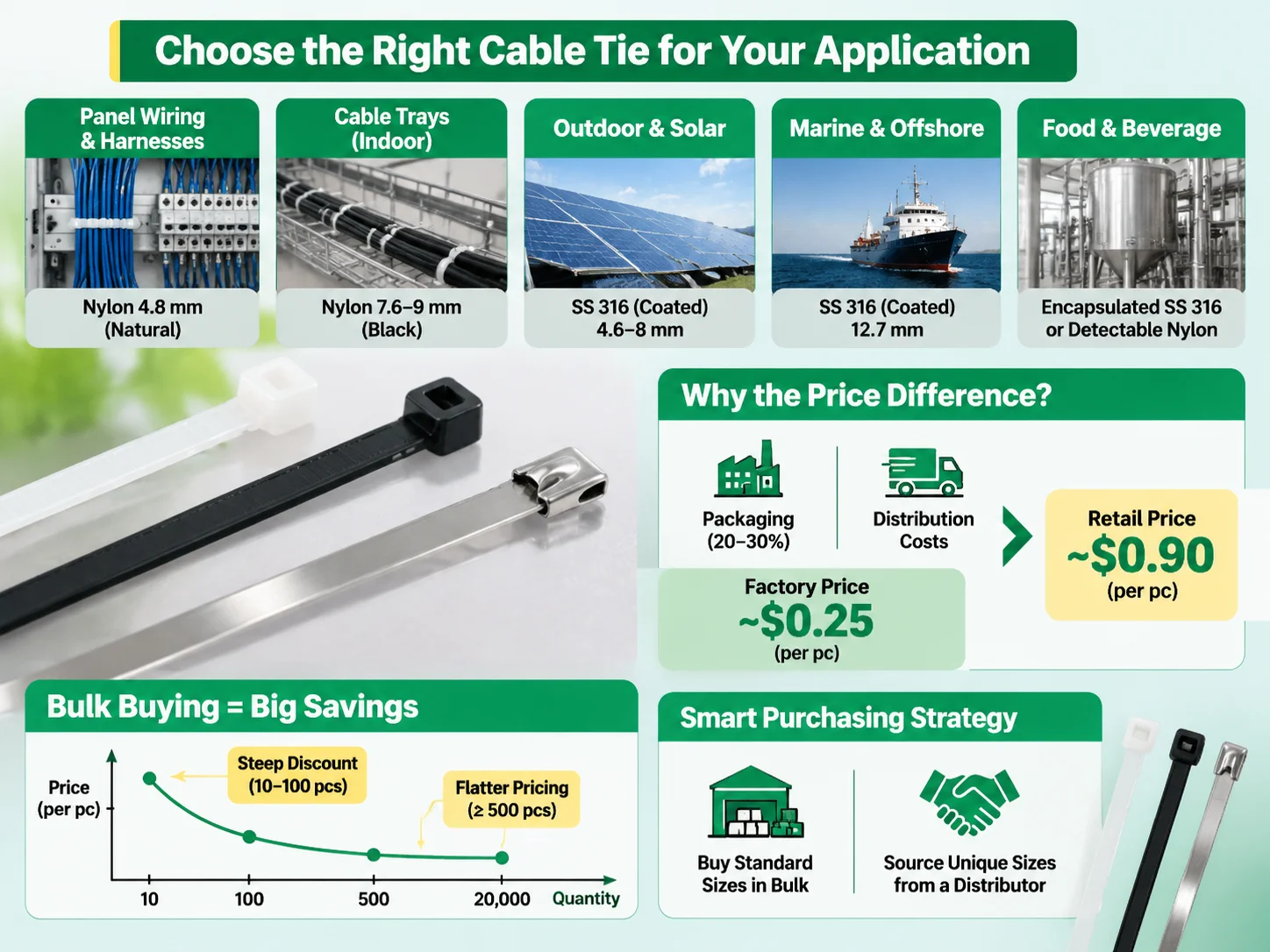
Application Selection
| Aplicação | Produto | Reason |
|---|---|---|
| Panel wiring and harnesses | Traditional Nylon 4.8 mm, Natural | (Economical, Quick, Sufficient for smaller bundles). |
| Cable tray application inside a plant | Traditional Nylon 7.6 mm to 9 mm, Black | Strength for reasonable cost. |
| Use in outdoor and solar power applications | Traditional Stainless Steel 316, 4.6 mm to 8 mm, Coated | Affected by UV and Thermal Cycling and have no Creep. |
| Marine and Offshore use | Traditional Stainless Steel 316, 12.7 mm, Coated | Affected by Salt Spray, Vibration and Fire Load. |
| Use in Food and Beverage Plants | Encapsulated Stainless Steel 316 or Detectable Nylon | Effects of wash-downs, need for detection and no sharp cut ends. |
| Use in Heavy Cable Riser | Traditional Stainless Steel 12.7 mm, Double Wrapped | Loads beyond the capacity of a single band. |
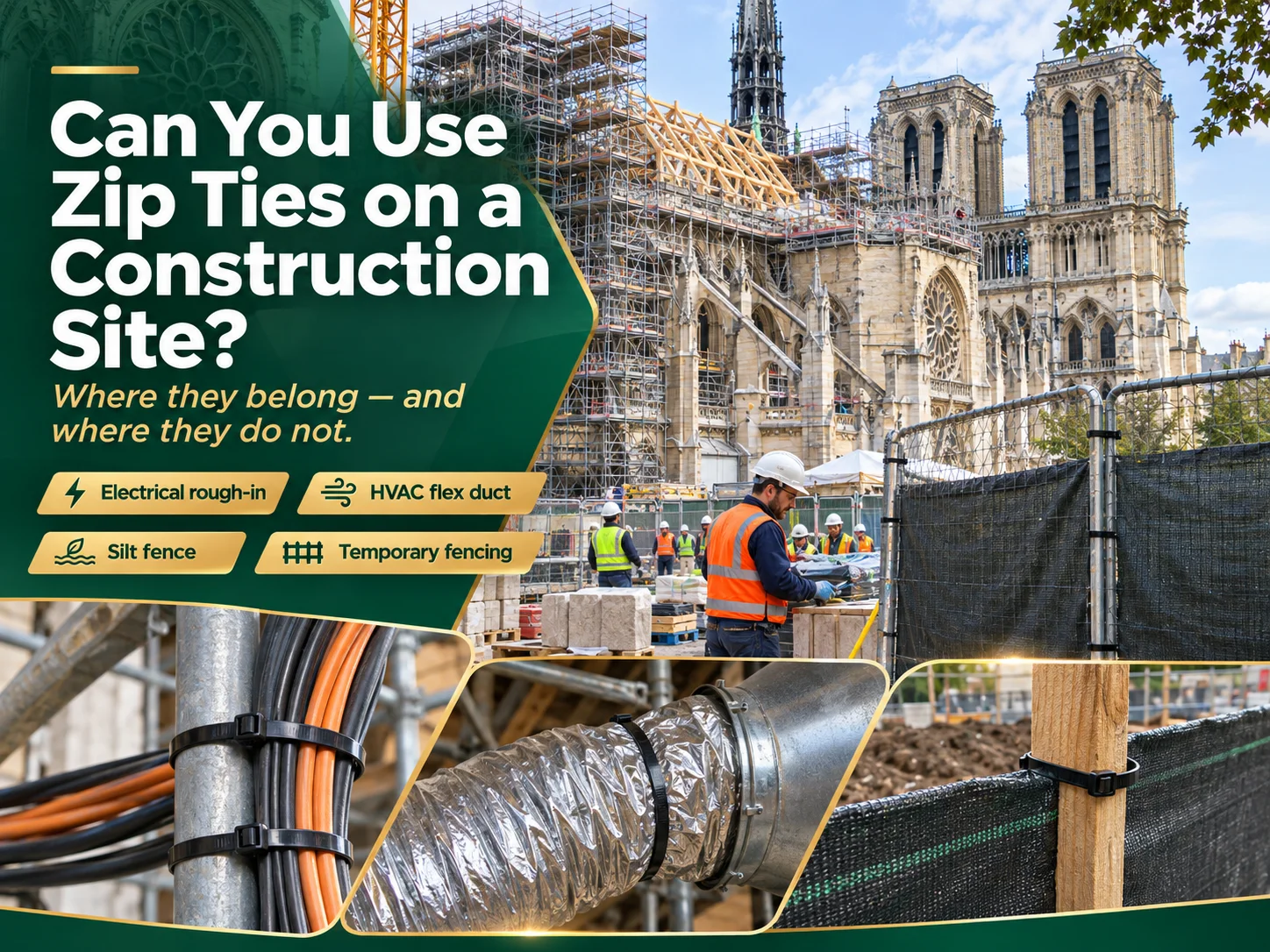
Choice of nylon represents an inconvenience for failure; choice of stainless represents a cost and/or safety reason. The guide for heavy-duty cable ties is developed based on the width and the material selection process as stated.
Wholesaler and Retailer: Possible Reason for Price Difference
A factory price for a 12.7 mm Nylon Tie will typically be around $0.25 each (or less) compared to approximately $0.90 at a retail peg (some stores offer them for even more than this). The difference is not a markup on the same item, but instead is due to three distinct cost factors.
Embalagem – a retail bag of 100 with a printed header produces more costs per unit than a bulk bag of 1,000 and has higher labour costs associated with producing the package. This accounts for approximately 20-30% of the overall difference in price.
Distribution – the distribution process includes maintaining stock on hand, providing credit to customers, handling returns, and staffing a counter.This cost is a real expense that gets absorbed into the per-unit cost of a product, which is also why a product’s trade price will generally be higher than that of the factory.
When it comes to volume, the steepest discounting occurs between 10 and 100 pieces with the curve flattening out at 500 pieces; this is due to fixed costs associated with set-up and inspection, rather than materials. A buyer that orders 200 pieces will be charged close to the 100-piece price point, while a buyer that orders 20,000 will be able to negotiate a completely different pricing structure.
In a project, an effective split would be to purchase bulk quantities of the most common sizes (standard sizes) and to source the unique sizes through a distributor. If a plant were to standardise on three widths of cable ties and one size of stainless cable tie, it could purchase all of these items in bulk within a single container. Any one-off requirements can typically be sourced from a local distributor’s inventory. Because the retail unit is normally packaged in packs of 100 cable ties, having a standard 8-inch pack as the typical retail unit is a good example of how packaging drives a shelf price, rather than the manufacturer’s suggested retail price (MSRP) based on the highest price point.
Where Does Igoto Fit In?
Igoto Manufacturers produces our cable ties from a range of sizes, covering sizes from 2.5mm to 12.7mm in Nylon 6/6 and sizes from 4.6mm to 12.7mm using a stainless band from both 304 and 316 grades, in both coated and uncoated forms. The vast majority of cable tie volume is shipped to distributors, panel builders and OEMs, who typically have a need for a standard product within multiple sizes, rather than a single, hero-product.
Heavy Duty Cable Tie manufacturing is structured as contracts for long-term supply and for container quantities, this is what creates a factory price as compared to a distributor’s price.
The standard volume product for general cable work in most of the industry is the 8” Black UV Cable Tie, which shows the most price difference to a branded equivalent throughout the industry.
We will not make the claim that a nylon cable tie can hold 1000 pounds. There are no nylon ties on the market capable of such a weight, and a customer finding this out in the field will not return; therefore, this is not good business practice and not good engineering.
Perguntas Frequentes
What is the widest nylon cable tie available?
The widest practical nylon tie available is 12.7mm (0.5″), with a rating of around 250 pounds. Ties above this width are used with a different family of products — stainless steel band ties. The largest stainless steel band ties from Panduit and Hellermann/Tyton can support up to and over 1200 pounds. The limitation of weight for nylon ties is due to the moulded pawl (the locking mechanism); when the pawl fails, the tie fails long before the strap.
Are the more expensive cable ties worth the extra cost?
The answer depends on the application. For cable bundles within an enclosure, a factory tie functions the same as a branded tie at one-third the cost. For an installed outdoor application or one where safety is paramount, the extra cost of the branded product is offset by having an established supplier who stands behind their products with a verifiable certification, a documented test report, and the ability to answer customer questions.
The tie style to be avoided is a generic brand with a photocopied certificate.
What is the contrast between Heavy Duty and Thick Zip Ties?
They are two ways of defining the identical product. Heavy Duty is a tensile classification, generally 120 lbs. and up, which corresponds to a tie width of 7.6 mm; while Thick is a physical description of the same strap. For example, a 9 mm tie is referred to as both Thick and Heavy Duty, and a 12.7 mm is the heaviest standard size both in definition.
What tensile strength can a 12.7 mm zip tie support?
It has a tensile strength of about 250 lbs. As a loop tension on a new tie at room temperature, it has a working load of approximately 60 lbs, assuming a safety factor of 4 to 1. In use, the rating decreases due to exposure to sharp edges, heat, and UV rays. Using two ties around the same set of bundles does not increase the load capacity because both ties will rarely support the load equally.
Sources
- Panduit – Cable Ties and Pan-Steel Stainless Steel Cable Tie Systems.
- HellermannTyton – Cable Ties Range and MBT Metal Ties
- Thomas & Betts – Cable Management and Support Products
- UL Solutions – Cable Tie Testing and Recognition.
- Cable Ties Unlimited – Tensile Ratings and Material Data
Summary
As abraçadeiras grossas são determinadas pela largura, com a largura máxima sendo 12,7 mm, com uma classificação de tração de aproximadamente 250 lbs para nylon; e 250 lbs para todas as bandas de aço inoxidável estão em uma categoria de produto diferente, geralmente custam mais e possuem requisitos de instalação totalmente diferentes.
Deciding to utilize an OEM branded tie vs. a no-name tie is a decision regarding recourse. The difference in price between an OEM branded tie with the same attributes and a factory tie can be as much as three times, with very little variance in performance between the two, with what you receive by spending more is a certificate, a data sheet and someone to call if you need assistance. For a manufacturing facility, that is often worth the investment, while for an original equipment manufacturer (OEM) shipping the product, it seldom is.