
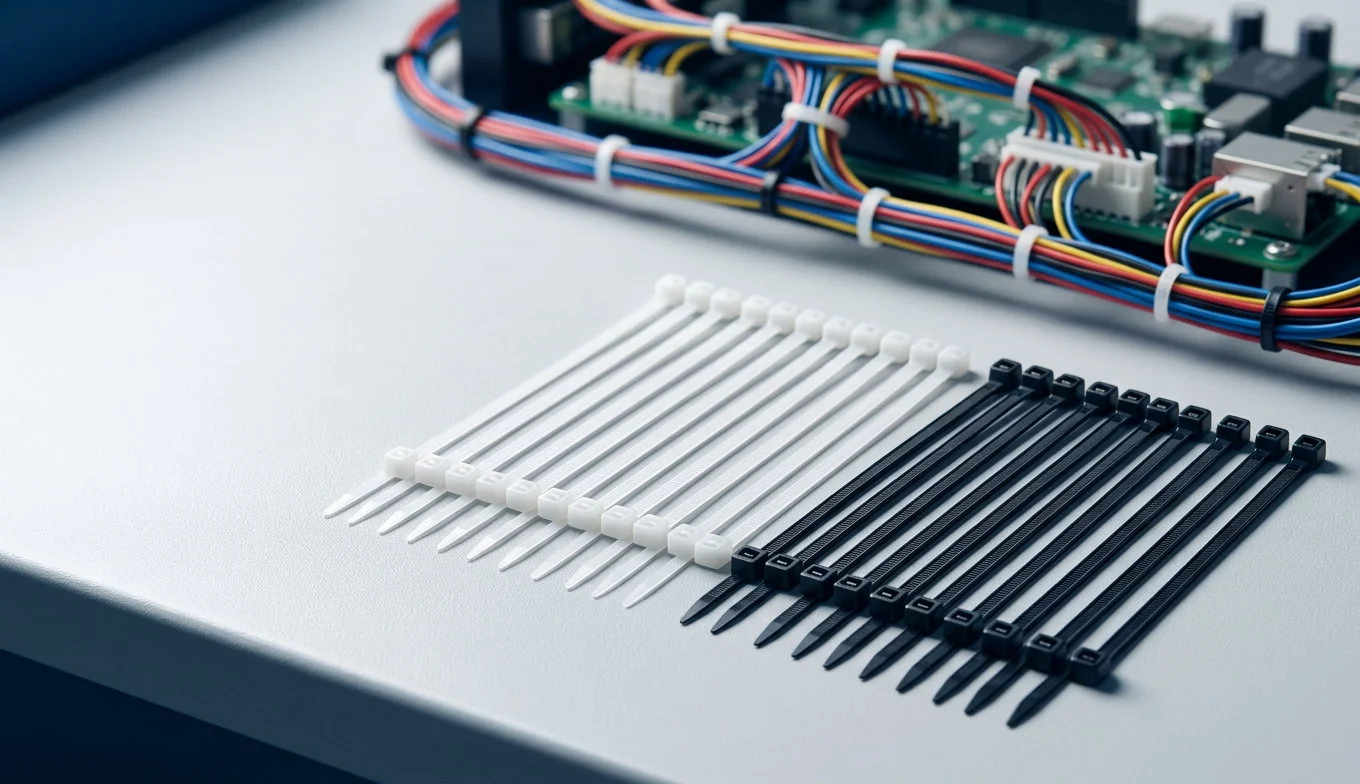

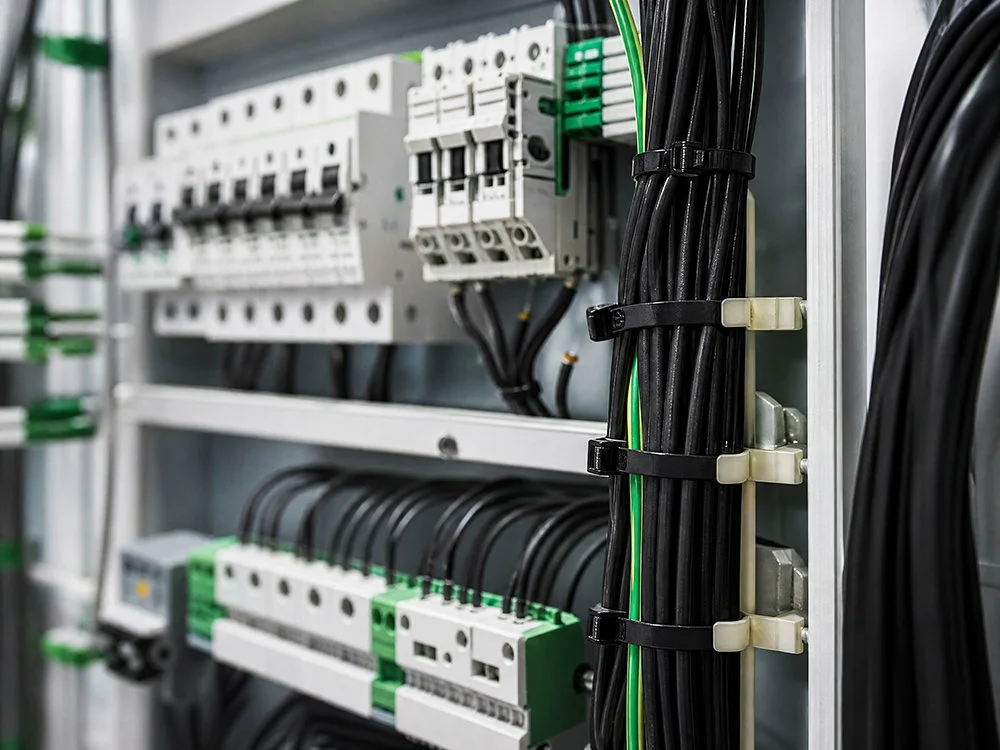

Лучшие нейлоновые стяжки с термостабилизацией
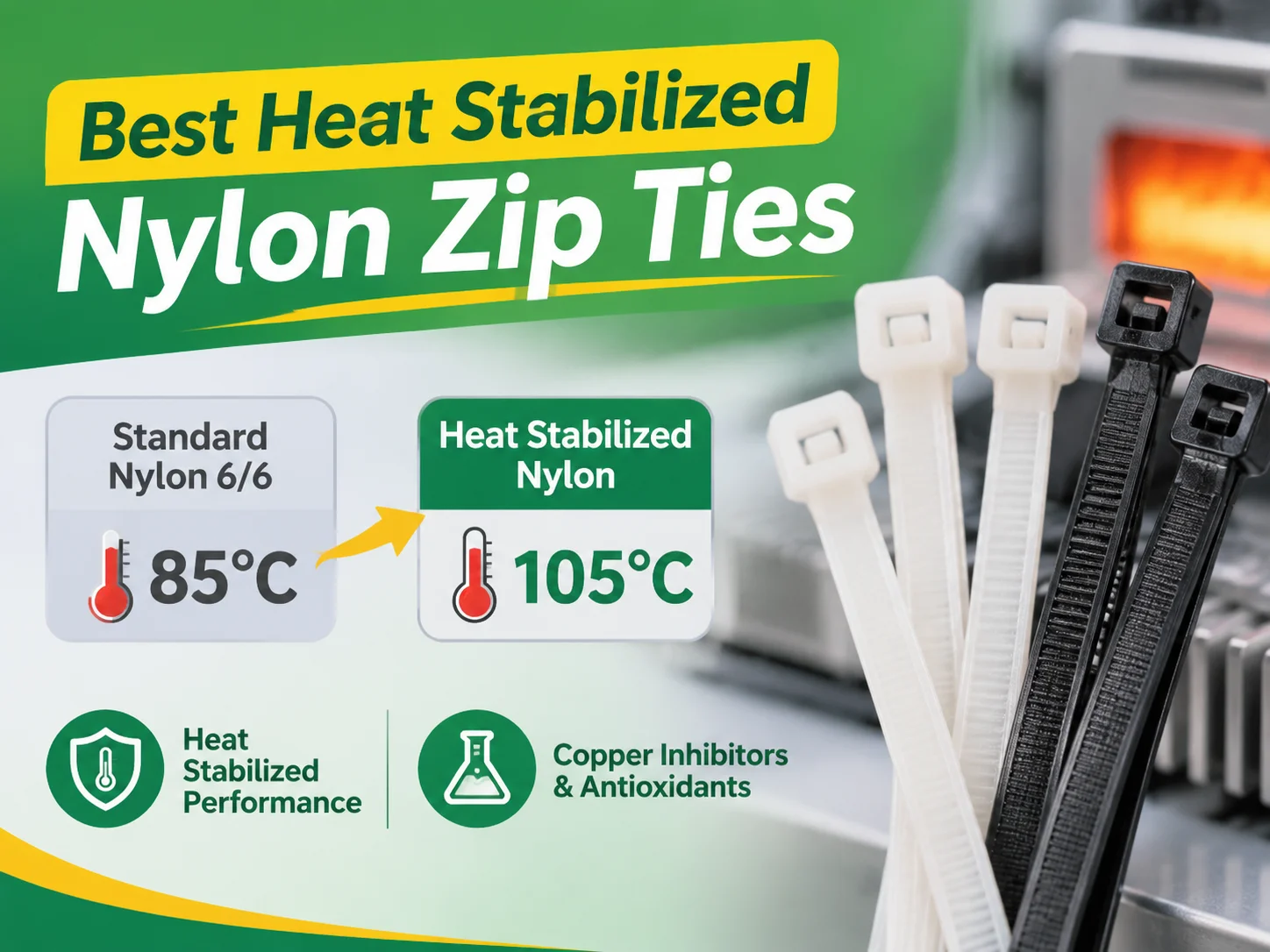
Термин “термостабилизированный” часто встречается при описании нейлоновых стяжек, что часто приводит к недопониманию. Точное определение не означает, что термостабилизированные стяжки могут бесконечно выдерживать тепло, возникающее в моторном отсеке, и термостабилизация не указывает на какую-либо форму устойчивости к УФ-излучению. Скорее, термостабилизация относится к химическим добавкам, введённым в нейлон, которые замедляют термическое разрушение материала нейлона, позволяя увеличить рабочую температуру примерно на 20 °C (36 °F) по сравнению со стандартными нейлоновыми стяжками и обеспечивая рабочую температуру около 105 °C (221 °F) при непрерывной эксплуатации.
Быстрый ответ: Стандартные нейлоновые стяжки 6/6 имеют типичный рейтинг непрерывной эксплуатации около 85 °C, в то время как термостабилизированные нейлоновые стяжки имеют рейтинг непрерывной эксплуатации около 105 °C. Добавки для термостабилизации, которые позволяют повысить этот рейтинг, включают ингибиторы меди и антиоксиданты, предотвращающие разрушение нейлоновых стяжек, вызванное воздействием как тепла, так и меди. Хотя термостабилизация повышает эксплуатационные характеристики нейлоновых стяжек, нельзя считать термостабилизированные стяжки устойчивыми к УФ-излучению, если они не содержат пигмент углеродной сажи, присутствующий в чёрных нейлоновых стяжках. Поэтому, если стяжка будет экспонироваться на открытом воздухе, следует использовать чёрную нейлоновую стяжку, а не термостабилизированную нейлоновую стяжку.
В оставшихся разделах будет рассмотрено использование химических добавок при производстве термостабилизированных нейлоновых стяжек (и их влияние на нейлоновые стяжки), два рейтинга для термостабилизированных по теплу и УФ-излучению стяжек, сравнение термостабилизированных и УФ-стабилизированных стяжек и сильные стороны каждого производителя, доступные размеры нейлоновых стяжек, ценовые диапазоны для каждого типа нейлоновых стяжек и недостатки каждого типа в эксплуатации, выбор нейлоновых стяжек по их применению, место производства производителя в индустрии нейлоновых стяжек и способы проверки заявлений производителя перед размещением заказа.
Что на самом деле означает термин «термостабилизированный»
Нейлон 6/6 считается типом полиамида. Полиамиды разлагаются при воздействии тепла из-за окисления. Этот процесс обычно происходит медленно при комнатной температуре; однако с повышением температуры скорость разложения также увеличивается. При разложении пластиковых стяжек под воздействием высоких температур они меняют цвет от полупрозрачного до жёлтого, коричневого и в конечном итоге обычно выходят из строя из-за потери эластичности.
В рамках своей тепло-стабилизирующей функции производители добавляют добавки, которые предотвращают окисление, прерывая цепную реакцию, приводящую к ухудшению характеристик. При тестировании производительности нейлонового изделия компании используют температуру, при которой продукт сохраняет определённый процент своей первоначальной прочности в течение длительного времени воздействия на заданной температуре испытаний.
Другой способ деградации нейлоновых изделий — это деградация, катализируемая медью. Медь, обернутая вокруг медных проводников, создаёт прямой контакт с медным металлом. Точка контакта вызывает более быстрое окисление нейлона по сравнению с другими участками нейлонового хомута. Отказ нейлонового хомута из-за такого вида деградации всегда происходит в месте контакта с медью. Поэтому в состав тепло-стабилизирующей формулы включён ингибитор меди, и именно поэтому тепло-стабилизированные нейлоновые хомуты обычно продаются только в выбранных марках для использования в электротехнических работах, даже если они не подвергаются высоким температурам.
Тепло-стабилизирующие добавки не повышают температуру плавления нейлона 6/6. Следовательно, независимо от того, был ли нейлоновый хомут тепло-стабилизирован или нет, температура плавления остаётся примерно 250 градусов Цельсия и, таким образом, остаётся материалом, неподходящим для использования при более высоких температурах. При температуре выше примерно 150 градусов Цельсия тепло-стабилизированные нейлоновые хомуты перестают быть подходящим материалом и должны быть заменены на другой полимер или хомут из нержавеющей стали. Максимальные температурные ограничения, связанные с производством стандартных нейлоновых стяжек указывают температуру, при которой нейлон становится непригодным для инженерных целей, поэтому важно, чтобы проектировщики ознакомились с этими спецификациями, прежде чем предполагать, что тепло-стабилизированные нейлоновые хомуты подходят для использования в условиях высоких температур.
Два температурных значения: 85 °C и 105 °C
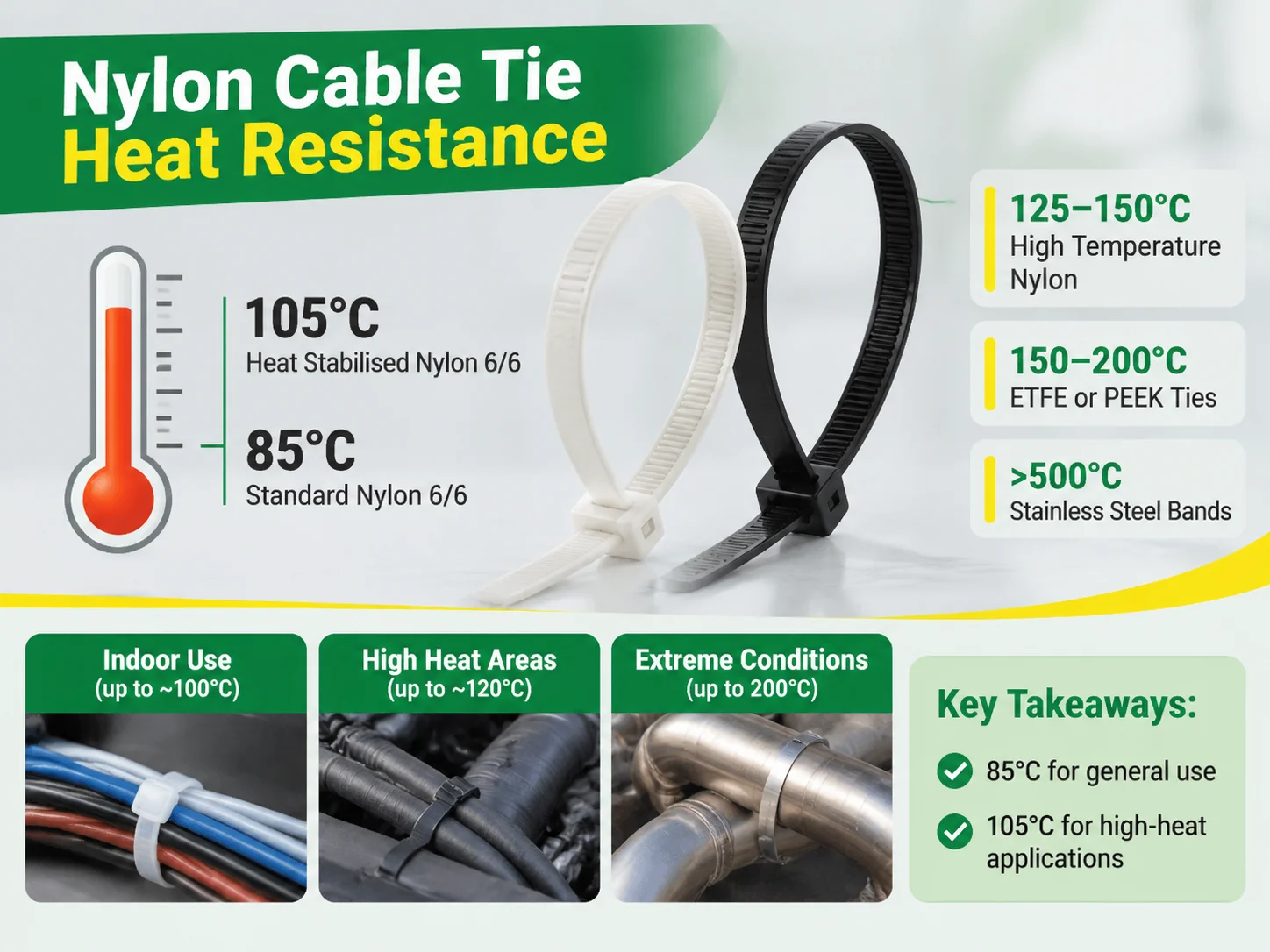
Значение 85 °C относится в целом к нейлоновым изделиям не только для постоянных установок, но и к тем, которые обычно продаются оптом. Значение 105 °C относится к соответствующему тепло-стабилизированному нейлоновому изделию, и вы должны искать это значение, когда в спецификации указано использование в местах с высокой температурой (например, моторные отсеки, балласты освещения, корпуса распределительных щитов, солнечные распределительные коробки).
| Класс | Температура (°C) | Температурный диапазон (°C) | Типичные применения |
|---|---|---|---|
| Обычный нейлон 6/6 | 85 °C | До ~100 °C на короткое время | Внутреннее связывание кабелей, панели, шкафы |
| Тепло-стабилизированный нейлон 6/6 | 105 °C | До ~120 °C на короткий период времени | Балласты освещения, распределительные щиты, моторные отсеки, солнечные системы |
| Высокотемпературный нейлон | 125-150°C | Выше, в зависимости от марки | Внутренние части приборов, рядом с нагревателями |
| Хомуты из ETFE или PEEK | 150-200°C | Выше, в зависимости от марки | Сильное химическое воздействие, экстремальная жара |
| Ленты из нержавеющей стали | Более 500 °C | Не применимо | Выхлопные системы, печи, наружные конструкции |
Для любых значений в этой таблице необходимо помнить две вещи: 1) Температурный рейтинг применим только при непрерывном использовании изделия на полной номинальной нагрузке; и 2) Стяжка, работающая на максимальную прочность при теплой среде, стареет быстрее, чем та, что несет треть своей прочности, и этот температурный рейтинг основан на неконфайнованной (окруженной воздухом) среде, а не в закрытом ящике, подверженном внутренним и внешним температурам.
Теплостабилизированные нейлоновые стяжки классифицируются так же, как и по их спецификациям. Это включает как интерпретировать заявление поставщика о теплостабилизации и что запрашивать, включая доказательства производительности. Когда заказчик запрашивает теплостабилизированные нейлоновые стяжки для температур выше возможностей поставляемого материала, спецификация теплостабилизированной нейлоновой стяжки будет вашим ориентиром.
Теплостабилизация не равна УФ-стабилизации, и цвет указывает на это
Теплостабилизация и УФ-стабилизация — это два различных пакета добавок к продукту. Следовательно, нейлоновая стяжка может иметь один тип стабилизации, но не оба. Черный цвет нейлоновой стяжки указывает на то, что углеродный черный использован в качестве УФ-стабилизатора, поглощающего УФ-излучение до того, как оно разрушит полимерную цепь. Поскольку углеродный черный — это черный цвет, черная стяжка предназначена для использования на открытом воздухе, тогда как натуральная или белая нейлоновая стяжка не обеспечивает УФ-стабилизации.
Теплостабилизация основана на другой химии по сравнению с УФ-стабилизацией, и эти различия не видны визуально. Черная нейлоновая стяжка может быть как теплостабилизированной, так и нет, и возможно производство теплостабилизированной нейлоновой стяжки натурального цвета; следовательно, она не будет обладать УФ-стабилизацией. Это различие может вызвать путаницу, из-за чего теплостабилизированная натуральная нейлоновая стяжка может выйти из строя на крыше в течение двух лет, если монтажник ошибочно полагал, что спецификация требует теплостабилизации.
Помимо двух свойств стабилизации, цвет нейлоновой стяжки предоставляет информацию об идентификации цепи или пучка, для которого стяжка была окрашена. Например, синие, зеленые, красные, желтые и серые нейлоновые стяжки производятся с использованием различных пигментов, обеспечивающих идентификацию цепи или пучка, но эти цветные пигменты обычно снижают УФ-стабилизацию нейлоновой стяжки по сравнению с черной стабилизацией углеродным черным.
Общая доступность черных стяжек на рынке указывает на уровень УФ-стойкости для использования на открытом воздухе в целом и свидетельствует о том, что проект, использующий стяжки других цветов в уличной среде, должен принять сокращенный срок службы и/или другой материал изготовления. Цвет и материал являются определяющими факторами в вопросе являются ли стяжки устойчивыми к УФ-излучению, thus the first thing to determine when evaluating Zip Tie UV resistance is to check the colour and material of the Zip Ties before reviewing the temperature rating.
The Brands Worth Shortlisting
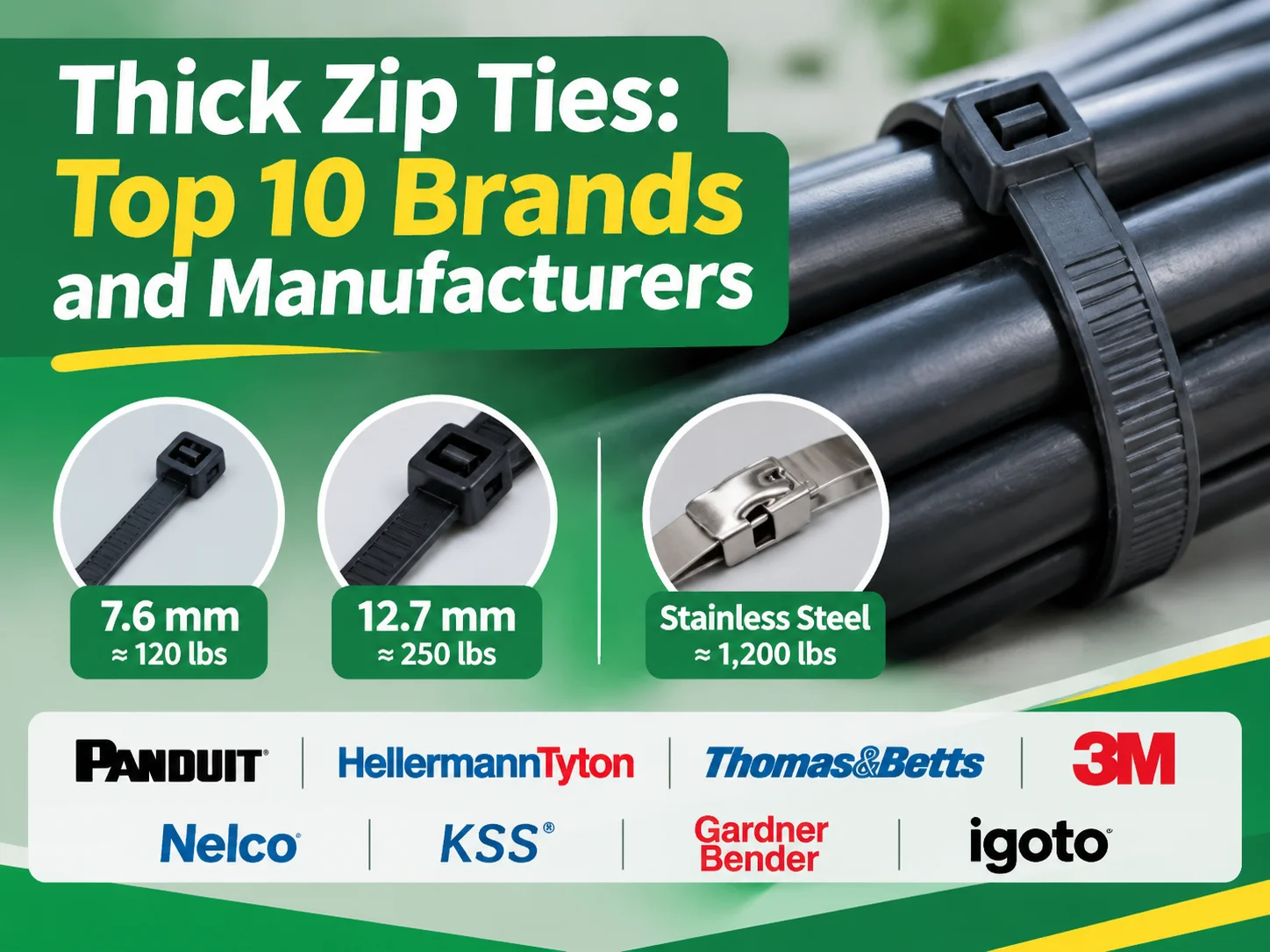
The list below represents the individuals involved in developing the specification for Zip Ties. Each of these manufacturers provides a temperature rating, a UV resistance claim and a tensile rating for their products by size, and this is what allows a comparison between them.
| Бренд | Product Location | Base/Product strength/Product Cost | Ценовая позиция |
|---|---|---|---|
| Panduit | Tinley Park, Illinois USA | Widest range/Published data/Controlled Tension Tooling | Наивысший |
| HellermannTyton | Milwaukee USA & Hamburg, Germany | Automotive panel building/Heat & chemical Grades | Высокий |
| Thomas and Betts | Memphis Tennessee USA/ABB Group | Ty-Rap Stainless pawl/Electrical Distribution Market | Высокий |
| 3M | St. Paul Minnesota USA | Speciality materials/adhesives & identification products | Высокий |
| KSS | Япония | Precision moulding/Small sizes/Consistent quality | Mid to High |
| Nelco | Индия | Volume production/Competitive export pricing | Средний |
| Эйвери Деннисон | Glendale California USA | Identification & Labelling Integration | Высокий |
| Igoto | Китай | Factory supply/OEM/Private Label/UL listed ranges | Low to Mid |
The range between the highest-priced brand and the lowest-priced brand for equal-sized Zip Ties is three to four times higher than the lowest-priced option, and this does not account for all of the margins involved in the manufacturing process.
The differences between various manufacturers and the uses for their products can become confusing if you don’t look closely. In short, each manufacturer has advantages over another and each one provides specific products to meet specific needs.
What Each Brand Is Good At
The main advantage of Panduit is that they are the definitive source for specifications; all products manufactured by Panduit come with the manufacturer published values for tensile strength and retained strength during use.
HellermannTyton’s principal strengths are in automotive and panel building, where the product must tolerate vibration, oils and heat, in addition to maintaining its mechanical properties.
Thomas & Betts are the electrical distribution industry standard. The use of stainless steel pawls in their Ty-Rap ties provides a much better grip on the tied wire than does the nylon pawl of a similar product. Nylon pawls will soften and lose grip in heat while stainless steel pawls will maintain their grip.
KSS and Nelco provide volume options with better consistency than unbranded factory products. Avery Dennison provides a product that serves two purposes; it is a label as well as a tie.
We are at the factory end of the spectrum, with a broad range of products because of the various manufacturers that we represent.
Sizes, and Where Each One Fits
Tie sizes are generally determined by their bundle diameters; the more rope needed, the wider the rope will need to be. The chart below offers the general measurements and uses for most of the ties within the 4-inch and 14-inch range.
| Tie Length | Typical Tie Width | Tie Tensile Load | Tie Bundle Diameter | Применение |
|---|---|---|---|---|
| 4″ (100 мм) | 5 мм | 18 фунтов | Up to 22mm | Small harnesses/panel wiring |
| 6″ (150 мм) | 6 мм | 40 – 50 lb | Up to 35mm | General Cable Bundling |
| 8″ (200 мм) | 8 мм | 50 – 75 lb | Up to 50mm | Most Common Size in Plant |
| 11″ (280mm) | 4.8 – 7.6mm | 75 – 120 lb | Up to 80mm | Larger Looms, Conduit, Duct |
| 14″ (356mm) | 7.6mm | 120 – 175 lb | Up to 100mm | Heavy Bundles, Outdoor, Industrial |
The 8-inch size is the most popular because it provides the best fit for the typical control and power bundles, and that is the size that most plants have in stock. If a specification only covers the use of 4-inch and 14-inch ties, there is a strong chance that neither size will adequately cover the range of applications for which it needs to be used.
In terms of overall strength, the width of the strap is more important than the length, which is why the 14-inch tie is so much stronger.
Choosing a long and narrow tie is often the weakest combination and can happen by accident when there is a large bundle and all the stores only sell ties in one width.
What They Cost, by Size and Volume
All prices shown below (per one hundred) are for standard nylon, heat-stabilized nylon, and nylon with UV black coloration, as bagged products sold at the factory and distributor level; therefore, they correlate directly with the nylon resin prices as well as the prices for the additive packages used in the nylon.
| Размер | Standard Price (per 100) | Heat Stabilized Price (per 100) | UV Black Price (per 100) |
|---|---|---|---|
| 4-inch Tie, 18 LB | 3 to 7 dollars | 6 to 12 dollars | 5 to 10 dollars |
| 6-inch Tie, 40 to 50 LB | 5 to 10 dollars | 8 to 16 dollars | 7 to 14 dollars |
| 8-inch Tie, 50 to 75 LB | 6 to 12 dollars | 10 to 22 dollars | 8 to 18 dollars |
| 11-inch Tie, 75 to 120 LB | 12 to 22 dollars | 18 to 35 dollars | 15 to 30 dollars |
| 14-inch Tie, 120 to 175 LB | 18 to 32 dollars | 25 to 48 dollars | 22 to 40 dollars |
Furthermore, the heat-stabilized tie will typically cost about 40 to 60 percent more than standard ties of the same size due to the price of the additives used in the production of heat-stabilized ties and the greater control exercised during the manufacturing process of heat-stabilized ties. When considering the purchase of heat-stabilized ties in greater volumes, the price difference between the two types will be less and more attributable to the relatively small price increase of the additive when the cost of moulding and labour are spread across larger quantities.
In the majority of plants, a coloured heat-stabilised tie must be placed as a special order which will involve minimum quantities and longer lead times than a black or natural tie would be associated with.
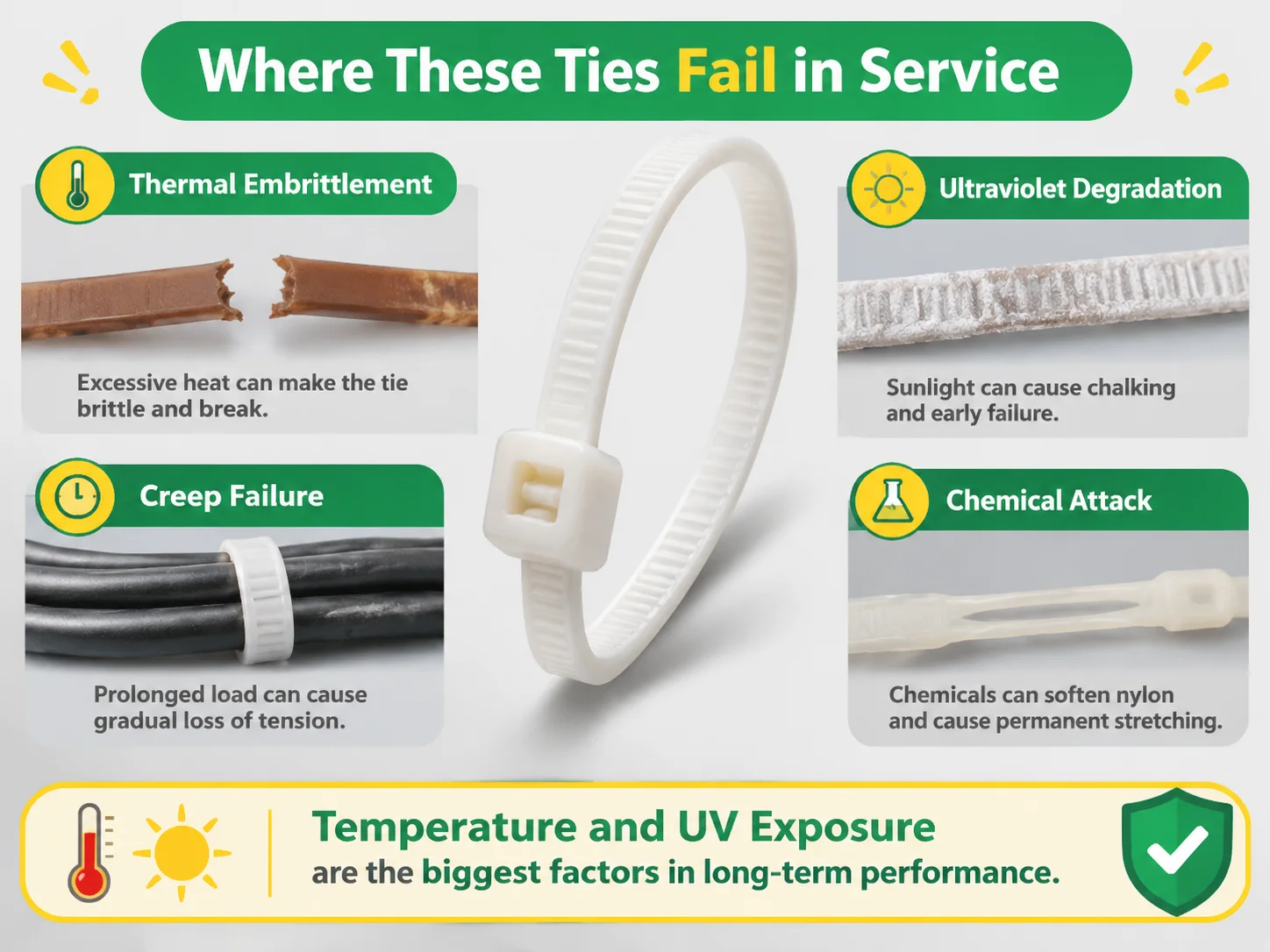
Where These Ties Fail in Service
The majority of claims for tie failures can be attributed to four modes of failure, none of which relate to manufacturing defects in an ordinary sense.
- Thermal embrittlement occurs when a tie operates continuously at an excessive temperature, causing the polymer to oxidise and become brittle and break rather than elongate. When a tie fails due to thermal embrittlement, it will have a clean and brown fracture.
- Ultraviolet Degradation occurs when a coloured or milky-white tie is exposed to sunlight, causing the tie surface to develop chalking, leading to failure at the first point of binding.
- Creep failure occurs when a tie is subjected to a prolonged tensile load at a specific temperature, causing the tie to lose tension gradually and the tied bundle to lose its securing ability without breaking.
- Chemical Attack occurs when the nylon tie comes into contact with chemicals such as solvents, fuels, and hydraulic oils, resulting in softening of the nylon material, causing unrecoverable elongation or stretching.
In view of the presence of three of four modes of failure relating to environmental concerns rather than strength-related concerns, temperature, and ultraviolet exposure are the greatest determinants of how well a tie will perform, irrespective of its rated tensile strength. For example, a properly graded 50 lb tie would outlive a non-properly graded 175 lb tie, all other factors being equal.
Choosing by Application
The chart below illustrates a relationship between the common applications and the properly graded tie, assuming that the tie would be installed using the proper tensioning tool (rather than relying upon manual installation methods).
| Применение | Recommended grade |
|---|---|
| Panel and cabinet wire (indoors) | Standard or heat-stabilized |
| Switchgear/ballasts | Heat-Stabilized |
| Rooftop conduit/Solar junction boxes | Heat-Stabilized, UV-black |
| Engine Compartment/Machine Housing | Heat-Stabilized or High-Temp |
| Outdoor/Coastal/Rooftop Areas | Stainless Steel Band |
| Food and Pharmaceutical Areas | Detectable Nylon and Stainless |
| Circuit ID | Standard Colors, Indoor Use Only |
| Plant Room Cable Tray | Heat-Stabilized |
The solar junction box has historically been an area of confusion for purchasers, as the rooftop combiner box must both be hot and exposed. A single tie that carries claims on both heat and UV properties is more effective than two separate ties for each property.
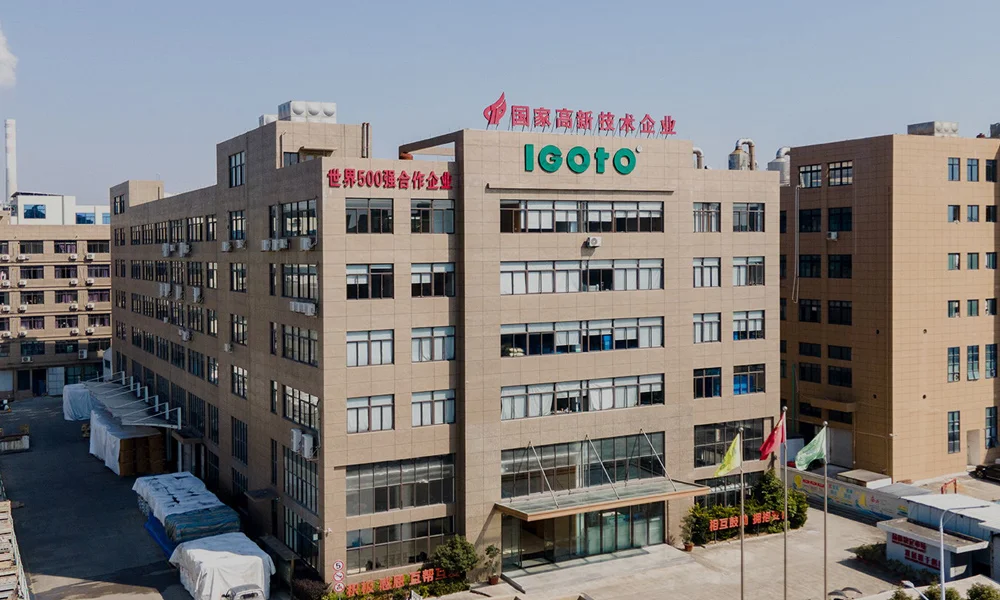
Where Igoto Fits
Igoto manufactures nylon cable ties in standard grades (heat-stabilized/UV black) and heat-stabilized, with sizes ranging from 4” to 14”. Igoto supplies these ties both as private labels and under its own name to distributors.
The business segment that produces heavy-duty cable ties has a unique structure; it is essentially based upon two factors: yearly contracts and container quantities, where the differences in pricing between non-branded and branded products are the most pronounced.
For specification purposes, we provide evidence rather than adjectives, including the nylon grade, additive package, retained strength at 105 °C, and black nylon UV properties. While we cannot make claims about temperatures that the materials cannot hold up to, a request for a nylon cable tie at 150 °C will usually result in using another material, rather than simply raising an older number.
How to Verify a Claim
Distinguishing between a rated product and one that is labelled requires answering four questions. These include: what the continuous service temperature is and what test method was used to obtain that figure; what percentage of the original tensile strength is retained at that temperature after 1,000 hours; are black nylon cable ties UV stable with carbon black and to what test? and is there a batch-level tensile strength record available, or is there only a type test for a sample?
A supplier who can answer all four questions is a source of rated products. A supplier that deflects the remaining three questions while providing an answer to the first question is only a source of a heat-stabilized standard tie. It is common enough to ask these questions always.
To perform the fifth check, physically examine the product. Bend the product back onto itself and look for any visible signs of cracking or deterioration. This will take less than a minute.
A high-quality nylon cable tie will flex at the bend without developing a whited out zone at the bend; if the tie has too much filler or is made from a degraded material, it will develop white stress marks very quickly. This does not serve as a laboratory test for the cable ties in question; however, we are able to identify manufacturing defects in large numbers of cable ties during the shipment process.
Documentation will contain the answers to most of the questions about cable tie specifications; we do have a separate page for certification and test documentation, as well as a list of what is dispatched with each shipping container. This list will include all UL Listed Ranges that have this type of listing, RoHS and REACH Declarations, and any batch strength record.
Часто задаваемые вопросы
Is nylon rated for heat?
Nylon 6/6 is rated for continuous use at approximately 85°C. This is acceptable for Panels and Cabinets; however, it is not acceptable for Ballast Enclosures or Engine Bays. For Ballast Enclosures or Engine Bays, we offer two other grades of nylon: heat stabilized grades, which will provide use up to 105°C, and another grade of nylon for use above ~150°C. For applications above 150-160°C, a different polymer will be necessary or, alternatively, a stainless steel cable tie.
What is considered a heat stabilised cable tie?
A nylon zip tie that contains an additive package that slows thermal aging and protects it against copper catalyzed degradation. As it is not a different polymer, the melting point remains the same. It will not be UV stabilized unless the tie is black and the supplier indicates that it is.
What are some good heat resistant zip ties?
There are a few suppliers, including Panduit, HellermannTyton and Thomas & Betts, who maintain data on the retained strength of their product when exposed to temperature. The retained strength is the figure that should be used for product comparison between suppliers. KSS and Nelco produce similar product quality but at a lower cost, and Igoto manufactures the same grades as KSS and Nelco at factory level. The brand has less importance than the published retained strength figure (if available) and the grade.
For how long will nylon zip ties be outside?
In temperate climates, a UV stabilized black tie will typically last between five and ten years while a natural or coloured tie will generally last between one and three years. A black nylon tie will experience even faster degradation near the equator, and at high altitudes or in environments with a high salt content. Therefore, in these instances, the use of a stainless band would be a more practical option.
What does heat stabilized mean? Does it mean that I can put it in an oven or near an exhaust?
No. 105 °C is significantly below the temperature of an exhaust component and is well below the melting point of nylon. The term heat stabilized means that the tie can withstand higher temperatures for a more extended period and will not degrade as quickly due to prolonged exposure to a warm environment.
Can I use a black tie outside without checking anything else?
Black ties provide UV protection; therefore they fulfil one of the two necessary criteria. The other criteria is that they should be made to operate in extreme temperatures. Black standard ties (85 °C) are still considered black, so when using a tie on a rooftop or in a solar box, opt for black and heat stabilized.
Ссылки
- Panduit — Cable Tie Material and Temperature Ratings
- HellermannTyton — Cable Tie Selection by Application
- UL Solutions — UL 62275 Системы управления кабелями
- NEMA — Wiring Products and Material Standards
- Grainger — Cable Ties and Material Specifications
Заключение
За счет термостабилизации нейлонового хомута пользователь получает хомут, способный выдерживать либо высокотемпературную среду (20 °C), либо длительное воздействие меди. Однако термостабилизация хомута не обеспечивает защиту от УФ-излучения, так как УФ-защита достигается за счет отдельной добавки и цвета. Термостабилизация не влияет на температуру плавления нейлона.
The two numbers to specify when ordering a nylon zip tie would be 105 °C and black (to provide UV protection). A nylon zip tie that is capable of withstanding both will perform adequately in a rooftop or ballast enclosure (i.e., to prevent failure) while it is still fresh, while a nylon zip tie that is capable of carrying one of the two will fail in the second summer.