



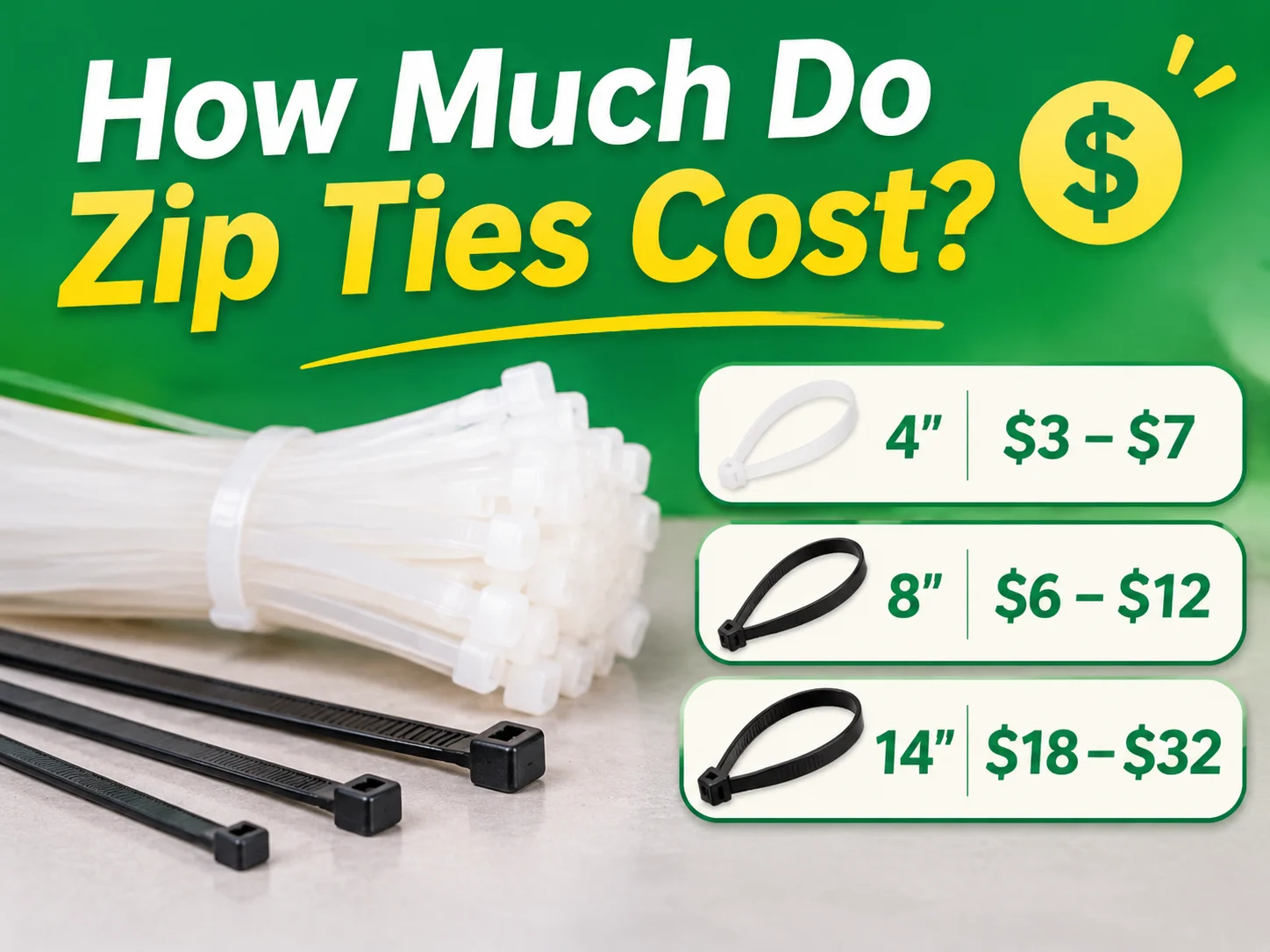
How Much Do Zip Ties Cost?
A pack of 100 pcs of a standard nylon zip tie (8″ long) typically costs between $6 – $12. The same quantity (pack of 100 pcs) of heat stabilized or heavy-duty nylon zip ties will cost approximately $12 – $25. UV color added has little if any increase in price versus standard colors. Stainless steel band ties start at approximately $25 for 100 pieces of small sizes and can reach up to about $60 – $120 for 12 mm width zip ties. Retail individual packs are sold at a higher per-piece cost, from $0.15 – $0.30 each, whereas factory container pricing for the same common sizes will range from $0.04 – $0.08 each. If you are purchasing more than a few dozen, you will typically want to have a zip tie installer tool or kit, which generally ranges from $20 – $150.
Quick answer: Most people are purchasing a package of 100, so that is the quantity of tie to quote. For example: A 4″ tie in a package of 100 = $3 to $7; An 8″ = $6 to $12; A heavy-duty 14″ tie will cost $18 to $32; These prices are distributor prices for regular nylon ties. Retail mark-up would double the price. Additionally if they were purchased in container volume it would be half the retail price.
The subsequent sections will provide guidelines for pricing according to size, description of materials/brands, comparison of retail to wholesale prices, reference to tools, special features that are priced higher due to extra cost, costs associated with a failed zip tie installation (hidden costs), application to assist in selection, expansion of production on our part and guidance to help prevent being misled by quoted prices.
How the Pack Size Confuses the Price
The selling size of the pack creates the pricing confusion. Bags are sold by count (quantity), by weight and by the length of string. A 100-pack of 4″ ties and a 100-pack of 14″ ties are four times different in material. The same price without size cannot be compared to anything.
There are two other units used in trade. One is a bulk bag of 1000 which is the most common purchase for a plant that uses them in daily production, and it typically receives a 15 to 25% discount when compared to a 100 pack. Another unit would be kits; these would consist of a variety of sizes, along with a tool, and they typically do not provide a value when compared to buying the sizes you will actually use.
Price by Size: The Table Buyers Actually Need
The price of a Tie is based on the Length of the Material and the Width of the strap for strength. Below you will see the pricing for the following lengths of tie in standard nylon and the prices for the heavy-duty column of tie in the same lengths using a wider strap. As shown in the price charts, you’ll find a breakdown of the types of ties available by their size, strength, packaged quantity and price per tie. There are three categories of ties represented in these charts based on packaging size. The chart represents both Standard or Heavy Duty Packages and the per-tie price.
| Size | Tensile | Standard, per 100 | Heavy duty, per 100 | Per tie, standard |
|---|---|---|---|---|
| 4 in / 100 mm | 18 lb | $3 to $7 | $6 to $10 | $0.03 to $0.07 |
| 6 in / 150 mm | 40 to 50 lb | $5 to $10 | $8 to $14 | $0.05 to $0.10 |
| 8 in / 200 mm | 50 to 75 lb | $6 to $12 | $10 to $22 | $0.06 to $0.12 |
| 11 in / 280 mm | 75 to 120 lb | $12 to $22 | $18 to $35 | $0.12 to $0.22 |
| 14 in / 356 mm | 120 to 175 lb | $18 to $32 | $25 to $48 | $0.18 to $0.32 |
| 24 in / 610 mm | 175 lb plus | $35 to $60 | $50 to $90 | $0.35 to $0.60 |
The per-tie price column allows you to compare a bulk bag with a small package size because it’s the only number that can be used to compare like-for-like. The prices are a little higher for bulk packs, but when you divide them by the number of ties in the package, they end up being lower because there are more ties in the package than there are in the small package size. For example, if a small package costs $9 for 100 ties, and a bulk package costs $62 for 1000 ties, the price of each tie in the small package will be 9 cents each versus 6.2 cents for the bulk package; that is a saving of about 31% for purchasing more of the same product in a larger package. Therefore, it’s better to purchase in larger quantities where possible.
When comparing prices of ties, be sure to also take into consideration the length of the ties that you are purchasing. In addition to being priced different depending on whether it is a standard or heavy-duty package, the length of the ties also affects the ability of the tie to hold your items securely together. For instance, if you are using ties to hold bundles of cardboard, you will need a longer tie so that it can wrap around the entire bundle and secure the bundle. Conversely, if you are using a tie that is too short, it will not wrap around the bundle and will not be able to secure it properly. In addition, if the tie is too long, there will be excess length that will require trimming to remove the excess, which means additional labor and a sharp end to deal with.
Furthermore, the packaging of the tie can impact your purchase decision as well. Not only will the size and type of the package impact the cost of your purchase, but it can also impact the amount of storage space you require. Some packages can be bulky and require a considerable amount of space to store. Other packages may be small and easy to fit in small areas. If space is an issue, consider the size of the package before you purchase your ties. To relate to the size chart, each row of the standard cable tie size chart gives a range (or bundle size) of lengths and the corresponding standard tie lengths for those bundle sizes; generally, the price you pay for the tie in the bundle size will cost you less than if you bought a longer tie and simply trimmed it.
Material Changes the Price More Than Size
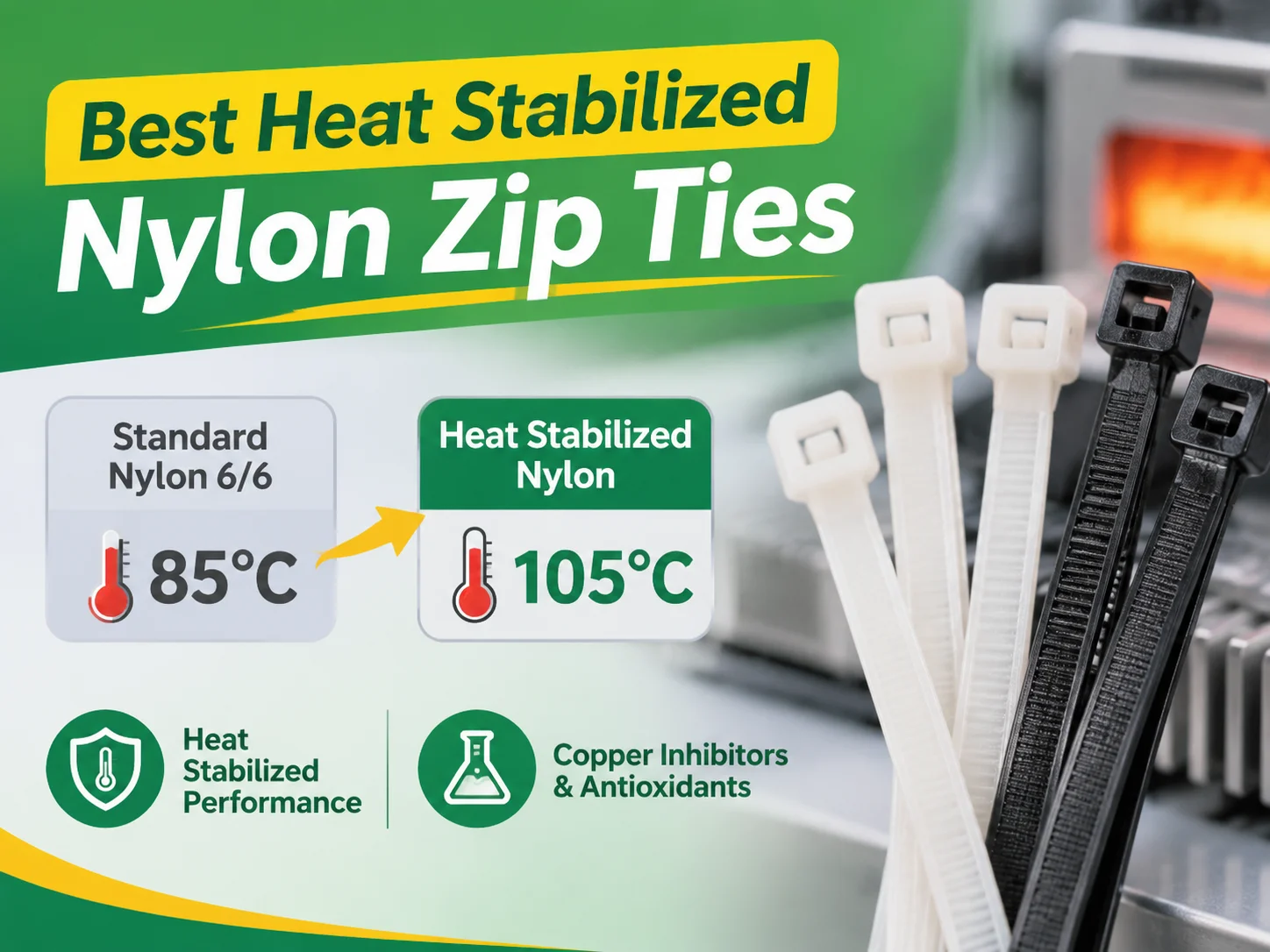
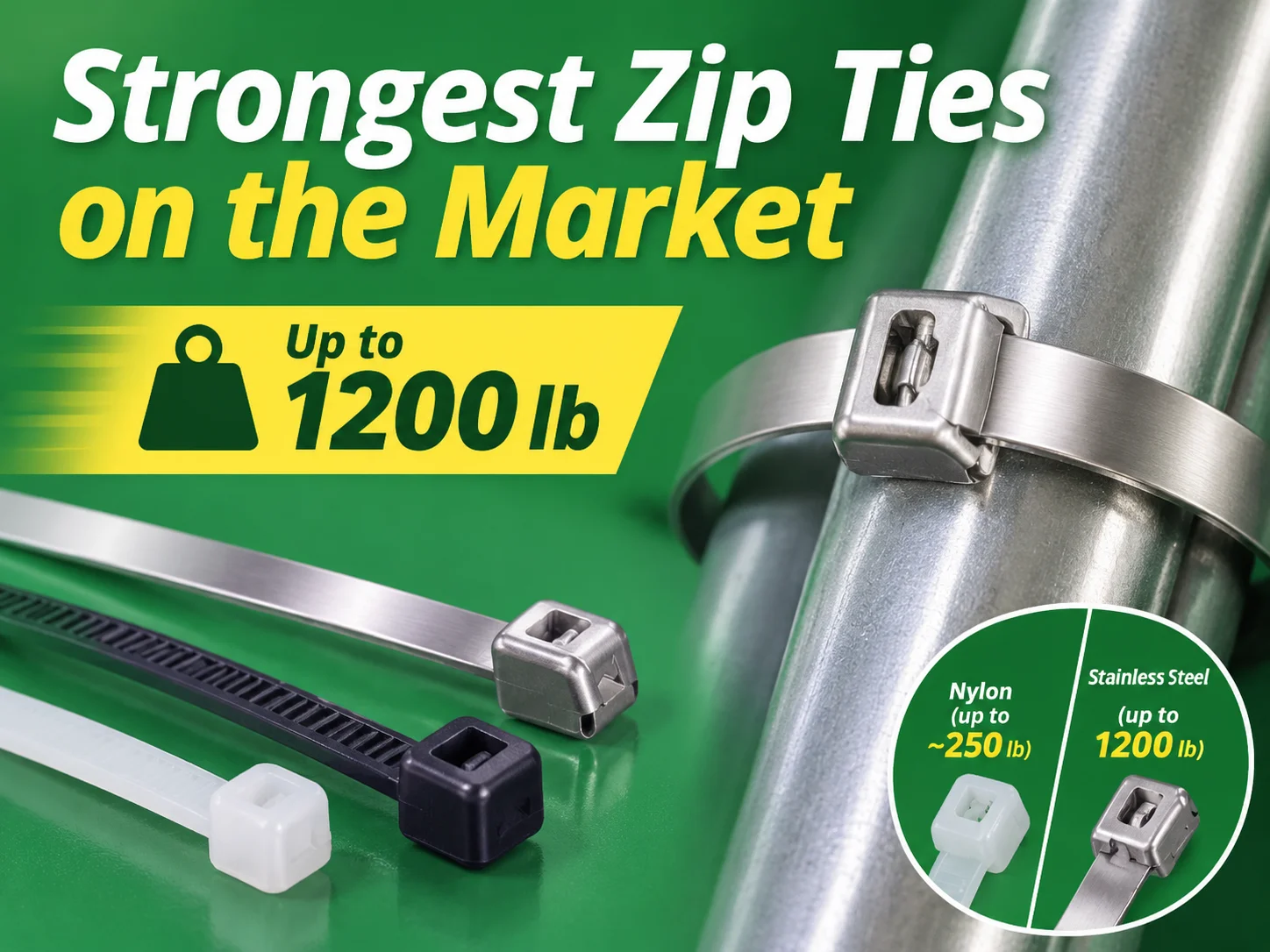
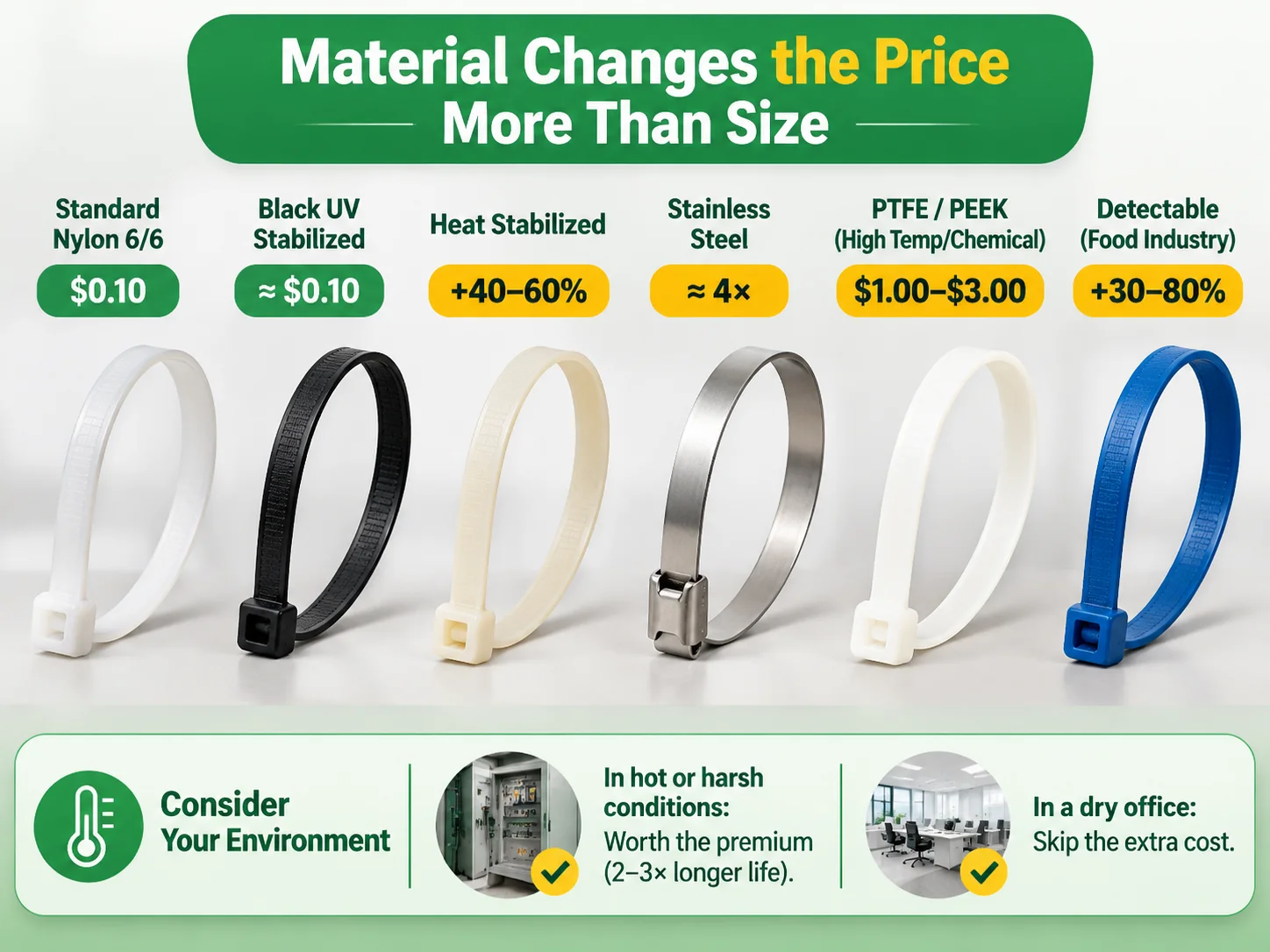
Many people use Nylon 6/6 as the basis for the types of cable ties available, however, there is a much larger range of pricing for these types of ties with the inclusion of additive packages that result in an increase of between 40% to 60% in the price of the tie. A price comparison of nylon cable ties will show that black UV stabilized nylon ties will be very close to the pricing of regular nylon cable ties since carbon black used in the production of the black UV stabilized tie is less expensive than the heat stabilizers in the production of the heat stabilized nylon tie. Stainless steel cable ties are much more expensive than nylon cable ties, and, in fact, will typically cost you four times more for the same size of tie as a nylon cable tie.
You should always consider the environmental conditions when evaluating the benefit of the added premium for this material, if you’re installing a heat stabilized cable tie in an electrical compartment it will cost you an additional $0.06 and will last at least two to three times longer than a standard nylon cable tie; however, if you were to install the same heat stabilized cable tie inside an office environment that is dry and no chemicals are located in that area, you would be wasting $0.06 on an unnecessary added cost.
The price of specialty material ties like PTFE and PEEK that are designed for high temperature or chemical applications can vary from $1.00 to $3.00 each, and detectable cable ties for food production applications will carry a premium price of 30% to 80% higher than what you would pay for a standard nylon cable tie. The pricing splits between nylon cable ties and black UV stabilized nylon cable ties provide a good insight into the price increments for different products in this classification.
What a Brand Adds, and What It Does Not
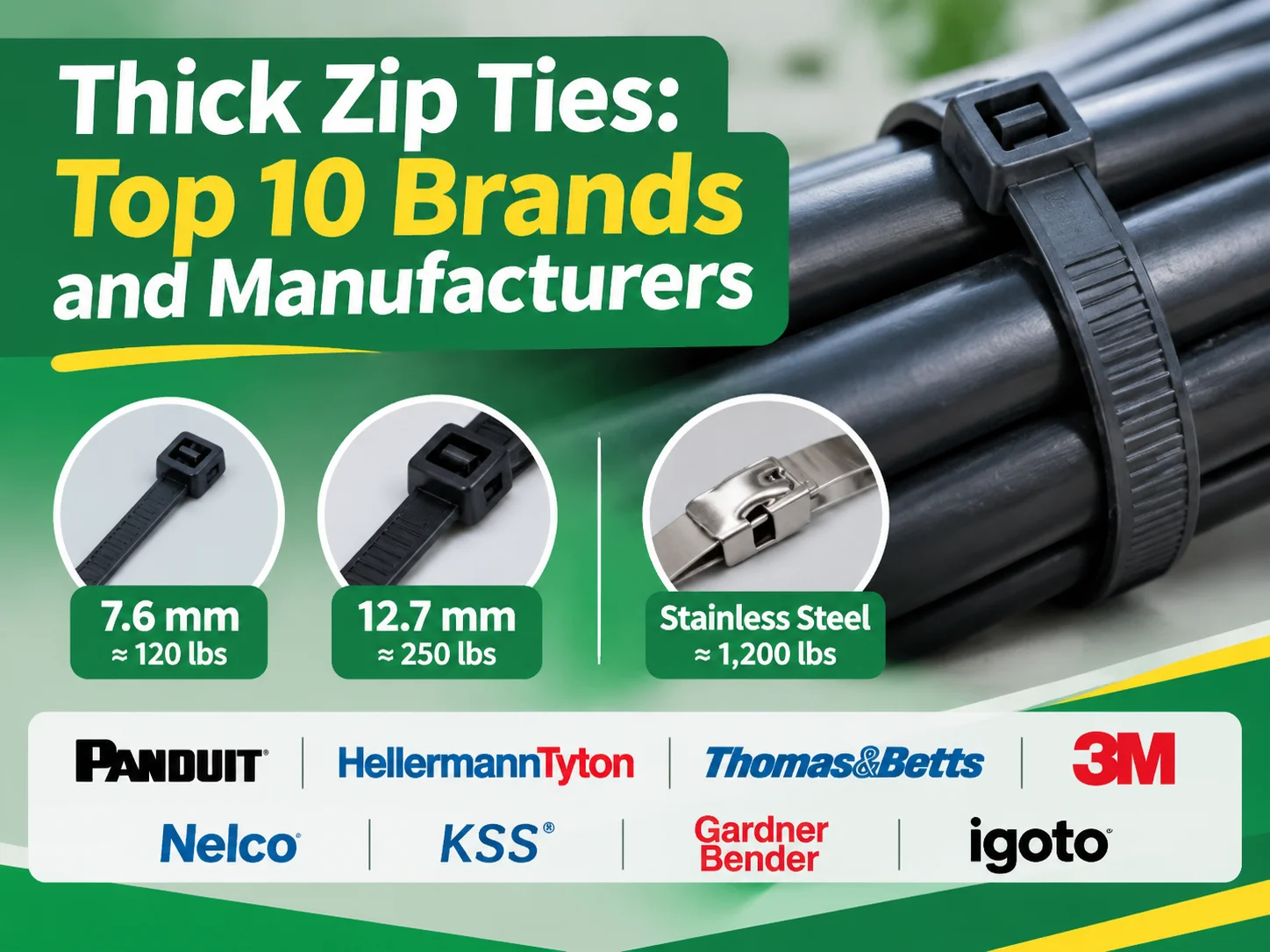
A branded tie from companies such as Panduit, Thomas & Betts, or HellermannTyton would be expected to have a price range of at least two to four times that of an equivalent factory tie that is produced from the same material and with the same type of additives.
When purchasing products through this channel, you can expect to receive items with controlled tensile strength properties, standard published retained strength curves, batch traceability records and in some instances, a stainless steel locking pawl that will securely grip the cable regardless of temperature. If you have a job that requires the specifications you’ve outlined in the previous sentence, it is certainly worth spending the money for these items.
The items you are purchasing through this channel do not necessarily give you access to a different polymer material than what you would receive if you purchased the same item from a factory that produces and distributes quality ties. The nylon used in a branded tie and the nylon used in a quality tie manufactured in a competent factory are both derived from the same small group of resin suppliers; the differences are solely in the compounding process, the moulding tolerances and the documentation of the products; the chemical composition is identical.
It is important to follow the application when making a brand selection, not the personal preference of an individual. For example, when bundling control cabling inside an indoor panel board, the bundling of control cabling will have no real benefit in relation to the 4x price increase. However, when using the same cable tie method in a rooftop combiner box; if the cable tie were to fail in this application, the service technician will need to return to the roof again to correct the problem. This is why a contractor using the cable tie method in a rooftop combiner box has more to gain from a higher-priced item.
Retail Versus Wholesale: Where the Multiple Comes From
The retail price includes the costs associated with placing the product into a store, presenting it in attractive packages and providing it in smaller quantities for consumers. For example, a carded pack of 25 ties sold at a home improvement store can cost between $4 and $8, while a pack of 100 ties can be purchased for between 6 and 12 cents per tie; therefore, each tie sold in a carded pack has a 4x to 8x price multiplier for the retailer. This is not necessarily a result of excessive profits; rather, it is a result of the cost of providing the product in formats that equally meet the needs of a consumer but do not meet the needs of a contractor.
Wholesale pricing works in the same manner, just from an opposite perspective. A distributor purchasing pallets of product receives the factory price plus a margin for the distributor; the same applies for a plant purchasing a truckload of product. The range of 15 to 25 percent between the two products can be found in the Combo Range and is open to anyone who can estimate a year of usage versus a one month time frame.
The standard plan for the Maintenance department is to purchase three different sizes that will allow you to complete 90 percent of the jobs in bulk and small quantities of the odd size. A store with eight different bagged sizes of 100 has no way to recover the cost of inventory after 36 months. The 8-inch black UV ties in boxes of 100 are the most common type of tie used by most plants and offer the best price justification for purchasing in bulk.
The Tools You May Need to Buy
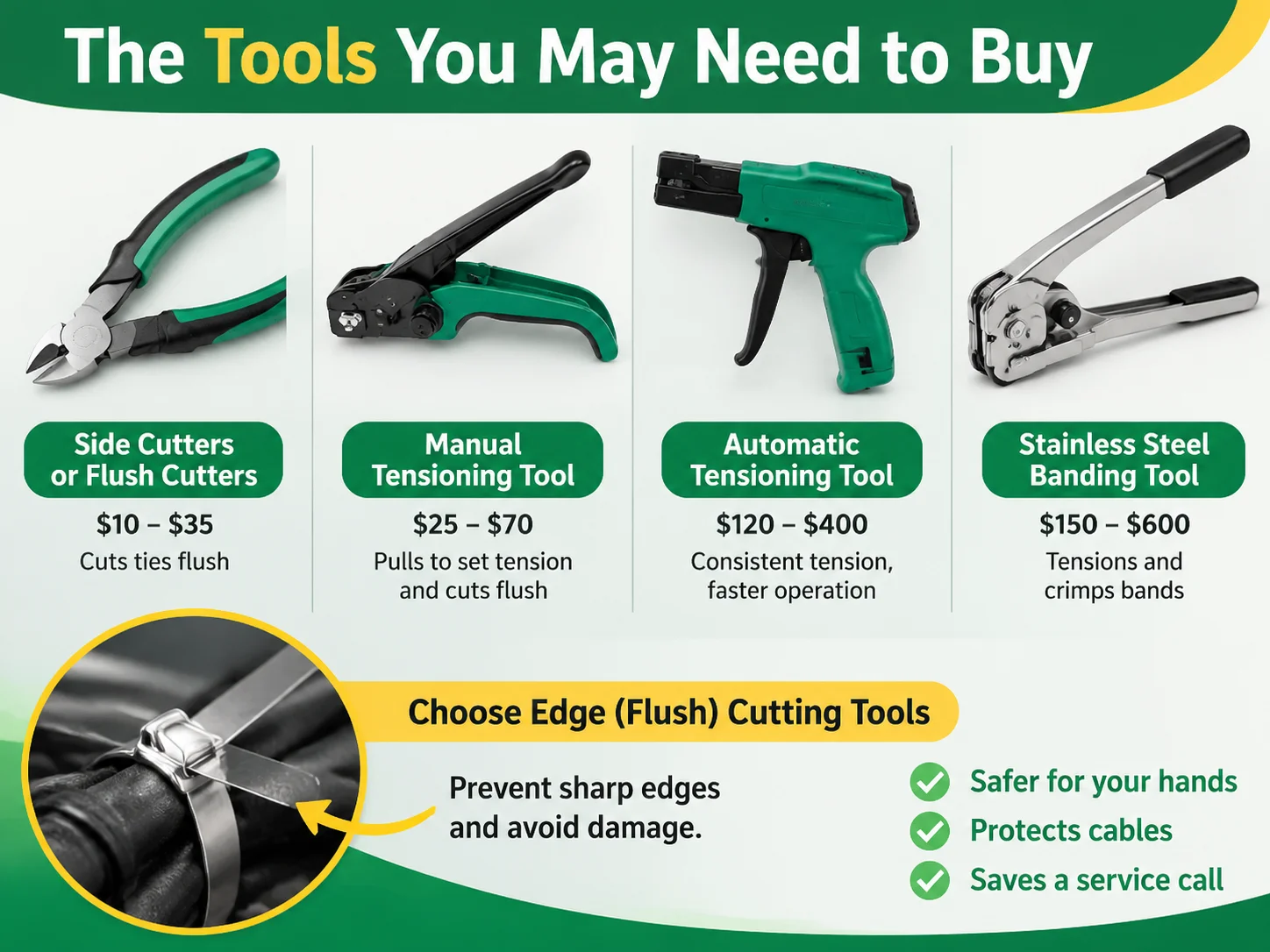
Though the number of ties you will be using may not seem to justify the purchase of a tool for the installation, if you are using over a thousand ties, you may want to invest in a tool. Using your hands to tension the ties will yield varying results, create sharp edges, and is generally a slower process than using a tension tool; therefore, different price point tools have been developed with the expected volume of use as a guide:
| Tool | Price | Function | When it is justifiable |
|---|---|---|---|
| Side cutters or flush cutters | $10 to $35 | Cuts ties flush | Any volume; buying one is always a good idea |
| Manual tensioning tool | $25 to $70 | Pulls to set tension and cuts ties flush | Using more than 100 ties per week |
| Automatic tensioning tool | $120 to $400 | Pulls to a consistent tension, cycles quicker, reduces hand fatigue | A production line or a harness shop |
| Stainless steel banding tool | $150 to $600 | Tensions and crimps stainless bands | Any stainless banding installation |
Buyers often forget to purchase the stainless steel tool. It is impossible to install a stainless steel band tie solely by hand because it requires controlled tension and crimping when installing it; therefore, the installation tool should be considered part of your equipment costs rather than an accessory item. For example, if you budget $200 for purchasing your stainless steel ties, but do not budget for the installation tool, you will not have budgeted for completing this project.
Another point of discussion is edge (flush) cutting tools. Edge (flush) cutting tools are a low-cost method to prevent needing to return to the job after installing stainless steel ties. Cutting the tail of the tie using a standard side cutter tool leaves you with a sharp edge, which can result in cuts to either your hands or to the insulation around the cables. Edge (flush) cutting tools, on the other hand, are much less expensive than a single service call.
Colour, UV and Special Features and What They Add
Note that the standard colour for nylon ties is black because black carbon serves as both a pigment and UV stabilizer. Natural (beige) is also available at the same price point. Other colors (blue, green, orange, red, yellow, etc.) will be similar to black, plus an additional 10-30 percent (retail) premium with possible minimum order requirement from manufacturer since a colored production run will require cleaning out the machine.
Additionally, special features will add additional cost. For example, a releasable stainless tie is 30-60 percent more than a non-releasable tie. Mounting heads and screw holes will add 20-40 percent. Marker flags and white label areas will add 50 percent or more to the total price of the item. Detectable ties used for food handling applications can be 30-80 percent more expensive than a standard tie. Individually, none of these items are very expensive, but if your specifications list four items, then your actual unit price has doubled before anyone notices.
The single most valuable feature for almost all outdoor applications is UV stabilization; therefore, it would be wise to include this one feature in your tool kit. The preferred colour of the product is black and the premium is zero. The alternative is to redo the entire installation in two years.
Where the Hidden Costs Sit: Failures and Replacement
When evaluating the cost of an installation, the purchase price is only one part of the cost of a failure. The cost of replacing a tie that has broken on the roof of a building includes a ladder, possibly a building permit, a minimum of one hour of labour ($80 to $200) in addition to 10 cents for the part. If a tie fails within the electrical panel, it will also cost you a shutdown. If a tie fails on a cable tray, the fallout from the equipment could be substantial.
These hidden costs change the equation when it comes to the purchasing decision. For example, if you pay 40 percent more for a heat-stabilized tie that lasts three times longer than a poorly made tie, you are actually saving money. The same applies for the use of stainless steel ties in coastal applications. The best value for a tie is the one that is still providing service after five years.
The second element of hidden costs is the cost of carrying an inventory. If a store carries twelve different sizes of tie to eliminate stockouts, the store is using cash and shelf space to provide the convenience of non-planning. Most plants can be serviced by holding six sizes and having a reorder point.
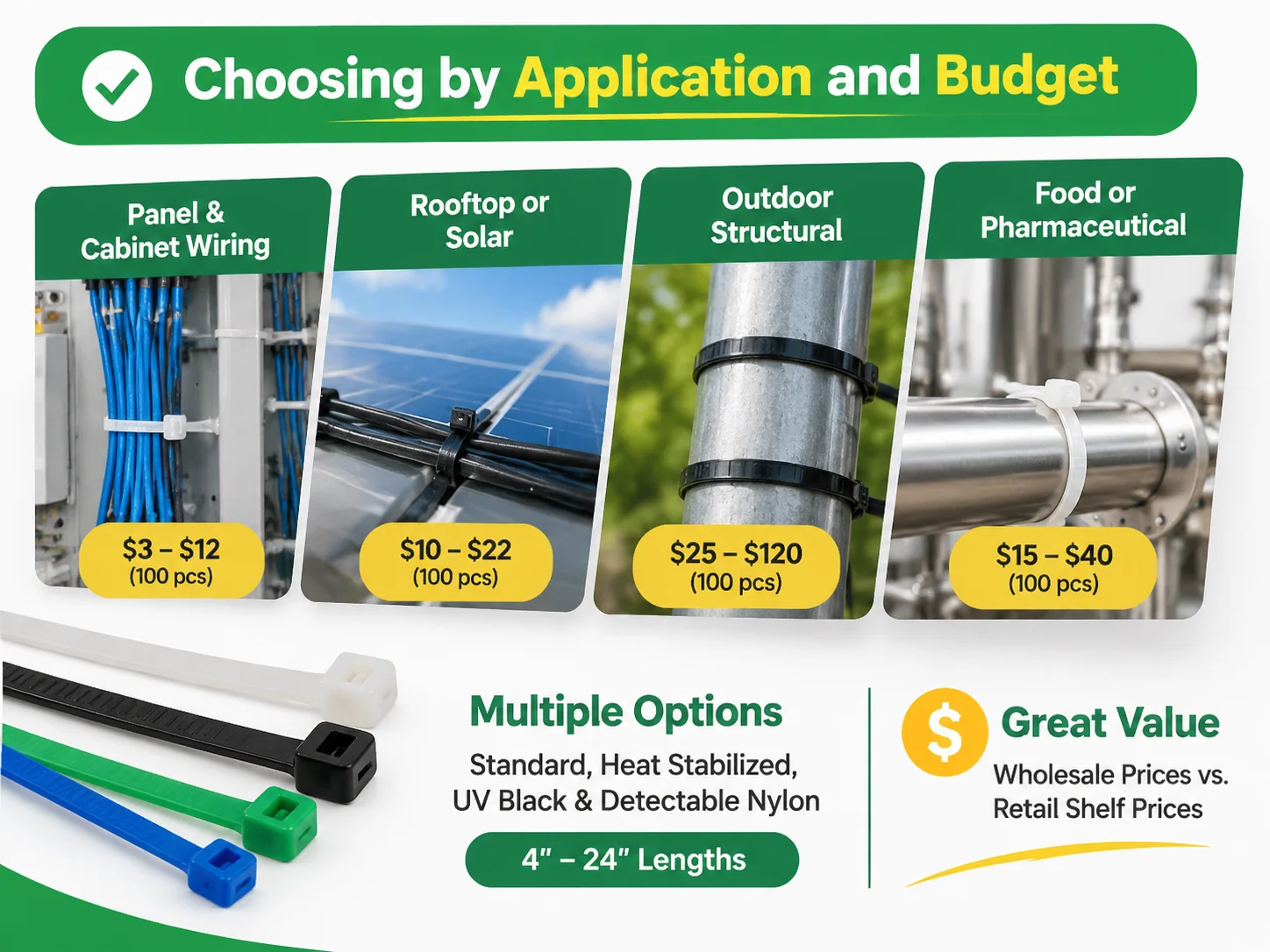
Choosing by Application and Budget
The table below provides information on common situations and which product to use, based on the application and the associated costs. The assumption is that all ties are installed using a tool.
| Situation | Product | Budget per 100 | Why |
|---|---|---|---|
| Panel and cabinet wiring | Standard nylon, 4 in to 8 in | $3 to $12 | No UV, moderate temperature, high count |
| General plant maintenance | Standard or UV black, 8 in | $6 to $18 | The volume size for most cable work |
| Rooftop or solar | Heat stabilized UV black | $10 to $22 | Heat and UV together |
| Switchgear or ballast enclosure | Heat stabilized | $10 to $22 | Continuous heat plus copper contact |
| Outdoor structural, coastal | Stainless band, 304 or 316 | $25 to $120 | UV, salt and load exceed nylon |
| Food or pharmaceutical | Detectable nylon or stainless | $15 to $40 | Foreign body control, washdown |
| Contractor van stock | Three sizes, 100 packs | $20 to $40 total | Coverage without inventory |
We manufacture a wide range of nylon tie lengths from 4″ to 24″. In summary, we will manufacture tie lengths, in standard, heat stabilized, UV black and detectable nylon; for sale under our own name as well as private labelled. The selling price will reflect the Factory Pricing. Therefore, the comparison will be based on the Wholesale Price of a Brand Name Manufacturer vs the Retail Shelf Price.
Where Igoto Fits
We purposely do not provide a price list, because a price list without considering size, grade, colour, and packaging, as well as annual volume would be inaccurate information for nearly every buyer that read it. What we do provide is the tensile strength of each size, the nylon grade used and the certification that will be sent with your order.
To compare the available options, a good way for a purchaser to request a quote for an annual quantity across three sizes to allow for comparing that amount against a distributor’s price for the same quantity and sizes mix.
How to Read a Quotation
There are four things you will want to look for on any quotation in order to compare them:
- the sizes in mm for both length and width, not just inches
- the tensile strength in lbs or N and the testing method
- the nylon grade and whether it has heat stabilization, and whether the colour black is UV stabilized
- the pack quantity of ties, since a price per carton means nothing until you know how many ties are in each carton
Although these two items are not included on the price, they are valuable to ask about. 1-The batch tensile report, gives you information concerning whether the shipment was tested or if only the type sample was tested; 2-The certification. Some products being used in data centres or food plants require a UL listing or a material declaration, which the lowest cost supplier may not be able to provide. The test documentation and certifications that shipping includes will provide both of these requirements.
Where quotations get misleading is that they allow comparisons between products that are non-comparable. The cost difference (60% material) between buying either a 100 count of 4mm wide ties, as opposed to a 100 count of 7.6mm wide ties; the cheaper price for either 100 smaller ties, is smaller, not cheaper.
Save Money: Buy Zip Ties in Bulk
The savings when purchasing in bulk are 15-25% for 100-pack versus 1,000-pack, and even more when comparing 1,000-pack and container sizes. This is a significant amount of money saved; however, a consumer must use the majority of ties purchased in a timely manner because nylon is hydrophilic, meaning moisture will be absorbed into the nylon after long periods of storing the ties.
Frequently Asked Questions
Are zip ties available at Dollar Tree?
Yes, they are available in small quantities. Due to the store’s fixed pricing model, you will get approximately 10-25 small zip-ties in a package, with prices between 5 cents and 12 cents per tie. These small sizes will suffice for home use. However, these sizes would be substantially more expensive for commercial purposes like to connect multiple panels or large trees.
How much do zip-ties cost at Walmart?
The price of 100 8″ zip-ties which are carded are $(5 to $9). Bulk bags of 1000 zip-ties cost $25-$45, depending on brand and size. The Store Brand zip-ties are the cheapest at this volume.
What is the cost of cable ties?
For heavy duty, and heat stabilisation purposes, Nylon standard cable ties will average between 4 and 12 cents for common sizes directly purchased from a distributor in multiples of 100. The heavy duty and heat stabilised cables will average between 10 and 25 cents, while the stainless steel cables will average between $0.25 and $1.20, while retail single packs will typically range between $0.15-$0.30 per tie.
How many zip-ties are in apackage?
Most packs contain either 10, 25, 100 or 1,000 zip ties, with 100 and 1,000 tying to the trade supply. Pricing is generally quoted on a per-100 basis. Prices for some bulk products are based on weight, so determining the price-per-tie must be done by calculating the weight of the ties.
Should I invest in tools to install zip ties?
No! If you are using less than approximately one hundred ties, no tool is necessary to install zip ties. However, if you plan on purchasing more than one hundred zip ties, investing in a manual tension tool will save you more time and provide you with professionally installed zip ties. Tools to apply tension to stainless-steel cable ties will need to be purchased separately and can range from $150 to $600.
References
- Panduit — Cable Tie Product Data and Pricing Structure
- HellermannTyton — Cable Tie Selection and Material Types
- Grainger — Cable Ties and Tools for Installing Them
- UL Solutions — UL 62275 Cable Management Systems
- NEMA — Wiring Products and Material Standards
Conclusion
In general, the average cost per one hundred standard eight-inch zip ties is $6-$12. When considering the grade and packaging size, the pack size that you buy has the biggest impact on your overall cost per tie. A heat-stabilized tie can increase your cost by 40% and offers three times the longevity in high-temperature areas. Additionally, you will enjoy 30% cost savings per tie when purchasing from a one-thousand pack as compared to purchasing a hundred-pack of ties.