



What Is a Plastic Tie Cable? Materials, Sizes, and Uses Explained
If you have ever bundled cords and wires behind a desk, secured a garden trellis, or organized the cabling inside a panel, you have likely reached for a plastic tie cable. This inexpensive little fastening device is one of the most widely used forms of cable management found in places like data centers, factories, home workshops, and greenhouses. However, not all plastic tie cables are created equal. With the wrong material, length of cable tie, or tensile rating, you might end up with loose bundles, a brittle failure in the cable tie, or the cable ties snapping with too heavy a load. This guide will explain what a plastic tie cable is, how it works, what the materials and types of plastic tie cable are, how to choose the right one, and how to use them correctly for various applications to keep everything neat.
What Is a Plastic Tie Cable?
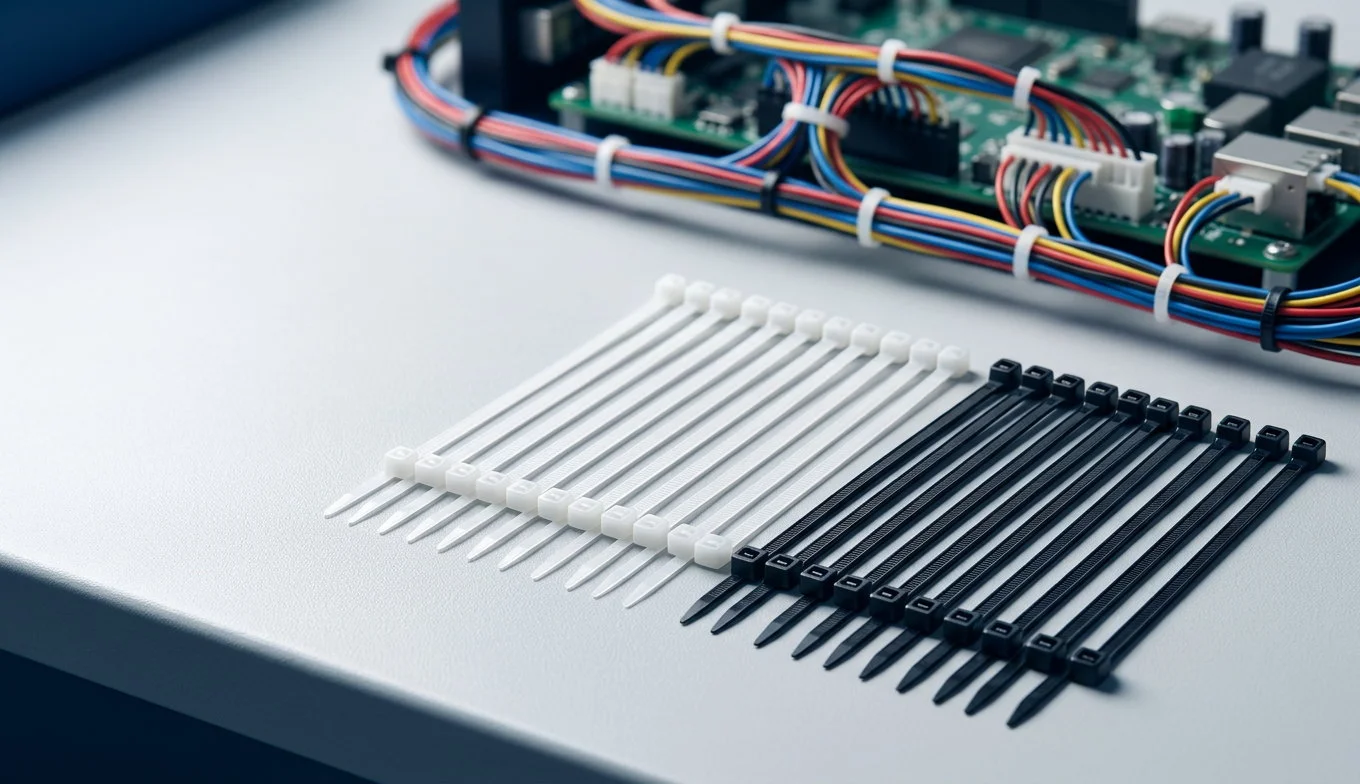
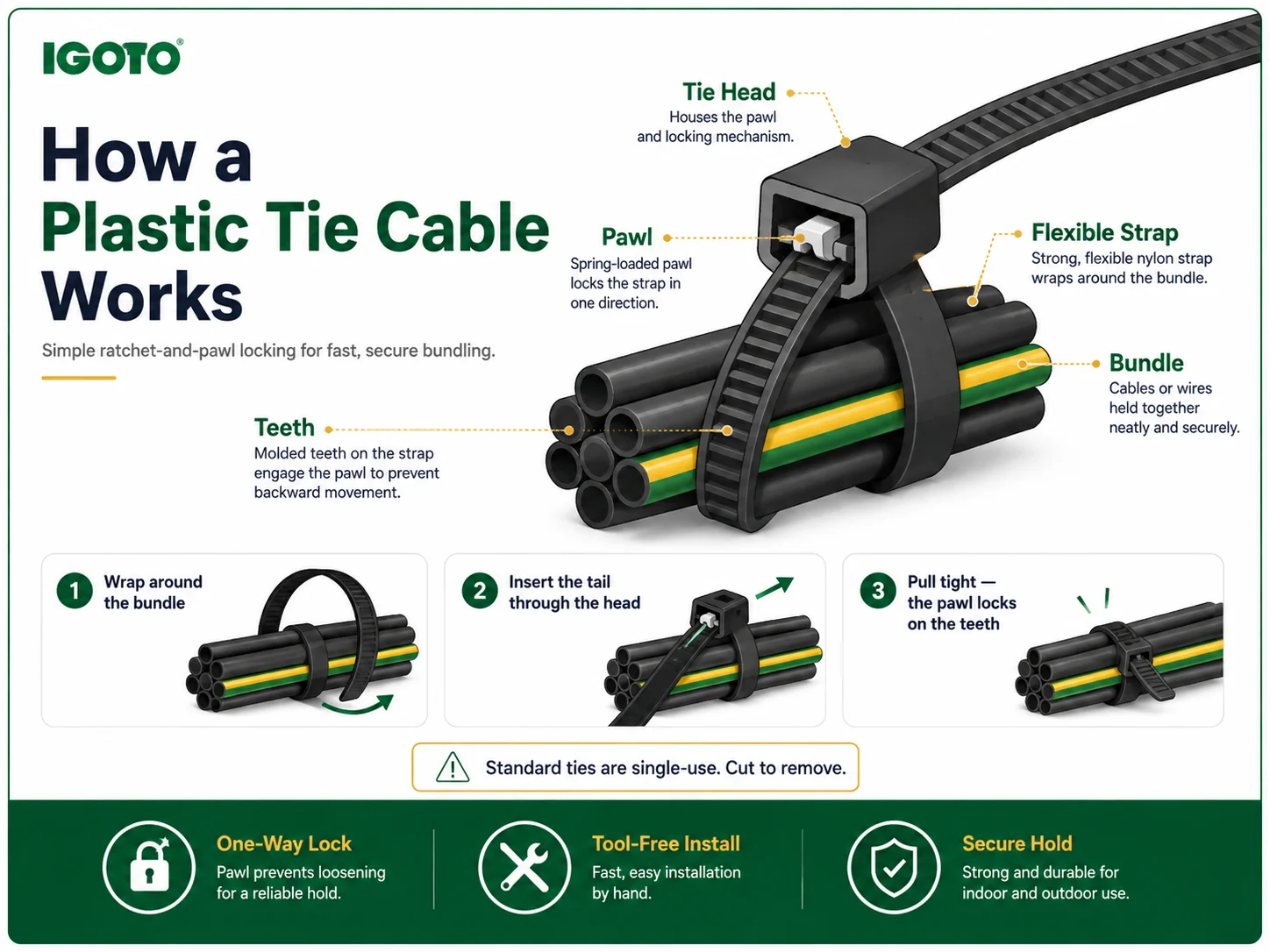
Plastic tie cables, also known as zip ties, cable ties, or hose ties, are fasteners formed of flexible polymer materials with a small locking head at one sided opened end. The strap has to be wrapped around cables, hoses, and the shoulders and then passed through the head so that a small angled tab called a pawl holds the strap in place while locking preventing it from loosening. Ultimately, the outcome is a fast only one-way locking loop that can be tightened to any size.
The idea may seem deceptively simple, yet designing a working plastic tie requires accuracy in the engineering process. The teeth should be sharp enough to lock properly since the head should be durable enough not to pull out of place, and the paraffin should be flexible enough allowing it to bend but not break. Having these necessities taken care of makes it possible for a tie weighing less than a gram to hold the bunch of items in place in their one particular spot for many years.
If you are new to the category, our overview of what zip ties are is a helpful starting point.
What Are Plastic Tie Cables Made Of?
The kind of material brings about almost all parameters of how the tie acts. It has qualities, temperature limits, resistance to the sun, and how it reacts to chemical substances involved. There are generally three types of plastics when talking about cables.
Nylon 6/6 (PA66) is the number one plastic cable. The material has a great ratio of price, strength, and flexibility. It can function normally in various temperatures from about −40°F to 185°F (−40°C to 85°C), and the tensile strength here varies from around 18 lbs for small ties to over 250 lbs for big ones. The property of nylon enables it to withstand exposure to various oils, greases, and chemicals.
Heat-stabilized nylon is designed for special hot operating conditions. This material allows for temperature use that exceeds the normal maximal temperature parameters.
UV-stabilized nylon is used for outdoor use and therefore is black in color with the use of carbon black. This kind of nylon has additives that protect it from degradation due to sunshine influence. тоhe same applies to polypropylene and Tefzel that can face such external influences but lose some of the strength in comparison with regular nylon ties.
Finally, because the performance of the tie depends on the characteristics of the material, it is important to distinguish the grade printed on the package in a shop before buying many ties.
How a Plastic Tie Cable Works
Every basic plastic tie utilizes the same ratchet and pawl design. The strap’s extended tail is equipped with many small teeth. The tail is passed through the tie’s rectangular head and pulled, with a little flexible component dubbed the pawl hitting the pawl over every tooth in the upper section of the head. Since the pawl is presented at an angle, it permits the tie to shift only in a single direction. When the strap is pulled tight, the strap stays in place; if the strap is pulled in a reverse direction, the pawl digs in.
This is also the reason that the vast majority of ties work only once: the only way to take the ties apart is by cutting them. The compromise in terms of reliability is that there are no movable parts, no glues going bad, and nothing required in order to install these ties. For situations where you need to open and re-close a bundle repeatedly, releasable designs solve this, which we cover in our guide to reusable zip ties.
Types of Plastic Tie Cables
Cable ties have grown in extent since the time they were originally invented. Here are a few widely used types:
Standard cable ties, which are usually the most common type used indoors.
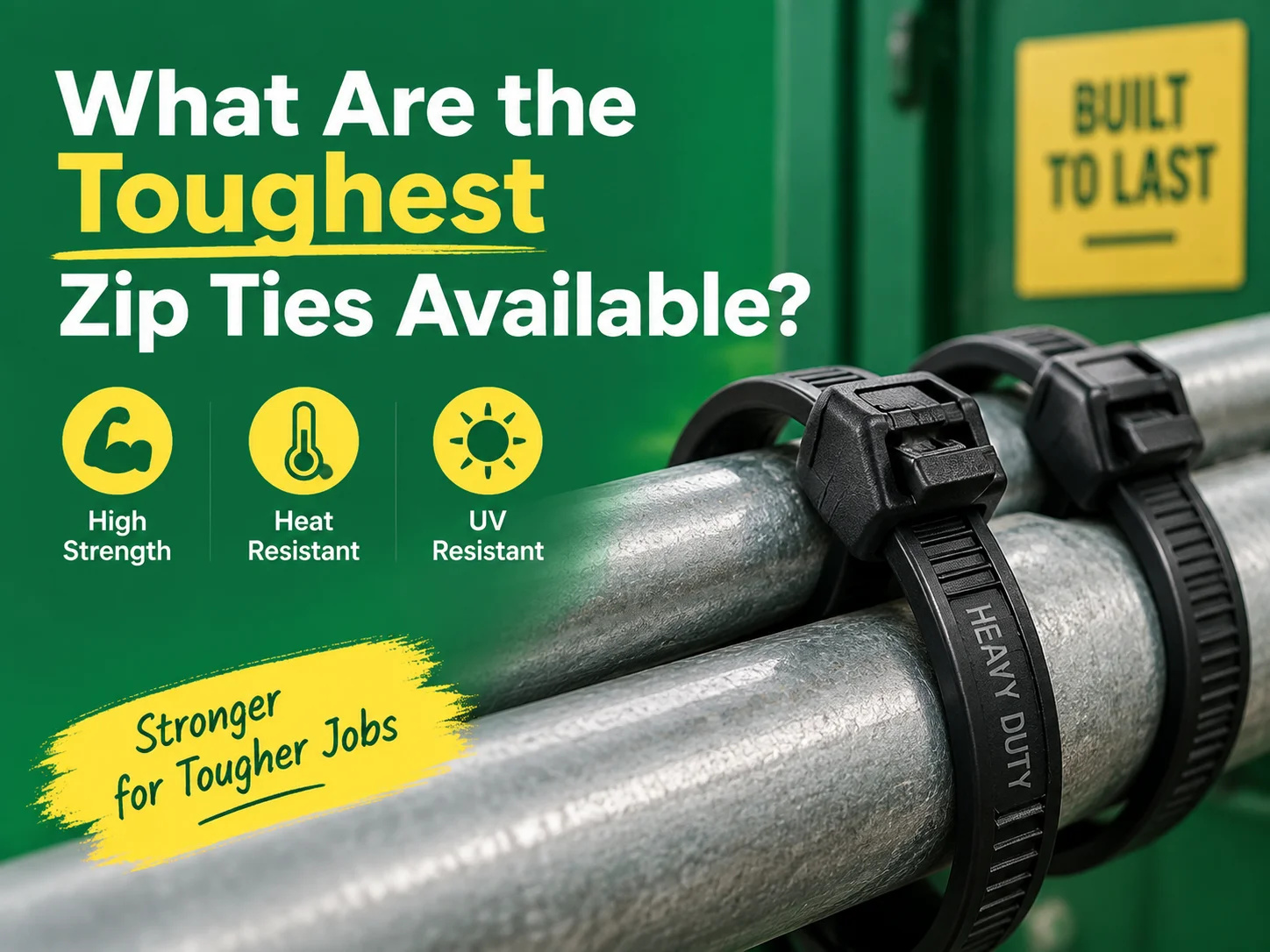
Heavy-duty cable ties built with tougher straps and heads for more challenging work.
Releasable cable ties, which allow users to open and re-use the ties.
Mounted-head ties, which include either holes that allow the tie to be attached to another surface.
Marker or label ties, which function as markers for cable organization.
Push-mount ties, which allow the tie to be clicked into the designated hole.
Colored ties, which are useful for categorizing cables.
Already, UV-resistant black ties are available for outdoor applications.
Choosing among these depend on what needs to be done as opposed to choosing a brand. Although all of them essentially use plastic ties, their features are different types due to differences in the application of these cable ties.
Plastic Tie Cable Sizes and Tensile Strength
In the size of a tie, two things are important: length, which determines the maximum size of the bundle it is able to encircle and minimum loop tensile strength, which refers to the maximum weight that the closed loop can withstand before it loses its performance. The thicker and broader the strap, the greater the tensile strength. The table below indicates the normal figures for the nylon 6/6 ties.
| Category | Typical Length | Approx. Tensile Strength | Common Use |
|---|---|---|---|
| Miniature | 4 in (100 mm) | 18 lbs | Small wire bundles, electronics |
| Standard | 8 in (200 mm) | 40–50 lbs | General cable management |
| Intermediate | 11–12 in (300 mm) | 50 lbs | Medium bundles, appliances |
| Heavy-duty | 14–15 in (370 mm) | 120 lbs | Thick cable runs, conduit |
| Extra heavy-duty | 18–40 in (450–1000 mm) | 175–250 lbs | Large industrial bundling |
A useful rule of thumb: choose a tie whose length is at least four times the diameter of your bundle, so you have enough tail to thread and cinch comfortably. For a deeper look at how strap dimensions affect performance, see our article on zip tie width, and for the strongest options, our guide to heavy-duty zip ties.
Key Benefits of Plastic Tie Cables
The long-lasting success of plastic cable ties boils down to a combination of benefits unmatched by other fasteners at any price.
Low price, usually just pennies each in bulk amounts
Quick, tool-free installing that speeds up large jobs
One-way locking mechanism that is resistant to loosening because of vibrations
Lightweight and non-conductive unlike metal
Corrosion-resistant due to the fact that plastic rusts less than metal
Made in all sizes, colors or shapes
Most nylon ties also carry a UL 94V-2 flame rating, meaning they self-extinguish rather than sustain a flame, which matters in electrical and industrial settings. For background on the underlying flammability classification, the UL 94 standard is a helpful reference.
How to Choose the Right Plastic Tie Cable
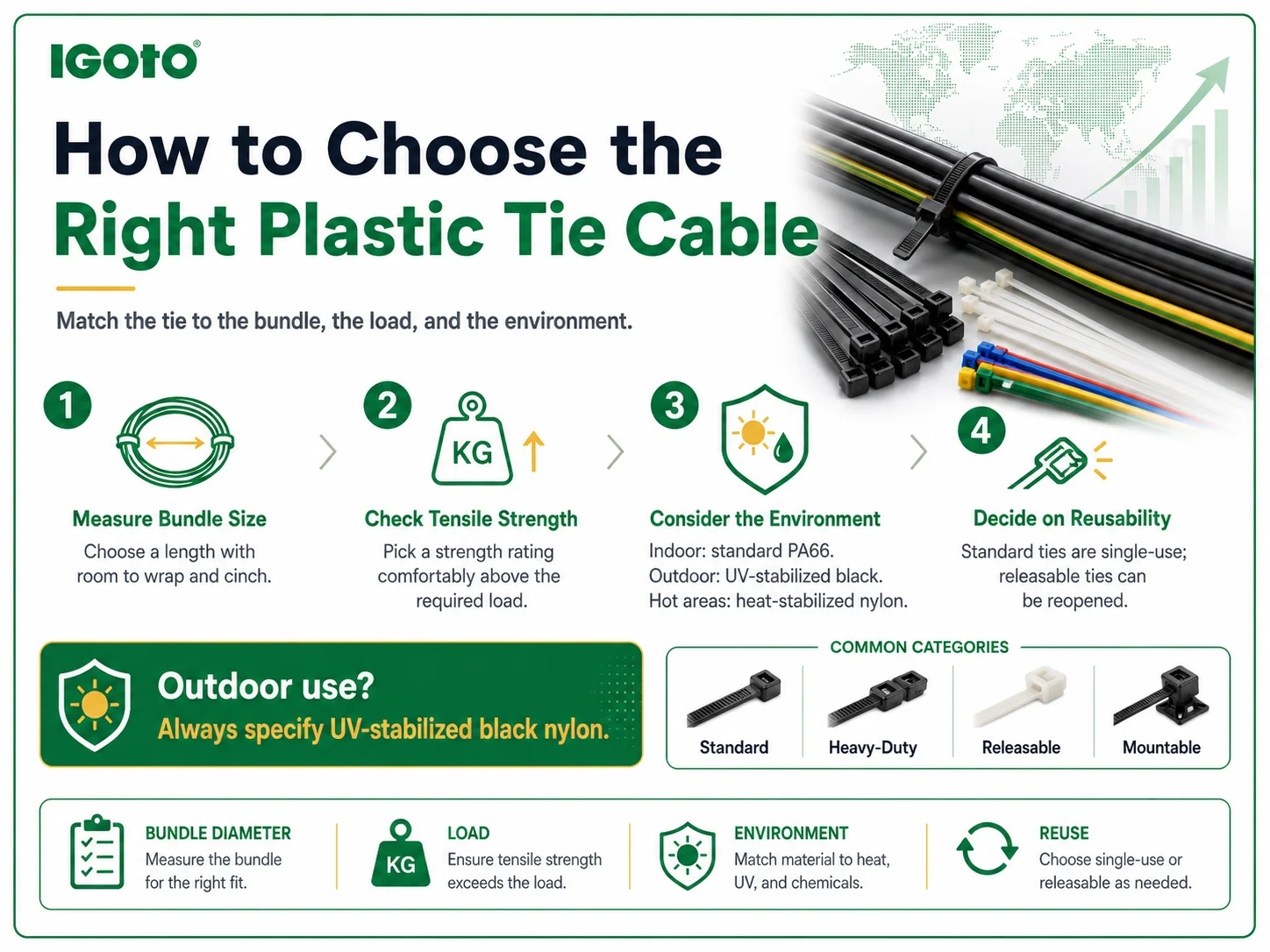
When it comes to choosing a tie, you need to consider four different parameters that would be necessary for it. These are bundle size, load, application environment, and reusability. To do so, you first measure how big your bundle is and get a length which allows for some wiggle room. After that, you determine how much load is going to be there on the tie and select a tensile rating that is above the needed number. Next on your list is considering your application environment. Indoor climates are less of a concern when it comes to materials, but it is important to keep in mind that outdoor environment is something that requires a specific material. Finally, if you will need to open the bundle sometime in the future, you will need to think of a releasable design.
Here is one of the tips: If you are going to use a plastic tie in the outdoors or under the sunlight, be sure to specify that you need UV stabilized black grade. Regular natural or colored nylon can be easily damaged in a season of exposure to UV rays, which means that buying cheap ties is going to be much more expensive in the long run.
If you are working across a mix of applications, our practical walkthrough on how to choose the right cable ties breaks the decision down step by step and pairs well with the sizing table above.
How to Use a Plastic Tie Cable Correctly
The installation process is easy enough as long as you avoid common mistakes that separate a clean installation from a messy one. In the beginning, you need to tightly wrap the cable tie around the cables, insert the remaining tail into the head of the tie, and pull it so it’s tight but not so tight that the cable could be damaged. If the cable is too tight, there is a risk of pinching the insulation or obstructing the data cables, hence it is recommended to allow for some looseness in sensitive cables.
It also very important to use a flush cutter instead of scissors and a knife when cutting the tail since a proper cut does not leave a sharp edge, unlike a diagonal cut that can cause cuts on the skin and get caught on the cables. In addition, if the work is going to require a high number of installations, investing in a tensioning tool with automatic cutting capabilities would save hands from getting tired and provide consistent outcomes.
And lastly, what you should not do, is to attempt to use the same standard single-use cable tie again because when you pull the pawl backwards it gets damaged and can’t provide a firm grip. If there’s a need to reuse wire ties, purchase the releasable type of cable tie in advance instead of trying to come up with a way of reusing the conventional type.
Common Applications
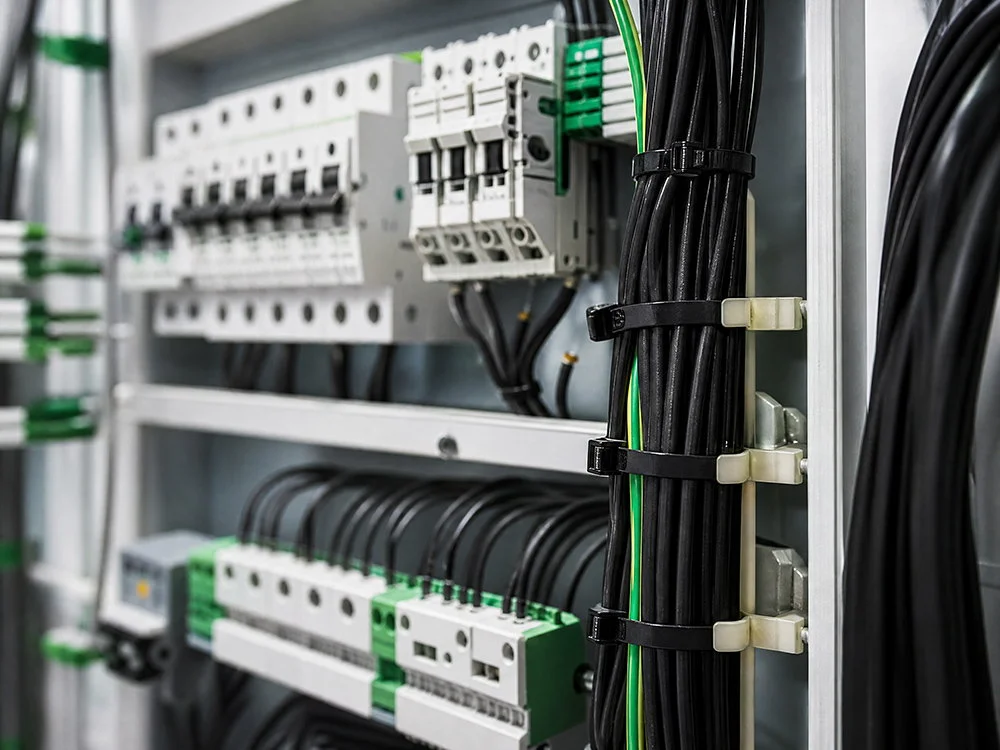
One of the advantages of plastic tie cables is that they serve a variety of purposes. For instance, the electrical technicians use these cables for arranging wires in control panels and racks, while in the automotive and aerospace sector they are utilized to fasten the wiring harnesses that need to withstand vibration and heat. Construction workers, on the other hand, use these cables for holding rebar, fences and signs. In agriculture, they also come in handy in guiding plants and providing support to nets, while at home people use them for holding electronic cords, curtains and many other objects.
The fact that the plastic tie cables can serve various purposes allows having only a few of their types. It is enough also to have a couple of indoor cable ties and a pack of outdoor UV tie cables.
Outdoor and UV Considerations
Sunlight is the main source of danger for outdoor plastic cable ties. Ultraviolet light destroys polymer chains in regular nylon, leading to discoloration, stiffening, and cracking of the strap. For this purpose, manufacturers put carbon black into the production of UV-rated ties; carbon black absorbs UV energy and shields the material beneath it.
The bottom line is, never think that a colorful or clear cable tie can withstand the weather just because it is made of nylon. Make sure that wherever it stays in the open air for a few weeks or longer there is a clear label indicating UV resistance. If you are unsure about this, choose a UV-stabilized black cable tie which is the most reliable option in outdoor usage.
Temperature swings add a second challenge. In extreme cold, nylon stiffens and becomes more brittle, while sustained heat softens it and reduces its grip. For installations that face both, look for ties rated across a wide operating range, and consider heat-stabilized grades for hot zones. Our discussion of whether white zip ties are UV resistant digs into the color-versus-durability question in more detail.
Plastic Tie Cable vs. Metal Cable Ties
Steel ties are a reliable alternative to plastic tie cables in demanding environmental conditions. In these situations, metal outperform nylon as it can withstand temperatures, UV rays, and corrosive chemicals that nylon simply cannot handle. However, it is expensive, needs the use of specific tools for installation, and is a conductor of electricity.
In most cases, plastic cables are a better option as they are cheaper, quicker to install, and safer. Use steel ties only in very extreme environments such as sea conditions or very hot exhaust systems.
Frequently Asked Questions
Is a plastic tie cable the same as a zip tie?
Indeed, there are different ways of calling the same thing: plastic tie cable, cable tie, zip tie. No matter their names, it is a type of strap made of plastic with teeth that can hold it tightly and securely in a particular position. This naming is based on the marketers’ choice in terms of regional habits.
How much weight can a plastic cable tie hold?
The amount of load depends on the type and the size of the ties. The load capacity of the mini nylon ties is around 18 lbs; standard ties can hold 40-50 lbs; heavy-duty ties hold up to 250 lbs. Make sure the tensile strength is always your expected load plus some limit of safety.
Are plastic tie cables reusable?
Regular ties are used once and require cutting for removal because the internal pawl locks only in one direction. Reusable designs include a small lever that allows you to release the head of the tie and reuse it without damage.
Can plastic tie cables be used outdoors?
Yes, but only UV-stabilized grades, typically black, are suitable for prolonged sun exposure. Ordinary indoor ties will fade and become brittle within a season outdoors, so match the grade to the environment.
What is the best material for a plastic tie cable?
Nylon 6/6 could be the best choice for its economic efficiency, strength, and flexibility. If you go through heat, you should select nylon that has heat-stabilizing properties. When you end up exposed to sun, you should choose black nylon that has UV protection. If you’re looking for an option that can tolerate explosive chemicals, use specialty polymers like polypropylene or fluoropolymers.
Final Thoughts
Amid the simplest tools ever found in a toolbox is the plastic tie cable. Nevertheless, selecting the correct tie is utmost importance when it comes to ensuring quality and permanency of the cables installation. Choose the right cable length, tensile strength it can withstand, and, what’s most important, material type, which is applicable to the environment where the process of installation occurs, and your tie, which can easily cost just a couple of cents, will serve you for years.
Whether you need everyday indoor ties, weather-resistant outdoor grades, or heavy-duty options for industrial work, browse the full range on our products page to find the right plastic tie cable for your next project.