

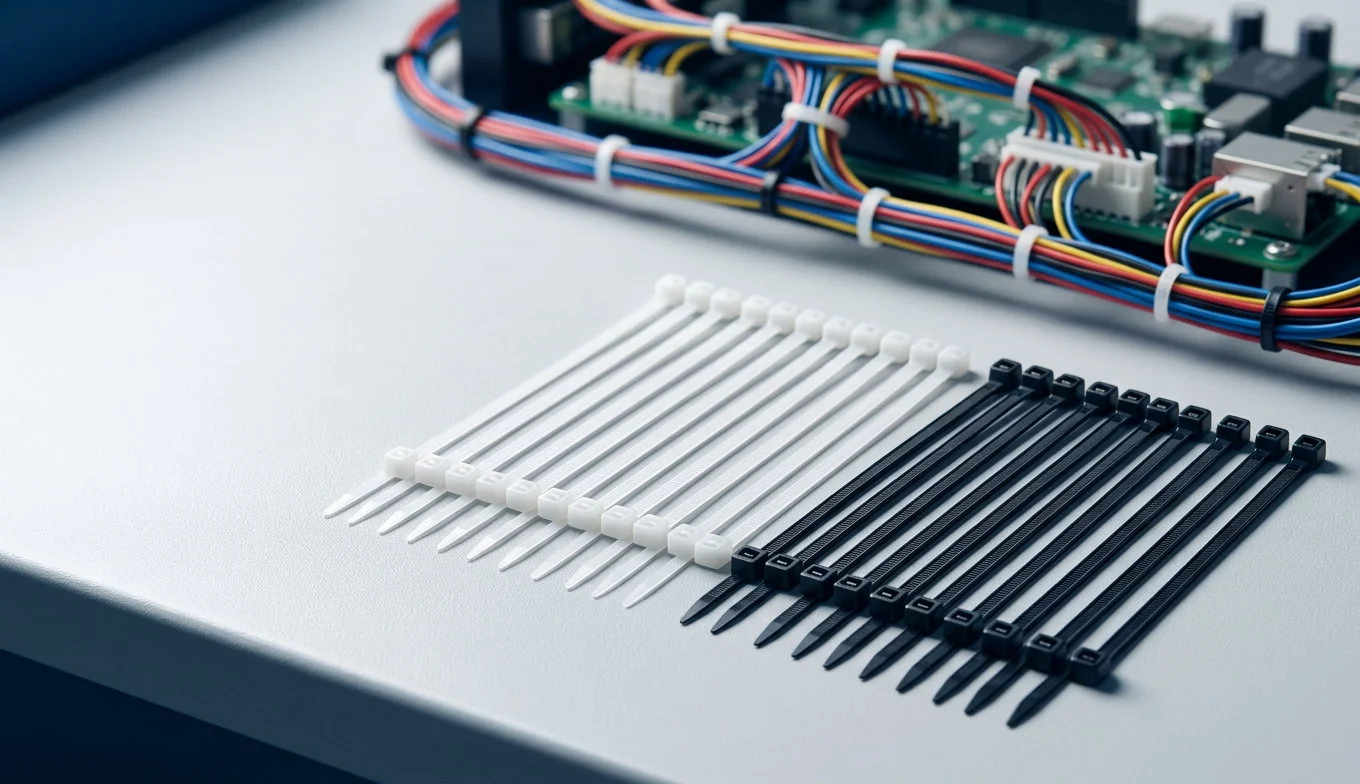



Can You Compare Cable Tie Brands on Quality and Price?
The vast majority of products in this space are compared in a simple manner; they basically just list some names with a few adjectives, like “quality,” “reputable” or “affordable.” Such information is not very useful for any business owner because one brand can produce a good and pricey item while another one produces an average but cheap product.
The subsequent stage is getting the system itself along with the results of its application to four well-known brands plus the report with recommendations.
In conclusion, one can compare the cable tie brands based on four major criteria. They are: 1) loop tensile in newtons, 2) cross-sectional size in mm, 3) material type as specified and 4) cost per 1,000 cable ties of the same size. Thus, we can see how it is not quality that matters from a marketing point of view, but quantity since there exists the most significant gap between tension bands and not between nylon ties.
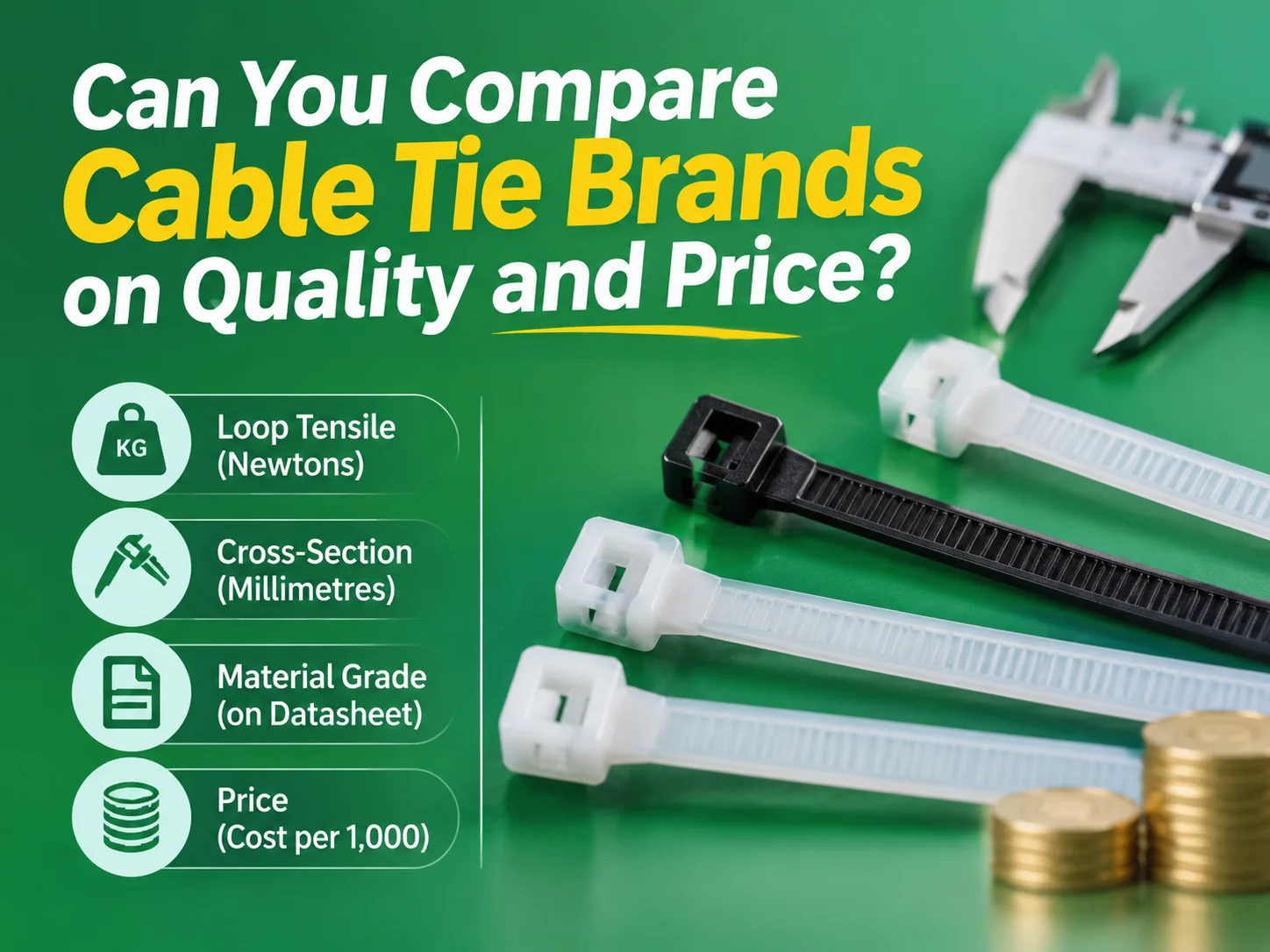
Why Most Cable Tie Brand Comparisons Fail
There are three main reasons for this, and luckily, all three of them can be fixed.
Firstly, brands are compared as entities rather than ranges. For instance, Panduit’s heavy and lightweight ties may look similar but in fact represent different engineering compromises. Therefore, saying that “brand X is stronger” is pointless unless the size of the product is specified.
The second issue is that pricing can be based on any pack size defined by the seller. As a result, while 100-pack of one brand’s product can be significantly more expensive than 1,000-pack of another brand’s tie; thus, when comparing different brands by quantity, the findings can be misleading.
Last but not least, treating tensile strength in a linear manner is an expensive mistake. If a product’s strength is twice as good while the cable tie only requires a tenth of that power, then one pays for unnecessary strength.
Four Numbers That Let You Compare Any Two Ties
The other elements are of lesser consequence. After getting these four points, you will be capable of making a product comparison in just two minutes.
- Loop tensile should be measured in newton. Some of the catalogs indicate the tensile forces in pounds, but in order to avoid confusion of the numbers, it is better to convert everything into one metric.Though the value of the forces in pounds is close to each other, when compared, the conversion shows that they are 80 N and 133 N, which means 66% difference in their performance.
- Cross-section is the combination of width and thickness. It would be incorrect to consider only the width of the product. For example, a tie in the width of 4.8 mm and thickness of 1.1mm and another tie, which is of 4.8 mm width and 1.3mm thickness will operate with different loads. It should be noted that only one will match the tensile value mentioned on the packaging. In case the technical documentation specifies width and thickness separately, both values should be taken into account.
- The material should be stated correctly. “Nylon” is not a material at all. The correct form would be PA66. As an example of four different kinds of nylon material that should be distinguished by the temperatures and chemical properties. Another example is stainless steel. A special environment should be taken into account while choosing between 304 and 316 types of steel.
- Normalized pricing refers to price per thousand for a specific dimension. The obtained data is also divided by tensile and length, which results in getting the necessary numbers.
The size conventions that make step two possible are worth knowing before you read any catalogue, and this guide to standard cable tie sizes and how they map to bundle diameter covers the width bands and what each one is for.
The Price-per-Strength Trap, With Real Numbers
Here is the exercise done on one brand’s published UK trade prices, per 1,000 ties, black PA66.
| Size | Length × width | Tensile | Price per 1,000 | Cost per kN | Cost per metre |
|---|---|---|---|---|---|
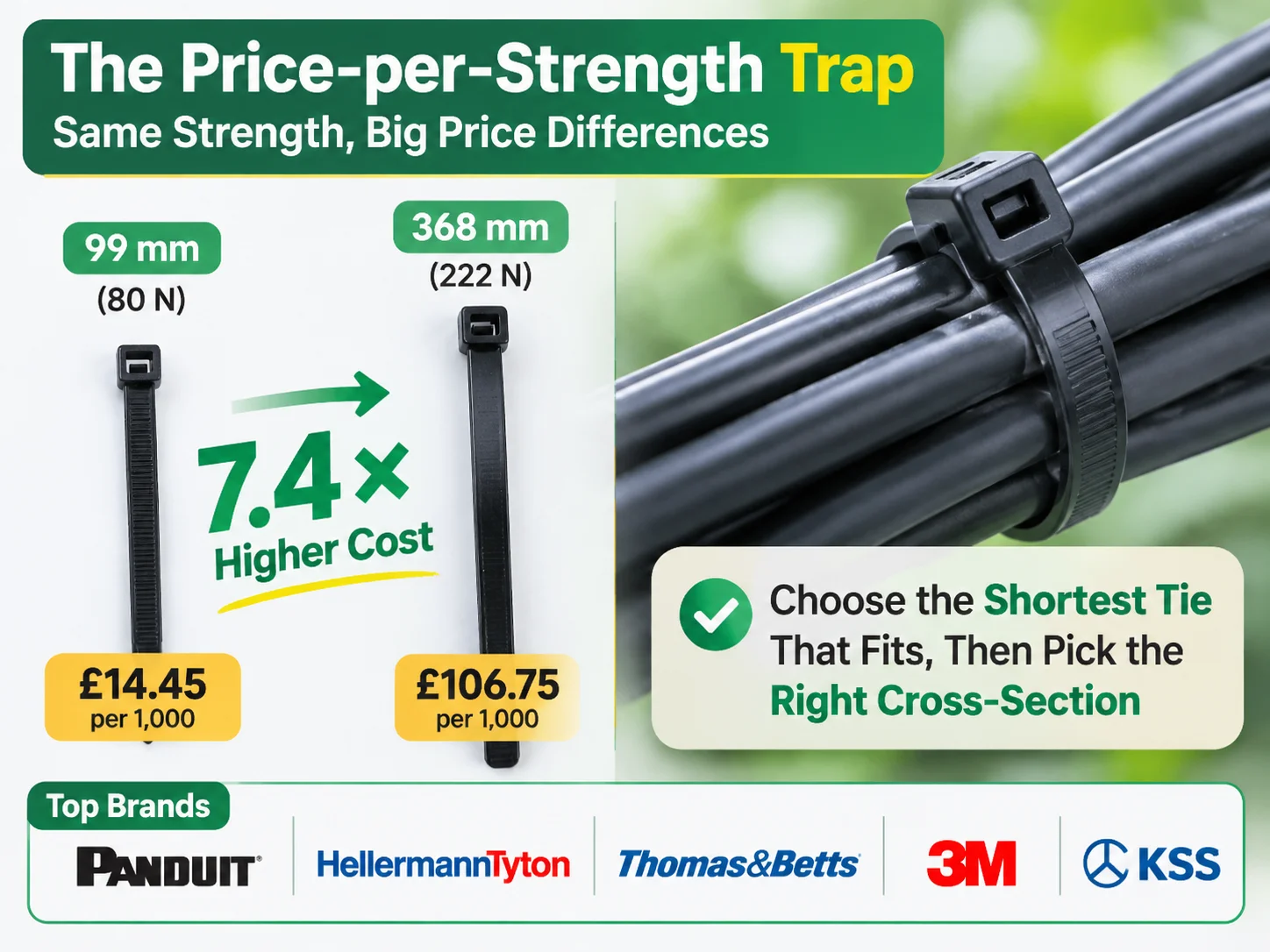
| PLT1M | 99 mm × 2.5 mm | 80 N | £14.45 | £181 | £0.146 |
| PLT2M | 203 mm × 2.5 mm | 80 N | £34.48 | £431 | £0.170 |
| PLT2S | 188 mm × 4.8 mm | 222 N | £48.40 | £218 | £0.257 |
| PLT4S | 368 mm × 4.8 mm | 222 N | £106.75 | £481 | £0.290 |
Take a look at the last two sections instead of looking at the fourth column. The cost for one meter of material hardly changes throughout the entire dataset, telling us that the prices for production are proportional to the amount of plastic bought. The cost for one kilonewton varies in price by a factor of 2.5, moving for reasons unrelated to strength; the two costly types are the two long ties.
The findings might prove not too comfortable for habitual purchasers. Longties are not more durable than short ones in case their cross section is the same. Buying the version of 368 mm in order to tie a 30 mm bundle costs 7.4 times more than using the 99 mm version with equal holding power.
So the rule of thumb is not to “go for heavy-duty ones once you want to be safe,” but rather “go for the shortest tie that is capable of holding the bundle with an additional 20% just in case you want to insert more cables later.”.
Brand by Brand, on Quality Signals and Not Reputation
In the marketplace, four companies lead the competition besides one which sells most of the factory-direct products. And here is how the companies differ from each other:
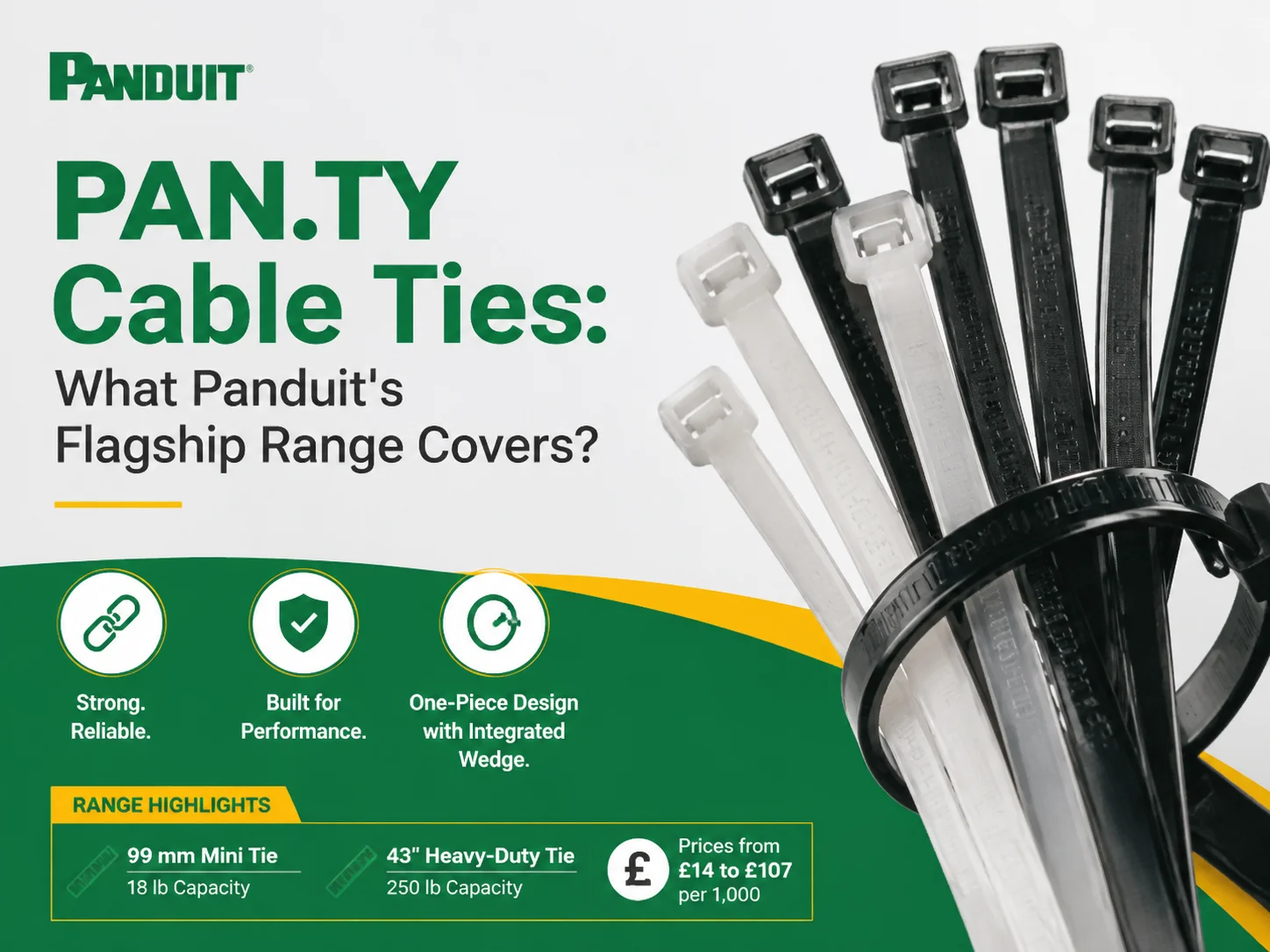
- Panduit, PAN.TY. Sizes its ties by measuring cross-section instead of length; hence, its part numbers seem puzzling until one understands the system (miniature at 2.5 mm, intermediate at 3.6 and 3.7, standard at 4.8, light-heavy and heavy-extra). The sizes range from 71 mm for the miniature tie to 43 inches for 175 lb tie and extra-heavy for 250 lb. The distinguishing feature is, however, documentation and molding consistency.
- HellermannTyton. Offers the widest variety of materials among the companies mentioned. It provides ties made of nylon in accordance with the list, from T18 to T255. Ties with PEEK composition resistant to +240 °C as well as ties which can be detected by metal detectors catering to food industry and straps for large cable up till that. If one is looking for chemistry or temperature-related material, this production line should be the first to give it a go.
- Thomas & Betts, Ty-Rap. The founder of the category and the one which anybody will refer to in respect to any kind of vibration since its lock was made of stainless steel, unlike others that used nylon. The types range from a tie measuring 92 mm and taking 80 N of load to another with 1,143 mm size and 780 N of load, consisting of PA66 and being rated in terms of temperature from −40 to +85 °C as well as UL94 V-2; that is why the military specifications can be of use here. However, this choice has its drawbacks due to the risk of foreign body presence.
- 3M and KSS. This company offers high variety of nylon and comprehensive marketing. It is not a wide-reaching company in terms of size range, however.
- Igoto and similar factory-direct ranges. There are four families, three of them being 3.0, 4.0, 4.8 and 5.0 mm, with 32 individual sizes ranging from 100 mm to 500 mm, both the variants being flame-retardant and UV-stabilized. The cost of the product is much lower than the branded one as there is no distribution chain connecting these ranges to clients.
A wider comparison of how these brands position against each other, including the price bands by size, sits in this look at which cable tie brand suits which buyer. The purpose for repeating it here is more specific: with respect to measured tensile strength and material grade, the gap between the official brand and direct factory product is less than the gap in price would indicate. Conversely, when it comes to documentation and availability, it becomes larger.
What the Certificates Actually Prove, and What They Do Not
A comparison usually trails off, but it is the best place to start for a few reasons: it is the only depth of your purchase a third party will ever investigate.
Cable ties are governed by UL 62275. If the tie is compliant, it should have some marking indicating it is of a certain type. Type 2 is a general purpose type and Type 21 indicates the tie has a mounting hole. This mark shows that the product has been tested; it does not show that the batch received met the requirements.
The terms UL Recognized and UL Listed are not used interchangeably; however, most people confuse the two terms. The Recognized component is intended for use in a product that is UL Listed; a Listed product is a complete device. For a panel builder manufacturing the product to UL 508A standard, they should be using a tie with the Recognized status indicated by the file number on the technical specification.
Tensile test report is the third document used, it is probably the least common one. The document must contain such pieces of information as sample size, test method, and the result distribution rather than just one number. For instance, if the supplier states that the tensile strength is “50 lb”, it can be unclear if we deal with an average value or a minimum one.
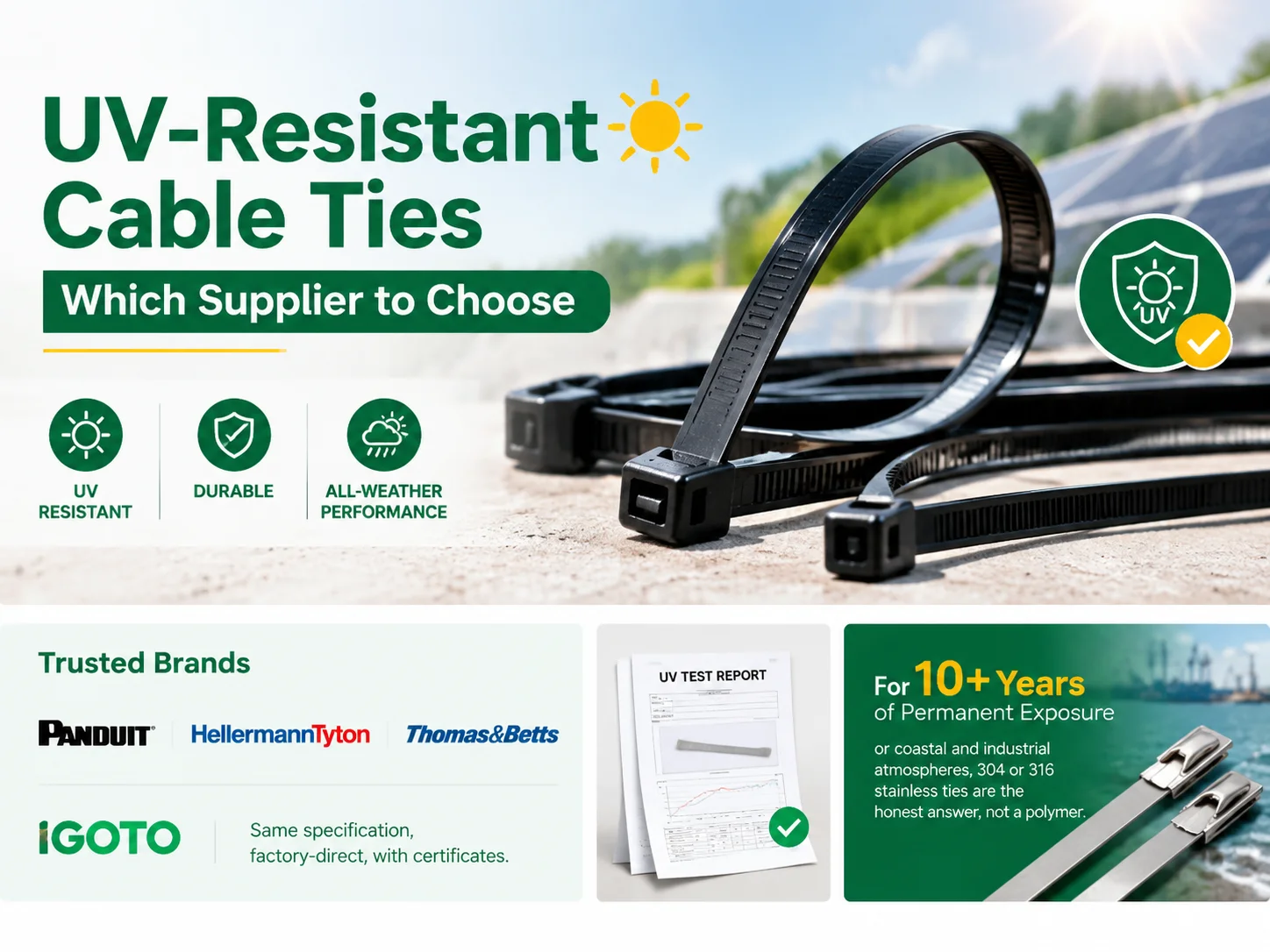
None of those types of documents prove the UV life of the product. The way of stabilization is a characteristic of a specific formulation and prevents us from making conclusions about the actual UV life. A black tie is not automatically a weather-resistant tie, and this explanation of how Australian buyers compare brands on price and specification goes through the same documentation question from a market where UV exposure is the deciding factor.
Where the Cheap Tie Wins, and Where It Genuinely Loses
It is important to be just and fair to both parties, since this question cannot be answered in the same way in every case.
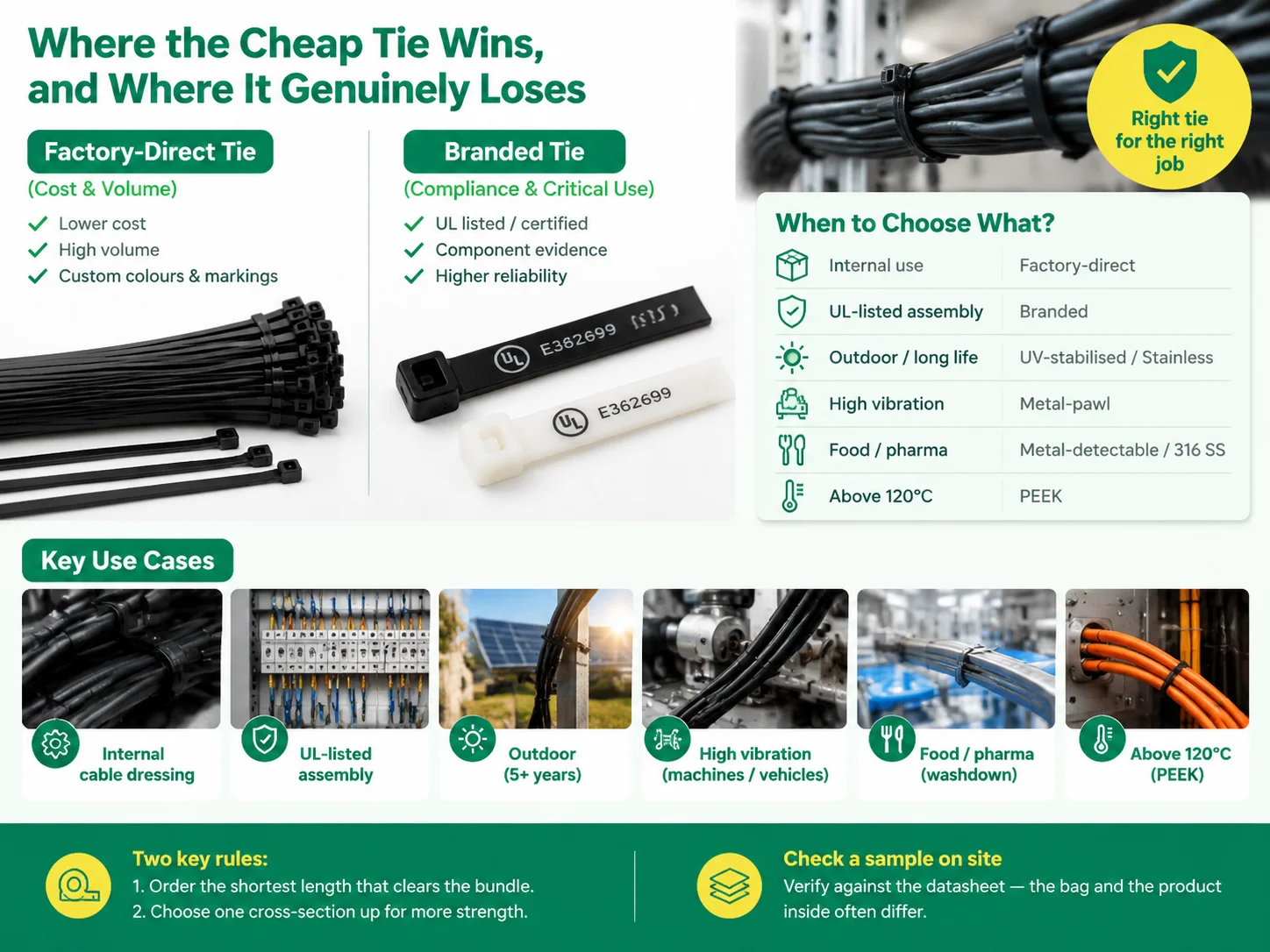
The factory-direct offer wins out in terms of the quantity, color, and marking and tagging system used in any process where the tie belongs to your products and does not require outside verification. For instance, a harness shop that is using 40,000 ties every week is paying for a supply chain it does not utilize. At that volume, a tested unbranded tie with a material certificate is the rational purchase, and the heavy-duty cable tie manufacturing side of that range is where most of the volume sits.
In three specific situations, the branded tie wins. If the assembly has a listed part number and the inspector wants component evidence. When the failure mode is expensive, like a tie suspending a cable bundle above a public space or inside a moving machine. And when the specification was written by someone else and you’re not winning the argument about substitution.
The blunt description here is that a cheap tie is not a worse tie, it simply has a thinner paper trail. An ousting this distinction decides the purchase more than a tensile number does.
A Buying Recommendation by Use Case
| Use case | What to buy | Why |
|---|---|---|
| Internal cable dressing in your own product | Factory-direct PA66, shortest tie that fits | No audit exposure, and length is the cost driver |
| UL-listed panel or control assembly | UL Recognized branded tie with file number | Component evidence is part of the listing |
| Outdoor run, five years or more | UV-stabilised black, or stainless | Stabilisation is finite; stainless is not |
| High vibration, machine or vehicle | Metal-pawl tie | Nylon wedges creep under sustained vibration |
| Food, pharmaceutical or washdown | Metal-detectable or 316 stainless | Foreign-object control and chloride resistance |
| Above 120 °C | PEEK | Nylon softens well before that |
| Mixed site stock, many sizes | One brand across the ladder | Consistent tooling and one datasheet set |
Two rules to follow make that table useful in practice. Buy the shortest length that gets to the bundle and when more strength is needed, purchase a heavier cross-section instead of a longer one. Then hold samples of each size at the site and check them against the data sheet once, as the catalogue information and the contents of the bag often mismatch without suppliers admitting it.
The wider point is that you ought to start negotiations at the level of size and not of unit price. A site that changes 200 bundles from a 368 mm tie to a 188 mm tie gains more than a 10% discount by doing so. Where the requirement is genuinely outdoor and long-life, the UV grade matters more than either, and the range built for that duty is the UV-resistant cable tie production line, not a general-purpose tie in black.
FAQ
How do I compare cable tie brands fairly?
Under the same size and dimensions, costs are normalized to the basis of cost for 1000 units of material. Then the tensile strength, measured in newtons, to the conversion of n/kN is done. The C.A.G.E. standard and the material’s certification have to be verified finally. Brand reputation must be considered at last, but not at the forefront of purchasing considerations.
Are expensive cable ties actually better?
In terms of documentation and consistency, the answer is generally yes. In terms of tensile strength per pound of material, the difference is smaller than the price difference; the premium pays for the documentation, supplier stock position and moulding tolerances which are important in a listed assembly, and much less so in internal cable dressing.
Is a longer cable tie stronger?
No. The tensile quality of a material is determined by the cross-sectional width and the thickness. A standard tie with a length of 368 mm and a standard tie with a length of 188 mm can carry the same load, but the longer tie is double the price. Therefore, it is the most frequent example of overspending on items in the category.
Does a black tie mean it is UV resistant?
No. The color black generally indicates carbon black level, which helps, but resistance more depends on stabilizing mixture of the manufacturer and hours of exposure. Ask for the accelerated weathering test and hours of testing and treat the color as a sign, not as a specification.
What is UL 62275 and does it matter?
This is the standard for cable ties. A compliant product is marked by Types; it is whether it is Type 2 for general purpose ties and Type 21 for cable ties with a mounting hole. For instance, it matters in assembly listings because the inspector will demand evidence of component compliance; however, it does not matter so much for internal dressing which is not audited by anyone.
What is the cheapest way to buy the strength I need?
The optimal choice for a tie is the smallest one that adequately secures the bundle, followed by increasing the cross-section rather than the length. In terms of expenses per kilonewton, the short wide tie will cost approximately a fourth of what it costs to tie one of the long and narrow ties at equal levels of tension.
References
- Panduit — PAN.TY Cable Tie Product Data
- HellermannTyton — Cable Ties and Fixing Systems
- Thomas & Betts — Ty-Rap Cable Tie Range
- UL Solutions — UL 62275 Cable Tie Certification
- Grainger — Cable Ties and Wire Management
Conclusion
Tensile strength measured in Newtons, cross-sectional area in millimeters, material grades in writing, cost for 1,000 pieces at the desired dimensions. And that’s how simple it is, done within minutes without a single supplier.
Then make a stern rule that goes straight to the point – do not buy any ties longer than necessary to fulfill their function. The people who think they are being charged a fortune for ties effectively know what it’s like to buy 350 millimeter ties for a job that only needed 30 millimeter ones.