


PAN.TY Cable Ties: What Panduit’s Flagship Range Covers
The condition under which various customers obtain PAN.TY is comparable to that under which many other merchandise is obtained. A drawing is made, a distributor has it available, and nobody cares whether things are being bought correctly. Efforts are absolutely justified, since, as is well known, something good is generally bought. The wide-range assortment is in line with requirements, documents are available, and the part number indicates size if read properly.
One must not ask whether PAN.TY is good, but whether its high price reflects its worth.
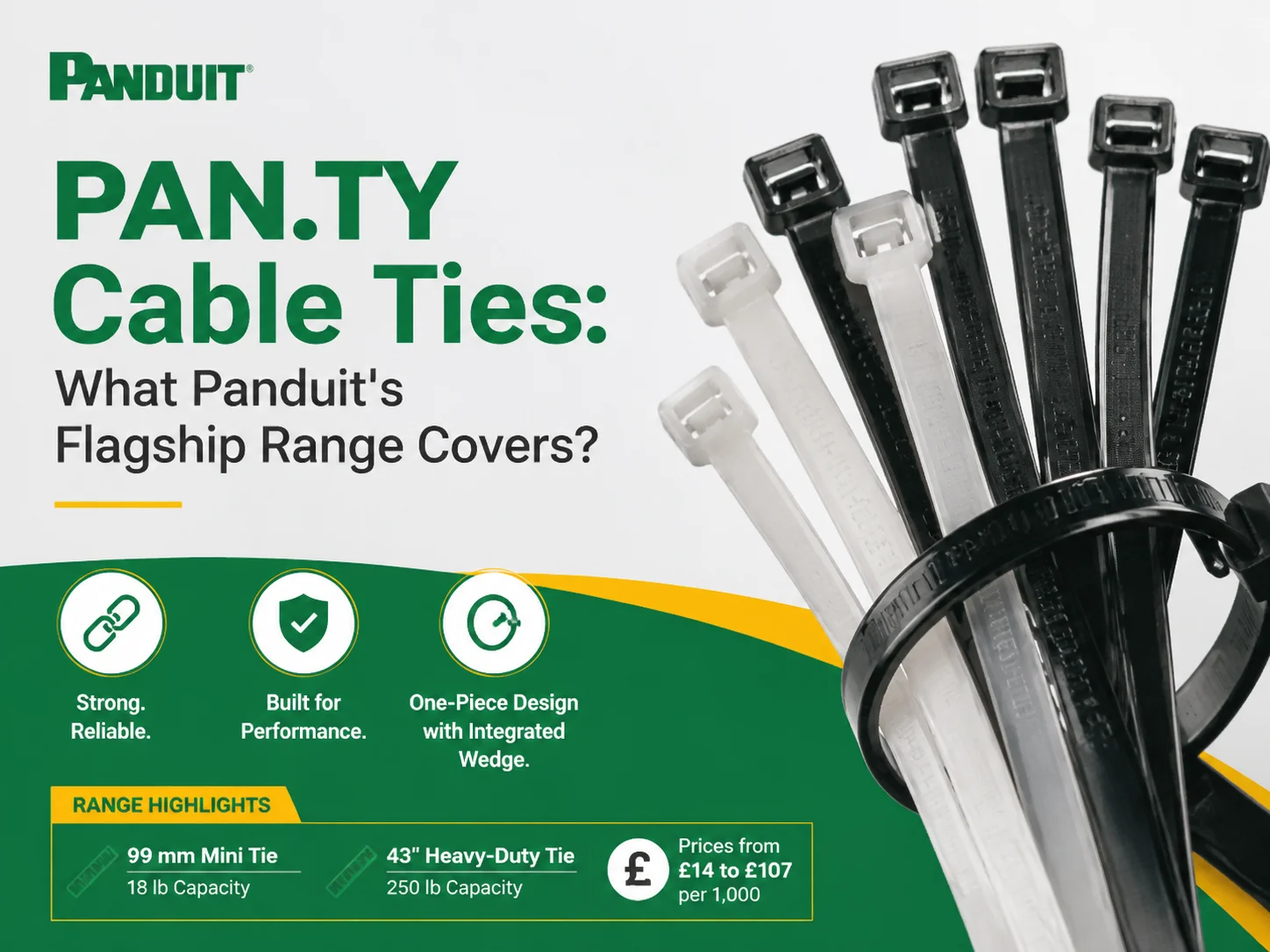
A short overview: PAN.TY is a collection of fasteners offered by Panduit, which is manufactured using a single piece of synthetic resin nylon 6.6 and has an integrated wedge. The line includes various options such as a compact 99 mm long mini tie with 18 lb weight capacity or a heavy-duty 43-inch model able to carry 250 lb of weight. Prices start at £14/1,000 for black mini ties and can go up to £107 for models with the standard 368 mm x-section.
What PAN.TY Actually Is
Cable ties are one of the most basic engineering items on the manufacturing site, and this makes them complex to copy. PAN.TY has developed a cable tie that uses a single piece of type-moulded nylon with a locking wedge inside its head. The tail is threaded, and the wedge engages sufficiently for the pawl to be pressed against the serration of the pass.
It is possible to notice three dеtaіls related to the way these cable ties perform in operation. The first issue is the design of the head that allows low threading resistance – this does not seem important until one thinks about having to tighten up 400 items in a shift creating a bottleneck in the output depending on someone’s hands. The second factor is a curved tip that allows the connection from a flat surface being picked up with one hand. And the last factor is the one-piece type of construction that assures that the tensile number in the technical document refers to a single mould and does not represent an assembly of two parts that can separate normally under the influence of vibration.
The specifications for the nylon production are in the range from −60 °C to +85 °C, which includes compliance with UL 62275 Types 2 and 21 as well as UL Recognized certificate and CSA certification. If an item is marked with all three specifications, there is a higher probability for PAN.TY to successfully pass the specification test than for a generic product.
The Catalogue, Organised by Cross-Section
This is where people become confused. Panduit uses cross-section size first and then length when categorizingits ties, with the part number encoding both sizes. The prefix “PLT” means Part Lock Tie, the length band is indicated by the number, while suffix letters represent cross-sectional size: ‘M’ indicates mini size =2.5mm, ‘I’ is for intermediate=3.6-3.7mm, ‘S’ indicate standard size at=4.8mm, and lastly ‘LH’ or ‘EH’ represent light-duty sizes and extra-heavy size ties respectively.
| Part number | Length × width | Max bundle | Loop tensile |
|---|---|---|---|
| PLT1M | 99 mm × 2.5 mm | 22 mm | 18 lb (80 N) |
| PLT2M | 203 mm × 2.5 mm | 51 mm | 18 lb |
| PLT1.5I | 142 mm × 3.6 mm | 35 mm | 30 lb class |
| PLT2I | 203 mm × 3.6 mm | 51 mm | 40 lb class |
| PLT2.5I | 246 mm × 3.7 mm | 61 mm | 50 lb class |
| PLT3I | 290 mm × 3.7 mm | 76 mm | 50 lb class |
| PLT2S | 188 mm × 4.8 mm | 48 mm | 50 lb class |
| PLT3S | 292 mm × 4.8 mm | 76 mm | 50 lb class |
| PLT4S | 368 mm × 4.8 mm | 102 mm | 50 lb class |
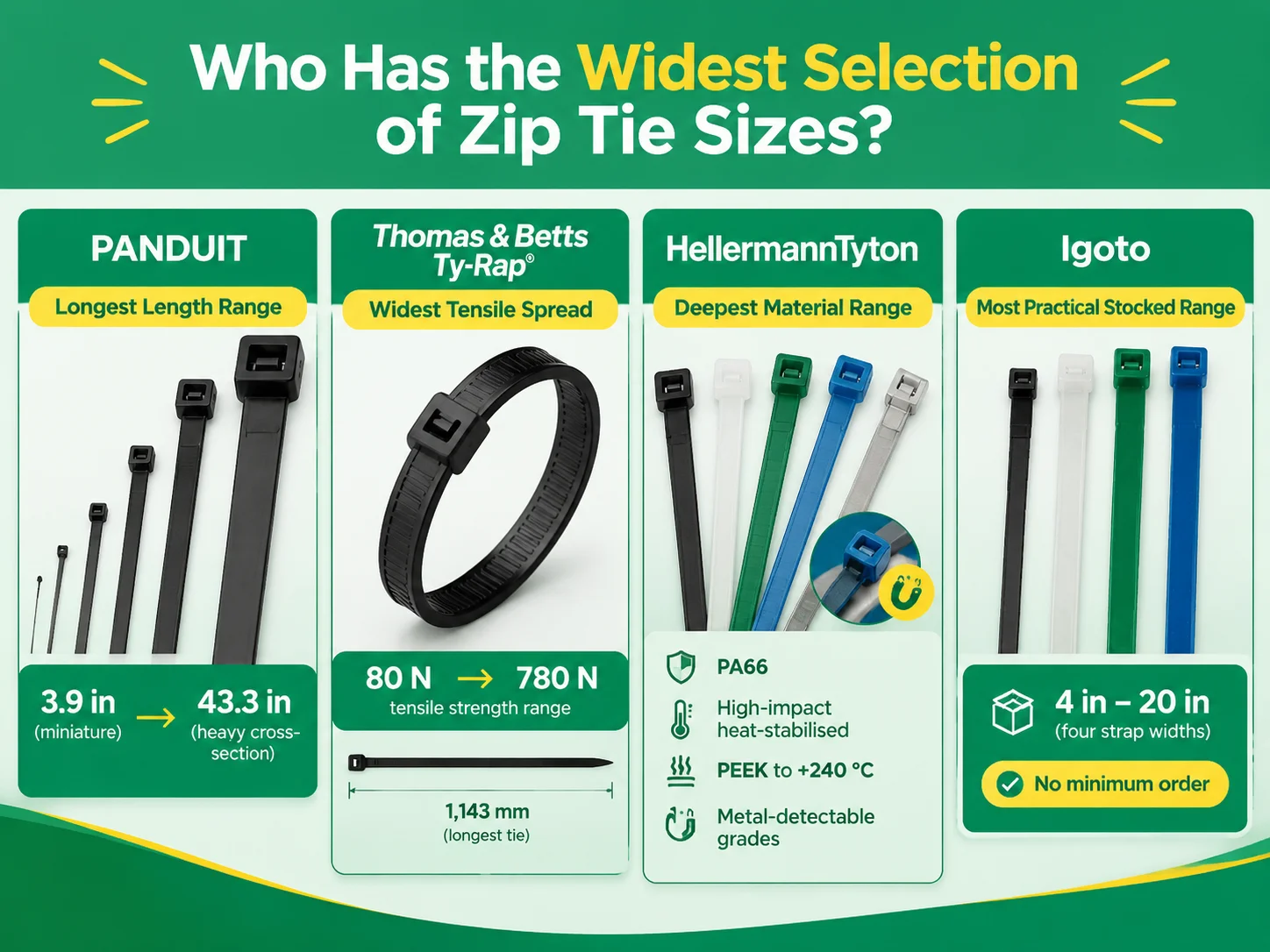
The range continues past the standard cross-section with a 43-inch light-heavy tie for 175 lb and an extra-heavy tie for 250 lb. On the other side of the range, there are small ties as small as 71 mm for the use of connections inside of boxes.
The reasons why the cross-section is significant also has to do with the fact that the width and the thickness determine the tensile strength, and length is only used to determine the amount of ties it takes to create the bundle. If you are choosing by length alone, you are choosing by the least important dimension, and this guide to how black zip ties are specified by size, strength and cost sets out the trade-offs including the UV question that decides whether a black tie is a weather-resistant tie or just a black tie.

What You Pay, Size by Size
The prices listed here refer to the prices of UK trade per 1000 units without any VAT from a 2026 catalogue which has already been published. Please convert the prices as needed, since the relationships between the various sizes are more important than the actual values.
| Part | Per 1,000 (GBP, ex VAT) | Approx. per tie |
|---|---|---|
| PLT1M 99 mm black | 14.45 | £0.014 |
| PLT2M 203 mm black | 34.48 | £0.034 |
| PLT1.5I 142 mm black | 33.17 | £0.033 |
| PLT2I 203 mm black | 45.45 | £0.045 |
| PLT2.5I 246 mm black | 54.30 | £0.054 |
| PLT2S 188 mm black | 48.40 | £0.048 |
| PLT3I 290 mm black | 70.95 | £0.071 |
| PLT3S 292 mm black | 75.85 | £0.076 |
| PLT4S 368 mm black | 106.75 | £0.107 |
There are two observations to be made when negotiating. The first is about pricing, since prices are normally proportional to the volume, approximately three times the price of a 2.5 mm miniature tie can be paid compared to a 4.8 mm standard tie, even if they have the same length. The other observation is about the fact that black UV stabilized ties are more expensive than the natural ones and that the price varies based on the size of the item. Thus mixed orders should be priced individually rather than by averages.
When buying small packages it is more disadvantageous. For example, a single PLT1M from the package of 100 costs significantly more than that from the package of 1000.
One material breaks the ladder entirely. Stainless steel ties cost several times what a nylon tie of the same length costs, which is why they get specified for a 20-year life, not for a cable bundle, and why the comparison between stainless steel and nylon cable ties belongs in the budget conversation, not at the point of order.
The Design Details That Carry the Premium
If you are attempting to substantiate the use of PAN.TY in contrast to a lower-priced tie in a bid, these are the aspects that will stand up.
- Consistency in molding. The strength value represents a limit and is determined by sample tests, with only a small variation. It is this aspect that allows the application device to operate without jamming.
- Proof of compliance. Compliance with UL 62275 Type described and UL recognition with a file number as well as CSA certificate. For any panel manufactured in accordance with UL 508A and any machine supplied to Canada these certificates are of utmost importance.
- Military or aerospace modifications. The presence of MS3367 cross-reference is the reason why PAN.TY appears in military specifications.
- Material possibilities apart from nylon. Possibilities to have PEEK executions for high-temperature applications, detectable material for foodlines, and heat-stabilized nylon for high surrounding temperatures. The catalog is a material platform, rather than one product pith.
- Integration of tooling. Tensioning tools are created for specific type of the tie, thus providing reproducible tension. Only hand tensioning provides the variance of up to 30 %.
Where PAN.TY Is the Wrong Choice
There are three common cases.
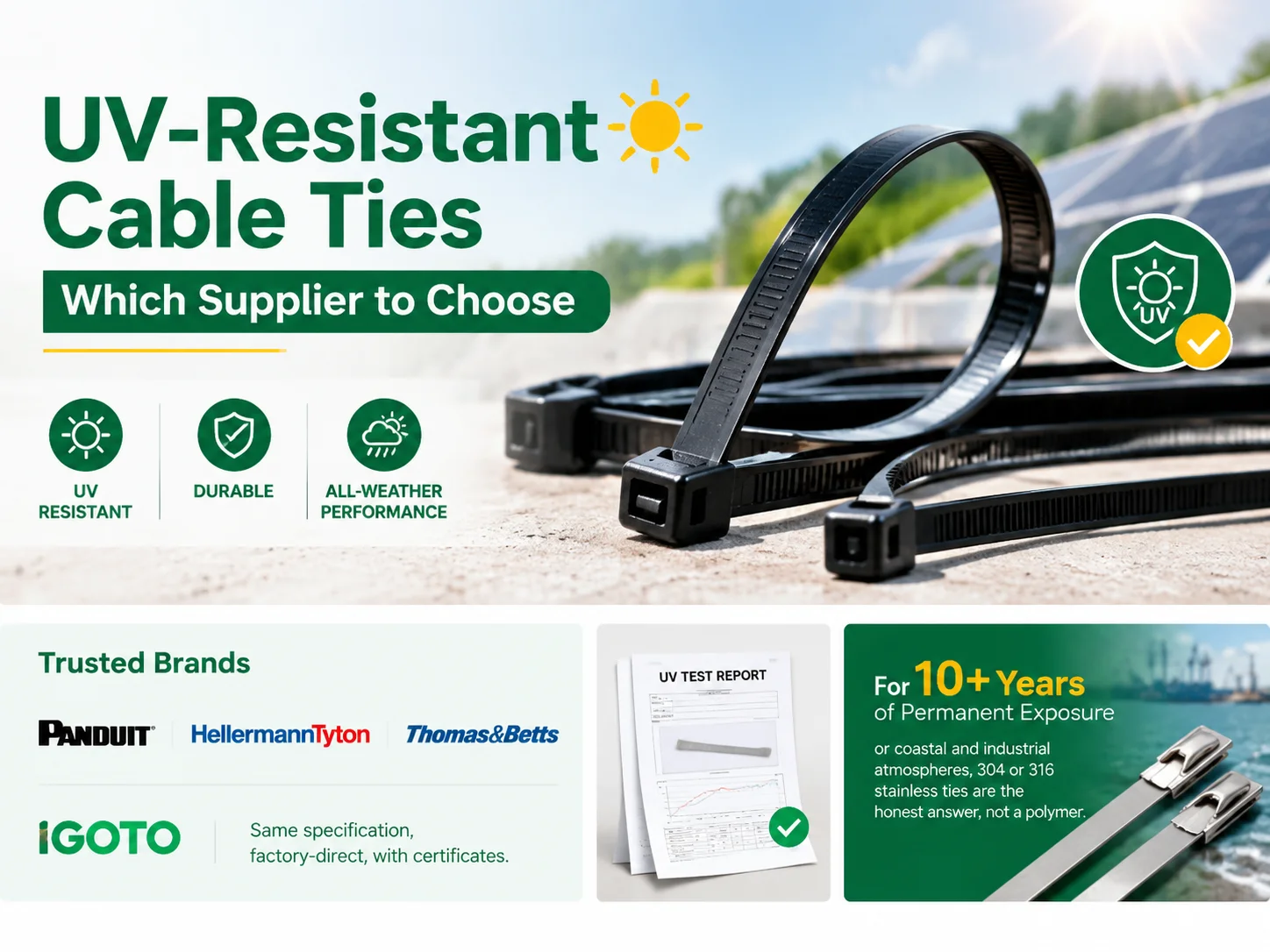
- Long exposure outdoors when there is strong UV. Black nylon material has some degree of UV stability, but not permanently. A rooftop, coastal or solar mounting installation that lasts five years requires a stainless-steel tie and specially formulated UV-resistant material, because the type of polymer used does not matter when in the sun.This is where the specification should move to a dedicated UV-resistant cable tie range instead of a general-purpose tie in black.
- The high capacity with the price being the limitation. A factory that is using 40 thousand ties each week is spending money for paperwork that it does not need. Given that level of production, it makes sense to buy a factory-direct tie, at a much lesser unit price, which comes with a material certificate and a tensile test report.
- The use of an uncommon color or marking. The Panduit company offers colors, but if you want a private-label program with your own part number and own legend printed on it, you have to speak to the factory, not the distributor.
The Alternatives, Compared Honestly
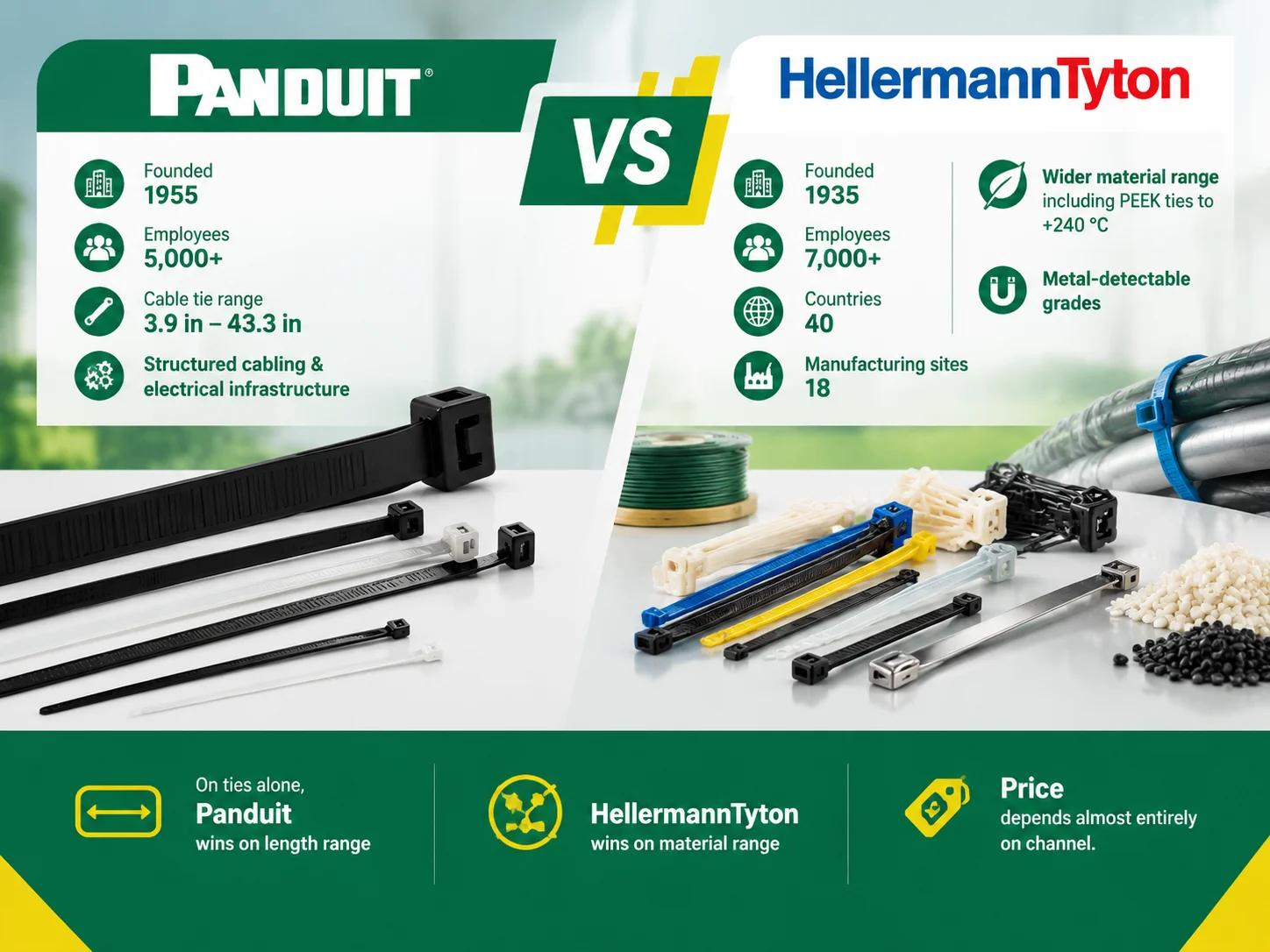
HellermannTyton. The other benchmark brand in Europe, which has much more material variety, and boasts PEEK at +240 °C.. Using similar quality and documentation, it differs through its distributor network footprint.
Thomas & Betts Ty-Rap. The original player in the category, it is credited for being the first choice when vibrations are strong since it employs a metal locking pawl instead of a nylon lever. However, the downsides are related to the metal piece in the head.
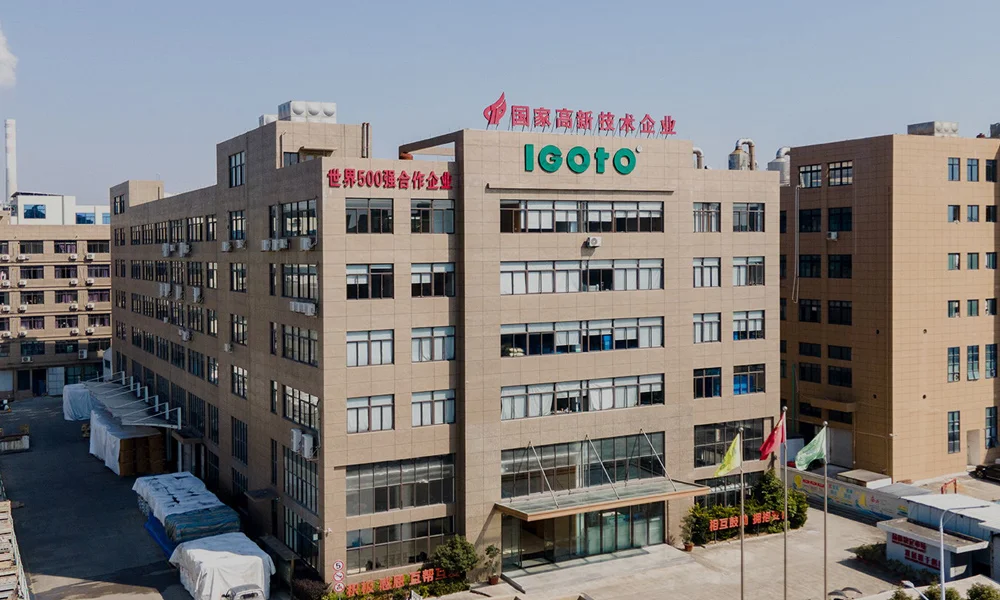
Igoto and similar brands. Four families range from 3.0 to 5.0 mm in width, with a total of 32 sizes from 100 to 500 mm, with variations available in UV-resistant material, UL62275-approved production, and OEM-marked products. The heavy-duty cable tie manufacturing side of that range is where most of the volume sits. Per-tie cost is a fraction of the branded price. What you give up is the depth of the catalogue and, in some markets, the instant availability.
Stainless steel. In most cases, it is not a good alternative to nylon and is acceptable only in specific areas, especially when fire-resistant, chemically-proof materials or lifetime of more than 20 years outdoors are required.
A Practical Way to Specify
Process involves four steps which must be followed in the same sequence.
- The starting point is the cable bundle, measured in terms of the real diametr. Then 20% must be added in order not to face problems with running out of the cable clamping device or using oversized one. If the was oversized, there will be extra expenses for additional equipment and long tail.
- Once loading is set, it must be taken into consideration that a cable clamping device that holds static cable has to be capable of withstanding an insignificant amount of tensile the right attribute must have sufficient properties to fulfill the task.
- The next step is fixing the environment. The impact of temperature, UV radiation, chemicals or whether detection is necessary makes selecting materials possible.
- Finally, one only needs to check if the documentation is required. If yes, choose the device bearing the brand, if not buy device according to its measured tensile and grade and request test report. The checklist in this guide to choosing heavy-duty cable ties turns those four steps into a form you can send to a supplier.
FAQ
Is PAN.TY a brand or a product?
The PAN.TY locking cable tie range is a collection of related products operating under the Panduit umbrella. People often refer to all PLT locking cable ties under the term “Panduit tie.”
What does the number in a PLT part mean?
The numbers show the length size and the letter shows the cross-sectional area. The PLT1M is a small 99 mm tie, while the PLT4S is a tie with a standard cross-sectional area of 368 mm. Width and thickness determine the amount of tension; length only determines the diameter of the bundle.
Are PAN.TY ties UV resistant?
The black varieties are UV stabilized, and are the right variety for outdoor use in most applications. Stabilizing is not a permanent process and a stainless steel tie or a specially made UV compound are preferable to any nylon tie for long exposure, such as on a roof or coastal site.
What is the strongest PAN.TY tie?
The extra–heavy cross sections are 250 lb of loop tensile; the light-heavy segment is 175 lb less than those. Both numbers fit well above what is needed for most of the harness and panel work, and the tooling needed for their installation is to be bought separately.
Can I use a cheaper tie in a UL-listed panel?
When it comes to panel standard, a panel standard is concerned only with the listed product not with the invoice. It is possible that if UL notated the tie, then there may be a problem with the listing in the assembly due to the inspector possibly requesting evidence of the component. If the panel is not listed with the standard that lists the tie, a tested unbranded tie will be accepted in normal situations.
References
- Panduit — Cable Management and PAN.TY Product Data
- HellermannTyton — Cable Ties and Fixing Systems
- Thomas & Betts — Ty-Rap Cable Tie Range
- Newark — Passive Component and Cable Accessory Distribution
- Grainger — Cable Ties and Wire Management
Conclusion
Since it is associated with being the benchmark in its category, PAN.TY is quite famous also because of the quality of the product itself. The mouldings provide consistent quality, quality assurance is exercised throughout the manufacturing process and the product number enables you to know the size of the product in case you have this data. When it comes to UL stamped panels, the documents become the basis of the product in the batch exported or inspected by the customer.
In terms of other types of products, when selecting the product you should not look at the brand name but at whether the tensile strength has been checked and whether the test documentation is available.