



Stainless Steel Zip Ties vs Nylon Cable Ties
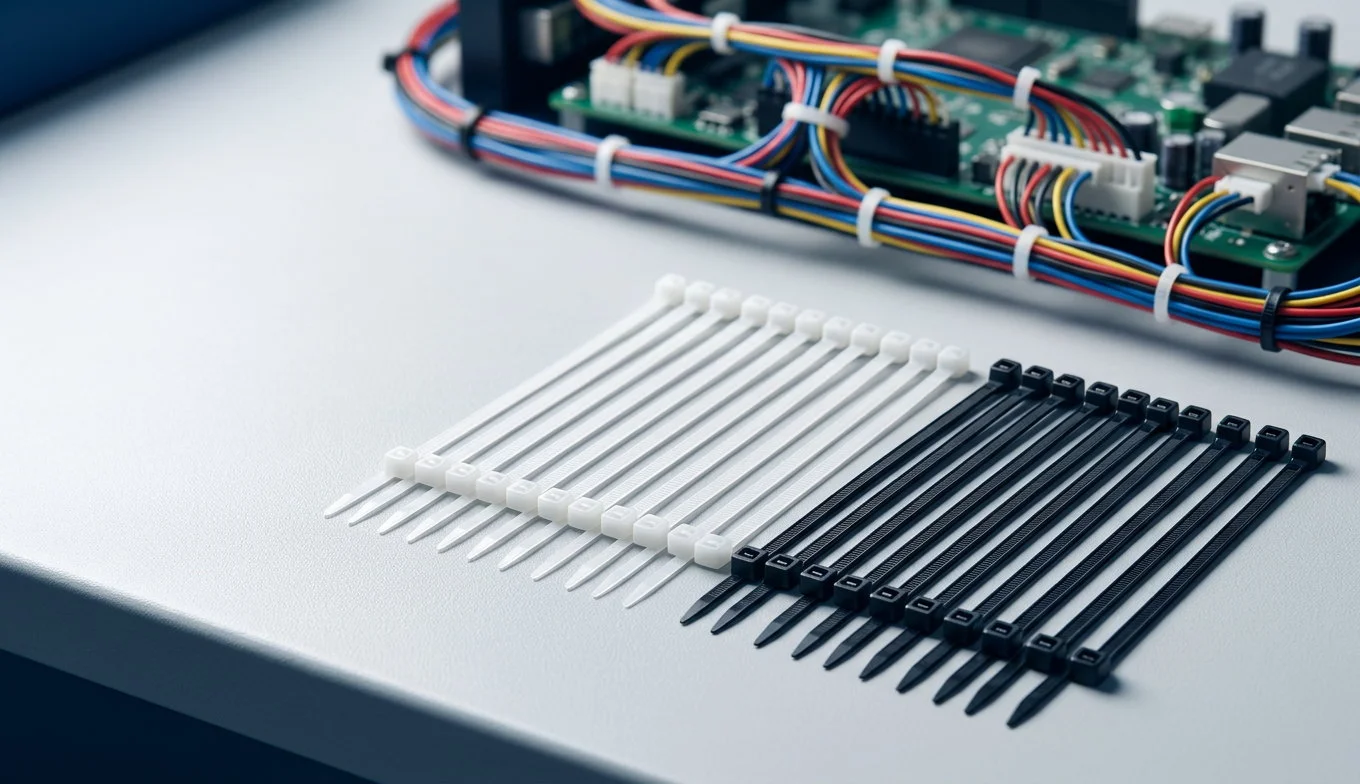
When the solar farm operator performed his cable bundle inspections in Arizona after two years of operating his solar farm, he came up with a familiar sight. The black UV‑stabilised nylon cable ties that were put to use stood the test of time and were just as good as new. However, the natural-coloured ties, which were used for last-minute repairs, were brittle and snapping. The bundles were hanging. He replaced all of them with stainless steel zip ties that could last longer than the panels themselves. His experience tells us that nylon ties are the right choice for almost all indoor and outdoor applications. Stainless steel ties are the right solution when the environment destroys nylon ties, be it extreme UV radiation, high temperature, corrosive chemicals, or a desired working life in decades or years. Understanding the strengths and weaknesses of each material and choosing the right tie for the particular conditions is what makes the difference between a fastening that works for the whole life of the installation and a fastening that fails before the initial inspection.
Material Fundamentals: What Each Tie Is Made Of
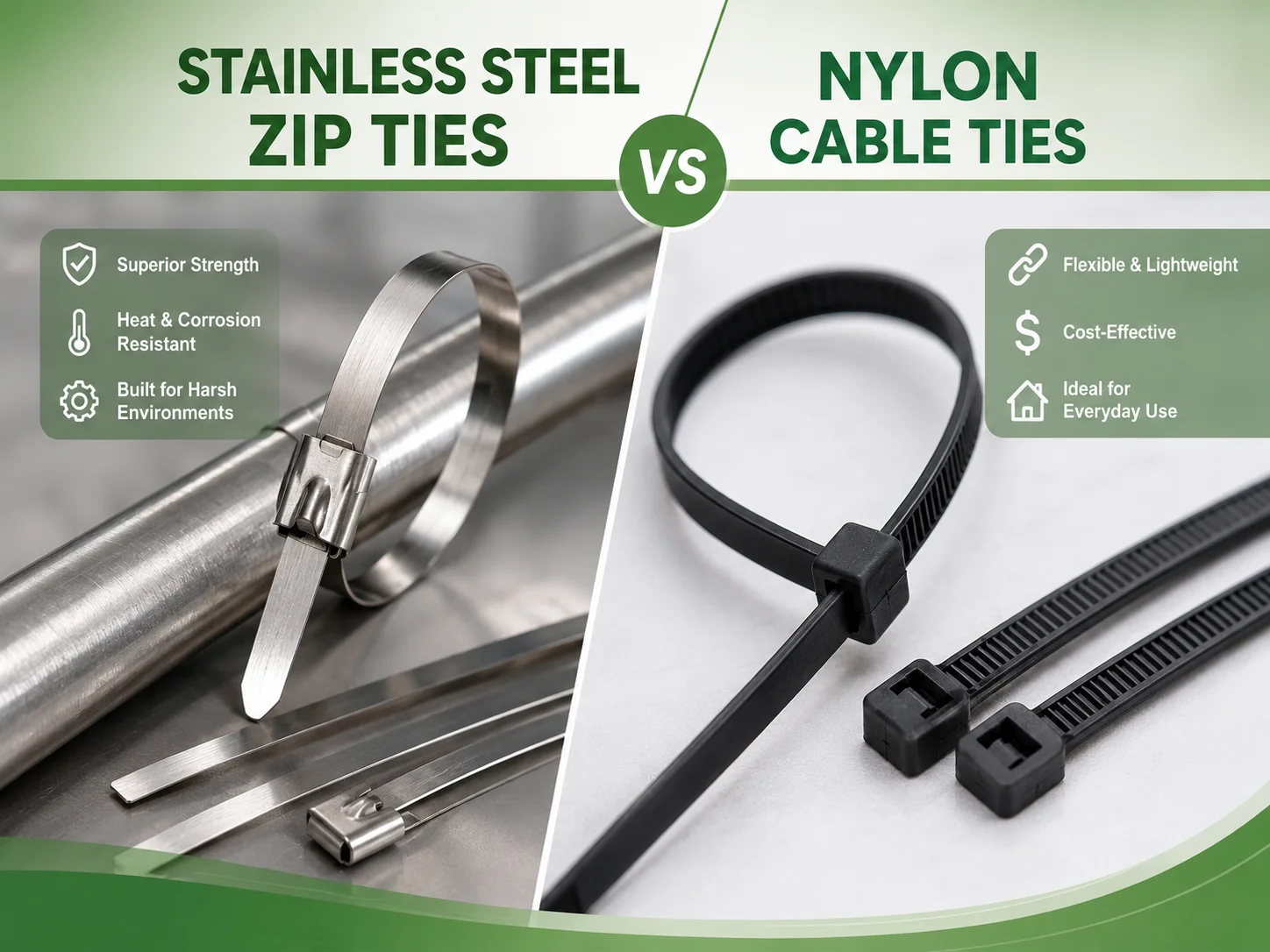
A nylon cable tie is produced from nylon 6/6 (polyamide 66), which belongs to the category of semi-crystalline engineering thermoplastics. The basic nylon cable tie has a continuous usage temperature of 85 degrees Celsius (185 degrees Fahrenheit) and a melting point of about 260 degrees Celsius (500 degrees Fahrenheit). The nylon can be altered with the addition of additives such as carbon black to make the tie suit outdoor use. Heat stabilizers are used to enhance the performance of the tie at high temperatures of up to 125 degrees Celsius or chemical additives to make it flame resistant.
Stainless steel cable ties are made of Type 304 or Type 316 stainless steel in the form of a strip. It has a locking system, where locking is either by its ball bearing locking function or by its folded tab self-locking system. No polymers are involved in the manufacturing process. It resists degradation, melting, softening of the material, or any chemical or heating effect. The tensile strength of the cable tie depends on cross-sectional area while strength is always higher than nylon ties by 2 to 5 times with the same width. Weight, cost, need for special tools for tensioning, and electrical conductivity of the material are the drawbacks that must be considered.
Head‑to‑Head Comparison Across Nine Dimensions
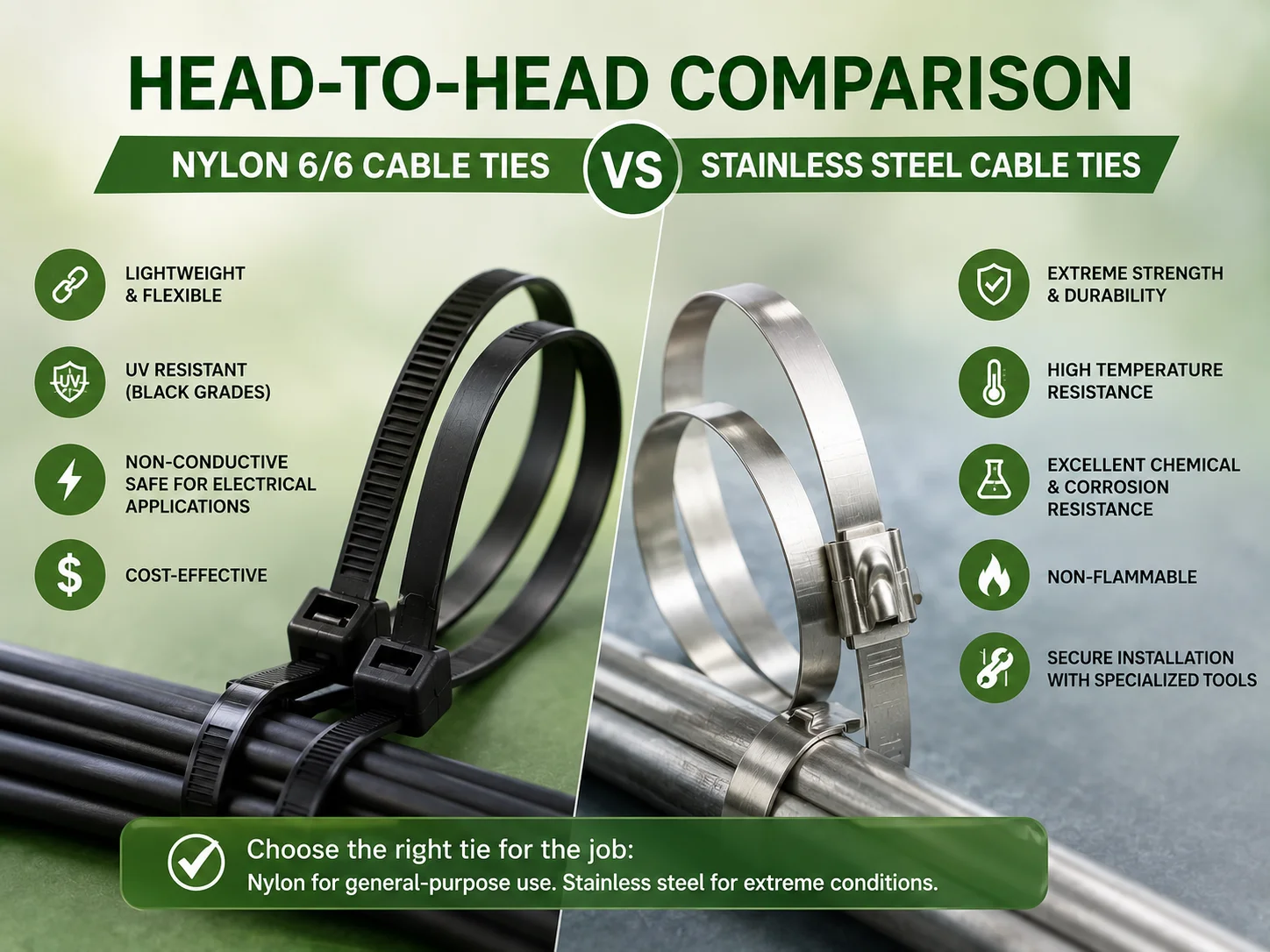
The table below provides a direct comparison of the two materials across the criteria that matter most in real‑world installation decisions.
| Criterion | Nylon 6/6 Cable Ties | Stainless Steel Cable Ties |
|---|---|---|
| Tensile strength | 18–250 lb (80–1,112 N), depending on width | 100–600+ lb (445–2,670+ N), depending on width and grade |
| Temperature resistance (continuous) | 85°C (185°F) standard; 125°C (257°F) heat‑stabilised | Effectively unlimited for any environment a cable tie would encounter (melting point >1,400°C) |
| UV resistance | Excellent for black UV‑stabilised grades (5–10 years outdoors in temperate climates); none for natural or coloured grades (degrade within 6–18 months) | Immune. No UV degradation of any kind |
| Chemical resistance | Good resistance to oils, greases, and common solvents; attacked by strong acids and phenols | Excellent. Type 304 resists most chemicals; Type 316 resists chlorides, marine environments, and aggressive chemicals |
| Flame resistance | Standard nylon is not flame retardant; flame‑retardant grades (UL 94 V‑2 or V‑0) are available | Inherently non‑flammable. Will not burn or support combustion |
| Electrical conductivity | Non‑conductive. Safe for use near live conductors and inside electrical enclosures | Conductive. Must not be used where the tie could contact live terminals or uninsulated conductors |
| Weight | Extremely lightweight. A 50‑lb tie weighs a few grams | Heavier. A stainless tie of equivalent length weighs several times more than a nylon tie |
| Installation tools | Hand‑tightening or a nylon tensioning/cutting tool | Requires a dedicated stainless steel tensioning tool for correct tension and flush cutting; hand‑tightening does not achieve consistent tension |
| Cost per tie (approximate bulk pricing) | $0.005–$0.05 for standard nylon; $0.01–$0.15 for specialty grades (UV, heat‑stabilised, flame‑retardant) | $0.30–$3.00+, depending on size, length, and material grade (304 vs. 316) |
Where Each Material Excels: Application‑Specific Guidance
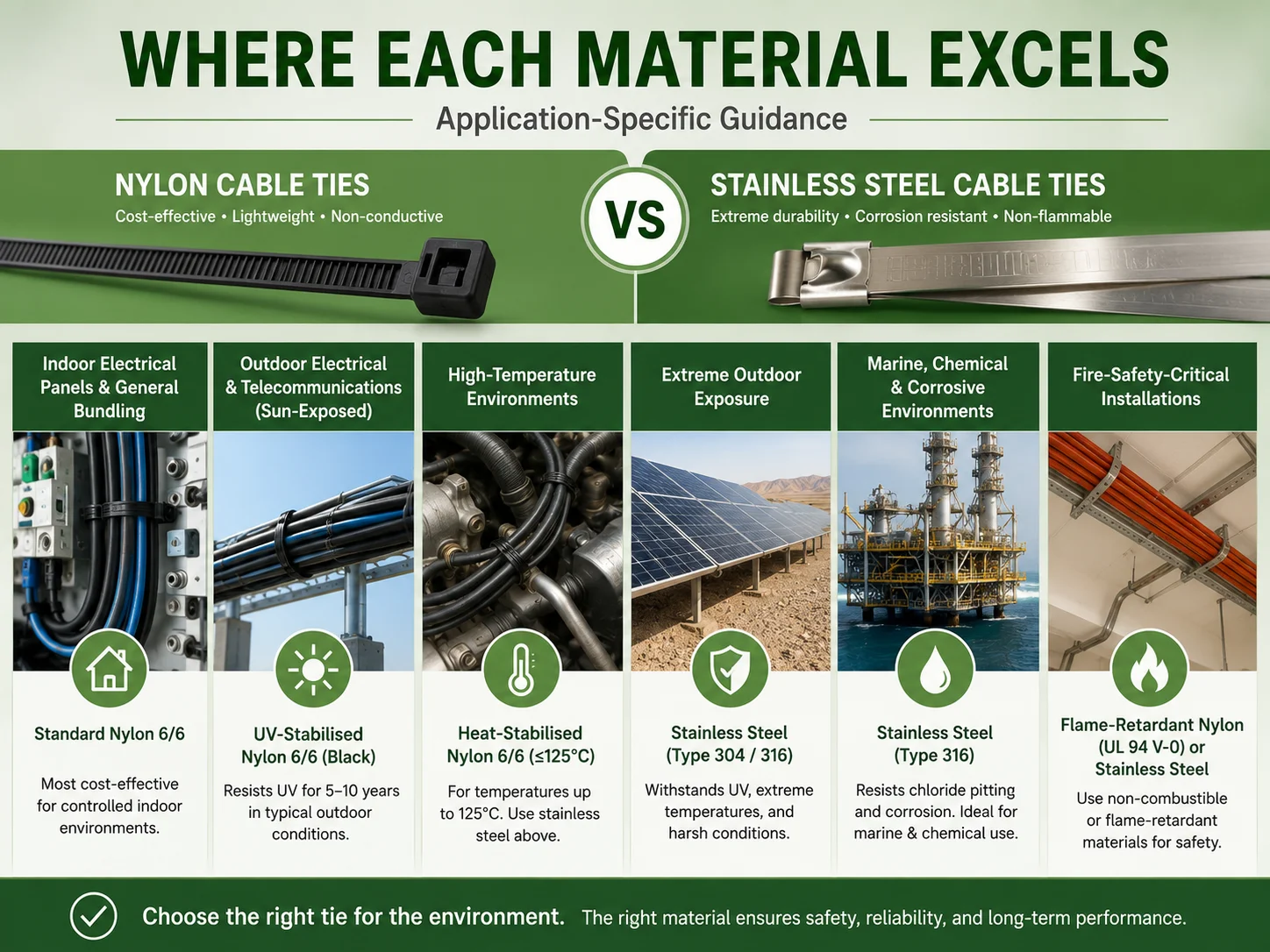
Choosing between nylon and stainless steel is hardly a case of taste. It largely depends on the environment in which the tie will be working throughout its entire lifespan. The diagram below provides an approach to selecting materials for specific usage.
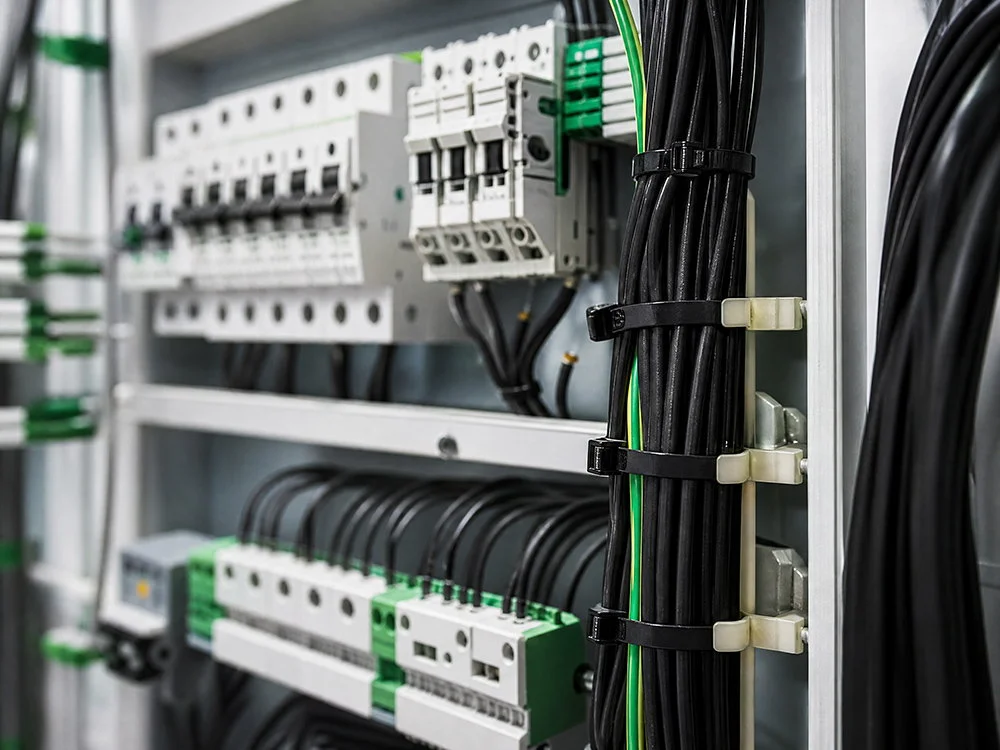
- Indoor electrical panels and general‑purpose bundling. The most cost-effective option is standard nylon 6/6. The conditions are managed, no exposure to sun rays, and the quantity of the load is as per the tie’s capability. It is lightweight, not electrically conductive, and easy to use by hand or with a hand-operated tension tool.
- Outdoor electrical and telecommunications (sun‑exposed). Nylon 6/6 in black with UV stabilisation is considered the norm. The UV stabilisation system features carbon black stabilisation, allowing for an expected lifespan of around 5-10 years in a mild climate. In addition to such a significant run time, it is substantially more cost-effective than stainless steel, giving a particularly strong advantage for the launch of outdoor cable trays, conduits, and overhead bundles.igoto’s UV‑resistant cable tie range is manufactured from carbon‑black‑stabilised nylon 6/6 and covers all standard sizes from 4 inches to 20 inches.
- High‑temperature environments (engine bays, industrial ovens, near motors). The first improvement from regular nylon is the heat-stabilized nylon 6/6, which has a heat resistance rating of 125ºC. Above this temperature, steel must be used. Grades of nylon do not survive temperatures higher than about 150ºC for an extended time without their material becoming brittle and hampered in tensile strength.
- Extreme outdoor exposure (desert solar farms, offshore platforms, chemical plants). Stainless steel is the most trustworthy option. The UV rays, salt spray, and extreme temperatures that fuse nylon in one season are of no consequence to stainless steel. A Type 304 stainless tie will function for years even in a desert solar field. A Type 316 tie will also fend off the chloride pitting on offshore platforms that would wreak havoc on Type 304.For environments where the tie must be non‑black for colour coding or visibility, stainless steel’s natural silver colour also solves the colour‑coding problem that UV‑stabilised black nylon cannot — a black tie is the only nylon tie that survives outdoors, as detailed in our guide on silver zip ties for outdoor use.
- Marine, chemical, and corrosive environments. Type 316 stainless steel is the minimum. Type 304 will pit and corrode in a chloride‑rich environment. Type 316, with its molybdenum content, resists pitting and is the standard for marine, coastal, and chemical processing applications.
- Fire‑safety‑critical installations. Flame-retardant nylon (UL 94 V-0) or stainless steel. In an application in a building such as a riser or plenum, or in any public access spaces, burning nylon tied to contribute to the fire fuel one way or another warrants that only a flame-retardant nylon tie or a stainless steel tie is used hence stainless steel being an ultimate solution as it is completely non-combustible.
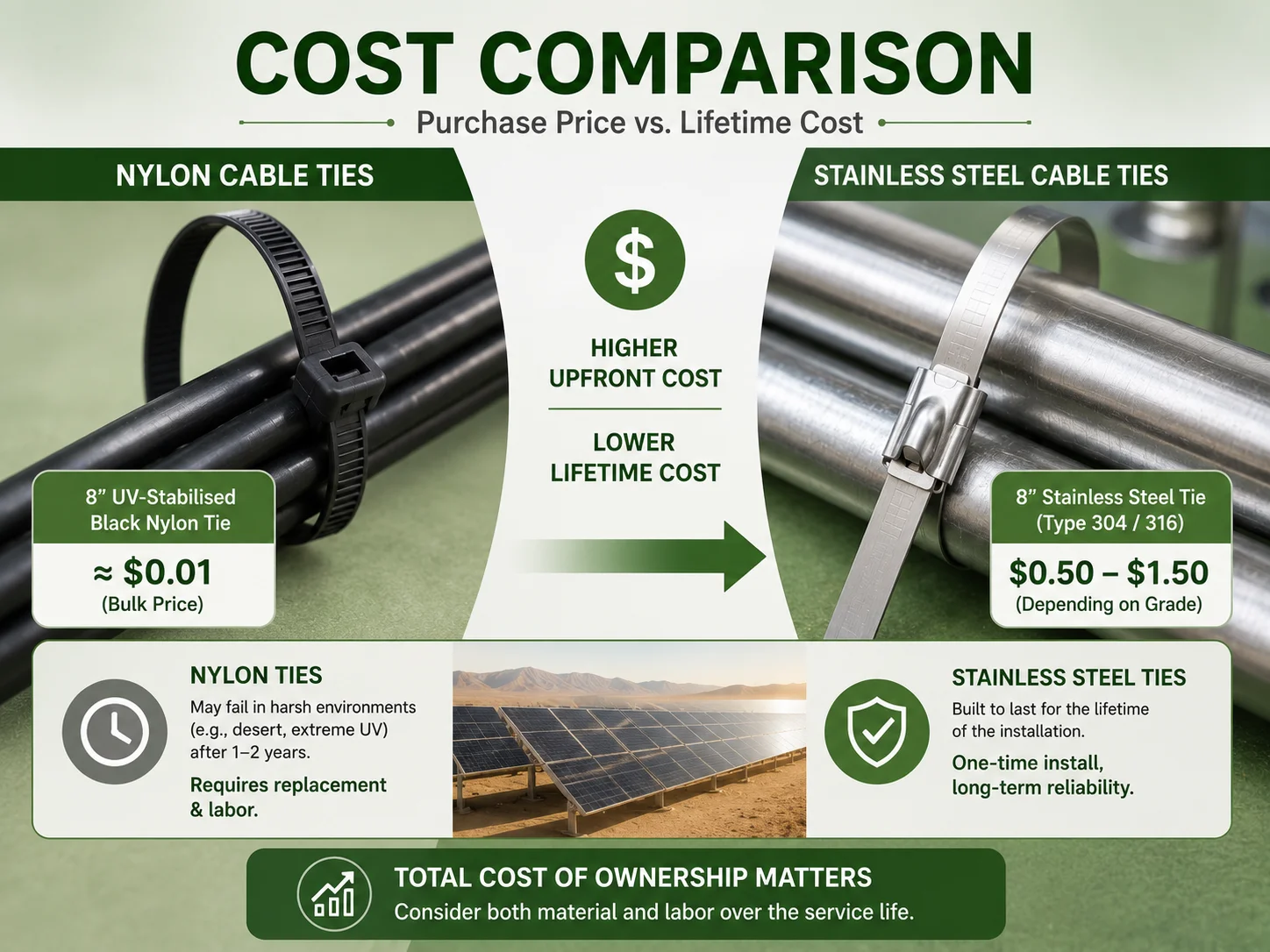
Thus, for example, if a nylon tie was used in a desert solar farm and it failed after two years, its replacement would require more labor than the price of the tie. As opposed to that, once installed, the stainless steel wire tie would last throughout the whole lifetime of the solar farm. Total cost of ownership includes the cost of the material and labor summed together and divided into the period of service.Our guide on alternatives to cable ties provides a broader comparison of fastening options, including the cost and performance trade‑offs of each.
Installation Differences: Tools and Technique
Nylon cable ties can be fitted in the blink of an eye and without any special hardware. In non-critical situations, hand-tightening works fine but using a manual or automatic tensioning tool ensures consistent tensioning and flush cuts to the tail. The tool is cheap and readily accessible.
To install a stainless steel cable tie, a specific tensioning tool made from stainless steel is necessary. The tool will apply pressure to the cable tie and cut it in one operation. If instead the tie is tightened by hand with twist pliers, it can lead to uneven applied pressure, damage the locking mechanism, and cut the tie in a manner so that the tail of the tie is very sharp and has to be dealt with properly in order to avoid injury to the people nearby during the installation.
Frequently Asked Questions
Are stainless steel cable ties any good?
Indeed, stainless steel cable ties are ideal for adverse environmental conditions. They are resistant to ultraviolet rays, high temperatures, as well as many chemicals, plus their tensile strength is much greater than that of nylon ties. The disadvantages of stainless steel cable ties consist mainly of their price which is much higher than that of nylon ties, the requirement of a special tensioning tool, and the fact they conduct electricity and cannot be used in places where they may come into contact with energized conductors.
Is nylon or stainless steel better?
None of the two are superior in all ways. Being lighter than steel, nylon is also cheaper, non-conductive and easy to install, which makes it a better choice in many indoor and most outdoor cases. But if a high level of strength, temperature resistance, UV-resistance and chemical resistance is what you need, then steel is much better for you.
What is the best material for zip ties?
The ideal choice of material for a zip tie depends upon the type of environment in which it is being used. Black UV-stabilised nylon 6/6 is an ideal choice for normal indoor and outdoor usage. In case of high temperature applications, stainless steel or ETFE is recommended. To be safe in extreme chemical environments, the option of Type 316 stainless steel or ETFE should be considered.
Are stainless steel zip ties better than plastic?
Stainless steel zip ties In terms of strength, temperature tolerance, ultraviolet resistance, and chemical resistance, metals (as opposed to plastics like nylon) have advantages. However, they are not advantageous in terms of cost, weight, and ease of installation or in terms of electrical non-conductivity. Indeed, in case of comparing their “betterness,” one should always consider the particular operating conditions and the desired lifetime of the assembly.
References
- Panduit — Stainless Steel and Nylon Cable Tie Specifications. Manufacturer technical data and application guidance for both nylon and stainless steel cable ties.
- HellermannTyton — Material Properties and Selection Guide. Global manufacturer providing detailed material performance data for nylon, stainless steel, and specialty cable ties.
- American Chemistry Council — Plastics Division. Information on the thermal and UV degradation of nylon and the role of stabilisers in extending outdoor service life.
- ASTM International — Stainless Steel Material Standards. Specifications for Type 304 and Type 316 stainless steel, including chemical composition and corrosion resistance.
The choice between stainless steel zip ties and nylon cable ties is a decision about the environment the tie will live in, the load it will carry, and the years it must hold. Nylon can be a viable choice for projects in indoor and outdoor settings, as it can be UV-stabilized, heat-stabilized, or fire-retardant. But when it comes to harsh environments where you want your ties to last longer than the equipment itself, the best choice is stainless steel. Choosing the wrong material can either be costly or lead to ties that become unusable sooner than expected. Choosing the right one is what ensures that the bundle stays tied for the required time, be it five years, twenty-five years, or forever. igoto provides people with all necessary sizes of nylon and stainless steel ties to suit all situations.