



Alternative to Cable Ties: Smarter Solutions for Every Fastening Challenge
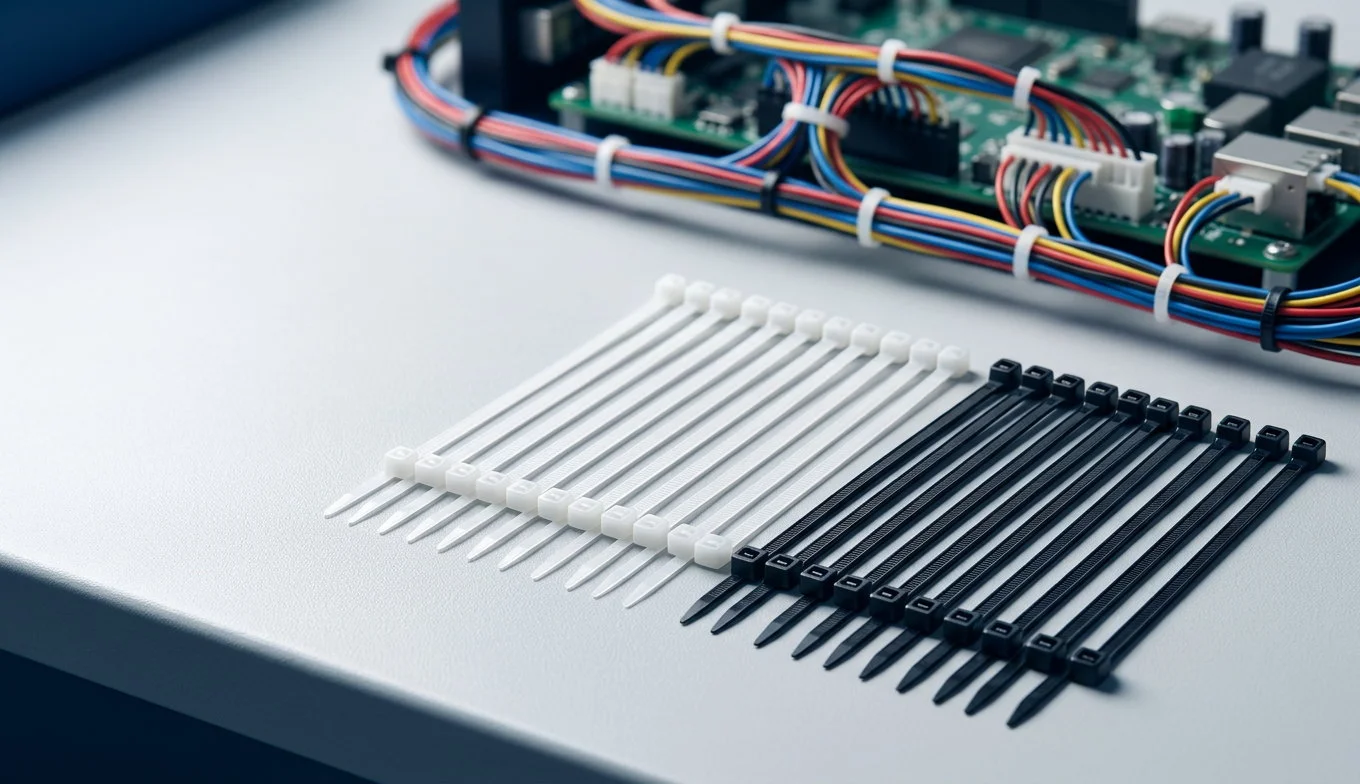
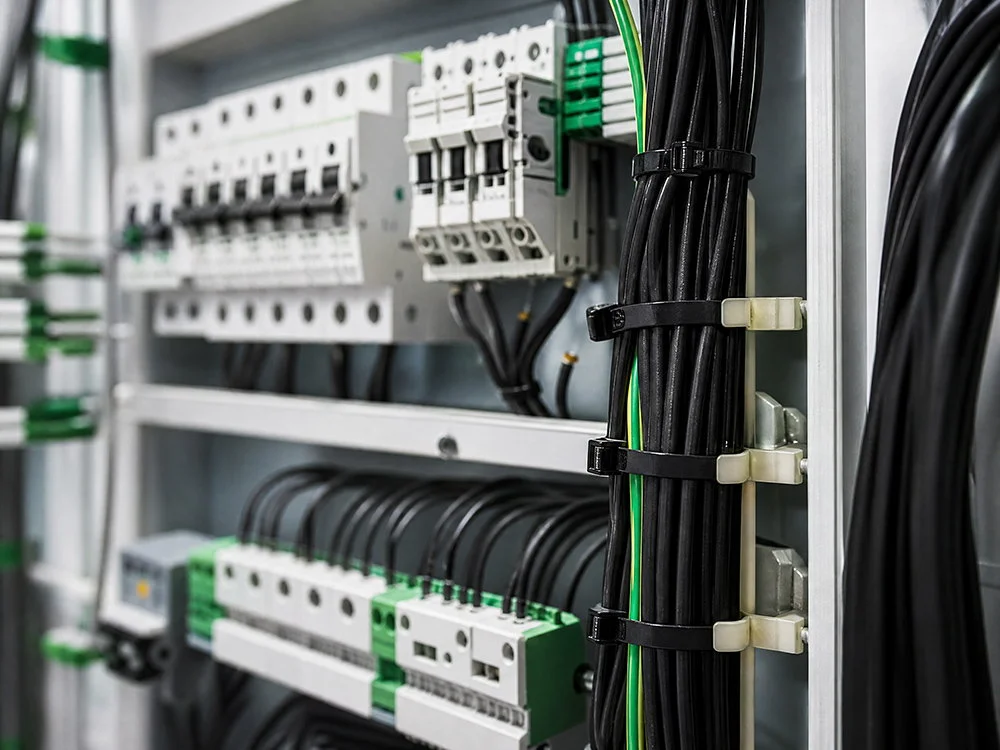
Making a journey through any data centre, manufacturing plant, or power plant, you will see a number of cable ties — neat, firm, and permanent. But look at it carefully and you will see how it can fail. A tie that is impossible to undo without cutting when inserting another cable. A bundle that is loosened because of the normal nylon tie that reduces its tension due to action of heat. An outdoor installation with a cheap non UV resistant tie that has become fragile and has broken. It is at this point when we can see the necessity of having something to use in place of cable ties. Knowing what other fastening methods are available and what are positive points of each fastening method shows professionalism of an installer.
Why Look Beyond the Standard Cable Tie?
Despite its effectiveness as a general-purpose fastener, the nylon cable tie has its own specific limitations. A big limitation related to the design of the tie is the fact that once tightened, it cannot be reused. This design’s mechanism consists of one-way ratchet arrangement and therefore, it is easy to over-tighten the device and cause damage. High heat, UV light, and some chemicals can reduce the tensile strength of standard nylon ties. In addition, a nylon cable tie, after being fastened, cannot be adjusted because of the fastening procedure.
Option exists for each weakness to be addressed. The solution will depend on what the fastening cannot do in any given situation.
Cable Tie Alternatives and Where They Excel
Hook‑and‑Loop (Velcro) Straps
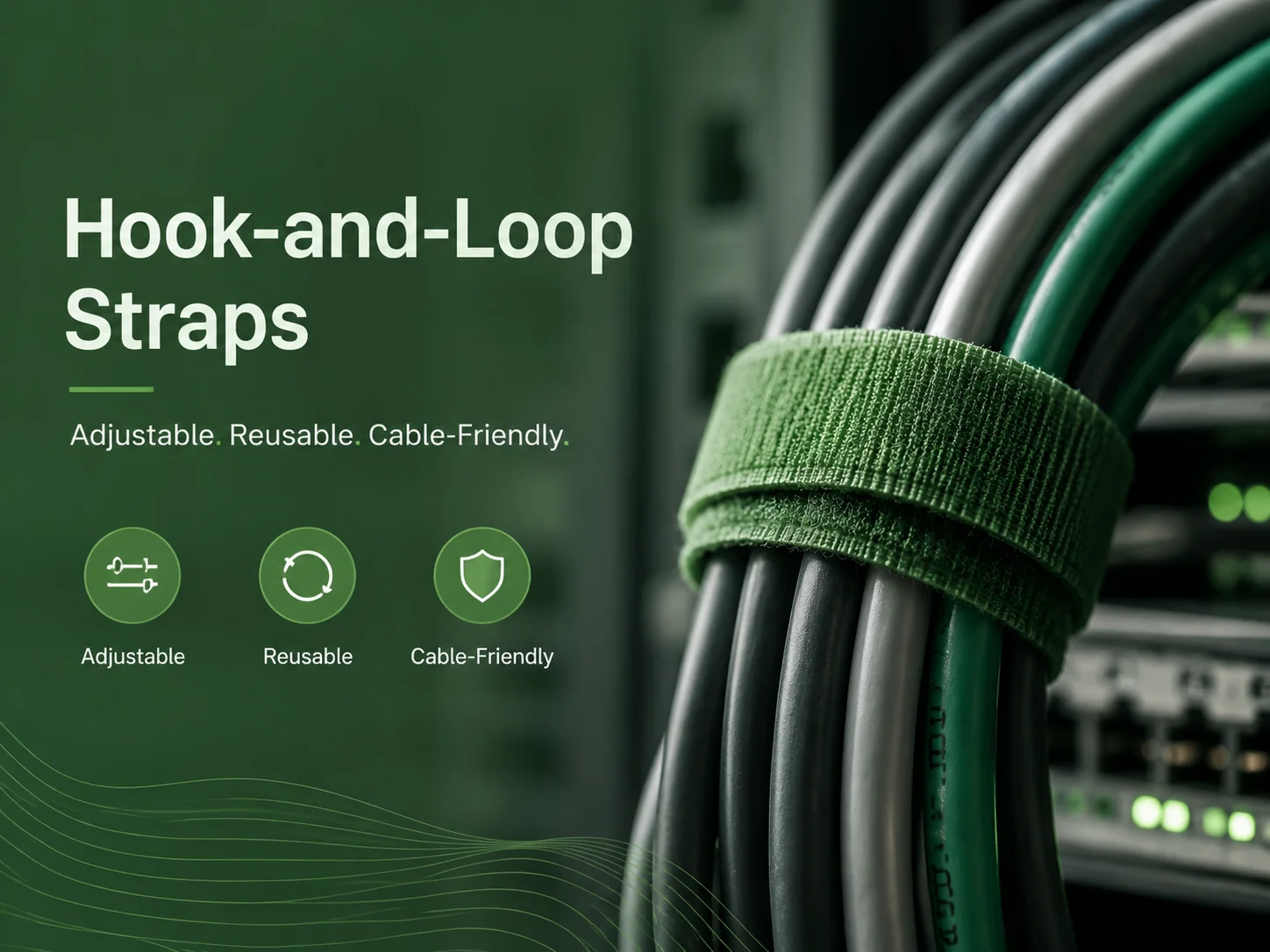
What it is: A textile belt that has hooked surface on one side and looped surface on the other, coiled around the pile and then locked down.
Strengths over cable ties: Completely adjustable, fully deployable, and reusable multiple times.
No tools are needed to operate it. It is totally safe to use on cables as it is designed to protect fragile cables during use.
Limitations: It has less tensile strength than nylon straps with the same width. It is not designed to handle much weight during storage. It can absorb water. There is dust accumulation.
Best for: Computers in data centers, rack servers as used in server farms, structured cabling in the office, temporary bundling during installation of cabling.
Releasable Cable Ties
What it is: A nylon zip tie equipped with a tiny feat at the latch section, which makes it possible to release and then re-tie the zip tie.
Strengths over cable ties: It has the same nylon strength and heat resistance rating, like any other tie, but it can open and be reused. It gives the flexibility to open the tie for any possible adjustment.
Limitations: The product is a bit pricier than usual ties. The release tab has the potential to activating unintentionally in a compressed package due to improper placement.
Best for: This includes exceptions set for control panels, areas which engage in production processes where machines and devices are frequently changed, cable arrangements in laboratories where tests and prototypes are made.
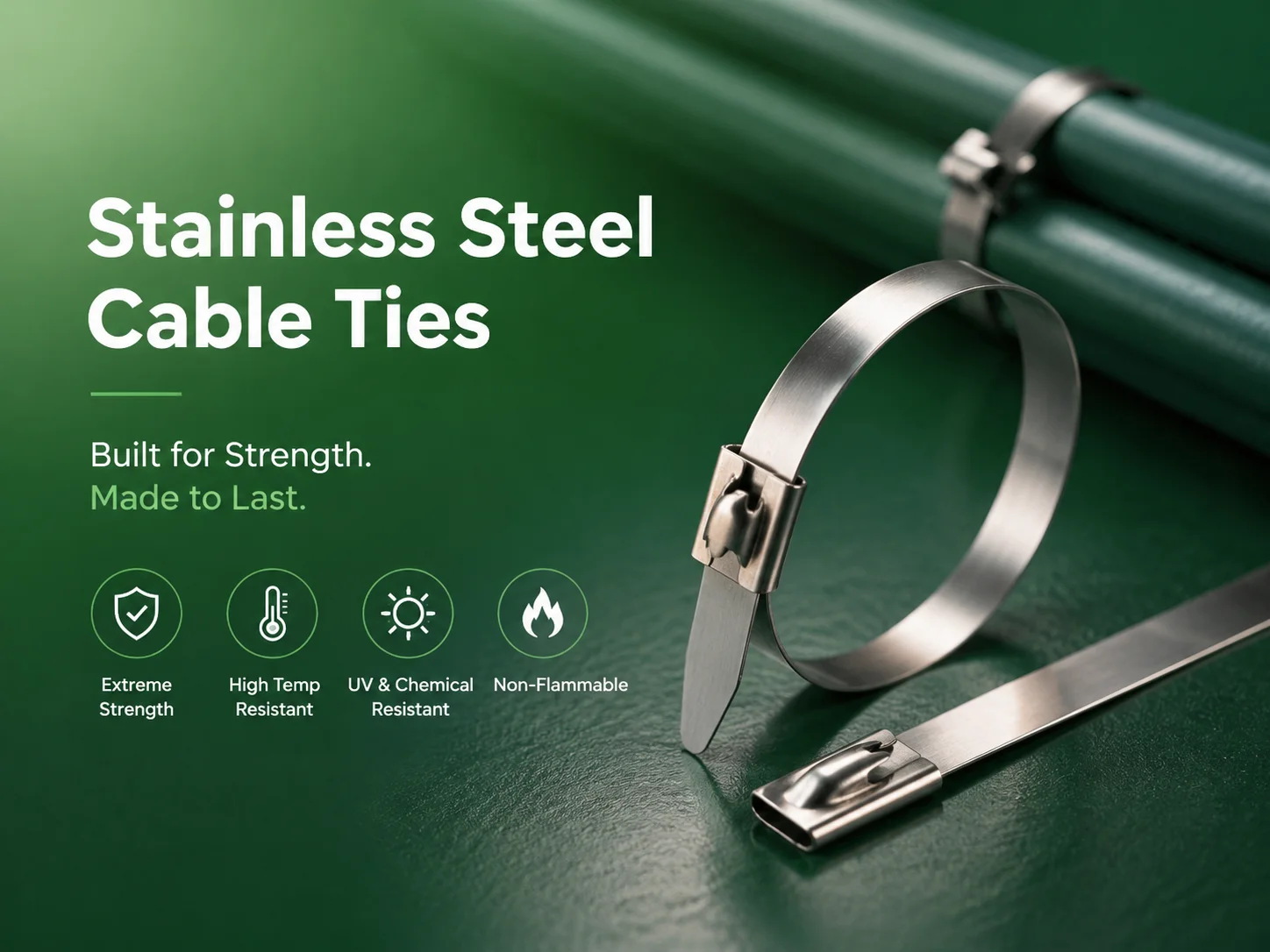
Stainless Steel Cable Ties
What it is: A metallic tie, commonly composed of 304 or 316 type of stainless steel, and with a design in either of two types: a ball-bearing locking type or one with a folded-tab configuration.
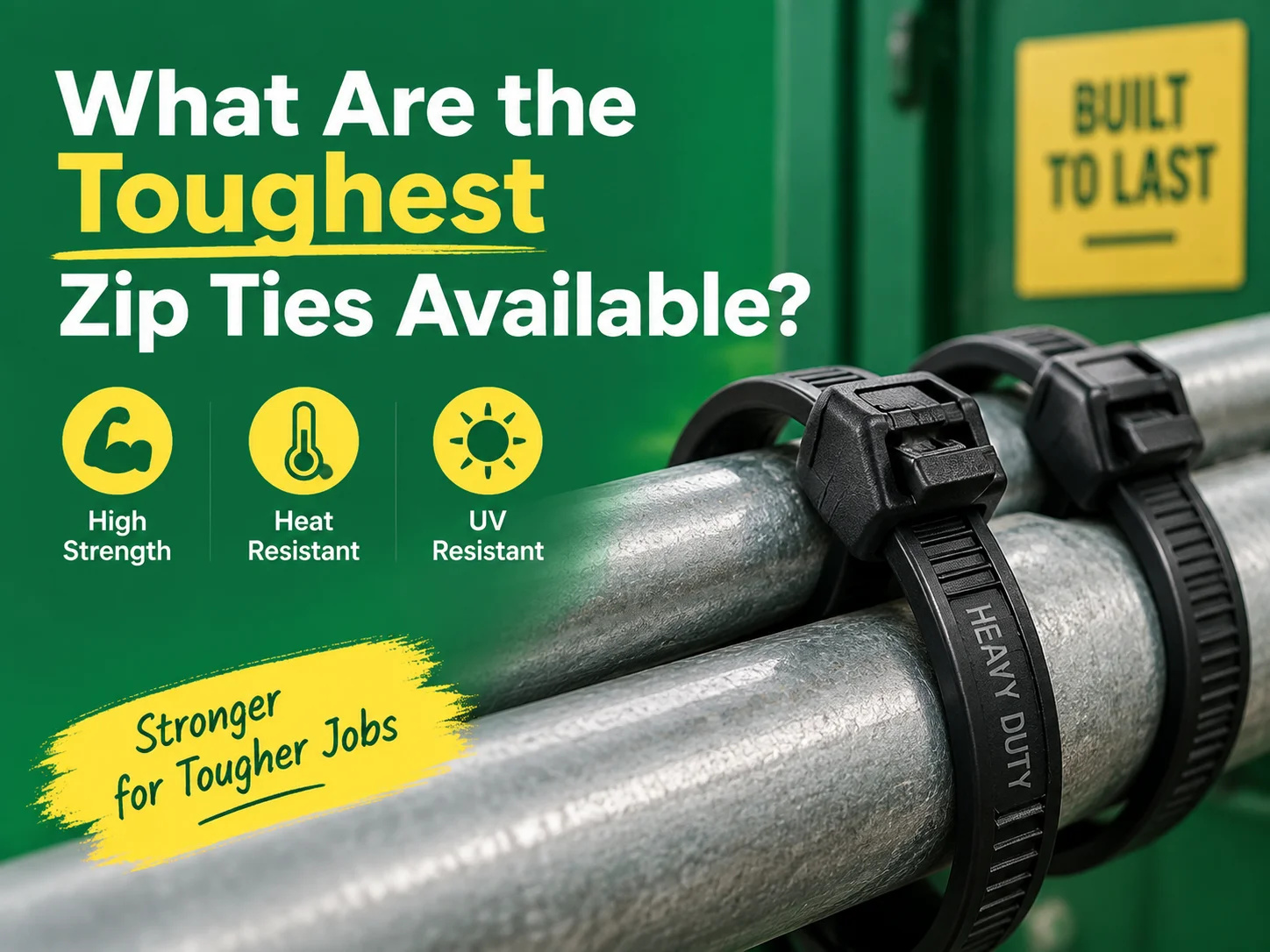
Strengths over cable ties: Not affected by ultraviolet light, warmth, coolness, or nearly every type of chemical. Tensile strength surpasses that of any nylon tie to an astonishing level of strength — a heavy-duty stainless steel tie is capable of withstanding in excess of 250 pounds. Will not lose its shape when continuously under stress.
Limitations: Sharp edges need to be handled; stub ends present danger. Requires a specific tensioning device for installation. Costlier compared to nylon. Conducs electricity thus needs to be avoided if the tie can get in contact with current-carrying conductors.
Best for: Locations exposed to extreme UV radiation (such as solar power plants and offshore platforms), high-temperature situations (like engine compartments and industrial cooking ovens), existing in dangerous places where flammability is an issue, and any other use where the highest possible strength is needed.
Our guide on why UV‑protected cable ties matter outdoors covers the outdoor degradation that stainless ties completely avoid.
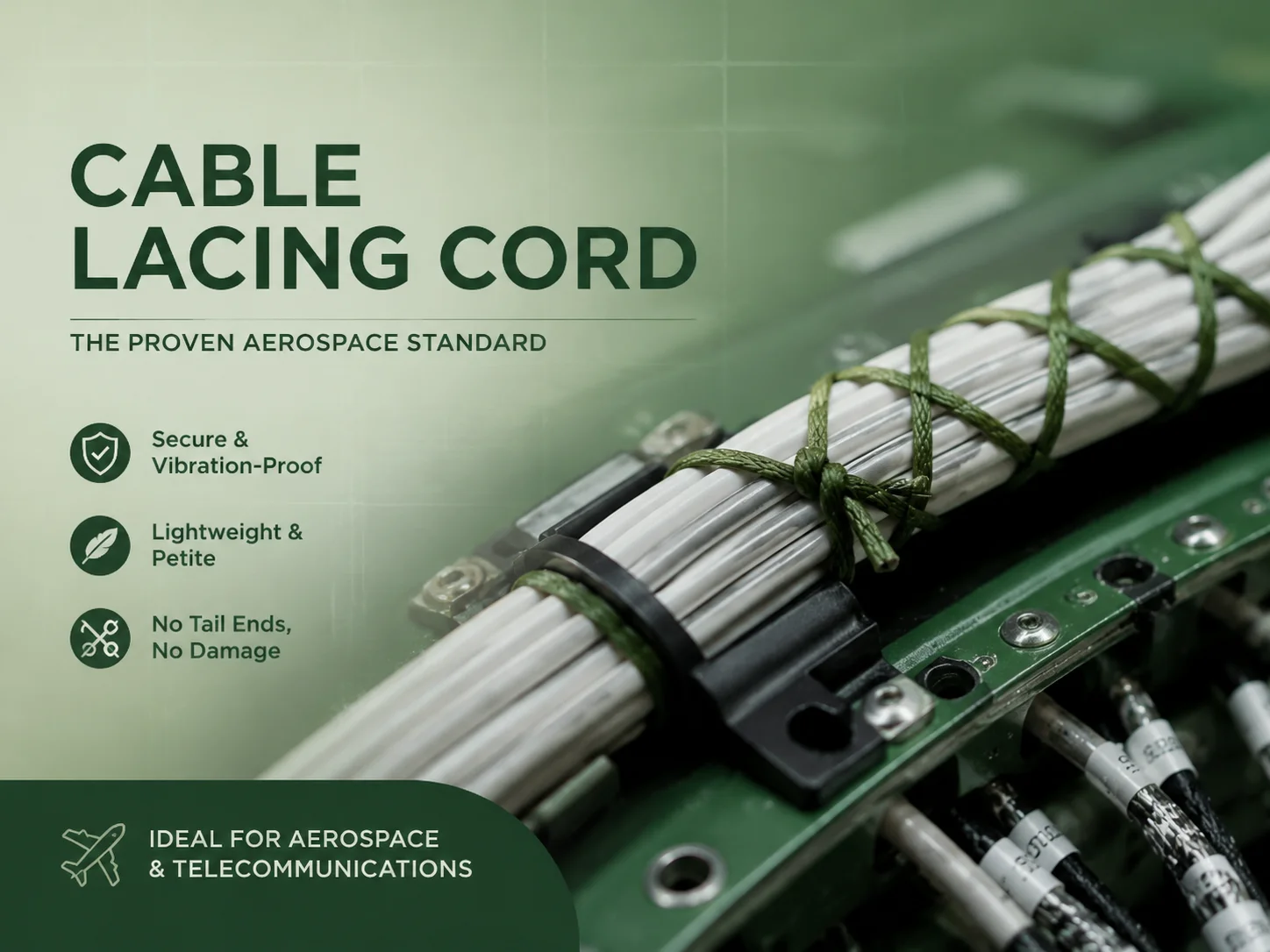
Cable Lacing Cord (Lacing Tape)
What it is: A cord that has been waxed or coated, usually nylon or polyester, which is twined around a cable bundle and then secured in place using a certain type of knot, being used preferably in the aerospace and telecommunications industry.
Strengths over cable ties: No inflexible tail ends to trim, no troublesome edges, and no toothed lock to break the cable. Exceptionally light and petite! When correctly tied, the lace is very stable and vibration-proof. Still used in military and aviation systems as the proven aerospace standard.
Limitations: Difficult to apply if done properly. Requires lots of training to make the right knots. Not adjustable without cutting it. Has lower strength than a heavy tie.
Best for: Wiring harnesses for aerospace and avionics applications, telecommunication central office works, and other domains that require a method that ensures no damage has been done.
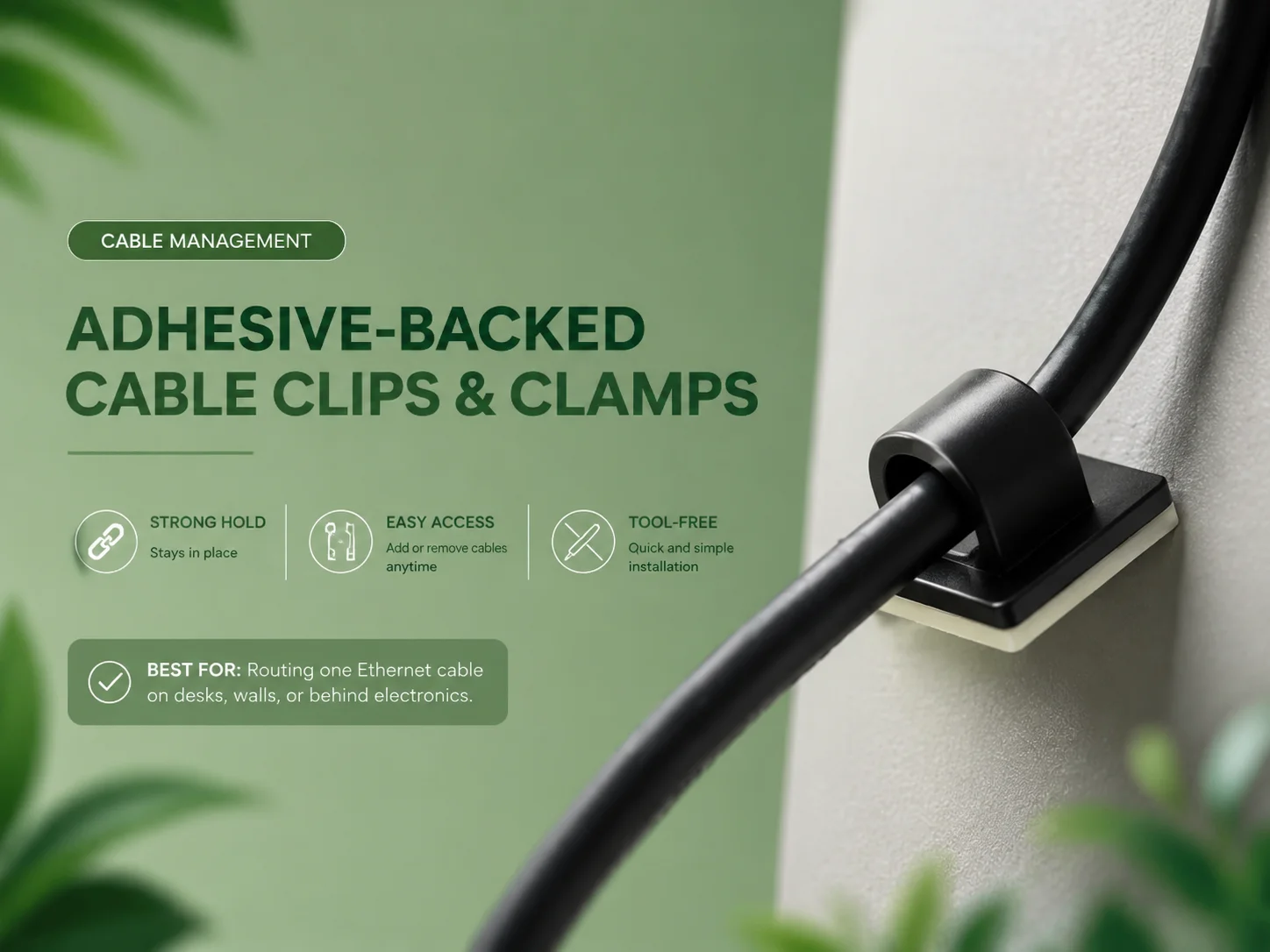
Adhesive‑Backed Cable Clips and Clamps
What it is: A clip made of plastic or metal, which has an adhesion base so it can stick to a surface where the cable is put inside.
Strengths over cable ties: Guides one cable or several cables in a tidy fashion without encasing the entire bundle. Cable can be taken out and put back in place without breaking the hold of the clip. No tools needed.
Limitations: The strength of the adhesive bond is entirely dependent on how the surface has been prepared as well as what adhesive has been used for the job; otherwise, heat, moisture, and dust will cause its deterioration over time.
Best for: Routing one Ethernet cable on desks or walls, securing thin cables behind electronics.
Cable Sleeving and Spiral Wrap
What it is: It could be a flexible plastic tube (sleeving), or it could be spiral cut wrap that wraps around cables along its entire length.
Strengths over cable ties: Cables are protected from cable damage along the whole path, not only at the tie points. Offers the option to open the system to insert the cable or pull out the cable. Produces a neat and professional look.
Limitations: Does not form a firm mechanical grip — wire ropes freely slip into the cover. Needs approach to the end of the cable for mounting of the sleeve. The strap needs winding across the whole length, which is labor-intensive.
Best for: Preventing cable bundles against chafing when in operation, and securing cables at the back of desks and entertainment centres, as well as the use of cables in engines where abrasion is a concern.
Choosing the Right Alternative: A Quick Decision Table
| Requirement | Best Cable Tie Alternative |
|---|---|
| Frequent changes or adds to the bundle | Hook‑and‑loop strap or releasable cable tie |
| Outdoor installation, extreme UV, or high heat | Stainless steel cable tie or UV‑stabilised black nylon tie |
| Maximum holding strength | Stainless steel cable tie |
| Delicate fibre or thin‑walled cables | Hook‑and‑loop strap or cable lacing cord |
| Protection against abrasion along the run | Cable sleeving or spiral wrap |
| Routing a single cable neatly along a surface | Adhesive‑backed cable clip |
| Electrical conductivity must be avoided | Nylon tie, hook‑and‑loop, or cable lacing cord — not stainless steel |
When a Cable Tie Is Still the Right Answer
While there are many alternatives available, the nylon zip tie would still prove to be the best option in most of the applications. With a tie that is permanent, has a controlled environment, does not exceed the capacity of the tie, and has been tension calibrated by the installer, a nylon cable tie is quick, cheap, and dependable. The alternatives are available for the moments when the nylon is defective.
Frequently Asked Questions
What’s stronger than a zip tie?
Stainless steel cable ties are much stronger than nylon zip ties as their tensile strength can reach more than 250 pounds for heavy-duty variants. However, for nylon alternatives, only a heavy-duty releasable tie or wide strap hook-and-loop fastener rated for industrial use can surpass the strength of a nylon tie.
What to use if you don’t have zip ties?
When in the field, either electrical tape, waxy string or even a length of hook and loop material can be used to temporarily tie up cables. The most suitable material to be used, however, depends on the load and environment. For example, the use of a hook and loop strap is the best option when working indoors with less cumbersome cables, while steel cable ties are recommended for high and outdoor loads.
What can I use instead of a tie?
In place of cable ties, you may think of using hook-and-loop fastening for adjustability, steel ties for durability and prolong outdoor use, releasable ties for uncommon changes, adhesive clips for routing single cables, and sleeve and spiral wrapping for protection against abrasion.
Is there a metal version of zip ties?
Indeed. Stainless steel cable ties are the metallic equivalent of nylon ties. They come in 304 and 316 stainless steel and can either be found with a ball-bearing locking mechanism or a folded-tab design. They are resistant to UV light, heat, and chemicals making them the strongest option out there for cable ties.
References
- Panduit — Cable Ties and Fastening Solutions — Manufacturer of stainless steel ties, releasable ties, hook‑and‑loop straps, and cable management accessories.
- HellermannTyton — Cable Management and Fastening Products — Global supplier of cable ties, releasable ties, and alternative fastening solutions.
- Velcro Companies — Industrial Hook‑and‑Loop Fasteners — Manufacturer of hook‑and‑loop cable straps and bundling solutions.
- Techflex — Cable Sleeving and Spiral Wrap — Manufacturer of braided sleeving and spiral wrap for cable protection and organisation.
The alternative to a cable tie is not a single product — it is a family of fastening solutions, each designed to solve a specific problem that the standard nylon tie cannot. A hook‑and‑loop strap solves the adjustability problem. A stainless steel tie solves the strength and outdoor‑life problem. Cable lacing cord solves the delicate‑bundle problem. Knowing which one to reach for, and when a standard tie is still the best answer, is the difference between an installation that holds and one that holds up. igoto supplies the full range — standard nylon ties, UV‑stabilised outdoor ties, stainless steel ties, and releasable options — because the right fastener is the one that matches the job, the environment, and the long‑term demands of the installation.