



Flame-Retardant Cable Ties: A Fire-Safe Wiring Solution
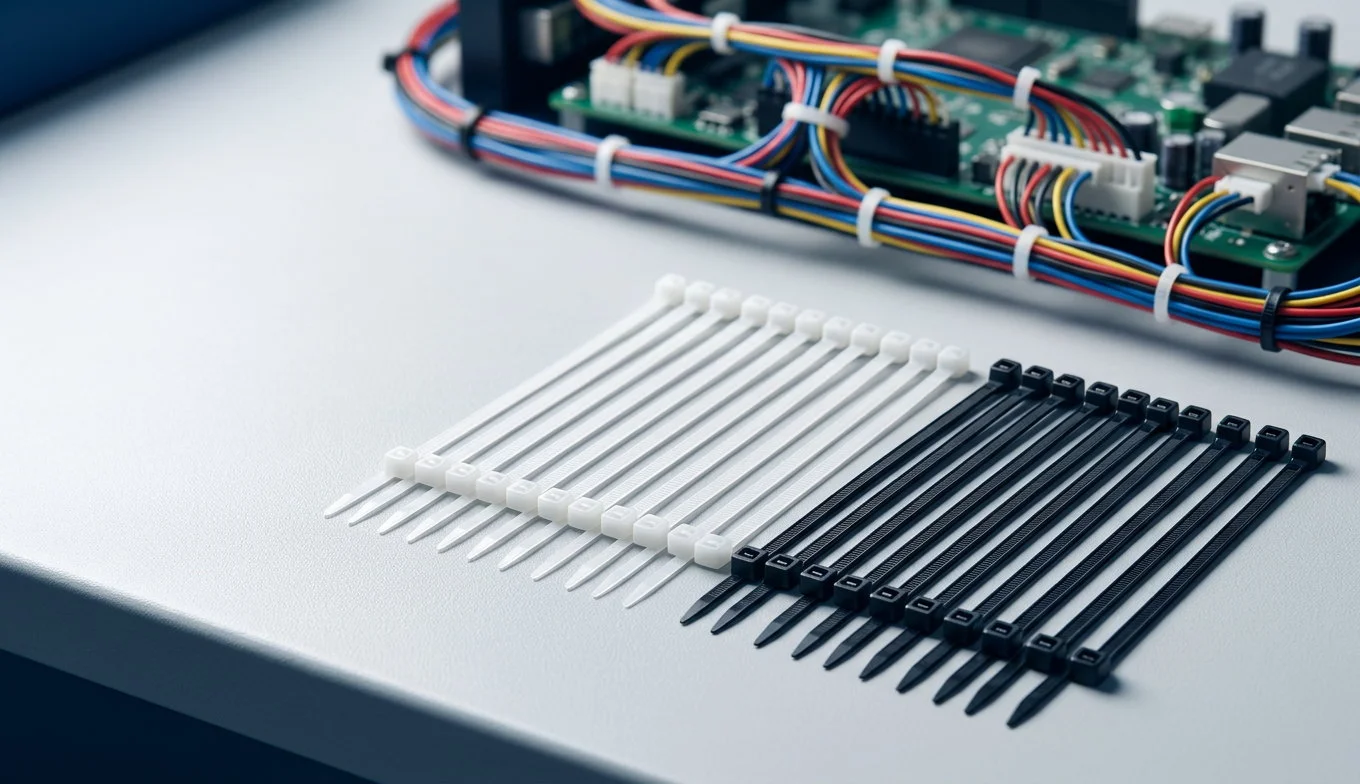
High voltages can generate an arc in a short circuit with an immense amount of energy (thousands of degrees) in the short burst of an electrical circuit as it occurs. The wiring insulation of the wire will become charred. The wiring is secured with standard nylon wire ties. The nylon wire tie has the potential of melting, possibly leaving molten plastic (if they fail to meet the NPFA70 standard) which could cause a flare if they ignite, assisting in the burning of the adjacent components. A proposed solution to this situation would involve using a flame-retardant zip tie to prevent this from happening. A flame-retardant zip tie is designed to extinguish when it comes in contact with fire. It also does not drip burning material so it limits the amount of damage and helps contain any fire within an electrical apparatus that has been built or manufactured to meet or exceed NFPA70 standards. In other words, a flame-retardant zip tie is classified as an accessory in any and all installations where fire safety is a requirement of installation, be it electrical enclosures, government buildings, transportation, data centres, etc., thus converting the zip tie from a potential source of combustion to a means of passive fire safety.
What Makes a Cable Tie Flame Retardant?
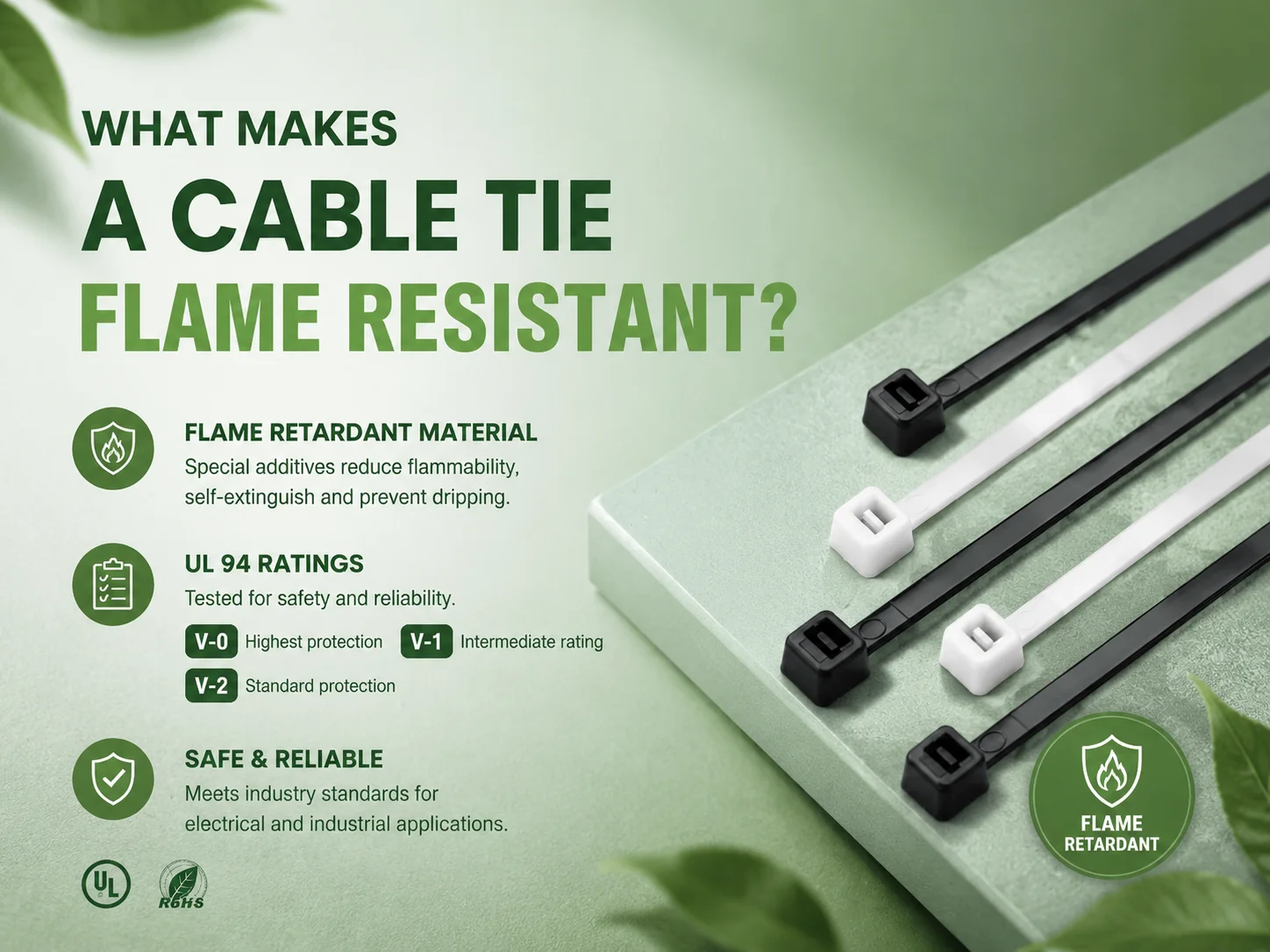
The nylon 6/6 (PA66) plastic used to create standard cable ties is a solidly constructed plastic but doesn’t have any flame resistance properties. If this plastic is exposed to open flames it ignites at around 260 degrees Celsius. Once ignited it has a tendency to continue to burn with “dripping” flames, which allows the continued spread of flame downwards. To create a flame-retardant version of the cable tie, the nylon polymer used in this fabric is modified by adding additives to its current state. There are various types of additives that provide flame retardancy in different ways. These include the release of either water or inert gases during heating, thus cooling the materials while simultaneously diluting the flammable vapours. Secondly, the addition of these additives will promote or assist in the formation of a protective layer of char/insulation on the surface of the cable tie, which serves as an insulator from heat and oxygen on the material beneath the charred surface. Thirdly, many of these additives scavenge free radicals in the gas phase and prevent the free radicals from sustaining combustion. The result is a cable tie that exhibits a high resistance to ignition and very importantly will stop burning within specified time limits after the source of flame has been removed.
UL 94 Rating – The measurement for flame-retardant performance of cable ties is through the UL 94 rating system which tests plastics for their flammability. Cable ties will usually have one of the following UL 94 ratings related to their flammability:
- UL 94 V-2: A vertical specimen self-extinguishes within 30 sec when tested, though there are still flame-related drips permissible. This is the least-rated cable tie for being flame-resistant inside electrical equipment. Typical flame-resistant cable ties will have a V-2 rating.
- UL 94 V-0: A vertical material shall extinguish within ten (10) seconds of igniting and will not release any flaming droplets. This is a significantly more stringent rating usually required in highly developed applications, including but not limited to: Telecommunications Central Offices; and some Public Access Areas.
- UL 94 V-1: An intermediate rating: extinguishes within 30 seconds, no flaming drips.
A cable tie that carries a UL 94 V-2 or V-0 rating, combined with the appropriate UL listing for the component itself, has been independently tested and verified. This is the documentation that an electrical inspector, a fire marshal, or a quality auditor will look for. Resources from UL Solutions provide the detailed test criteria for these ratings, and leading cable tie manufacturers such as Panduit and HellermannTyton publish the specific UL 94 and component listing data for their flame-retardant product lines.
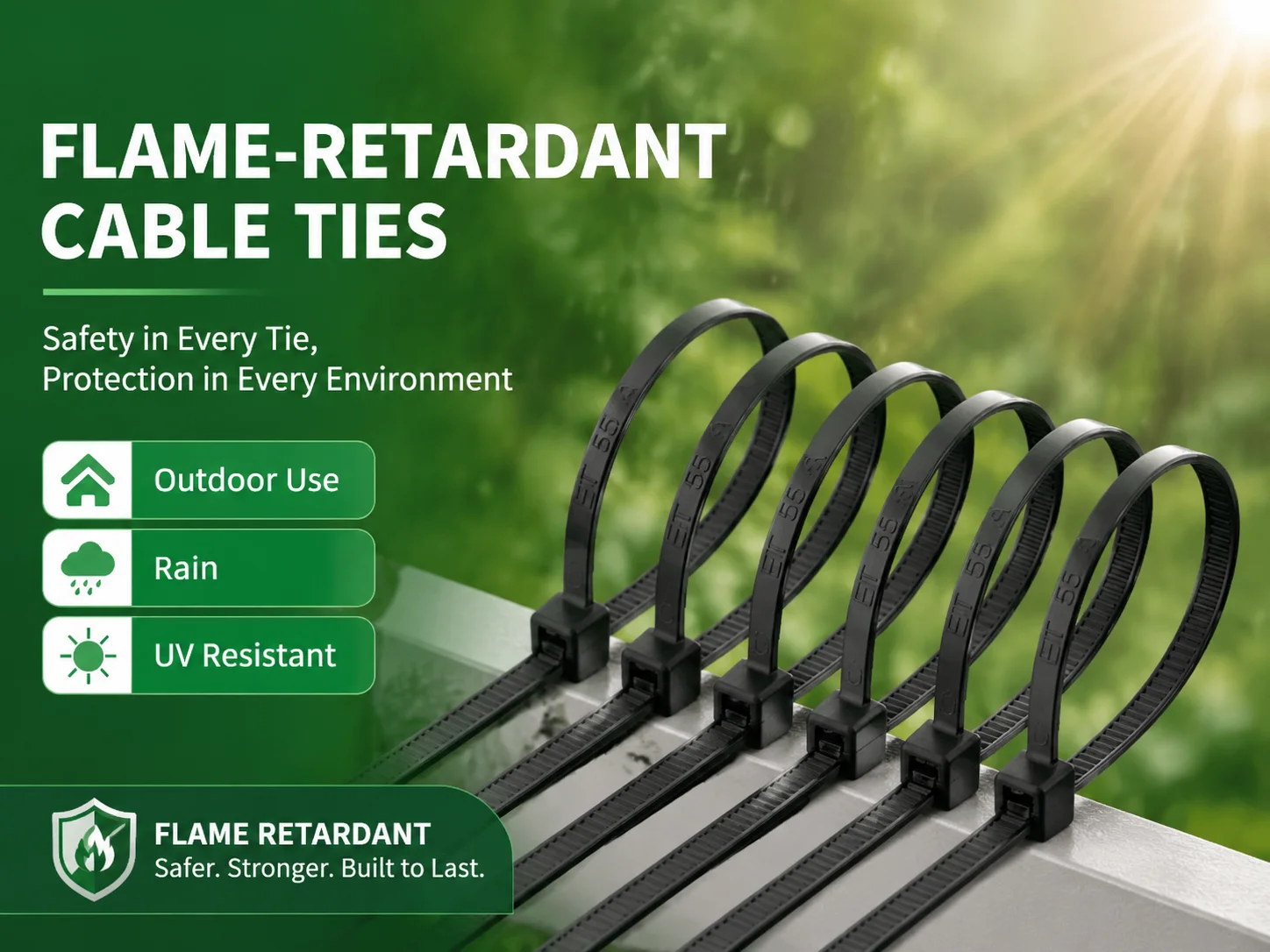
Where Flame-Retardant Cable Ties Are Required
All installations do not have to be installed with either flame-rated cable ties. An example of this would be that in your home garage, a standard nylon cable tie would be acceptable; however, in a regulated environment, choosing incorrect cable ties will fail an inspection and is part of your fire safety plan. The following are main industry sectors and applications that justify using flame rated ties:
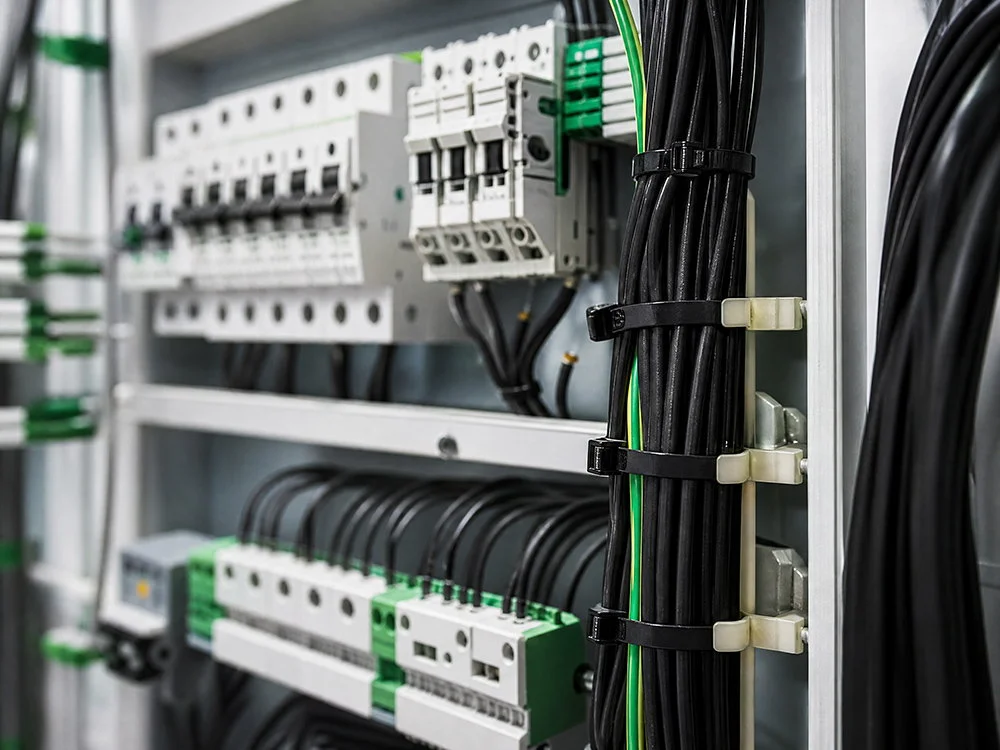
- Electrical panels and switchgear. The National Electrical Code (NEC) and both European and Asian wiring codes require that electrical enclosure components meet varying levels of flammability. Therefore, any type of UL listed panel that has a wire tie, must have a type of wire tie like the UL listed wire tie itself or a form of wire tie that is classified with regards to its respective type of wire tie will have an effect upon the overall safety of the entire assembly, due to this type of wire tie having a known flame rating.
- Data centres and telecommunications. The Telcordia (now a part of Ericsson) specifications regarding telecommunications equipment state that they need to meet GR-63-CORE for the purpose of establishing fire resistance standards for telecommunications equipment installed at central offices and data centers. Additionally, cable ties used in central offices and data centers are expected to meet the requirements of UL 94 V-0 and in some instances UL 2043 for plenum rated applications if used in air handling environments.
- Rail, aviation, and mass transit. There are stringent flame, smoke and toxicity (FST) standards for materials found within passenger train cars, aircraft and subway stations, including EN 45545 in Europe and NFPA 130 in the US. Cable ties used for these applications are required to be flame retardant as well as generate the least amount of smoke and generate the least amount of toxic gases when exposed to fire.
- Medical devices and laboratory equipment. Devices found in patient care environments must adhere to all the relevant requirements set forth by IEC 60601 and its companion standards. The use of flame-retardant cable ties on the device helps maintain the device’s fire safety envelope.
- Public buildings and infrastructure. Airports, hospitals and tall buildings usually need to have flame-retardant cable management in their contracts since they are required to do so under the building code and based on a fire engineer’s risk assessment.
In every situation, the flame-retardant cable tie acts as a small but significant part of the overall equation for fire safety. The primary barrier against fire is the enclosure, circuit protection, and fire-rated construction. However, the coupon is a link in the fire safety chain. The ignition of the tie and the subsequent drips of burning nylon from the tie onto a bundle of control cables can create an opportunity for the fire to spread from one single fault to an entire electrical panel. The self-extinguishing tie eliminates this pathway of fire propagation.
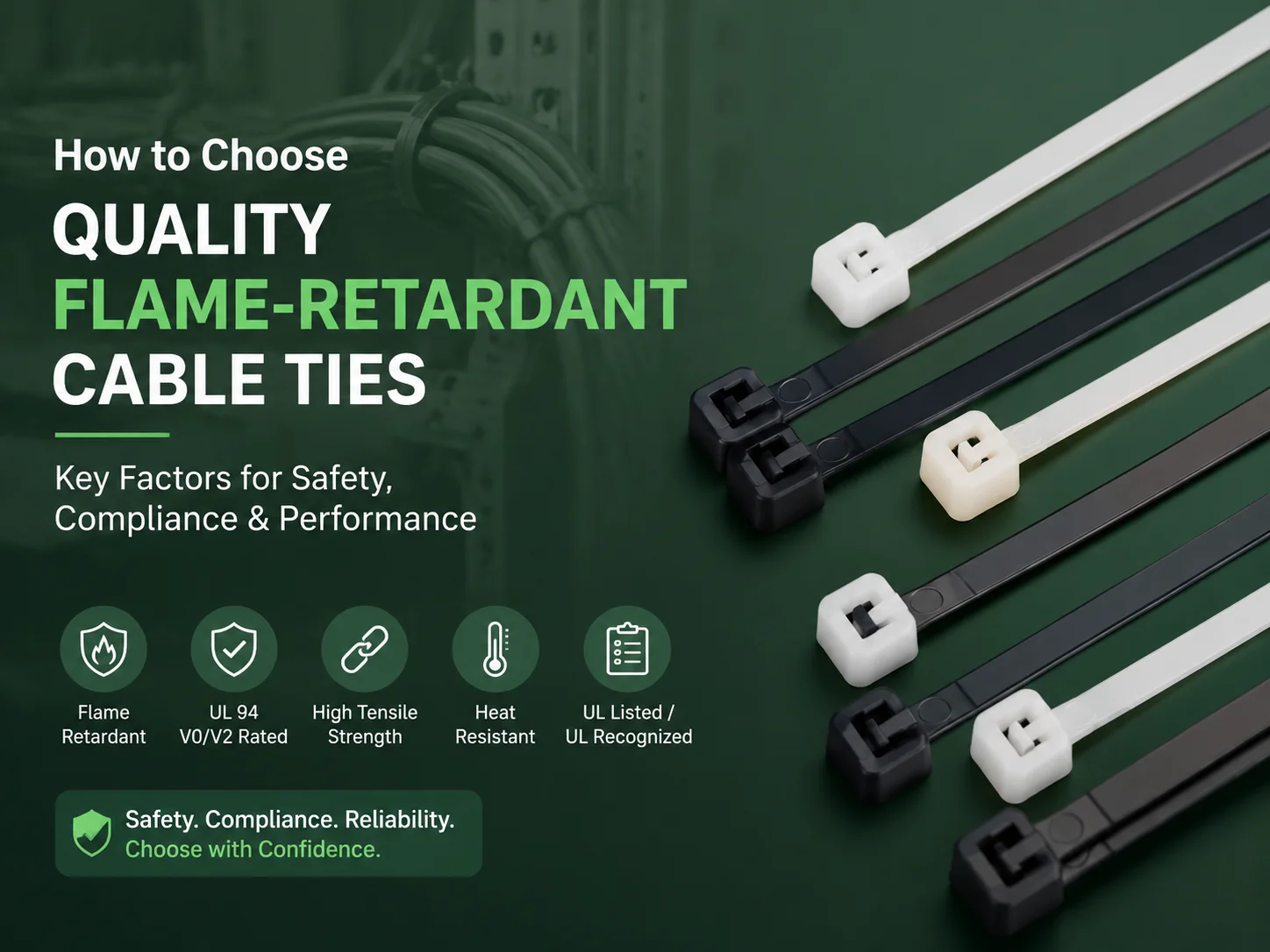
Choosing a Quality Flame-Retardant Cable Tie
To identify a flame-retardant cable tie product that meets its specifications as opposed to those that may only claim to meet their specifications, there are certain criteria to consider when making your selection:
- Verify the UL 94 rating and the component listing. Find the UL marking on the package and also see if the rating on the tie is either V2 or V0. If you are going to install a UL marked tie into an UL listed panel, ensure that the tie is either UL listed or UL recognized to be used in your application.
- Match the tensile strength to the mechanical load. There is no correlation between mechanical strength and flame resistance; some formulations provide a small reduction in mechanical strength. Choose a tie based on its rated bundle tensile strength as you would for a standard tie.
- Match the material to the operating temperature. A PA66 tie with standard flame-resistant properties can withstand temperatures of approximately (85°C). For locations where temperatures regularly exceed these levels (an example would be inside a motor terminal box), it is recommended that a heat-stabilized PA66 tie or an ETFE tie with a corresponding flame rating, be used.
- Consider the full fire‑safety picture. A cable tie is one part. Lots of other things, including cables being tied together, the conduit they are run through, and how the cable ties are held in place all affect the fire safety of an installation. If an application requires flame-retardant cable ties, specifying the tie is necessary, but not enough by itself to ensure it will be installed safely against fire hazards.
B2B buyers that purchase flame retardant cable ties for use in electrical OEM production, panel building or for large size installations care about the supply chain. The cable ties will need to be available in required sizes, colors (most often black or natural) and certification, and with consistent quality from batch to batch and with lead times that support project schedule. igoto supplies flame retardant nylon wire ties specifically to these markets, with UL ratings, dimensional consistency, and volume pricing that commercial and industrial buyers expect.
Major Manufacturers and Brands
The global market for flame-retardant cable ties includes several established manufacturers whose products are specified by engineers and stocked by electrical distributors:
- Panduit (USA): A leader in cable management, offering a full range of flame‑retardant ties with published UL 94 ratings, including V‑0 options, widely used in data centres and electrical panels.
- HellermannTyton (UK/Germany): A global manufacturer of cable management and identification products, with flame‑retardant ties meeting UL, CSA, and rail standards.
- ABB (Thomas & Betts) (USA/Switzerland): The Ty‑Rap brand of cable ties, including flame‑retardant versions, is a long‑established product line used in industrial and commercial construction.
- Legrand (France): Supplies cable management products, including flame‑retardant ties, particularly in European markets.
Alongside these multinationals, B2B suppliers like igoto provide an alternative route to market, offering flame‑retardant cable ties that meet the same standards and carry the same certifications, with a supply model that is built around the specific needs of OEMs, panel builders, and volume buyers: custom labelling, custom packaging, reliable lead times, and competitive bulk pricing.
Frequently Asked Questions
What is the difference between FR cable and FRT cable?
It is common for “FR” to be used to denote flame retardant materials whereas “FRT” is more widely recognised to identify a flame retardant treated item (like a plastic) or a flame retardant thermoplastic material such as cable ties that were made using an FR type of plastic; however. This subject matter will focus on whether or not the critical identifier (abbreviated by either FR or FRT) is the UL 94 rating (Class V2 or Class V0) or if it is the UL listing which establishes that it meets or exceeds the UL 94 test requirements.
What are the most durable heat resistant zip ties?
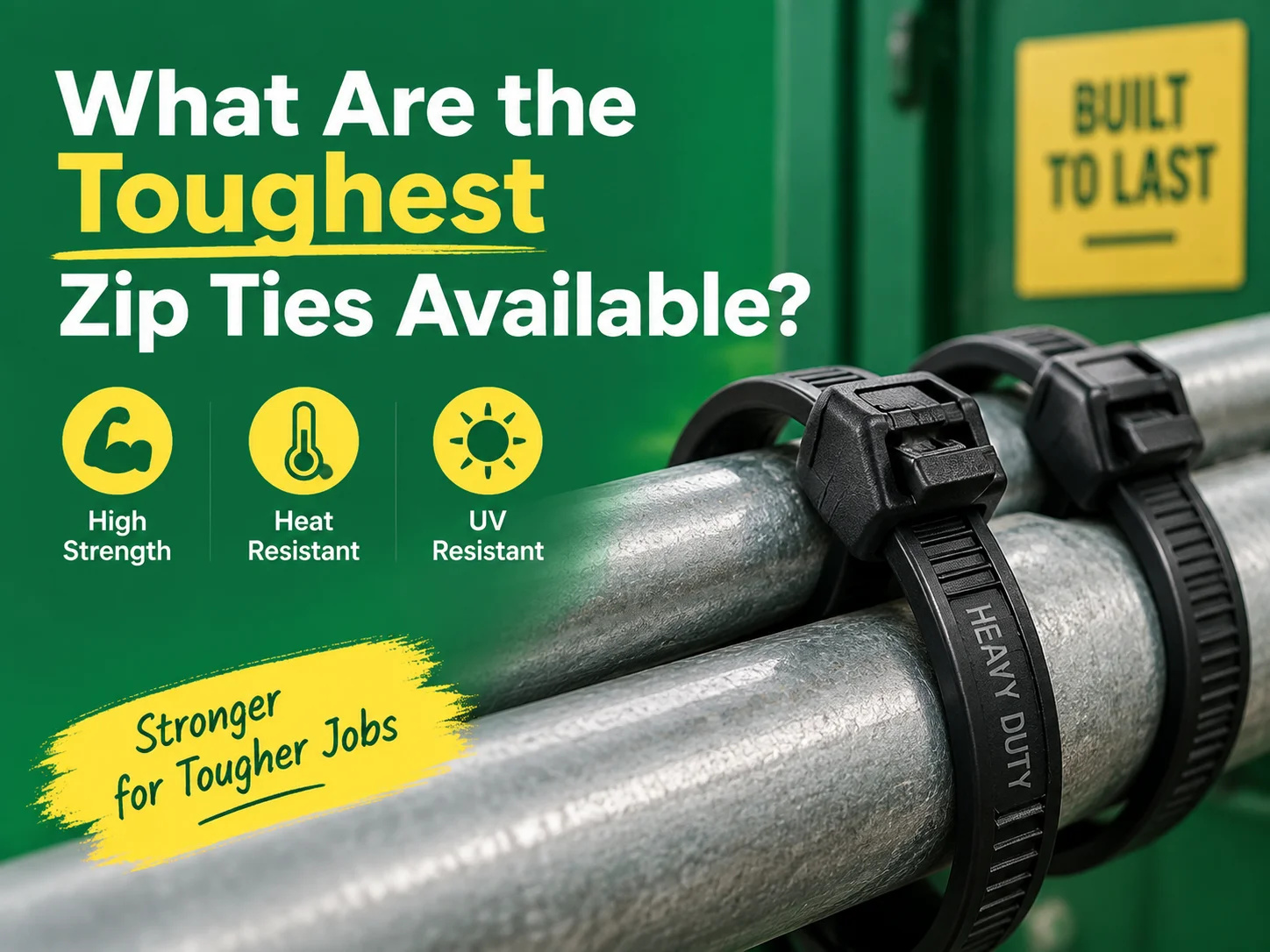
ETFE (Tefzel) cable ties The heat stabilisation of nylon ties helps to make them very heat resistant/durable material, with the ability to operate between room temperature and the maximum temperature of 170 to 125 degrees Celsius and have great resistance to UV, chemicals, and radiation.
What is a flame retardant cable?
Flame-retardant cables are wires designed to both prevent and extinguish flames within their jacket and insulation. Although flame-retardant cable ties serve the same purpose of fire safety as flame-retardant cables, they are separate products; however, flame-retardant cables and cable ties are commonly used in conjunction for installations regulated under various codes of practice.
What is the standard for fire retardant cable?
Fire resistant cables typically refer to many different standards; primarily IEC 60332 (flame propagation), UL 1581 & UL 1666 (vertical riser and plenum cable flame tests), and EN50266 (vertical flame spread). Cable ties generally reference UL 94 for materials and UL 62275 for cable management systems.
References
- UL Solutions — UL 94 Flammability Testing — Test criteria for V‑0, V‑1, and V‑2 ratings for plastic materials.
- Panduit — Flame‑Retardant Cable Ties — Product range with published UL 94 ratings and application guidance.
- HellermannTyton — Fire‑Safe Cable Management — Technical data on flame‑retardant products for regulated environments.
- NFPA 70 (National Electrical Code) — Requirements for component flame ratings inside electrical enclosures.
- Ericsson — GR‑63‑CORE (Telcordia) — Fire‑resistance requirements for telecommunications equipment.
A flame‑retardant cable tie is a small, inexpensive component that plays a role in a much larger fire‑safety system. In an electrical enclosure, it holds conductors in place. In a fire, it must do one more thing: refuse to become fuel. Specifying a tie with a verified UL 94 rating, matched to the temperature and mechanical demands of the installation, is a simple, low‑cost step that supports the compliance and the safety of the entire assembly. For the panel builder, the electrical contractor, and the procurement manager, igoto supplies flame‑retardant cable ties that meet those ratings, with the certifications and the reliable supply that a fire‑safe installation demands.