



How Strong Are Nylon Cable Ties?
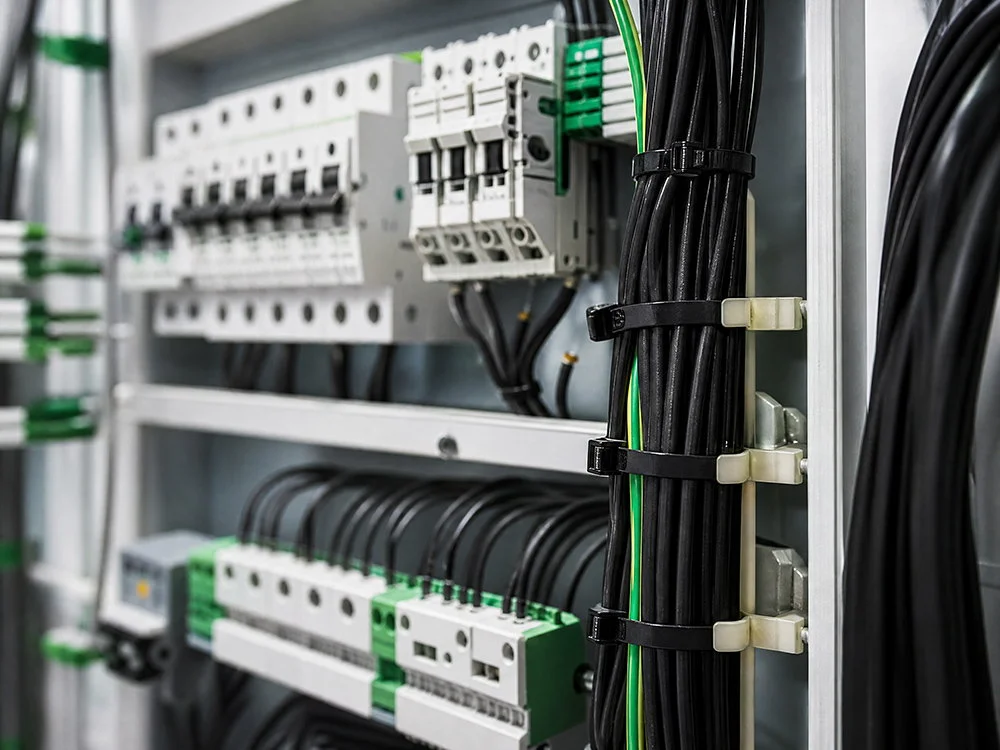
An armoured cable bundle weighing several hundred pounds can be hung from a cable tray with only one nylon (plastic) cable tie holding it in place. This cable tie performs as it should and holds the bundle in a secure and reliable manner. In addition, there are thousands of cable ties that have been used to hold fibre optic trunks and copper bundles in a secure manner throughout the data centre year after year. The question arises as to how much force is required to break a cable tie. The answer to this question is provided on the packaging of the cable tie: 18 lb., 50 lb., and 120 lb. Minimum tensile strength specifications represent the minimum hold of the cable tie; this is not simply an arbitrary value established for marketing purposes, but rather a minimum hold that has been tested and established as a standard for the strength of the cable tie. By understanding how the cable tie has developed its minimum hold strength, the limitations of this hold strength, and how to select the proper cable tie to support a specific load will assist an individual in using a cable tie in a manner that will result in a quality and trusted engineered fastening device.
How Nylon Cable Tie Strength Is Measured and What the Numbers Mean
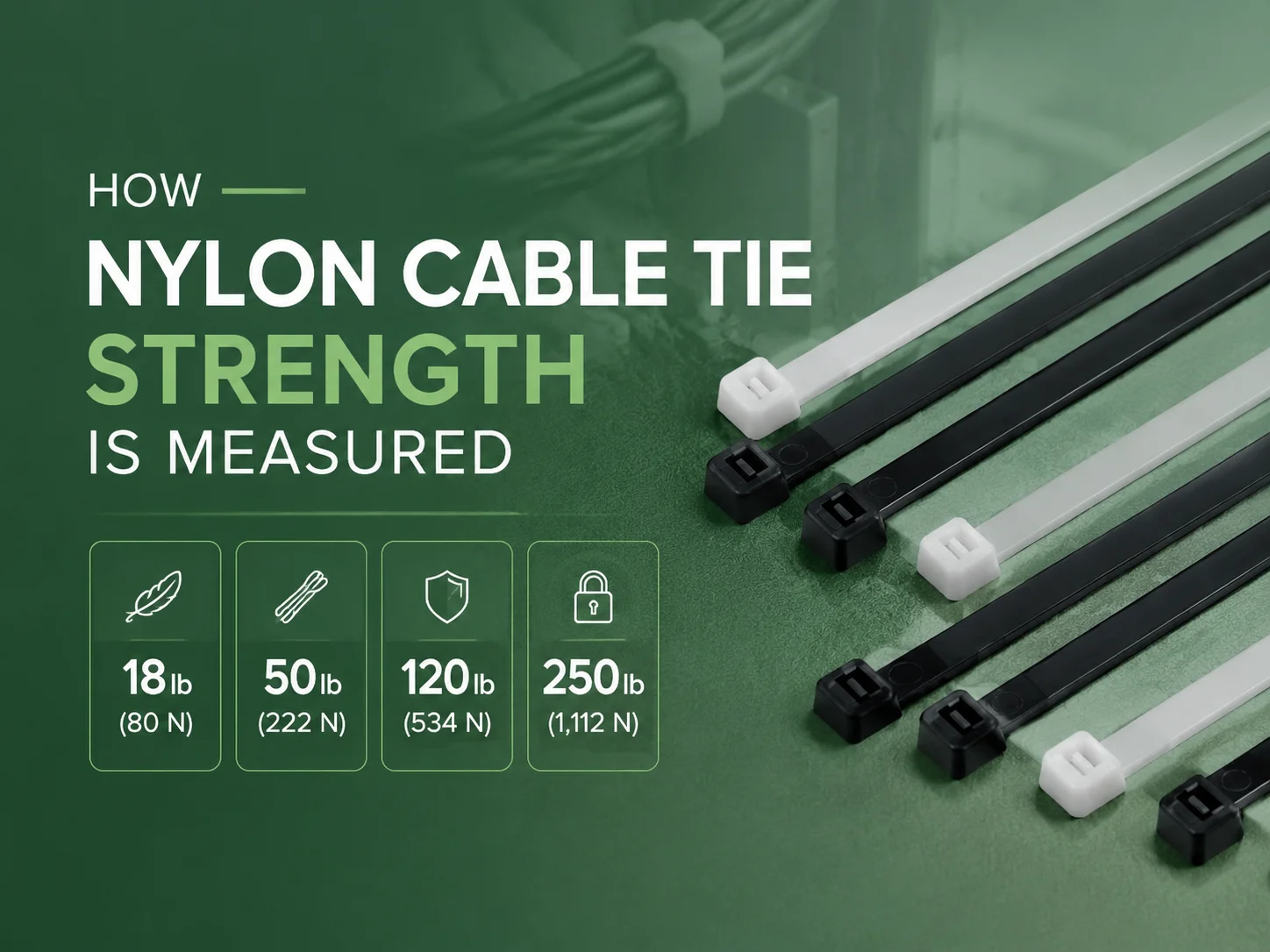
Nylon cable ties are rated according to their minimum tensile loop strength (the amount of force required to break a cable tie while being pulled taut). The tensile loop strength test method is standardized under UL 62275 and MIL-STD-23190. In this method, the cable tie is looped over a mandrel and the free end is drawn at a constant speed, while the force needed to break the free end is recorded. The rated tensile strength class (18 lbs, 50 lbs, 120 lbs, or 250 lbs) of any tie defines the minimum tensile loop strength that all ties in the lot must meet or exceed, but it does not define the upper limit of tensile loop strength for any tie (e.g., a 50 lb cable tie could break at 55 lbs to 60 lbs). The tensile strength of a cable tie is not only a function of how long the cable tie is, but also of the cross-sectional area (width and thickness) of the strap, so that a longer cable tie having the same width and thickness as a shorter cable tie would produce nearly the same tensile strength (the longer cable tie allowing for a larger total wrapped diameter of material).
The most common tensile strength categories and their typical applications are:
- 18 lb (80 N): Light‑duty bundling — a few Cat5e or Cat6 data cables, small instrument wiring, temporary bundling.
- 50 lb (222 N): The workhorse of electrical installation — standard power cable bundling, securing cables to tray, general panel wiring.
- 120 lb (534 N): Heavy‑duty — armoured cables, large‑diameter bundles, outdoor applications where wind and ice load are factors.
- 250 lb (1,112 N): Extreme‑duty — securing heavy cable risers, large‑diameter conduits, industrial applications where failure is not an option.
Why Nylon 6/6 Is the Material Behind the Numbers
The materials used in the production are also the determinant factor in regards to the strength of the nylon cable tie. The nylon material used for manufacturing cable ties is referred to as nylon 6/6 (polyamide 66) and is a semi‑crystalline engineering thermoplastic. Nylon 6/6 is one of the only thermoplastics to be made from long molecular chains of a thermoset resin. These long chains of nylon 6/6, when they are moulded under specific conditions, will form crystalline regions that are tightly packed in the finished part while being separated by amorphous regions. The result is that the crystalline regions account for the strength and stiffness of the nylon cable tie whereas the amorphous regions account for the flexibility of the finished product. When combined together, nylon 6/6 provides a tensile strength between 10,000 and 12,000 psi (based on the base resin) for the base resin itself. Then this strength is transferred to the finished product by way of the cross section area of the nylon tie. Nylon 6/6 also has a good resistance to creep. That is, it maintains its tension over a long period of time without slowly elongating or loosening; this is important for a fastening that is to be permanent.
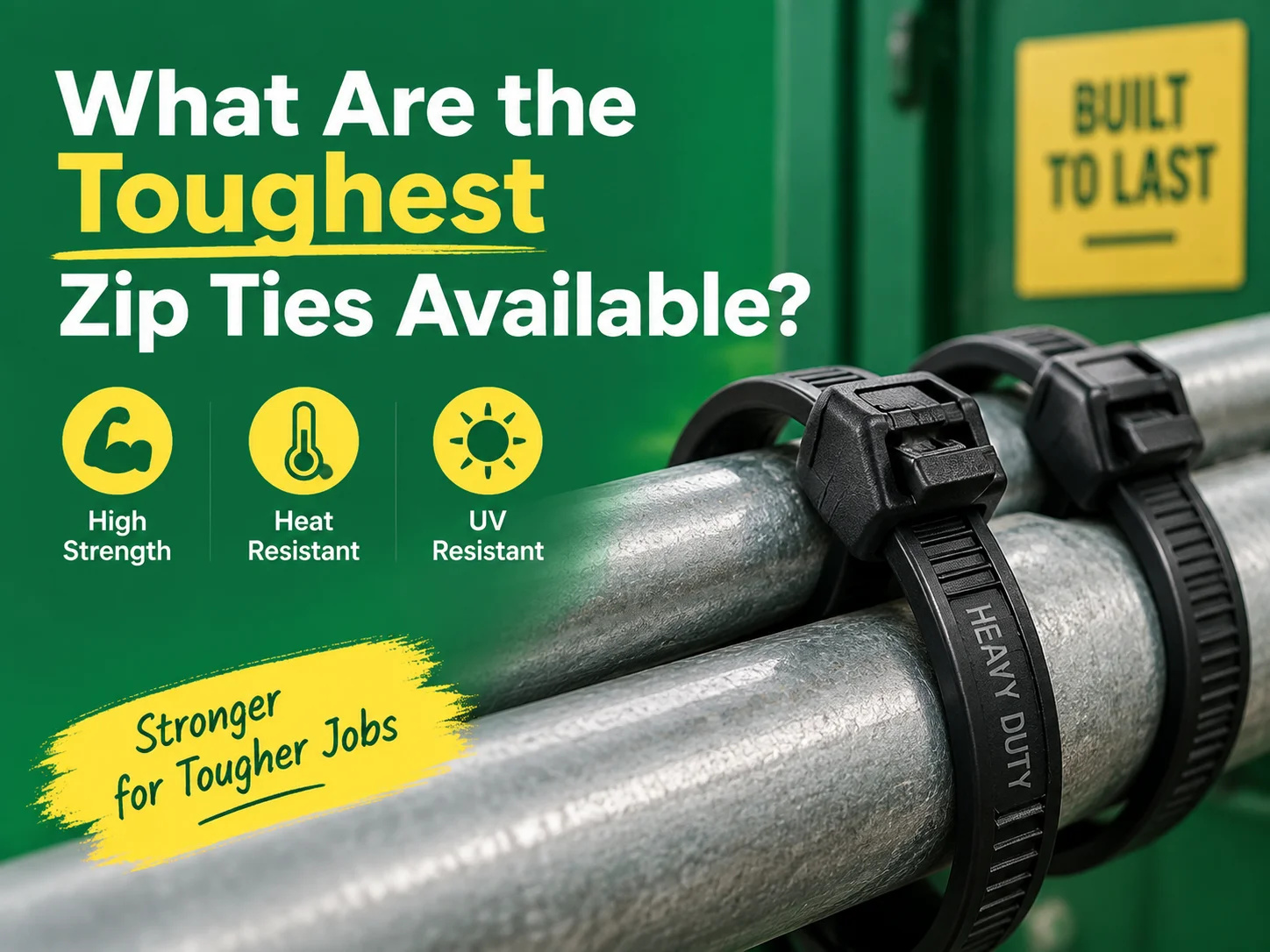
In addition to standard nylon 6/6, the modified nylon grades are more suitable when the environment puts greater demands on the product. High temperature heat-resistant nylon (typically referred to as HS) can operate up to 125C without becoming brittle. UV resistant nylon will typically be black due to the carbon black used in the stabiliser, and can resist UV degradation outdoors for many years. Flame retardant nylon is required for the use of ties inside of electrical boxes, and contains various additives that reduce the potential for combustion.
Each of these modifications affects the mechanical properties of the product, therefore a flame retardant nylon tie may exhibit slightly less (but not significantly less) tensile strength than standard nylon ties made from base resin with the same dimensions. This is why the strength of the product is measured on the modified/finished product and not the base resin. Materials scientists and manufacturers such as Panduit and HellermannTyton publish extensive technical data on how nylon properties translate into real‑world performance across their product ranges.
What Determines Whether a Nylon Cable Tie Is Strong Enough
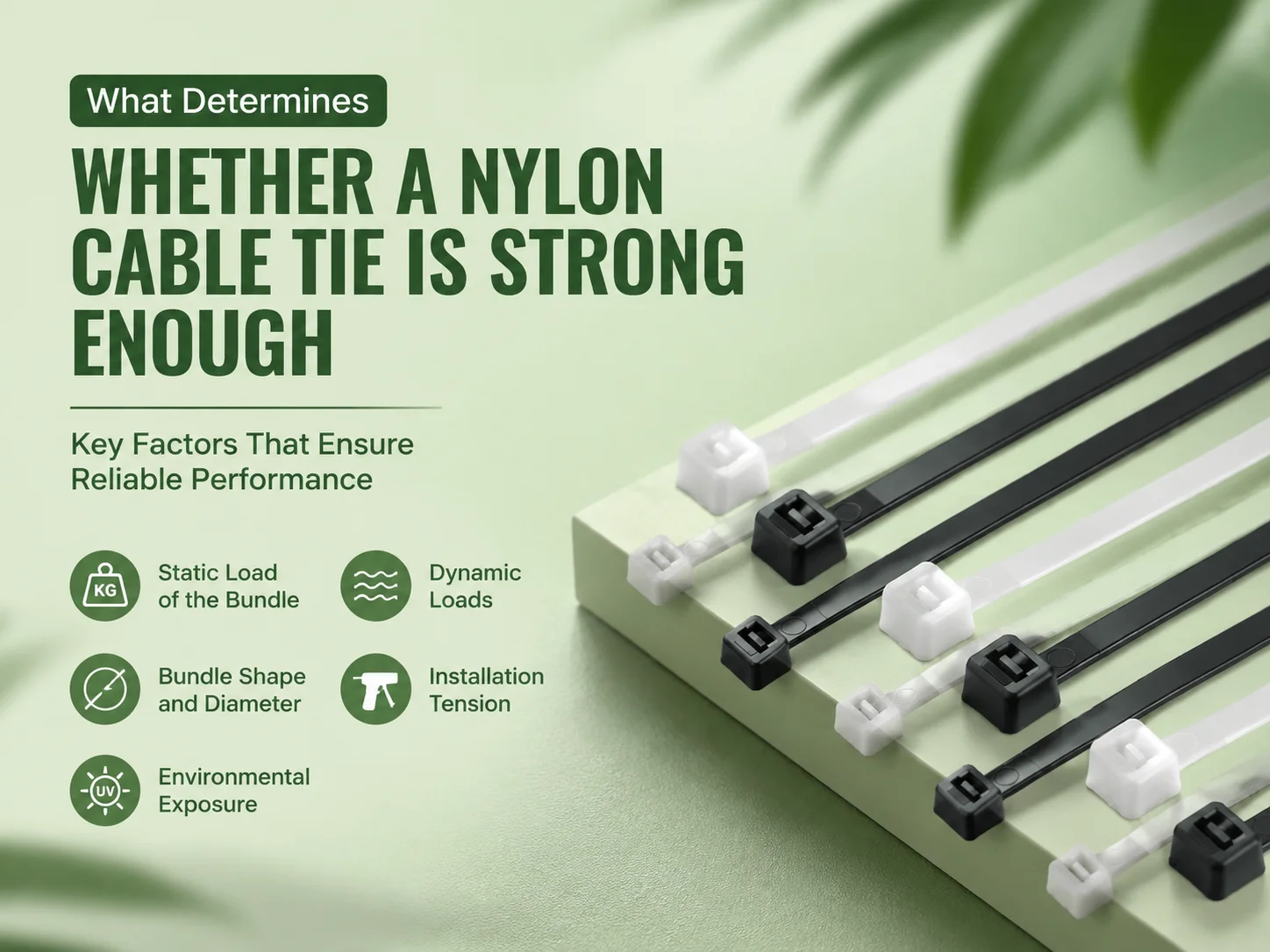
There are many factors that determine whether a cable tie will hold as rated and therefore, the rated tensile strength of a tie is just one part of the equation. For example, although a cable tie may have the necessary strength on paper the cable tie may fail when in service if the installation, selection or application is incorrect. Here are the greatest factors determining whether the tie will hold:
- The static load of the bundle. Each tie should be secure by having an appropriate rating for the combined weight of the secured and supported cables. A bundle weighing 40 pounds, hanging from one location, will snap if they have just an 18 pound tie to support them. An additional tie weighing 50 pounds would support the bundle (very close but no safety) at a maximum allowable load (without exceeding the maximum rated load).
- Dynamic loads. Wind, vibrations, and thermal expansion/contraction create added forces to the static weight of a structure. For example, when tying off cables to an outdoor rack, the peak load created by wind gusts can be many times greater than the weight of the cables themselves. Therefore, it is standard practice to incorporate a safety factor of 2:1 to 3:1 into any dynamic loading scenario.
- Bundle shape and diameter. When a tie is looped around a large and soft bundle, the forces exerted by the tie will be different than those that would be exerted if the tie were looped on a rigid and solid cylinder. Therefore, you want your tie to be long enough that the locking head will not push up against the side of the bundle at an acute angle (e.g., 12 degrees or less) and, as a result, weaken the engagement of the pawl.
- Installation tension. If a tie is too tightly pulled, the tie can be overworked as soon as it is installed, especially if the bundle expands with heat. By using a tensioning tool with consistent, calibrated tension, this variable is removed and all ties produced on a production line or installed at a jobsite are qualified alike when they are installed.
- Environmental exposure. If a 50 pound natural nylon tie is left outdoors, exposed to full sunlight for a year it can lose half of its strength. However, if you use a UV stabilized black tie of the same size, then it will keep most of its strength for years. The strength rating found on the packaging for the tie is based on how it was made and is not a good measure of what it will perform like in actual use when in a different environment from the intended one it was manufactured to work in.
How to Tell a Quality Cable Tie from a Substandard One
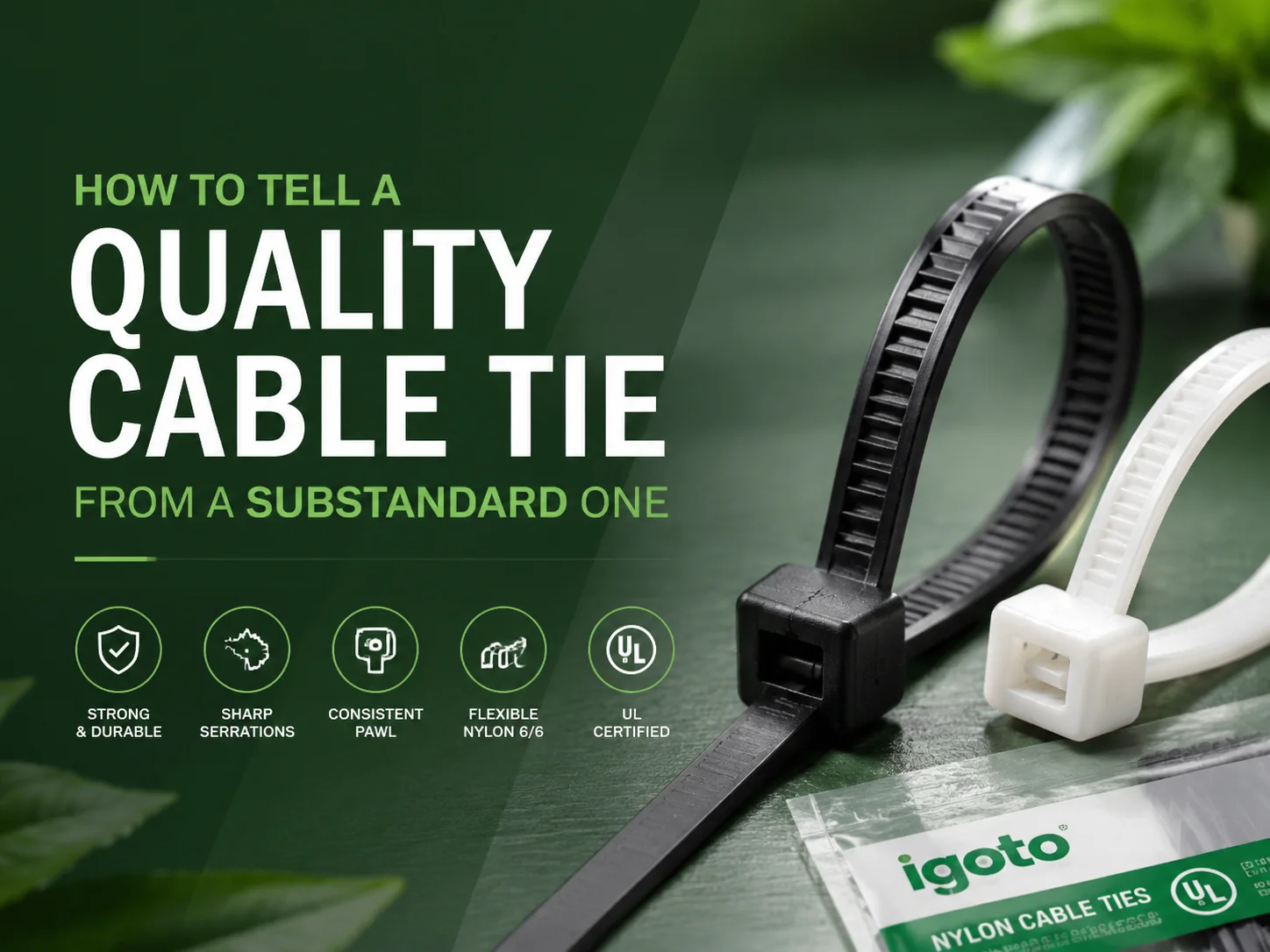
The difference between a quality nylon cable tie and a non-durable nylon cable tie often results from the manufacturing process. There are multiple visual and mechanical identifiers of the difference between the two items:
- Smooth, uniform surface. A well-made tie should be finished uniformly and free from burrs, sink marks, or color variations. Burrs present at the serrations may interfere with the functionality of the pawl, thus decreasing its effective tensile strength.
- Sharp, well‑formed serrations. Teeth should have an even and sharp working surface, but if the mould’s tool has been wore out it will determine that the serration produced will be either too shallow or rounded and will fail under pressure.
- Consistent pawl engagement. When the tail goes through the head, the pawl should operate smoothly and ratchet distinctly, so it feels rough if it doesn’t grab and it’s a defect in the manufacturing.
- Material that feels “alive”. A conditioned nylon 6/6 has some inherent flexibility. If a new nylon tie feels brittle, chalky, or very hard when removed from its packaging, that tie may be poorly made either because of a lower-quality or reprocessed materials used or because of an over-drying condition in manufacturing.
- Third‑party certification marks. An item that has been independently tested to confirm its indicated ‘tensile strength’ will carry a UL symbol on its packaging. This symbol denotes that an Item meets basic safety guidelines such as fire-resistance; where applicable, electrical properties; etc., are also addressed within the same testing program. On the other hand, if no UL symbol exists, there is still a very good chance of the item being tested for strength, fire-resistance; however, the end user must rely completely upon the manufacturer’s internal methods for quality assurance.
B2B suppliers, such as igoto, offer nylon ties that meet consistent manufacturing standards and certification. The unit price of a quality tie is fractional as a penny, yet the dollar value of one bad tie in a critical installation has multiples of that cost.
Frequently Asked Questions
How much weight can nylon cable ties hold?
Nylon cable ties “For example, a standard light-duty tie can hold 18lbs (8 kg), while an industrial heavy-duty tie can hold more than 250lbs (113kg). The rated tensile loop strength on the packaging gives the user the capacity of the tie-in pounds. It is recommended that user have a minimum of double the rated capacity or three times for hanging loads.”
How much force does it take to break a zip tie?
The amount of force it takes to break a zip tie is known as the minimum tensile loop strength of that type of zip tie: 18 lbs (light duty), 50 lbs (medium duty), 120 lbs (heavy duty) or 250 lbs (super duty). In most cases the breaking point will be slightly greater than the minimum rating for that type of zip tie, but in all cases the rated minimum tensile loop strength is the maximum holding strength for that zip tie.
What is the best material for cable ties?
Nylon 6/6 (PA66) The best available general-purpose material to use for making cable ties is polyamide (PA66) because it is strong, rigid, can withstand high temperatures, and is affordable. For outside applications a UV stable version of this material is used. When needed at extreme temperatures, either ETFE (a premium thermoplastic) or stainless steel will be selected as the cable tie material.
How long do nylon cable ties last?
Inside, nylon cable ties will typically last at least 20 years. Outside, a nylon cable tie’s life ultimately depends on how much sun it gets; a UV-stabilised black tie will last 5 to 10 years in a temperate climate, whereas a white (or non-UV stabilised) tie could become brittle in less than one year. As well as sunlight, you should consider how heat, moisture, and chemicals can also affect the longevity of the ties.
Does the colour of a cable tie affect its strength?
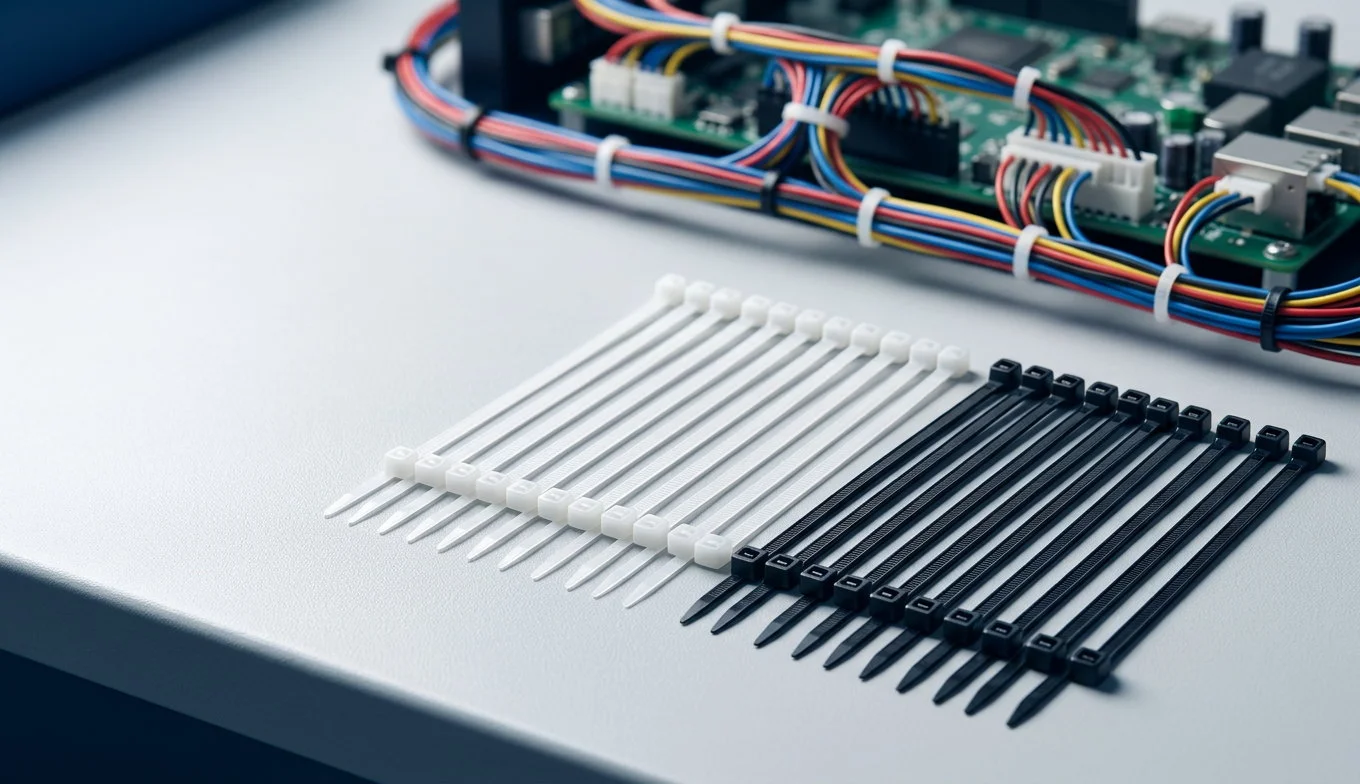
The strength of the tie is irrespective of its colour: a red 50 pound tie and a natural 50 pound tie (each of which have the same tensile rating) will have identical tensile ratings. However, black ties are UV stabilised, while the other colours will not maintain their outdoor strength for as long, therefore if a non-black tie is used outdoors, it will lose strength sooner even though both started with the same strength.
References
- UL 62275 — Cable Management Systems — Standard covering the testing and rating of cable ties, including tensile loop strength measurement.
- Panduit — Cable Tie Technical Data — Manufacturer tensile strength data and application guidance for nylon cable ties.
- HellermannTyton — Material Properties of Nylon 6/6 — Technical information on nylon 6/6 grades and their mechanical properties.
- American Chemistry Council — Plastics Division — Information on nylon and other engineering plastics, including mechanical and environmental performance.
How strong are nylon cable ties? The answer is printed on the bag: 18 pounds, 50 pounds, 120 pounds, 250 pounds. But the number is only as good as the material, the moulding, and the installation. A tie that is matched to its load, installed with the correct tension, and used within its environmental limits will hold for the life of the installation. A tie that is overstressed, installed poorly, or exposed to conditions it was not designed for will fail, sometimes without warning. igoto supplies nylon cable ties that meet their rated strength and carry the certifications that confirm it — because the tie that holds a bundle of cables is trusted, and that trust must be earned on every reel, in every bag, on every job.