

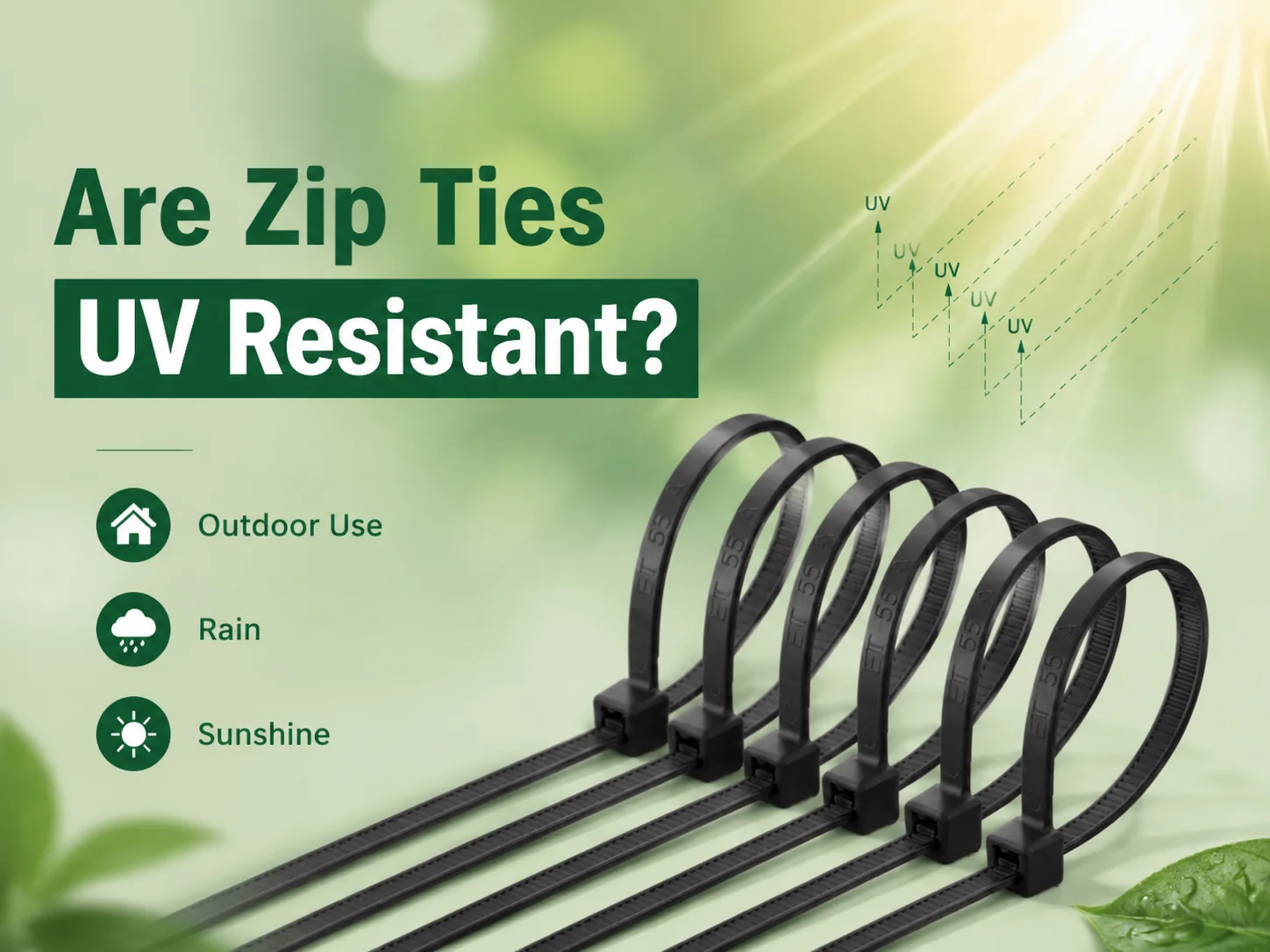
Are Zip Ties UV Resistant?
An installer at a solar farm in Phoenix was doing his usual inspection of the panels. While the cables appeared to be in order, the zip ties that held it to the mounting system were deteriorating. Upon touching one of the ties, it showed how brittle it had become. These ties were simply made of standard nylon and had been installed less than two years ago. Being exposed to the elements had broken down the material. The solution would have to involve replacing the ties with new black UV resistant ties at a much higher cost than if the proper ties were used from the very beginning. Understanding if zip ties are UV resistant is not an academic issue. It can be the factor separating a tie that can hold for a decade outdoors and one that fails in a season. The answer lies in the type of material and the UV stabilizing agents used by the manufacturer. Some zip ties are made for the sun, most are not.
What Makes a Zip Tie UV Resistant?
Regular nylon 6/6, which is used in most cable ties, is not UV-resistant. The ultraviolet rays, especially UV-A and UV-B rays that arrive at the Earth, break the chemical bonds in the nylon polymer chains in the process called photo-oxidation. Because of that, the chains become shorter, the material becomes harder, and the surface gets cracks. Effects of moisture and temperature change are speeding up this process. A nylon strand that is not stabilized can lose up to 50% of its strength after just a year of being used outdoors.
A zip tie that can resist UV rays is manufactured by including a chemical stabiliser when making nylon material used to produce tie. The main and most effective stabiliser is carbon black, which catches UV rays and works as a free-radical scavenger. As a result, these types of ties are almost always black because of the pigment. The stabiliser is mixed evenly throughout the entire material, so when any scratches or abrasion develop, the inside of the tie remains unaffected. Various studies from American Chemistry Council and technical publications from materials science universities show that carbon black is the strongest and most economic UV stabiliser for engineering plastics such as nylon.
Which Zip Ties Are UV Resistant?
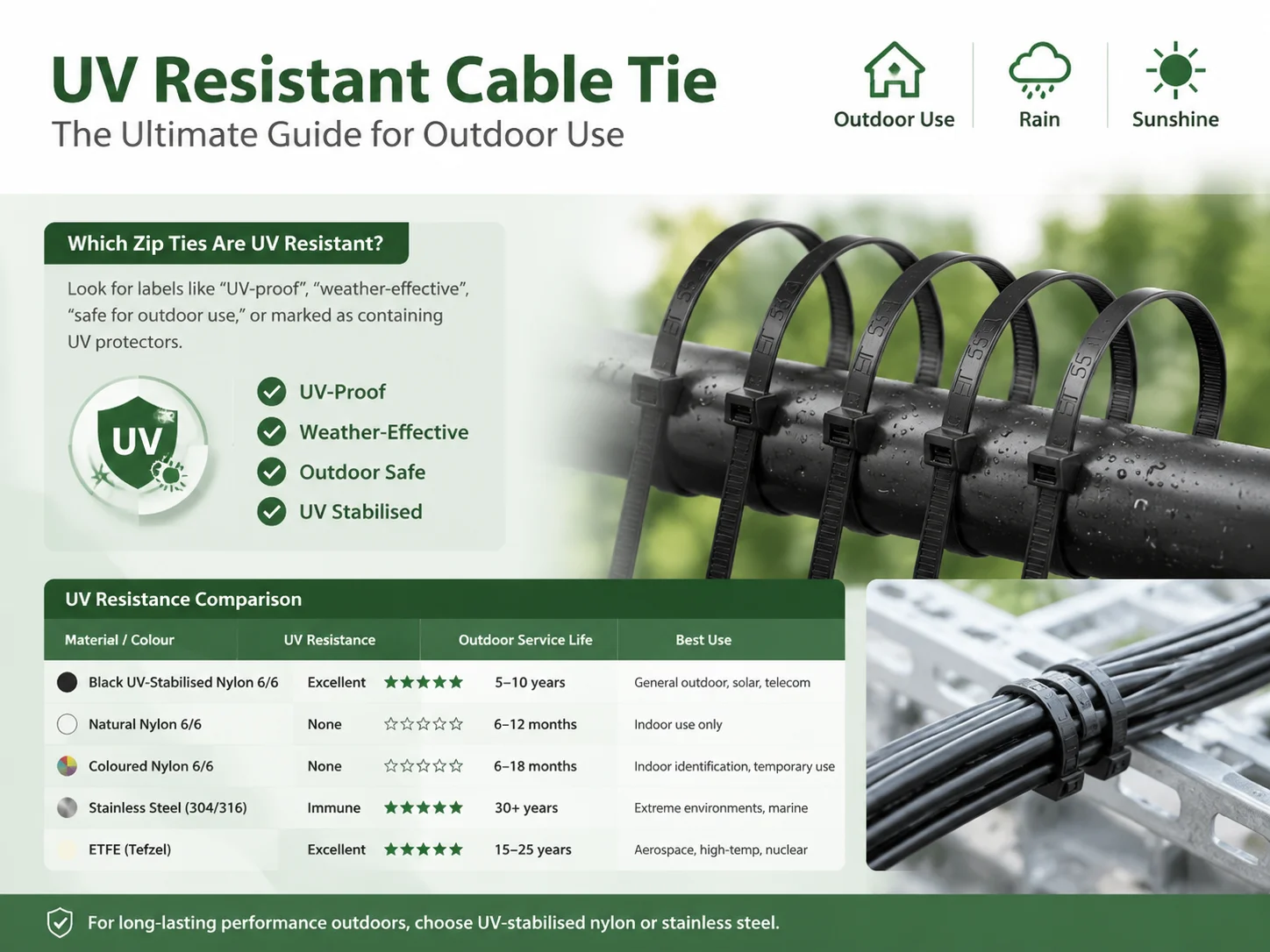
Not every black cable tie is UV-proof. The color black may originate from a pigment that does not help UV-protect. To know for certain, one must check the manufacturer’s product specifications. A cable tie marked as “UV-proof”, “weather-effective”, “safe for outdoor use,” or specifically stamped as containing UV protectors can be assured of its use outdoors. On the contrary, a cable tie marked only black without any UV information on the packaging cannot be assumed to be UV-protected. The table below summarizes the UV resistance of the most common cable tie materials and colors.
| Material / Colour | UV Resistance | Outdoor Service Life (Temperate Climate) | Best Use |
|---|---|---|---|
| Black UV‑Stabilised Nylon 6/6 | Excellent | 5–10 years | General outdoor electrical, solar farms, telecommunications |
| Natural (Uncoloured) Nylon 6/6 | None | 6–12 months before significant strength loss | Indoor use only |
| Coloured Nylon 6/6 (Red, Blue, Yellow, etc.) | None (unless specifically labelled as UV‑resistant) | 6–18 months | Indoor identification; temporary outdoor use |
| Stainless Steel (304 or 316) | Immune | 30+ years | Extreme environments, marine, chemical plants |
| ETFE (Tefzel) | Excellent (inherent) | 15–25 years | Aerospace, high‑temperature outdoor, nuclear |
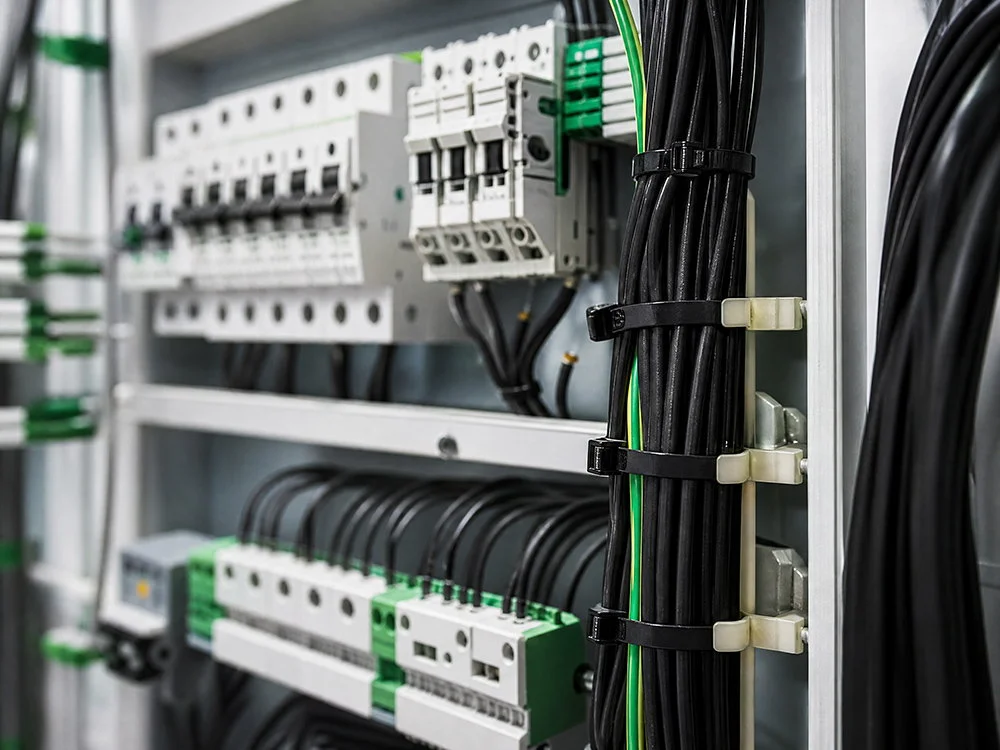
As the table shows, for the vast majority of outdoor applications — securing conduit to a cable tray, bundling low‑voltage cables on a rooftop, organising wiring in an outdoor junction box — a black UV‑stabilised nylon tie is the standard, proven choice. For environments where even the best nylon would eventually degrade, or where the tie must last the full life of the installation without replacement, stainless steel is the answer. Our UV‑resistant cable tie product line is manufactured from UV‑stabilised nylon 6/6, with the carbon‑black protection that outdoor service demands, in sizes from 4 inches to 20 inches and tensile strengths from 18 to 120 pounds.
How Long Will Zip Ties Last in the Sun?
The outdoor lifespan of an ultraviolet-protected zip tie varies from some years to many years, depending on weather conditions. In temperate climates with moderate temperatures, for example, the UK, the northern part of the USA, and central Europe, a black zip tie made from UV-stabilised nylon can last from five to ten years and remain strong enough for its intended purpose. In the case of the desert, where temperatures are very high, for instance, Arizona, the Middle East, and inland Australia, the working lifespan can be reduced to three to five years. If we take the ocean into account, the effect of salt water will make the lifespan even less. Manufacturers test the quality of their UV-stabilised zip ties using accelerated weathering tests as specified in many standards such as ASTM G154 and ISO 4892-2 that allow to make tests with the help of xenon-arc or fluorescent lamps simulating years of outdoor exposure in several weeks. A zip tie with this test result is considered as having been properly designed for outdoor facilities.
How to Identify a UV‑Resistant Cable Tie
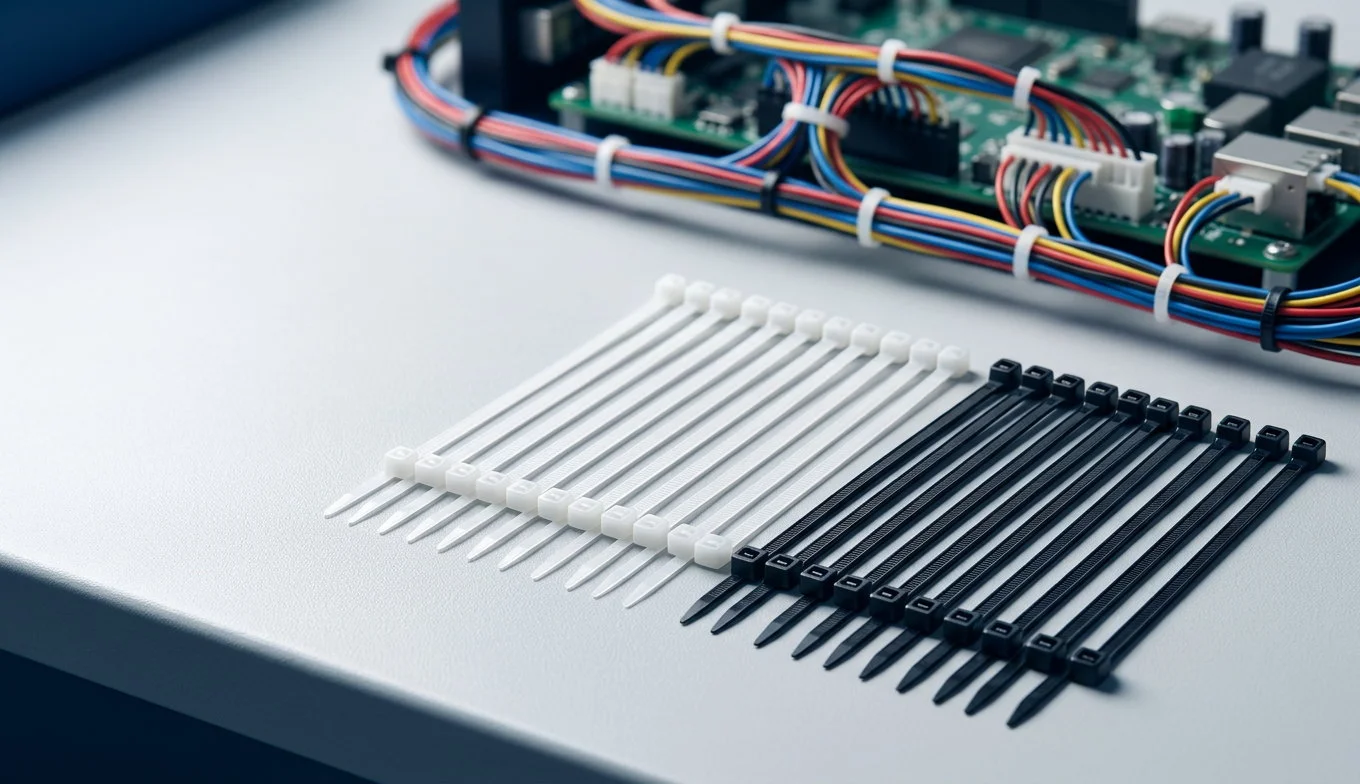
It is easy to spot authentic UV-resistant cable ties if one is aware of what to check. The retail package or product data information would mention being UV resistant, weather resistant, or specifically designed for outdoor use. The package would also indicate that the material is made from UV-stabilised nylon 6/6 or any other similar type of material. The actual tie will be completely black, without mix in the colour. If a tie appears black on the surface only and any other light shade is visible from the inside after it is cut, it means that it is not UV-stabilised, which means that the pigment has not been incorporated in the material. If the product specification does not mention its UV resistance, one must assume that it is only meant for indoor use, and the colour does not matter anymore.
Indoor vs. Outdoor: Choosing the Right Tie for the Job
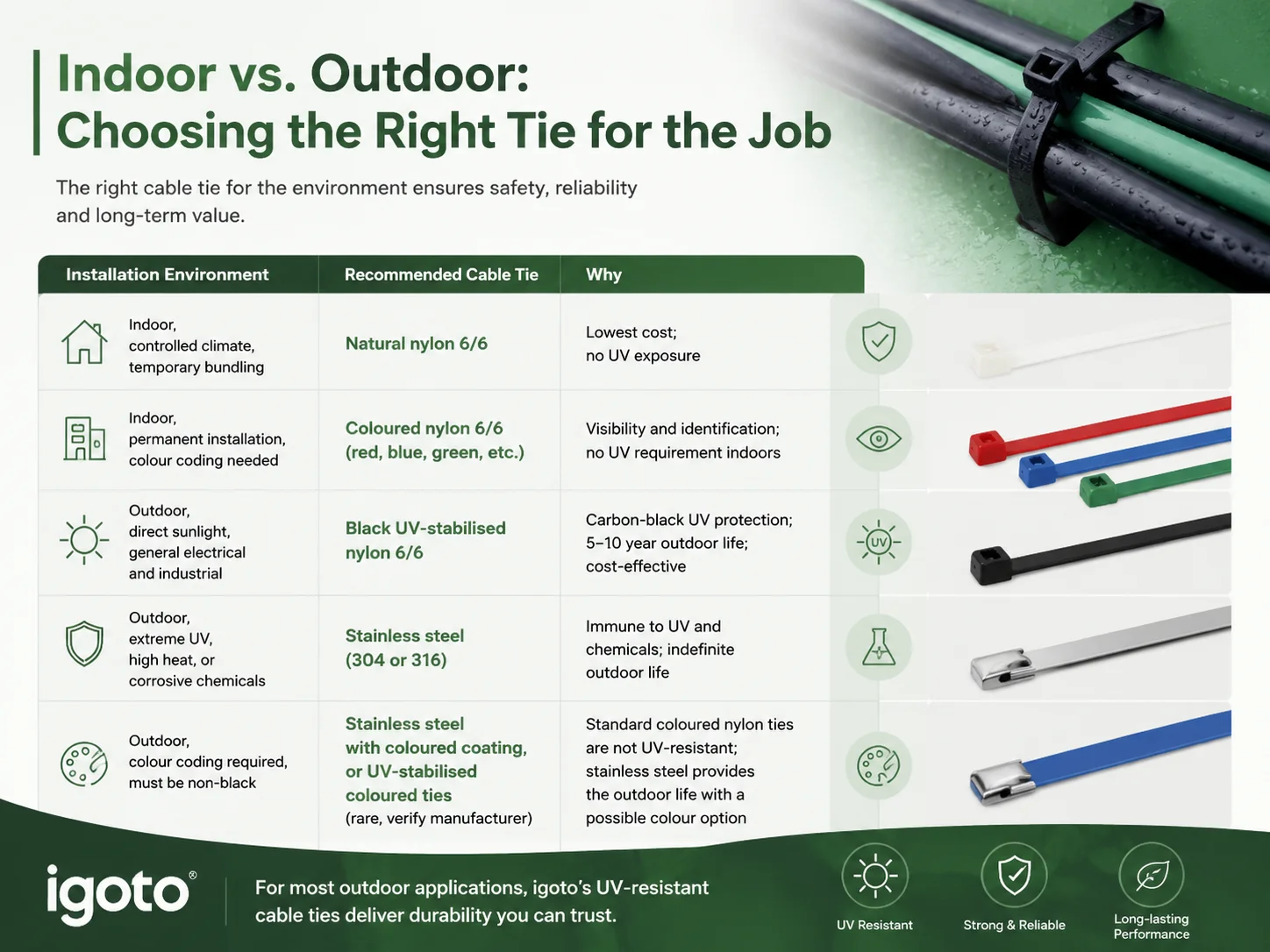
When it comes to the installation of a zip tie, it is easy to choose between an indoor or an outdoor option, but the results of making the wrong choice can remain hidden for months or years. Here’s a quick decision guide.
| Installation Environment | Recommended Cable Tie | Why |
|---|---|---|
| Indoor, controlled climate, temporary bundling | Natural nylon 6/6 | Lowest cost; no UV exposure |
| Indoor, permanent installation, colour coding needed | Coloured nylon 6/6 (red, blue, green, etc.) | Visibility and identification; no UV requirement indoors |
| Outdoor, direct sunlight, general electrical and industrial | Black UV‑stabilised nylon 6/6 | Carbon‑black UV protection; 5–10 year outdoor life; cost‑effective |
| Outdoor, extreme UV, high heat, or corrosive chemicals | Stainless steel (304 or 316) | Immune to UV and chemicals; indefinite outdoor life |
| Outdoor, colour coding required, must be non‑black | Stainless steel with coloured coating, or UV‑stabilised coloured ties (rare, verify manufacturer) | Standard coloured nylon ties are not UV‑resistant; stainless steel provides the outdoor life with a possible colour option |
For the installation workers and purchasers looking for an effective and economical fastening solution, igoto’s UV-resistant cable ties offer the black, carbon-black stabilized nylon material that fits well in their work environment. For harsh environments, our guidance on other options points to the use of steel and other materials that provide more benefits than nylon.
Frequently Asked Questions
Which zip ties are UV resistant?
Black UV‑stabilised nylon 6/6 zip ties that can resist UV. The defender is the black carbon pigment. Only nylon types that have the indication of being “UV resistant” or “outdoor rated” on the package can be used outside. The zip ties made from stainless steel possess an innate immunity to UV.
How long will zip ties last in the sun?
In a temperate climate, a UV‐resistant black nylon zip tie has an estimated lifetime of between 5 and 10 years, but in a desert climate only 3 to 5 years. Natural or coloured nylon wire ties that are not UV stabilised will start to become brittle and weak in the sunshine after 6 to 12 months.
Can zip ties be used outside?
Certainly, but only if it is UV-resistant. Black UV-stabilised nylon ties and stainless steel ties are appropriate for outdoors. Natural or coloured nylon ties that are not UV-stabilised deteriorate quickly and should not be used outside.
What color plastic is most UV resistant?
Black is the most ultra-violet resistant pigmentation as it utilizes carbon black pigments, which are also an efficient UV stabilizer. This quality also pertains to the nylon cable ties and other types of engineering plastics that are outdoors applications. The pigments of other colors like white, natural, red, blue, and yellow lack this property without application of an additional stabilizer.
References
- American Chemistry Council — Plastics Division. Information on UV stabilisation of engineering plastics and the role of carbon black in outdoor durability.
- Panduit — Outdoor Cable Ties and Weathering Data. Manufacturer of UV‑stabilised nylon cable ties with published accelerated weathering results.
- HellermannTyton — Cable Management Products. Global manufacturer of cable ties with outdoor‑rated options and technical data on UV resistance.
- ASTM G154 — Standard Practice for Operating Fluorescent Ultraviolet (UV) Lamp Apparatus for Exposure of Materials. The test standard used to evaluate the UV resistance of plastics, including cable ties.
The question are zip ties UV resistant has a simple, practical answer: only the ones that are built to be. A black, UV‑stabilised nylon cable tie, manufactured by a reputable supplier and tested to recognised weathering standards, will hold for years in the sun. A natural or coloured tie, or a black tie with no UV claim on its packaging, is an indoor product. The solar farm in Arizona learned that lesson at the cost of a full reinstallation. Choosing the correct tie at the outset — matching the material to the environment — is one of the simplest and most cost‑effective decisions in any outdoor electrical or industrial installation. igoto supplies UV‑resistant cable ties across the full size range, because the tie that holds a cable in the sun should be as durable as the cable it secures.