


What Plastic Zip Ties Last the Longest?
Upon observing the cable bundles over his head, a data center manager in Phoenix found something distressing. The standard nylon white zip ties installed only 18 months ago began breaking under slight pressure and had turned yellow and brittle. Since these zip ties were not UV resistant, he replaced them with black UV-stabilized nylon zip ties at a significant cost due to labor and downtime. The professional learned a valuable lesson that every installer would eventually have to learn: not all plastic zip ties are the same and the longest-lasting ones are the ones made with suitable materials for particular environments. The following guide will help you choose plastic ties that work best in specific conditions.
What Determines the Lifespan of a Plastic Cable Tie?
The lifespan of a plastic cable tie cannot be condensed into one figure. Four elements govern the lifespan of the tie: the base polymer, the additives (notably UV and heat stabilizers), the mechanical load, and the environment, including sunlight, thermal extremes, moisture, and other chemicals. While a nylon 6/6 tie guarantees a lifespan of twenty years in a cool, dark, dry interior room, it may fall apart in six months if placed on a flat roof in sunshine. Knowing each of the elements is important for making the right choice when selecting the tie material.
The Contenders: Plastic Cable Tie Materials Compared
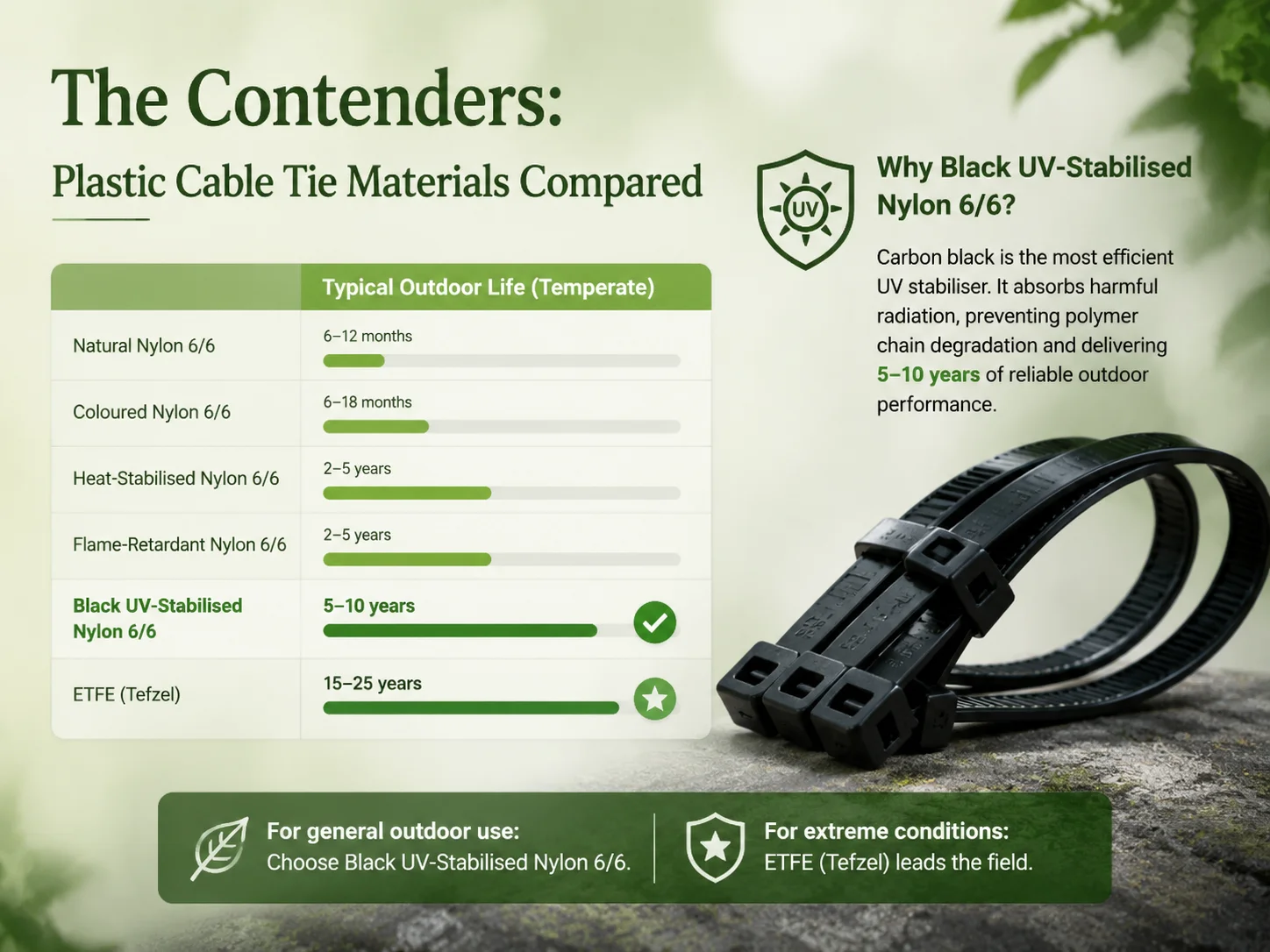
Several plastic materials are used to manufacture zip ties, each with a distinct service‑life profile. The table below ranks them from shortest to longest typical lifespan in a temperate outdoor environment.
| Material | Typical Outdoor Life (Temperate) | Max Continuous Temperature | UV Resistance | Best Use |
|---|---|---|---|---|
| Natural (uncoloured) Nylon 6/6 | 6–12 months before significant strength loss | 85°C (185°F) | None | Indoor, temporary, or short‑term general‑purpose bundling |
| Coloured Nylon 6/6 (Red, Blue, Yellow, etc.) | 6–18 months | 85°C (185°F) | None (unless specifically labelled) | Indoor identification and colour coding |
| Heat‑Stabilised Nylon 6/6 | 2–5 years (if also UV‑stabilised; otherwise similar to natural) | 125°C (257°F) | Only if black and UV‑stabilised | High‑temperature enclosures, engine bays, industrial ovens |
| Flame‑Retardant Nylon 6/6 (UL 94 V‑2 or V‑0) | 2–5 years (if also UV‑stabilised; check manufacturer) | 85–105°C (185–221°F) depending on grade | Only if black and UV‑stabilised | Electrical panels, public buildings, transportation |
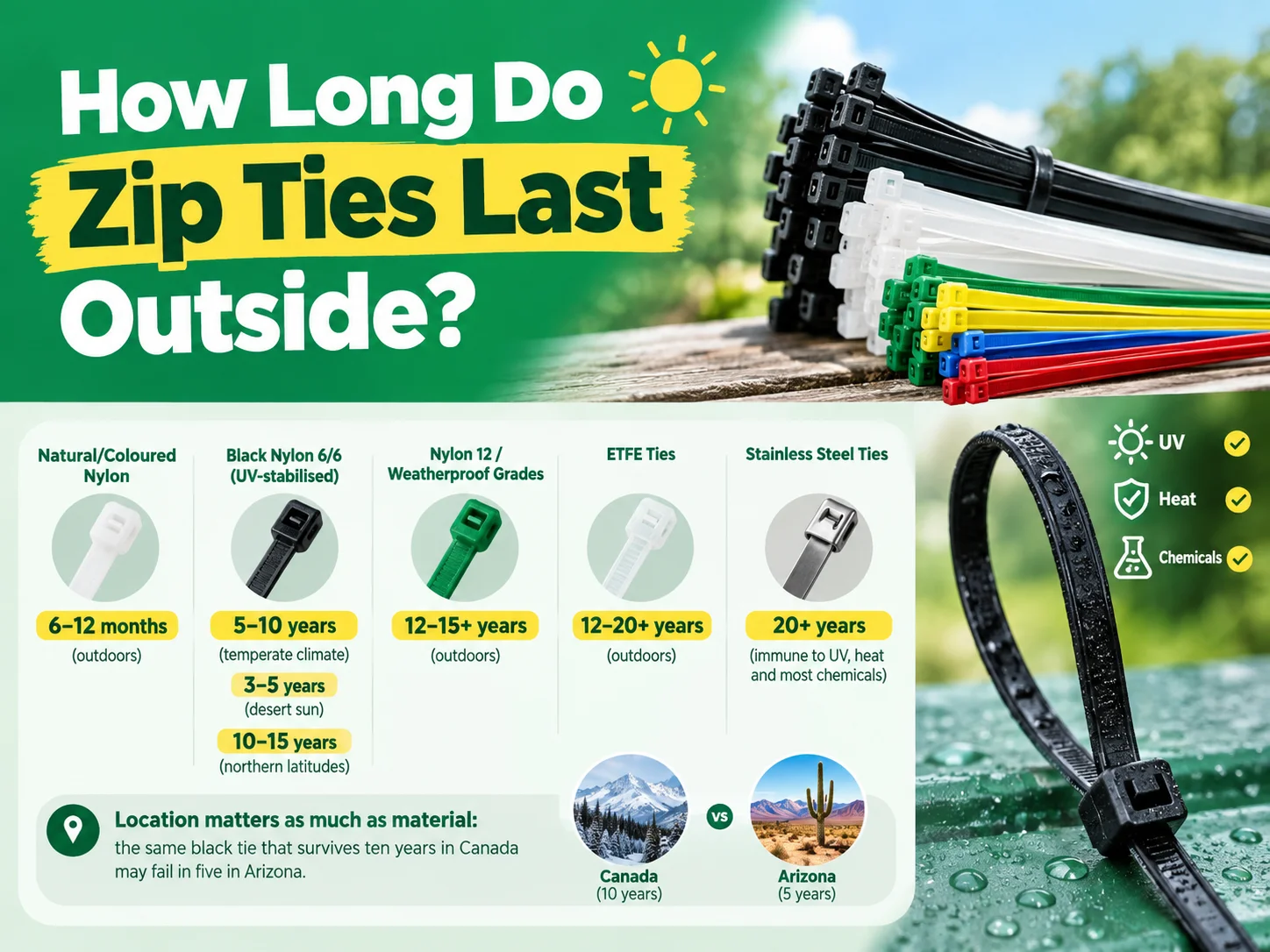
| Black UV‑Stabilised Nylon 6/6 | 5–10 years | 85°C (185°F) | Excellent (carbon‑black stabiliser) | The standard outdoor plastic cable tie — solar farms, telecom, general outdoor electrical |
| ETFE (Tefzel) | 15–25 years | 170°C (338°F) | Excellent (inherent) | Aerospace, nuclear, high‑temperature outdoor, extreme chemical environments |
According to the information provided in the table, black UV protected nylon 6/6 is the most durable plastic material used in manufacturing cable ties meant for general outdoor applications while ETFE or Tefzel lead in the field of production of cable ties that are supposed to be used in certain extreme conditions. Besides, carbon black does not serve only as a pigment for black nylon UV cable ties; it is by far the most efficient UV stabilizer that absorbs harmful radiation preventing polymer chain degradation, which makes Outdoor cable ties black in the vast majority of cases. For a deeper dive into the chemistry and the testing behind this, our article on why UV‑protected cable ties matter outdoors covers the science and the standards.
What About Stainless Steel? (The Non‑Plastic Answer)
There is no plastic zip tie that can sustain itself outdoors longer than a stainless steel cable tie. Stainless steel (Type 304 or 316) is not subjected to damage from UV rays, it does not get brittle over time, and it resists corrosion for many decades. For the most difficult conditions — oil rigs, solar farms in the desert, chemical factories — a stainless steel tie is virtually eternal. It is pricier than nylon and requires a separate tension tool to tighten it, apart from needing to be handled with care since cut ends are sharp. However, when it comes to longevity, stainless steel is definitely the leader and it wins over plastic. Our guide on alternatives to cable ties covers stainless steel and other non‑plastic fastening solutions in detail.
Why Are Nylon Zip Ties the Most Common Long‑Life Plastic Choice?
Nylon 6/6 is the leading option when it comes to plastic cable ties that have a long lifespan due to its high melting point, good tensile strength, resistance to creep, chemicals, and abrasions, and a price that makes it feasible for industrial-scale production. Choosing the right grades of nylon 6/6 for UV and heat protection will lead to reliable ties that last a decade or more. Even though it cannot fully compete with stainless steel in durability, nylon 6/6 is much cheaper, lighter, non-conductive, and simpler to use. This is the reason why most outdoor installations use black nylon 6/6.
How to Choose the Longest‑Lasting Zip Tie for Your Job
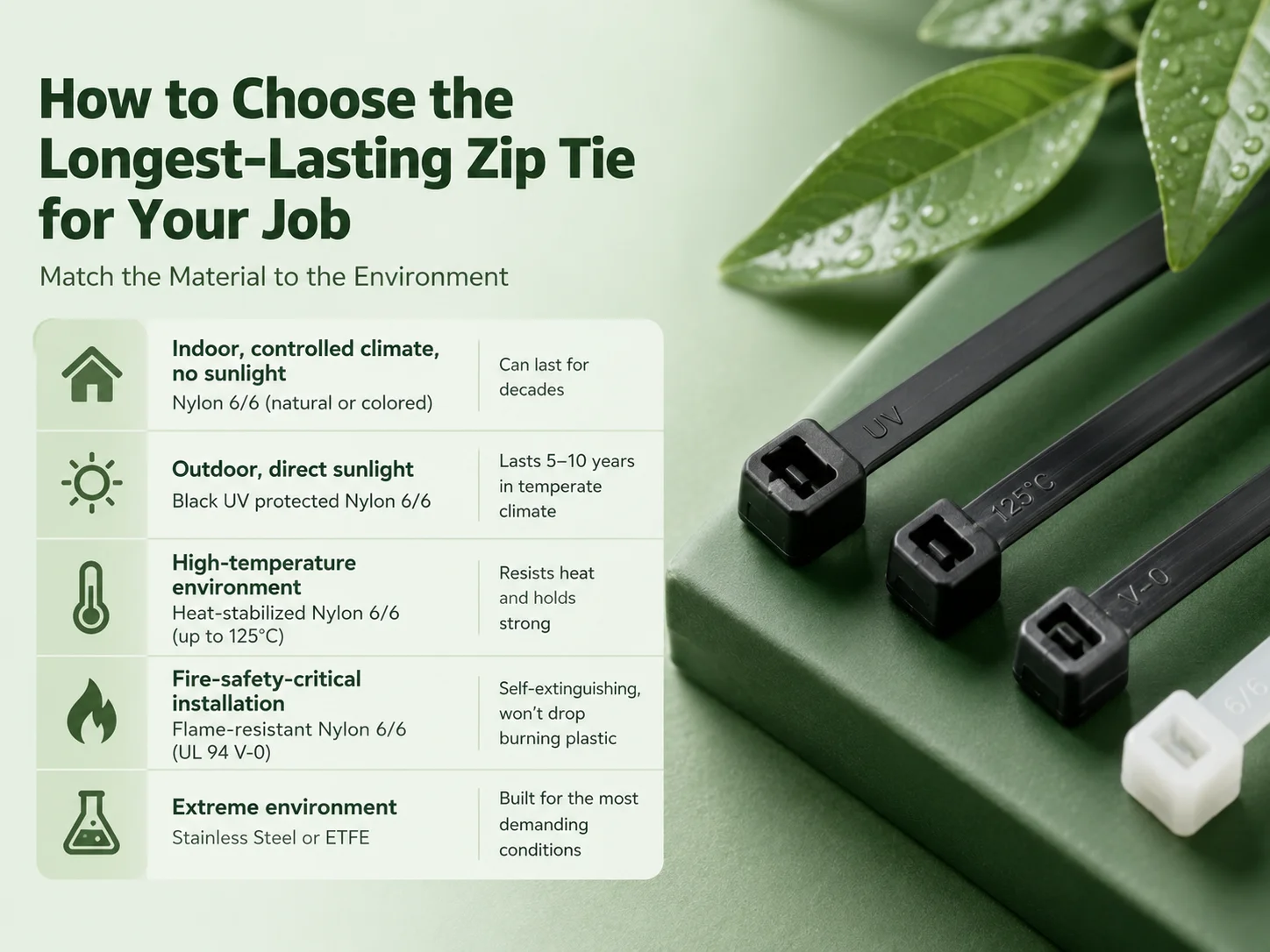
Choosing the right long-lasting plastic zip tie involves selecting the proper material for the intended environment, as well as the weight to be carried. The decision-making process is quite clear-cut.
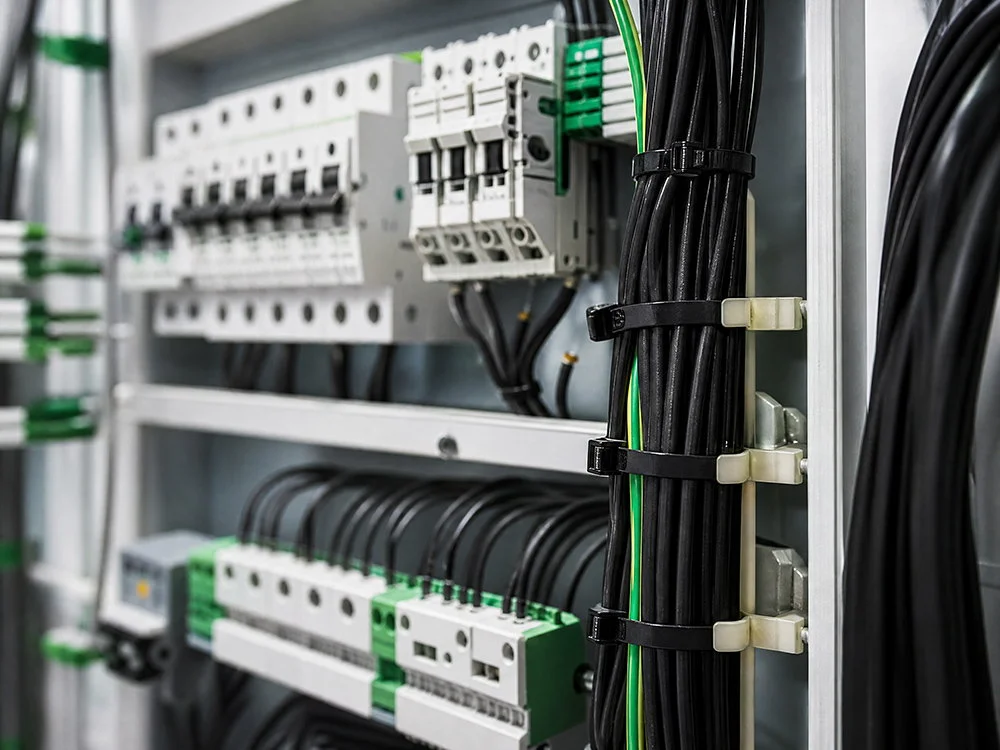
- Indoor, controlled climate, no sunlight: Nylon 6/6, either natural or colored, will suffice. It can last for decades inside an electrical panel that is cool and dry.
- Outdoor, direct sunlight, general electrical and industrial: Black UV protected nylon 6/6, this is the prime option for more outdoor applications, making sure that it lasts for a period of around 5 to 10 years in a temperate climate. The range of UV resistant zip ties by igoto has been designed for such conditions, with the use of carbon black which guarantees the required level of protection when used outdoors.
- High‑temperature environment (engine bay, industrial oven, near a motor): Heat-stabilized nylon 6/6 is rated to a maximum performance temperature of 125°C. Regular nylon material becomes less durable and breaks sooner when subjected to high heat.
- Fire‑safety‑critical installation (electrical enclosure, public building, rail vehicle): Nylon 6/6, which is flame-resistant and rated UL 94 V-0. This material is capable of self-extinguishing and will not drop burning plastic from it.
- Extreme environment (offshore, chemical plant, aerospace, decades‑long outdoor exposure): Either stainless steel or ETFE can be ascertained in this case. While these materials are not strictly plastic in the conventional sense, they are the solutions that come into play when plastic’s limitations have been surpassed.
Always check the specifications provided by the manufacturer. Just because a cable tie is black, it doesn’t mean it’s UV resistant, and the fact that a cable tie is called a heavy-duty tie doesn’t mean it’s heat-stabilized. Always check the exact material and test standards (e.g. ASTM G154 for UV weathering). For instance, some of the biggest producers such as Panduit and HellermannTyton offer specification sheets which can help you check the material and stabilizer used.
Common Misconceptions About Long‑Lasting Zip Ties
- “Black ties are always UV‑resistant.” Not necessarily correct. There are some black ties made using non-stabilized dyes. Only a tie that is specifically labelled as UV-protected can be used in an open environment.
- “A thicker tie lasts longer outdoors.” While thickness adds to the tensile force, it doesn’t stop UV breakdown. Hence, even a thick nylon natural tie will lose elasticity from the sun. It is the stabilizer, which is responsible for lifetime in outdoor applications, not the area.
- “Nylon is nylon — any brand will last the same.” The long-term performance is affected by the quality of the base resin, purity of the stabilizer package, and consistency of the molding process. A tie from a reputable brand name manufacturer with proper published tests will have better longevity than a no-brand name tie with the same nominal materials.
Frequently Asked Questions
What are the most durable zip ties?
Regarding plastic zip ties, the black UV-stabilized nylon 6/6 is the most durable for normal outdoor purposes, while the most durable for extreme heat, chemicals and long-term outdoor jobs is ETFE (Tefzel). In terms of durability, stainless steel ties are superior overall, although they are not actually plastic.
What zip ties won’t break?
While no zip tie is truly break proof, stainless steel ties offer the highest tensile strength and are resistant to both UV rays and heat. Among plastic ties, heavy-duty, UV-rated nylon 6/6 ties offer the highest strength, with ratings ranging from 120 to 250 pounds of tensile strength.
How long will black zip ties last in the sun?
According to the report, black UV-stabilised nylon zip ties are estimated to last between 5 to 10 years in moderate climate conditions, while un-stabilised black zip ties have a lifespan of about 6 to 18 months.
Are nylon zip ties better than plastic?
Nylon zip ties are plastic fasteners. Nylon is a kind of plastic known as a polyamide. It is in this context that people discuss whether nylon ties are better than the other types of plastic ties that exist, for example, those made from polypropylene and PVC. In this case, however, one should note that nylon 6/6 is stronger, more heat resistant, and much more durable than most other materials used in the production of plastic ties, thus becoming a preferable material for one’s long-term applications in regards to plastic cable ties.
References
- American Chemistry Council — Plastics Division. Information on UV stabilisation and outdoor durability of nylon and other engineering plastics.
- Panduit — Cable Tie Materials and Weathering Data. Manufacturer of UV‑stabilised, heat‑stabilised, and stainless steel cable ties with published accelerated weathering results.
- HellermannTyton — Technical Data on Cable Tie Materials. Global manufacturer providing detailed material specifications and outdoor performance data for their cable tie ranges.
- ASTM G154 — Standard Practice for Operating Fluorescent Ultraviolet (UV) Lamp Apparatus for Exposure of Materials. The test standard used to evaluate the UV resistance of plastics, including cable ties.
The plastic zip ties that last the longest are black UV‑stabilised nylon 6/6 for everyday outdoor use, and ETFE for the harshest chemical and temperature environments. Natural and coloured ties, while perfectly strong indoors, are not built for the sun. Stainless steel sits beyond the plastic category altogether, offering a near‑permanent fastening that no polymer can match. For the contractor, the solar installer, and the facility manager, the tie that lasts the longest is the one whose material was chosen for the job — and igoto’s UV‑stabilised nylon cable ties are built to be that choice for outdoor installations that must hold for years.