


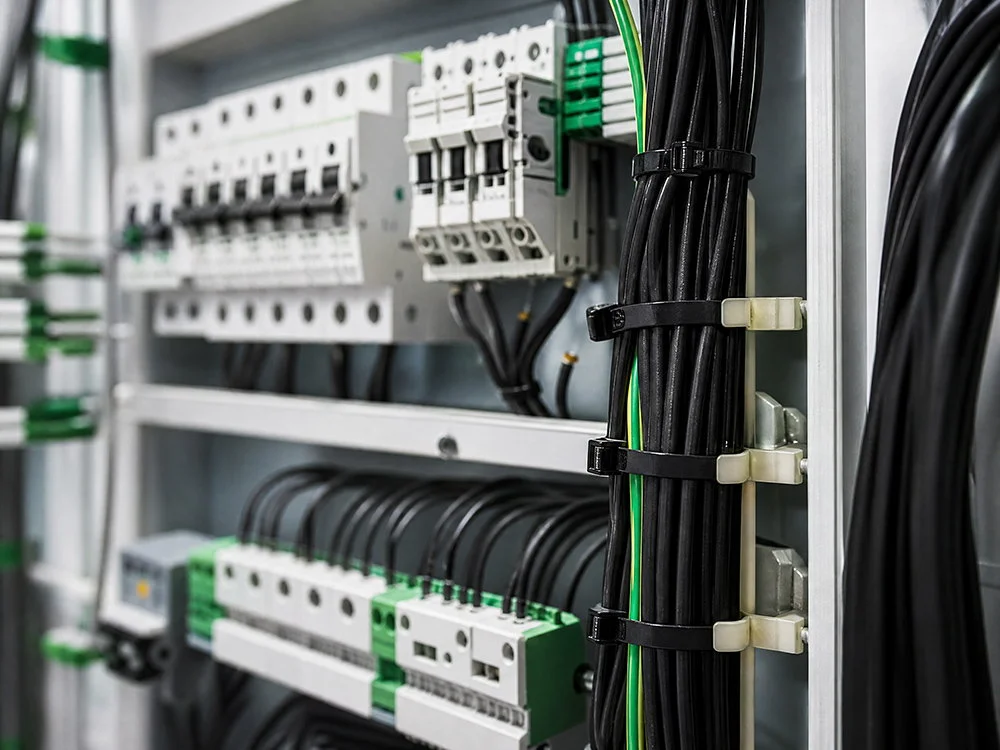

Heavy Duty Zip Ties: A Procurement Buyer’s Guide
As procurement professionals prepare to compile their purchasing lists for big projects, the choice of “high-strength cable ties” can pose a headache. How strong is strong enough? Should we choose nylon or stainless steel? Should the ties comply with certain UL ratings, have specific flammability class ratings, or bring guaranteed UV resistance? The bad decision can mean either unnecessarily high costs of buying expensive stainless steel ties where the nylon product would have been sufficient, or allows us to use incompliant ties that eventually fail and lead to the warranty claims. Heavy duty zip ties is one of the cheapest items on any industrial order, but their wrong choice can lead to huge risk.
Summary: Heavy duty zip ties start at roughly 120 lbs loop tensile strength and climb to 350 lbs or more, with stainless steel options reaching 485 lbs. The right pick depends on four variables: load and safety factor, environment (temperature, UV, chemicals), the standards your application must meet (UL 62275 type, UL 94 flame rating), and total landed cost at your order volume. This procurement guide walks through each so you can specify the correct tie the first time.
What Actually Makes a Zip Tie “Heavy Duty”?
There is no single legal definition of the term, which is exactly why it pays to buy by the number rather than the label. Across the industry, a tie is generally considered heavy duty once its loop tensile strength reaches about 120 lbs. Below that you are in standard and intermediate territory; above it you move into extra and ultra heavy grades. If you are new to the category, our primer on what zip ties are covers the basic anatomy, and our guide on how to choose the right cable ties walks through selection at a higher level. Here we focus squarely on the heavy end of the range.
The “loop tensile strength” or “maximum load” of a closed-loop cable tie is a crucial measure for buyers. The table below provides data for typical strength ratings and offers precise values for ordering an exact level of “heavy-duty” product. Note that the values are average ratings and individual specs may vary from the manufacturer.
| Category | Loop tensile strength | Typical material | Common applications |
|---|---|---|---|
| Standard / light duty | 18–50 lbs | Nylon 6/6 | Office, light cable bundling |
| Intermediate | 50–120 lbs | Nylon 6/6 | General industrial bundling |
| Heavy duty | 120–175 lbs | Nylon 6/6 | Automotive, HVAC, construction |
| Extra / ultra heavy duty | 175–350 lbs | Reinforced nylon or stainless steel | Marine, infrastructure, heavy equipment |
| Stainless steel | 200–485 lbs | 304 / 316 stainless | Extreme heat, chemical, hazardous areas |
When it comes to cable ties, two elements determine their strength: cross-sectional area and material. If the strap is thicker and wider and the locking head is sturdier, the cable tie will have a higher tensile strength. This is the reason why heavy-duty cable tie looks wide if compared to cheap ones. If you want to compare prices, ensure to ask the manufacturer to provide both the width and thickness of the strap so that you can see the differences in the strength of two cable ties which have the same length.
Besides tensile strength, the locking mechanism distinguishes good quality industrial ties from cheap cables ties, which are thrown out after usage. It is clear that rather producers of cable ties use various designs for the locking mechanism. The standard design works with the locking mechanism has the tail of tie locked in place. Quality ties, on the contrary, have a molded locking mechanism which does not allow ties to slip from the place. In some industries, such as electrical industry, the requirement for the tie is the fact that it can be opened after it was sealed. However, quality ties have enough strength.
Heavy Duty Materials Compared: Nylon 6/6, UV-Stabilized, and Stainless Steel
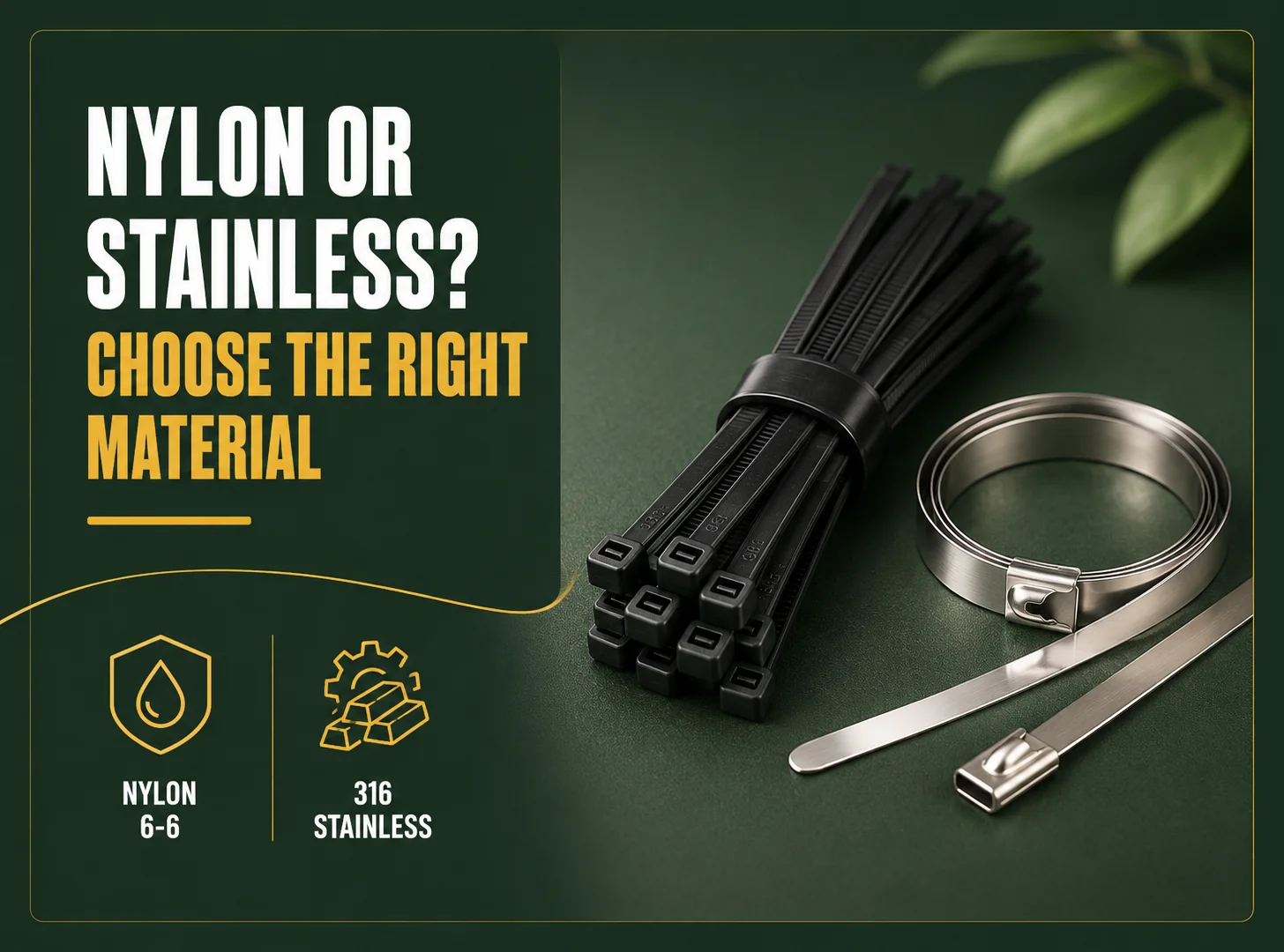
The majority of heavy-duty nylon cable ties are made from nylon 6/6, which is a useful polymer used in the manufacture of cable ties. It has great strength and flexibility, but it is also susceptible to water absorption and ultraviolet (UV) degradation. This makes the type of material used in the manufacture of cable ties very important. The table below summarizes all the materials that are most frequently faced by the procurement team.
| Material | Working temperature | Weather / UV | Flammability | Best for |
|---|---|---|---|---|
| General-purpose nylon 6/6 | -40°F to 185°F | Indoor / dry use | UL 94V-2 | Most indoor bundling |
| UV-stabilized nylon 6/6 (black) | -40°F to 185°F | Extended outdoor sun | UL 94V-2 | Outdoor and exposed runs |
| Heat-stabilized nylon 6/6 | Up to ~250°F | Indoor / high heat | UL 94V-2 | Engine bays, ovens, motors |
| Stainless steel 304 / 316 | -112°F to 1000°F+ | Excellent, non-corrosive | Non-flammable | Marine, oil and gas, tunnels |
To give you a good general guideline, when dealing with ties that will be subjected to sunlight for extended periods of time, use UV-stabilized black nylon. Because the stabilizers used to keep nylon from breaking down in the sun are available only in black nylon. For engine compartments, kilns, and situations where sustained heat is a factor, the best option is heat-stabilized nylon, which gives you a good heat range of about 250°F. When you are dealing with salt spray, chemical activity, high radiation, or open flame, then you will have to use stainless steel ties because they stand up to temperatures ranging from below freezing to 1000°F with no problem.
The trade-off, however, is that these ties are far more expensive and do not offer the flexibility of the other options available. However, they clearly have their place.
In addition to the four normal tie types mentioned previously, a few specialty materials can be extremely useful. For example, ETFE fluoropolymer (Tefzel) is effective against extreme acids and radiation but is weaker than regular nylon. PEEK is a superior option when temperatures above 500°F are an issue. You can use metal-detectable ties, usually bright blue in color, during the production of food and pharmaceuticals, as this will enable the detection of any stray fragments.
Standards and Certifications Procurement Teams Should Specify
For all products relating to safety, electrical or governed by codes, tensile rating by itself does not provide the complete specification. The correct governing rule is UL 62275, which is harmonized with IEC 62275 and CSA C22.2 No. 62275. Type 1 and Type 2 simply designate general use, while Type 11 and Type 21 designate long-term thermal qualification, and Type 21S specifically has to do with securing conduit and cables in buildings in compliance with electrical codes. If your installation will require approval, the classification of type must be put on the purchase order.
Flammability is performed according to UL 94. UL 94 classifies material according to its resistance to this effect. The general classifications are 94V-0, 94V-1, 94V-2, and the lowest rated category which is called UL 94HB. The most common quality nylon 6/6 usually has a UL grade of 94V-2, which is acceptable for all kinds of applications, but in situations of plenum and other higher risk of failures, it may require UL certified V-0 materials. Depending on your market, make sure that you also have the confirmation of conformity with RoHS and REACH directives.
Documentation is part of the delivery process. For materials used in regulated activities, request from suppliers their UL file or certificate number; please also ask for material safety data sheet and traceability of lots that will allow you to trace the physical product in case of any objections against the supplied product.
For any electrical, plenum, or code-governed installation, put the exact UL 62275 type and UL 94 flame rating on the PO in writing — a generic “heavy duty” line item is not a spec an inspector will accept, and it leaves your buyer exposed if the field product does not match.
Sizing, Tensile Ratings, and the Safety Factor Every Buyer Should Apply
Heavy-duty zip ties can range in length from 8 to 60 inches; as the length and toughness go up, so does the strap width. The right size has to be selected according to the thickness of the bundle and the maximum load. The table below provides some averages; however, it does make sense to check the specific specifications in the information provided by the supplier since width, thickness, and type of plastic will affect the values you see.
| Length | Typical strap width | Approx. tensile | Approx. max bundle diameter |
|---|---|---|---|
| 8″ | 0.19″ | 50–120 lbs | ~1.75″ |
| 11–12″ | 0.30″ | 120 lbs | ~3″ |
| 14–15″ | 0.30″+ | 120–175 lbs | ~4″ |
| 18–24″ | 0.35″+ | 175–250 lbs | ~5–6″ |
| 36–60″ | 0.35″+ | 175–250 lbs | Large bundles |
It is very common for buyers to make a blunder in understanding the rated tensile strength that is mentioned on the packaging. The tensile strength indicated in the packaging indicates the point of breakage and not the load that is actually meant to be carried by the ties during their use.
Never think of the rated rope tensile strength as the working load. While using the cable ties for carrying loads, the tensile strength should always be divided by a safety factor of 2-5 to ensure that they can carry the load far below their breaking point. These ties for instance can easily break while carrying a load of 175 lb.
Lastly, the temperature also matters when it comes to its ratings as the cable ties will lose strength when the temperature rises and can also become stiff when the temperature drops below certain limits. So, if you plan to use your industrial cable ties in the hot areas of an engine or very cold storage places, the temperature derating needs to be considered according to the required safety margin.
Industrial Applications: Matching the Tie to the Job
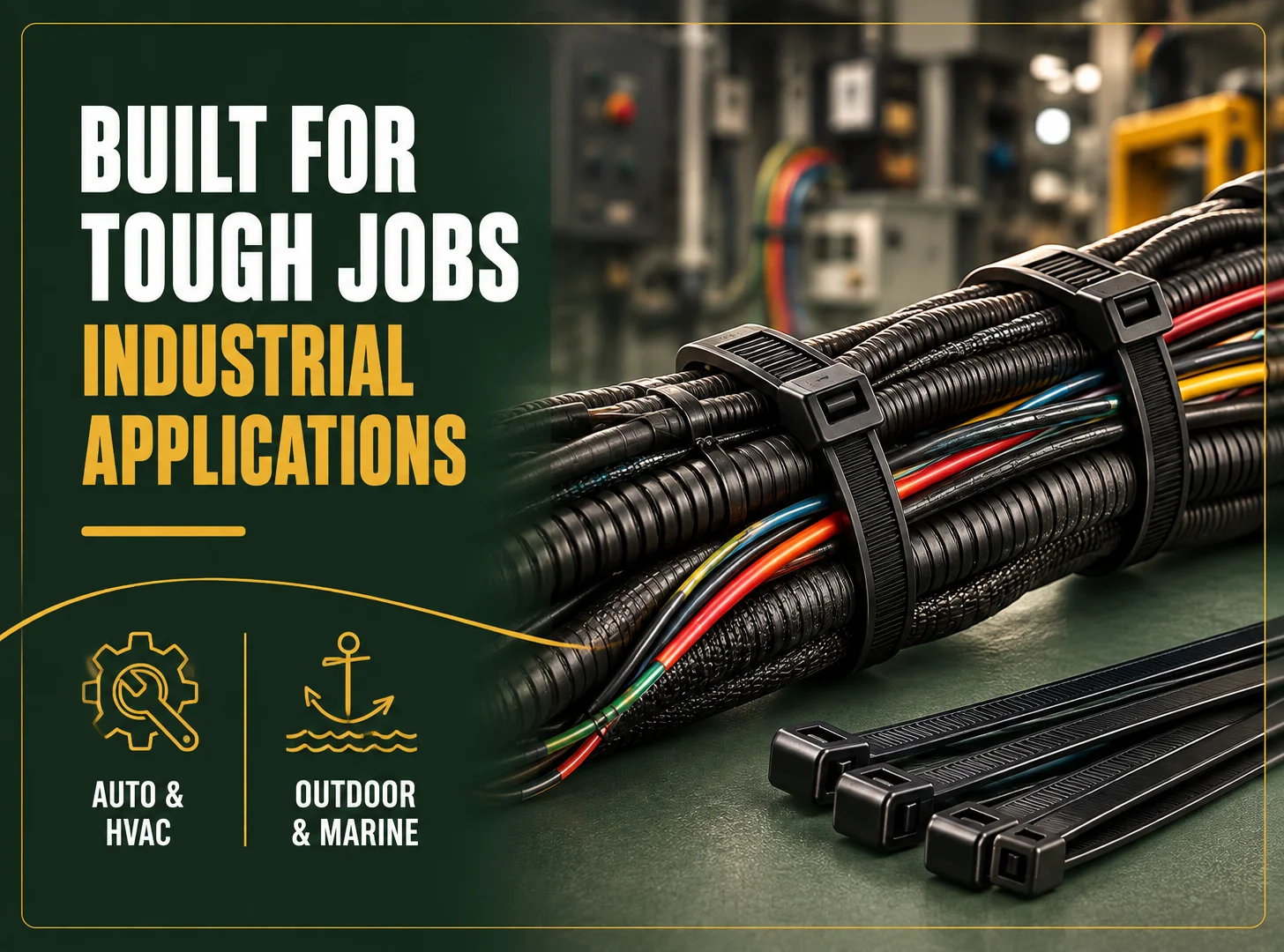
It becomes clear how much more it pays to buy zip ties by their specifications and uses rather than brand names when you look at how various industries take advantage of heavy-duty zip ties.For example, in automotive and transport industries extra heavy-duty ties are used to bundle wire harnesses and hoses that are exposed to frequent vibrations and heat. Hence heat-stabilized nylon with a high safety factor is typical in these sectors.
For example, in HVAC and construction industries heavy-duty nylon ties are wide enough to secure the ductwork, conduits, and heavy cable runs. Besides, one needs to use UV stabilized black ties when working outdoors.When it comes to specialized applications like underwater electrical cables or cable ties at offshore oil platforms, stainless steel works perfectly. You can see that salt, chemicals, and changing temperatures will ruin the standard nylon ties while durable stainless steel cable ties will withstand any extreme conditions.
Food production, pharmaceutical production, and cosmetics industry have different standards to be met, and in these cases metal-detectable plastic zip ties (usually colored blue) are used. This means that in case they break off any parts will be detected by the equipment.
Furthermore, working in cold storage or outdoors in the northern climate means that one needs to use cold-resistant stranded cables.
There is a rule that implies that you should first define the place where you will be working and then select necessary materials and requirements instead of the opposite.
Failure modes and post-buy costs are also to be taken into consideration. When it comes to cable ties, it’s great when they get broken during installation. It’s way worse to deal with old nylon cable ties that have become brittle after twenty-four months of use outdoors due to UV exposure and led to sagging cables.These problems are often discovered only months after the project has been completed or even when handing over the work when defects that seemed insignificant during the inspections have already resulted in losses.
Sourcing Heavy Duty Zip Ties in Bulk: A Procurement Checklist
After deciding on the technical specification, the next step is to come up with a sourcing decision that is based on a number of factors besides the unit price. The price of buying the heavy-duty zip ties in bulk may produce a cheaper experience, but cheap price might mean that the strap thickness is not constant or the flame rating is not reliable. The following list should be done to help make sure whatever purchase order to be made is still good:
Have a specification sheet that outlines all neccessary requirements such as tensile strength, width and thickness of the strap, grade of material, temperature range, and UL number.
Verify what is the UL 94 fire rating, as well as RoHS, REACH, or halogen-free compliance in case it is required at your market.
Get a sample from the production batch, and run a pull-test with it.
Have a chat with your supplier on the MOQ, lead time, and how frequently they provide stock for dispatch.
Take your total cost including freight, duties, packing and then compare.
Make sure which colors exist, since normally building material is only available in black.
A supplier who regularly provides you with needed documentation is the one with whom you should build a long lasting partnership, as that shows their system has been tested in practice. For companies that buy industrial products repeatedly throughout the whole year such kind of approach would save a lot on their expenses than if they purchased randomly whenever in need.
One thing that is always missed by buyers is cost of installation. High-tension heavy duty zip ties can be used much faster with a tensioning tool because it can be adjusted easily to make sure that everything is done right. Thus, in terms of placement of thousands of cable ties, it is necessary to pay attention to their costs, weight and performance.
Frequently Asked Questions
What weight capacity do heavy duty zip ties have?
Heavy duty nylon zip ties have a loop tensile strength ranging between 120 and 175 pounds. The extra heavy duty zip ties can support a weight of 175 and 350 pounds, whereas the stainless steel zip ties have a weight capacity of around 485 pounds.
Please be reminded that the weight mentioned above is the breaking weight of the zip ties.
You will need to multiply this weight by 2 to 5 times to know the safe working weight of the zip ties.
Are heavy duty zip ties UV resistant?
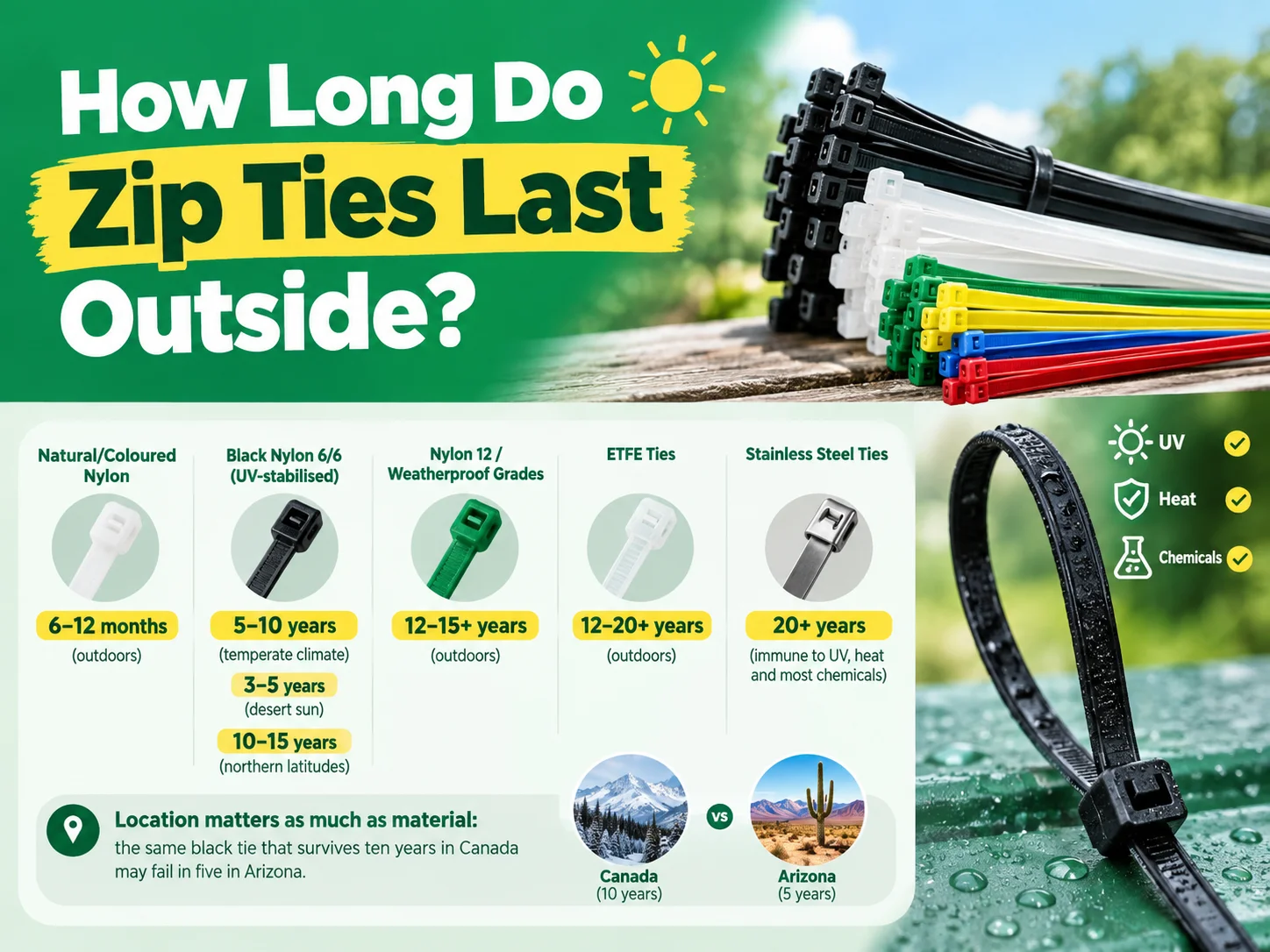
Heavy duty zip ties are not UV resistant unless they are made of UV resistant material. You will also have to order UV resistant black nylon so that the zip ties will be able to resist the sunlight. If you don’t use UV resistant material, the zip ties will wear down due to exposure to sunlight.
What’s the difference between the nylon heavy-duty zip ties and stainless steel zip ties?
Heavy duty nylon zip ties are cheaper, more flexible, and provide excellent performance at low temperature ranges of around -40°F to 185°F, while stainless steel zip ties cost more and offer lesser flexibility but have an operating range of -112°F to 1000°F.
Please note that nylon zip ties are susceptible to corrosion and chemicals, whereas stainless steel is not and is also not flammable, so they are best used in marine applications.
Do heavy duty zip ties require UL rating?
Yes. Heavy duty zip ties must be UL rated for electrical installations, and you will have to mention the UL 62275 type and UL 94 flame rating in your order. In cases where the usage does not fall under the code jurisdiction, a UL rating will be, however, optional.
References
- Cable tie — Wikipedia
- UL 94 flammability standard — Wikipedia
- Nylon 66 (polyamide PA66) — Wikipedia
- National Electrical Manufacturers Association (NEMA)
Looking for a business associate that can provide approved heavy duty cable ties to specifications, in quantity, with the paperwork that your purchasing process requires? In iGoTo CableTies, we produce and keep in stock both nylon and steel cable ties in all strengths and temperature ranges in order to ready make bulk orders. Look through our product to place your order or request a quote.