



Nylon Is It Waterproof? Water Resistance, Absorbency & Outdoor Use Explained
You might be putting your rain coat in your backpack, arranging to run cables outside or asking yourself if the nylon cable ties supporting your outdoor light fixtures are able to hold on. The question “Is nylon waterproof?”, although uncomplicated, the answer is more complex; in fact, nylon is not waterproof but is only water-resistant and has the ability to absorb moisture. More so, nylon comes in various shapes and forms; hence, the various products made from nylon such as jackets, ropes, and cable ties will respond differently under the action of water.
Briefly, the answer to the question is negative: nylon does not have the property of waterproofness, but rather of water resistance. While nylon as a polyamide does absorb water with up to 8% of moisture by weight depending on the grade; e.g. for polyamide 66 nylon it is around 2.5-3.5% of moisture when in equilibrium. Though nylon is not dissolvable or damaged in the short period of time, it should not be left soaking for a long time due to weakening. Moreover, unless it is UV-protected, it will degrade under UV sun rays. Nylon will gain waterproof status only if it is coated, laminated, or treated in some way. nylon cable ties for outdoor usage should be black and UV-stabilised (the sun is much worse than rain).
The Short Answer: Water-Resistant, Not Waterproof
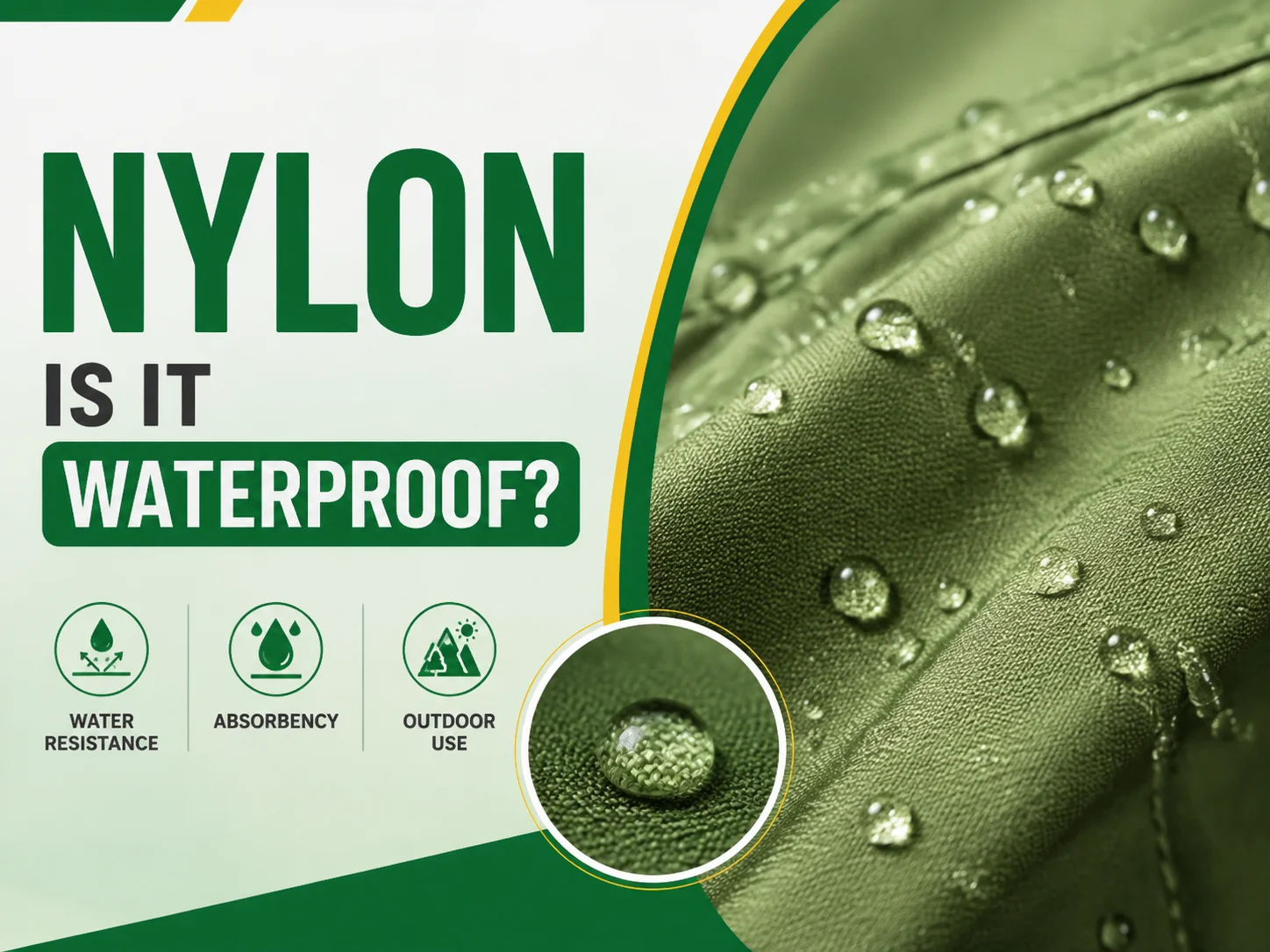
If you put nylon into water, the first thing you will notice is that it gets wet. It will absorb some water into the fibers of the nylon, and unless it is specially treated, after some time water will flow through the nylon. It is called water-resistant, which means it will resist water for a certain period of time but will not prevent it from passing through completely.
Waterproof literally means that water cannot flow through, which involves either using a non-absorbent material like rubber or PVC, or applying a waterproof coating or membrane onto an absorptive material. Nylon jacket itself is water-resistant, but if a nylon jacket has a waterproof coating like PU or a Gore-Tex membrane, it is waterproof due to the coating and does not depend on nylon.
Therefore, in response to the question, “is nylon waterproof?”, we can say that nylon is not waterproof as such, but nylon can become waterproof if treated.
Why Nylon Absorbs Water: The Chemistry
The reason why nylon (polyamide) takes in moisture has to do with its chemical structure. Nylon consists of repeating units called amide groups, which enable nylon molecules to establish hydrogen bonds (the same kind of bond that joins water molecules to each other). When nylon comes into water, water molecules can penetrate the polymer matrix and create hydrogen bonds with the amide groups, therefore getting stuck between the chains of the polymer.
Hence the reason for nylon behaving differently from normal plastics, like polypropylene (PP) or polyethylene (PE), which consists of simple hydrocarbons with no capacity to develop bonds with water and being very hydrophobic (water-repellent). Unlike other types of plastics, nylon is hygroscopic, which actually means that it loves moisture.
How Much Water Can Nylon Absorb?
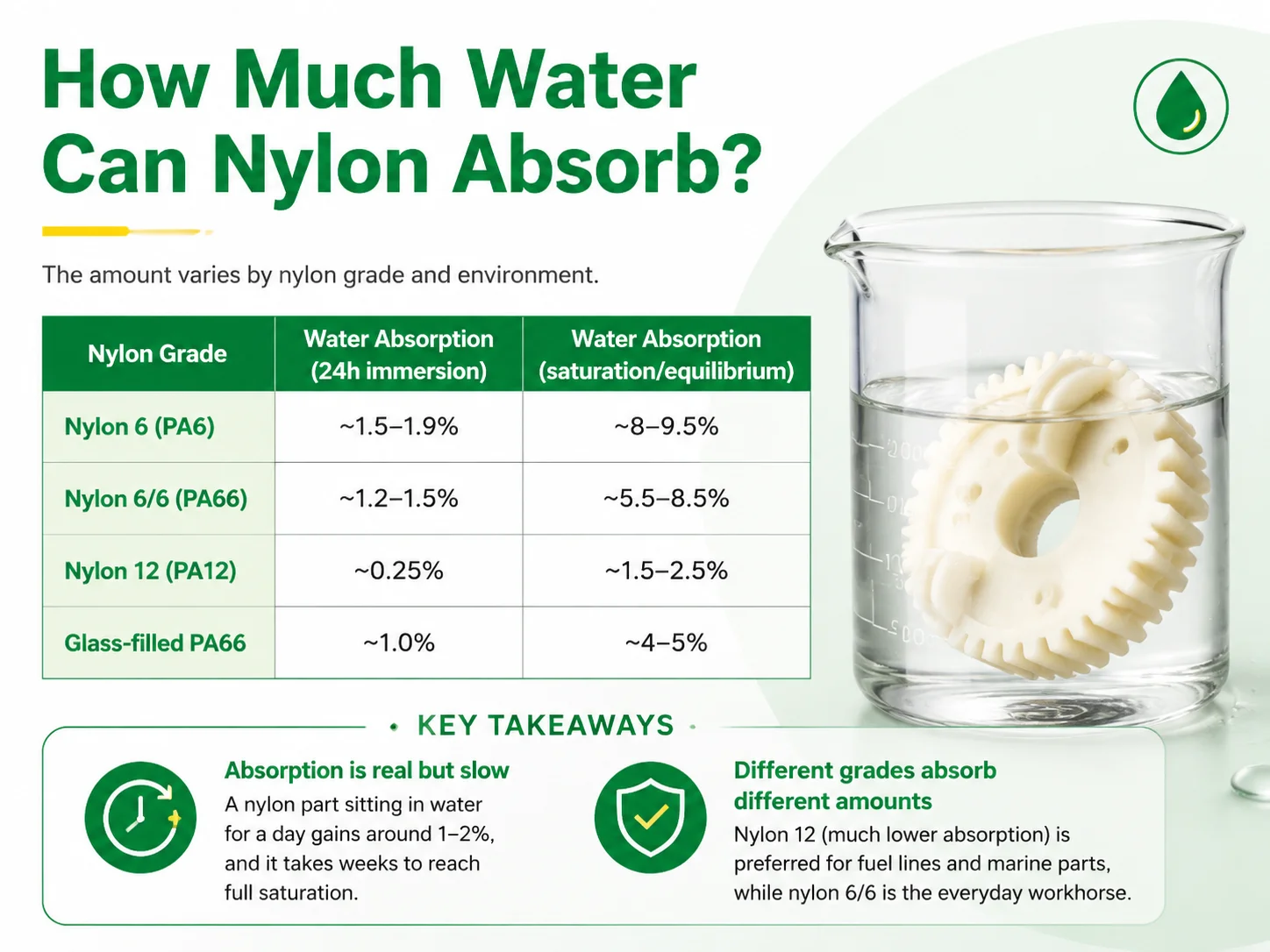
The amount varies by nylon grade and environment. The standard numbers you’ll see on technical data sheets:
| Nylon Grade | Water Absorption (24h immersion) | Water Absorption (saturation/equilibrium) |
|---|---|---|
| Nylon 6 (PA6) | ~1.5-1.9% | ~8-9.5% |
| Nylon 6/6 (PA66) | ~1.2-1.5% | ~5.5-8.5% |
| Nylon 12 (PA12) | ~0.25% | ~1.5-2.5% |
| Glass-filled PA66 | ~1.0% | ~4-5% |
There are two practical implications here: first, the absorption process does occur, but it is slow – a nylon cannot absorb more than 1-2% after about a day of being immersed in water, and the maximum absorption rate will be achieved only after several weeks. Second, various types of nylon absorb different amounts of water – nylon 12 is preferred for fuel hoses and some marine applications as it absorbs much less water, while nylon 6/6 can be considered a standard type.
What Water Does to Nylon Over Time
Nylon is unaffected by water, and short-term exposure to moisture is not a problem. However, prolonged wetness has impacts:
- Loss of strength (temporary): due to moisture absorption, nylon behaves more like a plastic and becomes a little softer, flexible, and weaker. Wet nylon 6/6 can lose 10-20% tensile modulus compared to dry material. This will reverse once the material dries out.
- Change in size: nylon absorbs water which causes swelling (0.2-1% depending on nylon type), which is important when making precision parts, but not as important in cable ties.
- Hydrolysis (long-term process that involves heating and wetting): Under high temperature conditions with water, nylon amide bonds can slowly hydrolyze, causing irreversible breakdown of the material. In practice, this matters with hot water applications, but not for regular outdoor usage.
- Surface mold: nylon itself does not decay like natural fibers, yet dirt and wetness accumulate on the surface and may lead to mold growth.
Nylon Fabrics vs Nylon Products: A Crucial Distinction
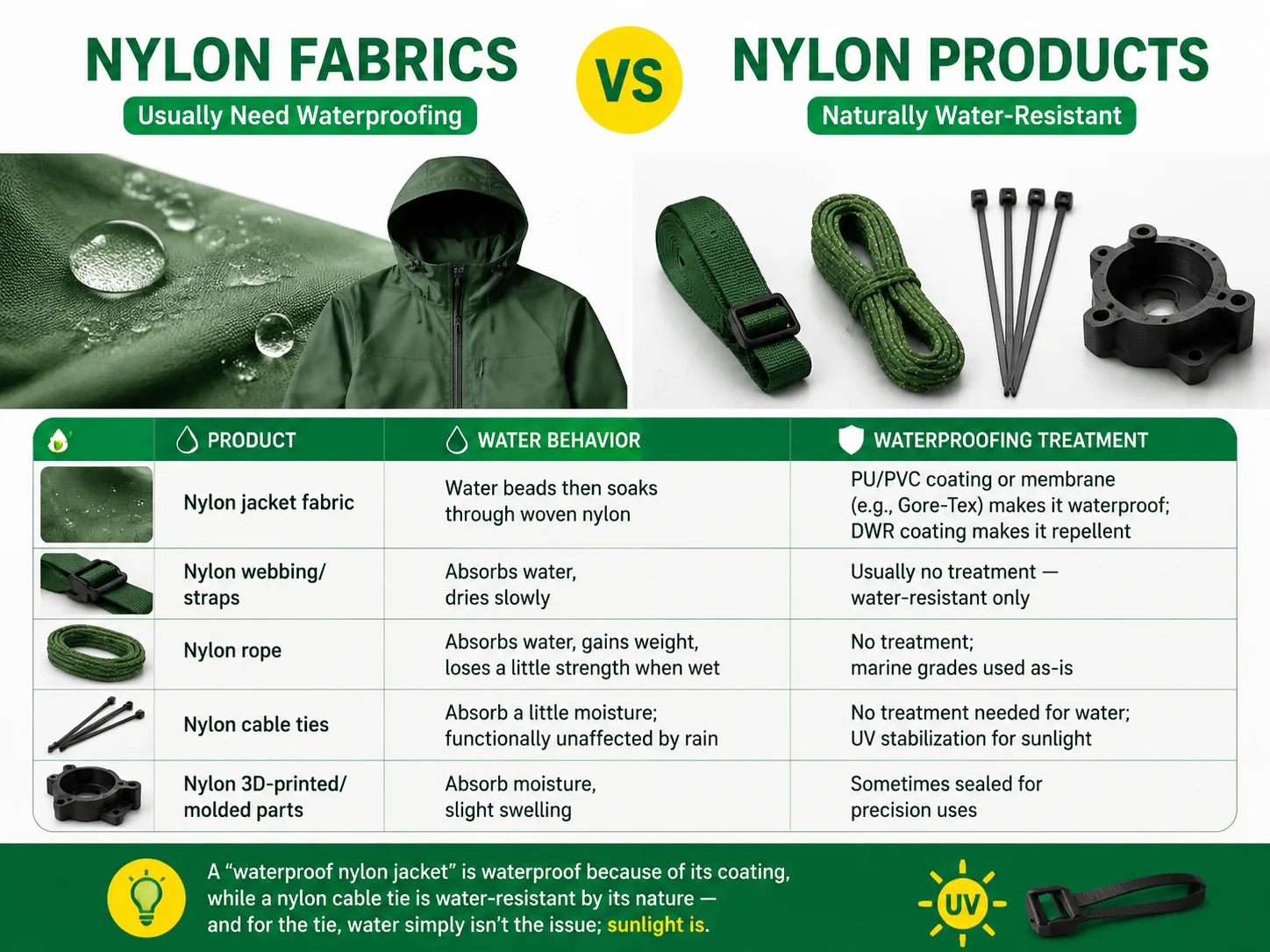
When people inquire whether nylon is waterproof, they often have classic fabric (like jackets, backpacks, tents) in mind — nevertheless, the answer is different for the fabric and solid nylon products.
| Product | Water Behavior | Waterproofing Treatment |
|---|---|---|
| Nylon jacket fabric | Water beads then soaks through woven nylon | PU/PVC coating or membrane (e.g., Gore-Tex) makes it waterproof; DWR coating makes it repellent |
| Nylon webbing/straps | Absorbs water, dries slowly | Usually no treatment — water-resistant only |
| Nylon rope | Absorbs water, gains weight, loses a little strength when wet | No treatment; marine grades used as-is |
| Nylon cable ties | Absorb a little moisture; functionally unaffected by rain | No treatment needed for water; UV stabilization for sunlight |
| Nylon 3D-printed/molded parts | Absorb moisture, slight swelling | Sometimes sealed for precision uses |
A “waterproof nylon coat” remains so due to its coating, in contrast to a nylon zip tie that is water resistant because of its inherent characteristics, where water is not really a concern for the zip tie, but sunlight really is.
Waterproof vs Water-Resistant vs Water-Repellent
These three terms are used loosely in product marketing, but they have distinct meanings:
| Term | Meaning | Nylon Example |
|---|---|---|
| Water-resistant | Slows water entry but eventually lets it through | Plain nylon fabric, most nylon products |
| Water-repellent | Resists water via a surface treatment (DWR coating) | Nylon jacket with durable water repellent |
| Waterproof | Blocks water completely (coating/membrane or impermeable material) | Nylon with PU/PVC coating, Gore-Tex-lined, PVC-coated tarps |
When a spec sheet says a nylon product is “waterproof,” look for how — the coating or membrane does the work, not the nylon itself.
Nylon Outdoors: UV Is the Real Enemy
Most individuals often overlook a somewhat surprising fact. While most consider rain to be able to wreak havoc with nylon, in fact, sunlight harms nylon the most. Ultraviolet (UV) rays break the polymer chains in nylon (a phenomenon called photo-degradation):
- An unprotected nylon item can become brittle, undergo discoloration (turn yellow or fade), and lose its strength after 1-3 years of permanent sun exposure.
- If the nylon is UV-stabilized (black or UV-rated grades), it can withstand outdoor conditions for many years (5-10), depending on many factors.
- Water works alongside the sun in coastal and tropical climates, with heat, humidity, and UV rays contributing to degradation:
This is the reason why outdoor products (cable ties, tarpaulins, webbing, etc.) are made of black or UV-stabilized nylon: pigments prevent sunlight from penetrating to the inside of the product.If you want to take your nylon item outdoors, make sure to check if the item is UV-stabilized before worrying about its being waterproof.
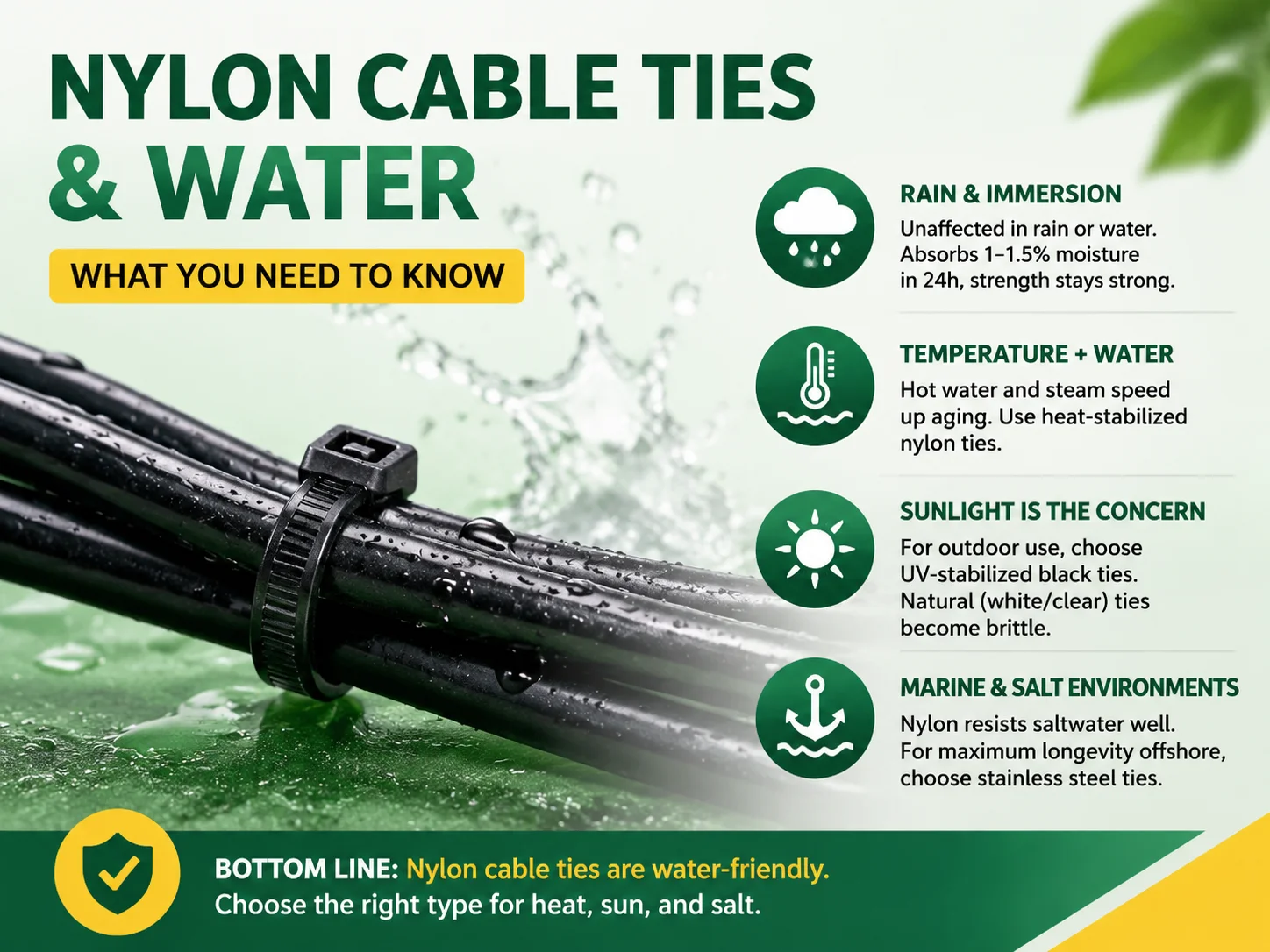
Nylon Cable Ties & Water: What You Need to Know
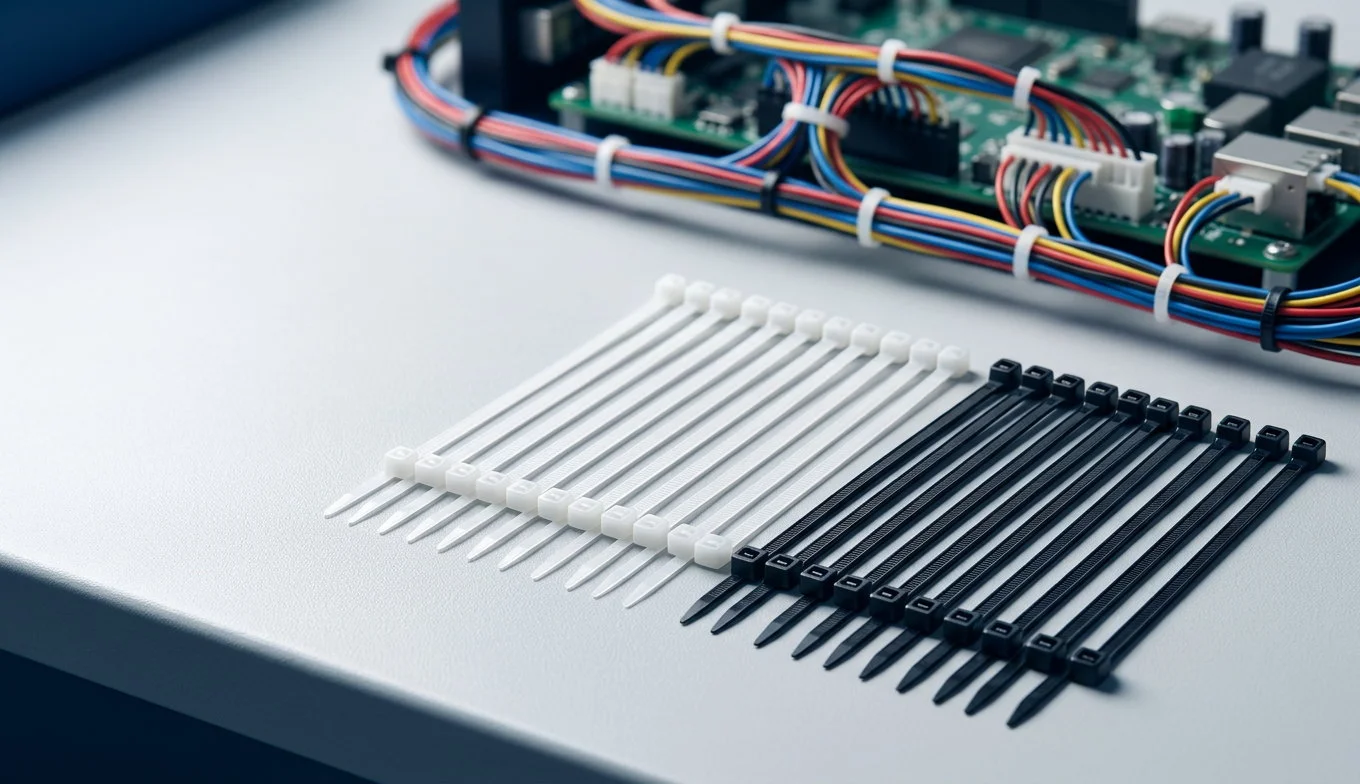
When we are back to the concerns about the most important product for this particular site, the nylon cable ties perfectly hold up in water. Regarding rain, exposure to water, and humidity, nothing will harm the normal nylon 6/6 zip tie. Let us observe the main facts regarding that:
- Rain and dipping. If a nylon zip tie goes under the water, it can get a little wet (about 1-1.5% within 24 hours) which will lead to the small loss of rigidity. But one will not lose the gripping ability of the zip tie for the common bundling.
- Temperature and water. For hot-water areas (like steam lines, hot washdowns) you need to apply heat-stabilized nylon ties, as the process of hydrolysis and heat aging take place there.
- Sunlight is in question. For such type of outdoor cable management as garden lights, AC wiring and advertising signs the best choice would be black nylon ties with UV protection rather than natural (white or transparent) ones. Natural nylon will become brittle in one or two years of being exposed to the outdoor conditions.
- Marine/salt water environment. In fact, nylon has perfect resistance towards salt water (it can be found in marine equipment) but the best solution will be the stainless steel ties, as they are relevant when both UV resistance and corrosion resistance matter.
How Long Will Nylon Last Outdoors?
Realistic expectations chart for outdoor nylon:
| Nylon Product | Indoor Life | Outdoor Life (natural/white) | Outdoor Life (UV-stabilized black) |
|---|---|---|---|
| Cable ties (PA66) | Years to decades | ~1-3 years before brittleness | ~5-10 years typical |
| Webbing/straps | Years | ~1-2 years | ~3-5 years |
| Fabric (uncoated) | Years | Fades and weakens in 1-2 seasons | Longer if treated |
| Rope | Years | ~1-2 years in sun | ~3-6 years |
These figures are only approximate–the local UV intensity, height, and temperature all modify them. However, here we can see the same pattern: black UV-stabilized nylon increases outdoor lifespan by 2-4 times.
Nylon vs Polyester in Wet Conditions
The main contender for nylon in the fabric (and product) arena is polyester — here’s how the two stack up when it comes to wet conditions:
| Factor | Nylon | Polyester |
|---|---|---|
| Water absorption | Higher (absorbs 2-8%) | Lower (absorbs ~0.4%) |
| Wet strength loss | Loses ~10-20% modulus when wet | Loses very little |
| UV resistance | Poor unless stabilized | Better than unstabilized nylon |
| Abrasion resistance | Higher (stronger fiber) | Good |
| Drying speed | Slower (holds more water) | Faster |
| Feel/strength | Softer, tougher | Crisper |
In terms of pure wet performance, polyester is technically “more waterproof” (since it absorbs less and retains its strength better than nylon) — however, nylon is overall the more durable and stronger of the two, which is why top-quality outdoor products often combine both of them — utilizing nylon where strength truly matters, and polyester where low absorption and UV resistance are crucial.
Care & Usage Notes for Wet Environments
- Dry nylon before storing: Keep wet nylon in bag can get moldy; hang or use the gear and ties before stowing them.
- Choose black color for outdoors: a favorite option for outdoor nylon is UV-stabilized black; use only black gear, ties, or straps.
- Check ties periodically outdoors: even UV-stabilized ties age; inspect outdoor cable ties yearly and replace any that are brittle or cracked — and when selecting a size and strength for an outdoor job, the standard cable tie sizes reference helps you match length, width, and tensile rating to the bundle.
- Choose right grade for the environment: for marine or hot environment use stainless steel ties or marine-grade nylon; use heat-stabilized for hot and humid environment.
- Avoid overtightening the cold-wet ties: nylon gets harder in cold; ensure to apply the right tension so that it does not crack at the teeth.
Frequently Asked Questions
How long will nylon last outdoors?
Untreated (natural/white) nylon has an outdoor lifespan of around 1-3 years due to UV rays that make it fragile. The UV-stabilized black nylon may survive 5-10 years, depending on the climate, and the level of solar intensity. The general rule of thumb is that black UV-stabilized nylon is the best option if the product is going to be used outdoors.
Can nylon be worn in the rain?
Absolutely, nylon fabric is a good option for wearing in rainy conditions, but nylon fabric allows water to seep in eventually. Nylon can get wet because water is able to penetrate the woven fabric once the outer layer is saturated. So when looking for a rainy day jacket, find a jacket made of nylon that is waterproof, either by having a waterproof coating or waterproof membrane.
What fabric is 100% waterproof?
No fabric can be called “100% waterproof” on its own unless it is treated with waterproof coatings or membranes: PU (polyurethane) coatings, PVC coatings, rubber coatings, or breathable membranes such as Gore-Tex and eVent. Examples of truly waterproof items can be PVC tarpaulins, rubber coats, and laminated or coated outerwear. Otherwise, without coatings, plain woven nylon or polyester or cotton fabric would only be water-resistant and not waterproof.
Which is more waterproof, nylon or polyester?
Polyester is superior to nylon in terms of water resistance as it absorbs approximately 0.4% of water while nylon absorbs 2 to 8% of the water. Moreover, when they are wet, polyester does not lose its strength, and hence, it dries quickly. Nylon is stronger compared to polyester, but it absorbs more moisture. Thus, in terms of water resistance, polyester is better while nylon is superior in terms of toughness and strength.
References
- DuPont — Nylon 6/6 (Zytel) Technical Data: Water Absorption & Mechanical Properties
- ASTM D570 — Standard Test Method for Water Absorption of Plastics
- ISO 62 — Plastics: Determination of Water Absorption
- Polyester vs Nylon — Fiber Property Comparisons
- REI Expert Advice — Waterproof vs Water-Resistant Rain Gear
- Nylon — Material Properties and Applications Guide
Conclusion
Is nylon waterproof? While it is water-resistant, it is not waterproof. That means it absorbs moisture by up to 2-8% depending on the fabric, it loses some of its strength and stiffness when wet, and only becomes completely non-water acceptant after it has either been coated or laminated.But for most practical purposes — and especially for products like nylon cable ties — water is a non-issue: rain won’t damage them, and even immersion barely affects their holding strength.