




What Are Zip Ties Made Of?
When a maintenance technician at a plant applied a few standard nylon zip ties in order to stabilize a group of wires near a steam pipe, he assumed that every zip tie is basically the same. Two weeks after, every tie broke. The temperatures in the environment near the pipe were only 110°C, while the temperature that standard nylon can tolerate is actually 85 degrees; hence, there was no violation. The issue lay not in the installation of a zip tie, but in the selection of the right material. Zip ties are made of different materials that were devised for different types of temperature, chemical exposure, and loads. It is important to understand these materials and their characteristics in order to know how to select an appropriate zip tie that can work for a long time as well as one that would break just before the first examination.
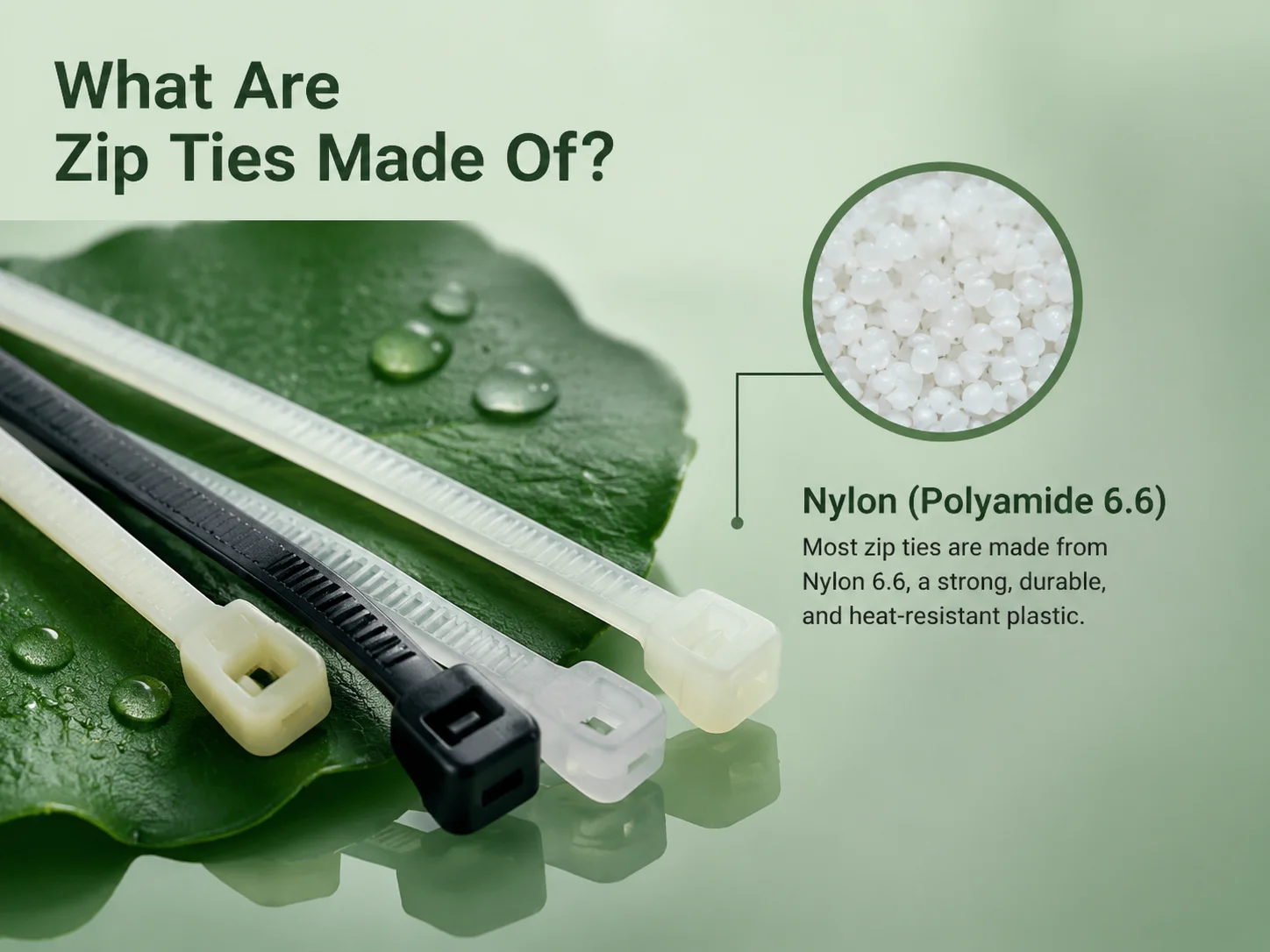
The Dominant Material: Nylon 6/6 (Polyamide 66)
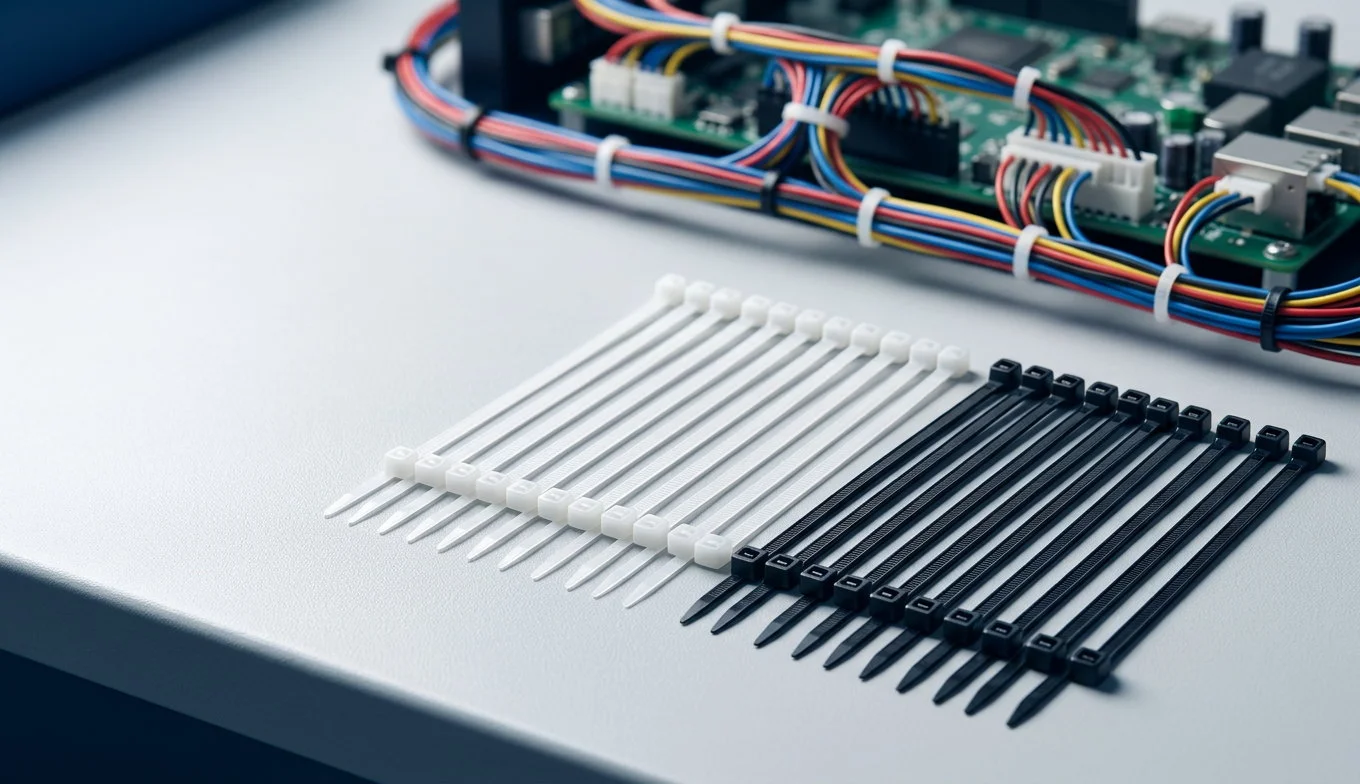
Most of the cable ties available in the market – estimated to be more than 90% in volume – are made of nylon 6/6, also known as polyamide 66 (PA66). Nylon 6/6 is a thermoplastic with properties such as high tensile strength, good stiffness with an excellent ability to resist creep and the relatively high operating temperature of up to 85°C (185°F). It was the material that was used in the first Ty-Rap cable tie that was invented by Thomas & Betts (now operating within ABB) in 1958 and it is still used as the standard material for most of the cable ties in any industry. Nylon 6/6 has been known as hygroscopic material that can absorb humidity from air and this moisture plasticizes the tie and gives it a small flexibility which prevents it from becoming very brittle at room temperature. A nylon cable tie that has been kept in dry conditions for a longer period may have a slightly lower flexibility than that which has been kept at room humidity and it is a normal feature of the substance and is not regarded as a defect.
Standard nylon 6/6 is known for its limitations. It deteriorates when exposed to sunlight unless it is treated to resist ultraviolet rays. It gets soft when used in elevated temperatures, losing its ability to withstand tensile stress. It also gets attacked by various strong acids, phenols, and specific chlorinated solvents. However, in most situations where the temperature is moderate, there are no issues regarding these limitations.
Specialty Nylon Grades: UV‑Stabilised, Heat‑Stabilised, and Flame‑Retardant
Applying certain additives to the base nylon 6/6, the manufacturers create cable ties suitable for usage in conditions that would destroy regular nylon. The table below gives an overview of the common specialty nylon grades, their specific characteristics and their applications.
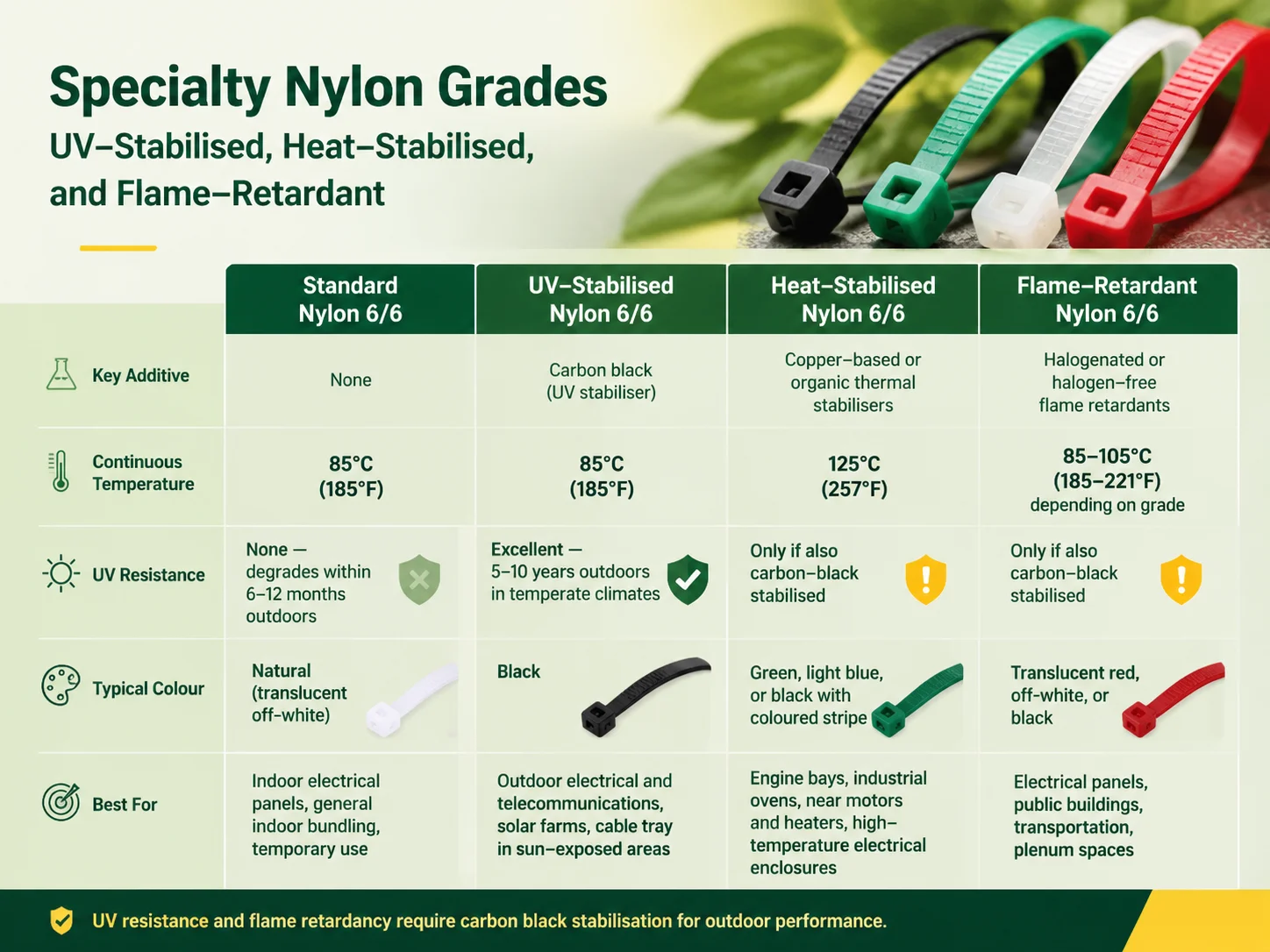
| Material Grade | Key Additive | Continuous Temperature | UV Resistance | Typical Colour | Best For |
|---|---|---|---|---|---|
| Standard Nylon 6/6 | None | 85°C (185°F) | None — degrades within 6–12 months outdoors | Natural (translucent off‑white) | Indoor electrical panels, general indoor bundling, temporary use |
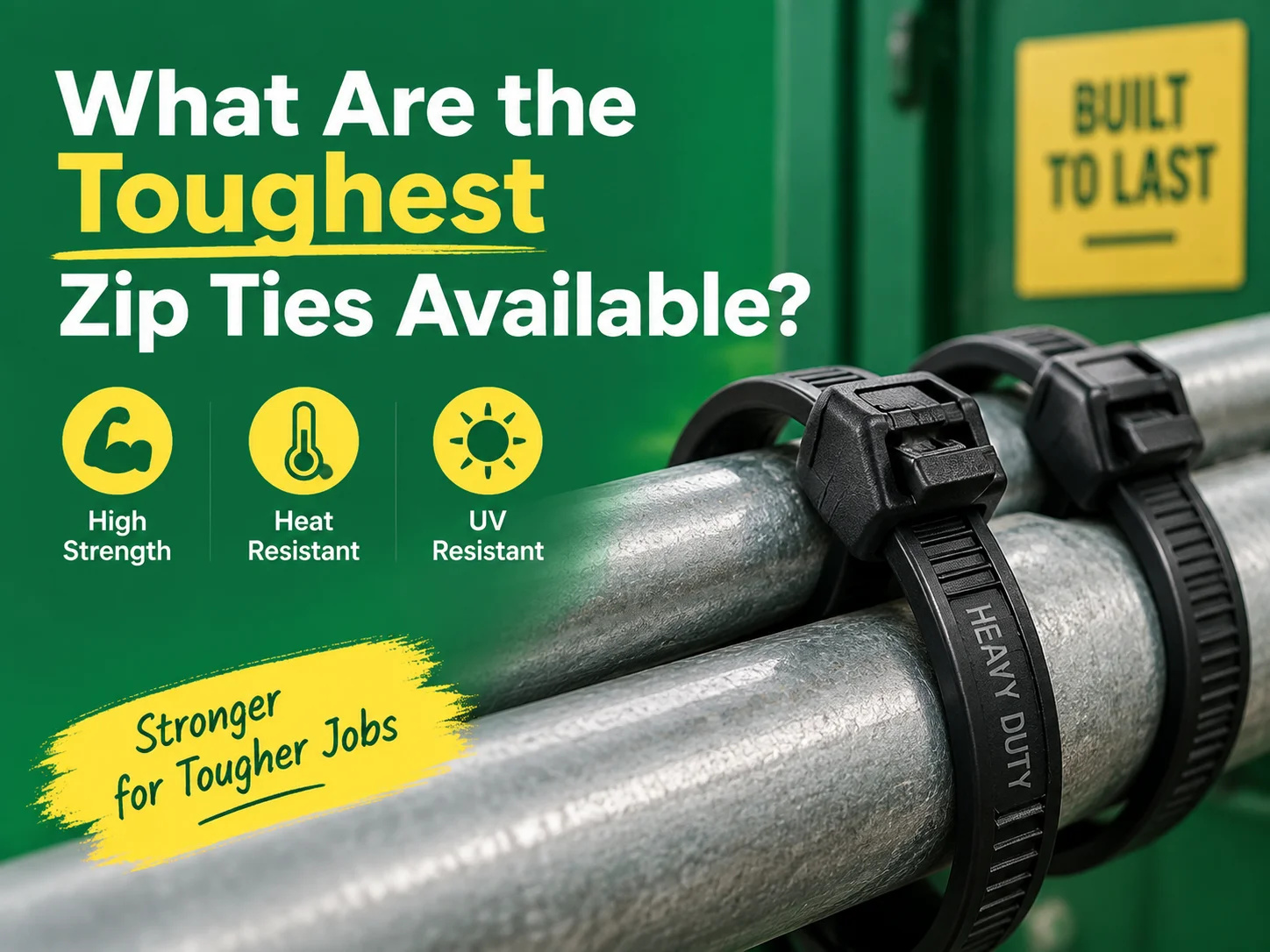
| UV‑Stabilised Nylon 6/6 | Carbon black (UV stabiliser) | 85°C (185°F) | Excellent — 5–10 years outdoors in temperate climates | Black | Outdoor electrical and telecommunications, solar farms, cable tray in sun‑exposed areas. Our UV‑resistant cable tie range is manufactured from this material. |
| Heat‑Stabilised Nylon 6/6 | Copper‑based or organic thermal stabilisers | 125°C (257°F) | Only if also carbon‑black stabilised | Green, light blue, or black with coloured stripe | Engine bays, industrial ovens, near motors and heaters, high‑temperature electrical enclosures |
| Flame‑Retardant Nylon 6/6 | Halogenated or halogen‑free flame retardants | 85–105°C (185–221°F) depending on grade | Only if also carbon‑black stabilised | Translucent red, off‑white, or black | Electrical panels, public buildings, transportation, plenum spaces |
It is important to understand that a black cable tie is not automatically UV‑stabilised. The black colour can come from a non‑stabilising pigment that provides no UV protection. Only a tie that is specifically labelled as “UV‑resistant” or “weather‑resistant” on its packaging should be trusted for outdoor use. Similarly, a tie that is labelled “heavy‑duty” is not automatically heat‑stabilised. The material grade must be verified on the manufacturer’s data sheet. For a deeper dive into how UV degradation works and how to identify a genuinely UV‑resistant tie, our guide on why UV‑protected cable ties matter outdoors covers the chemistry and the testing standards. For applications where heat is the primary concern, our article on whether zip ties are heat resistant explains the temperature ratings for each material grade in detail.
Beyond Nylon: Advanced Polymers and Metals
When the environment exceeds the limits of even the most advanced nylon grades — temperatures above 125°C, aggressive chemicals, or ionising radiation — the cable tie material must change entirely. The table below describes the three most important non‑nylon materials used for cable ties, their key properties, and their typical applications.
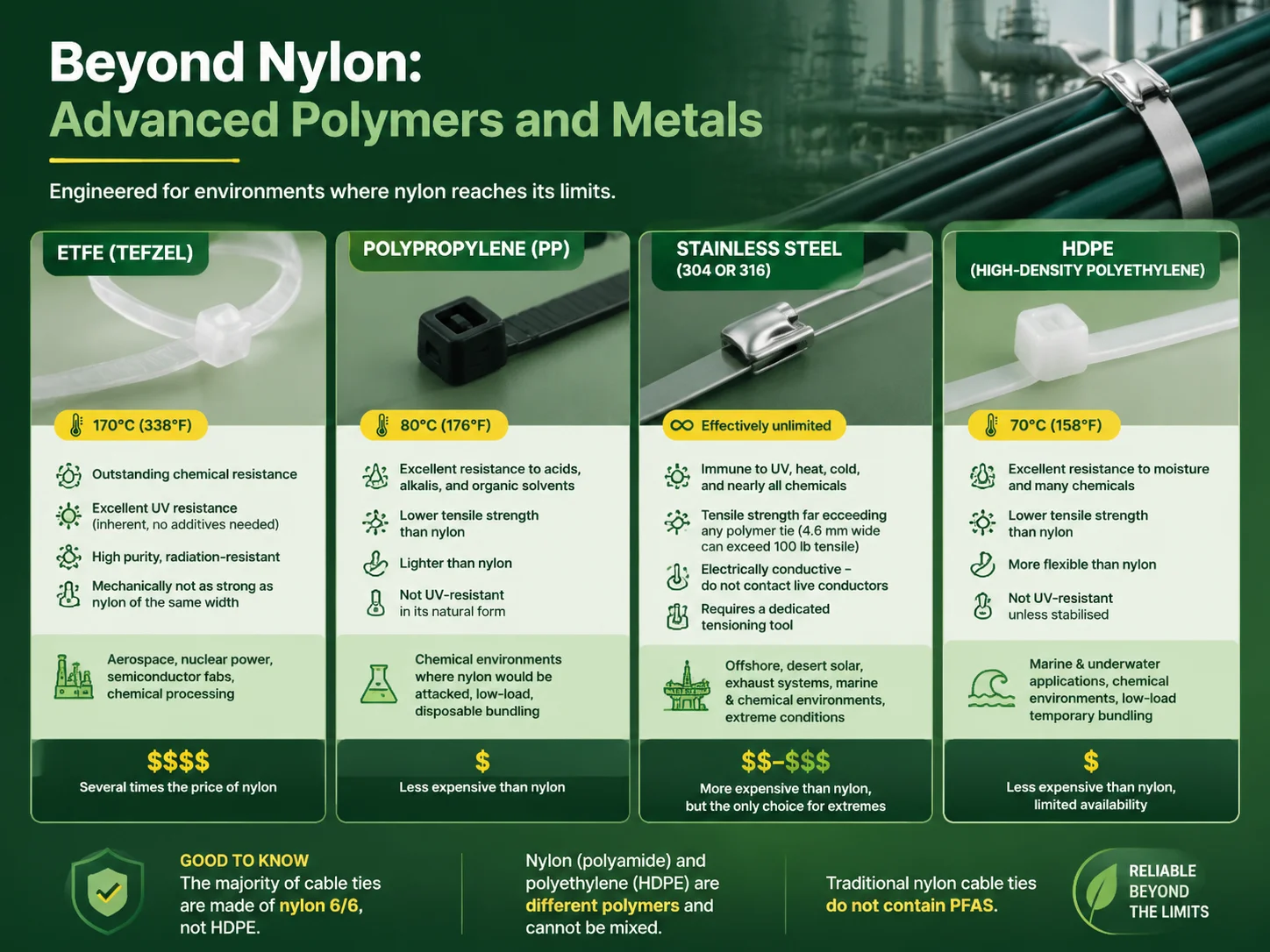
| Material | Continuous Temperature | Key Properties | Typical Application | Relative Cost |
|---|---|---|---|---|
| ETFE (Tefzel) | 170°C (338°F) | Outstanding chemical resistance, excellent UV resistance (inherent, no additives needed), high purity, radiation‑resistant. Mechanically not as strong as nylon of the same width. | Aerospace wiring harnesses, nuclear power plants, semiconductor fabs, chemical processing facilities | $$$$ — several times the price of nylon per tie |
| Polypropylene (PP) | 80°C (176°F) | Lower tensile strength than nylon, but excellent resistance to acids, alkalis, and organic solvents. Lighter than nylon. Less expensive than nylon. Not UV‑resistant in its natural form. | Chemical environments where nylon would be attacked, short‑term or disposable bundling, low‑load applications | $ — less expensive than nylon |
| Stainless Steel (304 or 316) | Effectively unlimited for any environment a cable tie would encounter | Immune to UV, heat, cold, and nearly all chemicals. Tensile strength far exceeding any polymer tie — a 4.6 mm wide stainless tie can exceed 100 lb tensile. Electrically conductive — must not contact live conductors. Requires a dedicated tensioning tool. | Offshore platforms, desert solar farms, exhaust systems, marine and chemical environments, any application where polymer ties would fail | $$–$$$ — more expensive than nylon, but the only choice for extreme environments |
| HDPE (High‑Density Polyethylene) | 70°C (158°F) | Lower tensile strength than nylon, but excellent resistance to moisture and many chemicals. More flexible than nylon. Not UV‑resistant unless stabilised. Rarely used for standard cable ties; more common in specialty applications such as marine and underwater fastening. | Marine and underwater applications, chemical environments where nylon is unsuitable, low‑load temporary bundling | $ — less expensive than nylon, but limited availability in standard cable tie form factors |
It is important to point out that a common misconception is that many of the regular cable ties made by well-known brands or B2B suppliers like igoto are made out of HDPE. The truth is that the majority of cable ties are made of nylon 6/6. In fact, HDPE is a different polymer, which means a different minimum melting temperature, as well as different tensile strength and chemical resistance. While HDPE ties do exist, they are niche products, not standard products in cable ties. The confusion regarding the question “are zip ties made of HDPE” stems from the mix-up between the two materials. The fact is that nylon (polyamide) and polyethylene are different, hence cannot be mixed in cable ties. Similarly, traditional nylon cable ties do not contain PFAS. PFAS means per- and polyfluoroalkyl substances, which is a group of chemicals that is used in coatings that are non-stick, repellent to water and stainproof. Nevertheless, they are not present in nylon 6/6 itself, nor in carbon-black UV stabilizers or heat and flame retarded, which are used for cable ties. So, regular nylon ties do not contain PFAS.
How to Select the Right Material for Your Application
The method for selecting the right material for cable ties involves matching the characteristics of the environment (temperature, sunlight, moisture, and tension) to the qualities of the chosen material. This method is simple and is based on the most extreme conditions for which the cable tie has to endure.
- Indoor, cool, dry, no sunlight. The untreated nylon 6/6 type is the economical alternative as it will withstand years even within the controlled environment.
- Outdoor, direct sunlight, general electrical and industrial. The standard is the black nylon 6/6, which has been stabilised with UV. The outdoor durability comes from the carbon-black stabiliser; furthermore, the tie is a much cheaper option compared to stainless steel in terms of most outdoor applications.
- High temperature (85–125°C), indoor or enclosed. The initial enhancement process is based on heat-stabilised nylon 6/6, which has a temperature rating of 125 degrees Celsius. Moreover, ETFE or stainless steel is necessary for long-term exposure to temperatures greater than 125 degrees Celsius, as no type of nylon can withstand temperatures above about 150 degrees Celsius.
- Fire‑safety‑critical installation. Nylon that is resistant to flames (UL 94 V-0) or stainless steel. Stainless steel has the benefit of being non-flammable.
- Extreme environment — offshore, chemical plant, nuclear, decades‑long outdoor life. For harsh marine and chemical use, use Stainless Steel 316, while for general use Stainless Steel 304 or ETFE is recommended. Although neither is technically a true plastic, yet they are the suitable materials where polymers fail in the extreme environmental conditions. For a full comparison of nylon and stainless steel across all performance dimensions, our guide on stainless steel zip ties vs nylon cable ties covers the trade‑offs in detail.
Always check for the material specification on the labels or on the manufacturer’s datasheet. A product with the material clearly identified as “Nylon 6/6”, “UL Approved Nylon”, “ETFE”, “Stainless Steel 316” and appropriate certification (UL Approval, Weather Testing Reports, Material Test Reports) is a product that can be counted upon to deliver the promised specifications. A product sold without any identification, without a datasheet or without certification is carrying an unknown risk associated with its undisclosed material.
A Brief History: What Came Before Zip Ties
Prior to the 1950s when nylon cable ties were invented, the process of bundling wire and cables was tedious and involved a lot of manual work. Until then, electricians had to manually bundle wires or cables using waxed lacing cords which are braided cords of either cotton or nylon and which have been coated in wax. This method, called cable lacing or “lacing,” is still in use today in military and aerospace applications in which metallic or synthetic cable ties could result in sharp edges or add weight resulting in signal interference in high-frequency wiring. Electricians also used rubber bands, adhesive tape, and metallic wire ties — the ancestors to today’s stainless steel cable ties.
The self-locking nylon cable tie was invented by Thomas & Betts in 1958 and revolutionized the industry. This new form of fastening is not only cheap, simples, and can be done with one hand; it takes very little time to apply. The material used in making the cord was nylon 6/6 on purpose because it is strong and heat resistant and can be made super quick with injection moulds.
Frequently Asked Questions
Are zip ties made of HDPE?
Actually, nearly all cable ties are made with nylon 6/6 (also called polyamide 66), rather than HDPE. HDPE (high-density polyethylene) is another polymer that has a lower melting point and lower tensile strength. There are HDPE cable ties, but they are not common. The consistent material used by all major cable tie manufacturers is nylon 6/6.
What are Harbor Freight zip ties made of?
Harbor Freight zip ties Similar to many economy-grade cable ties, the straps are manufactured from nylon 6/6. While nylon 6/6 is the same basic polymer that premium brands use, the level of quality control, the dimensional consistency, and the accuracy of the stated tensile strength may differ. A budget cable tie would generally suffice if being used for a non-critical indoor application for only a short period of time. But for a tie being used in an application where safety matters, the best choice would be a tie from a good brand whose specifications have been certified.
Do zip ties have PFAS?
No, regular nylon cable ties comprise no PFAS compounds. PFAS chemicals are primarily used in non-stick, water-resistant, and stain-resistant coatings. They do not form part of nylon 6,6; super black UV stabilizers; or the heat and fire-retardant additives used in the making of the cable ties. A regular nylon cable tie (be it natural or black, or UV or heat-stabilized) does not comprise PFAS. ETFE cable ties are fluoropolymer-based. Even if ETFE is a fluorinated polymer, it is not classified as PFAS.
What did they use before zip ties?
Prior to the creation of the nylon zip tie that occurred in 1958, electricians utilized waxed lacing cord, rubber bands, adhesive tape, and metal wire to organize cables and conductors. The method of cable lacing using waxed cord continues to be applied in the fields of aerospace and military, where the weight, sharp edges, or electrical properties of a nylon or metal tie cannot be accepted.
References
- Panduit — Cable Tie Material Specifications and Technical Data. Manufacturer of nylon, UV‑stabilised, heat‑stabilised, flame‑retardant, ETFE, and stainless steel cable ties with published material data sheets.
- HellermannTyton — Cable Tie Material Properties and Selection Guide. Global manufacturer providing detailed material performance data for every cable tie material, including nylon, polypropylene, ETFE, and stainless steel.
- ABB (Thomas & Betts) — The History of the Ty‑Rap Cable Tie. Information on the invention of the nylon cable tie in 1958 and the material selection that established nylon 6/6 as the industry standard.
- American Chemistry Council — Plastics Division. Information on the properties, additives, and environmental performance of nylon and other engineering plastics.
What are zip ties made of? The answer, for the vast majority of cable ties on the market, is nylon 6/6 — a strong, versatile engineering plastic that can be modified with UV stabilisers, heat stabilisers, and flame retardants to meet the demands of almost any environment. For the conditions that exceed nylon’s limits, ETFE and stainless steel provide the solution, at a higher cost but with a correspondingly higher performance. The right material is the one that matches the temperature, the sunlight, the chemicals, and the load that the tie will face for its entire service life. Choosing it correctly at the point of installation is the simplest, cheapest, and most effective way to ensure that the tie holds — for as long as it needs to. igoto supplies cable ties in every standard material, from natural nylon to UV‑stabilised, heat‑stabilised, flame‑retardant, and stainless steel, because the right material is the foundation of a reliable fastening.