



What Is Nylon? World’s Most Versatile Synthetic Material
In the same way that the bristles on your toothbrush, the cord on your boat, and the cable ties that help to keep your wires organized, the raincoat hanging in your closet, the timing belt in your car, and even the material covering your office chair all came from a common root. In 1935, a chemist working at DuPont by the name of Wallace Carothers first took a sample of the new substance out of a test tube, thus creating nylon — the first fully synthetic fiber known in history. Nearly a hundred years later, nylon still remains one of the most important engineering materials on the planet. This guide will answer the question of what nylon really is, what it is made from, how it is made, what its properties are, what types of nylon exist, what it is used for, how much it costs, and how it is different from plastics, polyester, and cotton.
The bottom line is that nylon is classified under polyamides (PA) which are synthetic polymers consisting of long chains made up of repeating units conjugated by amide bonds. It is made of various chemicals that are obtained from fossil fuels including diamines and dicarboxylic acids and then spun into fibers. It is characterized by great strength (with tensile strength between two times and three times than most plastics), toughness, and heat resistance, but it is vulnerable to long exposure to UV light. The major types of Nylon are Nylon 6 and Nylon 66, together with special kinds of nylon such as Nylon 11 and Nylon 12. Yes, contrary to popular belief, nylon is an engineering plastic.
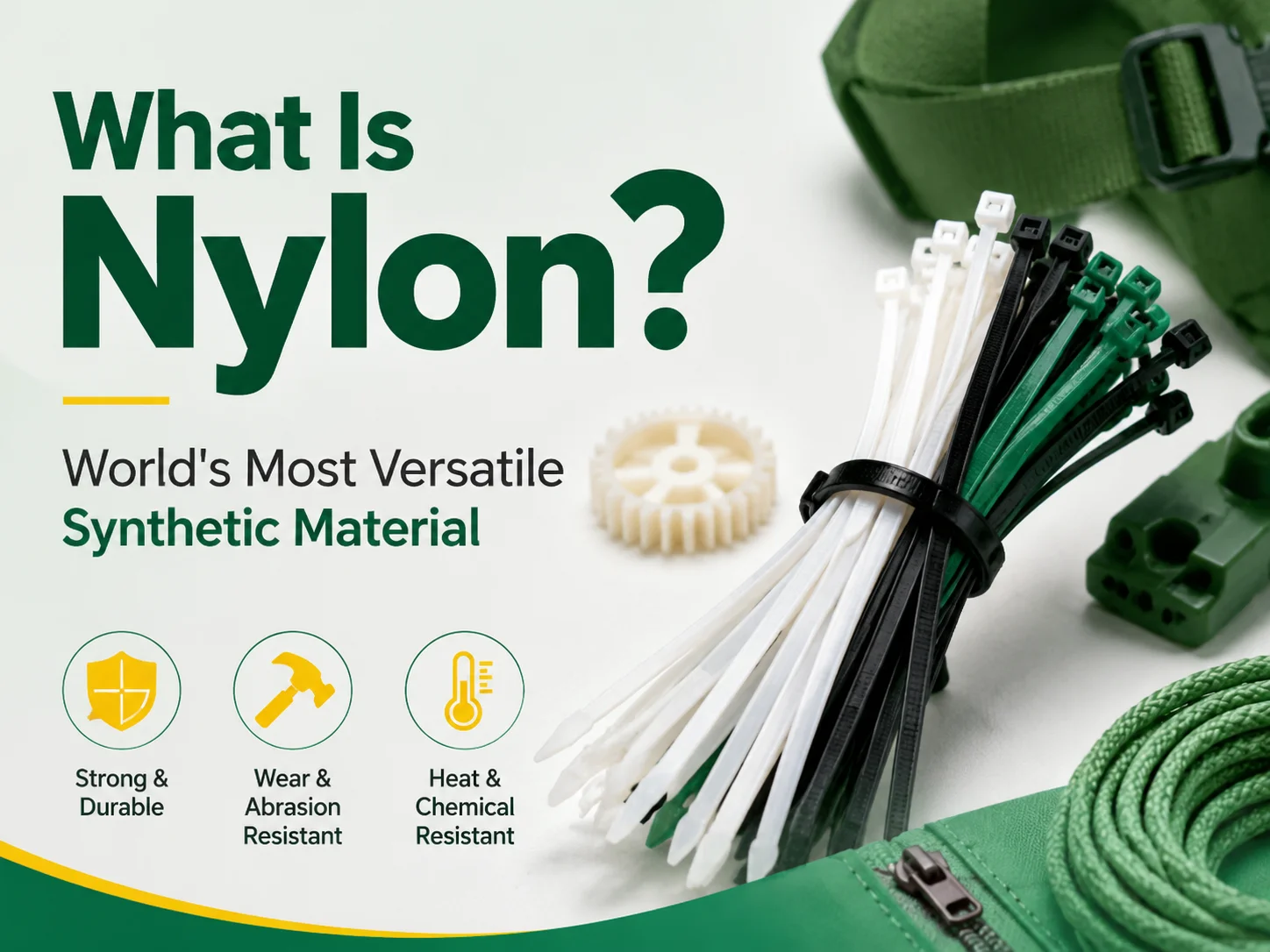
What Exactly Is Nylon?
Nylon belongs to the polyamide family, as it is made out of synthetic polymer. A polymer refers to a long molecule made up of small units called monomers. In case of nylon, monomers are linked together by amide bonds, which is indicated in the name of the polyamide. Moreover, amide bonds allow formation of hydrogen bonds between chains of polymer, which leads to strength, durability and elasticity of nylon.
Three main things about nylon:
- Nylon was the first synthetic fiber that was developed in 1935 by Wallace Carothers and was presented in New York in 1939.
- Nylon is a thermoplastic material which means that it can be melted and formed into required shape repeatedly.
- Nylon is an engineering polymer which makes it one of the most popular materials in various applications.
What Is Nylon Made From?
Nylon is created from the products of petrochemicals (historically, coal was used). There are two main components in the production of nylon, namely:
- Diamine compounds — Double amine molecules (for example, hexamethylene diamine, which is used to produce nylon 6/6).
- Dicarboxylic acids — Double acidic molecules (for example, adipic acid, which is used for nylon 6/6).
The chemical reaction occurs in accordance with the condensation polymerization process and results in chain formation of long molecules. Water is released as a byproduct and a material appears, which can be either melted down and converted into fiber or made into pellets for injection molding.
As far as nylon 6 is concerned, one molecule of caprolactam is polymerized instead of two chemical components, which is the reason why nylon 6 has its name. The difference in naming occurs because PA6 is produced from one component, while PA66 is produced from two components.
How Nylon Is Made: The Process
Nylon has to undergo four stages of production, starting from chemical substances and finishing with final products.
- Polymerization: this means that the chemicals, called monomers, are joined together to create long chains of polymers that bear the name nylon resin.
- Melt spinning (in the case of fibers): the resin is heated, and through a spinneret the polymer comes out as filaments that cool down and harden. After that, it is stretched so that it becomes up to twenty times longer than originally-flourished.
- Compounding (in the case of plastics): in the case of molded items made of nylon resin, various additives are added to prepare it for further steps, like those that prevent it from becoming too hot, complicated, and flammable.
- Forming process: the pellets are molded through special methods, including injection molding and 3D printing, while fibers are manufactured based on typical weaving, knitting, or braiding processes.
Types of Nylon: PA6, PA66, PA11, PA12 & More
Nylon isn’t one material — it’s a family. The most common types:
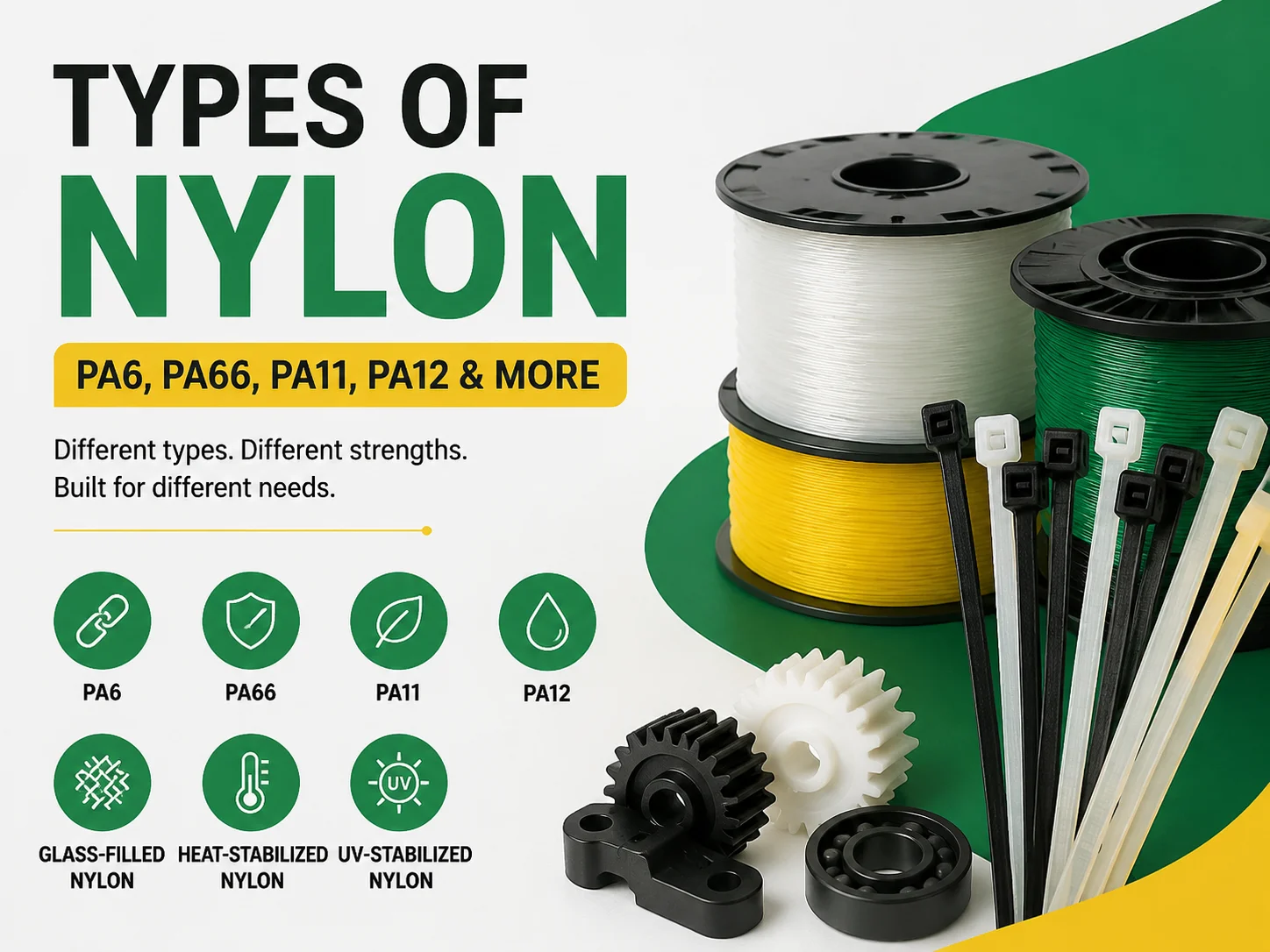
| Type | Full Name | Key Characteristics | Typical Uses |
|---|---|---|---|
| Nylon 6 (PA6) | Polycaprolactam | Good strength, toughness, easier processing, slightly higher moisture absorption | Textiles, fishing line, cable ties, industrial parts |
| Nylon 6/6 (PA66) | Poly(hexamethylene adipamide) | Higher strength, stiffness, and heat resistance than PA6; the premium workhorse | Cable ties, automotive parts, gears, bearings, ropes |
| Nylon 11 (PA11) | Polyundecanamide (bio-based, castor oil) | Very low moisture absorption, flexible, good chemical resistance | Fuel lines, tubing, 3D printing |
| Nylon 12 (PA12) | Polylauryllactam | Lowest water absorption of the common nylons, excellent dimensional stability | Automotive fluid lines, precision parts, medical tubing |
| Glass-filled nylon | PA6/PA66 + GF | 30-50% stiffer and stronger, better dimensional stability | Structural and mechanical parts |
| Heat-stabilized nylon | PA66 + stabilizers | Extended continuous-use temperature (105-130°C) | Engine bays, hot industrial environments |
| UV-stabilized nylon | PA66 + UV additives | Resists sunlight degradation (black grades) | Outdoor cable ties, outdoor gear |
When it comes to purchasing nylon products, knowing what type of nylon to purchase is important: PA66 is the top contender when it comes to cable ties and mechanical components, PA6 dominates in textiles, while PA12 is the best option when it comes to moisture resistance.
Key Properties & Parameters of Nylon
Here are the numbers that define nylon’s engineering performance (typical values for unreinforced PA66):
| Property | Typical Value (PA66) | What It Means |
|---|---|---|
| Density | 1.13-1.15 g/cm³ | Lighter than most metals, heavier than commodity plastics |
| Tensile strength | 60-85 MPa (molded); fibers much higher | Roughly 2-3× polypropylene’s strength |
| Tensile modulus (stiffness) | 2.8-3.5 GPa | Stiff but slightly flexible — a good structural balance |
| Elongation at break | 20-60% | Very tough — bends instead of shattering |
| Melting point | ~255-265°C (PA66) | Handles hot environments far better than commodity plastics |
| Continuous service temp | ~85°C standard; 105-130°C heat-stabilized | How hot it can run long-term |
| Water absorption (24h / saturation) | ~1.2-1.5% / ~6-8.5% | Absorbs moisture — affects dimensional stability |
| Abrasion resistance | Excellent | Outwears most plastics; used for gears and bearings |
| UV resistance | Poor unless stabilized | Needs black/UV grades outdoors |
| Chemical resistance | Good vs oils, fuels, solvents; poor vs strong acids | Works in automotive and industrial environments |
Two properties worth noting are strength (nylon absorbs shocks and stretches instead of breaking unlike brittle plastics) and self lubrication during wear (it runs against both metal and plastic parts with little friction, hence gears and bearings are made of it).
Nylon’s Strengths (and Weaknesses)
The strengths:
- High strength-to-weight ratio – nylon ropes can be more durable than steel ropes of the same weight.
- Great abrasion and wear resistance.
- Toughness – withstands impact, bending, and repeated bending (hinged and snap-lock parts).
- Heat resistance from 100-130 °C and above for engineering grades.
- Resistance to chemicals like oil, fuel, and most solvents.
- Good insulation.
- Elastic properties – fibers stretch and return to their original sizes, which allows the use of stitching, ropes, and ties.
The drawbacks associated with nylon are as follows:
- Moisture absorption — Nylon absorbs moisture, adversely affecting its properties in conditions of high humidity.
- UV degradation — nylon becomes brittle in UV conditions, requiring up to 1-3 years of outdoors exposure.
- Heat aging — Prolonged heating leads to the material oxidizing and becoming brittle unless properly treated.
- Price — The product is much more expensive than other commercial plastics.
- Hydrolysis — High-temperature water and acid will degrade the plastic over time.
- Petroleum dependence — The majority of its grades are derived from fossil fuels.
What Is Nylon Used For?
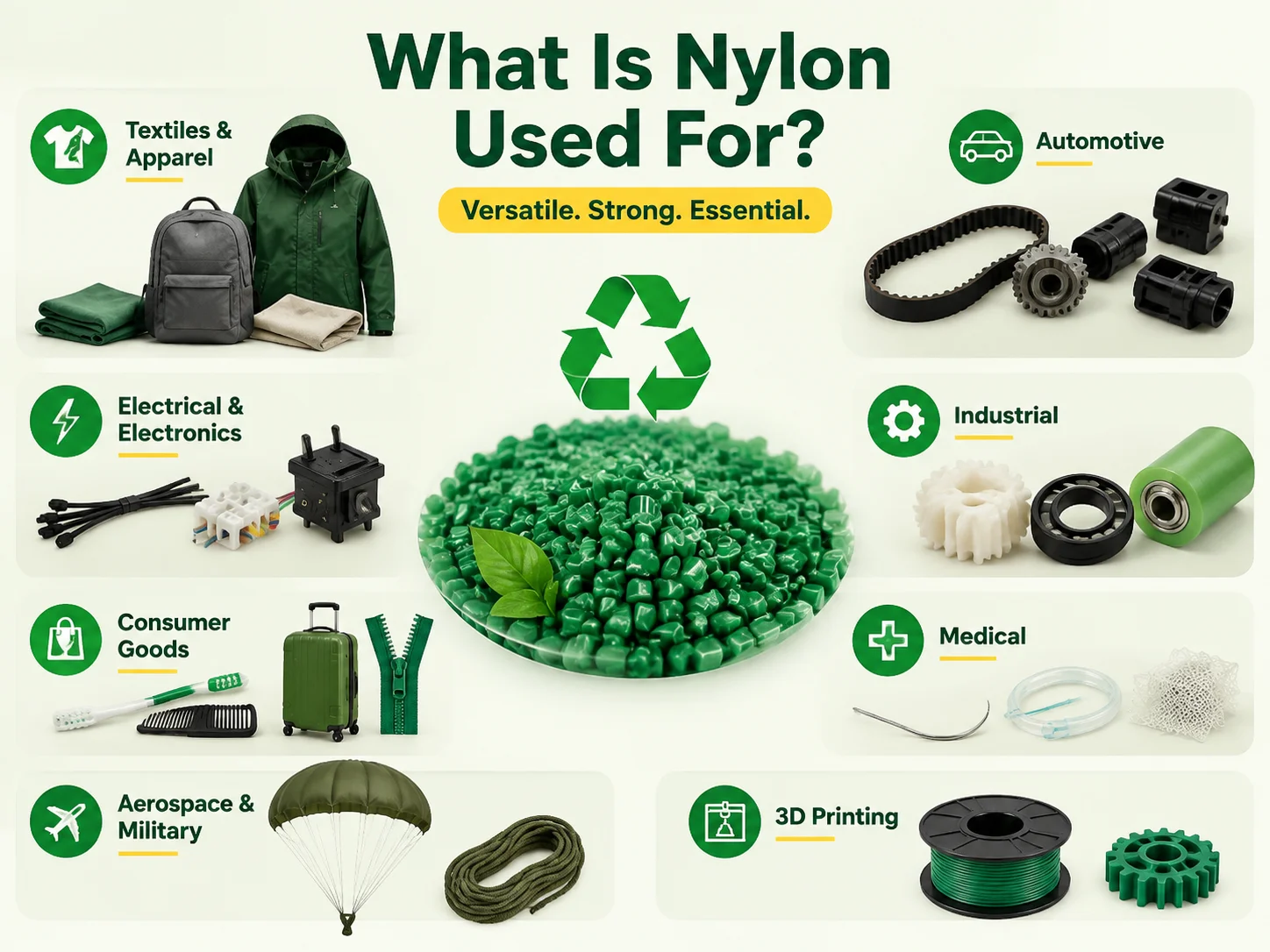
Nylon spans three very different roles: textile fiber, engineering plastic, and consumer product material.
| Industry | Nylon Applications |
|---|---|
| Textiles & apparel | Stockings, activewear, swimwear, rain jackets, umbrellas, parachutes, bags |
| Automotive | Timing belts, gears, fuel lines (PA12), engine components, airbag fabrics, connectors |
| Electrical & electronics | Cable ties, wire connectors, switch housings, coil bobbins, circuit breaker parts |
| Industrial | Gears, bearings, bushings, rollers, conveyor parts, rope and cordage, conveyor belts |
| Consumer goods | Toothbrush bristles, combs, luggage wheels, zippers, carpet, fishing line |
| Medical | Surgical sutures, catheters (PA12), medical tubing, surgical mesh |
| Aerospace & military | Parachutes, ropes, structural lightweight parts, cable management |
| 3D printing | PA12 and PA11 filaments — strong, durable printed parts |
Everyday Items Made from Nylon
If you take a glance around the room, you can spot the following nylon products in the room such as:
- Bathroom: tooth brush bristles, brushes, hooks on the shower curtain, zippers on the make-up bag;
- Closet: pantyhose, sportswear, jackets, straps of the backpack, shoelaces;
- Kitchen: spatula, utensils (heat-resistant nylon), brush for washing and board for cutting.
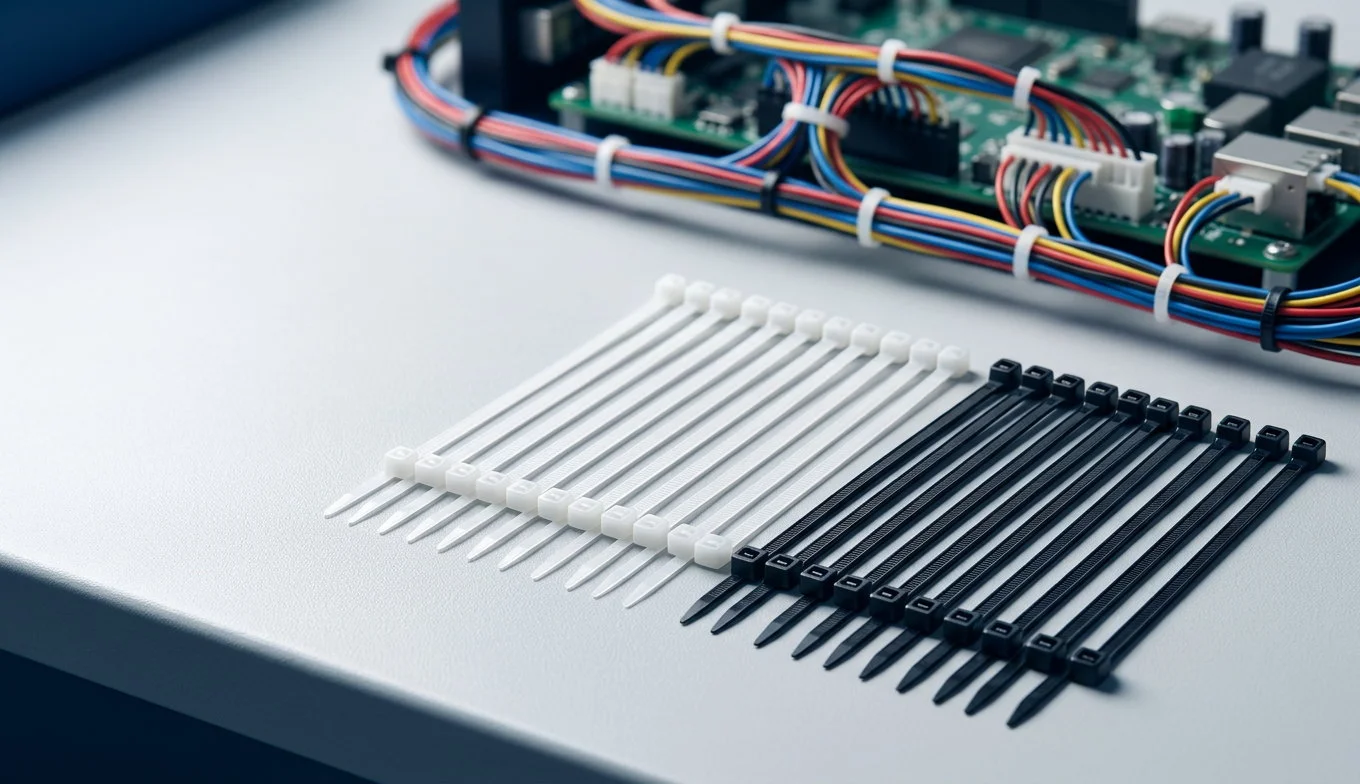
- Garage: nylon cable ties, ropes, tie-down straps, tool handles, car parts under the hood — the same standard cable tie sizes run from mini 18 lb ties for electronics up to heavy-duty 120+ lb ties for industrial bundling.
- Office: chair mesh and casters, cable management, pen mechanisms and printer mechanics.
- Outdoors: tent guylines, backpacks, sleeping bags, fishing nets and cord.
Water, Sunlight & Weather Resistance
One of the commonest queries about nylon involves its performance under the conditions of water and sunlight. And the answers here are:
- Water: This material shows water resistance but not waterproofness. It absorbs moisture (1.2-1.5% in 24 hours for PA66) and becomes a bit softer and weaker, but does not dissolve or decay — rain and dampness are absolutely fine for almost all applications you plan to use it for. Truly waterproof only when coated (fabrics).
- Sunlight: The actual threat to nylon is UV. Unprotected non-synthetic nylon becomes fragile and loses its strength when exposed to the sun’s rays after 1-3 years. UV-stabilized nylon lets you use nylon for 5-10 years or more. Any nylon used outdoors — cable ties, webbing, rope — must be black and UV-resistant.
Summing it all up: nylon resists water much better than cotton but withstands sunlight much worse than polyester, which is why for the manufacture of outdoors products people keep returning to the idea of using “black, UV-stabilized nylon.” That rule matters most for fasteners and cable management outdoors, where choosing UV-resistant cable ties is the difference between a one-year fix and a five-year one — and where the full selection logic is covered in our how to choose the right cable ties guide.
Nylon Material Prices
In comparison to commodity plastics, nylon materials tend to be priced higher, but they still sit below specialized engineering materials in terms of prices. Below are price estimates for 2025-2026:
| Form | Typical Price |
|---|---|
| Nylon resin (PA6/PA66 pellets, bulk) | $2.5-$5 per kg (bulk industrial pricing) |
| Glass-filled PA66 resin | $3-$6 per kg |
| Nylon filament (3D printing) | $30-$60 per kg spool |
| Nylon fabric (per yard) | $3-$15 |
| Nylon cable ties (100 pcs, standard) | $2-$8 |
| Nylon rope (per foot) | $0.10-$1.00 |
For consumers, the price of nylon compared to polypropylene or polyester is often justified by the benefits that nylon offers. That’s the reason nylon ties are 2-3 times costlier compared to cheap plastic ties.
Nylon vs Plastic: Is Nylon Just Plastic?
Here’s an interesting fact that surprises the people: yes, nylon qualifies as type of plastic. More specifically, it is considered as engineering plastic. The rationale behind that term is that the term “plastic” originates from the Greek word, meaning that it is something that can be molded. Thus, it is obvious why people get confused when they use the term “nylon vs plastic.”
| Feature | Nylon (PA66) | Commodity Plastic (PP/PE/PVC) |
|---|---|---|
| Category | Engineering plastic (polyamide) | Commodity plastic (polyolefin/vinyl) |
| Tensile strength | 60-85 MPa | 20-40 MPa |
| Heat resistance | ~85-130°C | ~60-90°C |
| Abrasion resistance | Excellent | Moderate |
| Toughness | High — bends, doesn’t shatter | Variable; PE flexible, PS brittle |
| Water absorption | Yes (1-8%) | Almost none |
| UV resistance | Poor unless stabilized | Poor unless stabilized |
| Cost | Higher | Lower |
| Best example | Quality cable tie, gear, rope | Cheap cable tie, grocery bag, pipe |
What you should keep in mind is that nylon is just another form of plastic but plastic does not mean nylon. If it is mentioned as plastic without any specifications, treat it like common plastic. If you see nylon being mentioned in the product, it is definitely a good product with real strength.
Nylon vs Polyester vs Cotton
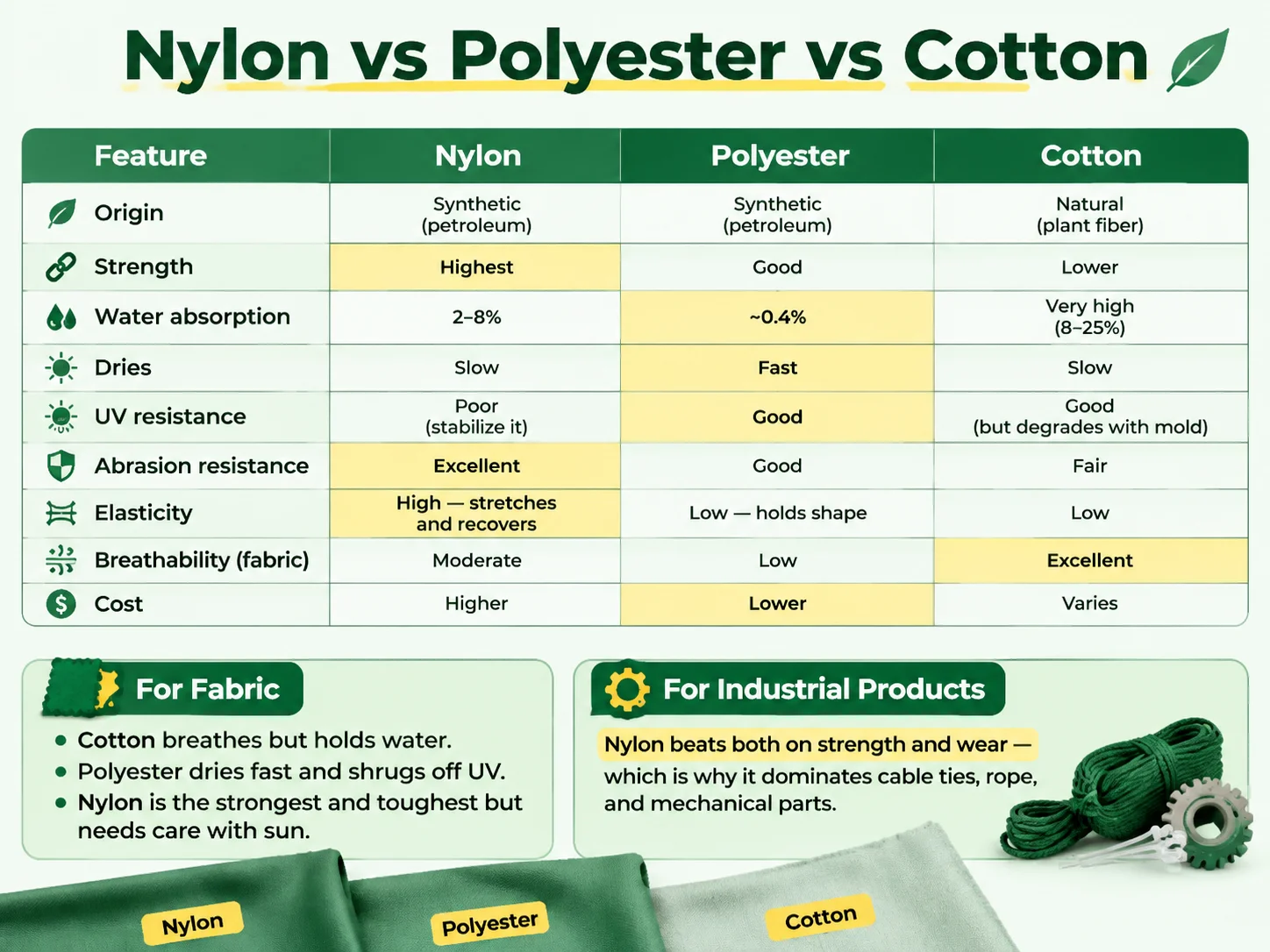
Nylon is often compared with polyester (its main synthetic rival) and cotton (its natural predecessor):
| Feature | Nylon | Polyester | Cotton |
|---|---|---|---|
| Origin | Synthetic (petroleum) | Synthetic (petroleum) | Natural (plant fiber) |
| Strength | Highest of the three | Good | Lower |
| Water absorption | 2-8% | ~0.4% | Very high (8-25%) |
| Dries | Slow | Fast | Slow |
| UV resistance | Poor (stabilize it) | Good | Good (but degrades with mold) |
| Abrasion resistance | Excellent | Good | Fair |
| Elasticity | High — stretches and recovers | Low — holds shape | Low |
| Breathability (fabric) | Moderate | Low | Excellent |
| Cost | Higher | Lower | Varies |
Regarding fabrics, cotton has great breathability, but it absorbs water; polyester dries quickly and resists UV rays; nylon is the strongest, yet it cannot be overexposed to sunlight. Regarding industrial products, nylon outperforms both in strength and durability — which is why it is used widely in cable ties, ropes, and machinery components.
Frequently Asked Questions
Is nylon just plastic?
Indeed, nylon can be classified as an engineering plastic as it belongs to the polyamide group. The term plastic indicates that the material is malleable enough; thus nylon qualifies for the definition by full measure. What is often meant by “nylon vs plastic” is that nylon as an engineering plastic is highly superior to, for example, PP, PE, and PVC as it withstands severe loads and has excellent thermal properties making the material more expensive and suitable for manufacturing items such as cable ties, gears, and ropes.
Is nylon like polyester or cotton?
Nylon is a man-made material like polyester since it is also derived from petroleum. Nylon was made to be stronger, tougher, more flexible, and more resistant to abrasions than polyester as polyester was designed to be better at avoiding water and ultraviolet light. Cotton is a natural fiber obtained from a plant that is breathable and comfortable to wear, but still is weaker than nylon or polyester and takes longer to dry. Hence, nylon is used where strength is needed, polyester is used where ultraviolet light and drying speeds are important, since cotton is great for keeping the body comfortable.
Is nylon safe for skin?
Nylon is generally accepted and commonly used by people (some examples of when nylon is being used are dental floss as well as stockings and stitches used in surgical operations). Nylon isn’t toxic and inert in normal use. Still, because nylon is not as ventilated as cotton, some people experience perspiration and irritation of skin when wearing clothes made of nylon while some individuals are sensitive to nylon’s dyes or other synthetic fabrics. אנשי עור רגיש יופתעו שלא קשה למצוא blends that will let your skin breathe and one should always wash newer nylon clothing before wearing it.
What are the disadvantages of nylon?
Disadvantages of nylon: it retains water (1-8% moisture) which decreases some of its strength and leads to dimensional instability; it deteriorates under UV light unless it has been stabilized (nonprotected nylon will become fragile outdoors); it will deteriorate with prolonged heat exposure unless heat-stabilized; it is more costly than commodity plastics; and it’s made from petroleum products which means it cannot degrade biologically and harms the environment. However, for most applications these issues can be taken care of in a proper way (by choosing the right type of nylon) so that nylon can actually become the best choice among the alternatives.
References
- DuPont — Nylon (Zytel) History and Material Data
- ASTM D4066 — Standard Specification for Polyamide (Nylon) Molding Materials
- ISO 1874 — Plastics: Polyamide (PA) Moulding and Extrusion Materials
- Science History Institute — The Invention of Nylon
- UL Standards — Nylon in Electrical Applications (UL 62275 cable ties)
- MatWeb — Nylon PA6/PA66 Property Database
Conclusion
Since its invention in a lab in 1935, nylon — a synthetic polymer known as polyamide — has become the basis of modern materials and technologies, stronger than regular plastics, more resilient than polyester, and flexible enough to get back into shape after pulling. As the name suggests, it comes from the combination of petroleum-derived diamines and acids, processed through polymerization to create very long molecular chains that are either spun into fibers or molded into shapes. By picking the right type (PA6 for fabrics, PA66 for toughness, PA11/12 for moisture-sensitive applications), as well as the right stabilization method (heat to protect from temperature, UV black for outdoor applications), nylon beats all its competitors — hence those plastic cable-ties that stop your cable arrangement from disarray.