




Nylon Cable Ties: Functions and Applications
Look at any electrical panel, underneath the hood of your car or through a data centre; you’ll find small, ridged strips used to secure cables — commonly referred to as “zip ties”. Nylon zip ties are one of the most commonly used types of fastener in modern manufacturing & construction. Zip ties weigh less than 1 gram and cost only a fraction of a cent. They can secure many different types of cables, from single fibre-optic strands to heavy-armored power cables. Despite having such a simple design, zip ties are very carefully designed products that come in many different sizes, materials, and colours, each of which are designed for use in a specific application. By understanding the functions; types; and how to select zip ties — they become much more than just a commodity; they become a reliable, long-term fastening solution.
What Are Nylon Cable Ties?
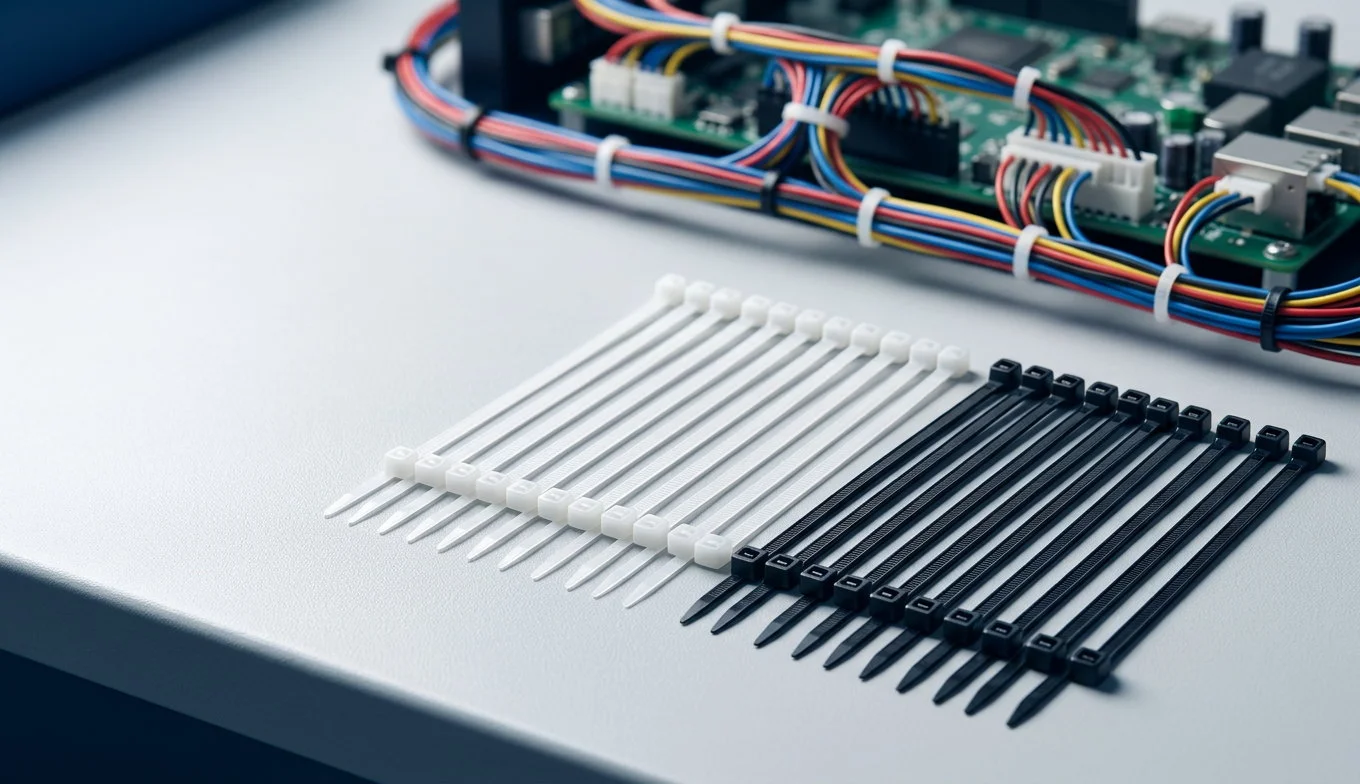
Self-locking fasteners like nylon cable ties come with two parts: an elongated flexible tape that has many serrations on one side, and a head at the opposite end with a pawl mechanism. To create the tie, you feed the tapered end of the tie, referred to as “the tail,” through the head and pull it tight. When fully tightened, the pawl will engage with the serrations, creating a one-way loop that cannot be released without cutting. The most common material for nylon cable ties is nylon 6/6 (polyamide 66), selected for both strength and stiffness, heat resistance, and of course, low cost. In many cases, additives are included in the nylon (for instance, when the cable tie will be used outdoors, UV stabilisers may be added; when used in high heat applications, heat stabilisers are added; and when used inside an electrical enclosure, flame-retardants may be added). With this very simple mechanism, Nylon cable ties can be constructed to hold from several pounds to more than 250 pounds in a tensioned manner by varying the width and thickness of the cable tie.
Core Functions of Nylon Cable Ties
Originally, nylon zip ties were developed to organize, bundle, or attach wires and cables. But with continuous use over the years, more applications have developed for zip ties.
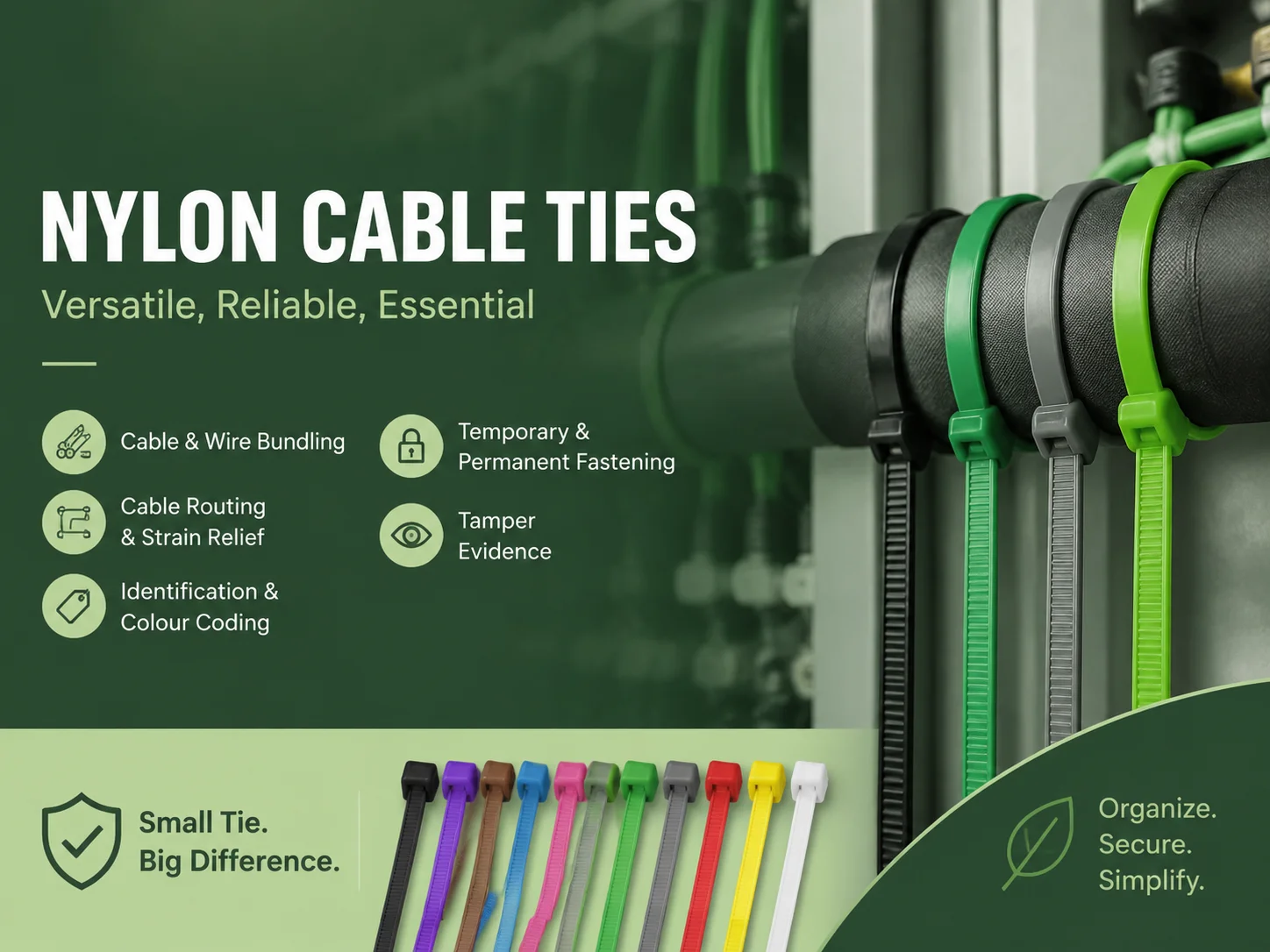
- Cable and wire bundling. Cable ties are often used in electrical panels, control cabinets, and data racks to group conductors into bundles that are neat and manageable. This can help reduce the amount of clutter and provide more airflow.
- Cable routing and strain relief. Cable ties secure cables to ladder racks, ladder racks, and mounting surfaces to eliminate sagging and reduce mechanical stress on connectors.
- Identification and colour coding. Colored ties indicate different types of circuits, voltage pools, and cable types and give technicians a quick visual reference.
- Temporary and permanent fastening. In addition to performing electrical work, cable ties can be used to secure signs, attach pieces to machines, bundle hoses, and even to make emergency repairs when working in the field.
- Tamper evidence. Some combination of color, markings, or head design (flag style) would define whether a panel or enclosure has been accessed since installation.
Types and Specifications of Nylon Cable Ties
Not all nylon cable ties are the same. The selection of a tie for a specific application involves several parameters that are standardised across the industry.
| Parameter | Common Options | Selection Guidance |
|---|---|---|
| Material | Nylon 6/6 (PA66), heat‑stabilised PA66, UV‑stabilised PA66, flame‑retardant PA66, PA12 (for low‑temperature flexibility) | Match the material to the environment. Use UV‑stabilised for outdoors, heat‑stabilised for high‑temperature enclosures, and flame‑retardant where building codes require. |
| Tensile strength | 18 lb (80 N) to 250 lb (1,112 N) | Select based on the weight and tension the bundle will exert. A data cable bundle may need only 18 lb; a heavy power cable may need 120 lb or more. |
| Length and width | 4‑inch (100 mm) to 48‑inch (1,220 mm); widths from 0.09 inch to 0.5 inch | Length must accommodate the bundle diameter plus excess for the tool. Width drives tensile strength. |
| Colour | Black, natural (white), red, blue, green, yellow, orange | Black for UV resistance; other colours for identification and coding. |
| Operating temperature | Standard PA66: -40°C to 85°C; heat‑stabilised: up to 125°C; PA12: down to -60°C | Check the expected temperature range of the installation environment. |
| Certifications | UL listed, UL recognised, CSA, RoHS, REACH, MIL‑SPEC | Required for electrical installations and regulated industries. A UL‑listed tie has passed specific tests for flame retardance, electrical properties, and mechanical strength. |
Where Nylon Cable Ties Are Used
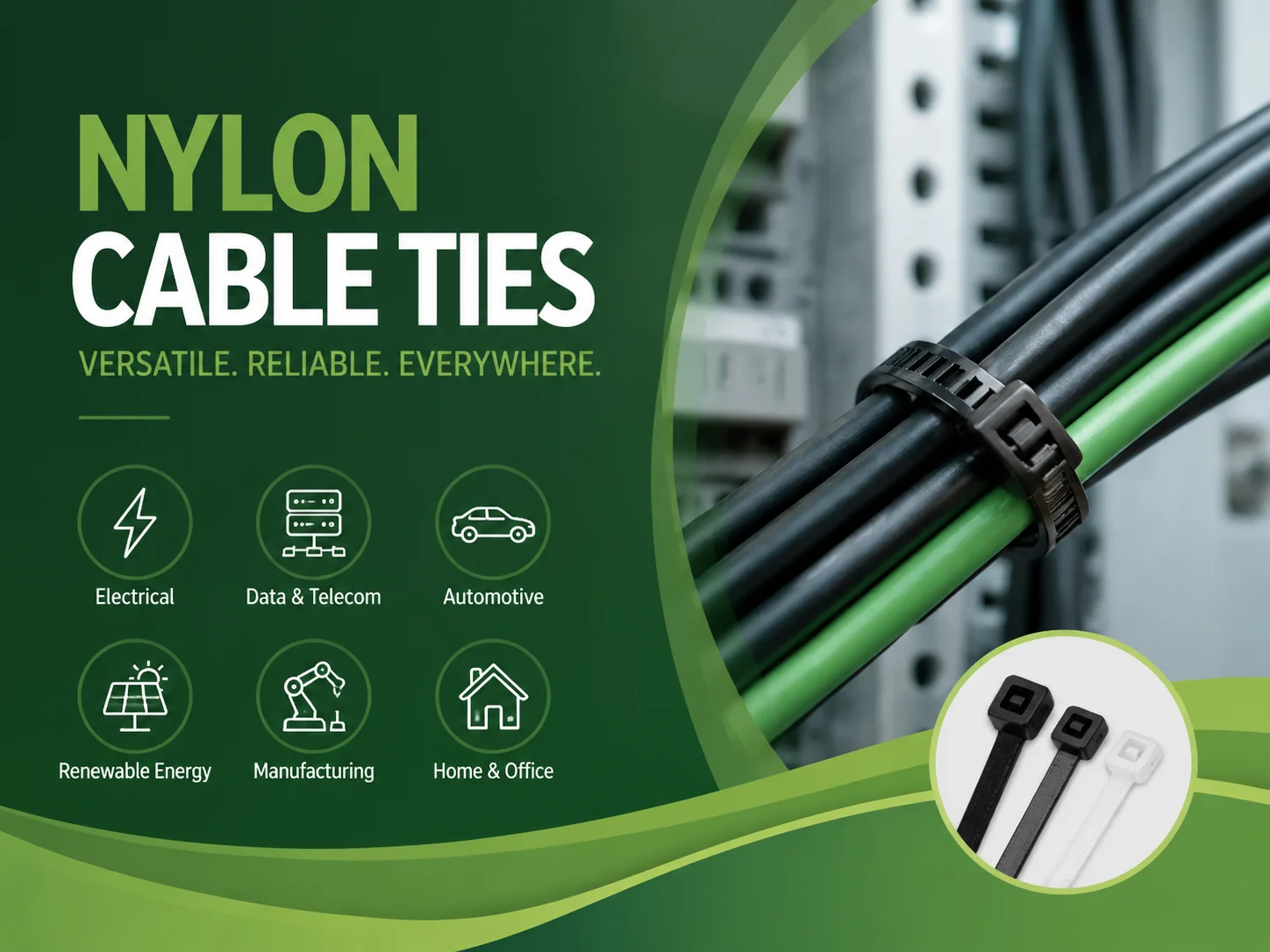
Nylon cable ties are almost universally used across industries using wires, cables or hoses. The primary areas include:
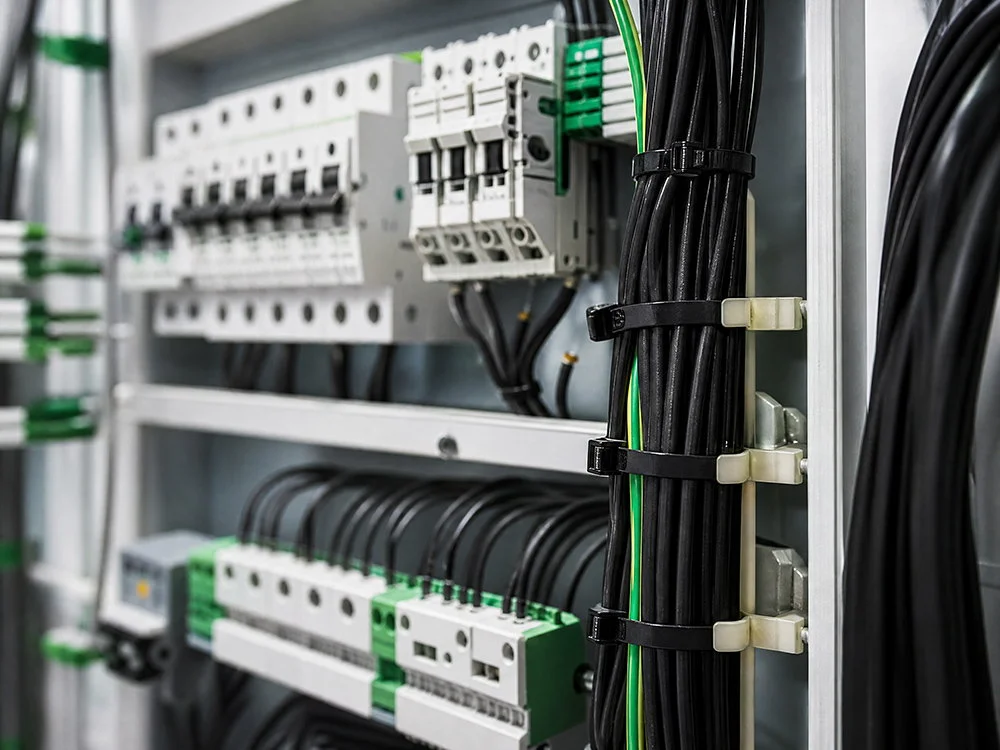
- Electrical and panel building. Cable ties are used in distribution boards, control panels, and switchgear to manage the conductors inside them and keep them separated from any electrocuting surface as well as to meet relevant electrical wiring codes (e.g., the NEC and BS 7671).
- Data centres and telecommunications. Thousands of patch cables connect servers and switches on a rack containing racks of servers and switches. Each patch cord is colour-coded by category (e.g., fibre, copper, and power), allowing easier maintenance and decreased chance of disconnection of the incorrect circuit.
- Automotive and transportation. Only heat resistant ties that will exist in an engine bay’s temperature conditions will be secured to a wiring harness . The fire/smoke/toxicity standards for the rail and aerospace industries require the use of flame/smoke/toxicity compliant ties.
- Renewable energy. DC cables on racking at solar power stations are typically secured using UV-stabilised black cable ties. Heavy-duty cable ties are used for internal cable management within the nacelles of wind turbines.
- Manufacturing and assembly. Hose ties keep pneumatic hoses fastened, hold parts in place while they are being welded or painted and bind parts together for shipping.
- Home and office. Whether you’re straightening out your desk or anchoring down a trellis in your backyard, cable ties made of nylon are the most popular type of fastening product.
How Much Do Nylon Cable Ties Cost?
Pricing of nylon cable ties will depend on quantity, size, certification and material. For example, an average (8‐inch) 50lb black, UV stabilised tie may have a bulk buying price of less than one cent when ordered in lot sizes (100000 units). However, when buying (100 units) from retail stores the unit price would vary between $5-10. An approximate guide for industrial buyers buying from suppliers in volume is provided in the following table:
| Tie Size (Length × Width) | Tensile Strength | Approximate Price per 1,000 (Bulk, Standard PA66) |
|---|---|---|
| 4″ × 0.1″ (100 mm × 2.5 mm) | 18 lb (80 N) | $3 – $6 |
| 8″ × 0.14″ (200 mm × 3.6 mm) | 50 lb (222 N) | $5 – $10 |
| 12″ × 0.3″ (300 mm × 7.6 mm) | 120 lb (534 N) | $15 – $30 |
When looking for specific types of cable ties (such as flame-resistant), heat treated cable ties) or ties with MIL standards certification), the cost will be higher than just standard nylon cable ties. Depending on whether you are buying stainless steel cable ties vs nylon cable ties will affect their pricing range very differently. If you are a company purchasing large numbers of cable ties you would want to partner with companies who can provide you with custom lengths, custom colours, private label, and volume pricing to create significant savings when purchasing a large quantity (ie. 1000 to tens of thousands) of cable ties at once.
Choosing the Right Nylon Cable Tie for Your Application
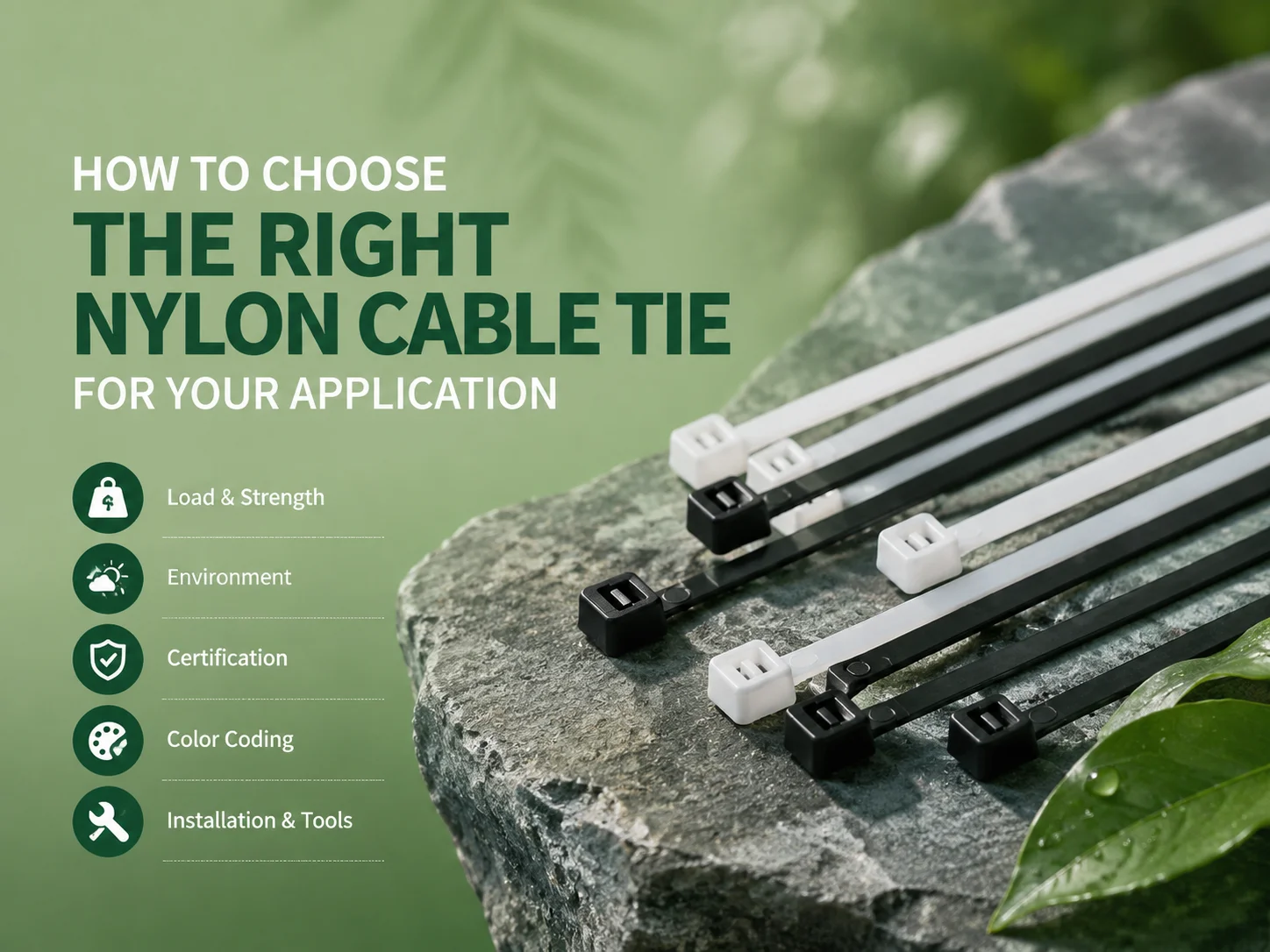
Selecting the correct nylon cable tie involves answering a few practical questions:
- What is the total weight and diameter of the bundle? Tensile strength and length can determine how much load is placed on a tie. It is recommended that at least the static weight plus some safety factor be rated for ties.
– A tie must be able to withstand the tensile load and length of the tie. Ties may need a rating for static weight and an additional safety margin for vibration or movement. - Where will the tie be installed? An outdoor black UV stabilised/bonded tie is to be used. A tie that has been heat stabilised is needed to prevent the material from breaking down in a hot industrial environment. If in a plenum/air handling area, the requirements in your code may require you to use a tie that is flame resistant.
- Does the installation require a specific certification? Each tie installed within a UL-listed enclosure must also be UL-listed or recognized by UL as well. Ties used in military or aerospace installations may need to comply with particular MIL-SPEC standards.
- Is colour coding needed? When needed for identification, make sure you’re selecting the proper color and that it is available in both your size and strength requirements. Keep in mind when working outdoors; black is the only color that has natural UV resistant properties.
- What tooling will be used? For small quantities, hand application is acceptable. For more extensive, production-type applications, a use of a tensioning tool offers the benefit of an even tightening and flush cut, allowing an installation to be completed faster and with better quality.
Major manufacturers such as Panduit, HellermannTyton, and ABB (Thomas & Betts) produce a full range of nylon cable ties, and their websites are a useful reference for specifications and performance data. For buyers who need a cost‑effective, customised, or bulk solution, B2B suppliers like igoto can provide the product range, the certifications, and the pricing structure that a large installation or an OEM production line requires.
Frequently Asked Questions
What are nylon cable ties used for?
Nylon cable ties Cable ties come in many different shapes and sizes. They are commonly used for fastening and securing cables and wires; however, the scope of their application has expanded to also include identification purposes (i.e. colour coding), tamper-evidence, and general-purpose fastening. Industries that utilize Cable Ties are; Electrical Installation, Automotive, and Packaging.
What is the best material for cable ties?
Nylon 6/6 (PA66) It is a general purpose material used to build cable ties, has good flexibility, strength, heat resistance and low cost. If it will be used in an environment where heat-stabilized, UV-stabilized or flame-retardant types of PA66 are available, those grades would be best suited. If the cable tie is to be made for extreme outdoor conditions or very high temperatures, stainless steel is the preferred choice.
Are nylon zip ties better than plastic?
A nylon tie is a type of plastic tie known as a ‘polyamide,’ or ‘plastic’ as other forms are known. When making nylon zip-ties from this material, they were compared to other plastic zip-tie materials such as polypropylene and PVC; nylon ties are stronger, more resistant to melting, and exhibit superior long-term stability to any form of other plastic cable-ties.
What is the difference between nylon and PVC cable ties?
Nylon cable ties Nylon is the primary material used for electrical and industrial applications, because it is a stronger, more rigid material which can withstand heat. In comparison to nylon, PVC is a flexible material that has good chemical resistance to certain acids and oils, but is not very strong and has a lower temperature rating than nylon. Generally, nylon is preferred for most electrical and industrial applications, while PVC is limited to use in specific chemical environments.
Can nylon cable ties be reused?
Standard nylon cable ties are made to be used once. The tie can be cut after the pawl has engaged with the serrations and cannot be released from its locked position. Reusable plastic cable ties are available that have a small tab on the pawl for easy release. They are slightly more expensive than standard cable ties and are used in cases where temporary bundling or regular changes are necessary.
References
- Panduit — Cable Ties and Wire Management — Manufacturer technical data and selection guides.
- HellermannTyton — Cable Management Products — Product specifications and installation guidance.
- ABB (Thomas & Betts) — Ty‑Rap Cable Ties — Manufacturer of the original Ty‑Rap cable tie and related products.
- UL — Cable Tie Certification Requirements — Explanation of UL listing and recognition for cable ties used in electrical equipment.
Nylon cable ties are a product that rewards thoughtful selection. The right tie, in the right size and material, installed with the correct tension, will secure a bundle for decades. The wrong tie — a natural nylon tie outdoors, or a tie rated for 18 lb holding a 50‑lb cable — will fail, sometimes long before anyone notices. Understanding the functions, the specifications, and the environment in which the tie will work turns a commodity item into an engineered fastening solution. For the electrical contractor, the panel builder, and the procurement manager, that understanding is the foundation of a reliable, code‑compliant, and cost‑effective installation.