


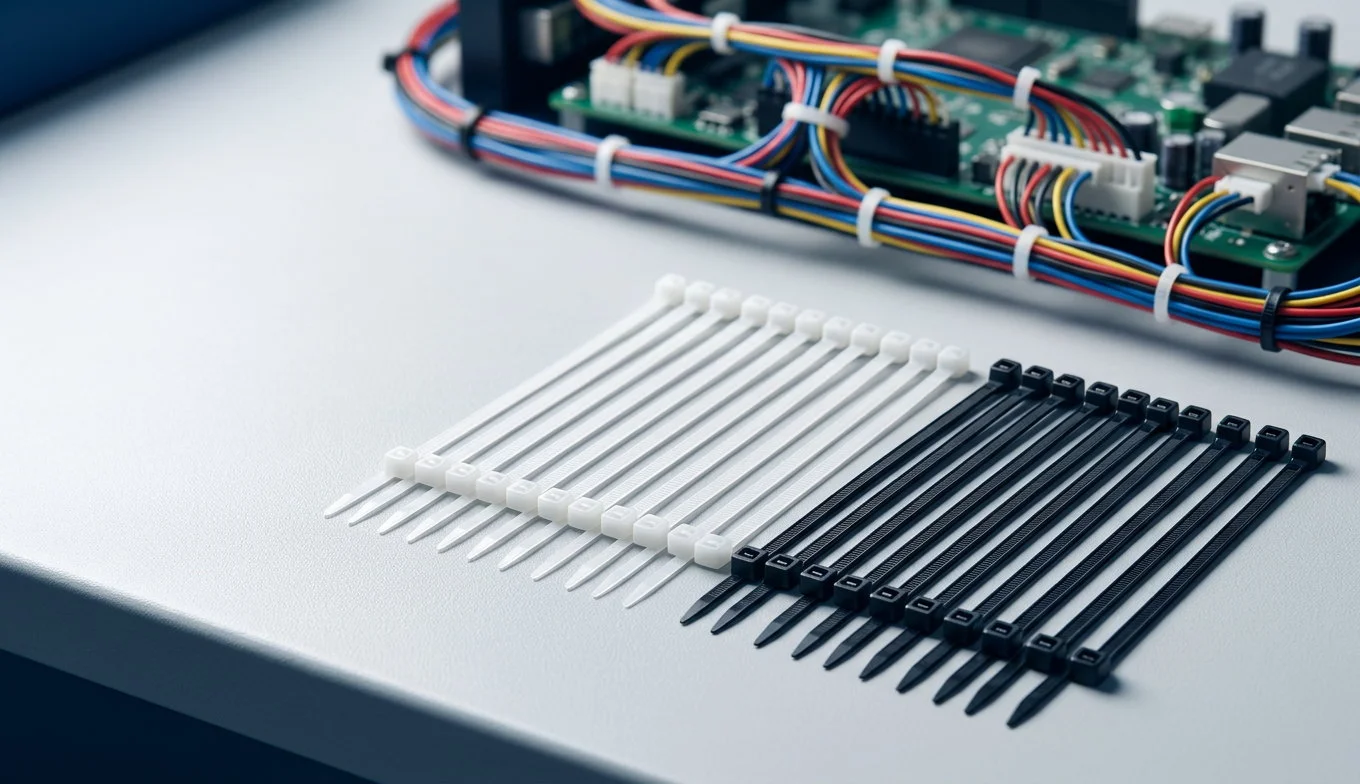



What Are Plenum Rated Cable Ties
You’re a network installer working inside office plenum space or an area above the drop ceiling used for HVAC air. Your job specifications require you to use “plenum-rated cable ties” which will be inspected by an inspector during the job. You decide to use standard nylon cable ties and your project manager stops you noting that these ties are not plenum rated. But what is the difference between plenum-rated and non-plenum rated cables? It is not just for aesthetics, but for safety reasons as well. In case of fire, standard nylon cable ties can melt and drip creating fire and toxic smoke and spreading them through air distribution system to the plenum space and the entire building. Plenum-rated cable ties are designed to prevent that event from taking place.
This guide provides all necessary information about plenum-rated cables such as what they are, how to distinguish them from the regular cables, what standard they meet, their price, characteristics and performance as well as installation instructions and methods for defining plenum-rated cable ties.
To put it briefly, plenum-rated tie wires refer to wires which can be used in plenum spaces and air spaces as per the guidelines of National Electrical Code (NEC). The definitions behind plenum-rated ties point to the materials which hold low smoke rating and have flame-proof features, such as materials like Halar (ECTFE), Tefzel (ETFE) or nylon with fire-retardant treatment.
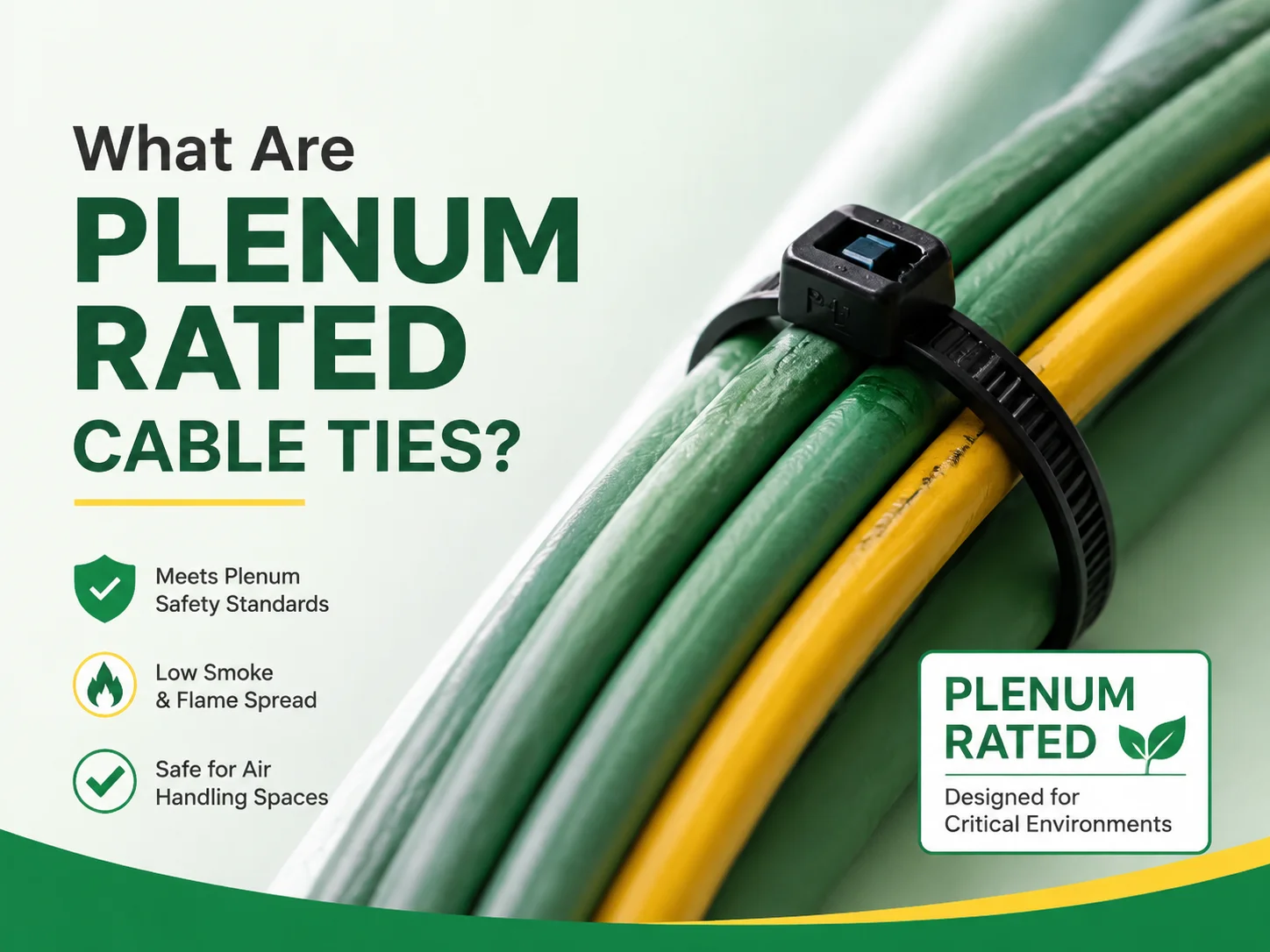
What Are Plenum Rated Cable Ties?
Plenum-rated cable ties (often called zip ties) are those which fulfill the building code safety standards for their use in plenum and other air-moving areas. This type of cable tie is produced using materials that do not ignite easily and do not produce a significant amount of smoke. This ensures that no cables will contribute to spreading the fire in the HVAC system in the event of a fire incident.
What Is a Plenum Space & Why Does It Matter?
A plenum space refers to the area in which air is circulated in the HVAC system of the space. It is normally referred to the area above the drop ceiling and also the area below the raised floor, which is the area of air circulation used to produce hot or cold air in the rooms. Because of air circulation, any fire in this area of plenum could result in smoke and flames being transported throughout the building via duct system.
For this reason, the NEC (NFPA 70) requires that all materials that are being used in plenum space, including the cable and tie options that are used to hold cable in position, must have a flame spread rating, fire rating and shall also produce low smoke.The same flame-safety thinking applies across the building — our article on zip tie heat resistance covers how temperature ratings interact with fire safety in other locations.
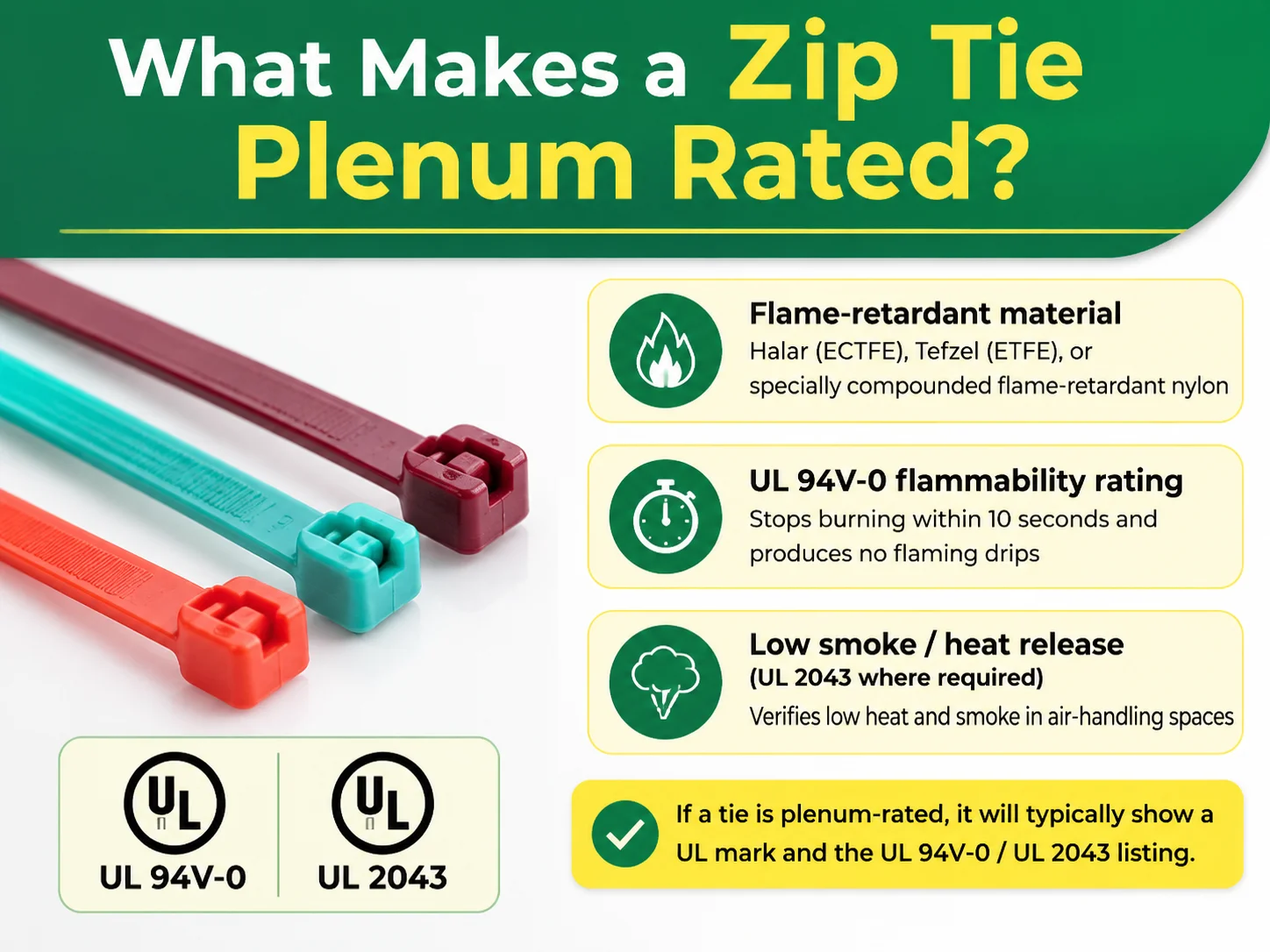
What Makes a Zip Tie Plenum Rated?
Three key features constitute a plenum-rated zip tie:
- A flame-resistant material: either Halar (ECTFE), Tefzel (ETFE), or specially compounded flame retardant nylon. These materials will self-extinguish and produce no dripping flames.
- A UL 94V-0 flammability rating: the most stringent common plastic flammability rating, which means the tie will extinguish after 10 seconds of flame evacuation – and will emit no burning drips that can ignite any materials.
- Low smoke/heats release (as applicable UL 2043): many plenum-rated ties are also tested in accordance with UL 2043, which means they do not emit excessive smoke or heat during a fire.
Typically, a plenum-rated tie will show the UL certification mark (as well as UL 94V-0/UL 2043 certification), and will have a specific color: maroon/burgundy for Halar, aqua for Tefzel, and orange/red for specialized flame retardant nylon.
The Standards: UL 94V-0, UL 2043 & NEC Requirements
| Standard / Code | What It Requires | Relevance |
|---|---|---|
| NEC (NFPA 70) | Materials in plenum/air-handling spaces must have low flame spread and low smoke | The code that makes plenum ties mandatory in these spaces |
| UL 94 (V-0) | Plastic self-extinguishes within 10s, no flaming drips | The flammability grade of plenum-rated materials |
| UL 2043 | Fire test for heat and visible smoke release for air-handling space products | Explicit air-handling-space approval — the “plenum rating” test |
| UL 62275 | Cable tie standard (Type 1, 2, 21 classifications) | Categorizes ties; Type 21 is standard, not inherently plenum |
There are plenum ties that do not have a UL 2043 certification (for some, certification comes via UL 94V-0 + local AHJ endorsement); nonetheless, UL 2043 provides the standard of reference. When you come across a term such as “plenum rated”, it is advisable to look for UL 94V-0 rating at least or preferably UL 2043 certification.
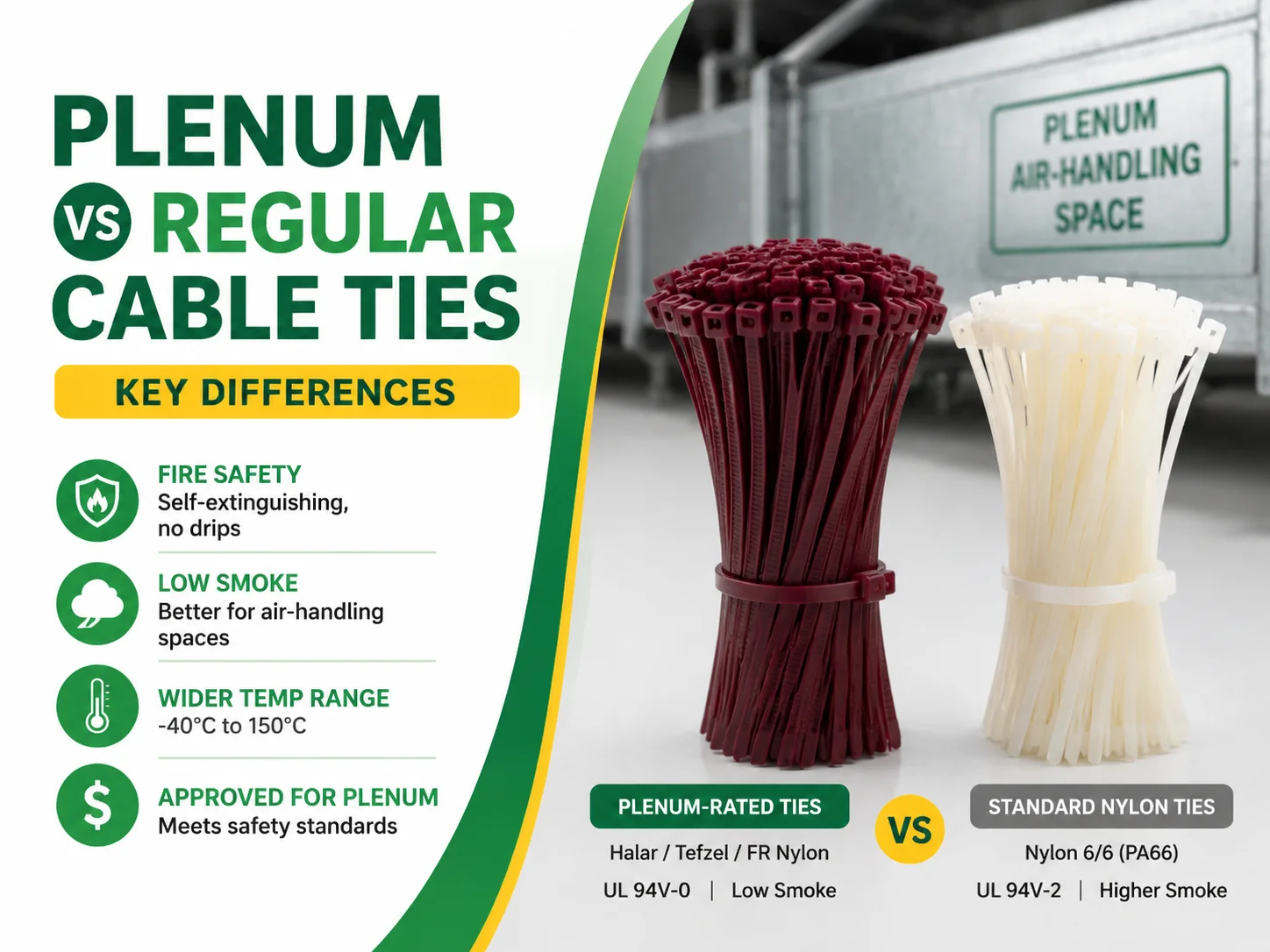
Plenum vs Regular Cable Ties: Key Differences
| Aspect | Plenum-Rated Ties | Standard Nylon Ties |
|---|---|---|
| Material | Halar (ECTFE), Tefzel (ETFE), FR nylon | Standard nylon 6/6 (PA66) |
| Flammability | UL 94V-0 (self-extinguishing, no drips) | UL 94V-2 (burns, can drip) |
| Smoke in fire | Low smoke (UL 2043 for air-handling) | Higher smoke, toxic gases |
| Temperature range | -40°C to 150°C (wider for Tefzel/Halar) | -40°C to 85°C typical |
| Color (identifying) | Maroon, aqua blue, orange/red | Natural, black, any color |
| Typical cost per 100 | $30–$150+ | $5–$15 |
| Approved for plenum | Yes | No |
Materials Used in Plenum Ties
- Halar (ECTFE), is a type of fluoropolymer which possesses superior resistance to fire and chemicals, in addition to covering a wide range of temperatures. As the representative material for plenums, this type of polymer affords protection against temperatures as low as those occurring in cryogenics and those reaching up to 150degrees Celsius.
- Tefzel (ETFE) is another variant of fluoropolymer, but it is stronger, resistant to flames and radiation; its common color is aqua blue.
Flame-retardant nylon (FR PA66). This polymer is produced specifically for the sake of achieving UL 94V-0 classification and satisfying the necessary requirements for the generation of smoke. - PEEK is a unique and rare type of polymer that is extremely expensive.
- What is common in all these materials is that non of them allows flames to spread or produce smoke as regular nylon does.
Specifications & Performance
The common specifications of plenum ties are as follows:
- Sizes: Plenum ties range in length from 4 inches to over 14 inches with the most common lengths being 7.4 inches, 8 inches, 11 inches and 15 inches.
- Thickness: The plenum ties have thicknesses of between 2.5 mm and 12 mm.
- Tensile strength: The tensile strength ranges from 18 lb for miniature ties to between 50 lb to 120 lb or more for standard and heavy-duty ties. The 50 lb tensile strength is the most common for this type of product.
- Temperature range: The temperature range of -60°C to +150°C. The temperature range of Halar and Tefzel is -40°C to +105°C.
- Flammability: These products are UL-94V-0 flame retardant; they have low level of smoke and are UL 2043 certified.
- Max bundle diameter: The maximum bundle diameter is between 2 inches to 3 inches depending on the size of the tie.
- Additional features: The plenum ties are UV resistant (many of them), RoHS compliant and some have military specifications.
Price: What Plenum Ties Cost
Plenum ties cost 3–10× standard ties because of the specialty materials and certification. Typical retail pricing:
| Product | Typical Price | Per Tie |
|---|---|---|
| FR nylon plenum ties (100-pack) | $30–$70 | $0.30–$0.70 |
| Halar (ECTFE) plenum ties (100-pack) | $85–$150 | $0.85–$1.50 |
| Tefzel (ETFE) plenum ties (100-pack) | $50–$100 | $0.50–$1.00 |
| PEEK ties (high-end) | $200+ | $2+ |
| Bulk (1,000+) | Wholesale discount | Drops significantly |
In the case of an ordinary network installation, the FR-nylon or Tefzel alternatives give you a good balance between cost and adherence to cable regulations, while Halar is the best choice for extreme conditions. If you’re putting together heavy cables in plenum areas,Our guide to heavy-duty zip ties explains how to size ties for bigger, heavier bundles while keeping the required ratings.
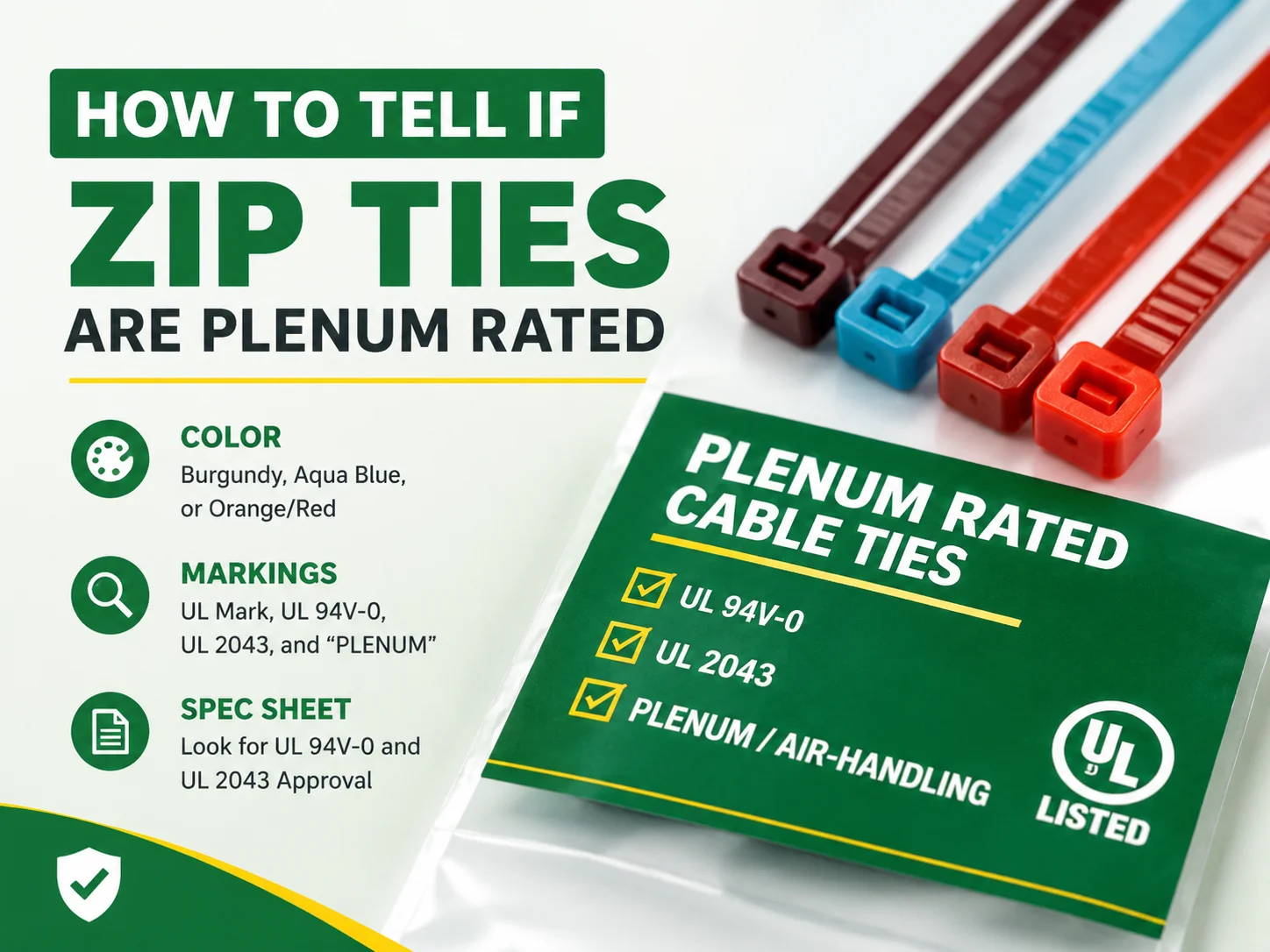
How to Tell If Zip Ties Are Plenum Rated
Three quick checks:
- Color: token ties are normally a distinctive color — maroon (Halar), aqua (Tefzel), or red/orange (FR nylon). Natural white or black ties are typically standard, not plenum.
- Marking: Ensure the product’s certificate bears UL labelling and UL 94V-0 rating (UL 2043 being listed is also a bonus). It should say plenum, or air-handling, or UL 2043 on the label.
- Specification sheet: renowned manufacturers (e.g. Panduit, HellermannTyton, Thomas & Betts) indicate flammability rating and plenum approval in the spec sheet; if it is not indicated, it is not a plenum.
Important: “flame retardant” or “UL 94V-2” in the label does not mean it is plenum. Generic type 21 ties are V-2, which is fine for standard applications but not for plenum spaces; only UL 94V-0 (and ideally UL 2043) is eligible.
Installation & Removal
- Installation: The procedure for installation of plenum ties is the same as that for the regular ties. Place the tail through the head, secure it firmly with a cinch, and cut off the end with a pair of cutting pliers. When doing a large installation, take help of a tensioning tool to tighten the ties consistently and repeatably.
- Do not overtighten: Fluoropolymer ties (Halar/Tefzel) are stiffer than nylon ones; therefore, make sure the ties are tight, but do not exert excessive force on them until they show stress-whitening or start cutting through the cable insulation.
- Removal: Plenum ties are single-use ones. In order to take them off, cut them with pliers or a releasing tool. Only a few brands offer releasable ties that can be used for temporary binding.
- Trimming: Always make sure that the remaining parts of the ties have been cut down to level with the surface – a short piece can be dangerous for hands and cable covers, and in the plenum area it is completely unneeded.
Frequently Asked Questions
What are plenum rated cable ties?
Plenum-rated cable ties are zip ties that have received approval for use in environments that contain plenum and air-handling areas (above suspended ceilings and below raised floors) in order to let HVAC air pass through them. These ties are manufactured from flame-resistant and smoke-reducing materials (Halar/ECTFE, Tefzel/ETFE, or flame-resistant nylon) that comply with the UL standard for flammability (UL 94V-0) as well as UL 2043 for air-handling areas. The NEC requires the use of plenum-rated materials there, meaning it is impossible for standard nylon cable ties to be utilized in these areas. They are usually distinguished by their unique colors (maroon, aqua, orange) and are sold at prices from $30 to $150 per 100-pack.
How to tell if zip ties are plenum rated?
Three verification methods to determine (1) the color: plenum ties are usually a dark red shade, bright blue, or orange/red, while plenum-approved ties are rare in white or plain black; (2) markings: shows UL seal and UL 94V-0 (best would be to have UL 2043) and phrases like “plenum” or “air-handling”; and (3) data sheet: credible manufacturers will include information about origin and rating. If the packaging indicates only “flame-retardant” or displays UL 94V-2, the type is not plane-rated – Type 21 V-2 ties are standard, not plenum.
What makes a zip tie plenum rated?
Three means determine how the zip tie obtained plenum-rated: (1) a flame-retardant material – Halar (ECTFE), Tefzel (ETFE) or special flame-retardant nylon, as opposed to plain nylon 6/6; (2) a UL 94V-0 flammability rating – the tie extinguishes in under 10 seconds and does not produce any flammable drops, and (3) UL 2043 testing, necessary for complete air-handling acceptance, stating low heat/smoke emission. All this means that the tie does not help flames to spread in case of plenum fire which is one of the NEC demands for the materials used in air-handling spaces.
Are type 21 cable ties plenum rated?
Type 21 cable ties are standard nylon ties with a UL 94V-2 flammability rating and do not have a plenum rating. UL 62275 “Type 21” refers to standard types of ties; this means that they burn and drip flames, which is a problem for plenum spaces. For plenum applications it is necessary to consider ties rated UL 94V-0 (and ideally UL 2043). Such types of ties are usually made of Halar, Tefzel, or flame-retardant nylon. When choosing ties for use in air-handling spaces keep in mind to check the flammability rating apart from just the type number.
References
- UL 2043 — Fire Test for Heat and Visible Smoke Release for Air-Handling Space Products
- UL 94 — Flammability of Plastic Materials (V-0/V-2 classifications)
- UL 62275 — Cable Ties standard (Type 21 classifications)
- NFPA 70 — National Electrical Code: plenum/air-handling space requirements
- Panduit — plenum-rated cable tie specifications (Halar/Tefzel)
- HellermannTyton — plenum and air-handling cable tie data
Conclusion
Plenum-rated zip ties are fire safety essentials rather than optional upgrades. Under the NEC code, materials that do not promote burning or generate smoke must be used in both plenum and air-handling applications. Plenum ZIP ties can be recognized by the flame resistant material used (Halar, Tefzel, or FR nylon), the UL minimum flame resistance standard 94V-0, and in some cases UL standard 2043.
They are sold at anywhere between 3 and 10 times the price of standard ties (for 100 ties cost may range from $30 to $150), but in plenum locations, this is just a matter of compliance and not preference. Identifying plenum ties can be done by checking for colors and labels. Installation does not differ much from the position of standard ties, except for the fact that it is necessary to avoid overtightening.