

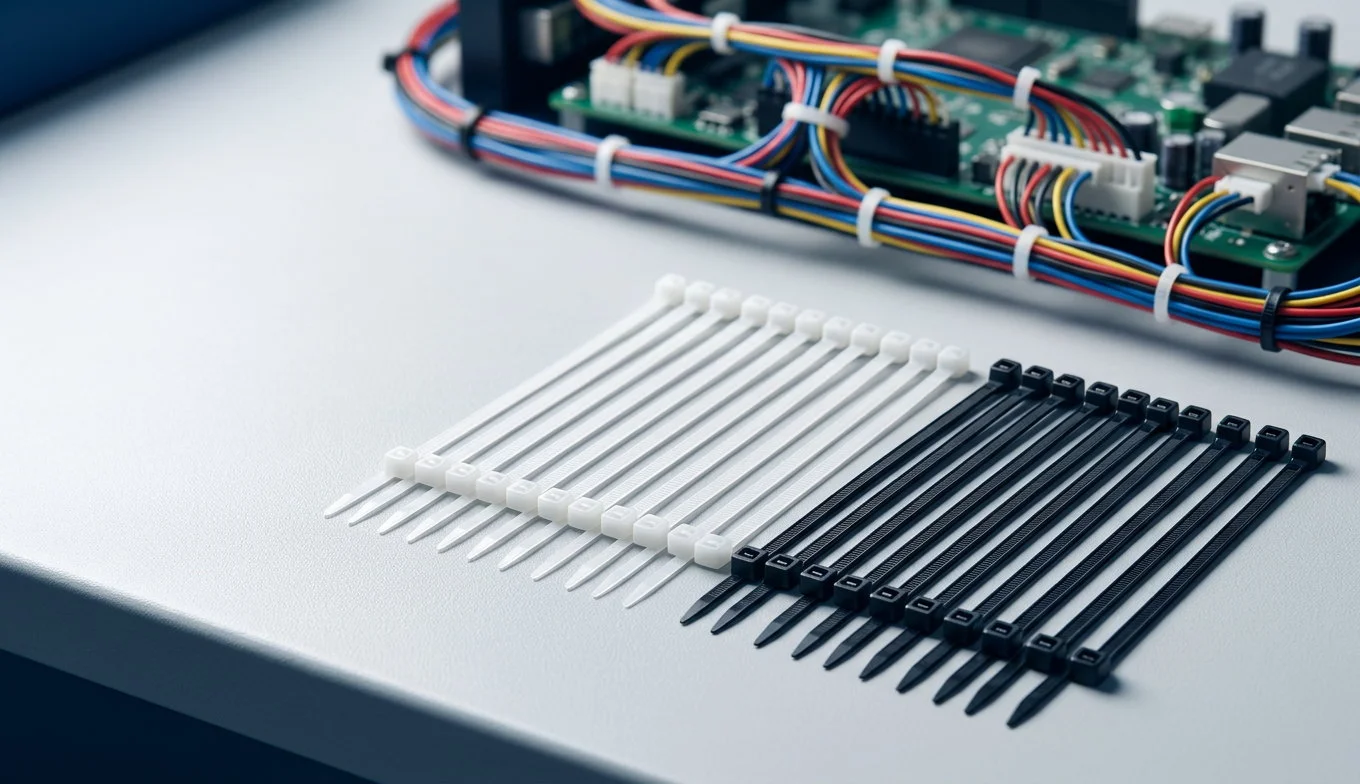

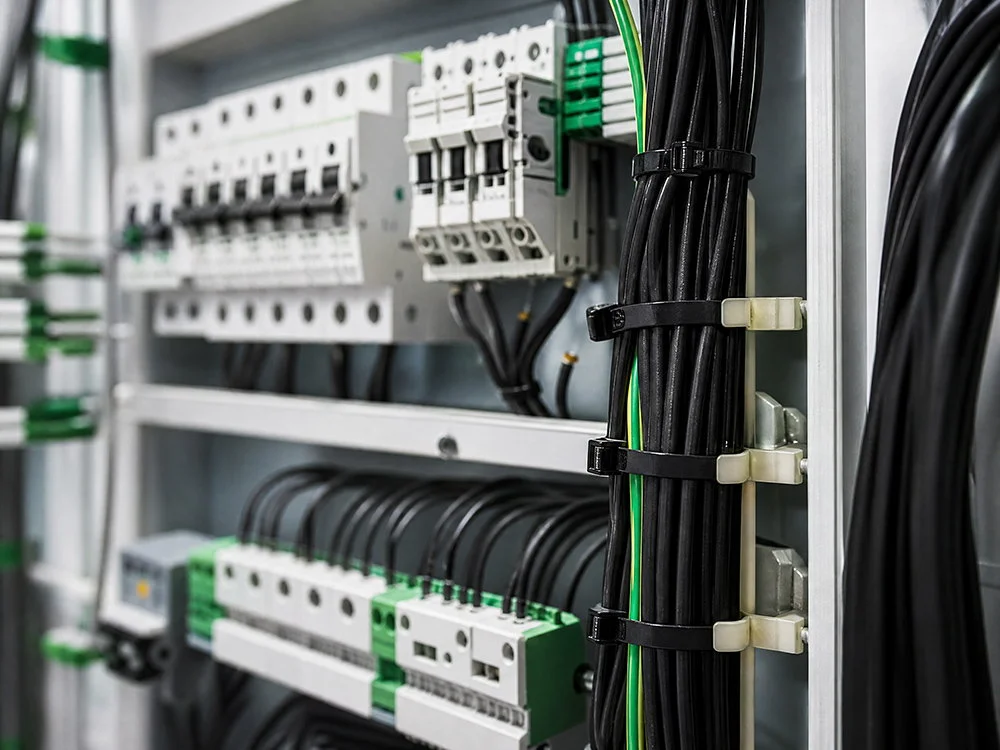

Clear Zip Ties: What They Really Are and Where to Use Them
A lighting technician preparing for a corporate event orders a bag of clear zip ties, thinking of an unseen fastener that would match the white piping and the light-colored ceiling grid. However, the item that arrives is a bunch of beige nylon straps that can’t be termed transparent. The overall performance of these straps is impressive. Nevertheless, there is a huge discrepancy between clients’ imagination when they type in the words invisible zip ties in the search line and what they get delivered.
The confusion regarding the different interpretations has to be cleared, because when you figure out what these ties really are, or what they are not, you will be able to use this fastener effectively and subtly. The guide provides the essential information on the composition, the appearance, the right and incorrect application of the ties, their sizes, and the price you have to pay for the product.
Summary: The term “clear” is a bit of a misnomer. Clear zip ties are natural, undyed nylon 6/6 cable ties — translucent and milky off-white rather than truly transparent. They are used indoors because of their clean, elegant appearance and also because they do not conduct electricity and give off smoke, but they are not able to withstand UV rays. Use them for indoor cable management, for display at stores and events, or when bundling lightweight items. If used outdoors, opt for a black UV-rated option.
What “Clear” Actually Means
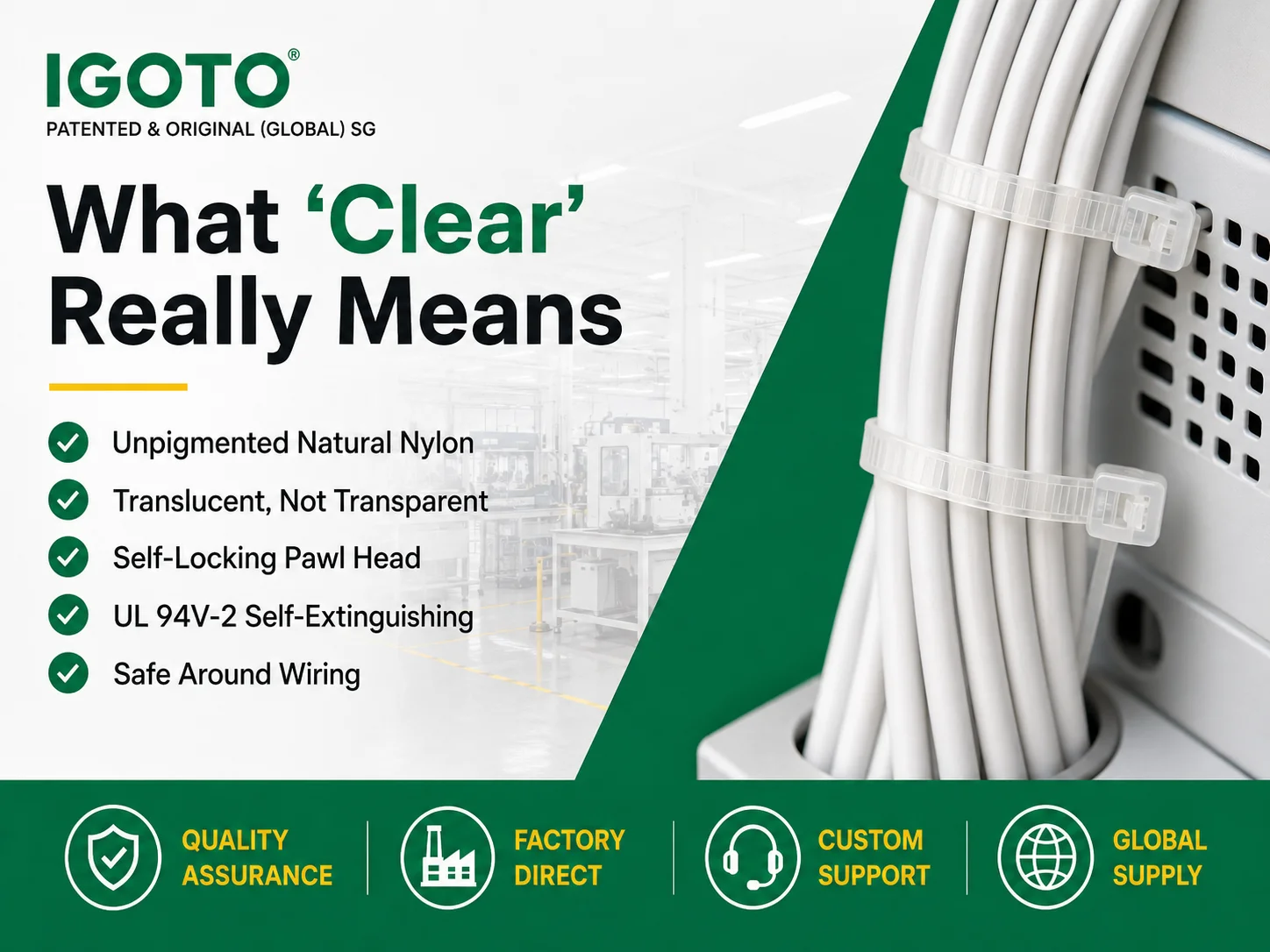
The key aspect to remember is that the clear zip ties cannot really be labeled as transparent. The reason behind this is that the plastic used in the production of zip ties is still produced in a translucent shade of white called “raw”. In case the manufacturer does not use pigment, the resulting ties are referred to in manufacturing as natural ties. Despite the fact that natural ties do allow some light to pass, sellers say that they are clear but quite often even white.
For that reason, customers order clear zip ties, thinking that they will receive glass-like transparence and end up being a bit surprised. The reason why is that a clear zip tie made of water-clear plastic is not something a customer would normally find. If the web page says that the zip tie has characteristics of being soft and translucent, then it means that it just did not go through the process of adding pigment. If the product clearly states that you require some level of optical transparence, then you should look for this.
Moreover, there is a nuance between natural and white zip ties. The difference lies in the fact that a natural tie is not painted at all and is therefore referred to as such. A white tie is painted white in order to become perfectly opaque and white. Nevertheless, both types of ties are translucent and soft and are used exclusively indoors.
The Material Behind Clear Zip Ties
The type of ties referred to by whichever name are made of nylon 6/6 which is the polymer usually used for types of fasteners you can find around the hardware stores. The decision to go with the polymer explains why these ties have practically all properties related to their usage.
Nylon 6/6 has a high strength-to-weight ratio, it can easily stretch enough to prevent breakage and it is not electrically conductive which makes it safe to use near cables. It has a UL 94V-2 fire resistance rating which means that it is a material that will extinguish on its own rather than cause a fire. Nylon works effectively in many industries and can be used from minus 40 to plus 80 degrees Celsius for standard brands. It fares well with oils and solvents. As it is non-conducting, it will not short circuit if it lies on a live contact. And as it is without pigment, it meets the low smoke requirements which are important for wiring done in walls.
The zip mechanism works like with any first class cable ties. It consists of a single cast head with a built-in claw to catch the teeth of the tape. Thus, if you pull it tight, it will stay tight. The head of a properly manufactured zip tie is low enough not to get caught on something. The color doesn’t interfere with anything — the black tie and natural zip tie from the same batch will have the same zip shape and teeth. The only difference is the impact of sunlight which we will talk about soon.
Where Clear Zip Ties Belong
In the indoors, where sun is not visible and the climate is controlled, there is an ample amount of ground there. The reason for this is practical and aesthetic at the same time.
On the aesthetic side of it, a light colored nylon is blending perfectly with light walls, white wire concealers, and neutral furniture, which a black nylon can never do. That’s why the people involved in the activities of audiovisual installation, event management, retail merchandising and home theater making are all keeping these tie solutions handy for them. The mess of white extension wires, decorated by a nice white natural tie looks very neat compared to the same extension wire mess bound with black ties. For any things happening in the public like booths at exhibitions, shop windows, photo-shoots or wedding decoration, use of natural ties for fastening things has become a new trend.
On the practical side of it, the physical parameters of the electrical materials bring the desirable effect. For handling low-voltage electrical cables, using of a natural nylon tie gives excellent results. These ties can be used in most households for creating trellises for indoor plants, securing cabinets with children in the house, binding decorations safely too. They are inexpensive, and there is nearly nothing they cannot hold when indoors.
As for food products, natural nylon ties are often used in cases where the use of colored ties could be harmful. A word of caution is due here: always check with the suppliers the information on the quality of these ties and their suitability for food contacting areas.
Here comes a choice: if direct sunlight is present even behind the window and only for a short period, it means that one should better use UV-rated black ties rather than clear or natural ties.
The One Place They Fail: Sunlight
This is the most critical point that explains why several outdoor installations deteriorate after a couple of years post-construction. Natural nylon has no protection against UV light and when left outdoors under the sun, its polymer chains begin to break down. The straps start losing their flexibility, the color changes from yellow to chalky and to the point when it is so brittle it can crumble at the least touch. Depending on other variables, this could happen within six to eighteen months.
Outdoor ties rely on carbon black for protection — it is the pigment that not only gives the tie its black color, but also absorbs and dissipates the solar energy before it is able to destroy the nylon. Perhaps, this is the reason black is the most common outdoor color and if a certain tie is not black, it means that it is not protected against these elements. Thus, under certain conditions, a clear tie is the short-term solution for the problem. We cover this failure mode in depth in our guide to whether white zip ties are UV resistant, and the longevity trade-offs across materials in what plastic zip ties last the longest.
It is worth knowing that a genuinely UV-stabilized light-colored tie does exist — manufacturers can add a non-carbon stabilizer such as a hindered amine light stabilizer instead of carbon black — but these are a specialty item, they cost more, and the packaging will explicitly say “UV resistant” or “outdoor rated.” If a pale tie does not carry that claim in writing, treat it as indoor-only. Color alone is never proof of UV resistance; the specification is.
Sizing and Strength
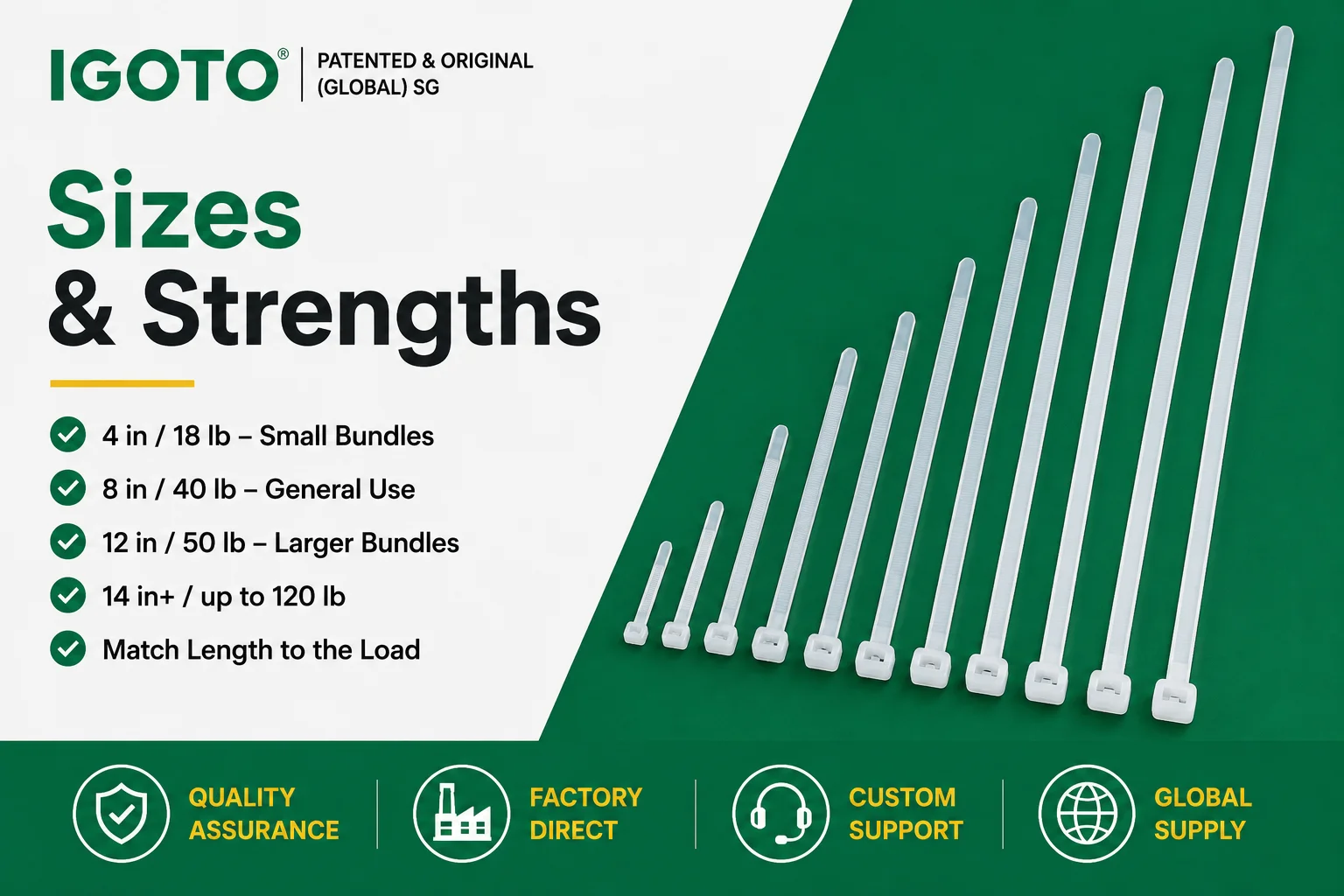
The issue of color is resolved; thus, we now need to make a decision concerning measurement, specifically, how long and strong the tie will be. The length of the material must be such that the package can be properly covered with an excess, and depending on the class of the tie, its tensile strength or the amount of weight the tie can withstand, expressed in pounds, has to be greater than the amount of weight the tie is going to have to bear. For a tie to achieve proper results, either the length or tensile strength must be chosen properly.
| Length | Typical tensile rating | Best-suited indoor jobs |
|---|---|---|
| 4 in (100 mm) | 18 lb | Phone and USB cables, earbud cords, small bundles |
| 6 in (150 mm) | 40 lb | Computer cables, small conduit, plant stems |
| 8 in (200 mm) | 40–50 lb | General cable management, patch panels, most household tasks |
| 11–12 in (280–300 mm) | 50 lb | Larger cable bundles, light fixtures, event rigging indoors |
| 14 in and up | 50–120 lb | Heavy indoor bundles, ductwork, larger conduit runs |
The ratings shown above are typical, not universal; a heavier-gauge tie of the same length can withstand much more, and manufacturers provide specific numbers for parts. A good principle to follow is to take a tie with a tensile strength at least double the static load it will hold, plus some more for any application involving vibration or impact.
Clear vs White vs Black: A Quick Comparison
Because these three descriptions get tangled together in listings, it helps to line them up side by side. The table below assumes standard nylon 6/6 ties of the same size class.
| Attribute | Clear / Natural | White (pigmented) | Black (UV-rated) |
|---|---|---|---|
| Appearance | Translucent, milky off-white | Opaque bright white | Solid black |
| UV resistance | None — indoor only | None — indoor only | Yes, via carbon black |
| Best environment | Indoor, shaded, decorative | Indoor, light-colored surfaces | Outdoor and industrial |
| Discreetness on pale surfaces | Excellent | Very good | Poor |
| Relative cost | Lowest | Low | Slightly higher |
| Typical strength | Identical for a given size — color does not change tensile rating | ||
In conclusion, clear and white colors are closely related and the most significant difference is opacity. Black is the other color used outdoors and there is no difference in strength between clear and white colors, so one should not be misled by the label “clear” to think that one clear product can be used for an outdoor application if its strength value is big enough. If you want the full picture on how color functions as a code rather than just a look, our article on the versatile uses of colored nylon cable ties breaks it down.
Buying: “Clear Zip Ties Near Me” vs Buying in Bulk
When a job comes up unexpectedly, the natural instinct is to search for clear zip ties near me and grab a small pack from the nearest hardware store or big-box retailer.
In case of a one-time household repair — one bundle of wires or mending a trellis — using a knot made of common nylon would probably be the right choice.
But whenever the quantity is involved, the statistics are already different. The retail multi-pack is overpriced, the choice is determined by what is laid down in the shop on that day, and quality may vary greatly from one product to the other when looking for unbranded imports. For builders, installators, companies, and everyone who uses offsets for their business, the best option would be to buy from the manufacturers or reliable suppliers: the constant content of nylon 6/6, documented tensile index that meets requirements, necessary lengths of cords, and certificates that can be checked. Thus, if you search for zip ties clear in bulk, you will get much better prices than when searching in the shop.
Decision point: in case of one small task, the fastest pack found in the nearest store will be a good choice. In all other cases when there is a repeated use, consider purchasing from manufacturers who should provide adequate prices, guaranteed material quality, and documentary rating instead of guessing.
When purchasing products in bulk, check some certain quality indicators: materials 100% virgin PA66 and not recycled or blended nylon, ability to comply with a 94V2 standard of Flammability and being certified by other organizations such as UL, CE, RoHS, REACH, and willingness of the producer to publish tensile reports per number.
Frequently Asked Questions
Are clear zip ties actually transparent?
Not in the sense of being glass-like that most people think of. Normally made from natural non-colored nylon 6/6, which is semitransparent and with a white milky appearance. Some light passes through them, but they are not transparent. Genuine transparent ties are a specialty product that you need to verify in the specifications.
Is there a difference between clear and white zip ties?
The term “clear” or “natural” implies that there is no pigment used and there might be some transparency. The term “white” refers to the use of white pigment to make white and opaque finish. In functionality, both types are the same, but they both refer to indoor products and suppliers use these terms alternately.
Can I use clear zip ties outdoors?
This is intended strictly for short-term purposes. Natural nylon does not block UV rays, will become discolored, hard, and fragile when exposed to sunlight within months. If anything to be used outdoors is meant to stay for a long time, find a black tie with UV protection or check whether the slogan of its application mentions “outdoor use”.
Are clear zip ties as strong as black ones?
Indeed, using the same volume and thickness, the tensile strength would depend on the features and type of nylon but not color. So both a transparent nylon tie and a black tie from the same category would show similar strength. The only difference between the ties would be their resistance to UV rays.
Where can I buy clear zip ties near me?
For quick jobs, small packages are available at hardware stores and home improvement chains. For larger orders and better pricing, as well as assurance of quality, it’s best to buy from a manufacturer or a distributor.
Are natural nylon ties safe around electrical wiring?
Correct. Nylon 6/6 does not conduct electricity, has a self-extinguishing rating of UL 94V-2, and remains uncolored for low smoke emissions for in-wall applications. As usual, make sure you verify any requirements that may apply to the specific electrical and building codes in the product certifications.
References
UL Solutions — UL 94 flammability classifications for plastic materials. ul.com
ASTM International — ASTM G154, Standard Practice for Operating Fluorescent UV Lamp Apparatus for Exposure of Materials. astm.org
RoHS and REACH — European Union directives on restricted and registered substances in manufactured goods. environment.ec.europa.eu
Sort Your Indoor Bundling the Right Way with IGOTO
Whether you call them clear, natural, or white, these ties are one of the most useful things you can keep within arm’s reach — as long as they stay indoors and you have sized them for the load. IGOTO manufactures natural and white nylon 6/6 cable ties in the full range of lengths and strengths, molded from 100% virgin PA66 and certified to UL, CE, RoHS, and REACH standards, with custom sizes, colors, and private-label packaging available for bulk and OEM orders. Explore the complete IGOTO cable tie product range to match the exact tie to your project, and reach out for factory-direct pricing when you are ready to buy beyond the retail shelf.