



Drywall, Concrete or Brick? How to Fix Cable Ties to Any Wall
A zip tie wall anchor is any device that secures a cable tie on the wall, regardless of whether the wall is drywall, concrete, brick, block or wood. This process looks easy but many DIY cable runs, CCTV installations or garage wiring projects fail at this stage: the adhesive pad falls from a dusty block wall, a plastic plug spins in crumbling plaster and a cable tie itself becomes brittle with time due to UV rays. The purpose of this guide is to explain what kind of anchor is used for each type of wall, how it is installed and how to choose a cable tie that will not be a weak point in a secure installation.
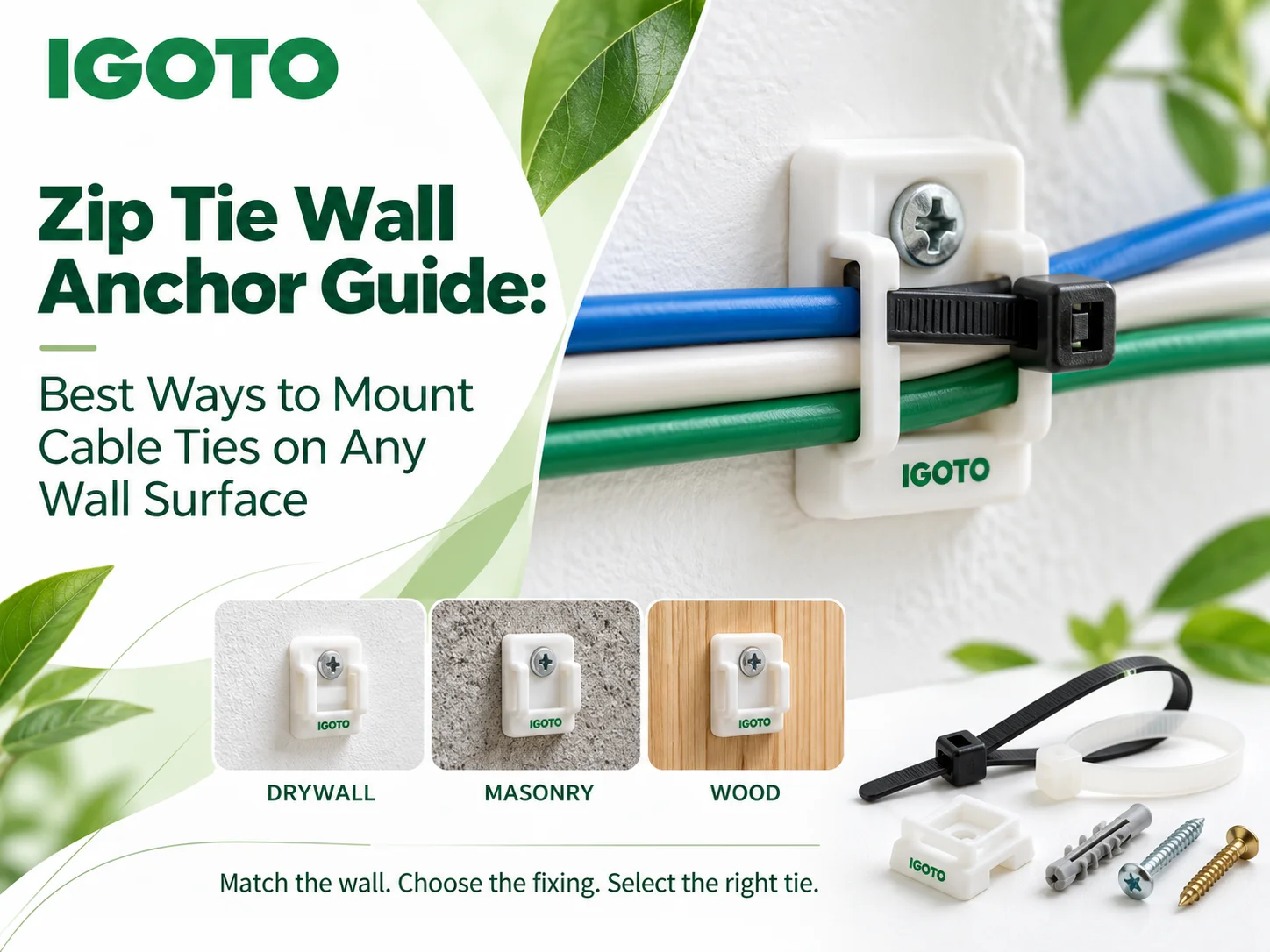
A zip tie wall anchor is a device which attaches a cable tie to a wall safely so that the cables, hoses or pipes follow a certain path. Depending on the wall type the most suitable anchor has to be chosen: adhesive type for smooth and clean surfaces and for light applications; screw anchor for plasterboard and the like which also is fastened into studs; masonry type for solid concrete and bricks; and hollow block and hollow brick anchors for other building materials. Whatever type of anchor is chosen, the choice of cable ties must correspond to it meaning that its width must match the mount slot and its grade and type must correspond to the environment.
Why Wall Type Decides Everything
The same strap can grip well on one wall while failing within days on another. This is the result of wall surface behind the mount rather than strap itself. Four questions should be raised when deciding what type of cable tie anchor to use:
Is the wall solid or hollow? In the case of solid concrete and brick, a plug will be surrounded from all sides. With drywall and hollow block, air hole is left behind the wall.
Is the surface smooth and clean? An adhesive will only adhere well if there are no dust or openings on the surface.
How heavy is the load? A few network cables have little weight. But a garden hose, heavy electric cable or outside lighting might require a mechanical anchor.
Indoors or outdoors? Sun and rain can attack adhesives, plastic elements and natural nylon.
If you only need a quick overview of the mounts themselves, our cable tie holder guide compares adhesive, screw, push and edge mounts. This article focuses on the wall: what goes into it and how to install it properly.
Zip Tie Wall Anchor Options Compared
The table below summarizes the main anchoring methods and where each one belongs. Load figures vary widely by brand and wall condition, so always follow the rating on the anchor packaging.
| Anchor method | Best wall types | Drilling | Relative holding power | Typical use |
|---|---|---|---|---|
| Adhesive tie mount | Painted drywall, tile, glass, metal, smooth plastic | None | Low | Desk cables, LED strips, light indoor runs |
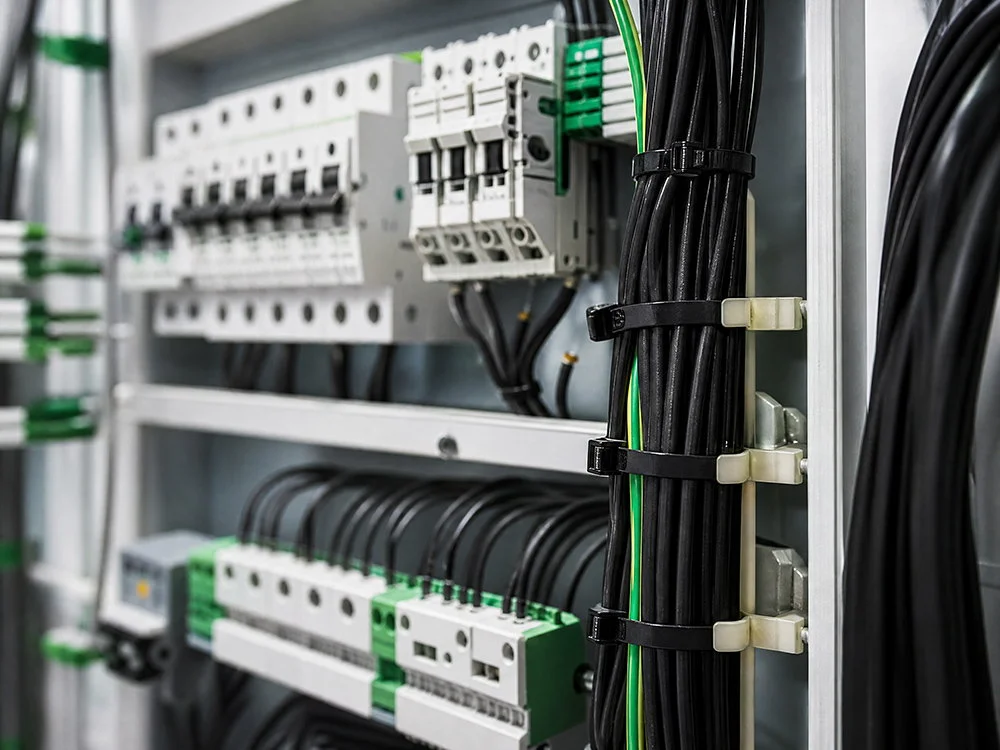
| Screw-mount tie base into a stud or timber | Wood studs, timber, plywood | Pilot hole | High | Garage and workshop wiring |
| Screw-mount tie base with a drywall anchor | Drywall between studs | Small hole or self-drilling | Low to medium | Network, CCTV and speaker cables |
| Press-in masonry tie mount | Concrete, solid brick, stone | Masonry bit, usually around 6 mm (1/4 in) | Medium | Exterior walls, basements, utility rooms |
| Wall plug with a screw-mount tie base | Concrete, solid brick, dense block | Masonry bit sized to the plug | Medium to high | Outdoor lighting, hoses, heavier cable runs |
| Concrete screw with a tie base | Concrete, solid masonry | Masonry bit sized to the screw | High | Industrial and commercial installs |
| Long frame plug or adhesive anchor | Hollow block, hollow brick | Masonry bit, often rotary only | Medium to high | Older buildings, perforated brick walls |
Tools and Materials You Will Need
- A stud finder and a utility locator to detect wires and pipes
A cordless drill for wood and drywall, plus a hammer drill with carbide masonry bits for concrete and stones
Pencil, measuring tape, and a spirit level or laser line to achieve straight runs
Mountings or bases appropriate for the wall type and compatible plugs, anchors, or screws
Isopropyl alcohol and some cloth for proper installation of adhesive mountings
Brush and vacuum to eliminate dust from the masonry holes
Cable ties in the suitable size, length, and strength, also flush cutter or tension toolProper drill bit is important, as worn masonry drill bit will provide a rusted oversized hole, and oversized hole is the main reason for why press-in mounting will become loose.
How to Anchor Zip Ties to Drywall
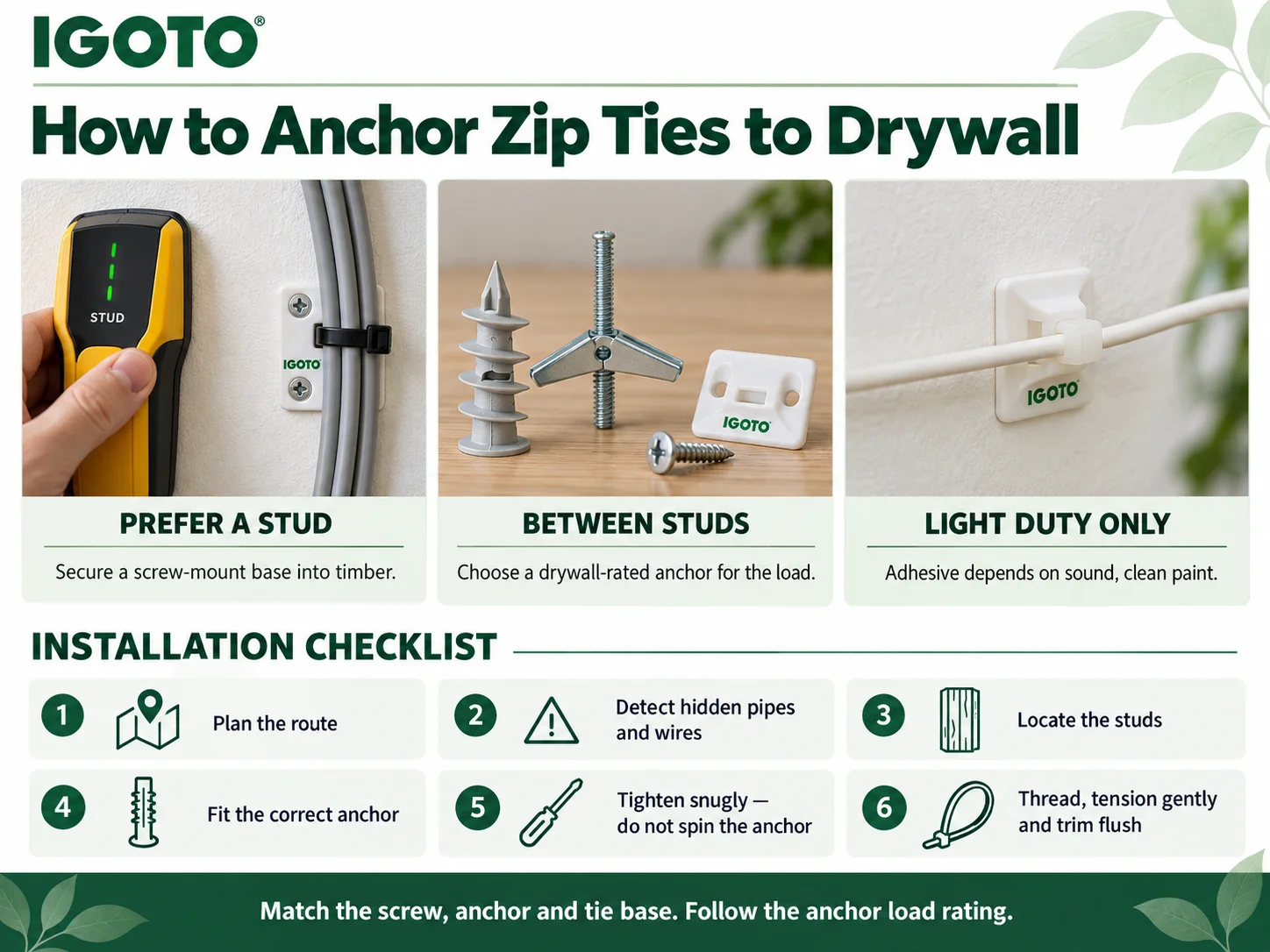
Drywall, also referred to as plasterboard, is the most commonly used interior wall, though it’s often misunderstood. The core material, gypsum, is easily damaged, so inserting a screw into drywall doesn’t offer a great deal of strength.
Best Solution: Screw into a Stud
Whenever your cable routing moves across a stud, make sure to screw a tie base in place directly into the wood. This gives you much greater holding power than any drywall anchor. Locate the center of each stud and position your holders accordingly.
Alternative Solutions Between Studs
- Plastic expansion anchors are inexpensive and adequate for running light cables, but they provide the least holding strength.
Self-drilling threaded anchors penetrate drywall without a pilot hole and offer superior holding strength compared to expansion anchors. These are appropriate for most types of networks, CCTV installations and speaker wire runs.
Toggle and screw toggle anchors expand behind the drywall, spreading the strain. Use these when you have heavier bundles or anywhere there’s a risk of pulling.
On the Wall: Using Adhesive
Adhesive mounts work on painted drywall for lightweight cables only; the strength of the bond depends on the paint. If you use it on unpainted drywall, the mount may come off along with some of the paint. If you need to run more weight, add a short screw through the middle.
Installation Process
1.Mark your route and holder locations at a distance of about 30-40 cm in a straight line and both sides of each bend.
2.Before drilling, check for hidden wiring and pipes.
3.Locate studs and utilize them wherever possible.
4.When installing between the studs, choose the drywall anchor according to the screw chosen for the tie base.
5.Mount the tie base.
6.Insert cable tie into the base and wrap around the bundle.
How to Anchor Zip Ties to Concrete and Solid Brick
Concrete, solid brick, and natural stone provide great attachment once drilled properly, but mounts based on adhesives do not tend to hold up in these materials. The surface is porous, gets dusty, and has moisture outdoors or in basements.
Option 1: Push Fit Masonry Tie Mounts
The masonry tie mount has a ribbed push stem going into the hole, and a tie slot on top. This option is the quickest way of anchoring: drill a hole, push the mount in, and you are ready to hang the tie now. The hole diameter is usually around 6mm (1/4 in), but it is essential to follow the sizes given by the mount instructions; oversizing even a bit can result in losing most of the grip.
Option 2: Wall Plug + Screw-Mount
The regular nylon wall plug + screw mount tie base is the most convenient solution as it uses things that many installers might already have. Drill the plug size hole, insert the plug so that it goes all the way in, and screw down the tie base into the plug. Remember that both parts must be compatible, marking the size of the screw and the plug required.
Option 3: Concrete Screws
If you need to mount heavier loads or use products used for commercial mounting, you might use a concrete screw through the tie base. Follow the recommendations for the drill size provided by the one who manufactures the screws.
Step by Step: Mounting in Concrete or Brick
1.Choose locations to work, remaining several centimeters away from the edges and corners.
2.Drill using a hammer drill with a carbide-tipped masonry drill bit, remembering the hole depth and diameter.
3.Remove the dirt from the hole with the help of a brush and a blower or vacuum to avoid loosening the anchors.
4.Insert the masonry mount or a wall plug.
5.Attach the tie base if using the plug mount, then thread and tighten the zip tie.
When you are drilling the walls, be careful as there might be invisible pipes and wires inside. Check for them with the help of a detector or check your building plans, avoiding drilling directly under or above outlets or switchers.
Hollow Block, Hollow Brick and Old Plaster
Hollow walls consist of a thin surface with empty spaces, meaning standard short plugs can turn or detach as a result.
Drill into the perforated brick using a regular drill without the hammer option to avoid breaking the delicate internal webs.
Use long frame plugs that are suitable for hollow masonry as they go through several webs, or adhesive anchors with netting sleeve for heavy anchorages.
Never use wedge plugs as they depend on solid material.
In old plaster walls, ensure the timber laths or studs are behind the plaster, not just the plaster itself.
Outdoor Walls: Where Most Zip Tie Wall Anchors Fail
Exterior walls are subjected to everything, including UV radiation, rainfall, heat. The proper installation using zip tie wall mounts consists of three aspects.
- A mechanical fixer. Unfortunaely, glue doesn’t really work well on walls outside. The best fix will be to use masonry anchors or concrete screws.
- Mounts with UV protection. When buying black mounts it is essential to choose those labeled for outdoor use.
- UV stable tie. The tie usually suffers first. Natural nylon breaks under sunlight, while carbon-black ties withstand much longer. Our article on how long zip ties last outside explains the difference.
Choosing the Right Cable Tie: The Weakest Link in Any Wall Anchor
While installing, the technicians spend a vast amount of time deciding on the plugs and drill bits but they end up using cable ties they find in the van. However, after they install the anchor in the wall, the cable tie holds everything together, protects it from the weather conditions, and can remain in place for many years.
Match the Width to the Mount Slot
The majority of wall mounts can accept tie widths of up to 4.8 mm, whereas small mounts can work only with ties of 2.5 to 3.6 mm. Measure the actual strap width, and see our tie wrap sizes chart for how width, length and bundle diameter relate.
Choose the Right Grade
- Indoor, light cables: standard nylon cable ties in natural or black.
- Outdoor walls, CCTV and solar: UV-resistant black cable ties.
- Heavier bundles or long spans: a high-strength 4.8 mm cable tie rated at 22 kg (about 50 lb).
Never tie cables so tightly that the insulation deforms, especially data, coaxial and fiber cables. And never use a zip tie wall anchor to support shelves, people or anything safety-critical.
Why Material Quality Matters
It is a fact that two ties of the same size can behave in a totally different way. Virgin nylon 6/6 ties usually have more consistent strength and flexibility than ties made of recycled regrind but dry ties become weak because of installation. The ties produced by IGOTO are made of pure PA66 (Ascend Vydyne 21SPC) and have UL recognition and rating UL 94 V-2 for operating temperatures from -35 to +85°C. For typical wall installs, the 8 inch black UV heavy-duty cable tie (200 mm × 4.8 mm, 22 kg) fits the slots of most standard wall mounts and handles outdoor exposure.
Common Zip Tie Wall Anchor Mistakes
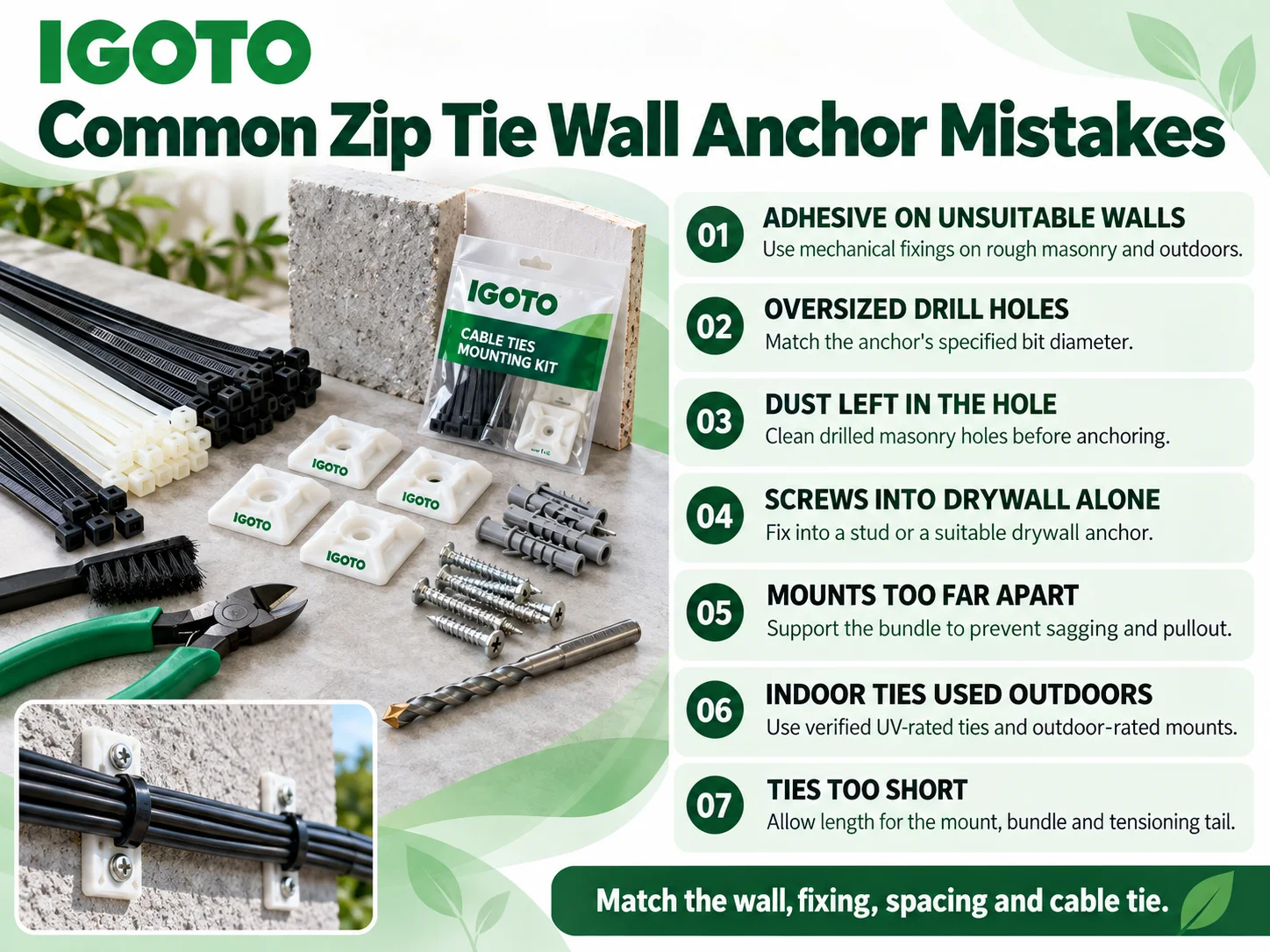
- Application of adhesive pads on masonry, stucco or exterior surfaces where success is low. Drilling holes that are too large.
- A large hole would allow mounting and securing devices to rotate and fail. Leaving debris in the hole will prevent the anchoring device from making firm contact.
- Inserting screws directly into plasterboard without the presence of either anchoring or stud material.
- Placing anchors too far apart from each other and allowing such a load to be applied to the anchors.
- Connecting outside anchor devices with inside connections that will become unusable when exposed to direct sunlight.
For Contractors and Distributors: Bulk and OEM Supply
If you install CCTV systems, network cabling or solar arrays at volume, or sell wall-mounting kits, consistent ties matter as much as consistent anchors. IGOTO supplies nylon cable ties in bulk and offers OEM and private-label packaging, including custom lengths, colors and kit-ready bags that pair with your own mounts and anchors.
Frequently Asked Questions
How do you attach a zip tie to a wall?
Attach a tie mount onto the wall, and pass the zip tie through it afterward. A sticky mount can hold down cables on flat surfaces. If you want to mount onto drywall, you should install the tie mount on a wooden stud or drywall anchor. On concrete or brick, use a press-fit masonry mount or use a plug system together with anchors.
What is the best zip tie anchor for drywall?
It is preferable to use a screw-mount tie base that is fastened to a stud. Self-drilling anchors are good for lighter cable runs between the studs while toggle and pull-toggle anchors are best for heavier bundles.
Can adhesive zip tie mounts hold on concrete or brick?
Usually just for a short period. Concrete and bricks are porous and dusty, and outdoors they become even weaker. Use mechanical fastening, like a masonry press-in anchor or a plug screw.
What size drill bit do I need for a masonry zip tie mount?
Most of masonry tie mounts have a hole that measures about 6mm (1/4 inch), but different products can have varying sizes. The diameter and depth of the hole can easily be found on the package.
Which zip ties should I use outdoors on a wall?
Use black UV-stabilized ties made of nylon 6/6 with outdoor-rated black mount. Ensure that width of the ties matches that of the mount slot.
References
- Drywall Anchors: What to Know Before You Buy, Family Handyman
- Wall plug, Wikipedia
- Drywall, Wikipedia
- Cable tie, Wikipedia
Conclusion
The right zip tie wall anchor starts with the wall. Use adhesive mounts only on smooth, clean surfaces for light indoor cables. Screw into studs or drywall anchors on plasterboard, press-in masonry mounts or plugs and screws on concrete and brick, and long frame plugs on hollow block. Then finish the job with a cable tie that fits the mount slot and matches the environment. If you need reliable PA66 cable ties in bulk for installations or wall-mounting kits, contact IGOTO for samples, pricing or OEM packaging.