

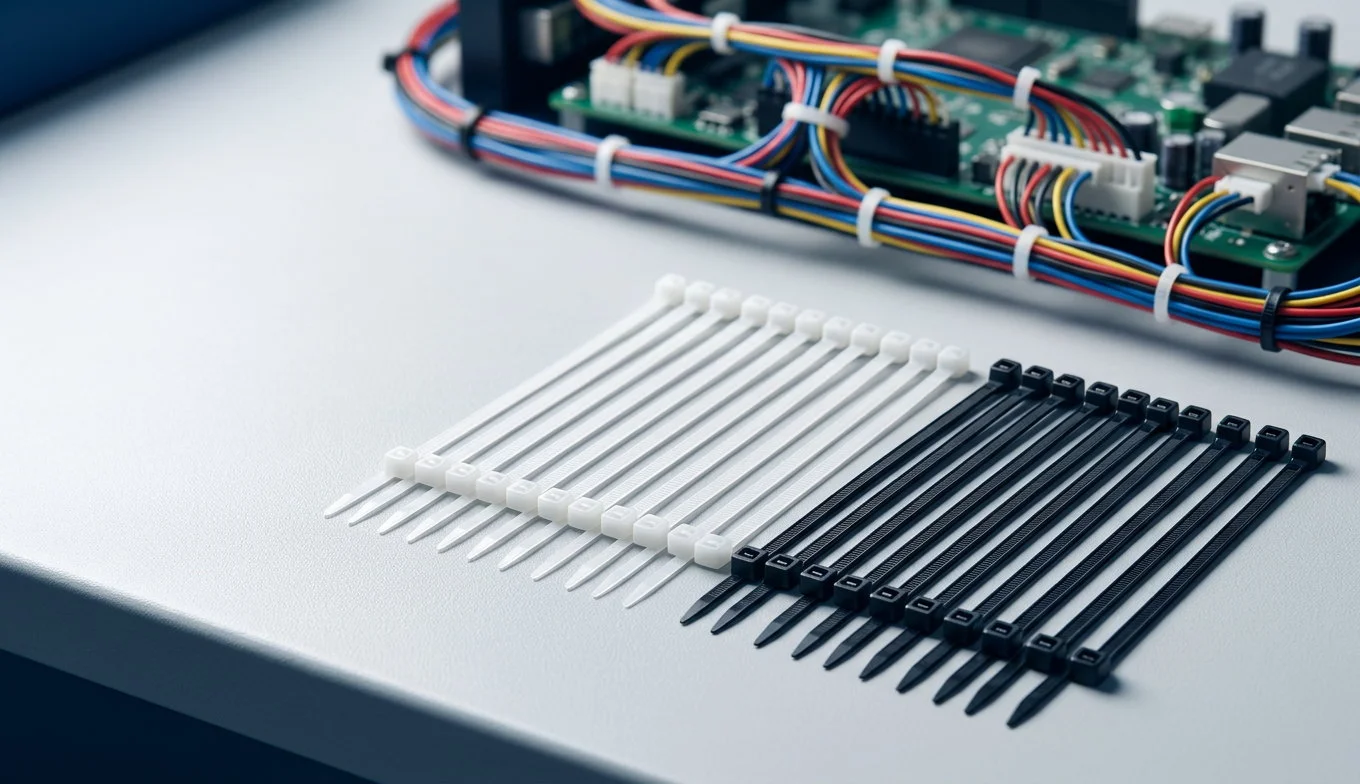

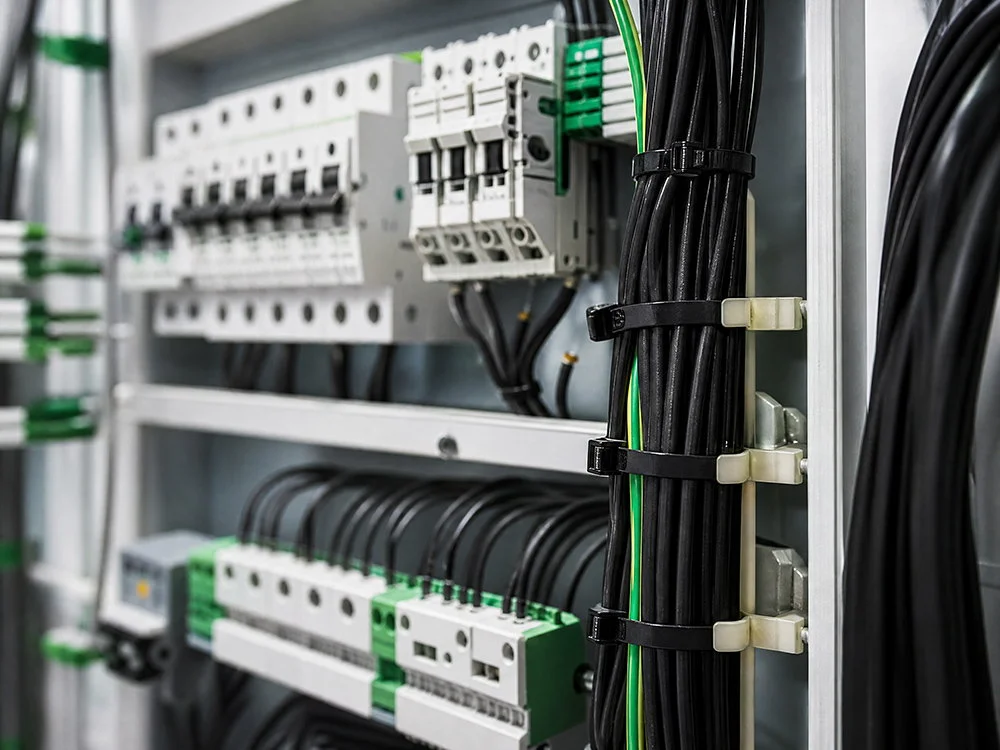

What is the Aviation Zip Ties Specs, Uses and Materials?
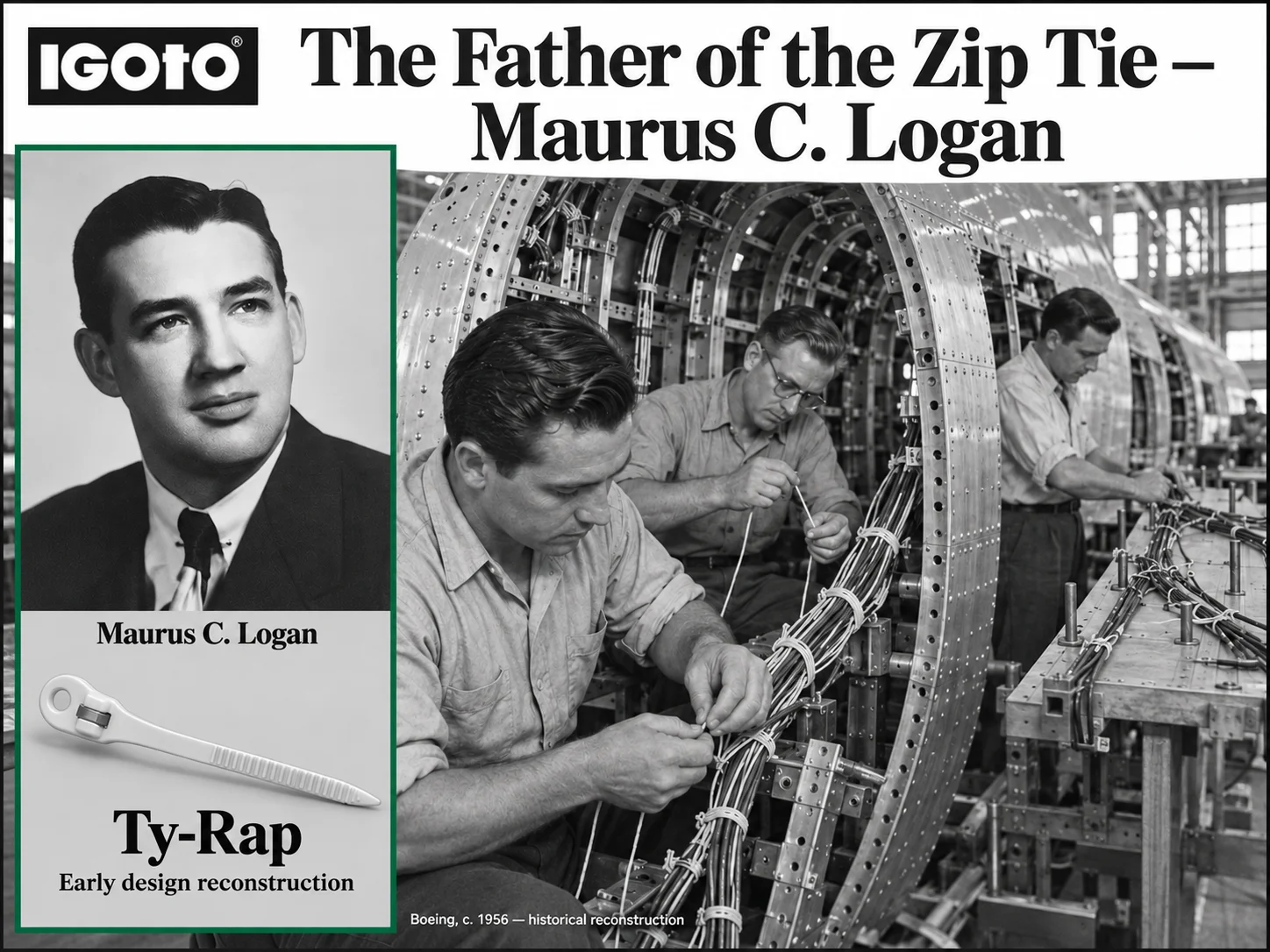
There are few fasteners with a story like aviation zip ties. These zip ties were created after the aviation industry put workers’ hands at risk of injury from the extreme amount of wire necessary in aircraft production. The 1950s were a time when wiring used thousands of feet of electrical wire that had to be coiled around plywood boards that up to 50 feet long. The task that had to be done was to tie off each bundle with a knotted piece of braided nylon. The process required the worker to wrap the cord around his or her finger to pull the knot tight. In doing so the worker would rub the skin off of their fingers to the point that it raised blisters and developed calluses. Because of this unhealthy and painful situation where hands acquired blisters became known among workers as “hamburger hands.”
A product development engineer at Thomas & Betts named Maurus C. Logan attended a factory in Seattle in 1956, where this process was happening and decided that it needed to be improved. He immediately set off on a two year project that would culminate in his idea which eventually would win a patent on June 24, 1958. His creation was known as the Ty-Rap, which was the first truly self-clinching cable tie. The Ty-Rap was a one-piece strap with a ratchet head which required no knot tieing, no pulling, and no technique for installing. The patent was awarded eventually in 1962, and Maurus received an award in inventors’ hall of fame for his invention in 2026
Today, almost seventy years after the first introduction of the cable tie into production, the device migrated to every industry in the world, becoming a favorite among various industries. However, it is still used in the hangars to attach cables to various devices, which will be discussed below.
Aside from doing research, IGOTO has its own website and sells nylon ties and other cable ties used in installations. This company manufactures nylon PA66 cable ties that can be of different types such as standard, medium and small-sized ties, high-strength ties, UV-resistant ties, flame-retardant ties, and threaded cable glands. According to the business registry, the legal entity responsible for the company’s work is Zhejiang IGOTO Electric Co., Ltd, a company based in Zhejiang province, China with a long history of cable tie production. The company manufactures in a 25,000- m² plant equipped with 18 production lines and 52 injection molding machines, using 100% virgin Ascend PA66 resin. The customer base of IGOTO includes large distributors, wholesalers, and manufacturers from all over the globe.
What “aviation zip ties” actually means
The term aviation zip ties refers to two different meanings, and using both meanings can create serious issues in procurement.
The first meaning is a type of hardware that meets aerospace specifications. Regarding airframe work, the main documents are SAE AS23190, the specification for the utilization of the straps, clamps, and mounting hardware for cable harness tying, and SAE AS50881 which regulates wiring installation in aerospace craft. Parts are identified with part numbers that usually refer to MS3367 series, for example, MS3367-1-0 describes a tie down strap that has the width of about 0.19 inches and can bundle cables with diameters of approximately 1.6 mm to 44 mm and is operated with special MS90387 tool at an appropriate tension setting. Any part manufactured according to this document has passed many material, performance, and size checks and has the proper certification.
The second meaning is much broader and refers to the general-purpose zip ties used in aviation-related places. Such application areas include ground support equipment, various hangars, avionics benches, cargo net accessories, maintenance staging, temporary wiring, and packaging of spare parts. Such zip ties do not require aerospace specifications and spending funds to acquire qualified zip ties is senseless.
A general-purpose nylon tie, no matter how perfect it is, cannot be compared to AS23190 or MS3367 certified zip ties. All the hardware must have its source tracked back to the document containing aircraft qualification. Commercial ties are good for tools and ground support devices but never for flight-critical mechanisms.
IGOTO manufactures the second category. The full nylon cable tie product range is designed for industrial, electrical, and non-certified fastening activities, including a lot of aviation-related activities on the ground, in stations, and in supply chain.
Usage of ties in the aviation industry
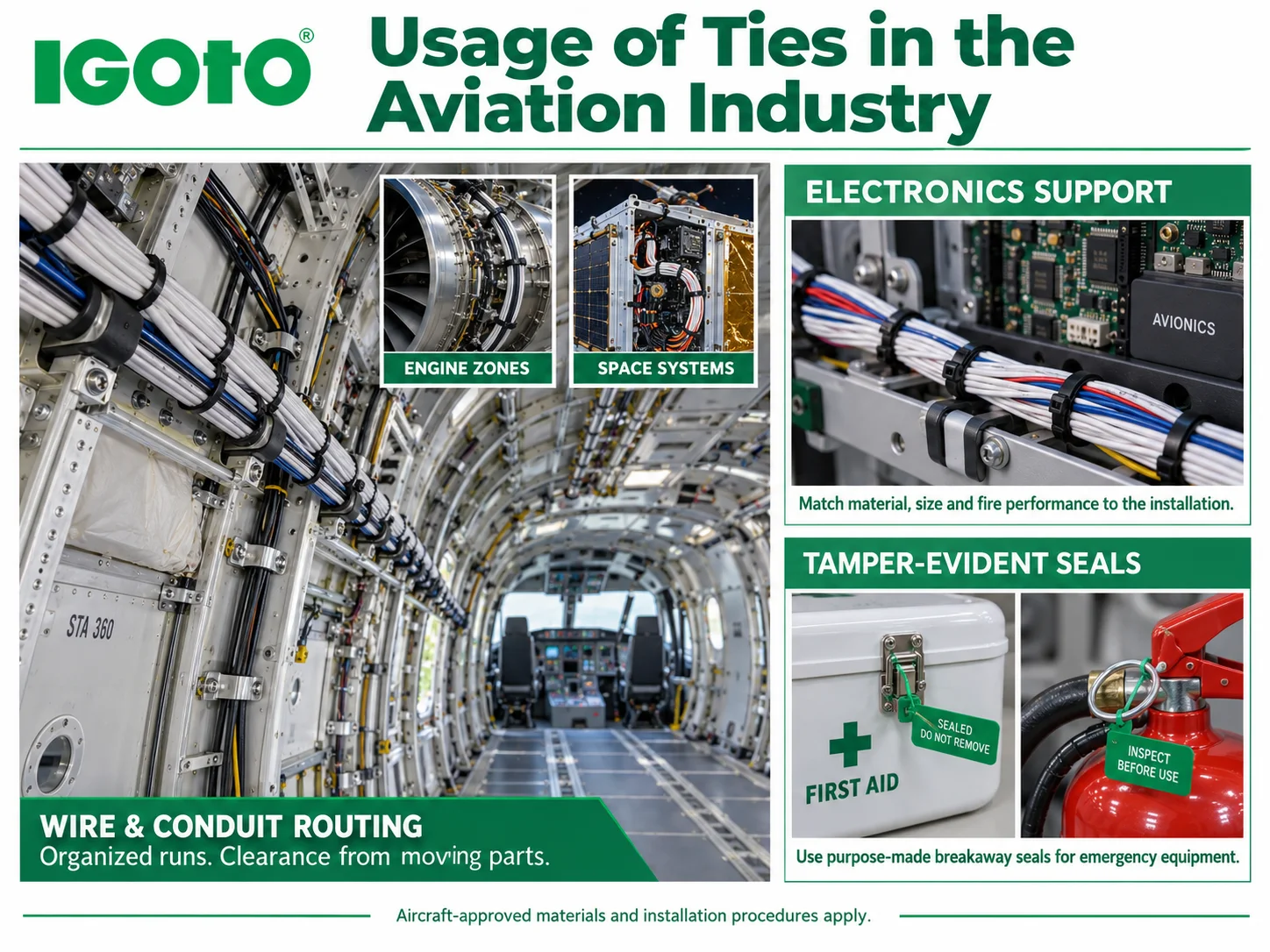
Routing of wires and conduits in the engine compartment, cockpit, cabin, and spaceships
This is the first and probably the most important application. A modern passenger aircraft has wires that can easily be many hundreds of kilometers long, divided into power supply wires, signaling wires, data bus wires, and wires for sensors and lights. All the wiring installations must be done in accordance with the design in such a way that no rubbing will occur due to vibration, sagging, or interference with moving parts.
Requirements vary considerably according to specific areas. The working conditions for wires in the cabin and cockpit can be called benign; the main problems that are taken into account when it comes to electricity supplies there are the weight of equipment and its combustibility. Engine compartments subject wires to high temperatures, vibrations, chemical damages caused by fuel, oils, glycol, and de-icing fluids. Wheel compartments pose even greater problems: moisture, dirt, and sudden temperature changes are added to the previous complications. Thus, servicing instructions indicate the need to use black ties in a plastic casing for this area. Wiring in outer space involves additional conditions like vacuum, radiation, and restrictions concerning the outgassing process (in case the tie has too many gasses, it will spoil the electronic eye).
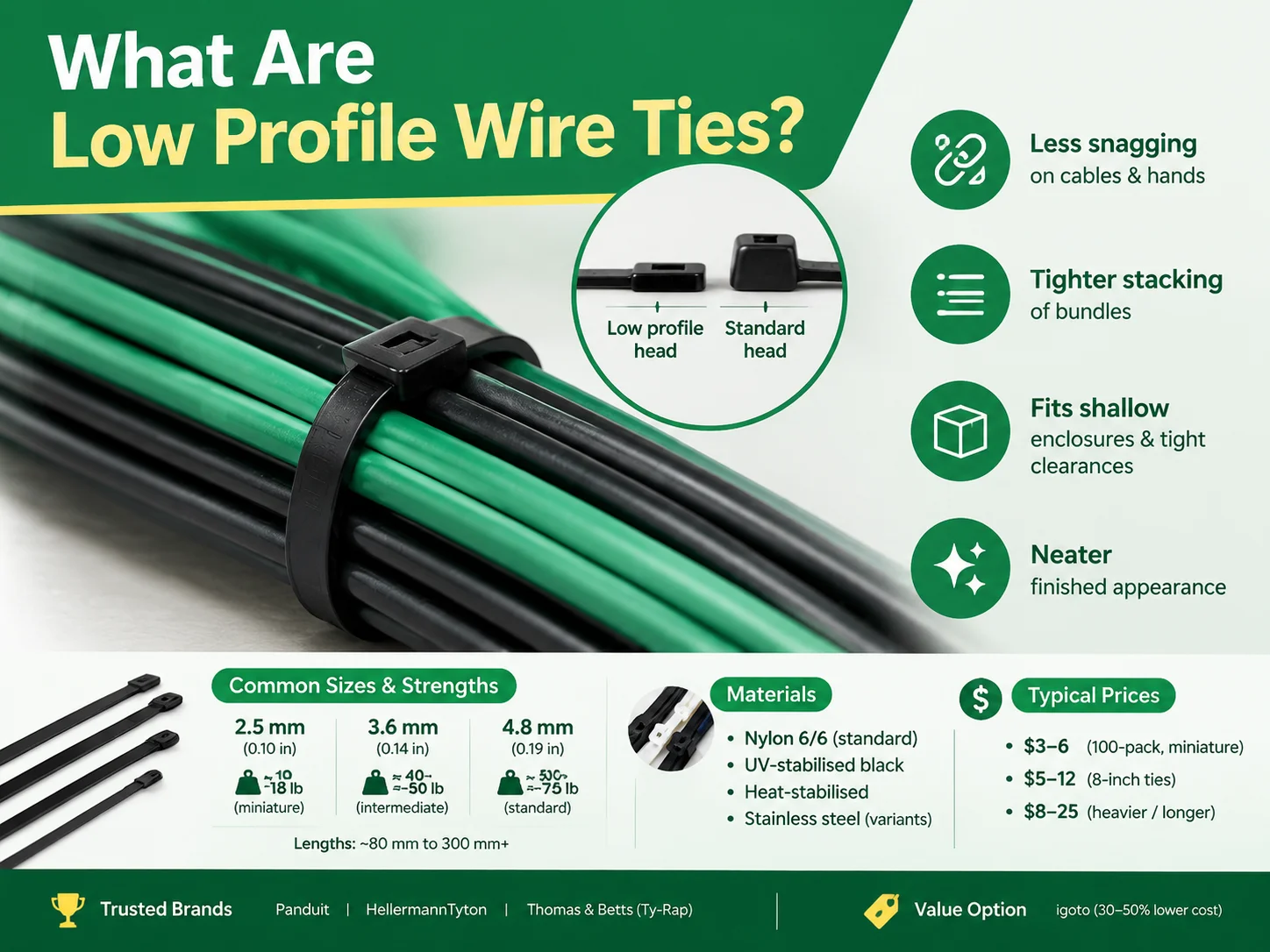
When it comes to the size of the tie, it is very important to select the right size of the tie in accordance with the diameter of the bundle. If you use ties that are longer than necessary, you will create rubbish and overload the construction. For general industrial bundling on the ground, IGOTO’s medium size cable tie range covers 8″ to 20″ lengths at roughly 18 kg tensile, while the standard cable tie series spans 4″ to 14″ with 8 kg to 18 kg options in natural and black.
Insulation and mechanical support in electronics
Nylon 6/6 is a dielectric material and this is the main reason cable ties displaced metal frames and the use of lacing wires in almost all electrical assembly applications. With cable tires, one can pass cables across an energized bus or can support a component against a bracket without making conductors and coupling of many components possible with just the use of cable ties.
Flammability is another factor in determining the suitability of cable ties in aviation. The materials used inside the cabin of every aircraft must follow the industry guidelines related to flammability and anything that is found inside the cabin pressurized section must be evaluated based on the heat, smoke and toxic gases produced in the event of a fire.The fire resistant cable ties from IGOTO are created from modified PA66 for the electrical panels and control cabinets offering improved fire safety ratings. In this case, it is crucial for a cable tie to have smooth and clean edges because any flash left on the strap will damage the insulation of the wires when vibration occurs after a long period of time.
The fo, or third application, involves the use of tamper-evident seals on safety equipment found on aircraft. IGOTO’s flame retardant cable ties use modified PA66 for electrical panels and control cabinets where improved fire safety is specified. Smooth, burr-free edges matter here: a tie with flash on the strap will abrade wire insulation over years of vibration. Small assemblies and PCB-level restraint are usually handled with the small size cable tie range at 2.5 mm width.
Use of tamper-evident seals for safety equipment
The use of tamper-evident seals in safety equipment is quite different to holding capacity. Whereas various emergency devices are carried by airplane that need to be certified to remain in an untouched condition between inspections. This includes portable fire extinguishers, first aid kits, medical kits, life jacket storage, security equipment and survival packs. There are regulations in place that require these devices to be available, maintained and usable and the air crew needs to check their condition before departure.
Thin seals of different colors are placed through a pin or a latch to enable fast inspection. In essence, the inspector can decide if the device has been opened or not. Many seals have a serial number to be logged in for further reference. Purpose-made seals are designed to break with predetermined force.
Under no circumstance should a common zip tie be used for the amount of breakaway seals for fire equipment. A regular zip tie will not break under hand force and second lost by cutting one in a fire situation could be critical for. Fire safety specialists prohibit usage of such practices by advising their followers to utilize seals produced specifically for the predicaments.
If any type of color coding or numbering on sealing devices is needed, it becomes critical to produce custom seals for retailers. IGOTO’s OEM and ODM programme covers custom sizes, colours, printing and packaging for exactly this kind of low-volume, high-specificity part.
Materials and their properties
Material selection drives almost everything about how a tie performs in service. The main options, roughly in order of cost:
| Material | Typical service range | Key characteristics | Where it is used |
|---|---|---|---|
| Nylon 6/6 (PA66), unmodified | −35 °C to +85 °C | High tensile strength, good dielectric, absorbs moisture, degrades under sustained UV | General industrial bundling, indoor panels, shop and ground use |
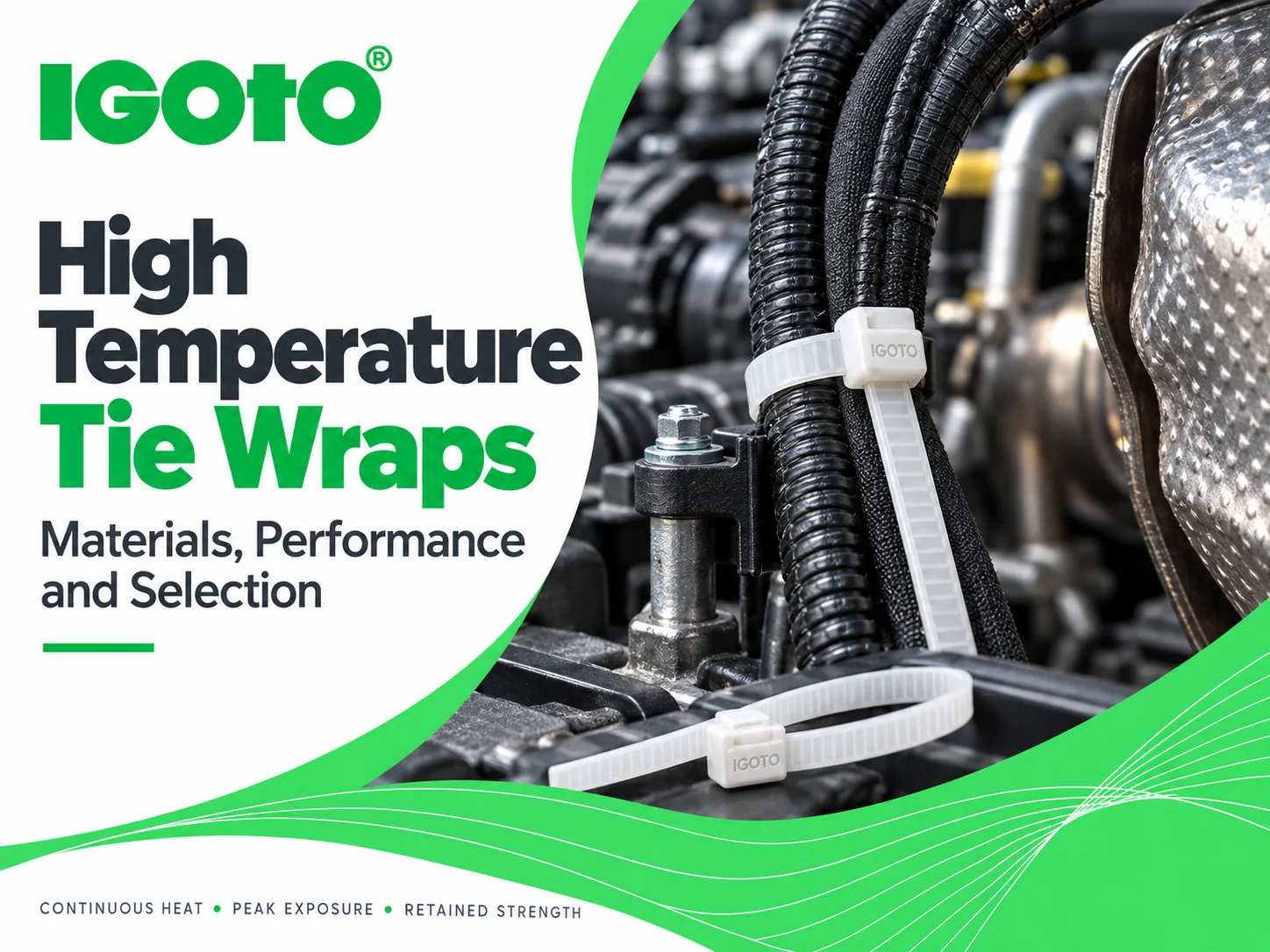
| Heat-stabilised PA66 | Up to about +105 °C continuous | Resists thermal ageing and embrittlement | Engine-adjacent ground equipment, hot cabinets, under-bonnet work |
| UV-stabilised PA66 (carbon black) | −35 °C to +85 °C | Carbon black pigment blocks UV degradation | Outdoor and exposed installations, airfield equipment |
| Flame-retardant PA66 | −35 °C to +85 °C | Improved UL 94 rating, self-extinguishing behaviour | Control cabinets, electrical panels, enclosed electronics |
| ETFE fluoropolymer | Roughly −65 °C to +150 °C | UL 94 V-0, halogen-free, very low outgassing, resists jet fuel and hydraulic fluid | Avionics bays, pressurised sections, cleanrooms, spacecraft |
| Stainless steel (bare or coated) | Several hundred °C | Non-flammable, immune to UV and chemical attack, high cost and mass | Firewalls, exhaust zones, high-radiation areas |
There are three practical considerations to note based on that table. Firstly, nylon is hygroscopic, meaning it absorbs moisture from the environment, which reduces its tensile strength but increases its flexibility. This is the reason that correctly produced cable ties are – during the manufacturing process – treated and packed in moisture-proof packages and that cable ties that have been stored loosely and in a dry environment for some years can become too brittle and break during application. Secondly, temperature ratings refer to ongoing use and not to surviving in adverse conditions — occasional exposure is very different from long-term use in extreme conditions and the tested faculties. Finally, black does not automatically mean that the product is UV resistant — it is resistant only when the colour comes from carbon black loaded as a stabiliser, which is what IGOTO’s UV resistant cable tie range uses.
Installation practice worth borrowing
The aerospace assembly discipline is tougher than most sectors, and its practices apply to other fields of high reliability as well.
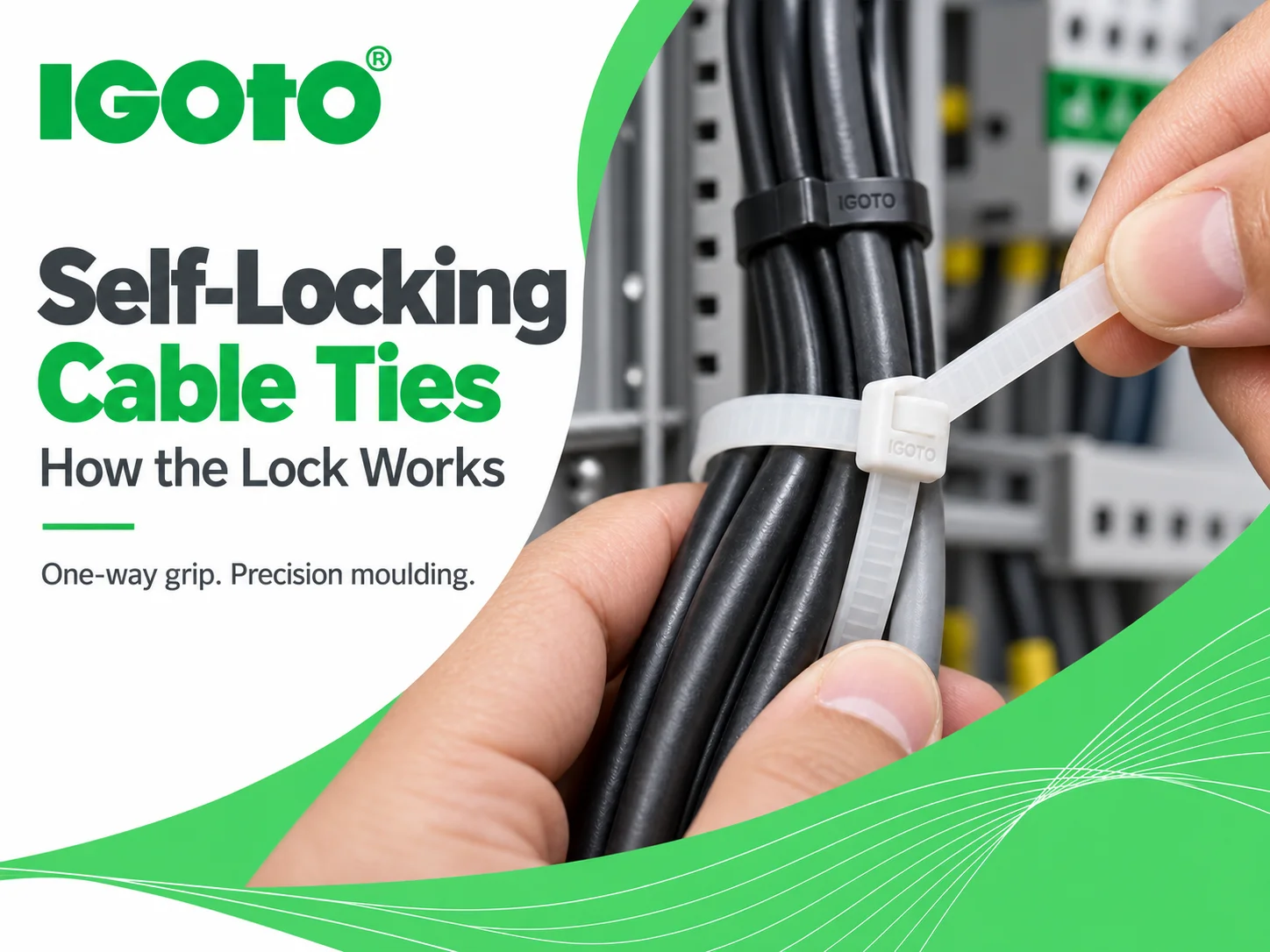
The tension is determined using a tool rather than human feel. The tensioning tools that are calibrated apply a constant force and produce a flush cut in one stroke. If the tension is too high, the wires may be crushed while too little tension allows the bundle to shift.
The cut must be perfect, and no burrs should be present. An uncut tail can hurt technicians working on the cable, or cause damage due to foreign objects getting stuck.
The head placement must be of the same direction, so it doesn’t interfere with operation of machinery and can be easily reached for inspection.
The spacing used must be specified and not improvised. Use of the same intervals prevents dipping and allows an even load distribution across many attachment points instead of one.
The use of the ties is restricted to one-time only. Тies that were untied or re-tightened stop being reliable and have to be removed.
The cable crossing point has a protection pad under the tie.
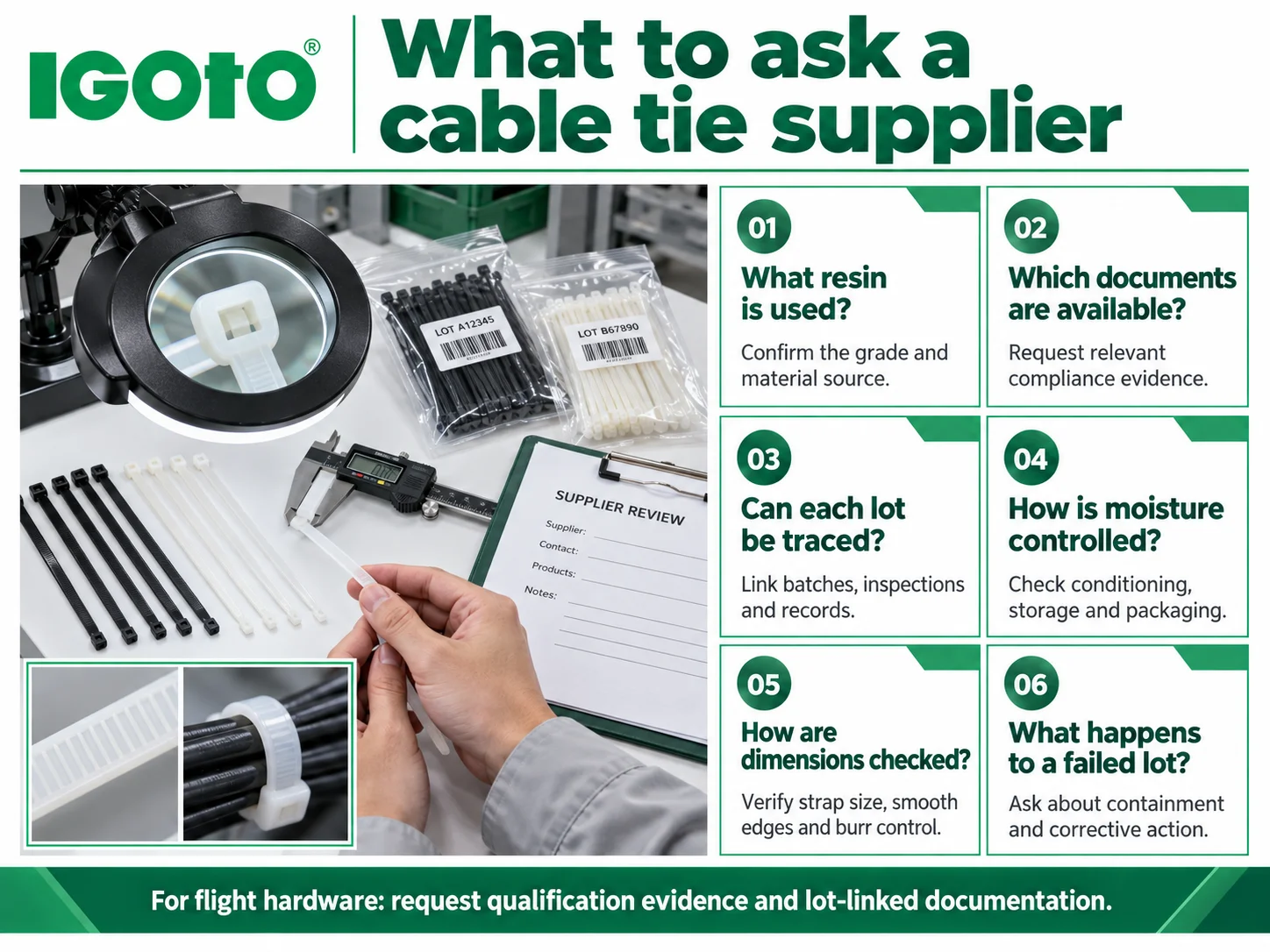
What to ask a cable tie supplier
While the questions may be posed in an airframe or ground support cart context, the essence of the queries is the same, with little differences in terms of the degree of scrutiny applied in either case.
Most importantly, inquire about the type of resin used — has it been created from raw ingredients? Regrind and recycled nylon may differ in tensile strength and impact resistance from batch to batch implying that such inconsistency cannot be tolerated when it comes to fasteners. Make sure you have the certification package — UL, CE, RoHS and REACH documentation should be readily available whenever requested. Inquire about lot traceability and the methods the manufacturer uses to manage humidity conditioning and packaging. It is necessary to inquire about dimensional control and edge finishing that should be perfect since flash and burrs most commonly result in insulation failure. Unfortunately, inquiring about what happens when a batch fails also reveals more about a certain supplier than their brochure ever could. IGOTO’s quality control page sets out its inspection stages for anyone who wants to benchmark against a working system.
For flight hardware, add the aerospace layer on top: qualification to AS23190 or the relevant MS part number, evidence of the qualification testing rather than a claim of compliance, and a certificate that ties the delivered lot back to that qualification.
References
- National Inventors Hall of Fame — Maurus Logan, Ty-Rap Cable Ties
- eCFR — 14 CFR 91.513, Emergency Equipment
- AOPA — Understanding and Inspecting Flight Control Cables
- Wikipedia — Cable Lacing
Frequently asked questions
Why is it called an aircraft cable?
Aircraft cables are small-sized stranded metal wire ropes, the name of which is rather historical than functional. In the aviation industry’s infancy, the control surfaces of flight – ailerons, elevators, and rudders – were operated by thin metal wires moving over pulleys from the cockpit; in this context, biplane wings were reinforced with the same wire ropes. The wires had to possess some of the unique characteristics such as strong tensile strength, real flexibility, and low weight while their diameters were not more than about 3/8 inch; 7×7 and 7×19 constructions were developed because of that. The name was kept even when aviation and the market changed drastically; the majority of cables produced today under this name are used in railing systems of decks, garage doors, sports equipment, etc. It must be emphasized that using commercial aircraft cables for aviation-related purposes is not allowed; special flight control cables must be used in such cases.
What year was the cable tie invented?
The process of patenting the nylon cable bundling and supporting strap, which was invented to solve the problem of bundling cables, began in 1958. The credit for the original invention goes to the inventor who discovered the solution to the problem in 1956. Because of the confusion regarding when the invention was applied for and when the patent was issued, there are two dates associated with the invention: 1958 and 1962.
Who made the original zip tie?
Maurus C. Logan was an employee of Thomas & Betts, which is a company dealing in electrical products located in America and it is a part of ABB right now. Logan was first in product design and then moved on to become vice president of research and development in the company and held a number of patents on various products. His cable tie was named Ty-Rap and was the first self-locking style of a cable tie, which is a flexible nylon strip that has a tooth at one end and it has ribs over the strip, which works like a ratchet. The first type of such a cable tie was two separate pieces, one made of metal and the other piece is an only nylon version, which is the cheapest and simplest version of the product and it is still used commercially today. Logan passed away at the age of 81 and was honored in 2006 by being inducted into the National Inventors Hall of Fame.
What did people use before zip ties?
Cable lacing is the practice of securing harnesses together with thin waxed cord, achieved by means of a series of running lock stitches, spot ties and knots, like the marline hitch. It was long the mandatory method in telecommunications, naval work and aerospace, being endorsed by generations of cablesmiths. It is still used in some applications, since it is obstruction-free and has no big heads to get caught on. Waxed, braided nylon cord, which was pulled manually, was used in aircraft assembly. This process led to the creation of the term “hamburger hands” and brought about the invention of the cable tie. Nowadays, modern lacing tape is made out of nylon, polyester, PTFE or glass fiber withstanding greater heat and cold than any nylon tie.
What do the British call zip ties?
The term ‘cable tie’ is overwhelmingly common. In the UK, “zip tie” is noted, but it sounds like an Americanism, whereas “cable tie” is used by catalogues, wholesaler and retailers. The next most common term is “tie wrap,” which is often used by electrical engineers and by suppliers. Older UK workers may also sometimes refer to it as “Hellermann tie”; slang derived from a well-known European brand, similar to the American term “Ty-Rap.” Other English-speaking countries use variants of the word, including “wire tie,” “hose tie” and “lassie band.” For writing specs or orders for international countries, the safest neutral term is “cable tie.”
The short version
The aviation industry has created the cable tie and has many uses in the industry, more than any other profession out there. The technical definition of “aviation zip ties” refers to an object that is manufactured according to the specifications of MS3367 or requirements listed in AS23190. These objects are made from different types of temperature resistant nylon, metal, or polymer material, however, it is important to say that the industry also consumes a lot of regular industrial ties for basic applications in ground equipment, workshops, and supply chains.
Knowing which of the two you are buying — and refusing to let one masquerade as the other — is most of the job. Send your specifications with the size, material grade, colour, quantity and any printing or packaging requirements, and a manufacturer can tell you quickly whether the standard range fits or the application needs something qualified elsewhere.