




Tie Wraps Sizes: The Complete Inch and Millimetre Guide
If you order “zip ties” from one shop and “cable ties” from another, you will end up with the same item: Nylon straps featuring a ratcheting head that can be used to bundle, secure, and organise. What is confusing for buyers is the naming system: they encounter a wall of packs that range from lengths of 4″, 8″, 11″, 18″, 24″, and 36″ to widths of 0.10″, 0.14″, 0.19″, 0.30″, and 0.50″, and tensile ratings between 18 lb and 250 lb. This guide will explain what the different sizes are used for, what the average costs associated with standard sizes are, and what brands to look for when ordering these items.
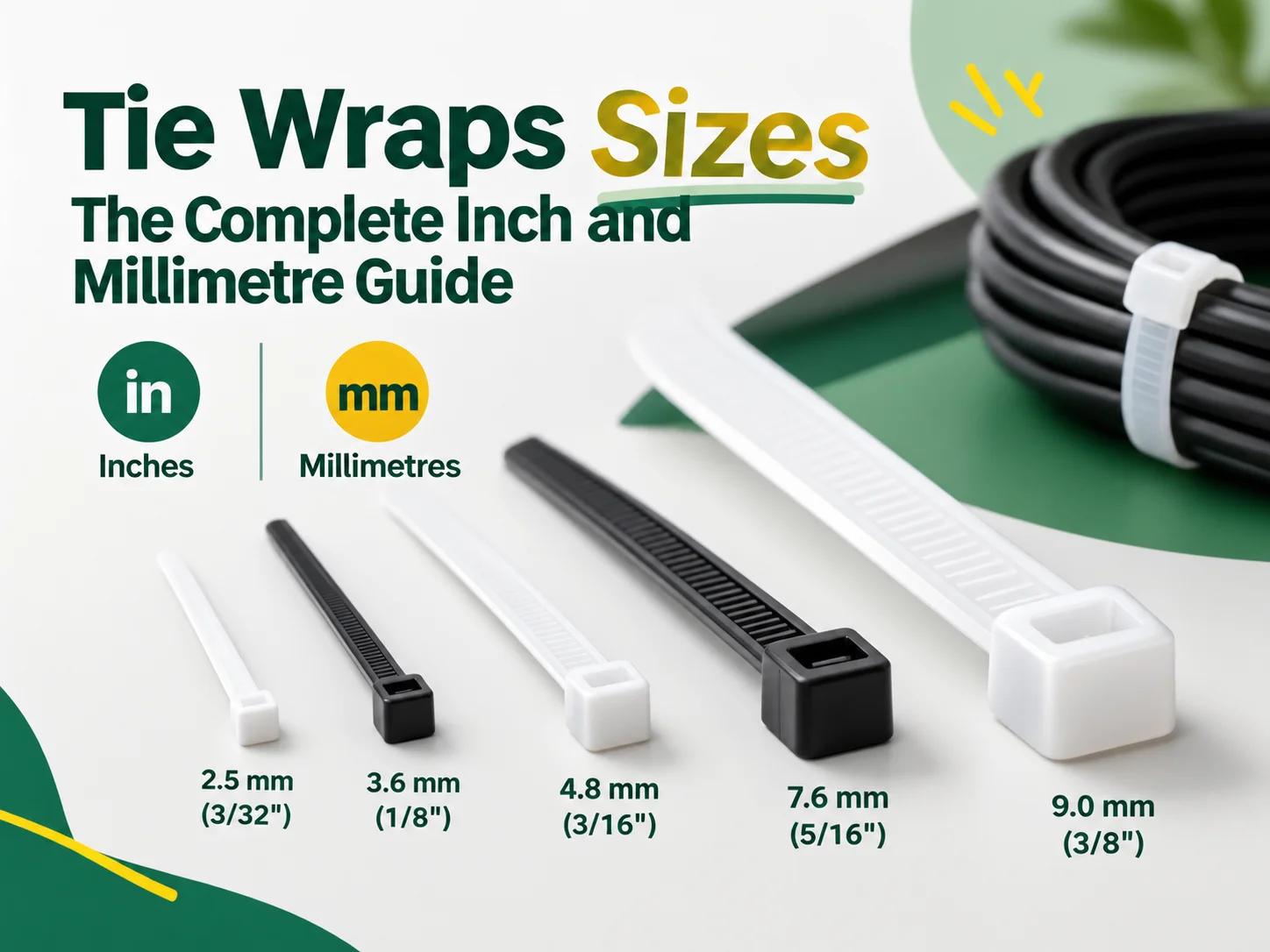
To put it simply: Tie wraps (also known as zip ties, cable ties, wire ties, or hose ties) come in three different sizes: length, width and tensile strength. Some popular lengths you can use in everyday life include those of sizes four inches (miniature), five and a half inches, eight inches, eleven inches, fourteen inches, eighteen inches, twenty-one inches, twenty-four inches and thirty-six inches. The widths used are 0.10″ (2.5 mm, roughly 18 lb), 0.14″ (3.6 mm, roughly 40-50 lb), 0.19″ (4.8 mm, roughly 50-75 lb), 0.30″ (7.6 mm, roughly 120-175 lb) and 0.50″ (12.7 mm, roughly 250 lb). To determine the proper size tie you will need, measure the diameter of the bundle and multiply it by approximately 3.14. Add an inch to the number and then round it to the nearest standard length.
Tie wraps, cable ties, zip ties: same product, different names
Before we can determine the appropriate sizes for the product we need to be aware that in some cases suppliers may refer to the same product under a variety of different names. “Tie wrap” is the original name used in American trade; “cable tie” is the commonly used designation in industry; “zip tie” is just the nickname which refers to the zipping done when the product is tightened; and in some situations, “wire tie” or “hose tie” are used to describe the application rather than the product. However regardless of what we call them all the mechanisms consist of a nylon strap with teeth in it and a self-locking mechanism in the head of the strap.The terminology history, and why the names diverged, is covered in our article on whether nylon cable ties are the same as zip ties.
Another aspect to note with respect to naming is when placing orders “cable tie” in some catalogs will refer only to the nylon product whereas “tie wrap” might refer to a greater volume of products. Make sure you specify what type of material the tie must be made from; what lengths; what width; and its color if it is important.
The standard tie wrap sizes (inches and millimetres)
Inches are prevalent in the market, particularly in North America, where they are used in conjunction with metric dimensions as well. Below is a table of the sizes that make up the bulk of sales:
| Length (in) | Length (mm) | Common width | Tensile | Typical use |
|---|---|---|---|---|
| 3″ – 4″ | 75 – 102 mm | 0.10″ (2.5 mm) | 18 lb | Miniature: small cable bundles, wire identification, crafts |
| 5.5″ – 6″ | 140 – 150 mm | 0.14″ (3.6 mm) | 40 lb | The everyday household tie: cords, small harnesses |
| 8″ | 203 mm | 0.14″ or 0.19″ (3.6/4.8 mm) | 40 – 75 lb | The most common general-purpose size in electrical work |
| 11″ | 280 mm | 0.19″ (4.8 mm) | 50 – 75 lb | Panel and harness bundling, larger cable groups |
| 14″ | 356 mm | 0.19″ (4.8 mm) | 50 – 75 lb | Longer runs, conduit and pipe support with mounts |
| 18″ | 450 mm | 0.19″ or 0.30″ (4.8/7.6 mm) | 50 – 120 lb | Large bundles, garden and outdoor use, light industrial |
| 21″ | 530 mm | 0.19″ (4.8 mm) | 50 – 75 lb | Extra reach where 18″ is marginal |
| 24″ | 610 mm | 0.30″ (7.6 mm) | 120 – 175 lb | Heavy-duty industrial bundling |
| 36″ | 914 mm | 0.30″ – 0.50″ (7.6/12.7 mm) | 175 – 250 lb | Very large bundles, construction and agriculture |
| 48″+ | 1,220 mm+ | 0.50″ (12.7 mm) | 250 lb | Maximum plastic duty; beyond this, use steel banding |
Width is the number buyers underestimate. A 4″ tie and a 36″ tie may share a length family, but the strap width — 0.10″ versus 0.50″ — is what determines holding strength. The complete width-to-tensile relationship is explained in our zip tie width guide.
The load figures behind each rating — and how a 50 lb tie behaves under vibration versus a static pull — are tested and compared in our how much weight can zip ties hold article.
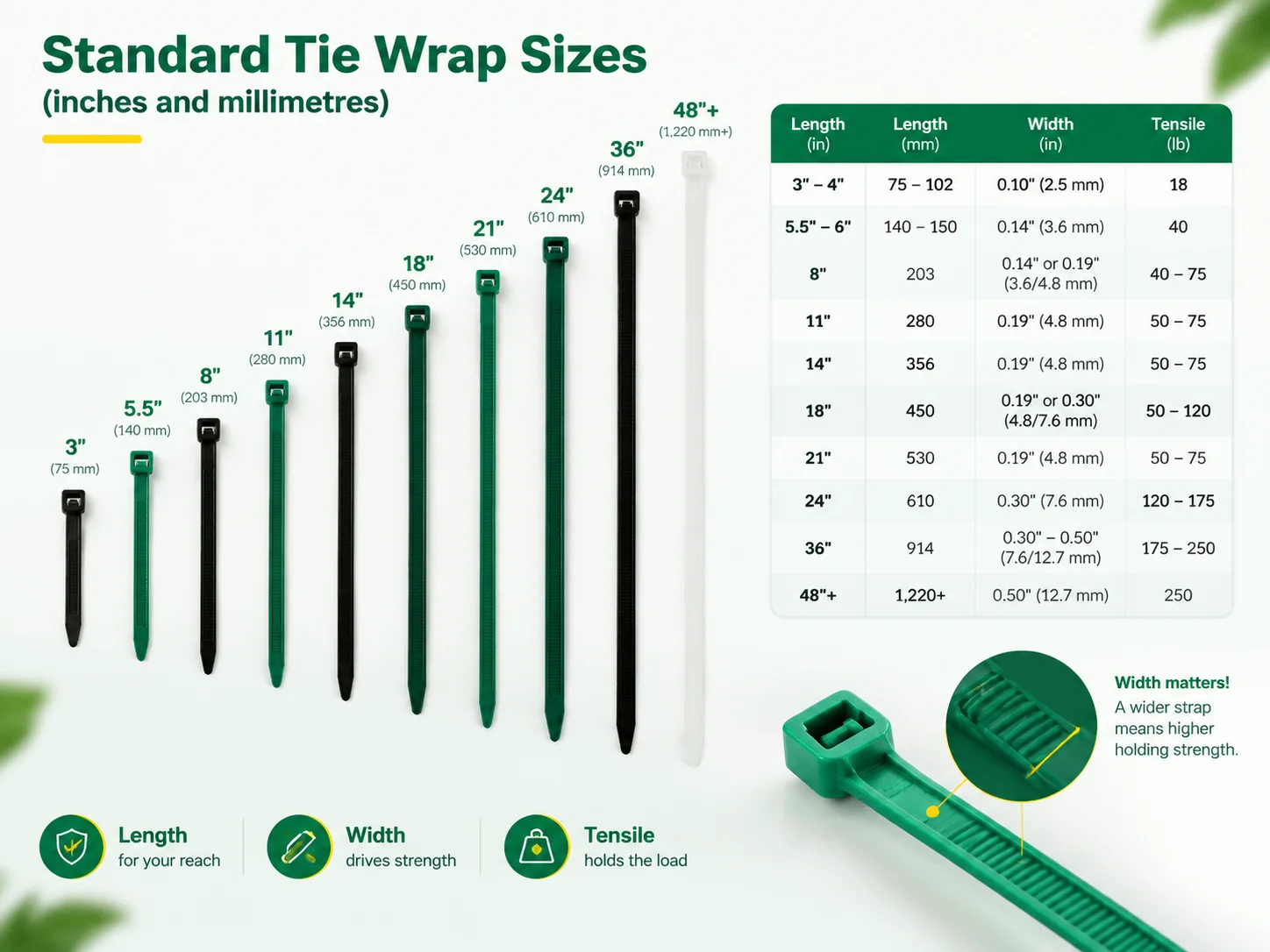
What each size is actually for
In short, sizing will make sense once you understand which numbers correspond with which jobs:
- 4″ ties and 6″ ties— indoor cable management: bundling a few network cables, organizing a desk, securing a small wiring harness, marking a wire with identification tags.
- 8″ ties— the real workhorse. Panel wiring, appliance repair, general electrical use, securing wire to a tray using a mount. Only one of these boxes should be kept at home.
- 11″ ties and 14″ ties— larger bundles and longer distance: cables in trunking, conduits, attaching flexible duct.
- 18″ ties and 21″ ties— outdoors, bigger jobs: fencing, trellises, holding tarps in place, tying light branches and garden structures together (must use UV black).
- 24″ ties and 36″ ties— industrial and construction jobs: large cable bundles, securing scaffolding netting.
- Stainless steel ties — when nylon is inadequate: exhaust systems, coastal work, hot equipment, and permanent outdoor fixings.
How to calculate the right tie wrap size
The two calculations cover nearly all applications:
- Determining the length based on bundle diameter. The tie must wrap around the bundle and extend through the head sufficiently. Given that the circumference of the bundle is equal to 3.14 times the diameter:
| Bundle diameter | Circumference | Minimum tie length | Buy |
|---|---|---|---|
| 0.5″ (13 mm) | ~1.6″ | ~2.6″ with tail | 4″ |
| 1″ (25 mm) | ~3.1″ | ~4.1″ | 6″ |
| 2″ (51 mm) | ~6.3″ | ~7.3″ | 8″ |
| 3″ (76 mm) | ~9.4″ | ~10.4″ | 11″ |
| 5″ (127 mm) | ~15.7″ | ~16.7″ | 18″ |
| 8″ (203 mm) | ~25.1″ | ~26.1″ | 36″ (or two ties in a figure-eight) |
- Determining the width based on load. Calculate the load that the tie will have to carry, double it for safety, and select a width with a higher tensile strength. For example, a 5 lb bundle will need a 0.10″ tie while a 20 lb bundle will need a 0.14″ tie; a tie of 0.19″ is needed for a 50 lb load along with a 0.30″ tie for a 100 lb load. For items weighing more than that you should look for 0.50″ tie line made of either nylon or stainless steel. If you are working with anything requiring strength, support, or safety features it is better to employ a clamp or bracket instead of a tie.
Shopping note: it’s more efficient to purchase the assorted kit; however, you often only receive thin, lightweight ties. Since you want to accomplish your job properly, make sure to purchase the necessary length and diameter and order the heavier-duty items separately.
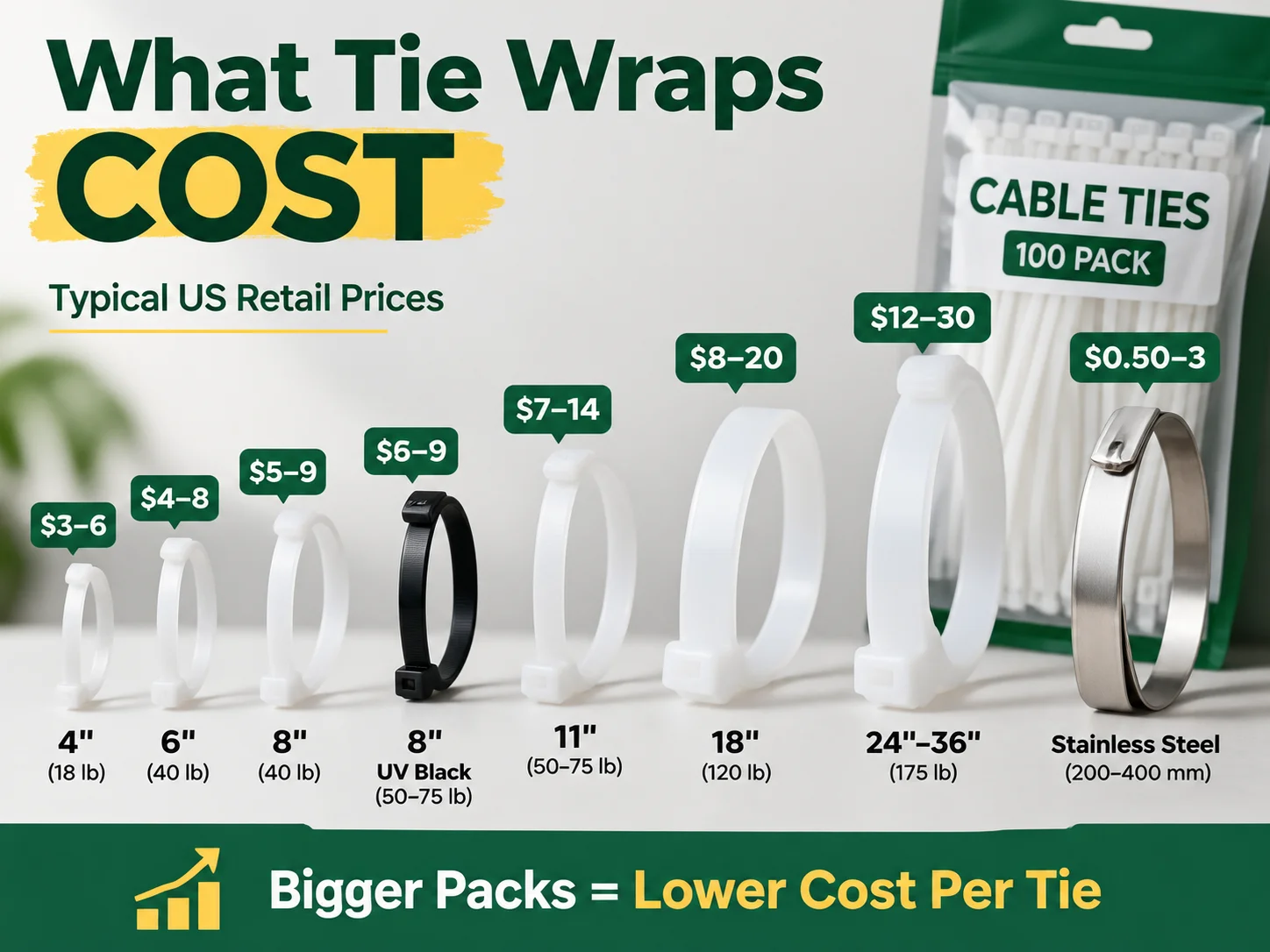
What tie wraps cost
Retail price information for the United States, based on a 100 unit pack size (be it bigger or smaller):
| Size | Typical pack | Price | Cost per tie |
|---|---|---|---|
| 4″ × 0.10″ (18 lb) | 100 | $3 – 6 | $0.03 – 0.06 |
| 6″ × 0.14″ (40 lb) | 100 | $4 – 8 | $0.04 – 0.08 |
| 8″ × 0.14″ (40 lb) | 100 | $5 – 9 | $0.05 – 0.09 |
| 8″ × 0.19″ UV black (50-75 lb) | 100 | $6 – 12 | $0.06 – 0.12 |
| 11″ × 0.19″ (50-75 lb) | 100 | $7 – 14 | $0.07 – 0.14 |
| 18″ × 0.30″ heavy duty (120 lb) | 25 – 50 | $8 – 20 | $0.20 – 0.50 |
| 24″ – 36″ × 0.30″ (175 lb) | 25 – 50 | $12 – 30 | $0.30 – 0.90 |
| Stainless steel, 200 – 400 mm | Per tie or 10-25 pack | $0.50 – 3 each | Varies with grade (304/316) |
Per unit cost drops drastically with larger volumes, namely, wholesale bundles of 1000 bring the cost of standard units down to only a few cents. Moreover, there is little difference in price between different grades since a defective tie can cost so much more.For the full size table with bundle-diameter guidance, our standard cable tie sizes guide is the reference to keep alongside this one.
Which tie wrap brands are worth buying
The market structure consists of three groups. The first consists of premium engineering companies – like Panduit, HellermannTyton, and Thomas & Betts (now ABB) – who provide tensile strength and weathering data as well as military and aerospace certification proving that they can command premium pricing. The majority of companies cater to middle-market customers, selling a vast array of distribution and identification products like 3M and Avery Dennison. Finally, in the value camp, you can find factory direct manufacturers such as igoto who offers the same types of UV-stabilized nylon 6/6 heavy duty products for 30–50% less off-brand.
Regardless of what tier of product you purchase, be sure to look for nylon 6/6 rather than generic nylon, the length and width in inches and millimeters, the tensile strength rating expressed in pounds, and finally for outdoor nets, ensure a clear UV-resistant statement. A net may not last for the full-length of the ten-year guarantee.
FAQ
What are the different tie sizes?
Tie sizes vary with the common ones being: 4 inches, 5.5 to 6 inches, 8 inches, 11 inches, 14 inches, 18 inches, 21 inches, 24 inches, 36 inches and 48 inches. Each size can have widths which are equal to: 0.10 inches (2.5 mm), 0.14 inches (3.6 mm), 0.19 inches (4.8 mm), 0.30 inches (7.6 mm) and 0.50 inches (12.7 mm). Each type of tie carries tensile rating from about 18 lb at the small ones to 250 lb for the larger ones and with the stainless steel ties having even a much higher tensile rating.
What are the different types of tie wraps?
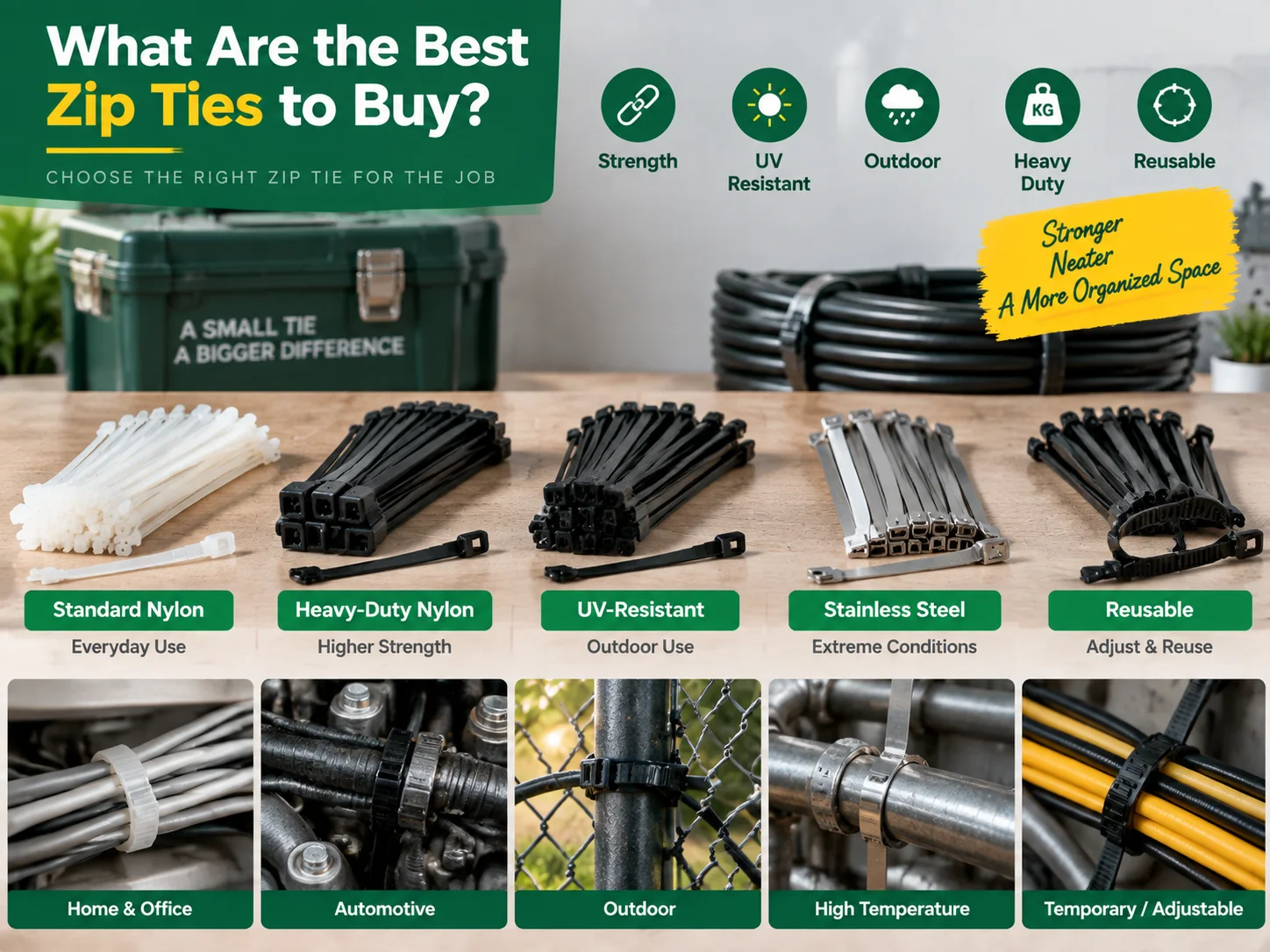
By material: nylon 6/6 (for indoor uses), UV-resistant black nylon (for outdoor use), heat-resistant nylon (for high temperature), stainless steel 304/316 (marine applications, exhausts, permanent outdoor uses). By design: standard one-way ties, reusable/releasable ties, mounting-head ties, identification ties, beaded ties, and flame-retardant grades for switchgear. All the ties will make use of the same size systems.
What size of tie should a 5’7″ guy use?
If the question is referring to a necktie, this will mean that the typical tie for a man who is 5’7” in height and around average build will usually be a standard tie of size 57 to 58 inches in length, however, for men on average hypertension height of 62 to 63 inches, and men shorter than average would use 52 to 54 inches for their ties. When it comes down to cable ties as the focus of this article, it is a matter of sizing not influenced by the individual user. This process involves multiplying the total diameter of the bundle by about 3.14 and then adding an inch for the tail of the tie which will now give the user the required width which has a tensile rating greater than double the load placed on the tie.
What is the normal size of a zip tie?
The commonly used and sold zip tie is 8×0.14 inches (approximately equal to 200mmx3.6 mm) with a tensile force of 40lb which is suitable for electrical applications. The next most widely used sizes after that are 4 to 6 inch ties used for smaller bundles and 11×0.19inch zip tie for larger panel work. If someone were to purchase just one box of zip ties for universal purposes then the size of 8 inches should be chosen as this is the most common default value.
References
- Panduit — Cable Tie Product Specifications
- HellermannTyton — Cable Management Range
- ABB / Thomas & Betts — Ty-Rap Cable Ties
- UL Solutions — Polymer Material Flammability and Component Certification
Conclusion
When it comes to tie wrap sizing, there are three numbers to remember: length, width, and tensile strength. Once you understand the different types of tie wraps, it is easy to choose the right ones. The standard sizes for tie wraps are 4″, 6″ 8″, 11″, 14″, 18″, 21″, 24″, 36″, and 48″. Tie wrap widths range from 0.10″ (supports weight up to 18 lbs.) to 0.50″ (supports weight up to 250 lbs.). To choose the size of tie wrap required, you should multiply the diameter of the bundle by 3.14 and add 1″ for the tail. If you’re ever unsure what’s the best size tie wrap for your bundle, simply measure the bundle size and refer to the tie wrap size specifications for more information. To buy the right type of tie wrap, all you need to know is that black UV-stabilized nylon is best for outdoor use while heat-stabilized nylon can be used in hot places. In some cases, metal tie wraps should be used if there is salt and heat in the environment. Tie wraps are relatively inexpensive with prices generally around a few dollars for packages of 100 tie wraps.