



Assorted Zip Ties: Types,How They Work, and How to Choose the Right One
Imagine a exhibitor at the Canton Fair in the spring of 2026 busily decorating their booth. Everything—from posters and monitors to lighting rigs—had been secured with disposable nylon cable ties; in fact, his team had used over a hundred of them to ensure the items remained safe during transit. He was forced to use diagonal cutters to snip through them all; the sharp cut ends sliced his knuckles, and the severed scraps fell into the carpet. With seven such major trade shows on his schedule for the year, he found himself wondering: was there a cable tie that offered a secure hold yet was easy to remove—and, more importantly, reusable? Such a product would not only save him extra effort during future setups but also help his company eliminate the wasteful costs associated with the massive volume of disposable ties consumed by frequent trade show participation. That fastener is the reusable zip tie — and it comes in several forms, each suited to a different bundle, budget, and re-work frequency.
Summary: A reusable zip tie is any cable tie that can be opened and re-fastened without cutting. There are three main families: releasable nylon cable ties, which use a small lever or tab to disengage the pawl so the strap can be pulled back out; hook-and-loop (Velcro-style) straps, which peel apart and re-close hundreds of times; and specialty reusable fasteners such as bungee ball ties and reusable mounting-base ties. Reusable ties trade a small amount of maximum holding strength and per-unit cost for adjustability, tool-free removal, and long-term savings on bundles that change often. Single-use nylon 6/6 ties remain the right choice for permanent, tamper-evident, or safety-critical fastening; reusable ties win wherever cables are added, removed, or re-routed on a regular basis — data centres, AV rigs, workshops, grow rooms, and home cable management. The correct choice is decided by how often the bundle will be opened, the load it must hold, and the environment it must survive.
What Makes a Zip Tie “Reusable”?
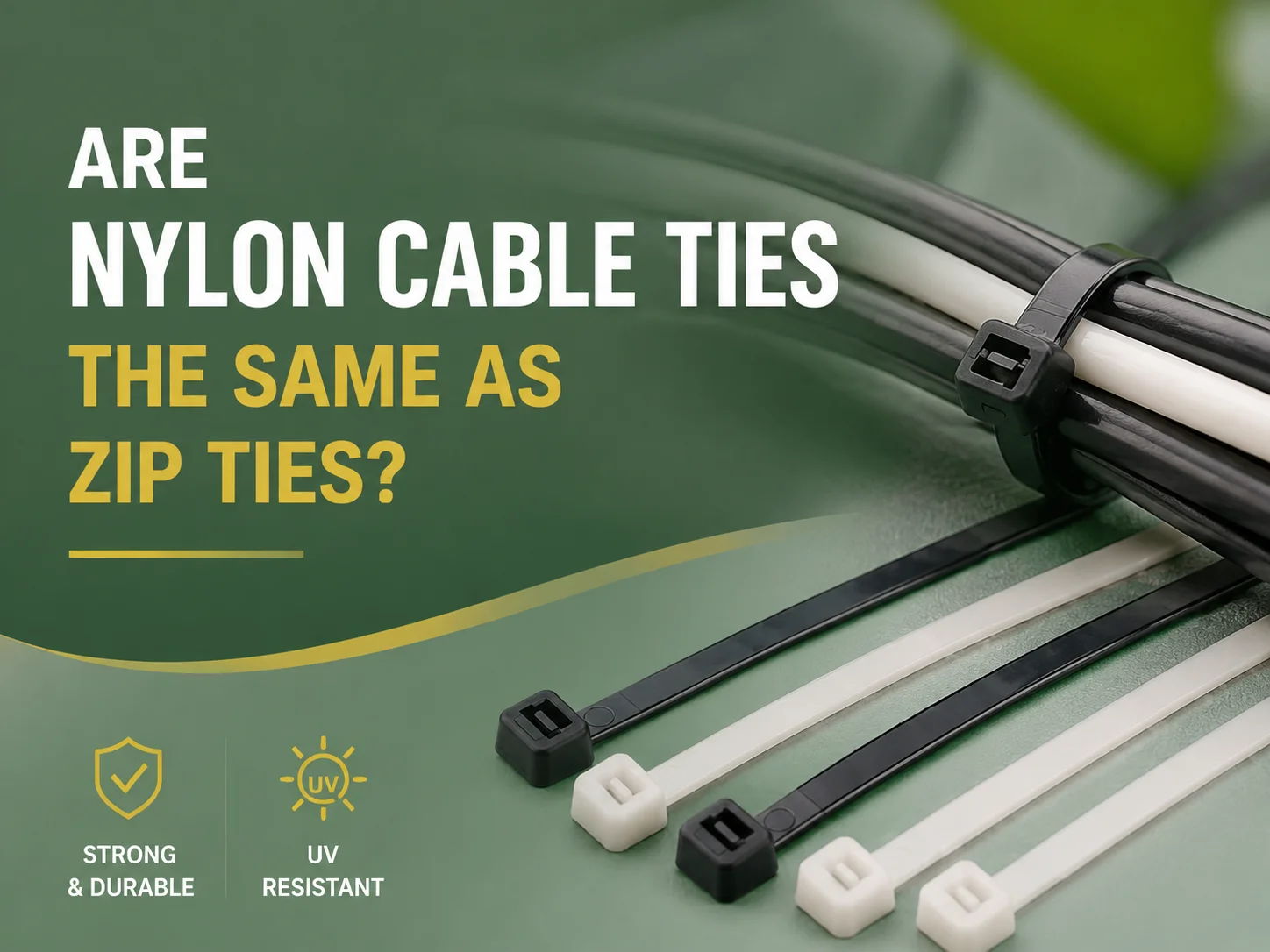
To understand what makes a zip tie reusable, it helps to understand why a standard one is not. A conventional cable tie is a strap with a row of angled teeth (serrations) on one face and a locking head at one end containing a small flexible tab called a pawl. When the tail is threaded through the head and pulled, the pawl rides over the teeth in one direction and then wedges against them in the other, creating a one-way ratchet. That one-way action is exactly what makes a standard tie so secure — and exactly what makes it single-use. To remove it, you have to cut the strap.
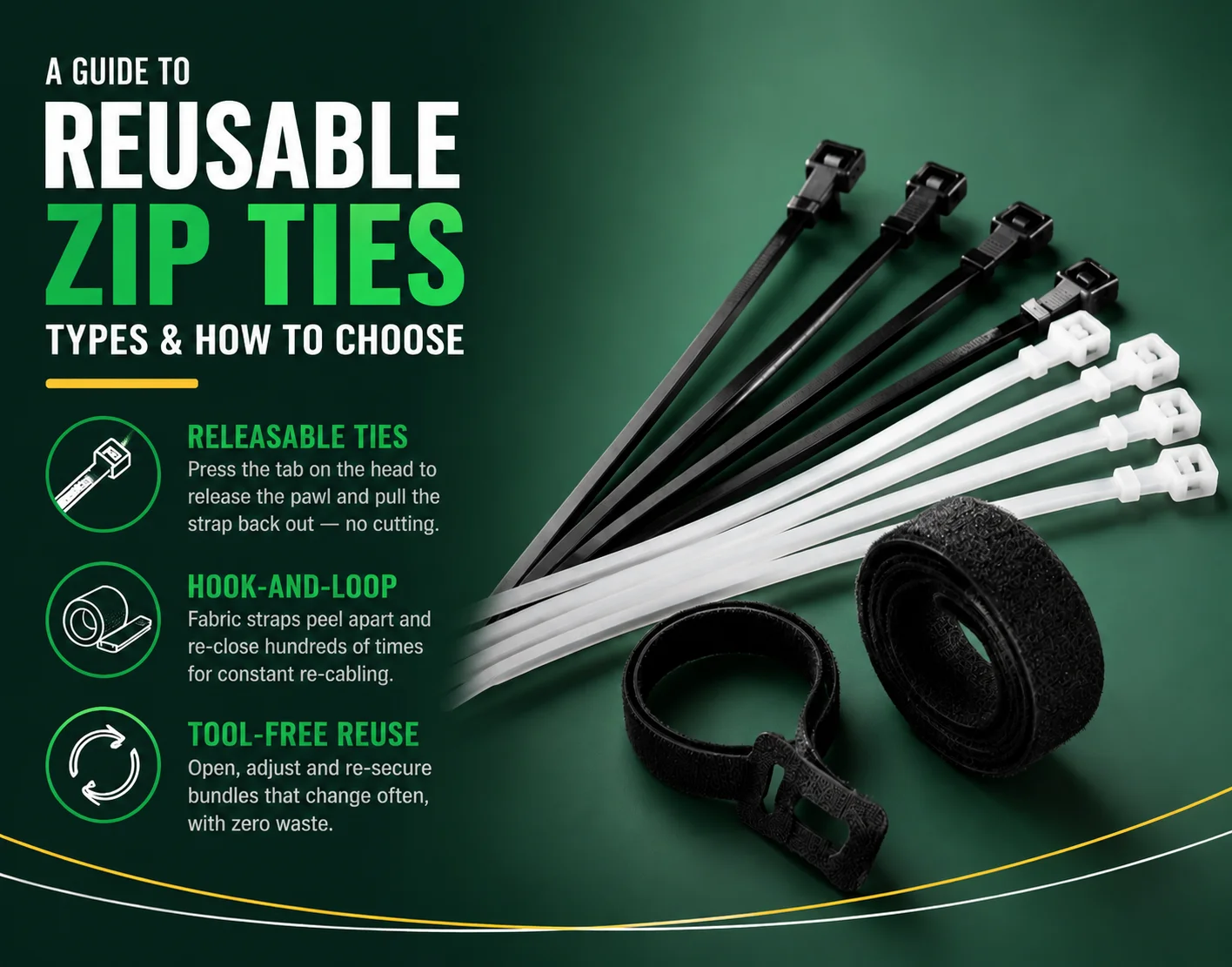
A reusable zip tie breaks that one-way lock on purpose. It does so in one of two ways. The first is mechanical: a releasable cable tie adds a small lever or extended tab to the head that, when pressed or lifted, pushes the pawl clear of the teeth so the strap can be drawn back out intact. The second is material: a hook-and-loop strap abandons the ratchet entirely and holds by thousands of tiny hooks gripping a looped fabric face, a bond that peels apart with a light pull and re-closes on contact. Both approaches deliver the same practical benefit — the bundle can be opened, adjusted, added to, and re-closed without a cutter and without consuming the fastener. The trade-off is that a release mechanism is, by design, a mechanism that lets go, so a reusable tie will generally hold slightly less than a comparable permanent tie of the same width.
The Main Types of Reusable Zip Ties
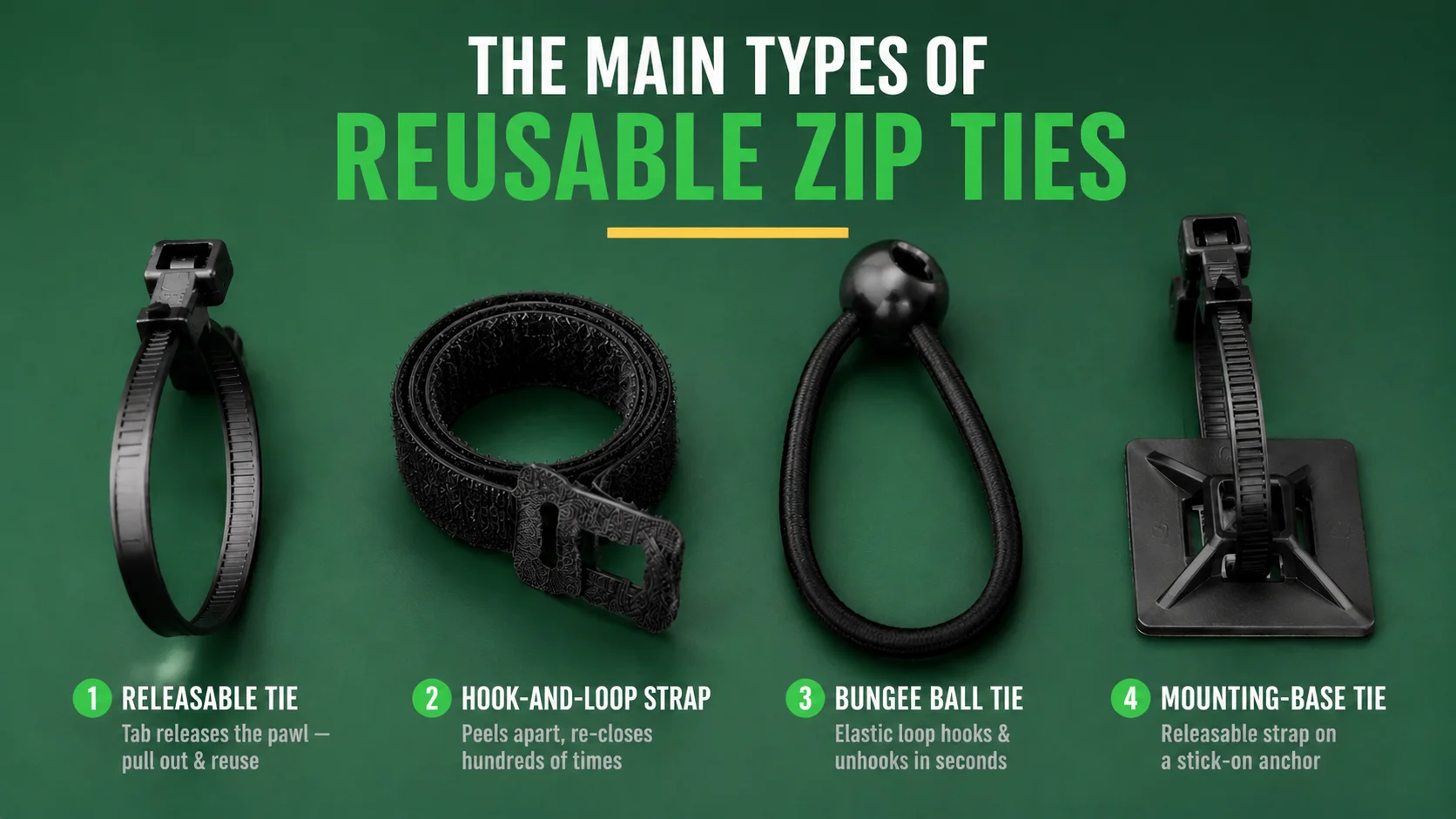
“Reusable zip tie” is not a single product but a category with several distinct designs, each with its own strengths. The table below compares the most common types before the sections that follow describe each in detail.
| Type | How It Reopens | Holding Strength | Best For | Relative Cost |
|---|---|---|---|---|
| Releasable nylon cable ties | Press a tab/lever on the head to release the pawl | Moderate to high — close to a standard nylon tie | Control panels, machinery, bundles re-worked occasionally | $$ — more than standard ties |
| Hook-and-loop (Velcro) straps | Peel the strap apart | Low to moderate — not for suspended heavy loads | Data centres, AV/IT, delicate cables, frequently changed bundles | $$ — economical over many reuses |
| Bungee / ball ties (elastic) | Unhook the ball from the loop | Low — light bundling and hanging | Tents, tarps, tool storage, temporary outdoor fastening | $ — economical |
| Reusable mounting-base ties | Releasable strap seated in a stick-on or screw base | Moderate — plus a fixed anchor point | Routing along a surface where cables change | $$ — base adds cost |
| Twist ties / rubber-coated wire ties | Untwist by hand | Very low — organisation only | Home, office, kitchen, hobby | $ — very economical |
Releasable Nylon Cable Ties: How the Tab Mechanism Works
The releasable nylon cable tie is the closest thing to a “true” reusable zip tie, because it looks, threads, and tightens almost exactly like a standard tie — it simply adds a way out. Inside the locking head, alongside the pawl that grips the serrations, sits a small lever or an extended tab. During installation the tie behaves normally: thread the tail, wrap the bundle, pull to tension, and the pawl ratchets and holds. To remove it, you press the tab (or lift the lever with a fingertip or a small screwdriver), which pivots the pawl away from the teeth and frees the strap to slide straight back out of the head. The strap is undamaged, so the same tie can be re-installed on the same bundle or moved to another.
Because the strap and head are still moulded from nylon 6/6, a quality releasable tie keeps most of the material advantages of a permanent tie — good tensile strength, a firm but slightly flexible strap, and, in the correct grade, UV or heat stabilisation. This makes releasable ties the reusable option of choice wherever the bundle is more than light-duty: control-panel wiring that gets modified during commissioning, machinery harnesses that are opened for maintenance, or prototype builds where cables are added and subtracted repeatedly. They cost more per piece than single-use ties and hold marginally less, but on a bundle that will be opened even a handful of times, the tie pays for itself and eliminates the sharp cut tails that a repeatedly re-tied bundle would otherwise leave behind. For a broader look at where releasable ties fit among all fastening methods, our guide on what is commonly used to secure wire bundles places them alongside clamps, lacing cord, and sleeving.
Hook-and-Loop Straps: The Infinitely Adjustable Option
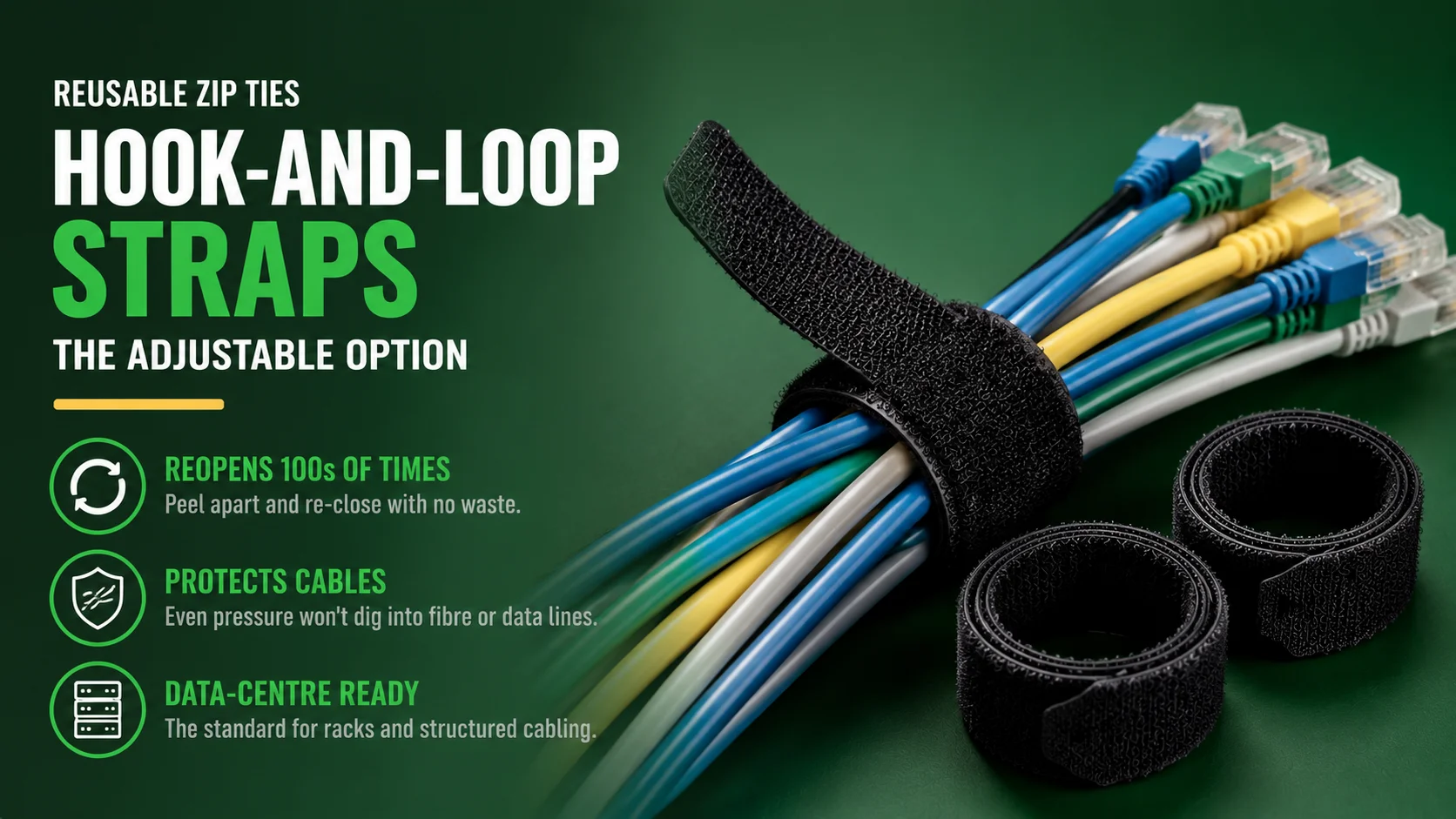
Where a releasable tie can be opened dozens of times, a hook-and-loop strap can be opened hundreds. These straps are woven fabric bands with tiny stiff hooks on one face and soft loops on the other; wrap the band around a bundle, press the faces together, and they grip instantly. There is no ratchet, no pawl, and no strap to thread — which is precisely why they have become the default in data centres, server racks, and structured cabling. A network technician re-patching a rack does not want to cut and replace a tie every time a cable moves; a strap that peels open, re-routes the cable, and presses shut in two seconds is the entire point.
Hook-and-loop straps have a second, quieter advantage: they cannot over-tension a cable. A nylon tie pulled too hard can bite into insulation and deform sensitive data or fibre cables, degrading signal integrity. A hook-and-loop band spreads its light, even pressure across a wide surface and cannot dig in, which is why it is preferred for delicate and high-frequency cabling. The trade-offs are real, though. Fabric straps have lower tensile strength than nylon ties and should not be used to suspend heavy bundles, and standard fabric grades are vulnerable to moisture, dust, and UV, which limits them mostly to indoor use. For heavy suspended loads or harsh outdoor exposure, a nylon or stainless option is the better tool — a decision covered in our comparison of stainless steel zip ties vs nylon cable ties.
Reusable vs. Single-Use Zip Ties: Which Should You Choose?
When choosing between reusable and permanent zip ties, the deciding factor is simple: how many times will this bundle be opened after it is first closed?
If the answer is “never”—such as with electrical cables inside walls, tamper-evident seals, or fasteners securing safety-critical components that must not be removed casually—then a single-use Nylon 6/6 zip tie is the correct and more economical choice. Since releasing them leaves permanent evidence of tampering, they meet the necessary security requirements. Using a reusable zip tie not only increases costs but also sends a misleading signal to operators, implying that the secured components can be opened, which significantly raises the risk of improper handling.
If the answer is “occasionally” — a panel that gets revised, a machine opened for service twice a year, a workshop rig that changes with each project — a releasable nylon tie is the sweet spot: near-permanent holding strength with tool-free removal when you need it. And if the answer is “constantly” — a rack that changes weekly, an AV kit torn down and rebuilt every event, a bench where cables are swapped daily — a hook-and-loop strap wins outright, because its per-use cost falls toward zero the more it is reused, and its tool-free speed compounds over hundreds of cycles. The most expensive mistake is using a single-use tie on a bundle that changes often: the running cost of ties, the labour of cutting and re-tying, and the litter of cut tails all add up far beyond the price of the right reusable fastener.
Common Applications for Reusable Zip Ties
Reusable ties earn their place wherever change is the norm rather than the exception. The most common uses include:
- IT data centers. These environments often require recabling; hook-and-loop straps have become the industry standard here, as they can be undone in seconds without the need for cutting tools near live cables.
- Live events such as concerts and broadcasts. These events require temporary setups that are dismantled after the event; straps capable of withstanding dozens of fastening cycles and releasable zip ties offer significant advantages.
- Trade show setup and teardown. Venues host various exhibitions throughout the year, with equipment frequently updated or relocated; releasable zip ties keep cable bundles tidy while preventing waste.
- Machinery and control-panel maintenance. Releasable nylon ties let technicians open a harness for service and re-secure it to the same standard, no re-stocking required.
- Workshops, hobby, and prototyping. Where cables and components are added and removed repeatedly, a tie that reopens saves both money and time.
- Greenhouses, grow rooms, and gardening. Soft, reopenable ties support plants and re-route lines as they grow without cutting into stems or requiring replacement each season.
- Temporary outdoor fastening. Bungee ball ties secure tarps, tents, and tool storage where a quick, adjustable, tool-free hold matters more than maximum strength.
For applications that need a specific strap length or width, our guide on cable tie sizes explains how to match dimensions to bundle diameter.
How to Release a Standard (Non-Releasable) Zip Tie
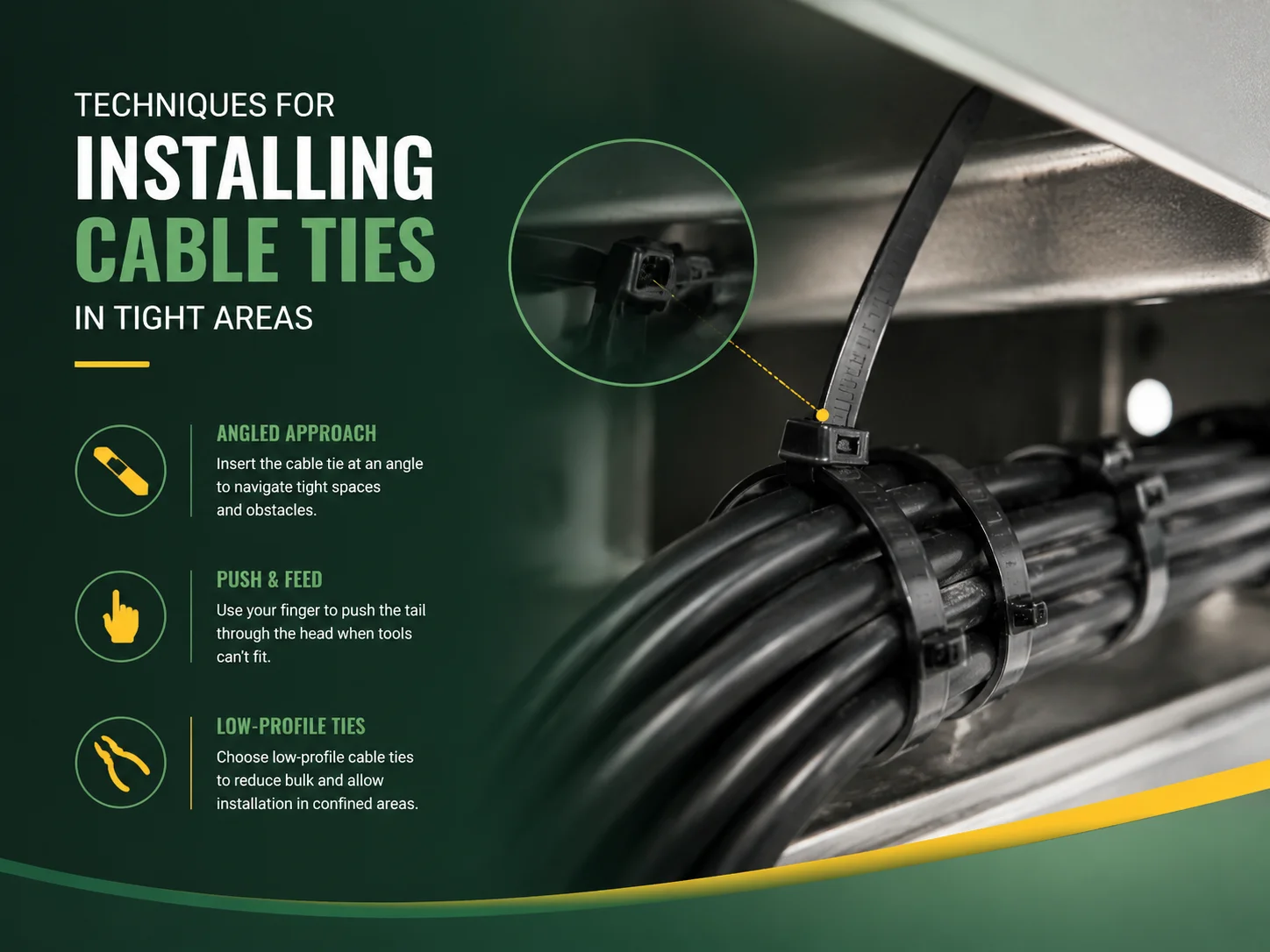
Sometimes the tie you already have installed is a standard, single-use one — and you need to open it without cutting, perhaps because there is no clearance for a cutter or because you want to reuse the tie. This is the well-known “zip tie trick.” Insert a thin, flat tool — a small flat-head screwdriver, a fingernail, a pin, or a purpose-made release tool — between the pawl and the serrated strap inside the locking head. Gently press the pawl away from the teeth while pulling the strap back through the head. If the pawl is held clear, the strap slides out intact and the tie can be reused.
Two honest caveats: on a fully and firmly tightened tie the pawl is wedged hard against the teeth, so this trick is difficult and often damages the locking head or the strap, leaving a tie that will no longer hold reliably. And a standard tie is not designed for repeated release — even a successful trick weakens it. If you know in advance that a bundle will be opened, install a releasable tie from the start rather than relying on the trick later. For situations where no tie fits at all, our overview of alternatives to cable ties covers clips, sleeving, and other reopenable options.
How to Choose the Right Reusable Zip Tie
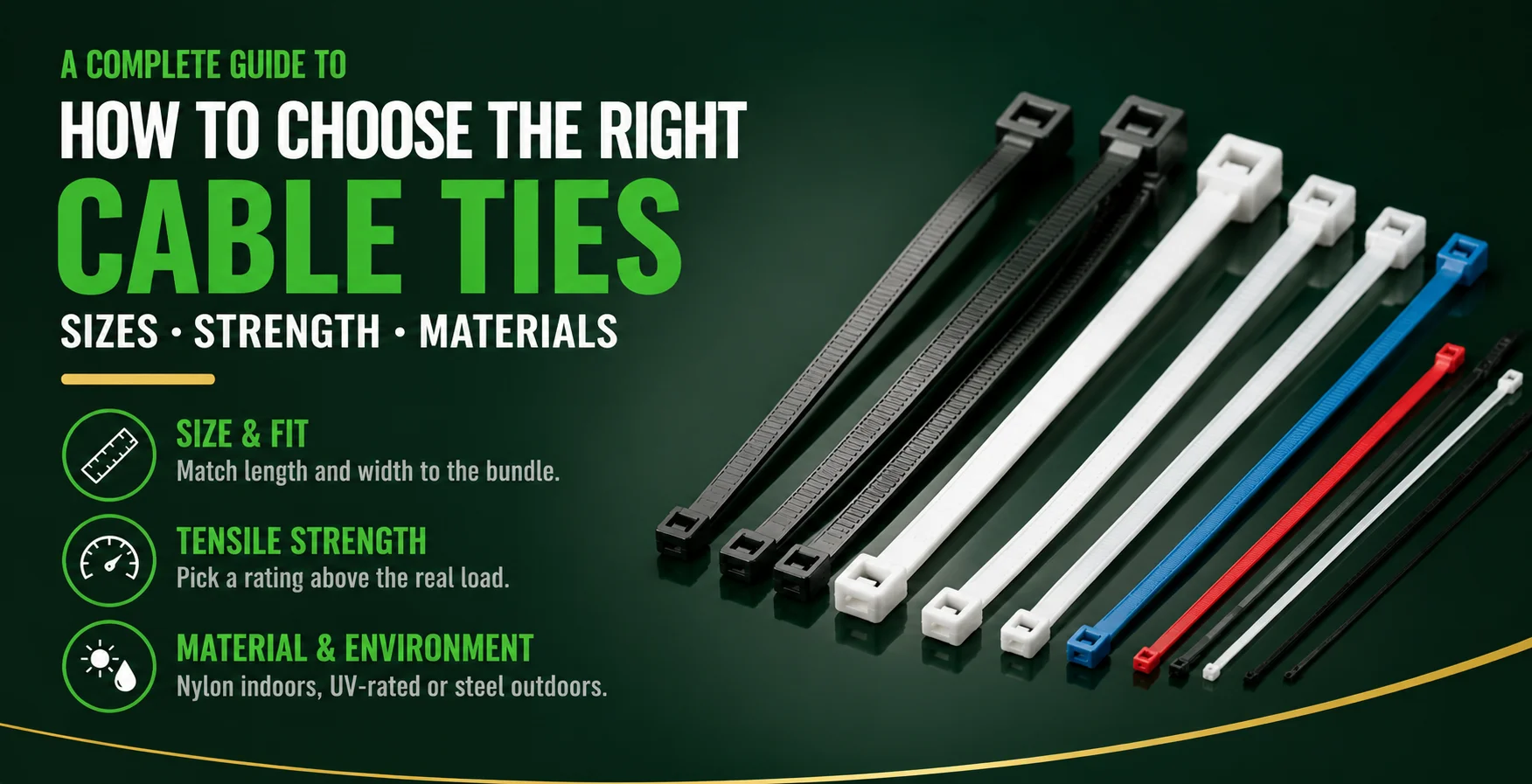
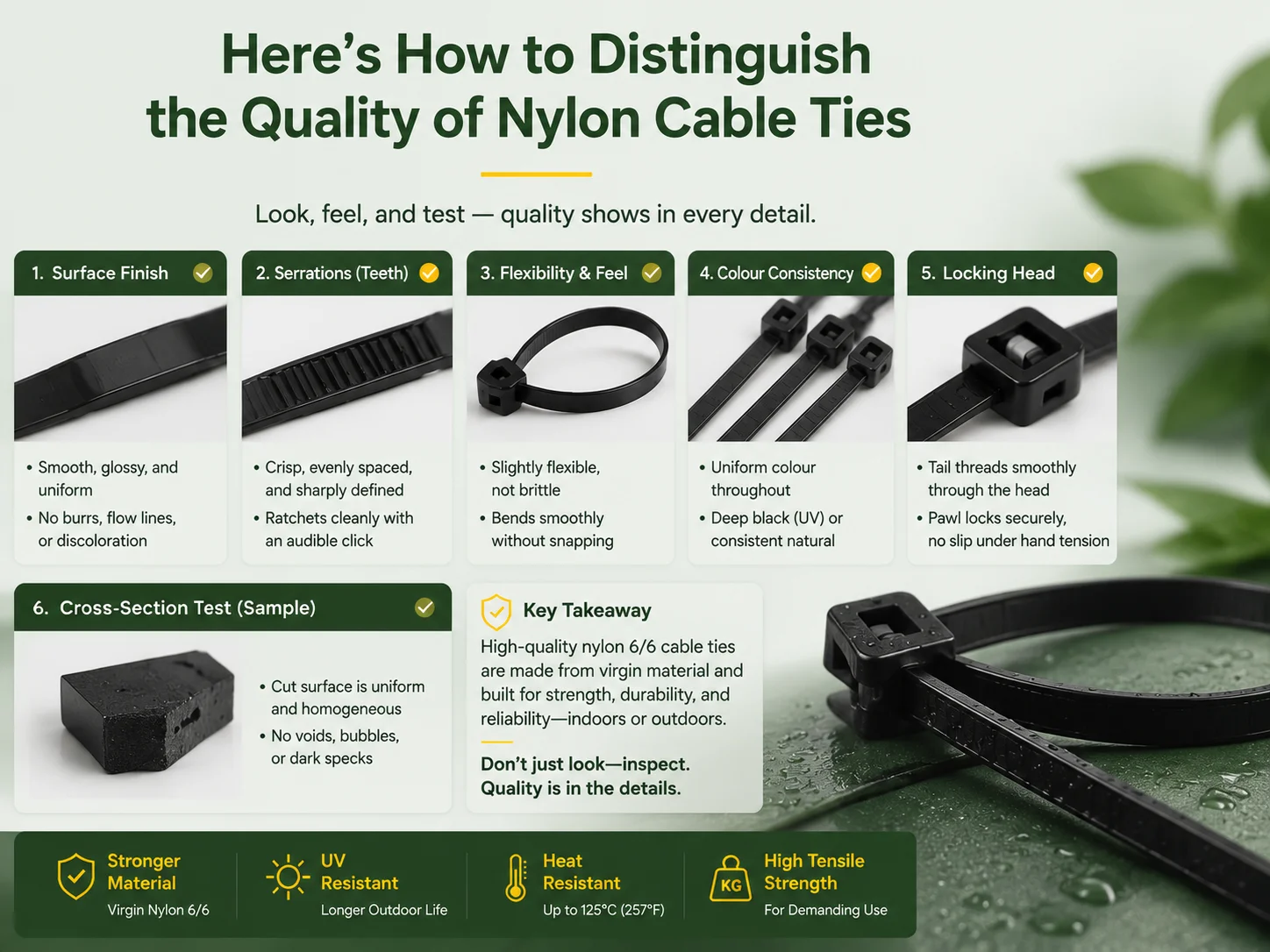
Selecting a reusable tie is a short, structured decision. First, match the type to the re-work frequency: hook-and-loop for constant change, releasable nylon for occasional maintenance, bungee or twist ties for light temporary duty. Second, match the strength to the load — check the bundle weight against the tie’s rated tensile strength and keep a safety margin, remembering that reusable ties generally hold somewhat less than permanent ties of the same width; for suspended or heavy bundles, do not substitute a fabric strap for a nylon tie. Third, match the material to the environment: indoor climate-controlled spaces suit fabric straps, while outdoor or sun-exposed installations demand UV-stabilised nylon — a point explained in our guide on whether zip ties are UV resistant — and hot or fire-sensitive locations call for heat-stabilised or flame-retardant grades. Finally, buy from a supplier who can document the material and rated strength, because a reusable tie that fails on the third reuse is no bargain. igoto manufactures releasable nylon cable ties and hook-and-loop straps in UV-stabilised, heat-stabilised, and standard grades, with the certification and OEM support that contractors, integrators, and OEM buyers rely on.
Frequently Asked Questions
Can zip ties be reused?
Standard single-use nylon zip ties are not designed to be reused — the one-way locking pawl must be cut to remove the tie. Reusable zip ties, however, are made specifically to reopen: releasable nylon ties have a tab that disengages the pawl, and hook-and-loop straps simply peel apart. If reuse matters, choose a tie labelled “releasable” or “reusable” rather than trying to reopen a standard tie, which usually damages it.
How do reusable zip ties work?
Reusable zip ties work in one of two ways. A releasable nylon tie has a small lever or tab in the locking head; pressing it lifts the internal pawl off the strap’s teeth so the strap can be pulled back out undamaged and re-fastened. A hook-and-loop strap has no ratchet at all — it holds because stiff hooks on one face grip a looped fabric face, and it releases when the two faces are peeled apart. Both let you open and re-close a bundle without a cutter.
Are reusable zip ties as strong as regular ones?
A quality releasable nylon tie holds close to a standard nylon tie of the same width, but slightly less, because the release mechanism is by design a way for the pawl to let go. Hook-and-loop straps hold considerably less than nylon ties and should not be used to suspend heavy bundles. For maximum, permanent, or safety-critical holding strength, a single-use nylon 6/6 or stainless steel tie is still the stronger choice; reusable ties trade a little strength for adjustability.
What is the best reusable zip tie for cable management?
For indoor cable management that changes often — data centres, AV racks, desk and home-theatre setups — hook-and-loop straps are usually the best choice because they reopen in seconds and cannot over-tighten delicate cables. For heavier or occasionally serviced bundles such as control panels and machinery, releasable nylon cable ties are better, offering near-permanent strength with tool-free removal. Match the type to how often the bundle will be opened and the load it must carry.
References
- HellermannTyton — Releasable Cable Ties and Hook-and-Loop Fastening. Global manufacturer of releasable nylon ties, hook-and-loop straps, and reusable bundling products for IT, industrial, and automotive use.
- Velcro Companies — Industrial Hook-and-Loop Cable Straps. Original manufacturer of hook-and-loop fastening straps for data centres, offices, and reusable cable management.
- Panduit — Reusable and Releasable Cable Management Products. Manufacturer of releasable ties, hook-and-loop straps, and mounting accessories with published performance data.
- UL 62275 — Cable Management Systems. The standard that defines testing and performance requirements for cable ties, including tensile loop strength and material conditioning.
Reusable zip ties solve a problem that permanent ties cannot: they hold a bundle securely and then let it go, cleanly, as many times as the job demands. The right one depends entirely on how the bundle will live. A rack that is re-patched every week wants a hook-and-loop strap that opens in seconds and never over-tightens a fibre cable. A control panel opened twice a year wants a releasable nylon tie that holds like a permanent tie until a fingertip on the tab sets it free. A tarp in the yard wants a bungee ball tie that hooks and unhooks in the wind. What none of these jobs wants is a single-use tie cut and replaced over and over, littering the floor with sharp tails and quietly running up a cost that a reusable fastener would have eliminated on its second use. Choosing a reusable tie is choosing to match the fastener to the life of the bundle — and igoto supplies the full range, from releasable nylon cable ties to hook-and-loop straps in UV-stabilised, heat-stabilised, and standard grades, so the tie that opens and closes with your work is always the right one for the environment it works in.