



The High temperature tie wraps Guide: Materials, Performanceand Selection
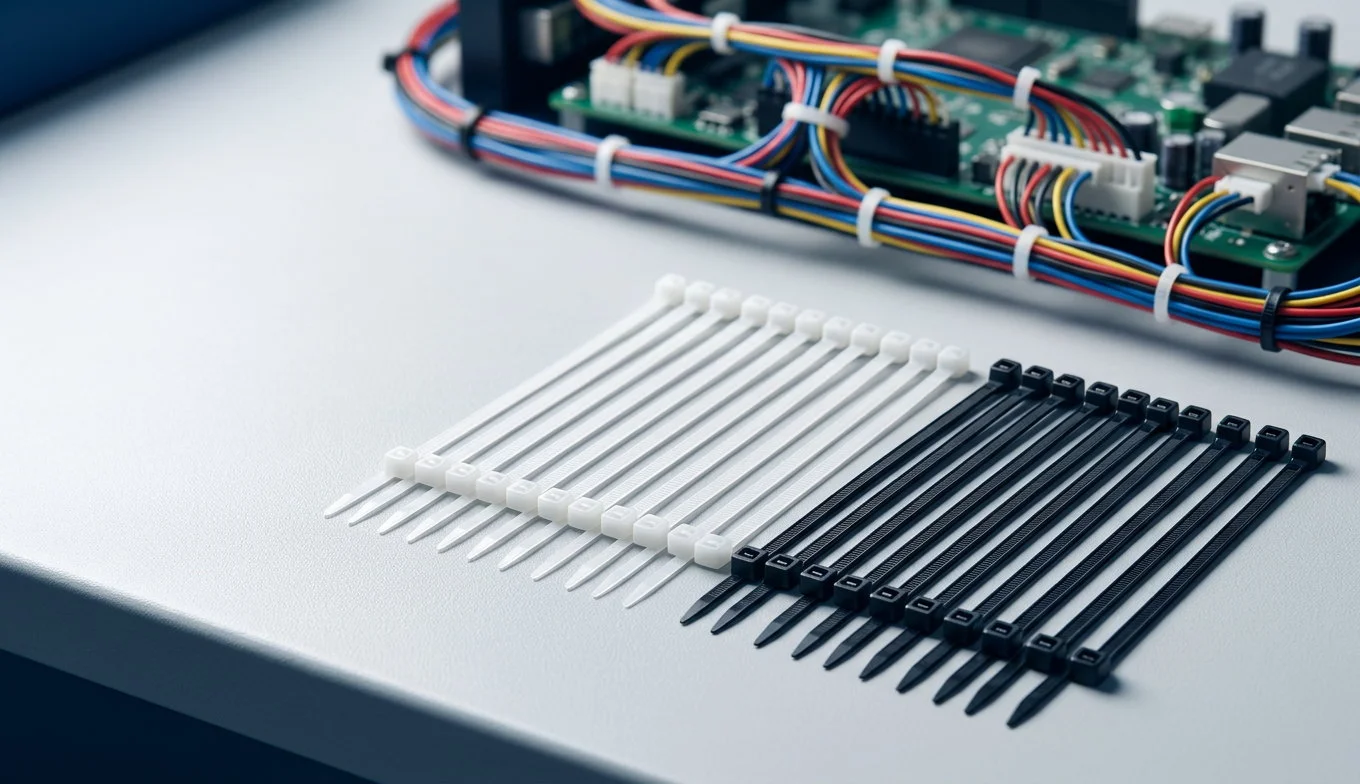
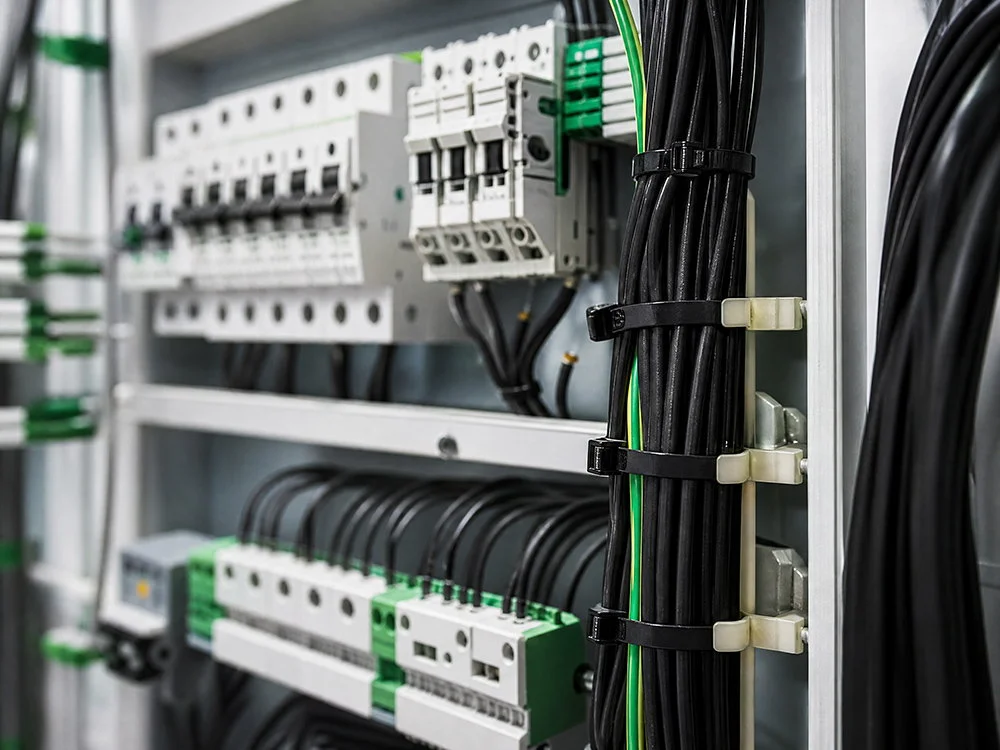
High temperature tie wraps are not just plain nylon cable ties that come in a different color. They are classified under a different engineering category and are manufactured using unique types of plastic that has been certified for various heat tests so that they can be used in situations where regular cable ties cannot withstand heat and fall off, creating a mess. The IGOTO EHT series is one of the top performers in this category with an operating range of -60°C to +280°C for use in hard-to-access engine compartments, engine rooms, aircraft engine compartments, and reactor buildings because these places need fasteners that will last for 20 years while keeping the temperature either in a hot or cold zone.
This guide describes the main differences between a heat-tolerant tie and a conventional one and what the EHT line can offer in contrast to conventional issue PA66 ties and how to create a specification agreed by a purchaser, an examiner, and a factory.
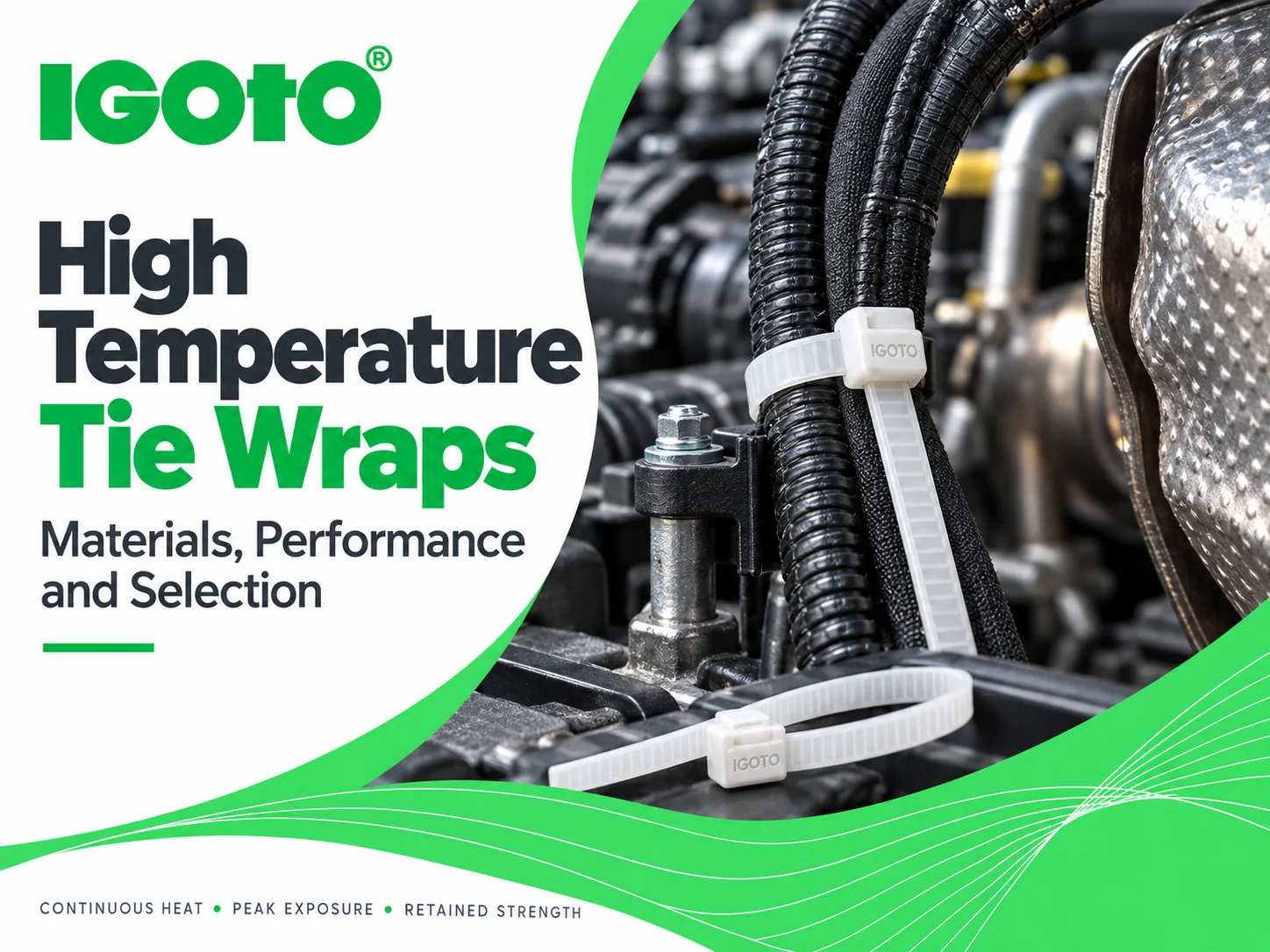
A high-temperature tie wrap is a unique type of self-locking cable tie developed from a high-temperature industrial polymer instead of standard polyamide 66. It can operate under much higher temperatures, going up to more than 85°C. The IGOTO EHT series, which is designated for use at temperatures ranging from -60°C to +280°C, preserves a much greater part of its original tensile strength after ageing under heat, and can boast a better flame retardant category with reduced smoke emissions. Its applications require the use of wires at temperatures exceeding 85°C in situations where failure of a fastener poses a risk to safety instead of creating inconvenience from maintenance issues.
What Actually Makes a Tie Wrap “High Temperature”
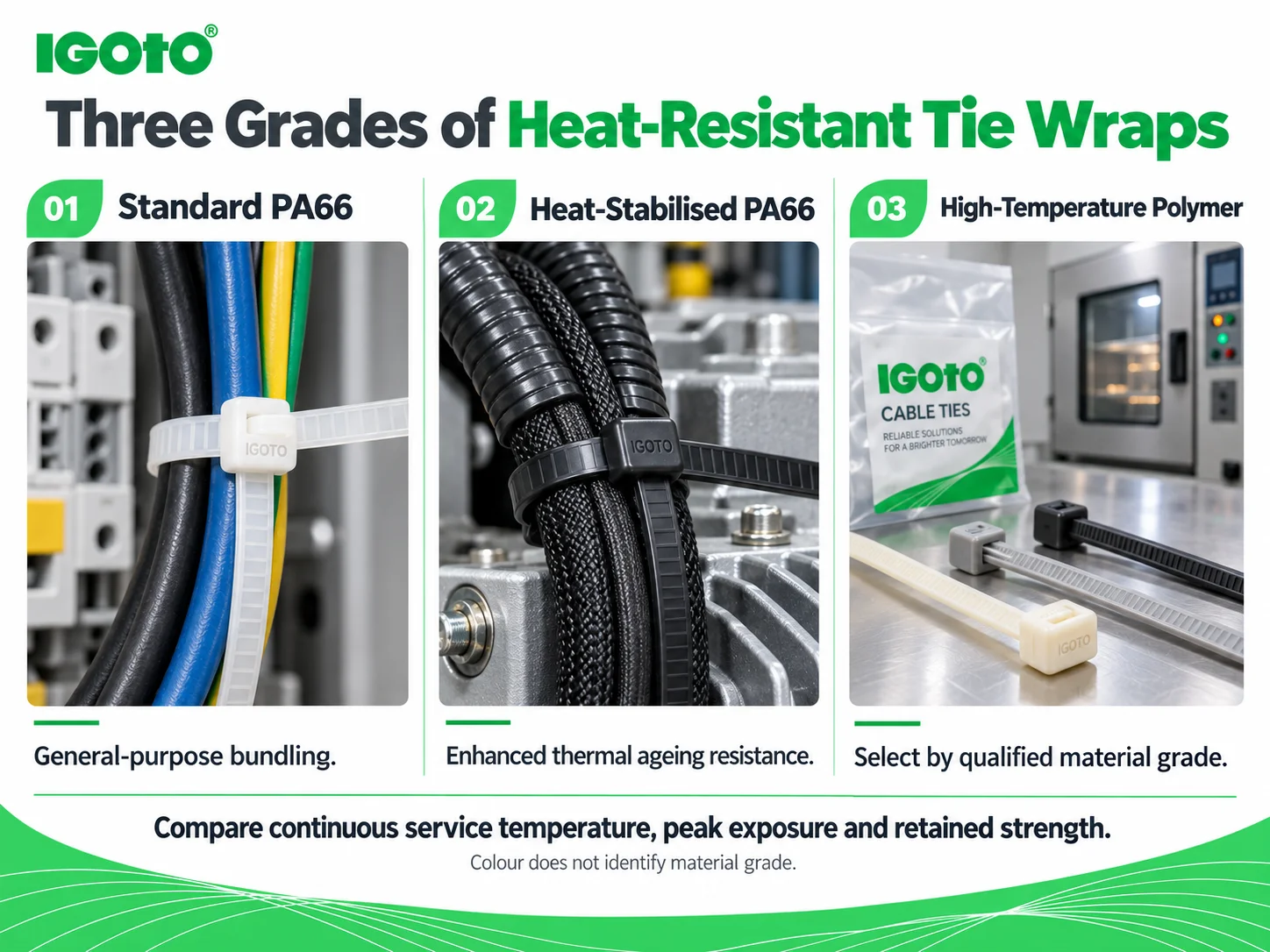
The term is used nondescriptly by catalogue suppliers but that nondescriptness costs buyers money. While three different products are sold under the same name, there is a fundamental difference between them.
The first product is a classic polyamide 66 tie; the IGOTO family is made from Ascend Vydyne PA66 and has its working temperature ranging from -35°C to +85°C. It must be noted that this applies not to the melting point of PA66 but its operational temperature; the polymer does not melt before roughly 260°C. However, its mechanical properties start disappearing long before that figure. The tie that is installed at 20°C and stays at 110°C will elongate for some weeks under its own load. The bundle will loosen up while the tie looks intact, and the inspection will not see any issues with it until the bundle eventually chafes.
The second product is heat-stabilized PA66. Different packages of organic and copper-halide stabilizers minimize thermal oxidation of PA66 and raise its continuous-temperature rating to 105°-125°C range. Such product is widely used in warm locations such as car under hoods. At the same time, it is not the type of tie that you would find in the relevant engineering documents mentioning 200°C+ requirements.
Finally, the third type of tie is always referred to as a real high-temperature polymer one. In this case, the polymer type would be completely different, and the tie would need to be qualified according to many criteria instead of the one single limit.
Our companion article on whether zip ties are heat resistant walks through the failure mechanics of each grade in more detail, and the guide to choosing heat-stabilised nylon zip ties covers the middle tier for projects that do not need the full EHT envelope.
Inside the EHT Series: -60°C to +280°C in a Single Part
The key number of interest pertaining to the EHT range is the breadth of the range itself and not just its high point. The 340-degree breadth of the range is unique, and it is significant because most applications that require the use of this technology don’t operate at a constant high temperature.
For example, an airplane waiting on the ground through the night at a northern airport is well below freezing at night and then heats up to an operational temperature just after the plane engines start. A ship’s engine room is warm when the ship is underway but at a temperature near ambient when docked in a port. An engine bay of a diesel engine in a Nordic country experiences temperatures as low as -40 degrees Celsius before it peaks to a temperature of 150 degrees Celsius during the same shift. A component rated only at the upper end will become brittle when it is cold and will not survive the first temperature change whereas a component rated at the lower end will deform and lose its preload at the first heat run.
| Property | Standard PA66 tie | Heat-stabilised PA66 | EHT high temperature series |
|---|---|---|---|
| Declared working range | -35°C to +85°C | -40°C to +125°C | -60°C to +280°C |
| Base polymer | Polyamide 66 | Stabilised polyamide 66 | High-temperature engineering polymer |
| Behaviour under sustained heat | Creep and preload loss | Slowed oxidation, gradual loss | Retains loop tension through cycling |
| Behaviour at deep cold | Embrittlement below rating | Improved but limited | Remains ductile to -60°C |
| Typical flame classification | UL 94 V-2 | UL 94 V-2 or V-0 | UL 94 V-0 with reduced smoke |
| Typical application | Panels, indoor, general bundling | Engine bay, motors, HVAC | Engine, marine, aviation, nuclear |
One important note should be taken into account in every specification documents. The +280°C value should be understood as an upper range of the stated operational limits that shows how extreme an environment is the component can withstand. It does not mean that the user is allowed to secure a tie on the turbocharger housing directly. Using materials in the upper temperature range decreases their lifespan significantly and so the design temperature stated in the project should refer to the average temperature which the tie is actually exposed to.
Do not fasten the polymer tie directly to the metal surface of the exhaust manifold, turbocharger or heater regardless of the declared temperature range. The thermal loads of radiation and conduction differ from each other. Direct contact with the surface that is exceeding the temperature threshold implies the use of a steel tie.
Three Advantages of EHT Over Standard Nylon Tie Wraps
Buyers rarely switch grades for one reason. In practice the EHT series is specified because three separate performance gaps close at once.
A Wider Temperature Window
This one is quite obvious, but the advantage works both ways. Standard PA66 gives you a 120-degree usable range, while the EHT series gives you 340 degrees of usable range. This means that a single part number serves a global equipment platform — the same harness clip specification is sent to a customer in Kuwait and a customer in Finland without any local adaptation. For an OEM dealing with a bill of materials across export markets, combining three regional tie grades into one often has more benefit than the actual price difference.
It also removes the low-temperature failure mode that catches people out. Most discussion of high temperature cable ties ignores the cold end entirely, yet a tie that has gone brittle at -50°C snaps during installation or during a vibration event. Our guide to cold weather cable ties covers that failure mode in detail.
Higher Retained Strength
Loop tensile strength provided on the datasheet is based on a new, conditioned and room temperature test. This number is meaningless when it comes to third-year performance. In a heated application, retained strength is what matters, which is defined as the percentage of loop tensile strength stated on the label that is still achieved after thermal ageing at operating temperature.
Regular nylon fails quickly once above the rated temperature due to thermal oxidation taking place and the sign of this problem is a chalky tie that breaks when it’s bent. EHT polymer base doesn’t succumb to this problem, which means that it maintains preload after being cycled and not losing any load thanks to being able to hold a tight bundle, meaning that a harness stays in compression and maintenance interval extends.
Higher retained strength also means the tie can be tensioned confidently at installation without the installer over-compensating for expected relaxation. For general-purpose strength comparisons across the nylon range, see our overview of high strength cable ties.
Better Flame Retardancy
PA66 in its standard form is classified as UL 94 V-2, indicating that it is allowed to create flaming drips during testing. In situations such as those that occur in an engine room, a cable tray or an aircraft bay, flaming drips are specifically the means by which a localized fault turns into a fire in a room. The EHT series, on the other hand, is manufactured to comply with the more stringent V-0 standard making sure that the test sample self-extinguishes and does not generate flaming drips in the process. In addition to that, less smoke produced is an advantage when using it in confined space.
This is why high temp tie wraps and flame-retardant ties overlap so heavily in marine and rail specifications — the two requirements almost always arrive together. Our dedicated flame retardant cable tie range covers the applications where fire performance is the primary driver rather than temperature.
Where High Temperature Tie Wraps Earn Their Cost
High temperature tie wraps cost several times what a general-purpose nylon tie costs. That premium is justified in four environments, and it is wasted almost everywhere else.
Automotive Engine Compartments
A turbocharged modern engine’s underhood temperature usually ranges from 100°C to 150°C during typical operations and the spots around the turbo and exhaust, such as the back of the engine, experiences even greater heat. The most difficult aspect is the heat soak after the engine is turned off; there is no cooling for several minutes. All wiring from different components, such as the temperature sensors, high-voltage wires, and fuel injectors is held down with fasteners. In commercial vehicles and off-highway equipment, challenges become even more difficult, as service cycles can be very long and access can be very limited. Our automotive wiring harness solutions page covers the full bundling approach for this environment.
Marine and Shipboard Installations
An engine room has a combination of constant heat combined with salty moisture, vibration and the risk of fire which is always taken very seriously by classification societies. If only heat is present then an upgraded tie would be required but if heat is present in addition to the flame performance requirement then the use of the upgraded tie may be made compulsory. On the upper side of the deck, it is the reverse with UV rays and salty spray.Our guide to marine grade zip ties addresses the corrosion and UV side of the same specification.
Aviation and Aerospace Wiring
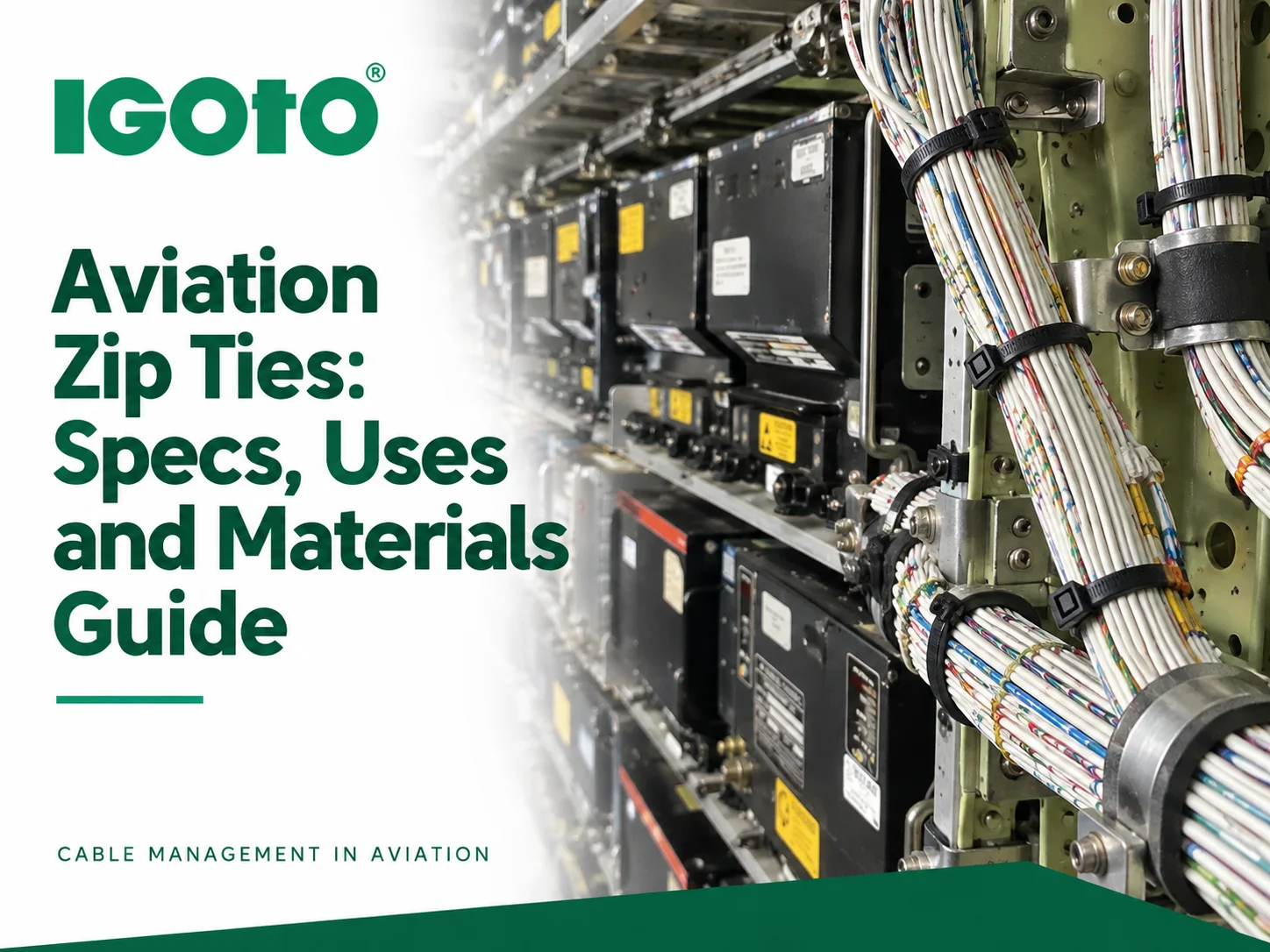
Airplane looms are subjected to fluctuating temperature circumstances, low-pressure environments, vibrations and stringent requirements for combustibility and smokiness. Also, weight is of great importance, so high-performance polymer fasteners are often used in places where the standard would be the use of metal fasteners. It becomes an imperative from the point of view of tracking and lot management rather than just a nice-to-have.Our article on aviation zip ties goes into the qualification expectations for this sector.
Nuclear Power Plant Cable Management
This is the most challenging case, not just in regard to temperature. The cable management system within the containment must tolerate years of elevated temperatures as well as accumulated gamma radiation. In safety related installations, cable hardware is subject to environmental qualification conditions requiring assessed aging performance. Conventional nylon would not withstand radiation or heat and is thus unsuitable for the plant’s cable ties. High temperature polymers are considerably more durable against both factors thus explaining their prevalence despite the expense involved.
When it comes to nuclear technology, aerospace or marine classifications, it is not enough to just have a temperature indicated on the bag. Make sure to get the test report, material grade, lot traceability, and coverage before allowing the cable tie near a safety circuit.
Writing a Specification That Actually Gets You the Right Tie
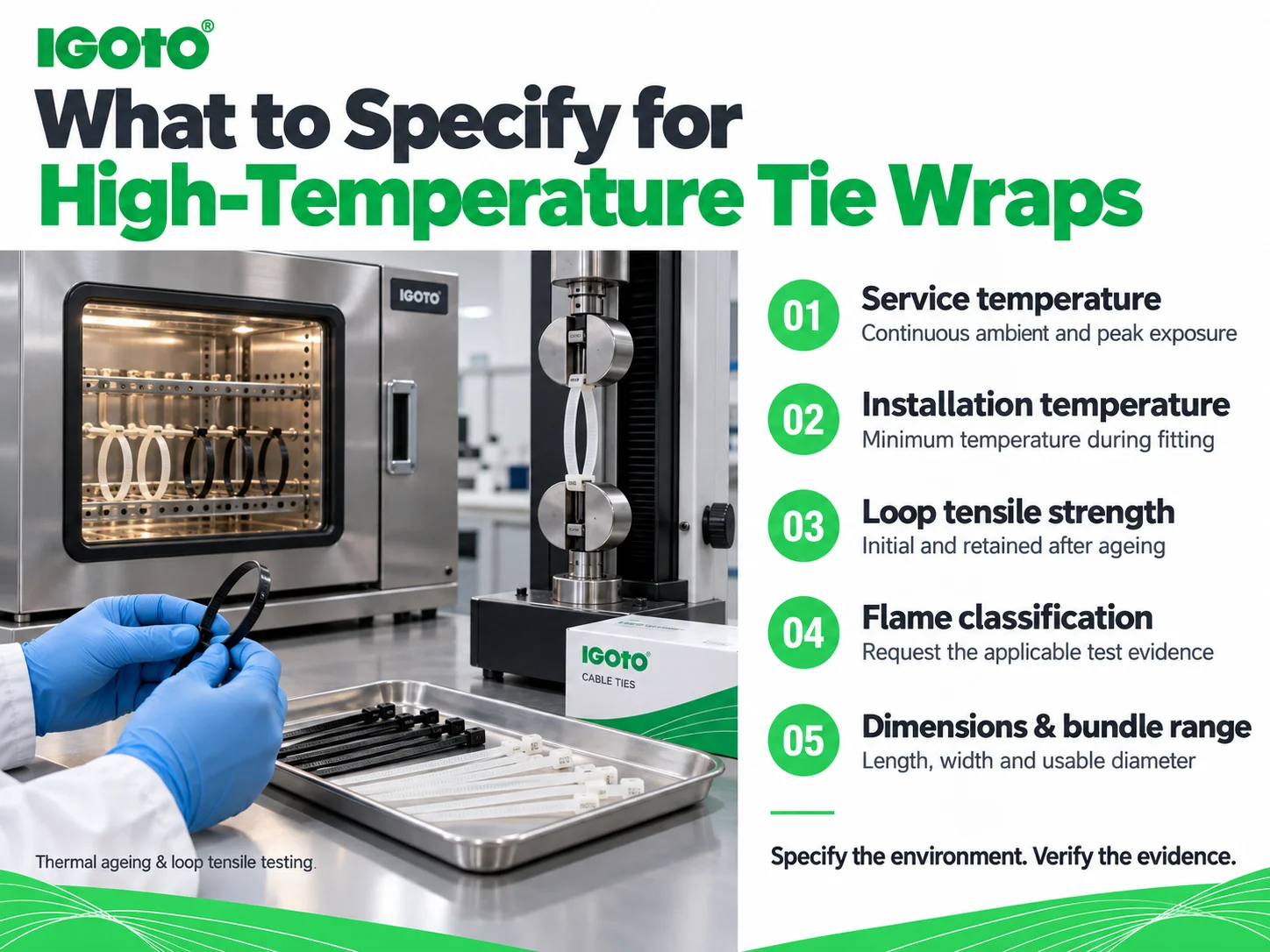
Most disputes over heat resistant tie wraps come from an incomplete specification rather than a bad product. Five lines prevent almost all of them.
Ambient exposure and peak exposure to heat are treated separately in the specification. The term “high temperature” in a purchase order is vague, while the specification “115 degrees Celsius continuous, 180 degrees Celsius peak for ten minutes continuous” has a significance.
Minimum installation temperature must be clearly defined. According to IEC 62275, an installation temperature test is necessary only when the declared temperature is below zero degrees Celsius. Thus, it is crucial to specify it when using them in low temperatures such as those observed in winter.
What should also be specified is tensile strength needed and whether it is retained or initial. In case of long-term usage, it is needed to specify the retained value in the specification after aging.
Flame resistance class must also be indicated. If a flame class of UL 94 V-0 is required, this has to be stated in the technical specification. Assuming that it is a vloneay due to experiencing high temperatures is incorrect.
Dimensions and size of the bundles must be indicated. The length and width of the tie wrap should be stated.
Installation and Inspection in Hot Environments
However badly a good tie is installed, it still can fail, and high-temperature conditions are quite unforgiving when it comes to that. The distance is the key when it comes to mitigation of heat. The greatest distance from a hot surface produces a better heat leakage reduction than the best tie material. A tie should be used only for securing the bundle in place, not for saving the improperly routed bundle.
No hand tensioning. A good tensioner solves installation issues and provides quality, avoiding harsh or too-long ends, which can damage another conductor. Over-tensioning ties in the hot area creates a point of stress at the same place where heat will damage the system.
Keep the bundle in a good shape. Too much compression changes the insulation of the wires and thermal impacts speed up the process. The important element is to use the tie properly, providing sufficient fastening, not using it to fix the bundle.
Watch for the signs. The heat-related failure types can be distinguished by discoloration, chalking, lack of cold slackness, lack of flexibility, or visible sag that was not there at the installation. The tie has reached the end of its life even if it has not yet broken.
Do not re-use the tie that had been in the thermal cycle. The pawl and the material will change and the new installation will not be able to ensure the same level of fastening as the previous one.
Frequently Asked Questions
What are the best heat-resistant zip ties for cars?
When it comes to working under the hood of most passenger vehicles, using heat-stabilized PA66 ties rated for temperatures reaching 105° or 125°C is the cost-efficient solution since they could be used for most sensors, injectors, and light harness routes. For harness routes that are located next to turbos, exhaust manifold, or hybrid power module where peak heat can reach 150°C or go beyond, utilize high heat polymer ties like EHT series. However, for anything that will make direct contact with exhaust components, use stainless steel ties instead since polymers should not be used in that case. The important factor to note is not the type of the car but the measured temperature at the location where the tie is being used.
Does AutoZone sell high-temp zip ties?
AutoZone is a supplier of cable ties made from nylon, including general-purpose ones that are already UV-rated. These cable ties come from companies like Calterm and Auveco. The store also keeps stainless steel ties that can tolerate temperatures of almost 300 degrees Celsius due to the fact that their usage is extremely tough and under rugged conditions. In regular retail counters, one generally cannot buy a certified high-temperature polymer cable tie that has thermal ageing certification. These are chemical and construction materials in an industry that focuses on production. In case of repairs in hot conditions, a stainless steel tie that is purchased in retail would be a good choice.
What are some high temperature resistant cable ties?
The category comes in levels. Heat-stable PA66 finishes in the range of 105°C to 125°C. ETFE fluoropolymer ties are rated up to around 170°C, having excellent resistance to chemicals and UV rays. PA46 and PEEK ties can reach temperatures from about 190°C to 240°C, produced from materials that are strong and flame resistant. When high temperatures are unavoidable, the use of stainless steel ties from 304 or 316 grade eliminates polymers altogether. The range of IGOTO EHT series is between -60°C and +280°C, which is at the top of the polymer range and makes one part number functional for different processes that would generally need other polymer grades.
At what temperature will zip ties melt?
Regular nylon 6/6 zip ties will start melting at approximately 260 degrees Celsius, but one shouldn’t design against that figure. It is more important to focus on the fact that the tie loses its functionality much earlier: when used repeatedly above the temperature of around 85 degrees Celsius, the polymer starts to undergo plastic deformation, which means that it stretches too much, which causes the bundle to become loose and the pre-tension to be lost, even though the zip tie may still appear intact. Hence, practical failures for standard nylon start around 100°C to 110 degrees Celsius rather than 260°C. It is advisable to always evaluate against the continuous service temperature as well as the declared range of operation instead of the melting point.
References
- International Electrotechnical Commission — IEC 62275, Cable Management Systems: Cable Ties for Electrical Installations. Defines classification by material, loop tensile strength, temperature rating, fire contribution and environmental resistance, including when a minimum installation temperature test is required.
- UL Solutions — Cable Ties for Cable Management. Explains how a declared maximum operating temperature is investigated under UL 62275 and how relative thermal index evaluation under UL 746B supports long-term thermal endurance claims.
- UL 94 Flammability Classification. Background on the V-0, V-1 and V-2 ratings, including the flaming-drip criterion that separates V-0 from V-2 materials.
- U.S. Nuclear Regulatory Commission — Environmental Qualification of Electric Equipment. Regulatory background on qualifying equipment for the temperature, radiation and ageing conditions found inside nuclear plant containment.
- NASA Technical Standards System. Workmanship and cable harness standards covering bundling, securing and inspection practice for aerospace wiring.
Conclusion
High temperature tie wraps exist because thermal failure in a cable tie is quiet. Nothing melts, nothing snaps, and nothing shows up on an inspection sheet — the bundle simply relaxes over a few hundred heat cycles until a conductor finds a sharp edge. The EHT series answers that with a -60°C to +280°C working envelope, retained strength through repeated cycling rather than a single room-temperature test figure, and a V-0 flame classification that matters as much as the temperature number in engine rooms, aircraft bays and containment buildings.
The selection rule is straightforward. Measure the sustained temperature at the actual clip location, note the peaks separately, add the flame and traceability requirements the sector demands, and specify against those four numbers. Where the environment stays under 125°C, heat-stabilised nylon is the economical answer. Where it runs hotter, cycles hard, or carries a safety consequence, the EHT range is built for it. IGOTO manufactures across the full range and supplies material data sheets, test reports and OEM packaging on request — contact our team with your temperature profile and bundle dimensions for a specification review.