




How to undo Zip Ties without cutting?
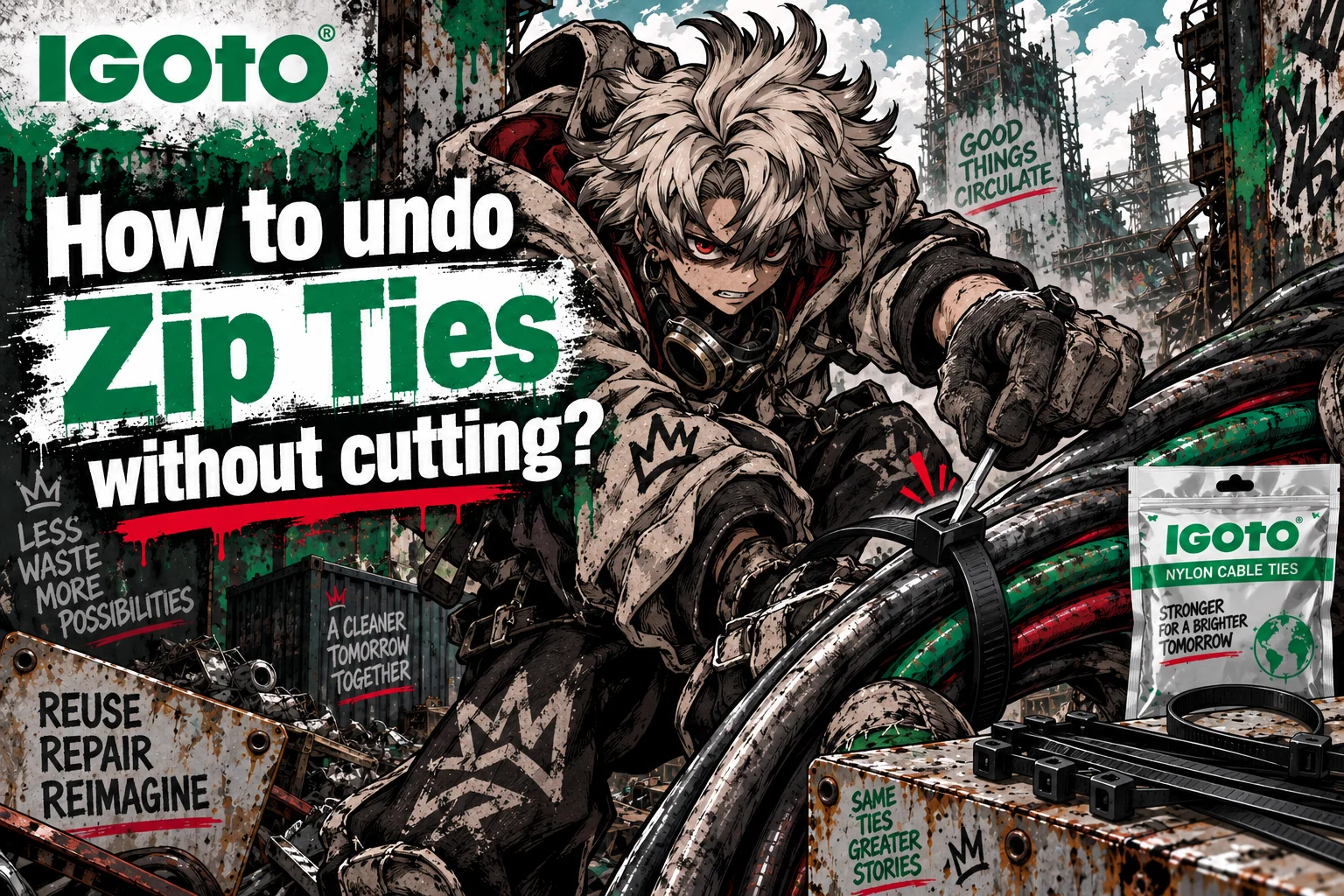
If you’ve seen Rudo explode in Gachiakuta against a Trash Beast using nothing but a handful of junk, you would understand the main point of this article: the simplest of rubbish can serve you better than you might expect. Now, here’s a practical version of this superpower application — how to undo zip ties without cutting them, which means that you will keep the unbroken cable underneath and the tie itself will remain reusable instead of ending up as scraps of plastic. Even if you are a cosplayer reconstructing a prop, an advanced cable organizer, or a gardener disentangling the stakes of last season, the approach is the same and takes about ten seconds as soon as you know which spot to apply pressure to.
This article serves two purposes. First of all, it benefits from the popularity of a manga and anime sensation that turned an unremarkable industrial device into something that attracts attention on the Internet. Secondly, it teaches people of specific practical skills and customer logic so that one does not have to take out a cutter when dealing with a zip tie in real life.
The Gachiakuta angle: when a zip tie becomes a weapon
For readers who are not deep in anime, a quick primer. Gachiakuta — the title roughly means “legit trash” — is a dark-fantasy series written and illustrated by Kei Urana, with the gritty graffiti backgrounds drawn by Andō Hideyoshi. Studio Bones turned it into an anime that began airing in July 2025, and its aesthetic is pure industrial street-punk: rust, spray paint, scavenged metal, and mountains of cast-off waste. You can read Kodansha’s official English release if the world grabs you.
The basic premise of the story is wonderfully simple: Rudo is sent on a mission in a deserted land where normal weapons are completely useless against monsters made of pure thought. What does help him in this situation is the so-called “Vital Instrument.” This term refers to an ordinary object that has been taken care of for so long that a kind of soul has appeared in it. The protagonist’s gloves help him activate this secret potential he finds in junk that other people dig throughout the story.
This idea has inspired fans to pick the zip tie as one of the most useful combat items of the show. In a world made of industrial waste, cable ties are the best medium for such purposes: not only are they cheap, versatile, and functional, but they also fit into the whole trash-punk concept. A piece of junk that holds together a broken gauntlet, holds on the armor plates, and controls something mid-fight is much better than any sword.
But there is one twist the anime doesn’t show you: it is not impressive skill when people tie something; it is much more impressive when they remove what was tied.
Why undo a zip tie without cutting at all?
Reaching for the cutters is the obvious move, so it is worth being clear about when you should not. Learning to undo zip ties without cutting pays off in four common situations.
The first point to remember is reuse. It is well known that a good nylon tie can support a heavy weight and resist heat and humidity and therefore, to throw it away after its first use brings a lot of waste. The second aspect is related to cable safety: a very sharp edge of the cutter can damage an insulated wire or a fragile ribbon cord without anybody noticing it until some equipment stops working. The third point is the temporary work: it is much simpler to do when one has to replace a prototype rig, set up a trade-show exhibition or make sure that an equipment panel is opened regularly. And the fourth point is related to those who come to the city from Gachiakuta – it is the process of construction props and costumes that can need readjustment and dismantling of elements over and over again.
The second important aspect is connected to the tail. Cutting a cable can leave a hard and sharp remnant behind.
First, understand the lock you are fighting
If you do not decipher how a mechanism works, defeating it is impossible; so, here is the shortened explanation. There are two components of a conventional nylon tie. The strap is equipped with slanted teeth aligned on one side while the square-shaped head conceals a small flexible component known as the pawl. When the tail is inserted and it is pulled, the teeth glide over the pawl, producing the distinctive zipping noise. When pulling stops, the pawl gets stuck between two teeth, locking the strap from moving back. The invention works only in one direction, meaning that though it can be very useful for retaining something in place, getting rid of it can be disappointing.
That single fact tells you everything about the method. To open the tie you do not fight the strap; you lift the pawl. Move that tiny tongue clear of the teeth, and the strap suddenly slides backwards as freely as it went in. If you want the deeper mechanical breakdown of every removal scenario, our companion piece on removing a cable tie the right way covers the whole decision tree.
How to undo zip ties without cutting: the pin method
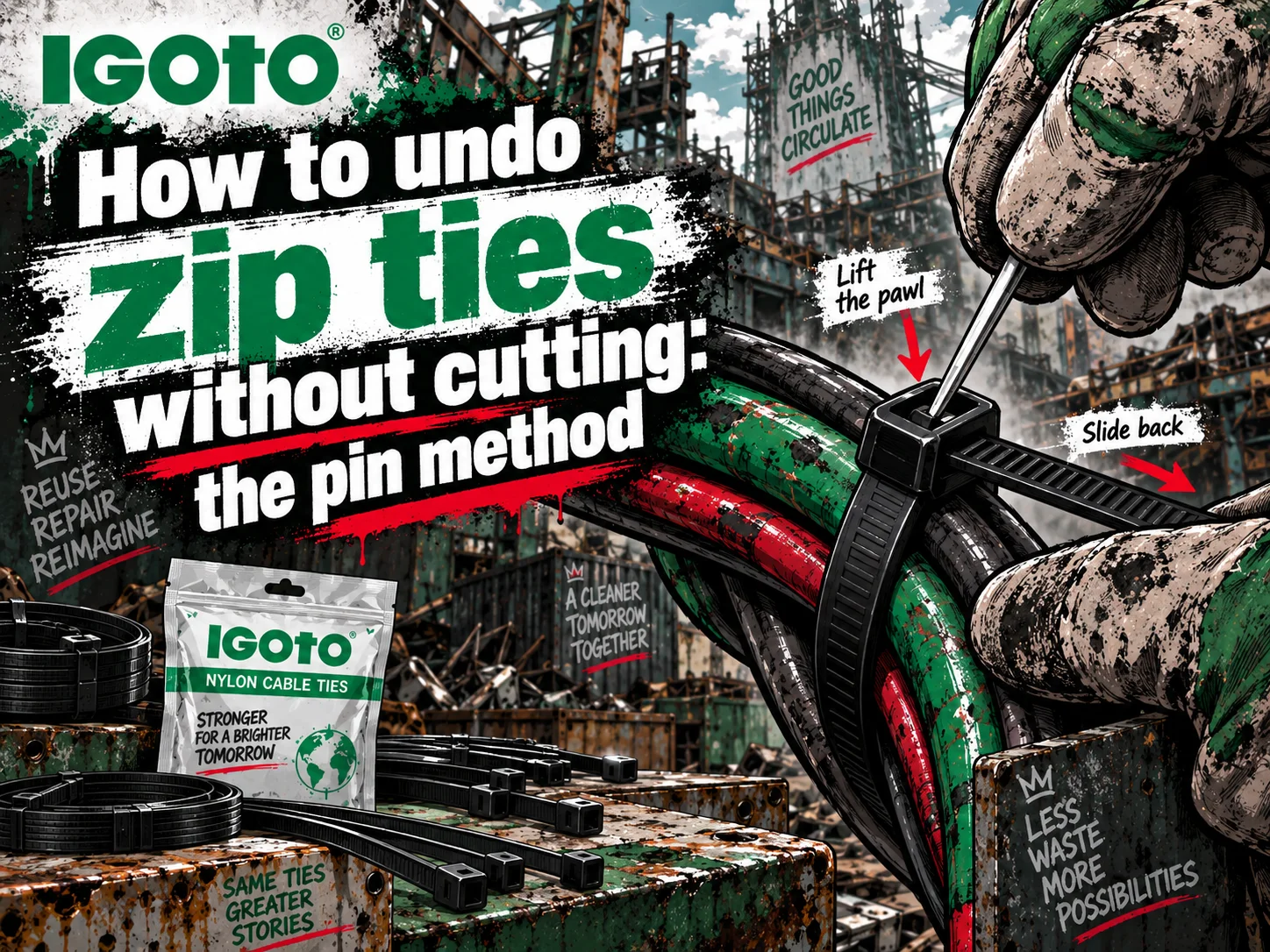
The ability to open zip ties without cutting them is crucial. The aim of this skill is to do manually what reusable zippers do automatically: push the pawl upwards so that the strap can move out of the head.
The one thing you will need is a gadget that is both thin and sturdy. A jeweller’s flathead screwdriver is perfect. A safety pin, sewing needle, a straight paper clip, or a tough nail also work for lighter zippers. One requirement is that the tip must be sharp enough to fit into the head without being too soft and bending before the pawl.
Gently get through the exercise the first few times:
Look for the head and examine the side the strap enters through. Then look through the opening and you should see the small pawl pressing against the teeth of the strap.
Put the tip of your tool into the gap between the pawl and the teeth, on the same side where the strap goes in on.
Carefully pull the pawl back away from the teeth. You are lifting it a millimeter or so, not forcing it.
While holding the pawl in place with one hand, pull on the strap’s tail and take it out of the head. It should come out smoothly.
If it gets stuck, do not pull on it, put the tool back into the right place and try again.
Important thing to remember: do not put your tool in the direction of your fingers and do not force the strap to move when it feels stiff.
Most common mistake is using a tool that is too thick. If you force a large flat blade into the head, you are going to break the pawl.
The no-tool fingernail trick
In case a tie is loosely done up, you may not need to use any equipment to make untying easier. You only need to put your fingernail into the hole and shift the pawl away from the teeth. At the same time, the tail should also be pulled away. The difficulty is that you have to use the right amount of pressure which may take a few attempts, but when done correctly, it gives results. The method is entirely convenient in situations when all the tying tools are far away from you.
Easy mode: releasable and reusable ties
Everything above is the manual override for a standard, single-use tie. But a whole category of ties is built to open on purpose, and if you find yourself undoing ties constantly, they are the real answer.
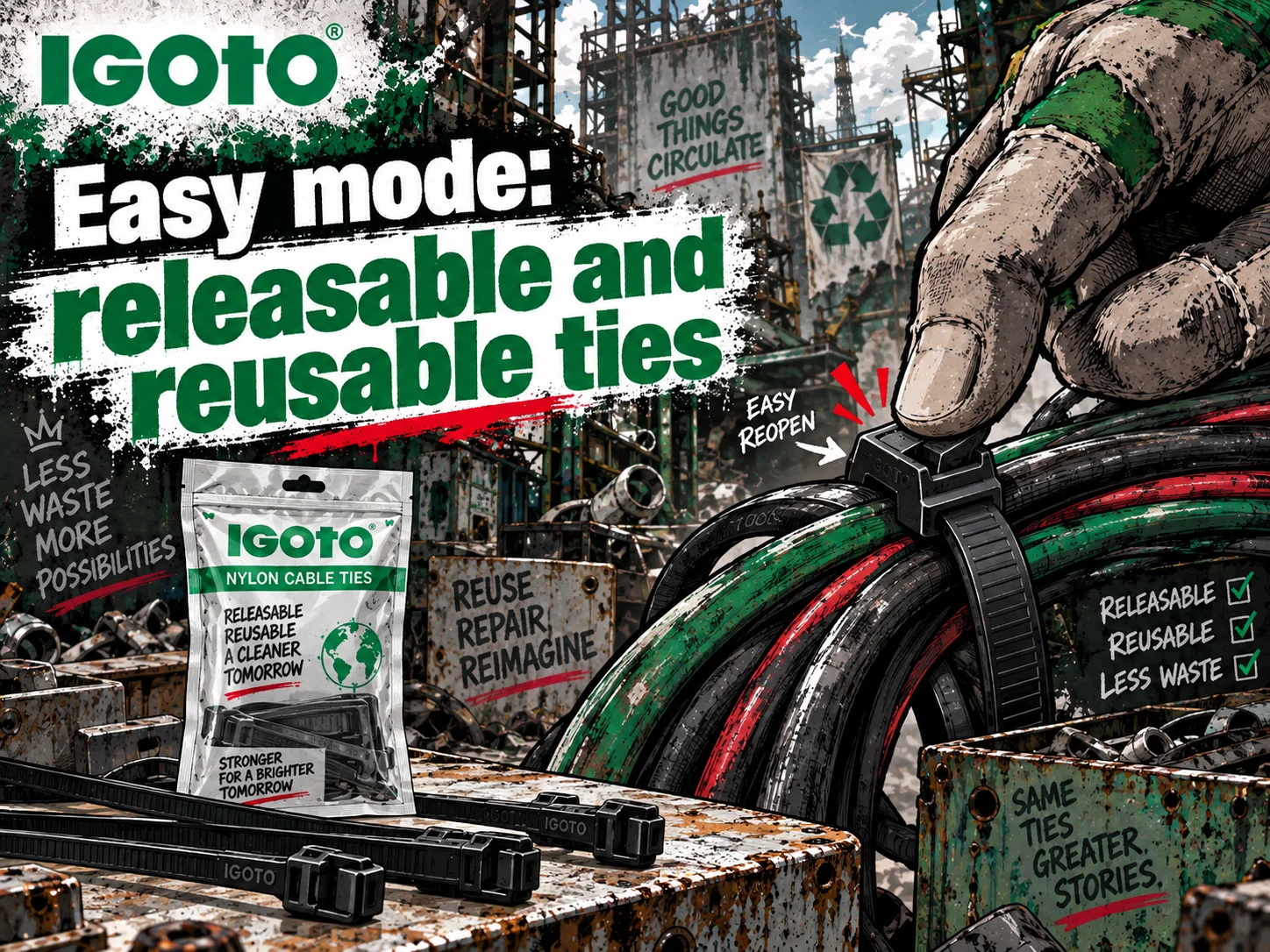
A releasable tie adds a small lever or extended tab to the head. Press or lift that tab and it does the pawl-lifting for you — no tool, no fingernail gymnastics, just a clean release every time. There are also hook-and-loop straps that abandon the ratchet entirely and peel apart by hand. Our overview of the different families of reusable ties and how each one opens lays out which is which, and our guide to reusable alternatives to standard ties weighs the trade-offs. The one thing to accept is that a release mechanism holds slightly less than an identical fixed tie, because a mechanism designed to let go is, by definition, a little less permanent.
Beyond the screen: real-world jobs where this matters
The Gachiakuta hook is fun, but the reason this skill earns its place in your hands is everyday work. A few scenarios where opening beats cutting every time:
Cosplay and prop-making is the obvious crossover. Costumes are never right on the first try — you reposition straps, swap panels, and adjust fit over dozens of sessions. Ties that open let you iterate endlessly on one bag of hardware, and because you can reuse reusable ties indefinitely, a single pack lasts a whole build season. For anything worn under stage lights or left outdoors, reach for a UV-stabilised tie so it does not go brittle mid-event.
Cable management is the other big one. Home-lab, home-theatre, and rack-server setups get re-cabled constantly. Ties that reverse out cleanly mean you can add a drive, reroute a cable, and re-dress the bundle without a bin of scraps or a nicked wire. When space is tight and you cannot even see the head clearly, our notes on working with ties in cramped spaces cover the slim tools that reach where fingers cannot.
Seasonal and garden work rounds it out. Plant stakes, netting, and trellis lashings all come down at the end of a season. A tie you can open is a tie you can move to next year’s tomatoes instead of clipping and discarding.
Do not reuse a tie that has been outdoors for months, feels stiff or chalky, or shows stress whitening at the head — a sun-aged or over-stressed tie can shatter without warning, so open it once, retire it, and fit a fresh one.
When you should just cut it instead
Honesty matters more than dogma here. Sometimes the smart move is to stop trying to save the tie. If a strap is cinched down so hard there is no gap at the pawl, if the tie is old and brittle, or if you simply do not need to keep it, forcing the pin method risks a slipped tool and a scored cable. In those cases a single clean cut at the head, blade angled away from the bundle, is faster and safer. Our guide to cutting cable ties cleanly shows exactly where to cut and which tool leaves no jagged tail. The skill is not refusing to cut — it is knowing which situation you are in.
Choose ties that open easily next time
If you have arrived at this article because a tie would not budge, the longer-term fix is often the tie itself, not your technique. Matching the fastener to the job — the right size, the right material, and crucially the right head style for how often you will open it — saves the whole struggle. Our guide to choosing the right cable ties for the job lays the options out side by side, and you can browse the full range of nylon ties to find standard, releasable, UV-stable, and heavy-duty families. For anything you know you will re-open, buy releasable from the start and you will never fight a pawl again.
Frequently asked questions
Is a standard zip tie reusable after untying it?
On the whole, yes, as long as you do it in a careful manner. A zip tie that was removed without damaging the pawl and the teeth is safe for re-tying. But before reusing it you need to check it for damage. If the head is cracked and the pawl bent, then do not reuse it. A releasable zip tie can be reused many times without having to check it before re-fastening it.
How to undo a zip tie with no tools?
If the tie is only slightly tightened, it is enough to push a fingernail into the pawl through the slot and pull the tail back. In case of a releasable tie, it is enough to hold the tab with a thumb and slide the strap out of the head. There are no ways of untying a completely tight standard zip tie using fingers alone. Use a flat tool or cutting it off.
Does a zip tie get tighter with pulling?
Yes. Because that is exactly the zip tie is designed to do. The one-way pawl prevents the strap from going backwards, therefore pulling it makes the strap tighter and tighter. To unlock a zip tie you need to lift the pawl or cut it, there is no way to turn it back.
Does Gachiakuta really have a zip tie in it?
The point of Gachiakuta is that everything we throw away can become useful in the right hands, and, therefore, the world of the show is a place where zip ties belong. Fans and cosplayers use zip ties in the context of Gachiakuta aesthetics. Use it as inspiration, rather than as a fighting guide.
What is the best tool for untying a zip tie without cutting it?
A jeweller’s flat-head screwdriver is the best, since it is thin enough to get into the head and stiff enough to lift the pawl. For lighter ties, you can use a safety pin or a needle. It is important that the tool is not too wide as it would bend the pawl and make it impossible to reuse the tie.
The bottom line
Rudo’s real lesson in Gachiakuta is not that trash makes good weapons — it is that value hides in the things people throw away. A zip tie is a tiny, perfect example. Master the pawl and you turn a single-use throwaway into a tool you open, reuse, and open again, protecting your cables and your knuckles along the way. Read the head first: a tab means press and release, a plain head means lift the pawl or make one clean cut. Do that, and knowing how to undo zip ties without cutting stops being a party trick and becomes a two-second reflex — and if you are opening the same bundle over and over, that is your cue to switch to releasable ties and stop fighting the lock altogether.