



Identification Cable Ties: Flag, Numbered & Serialized Guide
A bundle of cables that all look the same is only organized until someone has to find one of them again. Identification cable ties solve that problem by combining the fastening job of an ordinary zip tie with a surface that carries information: a write-on flag, a pre-printed serial number, a laser-marked code, or simply a color that means something on your site. This guide explains the main types, how the numbers get onto the tie, when a serialized tie is (and is not) a security seal, and how to specify the right product for a panel shop, a data center, a solar farm or a warehouse.
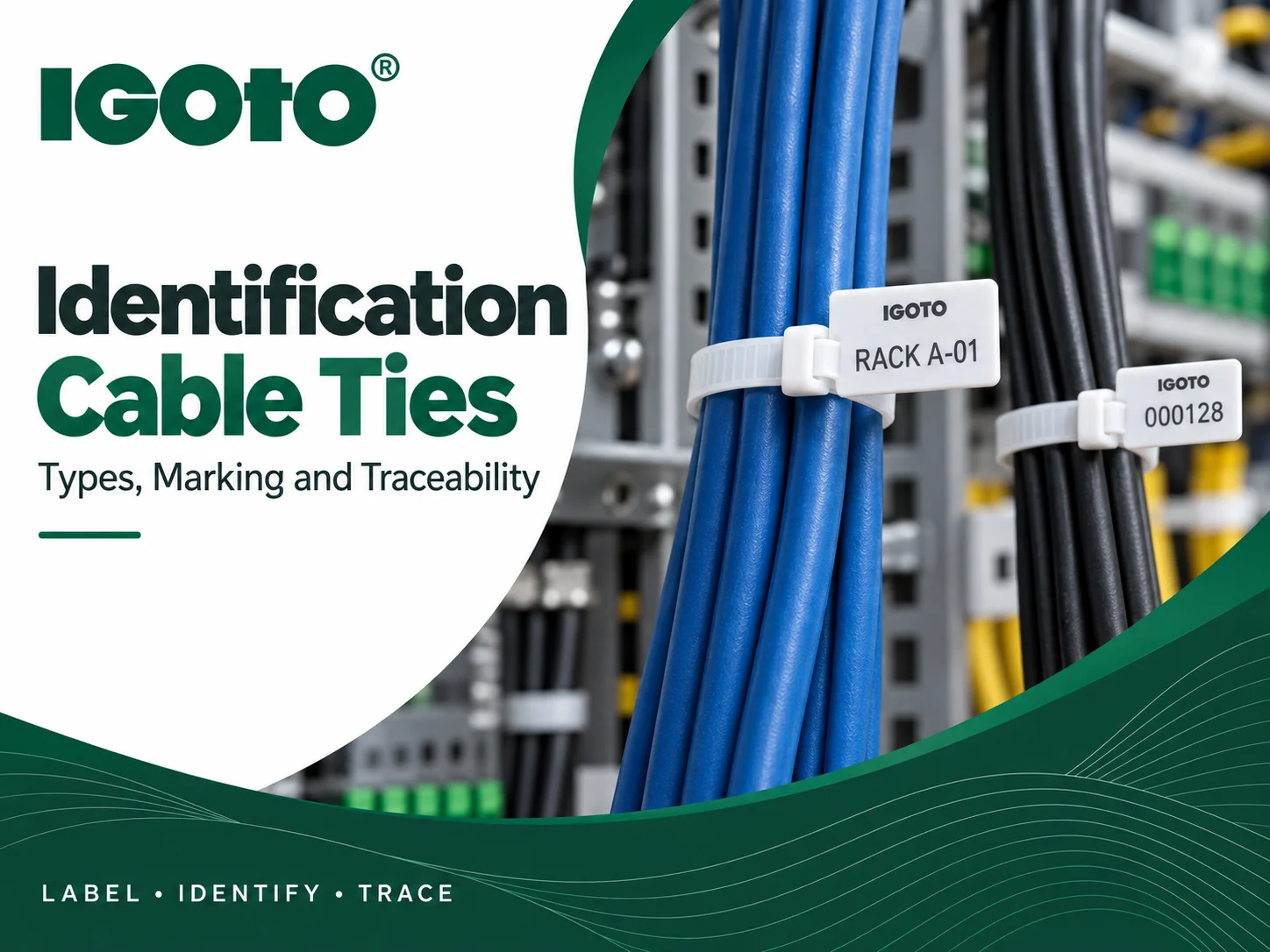
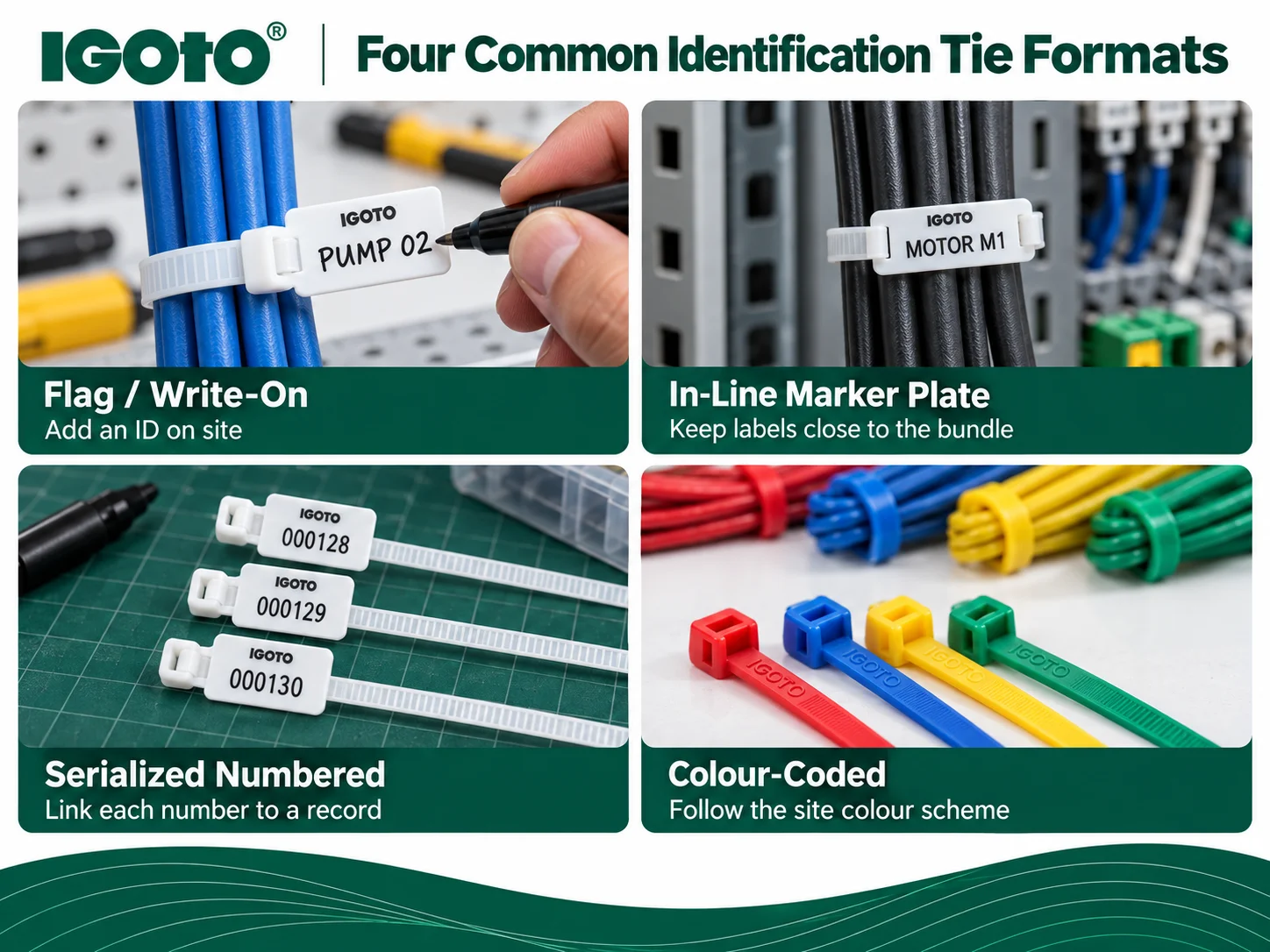
Identification cable ties are self-locking bands that are generally made from nylon 6.6 or a nylon copolymer, which contain an imprint area. It allows later identification of the bound bundle, cable, or article. The four basic types are flag or write-on variants with a blank area located at the tip, marked types with a plate in the strap, numbered items whose flagged part bears the hot stamped or laser marked number, and color-coding items that transmit information through the color scheme of the site. The majority are non-releasable and single-piece items, which can only be eliminated by cutting, thus making them tamper-proof. They are identification devices, since a plastic tie with numbers indicates something was opened, but the tie is not of very high security level in accordance with ISO 17712 standards.
 What Are Identification Cable Ties?
All zip ties consist of three portions: a head that carries the locking pawl, the strap equipped with multiple teeth and a tail. However, an identifying tie includes an additional fourth part that actually accommodates the information. The flat paddle located at the head indicates that it is a flag tie, and the wide plate integrated within the strap indicates that it is a marking tie. In case of a serial tie, the paddle arrives bearing a number printed on it that cannot be found on any other tie produced in this batch.
The product lies between two different worlds. For electric specialists and network installers the ties are a unique form of labeling equipment that can enable any technician find out circuit name or cable identification without unwrapping it. For logistics and facilities teams the numbered ties are viewed as light-weight seals, for the absence of the tie or its cut signals about the fact that a certain bag, cage or cabinet is opened. You have to figure out what kind of work is required from you in order to choose wisely, which is also the question that is often ignored in product descriptions.
If you are new to the wider category, our overview of the different types of assorted zip ties covers standard, releasable, mounting and heavy-duty designs. Identification ties are just one branch of that family tree, utilizing the same technology but for absolutely different purposes.
The Main Types of Identification Ties
Flag ties and write-on ties
The flag tie is one of the most commonly used forms of identification, consisting of a rectangular paddle in close proximity to the head of the cable tie, where the user can use various means such as writing on a paddle with a permanent marker, sticking a label to it or not using anything at all, counting only on the color of the tie. Some of these ties possess a white epoxy or laminated writing surface on the colored body, thus allowing for a better contrast, and making it easier to write with ink than when using a bare nylon model. Typical write-on areas with retail cable ties range between approximately 20 mm x 15 mm in the case of mini ties, to around 35 mm x 20 mm for standard ties, while large flag types would provide a writing area of several square inches for stock or inventory records.
Marker ties with an in-line plate
A marker tie has the writing surface embedded into the strap; therefore, the plate goes around the bundle instead of protruding from it. As a result, it looks cleaner in the control panel or behind the wire duct where the flag may become stuck, or crushed, during service. This implies that though it uses more space, the displayed text will follow the contour of the bundle and therefore, may be somewhat hard to read in case of very small bundles.
Serialized and numbered flag ties
Serialized ties refer to flag ties with unique numbers already marked on the paddle during the manufacturing process (usually hot stamped or laser marked). Commonly used serial numbers consist of six or seven digits and famous manufacturers guarantee there are no repeated numbers in a series of serialized cable ties. Numbered cable ties are the variant most people mean when they search for serialized flag identification numbered cable zip ties: a 6-inch nylon tie with a pre-printed flag that can be logged in a spreadsheet the moment it is applied.
What are pull-tight numbered seals?
These are long cable ties that are molded out of polyethylene or polypropylene plastic (sometimes with metal inserts in the lock). Pull-tight ties are marked with the serial number which will sometimes even have a barcode and the word SEALED, while its main function is to indicate the presence of tampering rather than bundle wires.
Color-coded ties
The simplest identification system uses no text at all. A site standard might assign red to fire-alarm circuits, blue to data, yellow to temporary installations and green to earthing, and every tie in that color then carries meaning. Color coding is fast to read from a distance and costs nothing extra per tie. Our article on the versatile uses of colored nylon cable ties goes deeper into color schemes for electrical, telecom and household projects.
Slide-on and tag-holder markers
Certain systems take the tag away from the tie. With some printable polyester tags or with heat-shrinkable marker, it can slide through a nylon tie and be closed afterward. Thus, a site is able to print long barcode numbers or alphanumeric codes in a thermal-transfer printer and use simple stock cable ties.
| Type | How it carries information | Best fit | Main limitation |
|---|---|---|---|
| Flag / write-on tie | Blank paddle beside the head for marker ink or labels | Field labeling, inventory, valves, temporary works | Handwriting quality varies; ink can fade outdoors |
| Marker plate tie | Writing plate molded into the strap | Control panels, wiring ducts, harnesses | Text curves around small bundles |
| Serialized numbered flag tie | Unique hot-stamped or laser-marked number | Asset tracking, audit trails, cable records | Numbers must be logged to be useful |
| Pull-tight numbered seal | Serial number and often a barcode on a long strap | Bags, cages, meters, cabinets, totes | Not a bundling tie; indicative security only |
| Color-coded tie | Color assigned to a system or circuit type | Large installations, quick visual sorting | Only as good as the site color standard |
| Slide-on tag system | Separate printed tag threaded onto a standard tie | Long IDs, barcodes, data centers | Extra part to stock and install |
How the Marking Gets onto the Tie
Two ties can look identical on a product page and behave completely differently after five years in a plant room. The difference is usually the marking method, so it deserves as much attention as length and tensile rating.
Hot stamping
A hot die applies pigmented foil to the flag surface. This process creates a character that is recessed to a small extent, has high contrast, and is resistant to chemical solvents and abrasion. Hot stamping is the preferred procedure for numbering flag ties because it serves well in creating sequential numbers and ensures good readability even if the tie is used roughly.
Laser marking
The use of a laser alters the hue of the polymer coating when needed or removes a minuscule layer to expose the underlying background. The beauty of laser marking is that there’s no need for printing materials, and the print can contain serial numbers, barcodes, QR codes, and logos all at once. Each batch can be marked in a single pass, making laser marking the most common method of marking in mass production since each run can be differentiated with a different serial number.
Ink and pad printing
The ink is transferred from the etched plate to the tie through pad printing. Pad printing is cost-effective for repeated text, such as a company name, phase identification, or date code, while not as practical for unique serial number markings which are more prone to rubbing and chemical exposure than stamping and laser markings.
Handwriting
Using a permanent marker to write on a blank flag is the best flexible option that is least durable. It works for short-term projects, relocation and modification projects, inventory counting, and is the only method that gives the installer a chance to name the label at the installation point.
| Method | Durability | Unique numbers | Typical use |
|---|---|---|---|
| Hot stamping | High | Yes, sequential | Serialized flag ties |
| Laser marking | Very high | Yes, plus barcodes and QR codes | Asset tracking, branded ties |
| Pad or ink printing | Moderate | Limited | Logos, phase or circuit text |
| Handwriting | Low to moderate | Whatever you write | Field labeling, short-term tagging |
Serialized Ties vs Security Seals
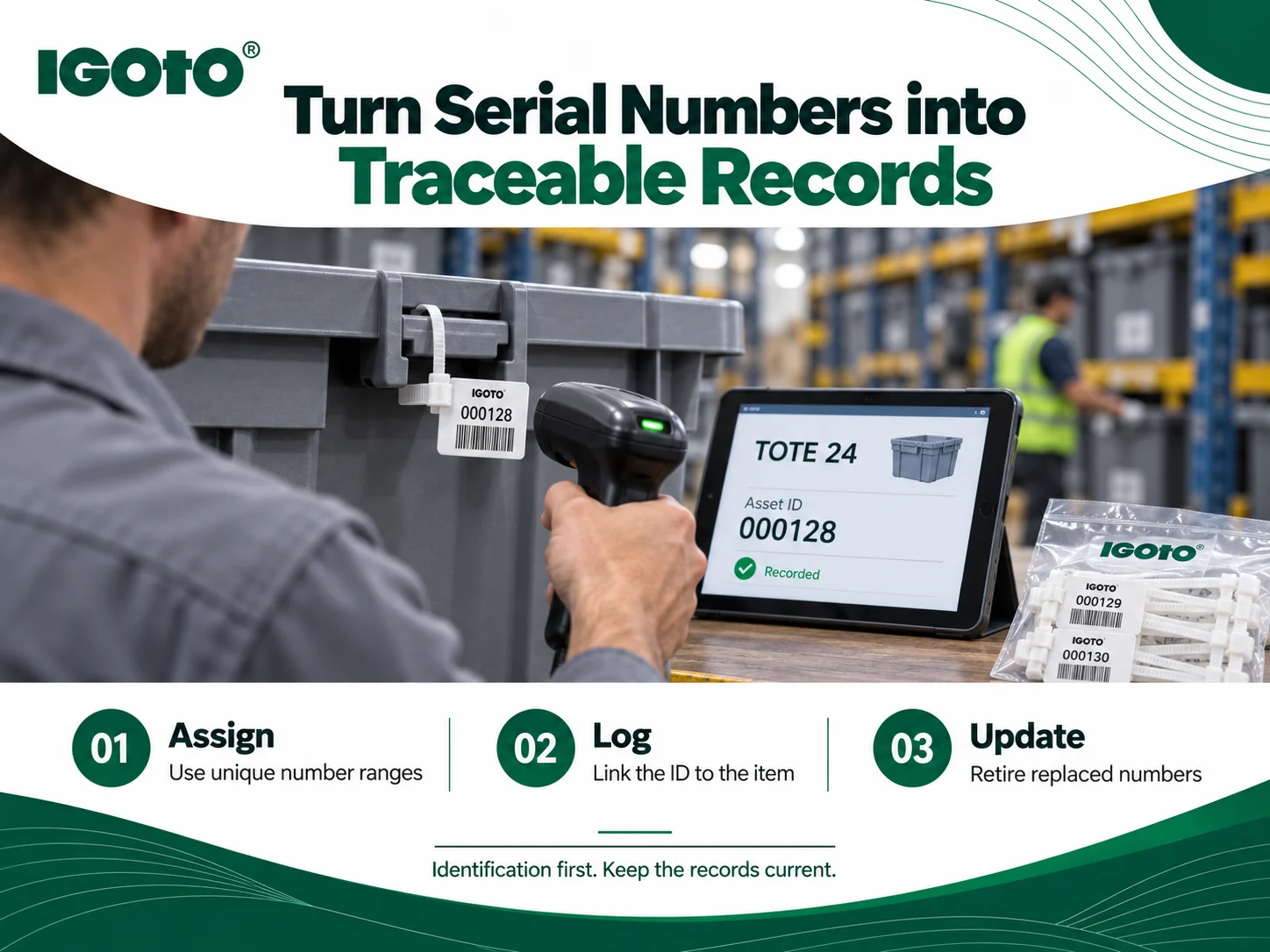
Due to the fact that a one-piece nylon tie needs to be cut in order to be removed, a serial number tie provides a basic form of tampering evidence: if the number on the tie does not correspond to the number in the log or if the tie is gone, it means that someone has tampered with the tie. This is the reason why cash bags, airline carts, fire extinguisher boxes, and utility meters are often sealed with a numbered plastic tie.
With international shipments it’s a different story. ISO 17712 divides mechanical seals for cargo containers into three categories: I – for indicative, S – for security, and H – for high security. The standard states that pull tightening strap seals can look like simple electrical ties, but they are different from them, moreover, a bulletin by the U.S. Customs and Border Protection regarding the standard’s requirements indicates that its C-TPAT program mandates using H seals for containers.
A plastic numbered cable tie may be referred to as an indicative device, thus it is possible to use it for marking that the tote, cabinet or cage have been opened, however, it should never be used as a primary seal on an international shipment; it should be replaced with an ISO 17712 H bolt or cable seal with its own certificate.
In practice, for most readers, the conclusion is rather simple. If the purpose of the fastening is to help identify and track cables or objects, then a serial nylon flag tie should be used. If the purpose is to comply with security policy requirements or those of customs, then certified seal should be specified.
Where Identification Ties Earn Their Keep
Data centers and structured cabling
ANSI/TIA-606-D, which was published in 2021, is the present administration standard for telecommunications infrastructure. Logical identifiers, cable end labels, and matching installation records are required by it. Identification ties and slide-on tags are typical means of providing identification for bundles and trunk cables, where each conductor would need impractical adhesive wrap labels.
Control panels and machine wiring
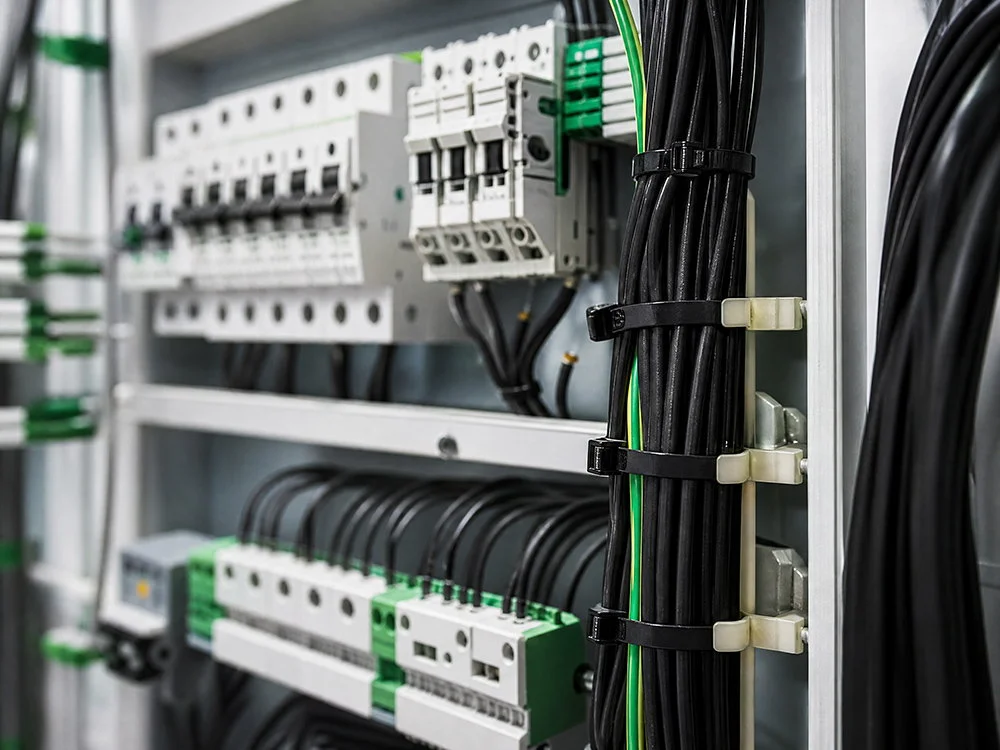
Marker ties are employed by panel builders to identify harness branches, terminal groups, and field cable connections. A plate rests flat on the bundle, making it resistant to cover removal and duct work operations.
Solar, utility and outdoor infrastructure
Utility-scale solar sites run thousands of string cables that look identical, and a clear string ID saves hours during commissioning and fault finding. The specialist identification market for energy assets is large enough to support dedicated suppliers; our profile answering what the company behind Identimark.com is shows how seriously transmission operators treat long-life marking.
Logistics, retail and facilities
Returnable cages and tote lids feature numbered ties in warehouses, display cases and sample bags have been sealed by retailers, crash carts and pharmaceutical totes are sealed by hospitals, and event planners utilize numbered ties on their wrist bands and equipment boxes. Each time, the value has been added by the log documenting which number has been sent where.
Inventory and asset tagging
A flag tie is frequently the easiest approach to apply an asset number to something that does not have a flat surface suitable for a label: hoses, ladders, rental equipment, valves, sample bags, and plant labels. It also allows for easy tagging of an item again by just removing the old tie and putting a new one in place.
How to Specify Identification Cable Ties
An effective specification provides the same answers for all orders, allowing for producing comparable offers and avoiding unexpected results at the moment of delivery.
- Material: our choice is nylon 6.6, which is commonly used for electrical applications and can usually operate at a temperature of up to 85°C indoors. In case of flag or labeled ties, nylon co-polymers are always used, while polyethylene and polypropylene materials are selected for tie pull-tight type products.
- Length and bundle diameter: the majority of work with panels and IT installations is conducted using ties of 4 inches and 6 inches of length, while ties with lengths between 8 inches and 18 inches are selected for larger bundles, pipes, or seals Our guide to standard cable tie sizes converts lengths into maximum bundle diameters.
- Marking area: all flag or plate sizes should be checked against the largest identifier size that will be utilized, thereby taking into account any zeros, specs, and check digit.
- Marking type and number of digits: hot stamp or laser marking should be utilized for permanent identifiers, whereas 6 or 7 digit numbers should be selected for labeled products.
- Color: the color utilized should match the corporate standard chosen by the company and it is good to remember that both white and natural color pads/good quality handwritten names are visible well.
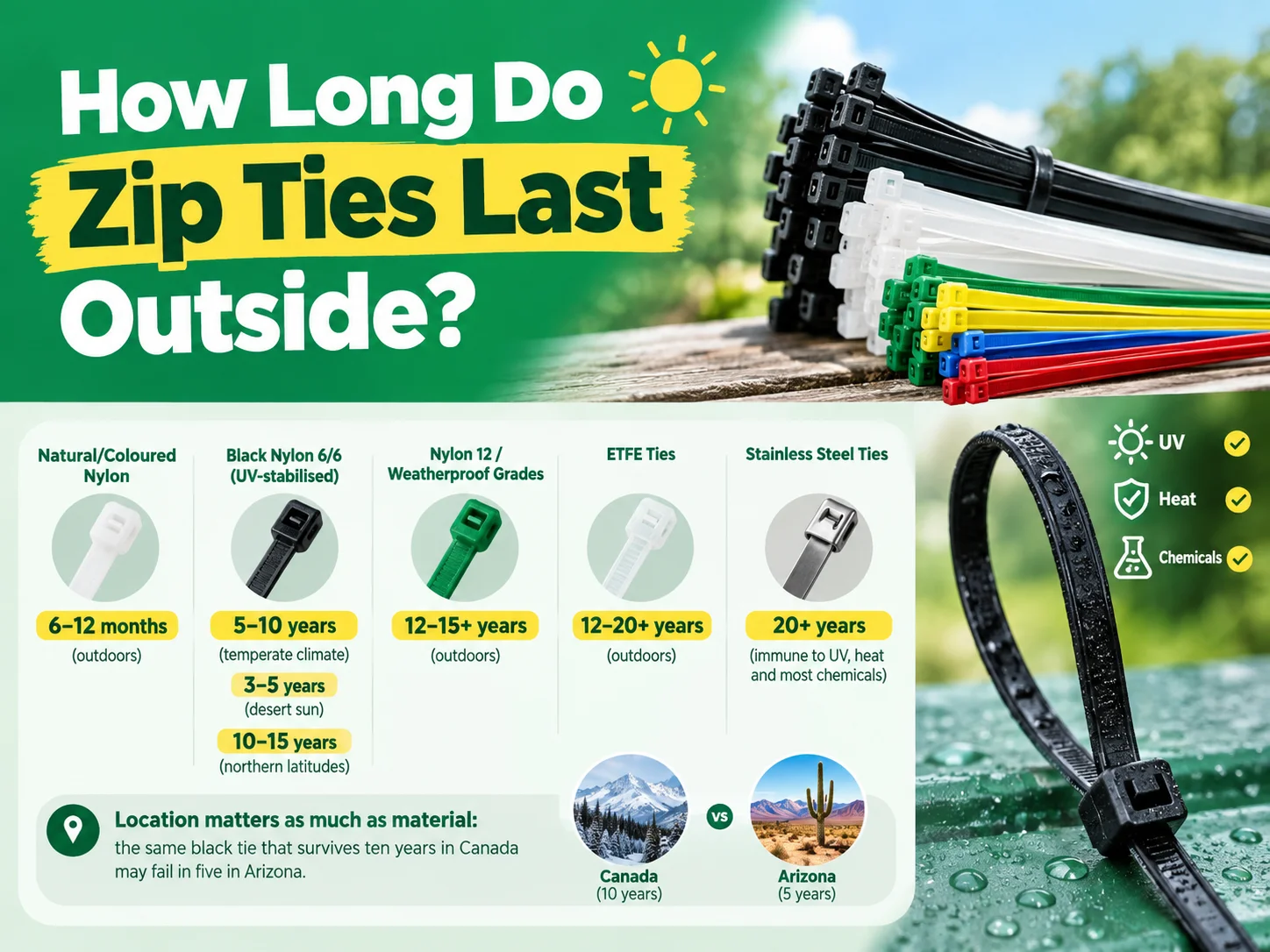
- Environment: UV stabilization is required for any product used outside and it should be double-checked that temperature limits are not exceeded.
- Certification: in the case of cable ties used in various electrical installations across North America, it would be great to know whether the cables comply with the UL 62275 standard.
Handwritten flags and natural nylon produce weak points outdoors of cable ties. Sun rays fade the writing, while natural nylon polymer gets destroyed, so it might be wiser to use either UV-stabilized black or colored ties with laser or hot-stamped markings, rather than relying on the pen method.
If you are weighing up weather performance in more detail, our explainer on whether zip ties are UV resistant explains how carbon black and UV stabilizers change service life.
Building a Numbering Scheme That Survives an Audit
The braids are only part of the identification system, and the other part is the record that accompanies it. Some simple habits will distinguish between a well-organized cable installation and a bunch of random numbers.
①.Plan the numbering scheme before installing the first tie. For example, in a structured cabling project, the scheme will be built from building, room, rack, and port, while a warehouse might use site, zone, and cage number in its numbering scheme.
②.Give number ranges to specific teams or areas to ensure that two teams do not use the same series of tie numbers.
③.Record the number during installation in the best possible manner: barcode scanning or photographing the tie.
④.Cable ends must be labeled according to the TIA-606-D standard so that the identification can be made from either end of the cable.
⑥.Record all moves and changes. When the cable tie is replaced, the number in the logs must be deactivated.
⑦.Have extra ties from the same series on site to keep the records consistent.
Stock Products or Custom Identification Ties?
Ready-to-use flag and numbered ties are perfect for small-scale projects and testing. Otherwise, larger customers, distributors, and OEMs run out of solutions offered by standard packaging: they require additional specifications like color, length, UV stability, branding and grouping in kits according to wire colors.
That is where a direct manufacturer helps. IGOTO has molded PA66 nylon cable ties for more than 25 years and produces color-matched ties specifically for cable identification and color-coding projects, as described on our color cable tie manufacturing page. Through the OEM cable tie program buyers can specify length, width, tensile level, color, material grade, private-label packaging, product labels and barcodes, and evaluate samples before bulk production. Remember to discuss your requests regarding printing or numbering with your manager before production starts, so that he can check the possibilities, tools and time frame.
Frequently Asked Questions
What are the different types of cable ties?
Standard types of ties are one-piece nylon ties, heavy-duty ties, as well as releasable or reusable types among others. In the same vein, mounting ties are also classified as those that have a screw hole or push-mounting mechanism and specialty ties including those made from stainless steel and those made from special type materials like flame-resistance, UV resistant and other special identification ties.
What is the best brand of zip ties?
When talking about the best brand of ties, it should be noted that there is no best brand for all cases, since the best tie is determined by the material from which it is produced, the tensile rating and temperature range parameters, as well as performance against the UV radiation. Our comparison of what makes the best brand of cable ties explains how to judge suppliers on evidence rather than packaging.
What are 6 in cable ties?
The expression often denotes 6-inch cable ties (approximately 150 millimeters) being the most widely available general-type ties and the standard for flag serialized ties. A 6-inch cable tie can typically hold cables with a diameter of around 1.5 inches depending on design and size. At times, the question refers to nylon 6 and nylon 6.6, with the latter being the type used for electric cable ties as it has a higher melting point.
Is there a difference between cable ties and zip ties?
In everyday use, no. Cable tie is the more common term in electrical and industrial settings, and zip tie is the everyday name for the same self-locking strap. Specifications, not names, determine performance. Our article on whether nylon cable ties are the same as zip ties covers the terminology in more detail.
Can serialized cable ties be reused?
Most serialized flag ties are one-piece and non-releasable by design, so they must be cut to remove. That is what gives them tamper evidence. Reusing a number would break the audit trail, so a cut tie should be retired in your records and replaced with a new number.
What should I write on identification cable ties with?
Use a fine-tip permanent marker designed for plastics on write-on flags, and let it dry before handling. For permanent or outdoor identification, choose ties with hot-stamped or laser-marked codes, or print labels on a thermal-transfer printer and apply them to a blank flag.
References
- TIA Fiber Optics Tech Consortium: ANSI/TIA-606-D Administration Standard for Telecommunications Infrastructure
- ISO 17712:2013 Freight containers, Mechanical seals
- U.S. Customs and Border Protection: ISO 17712 High Security Seals Bulletin
- Wikipedia: Security seal
- UL Solutions: Cable Ties for Cable Management
- ANSI Webstore: UL 62275 Ed. 4-2025 Cable Management Systems, Cable Ties for Electrical Installations
Conclusion
Identification ties transform fasteners into record-keeping devices. Flagging and write-on ties provide the installer with more options during installation, while marker plate ties control wire arrangement? Serial numbered ties create an audit trail for property and communication lines, and color-coded ties enhance the convenience of installations of large capacities. Pick the identification option for the desired period, use plastic numbered ties as identifiers and indicators of tampering, and develop the numbering system and a register before fastening the first tie in place. When standard packs do not fit the project anymore, contact a supplier who has control over the materials, colors, and packaging.